

P0245 on 2013-2018 Ford Focus 2.0L EcoBoost: Wastegate Solenoid Low Circuit Causes and Fixes
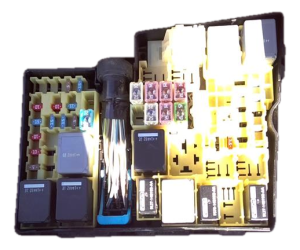
On a Ford Focus with the 2.0L EcoBoost, code P0245 is most often caused by a blown 10A or 15A fuse (F34 in the under-hood fuse box) due to a chafed wiring harness. Before replacing any parts, check this fuse. The fix is often just a $1 fuse and securing the damaged wire.
- For a P0245 code on a 2013-2018 Focus 2.0L EcoBoost, always check fuse F34 in the under-hood fuse box before buying any parts.
- If fuse F34 is blown, the cause is almost certainly a chafed wiring harness that needs to be found, repaired, and secured.
- This code causes a serious loss of power ('limp mode') but is often a very inexpensive and DIY-friendly fix.
- Do not replace the turbocharger; P0245 is an electrical fault, not a mechanical one.
What's Unique About the 2013-2018 Ford Focus
On the 2.0L EcoBoost engine used in the Focus ST and other Ford models like the Escape, P0245 is very frequently a simple electrical issue rather than a failed turbo part. The most common cause is a blown fuse (F34) which is often triggered by a short in a specific wiring harness that is known to rub through its insulation. Common chafing points are under the air filter box, or against the A/C compressor or brake vacuum pump. Ford has issued multiple Special Service Messages (SSMs 47086, 48895, 47575) about this exact problem, confirming it as a known pattern failure for this powertrain.
Symptoms You May Notice
- Check Engine Light is on
- Significant loss of engine power and acceleration (limp mode)
- Poor or no turbo boost
- Sluggish performance
- Warning messages on the dash, such as for the transmission, 4WD system, or Hill Descent Control may appear, as the same F34 fuse powers multiple components.
- Replacing the wastegate solenoid without first checking fuse F34. On this specific engine, the fuse is the most common failure point.
- Replacing the entire turbocharger assembly. P0245 is an electrical code and rarely indicates a mechanical failure of the turbo itself.
Most Likely Causes
- Blown Fuse (F34) Due to Chafed Wiring Harness 🔴 High Probability Ford has documented this issue in multiple TSBs (SSM 47086, 48895, 47575). The '14290' or '12C508' wiring harness is routed in a way that it can rub against the air cleaner box, A/C compressor, or brake vacuum pump, causing a short to ground that blows the fuse.
How to confirm: Check the F34 fuse (typically a 15A mini fuse) in the under-hood fuse box. If it is blown, inspect the wiring harness under the air filter box and around the engine bay for signs of rubbing or bare wires. A user on focusst.org noted, 'The harness was rubbing on the corner of the transmission case right below the intake tube.'
Typical fix: Replace the blown mini fuse and repair the chafed section of the wiring harness with Tesa tape or loom. Secure the harness away from the component it was rubbing against with zip ties.
Est. part cost: $1-$5 - Failed Turbocharger Wastegate Solenoid 🟡 Medium Probability → Shop Turbocharger The solenoid is an electronic component that operates in a high-heat engine bay and can fail electrically over time. While less common than the fuse issue on this platform, it is the next logical part to fail.
How to confirm: If the fuse and wiring are intact, test the solenoid's internal resistance with a multimeter (it should typically be between 10-40 Ω). You can also use a scan tool with bidirectional controls to command the solenoid on and off and listen for a click. Check for 12V power on one pin and a control signal from the PCM on the other.
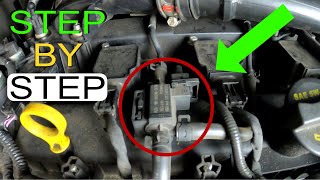
Typical fix: Replace the turbocharger wastegate solenoid. This is often accessed from the top of the engine after removing the engine cover. 🎬 Watch: Step-by-step guide to replacing the turbo boost solenoid.
Est. part cost: $40-$160 - Damaged Solenoid Connector or Wiring ⚪ Low Probability Engine vibration and heat can cause wires to become brittle or pins in the connector to lose tension over time.
How to confirm: Visually inspect the connector at the wastegate solenoid for corrosion, bent pins, or loose wires. Perform a continuity test on the wires between the PCM and the solenoid connector.
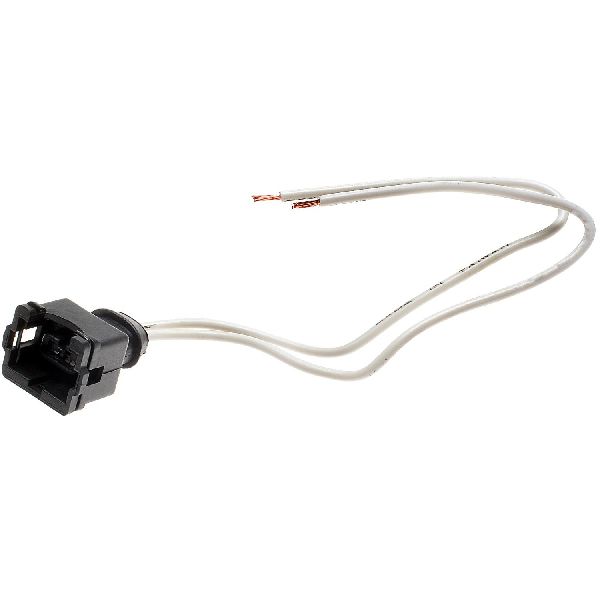
Typical fix: Repair the damaged wiring or replace the connector pigtail.
Est. part cost: $10-$30
Rare But Worth Checking
- Faulty Powertrain Control Module (PCM): → Shop Engine Control Module (ECM) This is extremely rare. Before condemning the PCM, all other possibilities, especially wiring shorts, must be exhaustively ruled out. A user on Reddit with a 2016 Ford Escape documented a case where voltage was present on the control wire directly at the PCM, suggesting an internal short. This should be the absolute last item to consider.
Diagnosis Steps
- Read the trouble codes with an OBD-II scanner. 🎬 Watch: A quick overview of diagnosing the P0245 trouble code.
- IMPORTANT: Immediately check fuse F34 (15A) in the under-hood fuse box. Test it with a multimeter or test light, do not just visually inspect it.
- If the fuse is blown, locate and inspect the engine wiring harness, particularly under and around the air filter box, near the transmission case, and around the A/C compressor for signs of chafing or damage.
- Repair any damaged wires using quality electrical tape (Tesa tape recommended) or heat-shrink tubing. Secure the harness with a zip tie to prevent it from rubbing again.
- Replace the blown fuse with one of the correct amperage (15A).
- If the fuse is NOT blown, inspect the electrical connector on the wastegate solenoid for corrosion or damage.
- With the key on, engine off, check for 12V power at the solenoid connector power wire. If power is missing and the fuse is good, there is an open circuit in the power wire.
- Test the solenoid's internal resistance with a multimeter. Compare the reading to the manufacturer's specification (typically 10-40 ohms). If it's out of spec (open or shorted), the solenoid is bad.
- If all other components test good, the final step would be to check for a short or open in the control wire going back to the PCM, though this is less common.
- After any repair, clear the codes and perform a test drive to ensure the fix was successful.
Parts You'll Likely Need
- Mini Fuse (15A) — This is the most common failure point for P0245 on the 2.0L EcoBoost engine due to a known wiring harness chafing issue.
Trusted brands: Bussmann, Littlefuse
OEM price range: $1-$5
Aftermarket price range: $1-$5 - Turbocharger Wastegate Solenoid
(OEM #CJ5Z-9K378-B (replaces CJ5Z-9K378-A))— This is the second most likely cause if the fuse and wiring are good. The solenoid can fail electrically, causing the low voltage code.
Trusted brands: Motorcraft, Pierburg, Dorman
OEM price range: $100-$160
Aftermarket price range: $40-$90
Related Codes That Often Appear With This One
- P0246 — P0246 is for 'Wastegate Solenoid 'A' Circuit High'. It's the companion code to P0245 and can sometimes appear intermittently along with P0245 during an electrical fault, as noted by a user with a 2016 Escape.
- P0299 — P0299 means 'Turbocharger Underboost'. If the solenoid fails or has no power, it can't command the wastegate to close properly, leading to a lack of boost.
- P0034, P06A0, P0480, etc. — Ford TSBs SSM 47575 and 48895 explicitly state that a blown F34 fuse will also cause a cascade of other codes, including P0034 (Heater Control Circuit Low), P06A0 (A/C Clutch Relay Control Circuit), and P0480 (Fan 1 Control Circuit), because this single fuse powers multiple unrelated components.
Technical Service Bulletins (TSBs) & Recalls
- SSM 47086: Notes that 2017-2018 1.5L/2.0L engines may exhibit a blown fuse F34 and P0245 due to the '14290' wiring harness chafing under the air cleaner or near the brake vacuum pump. It may also exhibit an all-wheel drive (AWD) fault.
- SSM 48895: Re-iterates the information for 2017-2019 models, specifically calling out the '12C508' (2.0L) harness and listing numerous other DTCs that can be caused by the same blown fuse, such as P023A, P06DB, and P2681.
- SSM 47575: Another bulletin confirming the fuse F34 and wiring harness chafing issue on 1.5L/2.0L models, also referencing the '12C508' harness for the 2.0L engine and noting the vehicle may exhibit an all-wheel drive fault.
- Bulletin #TSB150162: Notes that 1.6L GTDI engines may exhibit a lack of power with the MIL illuminated and DTCs P0234, P0245, P0246, and/or P0299.
Platform-Specific Known Issues
- Ford Special Service Message (SSM) 47086, 48895, and 47575 all document that the engine wiring harness may chafe under the air cleaner or near the brake vacuum pump, causing fuse F34 to blow and triggering code P0245 and a host of other unrelated codes.
Mechanic-Grade Diagnostic Values
- Turbocharger Wastegate Solenoid Internal Resistance — expected: 10 - 40 Ω (general specification). Failure: A reading near 0 Ω (short circuit) or infinite/OL (open circuit) indicates a failed solenoid.
- Solenoid Connector Power Pin Voltage (Key On, Engine Off) — expected: 12V (Battery Voltage) ± 0.5V. Failure: A reading below 11V points to a problem in the power supply circuit, such as the F34 fuse or the wiring from the fuse box.
- Solenoid Control Wire to Chassis Ground Continuity (Solenoid and PCM disconnected) — expected: Infinite resistance / Open circuit (OL). Failure: Any low resistance reading indicates a short to ground in the control wire harness, a common cause for blowing fuse F34.
Scan Tool Commands That Help
- FORScan or Ford IDS: Output State Control / Actuator Self-Test (e.g., for PID TURBO_WGATE) — After confirming the fuse and wiring are good, this command directly activates the wastegate solenoid. You should hear an audible click. If there is no click despite having good power and ground at the connector, the solenoid itself has failed internally.
Wiring & Ground Locations
- G100 / G102 / G104 — Located on the left side of the engine compartment, typically on the frame rail or inner fender underneath/near the air filter box.. These are primary chassis ground points for the engine harness. A corroded or loose ground at these locations can cause floating voltages and intermittent low circuit codes for various sensors, including the wastegate solenoid.
- Wastegate Solenoid Connector (C139) — On the 2.0L EcoBoost, the solenoid is typically mounted on top of the engine, near the valve cover, making it relatively accessible.. This is the primary point for testing power, ground, and solenoid resistance. The connector has two pins; one is the power supply (often Yellow/Violet wire) from fuse F34, and the other is the control wire (often Blue/Orange wire) going to the PCM.
Real Owner Repair Stories
- focusst.org forum user 'Fallingdown' (Ford Focus ST (2013-2018)) — Car went into limp mode with no boost and threw code P0245.
❌ Tried (didn't work) Initial diagnosis pointed towards a bad solenoid, but the user checked the fuse first based on forum advice.
✅ What actually fixed it The user found fuse F34 (15A) in the under-hood fuse box was blown. Upon inspection, the wiring harness was found to be rubbing on the corner of the transmission case directly below the intake tube. The fix was to tape up the chafed wire, secure the harness with a zip tie, and replace the fuse.
OEM Part Supersession History
CJ5Z-9K378-A→CJ5Z-9K378-B— Revision to improve durability and resistance to heat/vibration-related failure.
Heads up: The parts are interchangeable. When replacing, it is recommended to use the latest 'B' revision.
Model Year Variations Within This Range
- 2015-2018 (Facelift models): The 2015 model year introduced a significant interior and exterior facelift. While the 2.0L EcoBoost engine and the P0245 fault causes remained mechanically the same, the infotainment system was upgraded to SYNC 3 (on ST2/ST3 trims) and the steering wheel was redesigned. These changes do not affect the diagnosis or repair of P0245 but are notable differences in the vehicle generation.
Diagnostic Flowchart
Other Known Issues on This Vehicle
Issues unrelated to this code that are worth knowing about as an owner of this generation:
- EVAP Purge Valve Failure (P1450) 🔴 High — Extremely common. The valve often gets stuck open, causing rough idle, stalling after refueling, and a P1450 code. It is a known recall item (18S32) on many Focus models. (Ref: Recall 18S32 / NHTSA 18V-735)
- Weak OEM Rear Motor Mount (RMM) 🟠 Medium — The stock RMM is soft and prone to failure, leading to excessive engine movement, wheel hop on acceleration, and poor shifting feel. Most owners upgrade to a stiffer aftermarket mount.
- Intake Valve Carbon Buildup 🟠 Medium — As a direct-injection engine, fuel does not wash over the intake valves, leading to carbon deposits over time (typically noticeable after 50,000-80,000 miles). This can cause reduced performance and misfires. Walnut blasting is the recommended cleaning procedure.
- Low-Speed Pre-Ignition (LSPI) 🔴 High — A known risk with small-displacement, turbocharged direct-injection engines. Lugging the engine (high gear, low RPM, high load) can cause a pre-ignition event that can be destructive to pistons. This is largely mitigated by proper driving habits (downshifting to accelerate) and using high-quality oil.
- Wiring Harness Chafing (Pre-facelift) 🟠 Medium — On pre-facelift models (2013-2014), a different wiring loom issue could cause fluctuating revs or stalling. This was subject to a recall in the US and warranty repairs in other regions. (Ref: NHTSA Campaign Number: 14V597000)
Used vs. New Parts: Buying Guide for This Vehicle
When a used part is the smart pick: A used wiring harness pigtail from a junkyard is a viable option if only the connector is damaged and you are comfortable splicing wires. A used wastegate solenoid can be a budget-friendly choice, but it carries risk as it's a common failure item.
Donor-vehicle mileage cap: roughly under 60000 miles for the part to have meaningful remaining life.
What to inspect on the donor part:
- For a used solenoid, inspect the plastic housing for cracks or signs of extreme heat exposure.
- Check the electrical connector pins for any corrosion or damage.
- If possible, test the resistance of the used solenoid with a multimeter before purchase; it should be within the 10-40 ohm range.
- For a wiring pigtail, ensure there is at least 4-6 inches of wire past the connector and that the wires are not brittle or cracked.
Aftermarket brands forum-validated for this vehicle:
- Motorcraft (OEM)
- Pierburg (Often the OEM supplier)
- Dorman (Offers a cost-effective alternative with a specific part number for this application)
Brands owners have reported issues with on this vehicle:
- Unbranded, no-name solenoids from online marketplaces should be avoided, as their coil resistance and durability may not meet specifications, leading to repeat failures.
Real Owner Stories
Aggregated from forums and TSBs cited above. Mileages and costs reflect what owners reported in those sources.
2013-2018 Ford Focus ST 2.0L EcoBoost
Symptoms: Limp mode, P0245, and no boost.
What fixed it: Checked fuse #34 (15A) under the hood and found it blown. Discovered the harness rubbing on the corner of the transmission case right below the intake tube. Taped the harness, zip-tied it out of the way, and replaced the fuse.
Source hint: focusst.org (Thread: 'Limp mode, P0245, no boost') user 'Fallingdown'
2016 Ford Escape 2.0L EcoBoost
Symptoms: Blown fuse F34 and associated warning messages on the dashboard.
What fixed it: Identified a blown F34 fuse caused by a short in the wiring circuit.
Source hint: Reddit (r/MechanicAdvice) post regarding 2016 Ford Escape diagnostic process
Related OBD-II Codes
Frequently Asked Questions
Which Ford Technical Service Bulletins (TSBs) address the P0245 code on my 2.0L EcoBoost Focus?
Why is my Focus showing transmission and Hill Descent Control warnings along with the P0245 code?
Where exactly should I look for wiring damage on my 2013-2018 Focus to fix P0245?
What is the correct resistance for the wastegate solenoid if I need to test it?
Is there a recall for the wiring issue causing P0245 on the Focus?
Can I just replace the F34 fuse to fix the 'limp mode' and P0245 code?
Helpful Videos

Used OEM Parts in Stock
New Aftermarket Parts Available


The information in this article is provided for general reference and educational purposes only. Vehicle specifications, procedures, and part compatibility can vary by production date, trim level, and region. Always consult your vehicle's factory service manual and verify part numbers before purchasing or performing repairs. Safety-critical components such as airbags, seat belts, and braking systems should be installed by a qualified professional.
- Ford Focus:
- 🧭 Diagnostic Flowchart
- 🎬 Helpful Videos
- 🛍️ Shop This Part
- What's Unique About the 2013-2018 Ford Focus
- Symptoms You May Notice
- Most Likely Causes
- Rare But Worth Checking
- Diagnosis Steps
- Parts You'll Likely Need
- Related Codes That Often Appear With This One
- Technical Service Bulletins (TSBs) & Recalls
- Platform-Specific Known Issues
- Mechanic-Grade Diagnostic Values
- Scan Tool Commands That Help
- Wiring & Ground Locations
- Real Owner Repair Stories
- OEM Part Supersession History
- Model Year Variations Within This Range
- Other Known Issues on This Vehicle
- Used vs. New Parts: Buying Guide for This Vehicle
- Real Owner Stories
- 2013-2018 Ford Focus ST 2.0L EcoBoost
- 2016 Ford Escape 2.0L EcoBoost
- Related OBD-II Codes
- Frequently Asked Questions
- 🎟️ Get 5% Off