

P0261 on 2002 Volkswagen Beetle 1.8L: Cylinder 1 Injector Circuit Low Causes and Fixes
On a 2002 VW Beetle 1.8L, code P0261 most often means the cylinder 1 fuel injector has failed or its wiring is shorted to ground. The plastic insulation on the injector wiring harness becomes brittle with age and can crack, causing a short. Expect to pay $50-$90 for a new Bosch injector and replace it yourself in about an hour.
- P0261 on your Beetle means there's an electrical problem with the cylinder 1 fuel injector circuit, not a fuel pressure problem.
- The most common fixes are either replacing the cylinder 1 fuel injector or repairing its wiring.
- A simple way to confirm a bad injector is to swap it with another cylinder and see if the fault code follows the injector.
- Always inspect the wiring harness for cracks or melting before buying parts, as this is a known weak point on older VWs.
What's Unique About the 2002-2002 Volkswagen Beetle
The 1.8T engine used in the 2002 Beetle is generally robust, but like many Volkswagens from this era, it can be prone to electrical issues as it ages. The plastic insulation on wiring harnesses in the hot engine bay can become brittle and crack, leading to shorts. While the fuel injector itself is a common failure point, it's crucial to inspect the wiring harness leading to the injector, as a short to ground is a frequent cause for a 'Circuit Low' code on these specific cars. On some VW/Audi 1.8T engines, multiple injector circuit low codes (e.g., P0261, P0264, P0267) can appear at once, often pointing to a failing power supply relay (commonly Relay 109) rather than multiple injector failures.
Symptoms You May Notice
- Check Engine Light is on
- Rough engine idle and engine shake
- Engine misfiring and stumbling, especially under load
- Noticeable loss of power and poor acceleration
- Reduced fuel economy
- Engine may be hard to start
- Hesitation or stumbling on acceleration.
- Replacing the spark plug or ignition coil for cylinder 1. While these can cause a misfire (P0301), they will not cause an injector circuit code like P0261. The P0261 code specifically points to an electrical fault in the injector circuit, not a combustion or ignition problem.
Most Likely Causes
- Faulty Cylinder 1 Fuel Injector 🔴 High Probability → Shop Fuel Injector The internal coil windings of the fuel injector can short out over time and with high mileage, which is common for any vehicle of this age. The constant heat cycles in the 1.8T engine bay contribute to this wear.
How to confirm: Disconnect the injector and measure its resistance with a multimeter. A healthy Bosch injector for this engine should read around 12 ohms. A reading far outside the 11-16 ohm range indicates a fault. The easiest confirmation is to swap the cylinder 1 injector with another cylinder (e.g., cylinder 2). Clear the codes and drive. If the code changes to P0264 (Cylinder 2 Injector Circuit Low), the injector is definitively bad.
Typical fix: Replace the faulty fuel injector. It is often recommended to replace all four injectors at the same time to ensure balanced fuel delivery, though it is not strictly necessary if budget is a concern.
Est. part cost: $50-$120 - Wiring Harness Short or Damaged Connector 🟡 Medium Probability The engine wiring harness on VWs of this period is known to become brittle from heat and age. The insulation can crack, allowing the signal wire for the injector to short to ground on the engine block or cylinder head. The connector itself can also become corroded or the locking tab can break, leading to a poor connection.
How to confirm: Visually inspect the wiring going to the cylinder 1 injector. Look for any cracked, melted, or chafed insulation. Wiggle the connector and harness with the engine running to see if it affects the idle. Unplug the connector and check for green or white corrosion or damaged pins. With the injector and ECM disconnected, you can perform a continuity test to check for a short to ground on the signal wire. A voltage drop test can also find hidden resistance; more than 0.2V on the ground side or 0.5V on the power side indicates a problem.
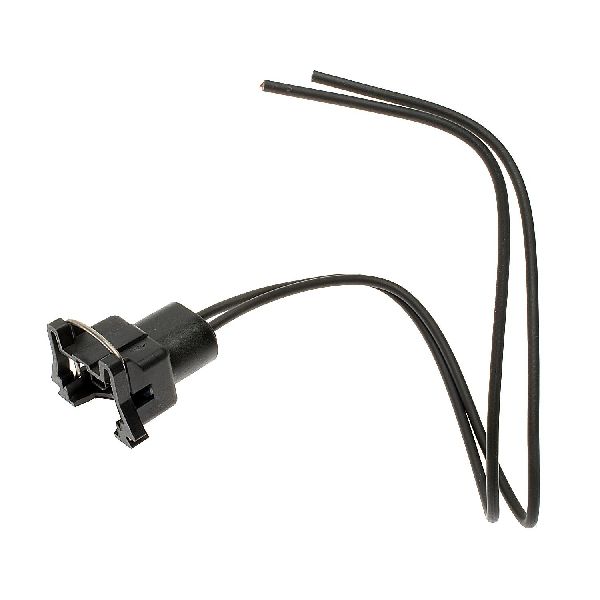
Typical fix: Repair the damaged section of the wire, which may involve soldering in a new piece of wire and using heat-shrink tubing. If the connector is damaged, a new pigtail connector (e.g., part number 1J0973722A) can be spliced in.
Est. part cost: $5-$30
Rare But Worth Checking
- Faulty Engine Control Module (ECM): → Shop Engine Control Module (ECM) This is the least likely cause. The internal driver circuit in the ECM that fires the injector can fail, but this should only be considered after thoroughly ruling out the injector and wiring harness as the cause.
Diagnosis Steps
- Read the trouble codes with an OBD-II scanner to confirm P0261 is present. Note any other codes, such as P0301.
- Perform a thorough visual inspection of the wiring harness and connector for the cylinder 1 fuel injector (it's the first cylinder on the driver's side of the engine). Look for obvious signs of damage, melting, or corrosion. Pay close attention to where the harness might rub against other components.
- Disconnect the electrical connector from the cylinder 1 injector. Use a multimeter set to Ohms (Ω) to measure the resistance across the two pins on the injector itself. A good Bosch injector should read around 12 ohms. Compare this reading to the other injectors. A reading significantly lower than the others indicates a bad injector.
- If the injector resistance is good, test the control circuit. Plug a 'noid light' into the injector's electrical connector. Start the engine; the noid light should flash rapidly and consistently, indicating the ECM is sending a signal. If it does not flash, or if it stays on constantly, there is a problem with the wiring or the ECM.
- To definitively isolate the injector, swap the cylinder 1 injector with the cylinder 2 injector. Clear the codes and drive the vehicle. If the code returns as P0264 ('Cylinder 2 Injector Circuit Low'), the fuel injector is faulty and needs to be replaced.
- If the code remains P0261 after swapping the injector, the problem lies in the wiring harness. Use a multimeter to check for continuity on the signal wire between the injector connector and the ECM connector. Also, check for a short to ground on that same wire. Check ground point GND 15 on top of the cylinder head for a clean, tight connection.
- If all wiring and the injector test good, the final, though rare, possibility is a failed injector driver in the Engine Control Module (ECM).
Parts You'll Likely Need
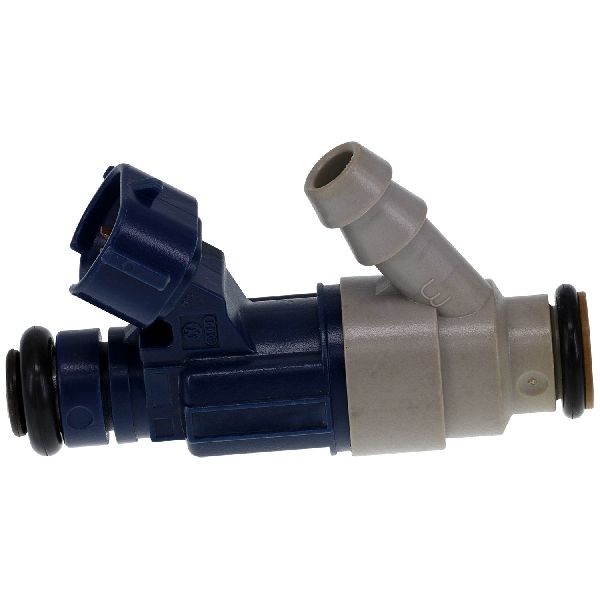
- Fuel Injector
(OEM #06A906031BA)— This is the most common cause of a P0261 code, resulting from an internal short circuit in the injector's coil.
Trusted brands: Bosch (OEM supplier)
OEM price range: $90-$120
Aftermarket price range: $50-$90
Related Codes That Often Appear With This One
- P0301 — P0301 means 'Cylinder 1 Misfire Detected'. Since P0261 indicates the cylinder 1 injector isn't working correctly, that cylinder cannot receive the proper amount of fuel to fire properly, which directly causes a misfire.
- P0264, P0267, P0270 — Seeing multiple injector circuit low codes simultaneously is rare but points away from individual injector failures. This pattern strongly suggests a problem with a common power source, such as the main fuel injector relay (often Relay 109 on this platform) or a shared ground connection.
Technical Service Bulletins (TSBs) & Recalls
- 97-18-02TT: While for a 2018 model, this VW Tech Tip for injector circuit faults (P0201-P0204) highlights that harness connection issues are a primary area of concern, advising inspection for damage, corrosion, and loose terminals. This reinforces the need to check wiring on older models as well.
Mechanic-Grade Diagnostic Values
- Fuel Injector Internal Resistance — expected: Approximately 12 Ohms. A healthy range is typically 11-16 Ohms.. Failure: A reading near zero ohms indicates a short circuit. A reading of infinity (OL) indicates an open circuit.
- Injector Connector Voltage (Key On, Engine Off) — expected: One pin should show battery voltage (~12V+). The other pin is the control wire from the ECM and should show near 0V.. Failure: No voltage on the power pin indicates a supply issue (fuse, relay). Voltage on the control wire when not cranking indicates a short to power.
- ECM Fault Trigger Condition — expected: The ECM expects to see a voltage spike after the injector fires. For this code, the ECM is seeing a low voltage state.. Failure: The P0261 code is set when the signal voltage on the injector control circuit is measured to be less than 3.00 Volts.
- Injector Circuit Voltage Drop (Engine Cranking) — expected: Less than 0.5V on the power side, less than 0.2V on the ground side.. Failure: Any voltage reading higher than the expected values indicates excessive resistance in the wiring, connections, or ground path.
Hidden / Shadow Codes Worth Checking
- 01249 / P1237: These are VW-specific fault codes for 'Fuel Injector for Cylinder 1 (N30): Short to Ground' or 'Open Circuit'. They are more descriptive than the generic P0261 and can be read by VW-specific scan tools like VCDS. (see via VAG-COM (VCDS) or other advanced European vehicle scan tools.)
Scan Tool Commands That Help
- VCDS (VAG-COM): Engine (01) -> Output Tests (03) -> Select 'Fuel Injector Cylinder 1 (N30)' — This command allows you to manually activate the cylinder 1 injector. With the engine off, you should hear a distinct 'click' from the injector each time the test is run. A lack of a click, when the wiring is known to be good, points to a failed injector.
Wiring & Ground Locations
- N30 — This is the VW designator for the Cylinder 1 fuel injector itself.. This is the component the code is referencing. It is the first injector on the driver's side of the engine.
- GND 15 (1.8L) — On top of the cylinder head, near the ignition coils.. This is a primary engine ground point. A loose or corroded connection here can cause all sorts of erratic electrical issues, including low voltage faults like P0261.
- Injector Connector (Cyl 1) — The electrical plug on the cylinder 1 fuel injector.. The power wire is typically powered by the fuel pump relay. The control wire (trigger) for cylinder 1 is often a purple wire that runs back to the ECM. A short to ground on this trigger wire is a common cause for P0261.
- ECM (ECU) — Located in the plenum chamber, at the base of the windshield under the plastic trim panel.. This is the source of the injector control signal. All wiring tests will ultimately lead back to the ECM connector.
Real Owner Repair Stories
- Ross-Tech Forums (2002 Audi A4 1.8T (AMB engine)) — Flashing MIL (Check Engine Light), vehicle had to be towed.
✅ What actually fixed it The user scanned with VCDS and found code 17648/P1240 for cylinder 4 injector open circuit. An ohmmeter test confirmed the injector was electrically open. Replacing the single faulty fuel injector and all O-rings resolved the issue. - Ross-Tech Forums (2001 Jetta 1.8T) — Crank no-start, rough idle, multiple injector open circuit codes (P1237, P1238, P1239, P1240).
❌ Tried (didn't work) Initial diagnosis pointed to a major wiring or ECM issue due to all four injectors coding at once.
✅ What actually fixed it The user realized they had caused the codes themselves by pulling the fuel injector fuse (Fuse 32) to perform a compression test. After reinstalling the fuse and clearing the codes, the injector faults did not return, revealing a different underlying issue. This serves as a caution against misinterpreting self-induced codes.
OEM Part Supersession History
06A906031BA→N/A— This remains the primary OEM part number for this application.
Heads up: The OEM supplier is Bosch, with their equivalent part number being 0280156061. These are directly interchangeable. Be aware that other 1.8T engines used different injectors, so verifying the part number for your specific engine code (e.g., AWP, AWW) is crucial.
Diagnostic Flowchart
Other Known Issues on This Vehicle
Issues unrelated to this code that are worth knowing about as an owner of this generation:
- 1.8T Engine Oil Sludge 🔴 High — Common on engines with infrequent oil changes or use of non-synthetic oil. The small oil capacity (3.7 quarts) exacerbates the issue. Can lead to clogged oil pickup tubes and catastrophic engine failure. (Ref: VW issued an extended warranty in 2004 for sludge-related failures, but it has long since expired.)
- Failing Window Regulators 🟠 Medium — Extremely common. The plastic clips that hold the window glass to the regulator cable break, causing the window to fall into the door, often accompanied by a popping or crunching sound. (Ref: Multiple TSBs exist, such as 2064585, which address cleaning and lubricating the guides, but the primary failure is part breakage requiring replacement.)
- Timing Belt and Tensioner Failure 🔴 High — The 1.8T is an interference engine, meaning a failed timing belt will cause catastrophic engine damage. The recommended replacement interval was revised down to 75,000 miles, but many owners suggest 60,000 miles to be safe.
- Instrument Cluster Failure 🟠 Medium — Common for gauges (speedometer, tachometer, fuel) to become erratic, stick, or fail completely. The central display pixels can also fail. This is often due to failing stepper motors or bad solder joints on the cluster's circuit board.
- Brittle Plastic and Rubber Components 🟠 Medium — Very common as the vehicles age. Vacuum lines, PCV system components, and coolant flanges become brittle from engine heat and crack, leading to vacuum leaks, coolant leaks, and various running issues.
Used vs. New Parts: Buying Guide for This Vehicle
When a used part is the smart pick: A used fuel injector from a reputable salvage yard is a reasonable choice for this repair, especially for a budget-conscious owner. Since it's an external electronic component, failure is often immediate rather than a slow degradation, so a working used part can be reliable.
Donor-vehicle mileage cap: roughly under 120000 miles for the part to have meaningful remaining life.
What to inspect on the donor part:
- Ask the seller to test the resistance with a multimeter; it should be around 12 ohms.
- Visually inspect the plastic connector for cracks or damage.
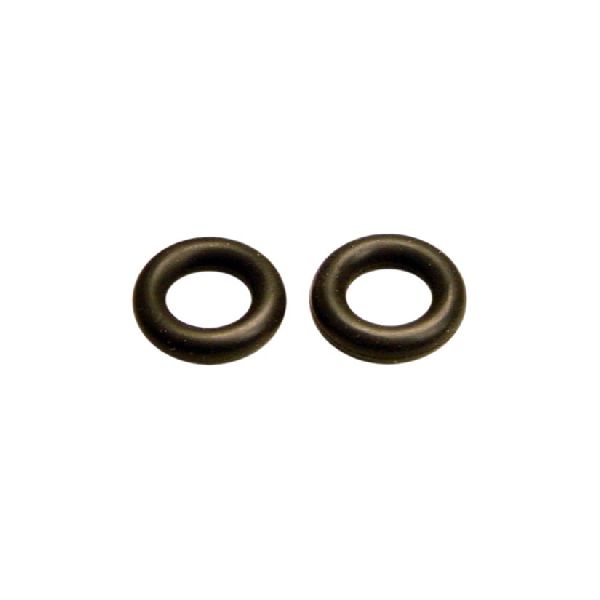
- Ensure the nozzle (pintle) end is free of debris and the O-rings are present (though they should always be replaced with new ones).
- Avoid injectors with significant rust or corrosion on the metal body.
OEM-only on this vehicle (don't cheap out):
- Engine Control Module (ECM) - If the ECM injector driver is diagnosed as faulty, a used, new, or remanufactured OEM unit is the only reliable option. Aftermarket ECMs are not recommended.
Aftermarket brands forum-validated for this vehicle:
- Bosch (This is the Original Equipment Manufacturer and the best choice).
Brands owners have reported issues with on this vehicle:
- Unbranded, generic 'no-name' injectors from online marketplaces. These often have inconsistent flow rates and poor quality control, which can lead to persistent performance issues, poor fuel economy, or new trouble codes.
Real Owner Stories
Aggregated from forums and TSBs cited above. Mileages and costs reflect what owners reported in those sources.
2002 Volkswagen GTI 1.8T
Symptoms: Check Engine Light with code P0261, likely accompanied by rough idle or misfiring.
What fixed it: The owner found the injector's signal wire had rubbed through its brittle insulation on the valve cover, causing it to ground out. The repair involved splicing in a small piece of new wire and sealing it with heat shrink tubing.
Source hint: VWVortex & NewBeetle.org: Numerous threads discuss P0261 on 1.8T engines.
Related OBD-II Codes
Frequently Asked Questions
My 2002 Beetle has a P0261 code. Is it more likely to be the fuel injector or the wiring?
How can I definitively test the fuel injector on my 1.8T engine at home?
I have a P0261 and also a P0301 misfire code. Are these related?
The plastic connector for my fuel injector is broken. Is there a replacement part number?
Should I replace all four fuel injectors if only one is bad?
My friend's 2004 Jetta 1.8T has this same P0261 code. Is the diagnosis the same as for my Beetle?
We Have This Part in Stock


The information in this article is provided for general reference and educational purposes only. Vehicle specifications, procedures, and part compatibility can vary by production date, trim level, and region. Always consult your vehicle's factory service manual and verify part numbers before purchasing or performing repairs. Safety-critical components such as airbags, seat belts, and braking systems should be installed by a qualified professional.
- Volkswagen Beetle:
- 🧭 Diagnostic Flowchart
- 🛍️ Shop This Part
- What's Unique About the 2002-2002 Volkswagen Beetle
- Symptoms You May Notice
- Most Likely Causes
- Rare But Worth Checking
- Diagnosis Steps
- Parts You'll Likely Need
- Related Codes That Often Appear With This One
- Technical Service Bulletins (TSBs) & Recalls
- Mechanic-Grade Diagnostic Values
- Hidden / Shadow Codes Worth Checking
- Scan Tool Commands That Help
- Wiring & Ground Locations
- Real Owner Repair Stories
- OEM Part Supersession History
- Other Known Issues on This Vehicle
- Used vs. New Parts: Buying Guide for This Vehicle
- Real Owner Stories
- 2002 Volkswagen GTI 1.8T
- Related OBD-II Codes
- Frequently Asked Questions
- 🎟️ Get 5% Off