

P0266 on 2009-2014 Volkswagen Jetta 2.0L TDI: Cylinder 2 Balance Fault Causes and Fixes
This code almost always means Cylinder 2 isn't contributing enough power. Before you buy any parts, contact a VW dealer with your VIN to see if your Jetta needs a free software update (TSB 01-14-14 / 2035464 or recall 23O6), as this is the most common fix for false positives. If the software is current, the #2 fuel injector (Bosch/VW P/N: 03L130277A, superseded by 03L130277S) is the likely culprit, costing $300-$500 for the part.
- Before any repairs, call a VW dealer with your VIN to check for a free software update under TSB 01-14-14 or recall 23O6.
- If the software is current, the code likely indicates a failing fuel injector in cylinder #2.
- Symptoms include a rough idle, power loss, and a drop in fuel efficiency.
- Replacing a TDI injector is a complex DIY job requiring special tools and software for coding the new part to the engine.
- Do not replace other parts like fuel filters or pumps to fix this code; it is specific to the performance of cylinder #2.
What's Unique About the 2009-2014 Volkswagen Jetta
For the 2.0L TDI engines (CBEA, CJAA) in this specific Jetta, Golf, and Beetle range, the P0266 code is frequently a "phantom" problem. Volkswagen acknowledged that the original ECM software was too sensitive and could incorrectly flag a healthy injector, setting this code. VW released a technical service bulletin (TSB 2035464, superseding earlier versions) and an emissions service action (23O6) with a software update specifically to fix this false-positive issue. Therefore, the first step is always a software check, not immediate part replacement.
Generation note: This guide covers the Volkswagen Jetta A5 (2009-2010) and A6 (2011-2014) generations. The fix is consistent across both generations as they share the affected 2.0L TDI (CBEA, CJAA) engines and are both covered by the same service bulletins.
Symptoms You May Notice
- Check Engine Light (Malfunction Indicator Lamp) is on
- Rough or vibrating idle
- Noticeable loss of power and sluggish acceleration
- Engine hesitation or stumbling
- Reduced fuel economy
- Black smoke from the exhaust under acceleration
- Engine misfire condition
- Replacing the fuel injector before checking for the required software update. This is the most common and costly mistake made for this specific code on this vehicle.
- Replacing the wrong injector. Cylinder numbering on VW transverse engines can be confusing. Cylinder #1 is on the passenger side (timing belt side), and Cylinder #2 is next to it.
Most Likely Causes
- Outdated Engine Control Module (ECM) Software 🔴 High Probability VW officially documented that the original diagnostic strategy for fuel injector calibration was overly sensitive, leading to false contribution/balance faults. This was a widespread issue affecting multiple cylinders, not just #2.
How to confirm: Contact a Volkswagen dealership or a qualified independent shop with the vehicle's VIN. They can check if TSB 2035464 (which supersedes 01-14-14 and 01-14-19) or Emissions Service Action 23O6 is open for your vehicle.
Typical fix: The ECM software is updated (reflashed) to the latest version. This is a free update if covered by the campaign.
Est. part cost: $0 - Faulty or Clogged Cylinder 2 Fuel Injector 🟡 Medium Probability → Shop Fuel Injector High-pressure common rail diesel injectors operate under extreme stress and can wear out or become clogged over time, affecting their spray pattern and fuel delivery. Internal piezoelectric stack failure is also a possibility.
How to confirm: After confirming the ECM software is up-to-date, a mechanic can use a diagnostic tool like VCDS to monitor injector deviation values (Measuring Value Block 13). A value for cylinder 2 that is consistently above +1.5 mg/stroke or below -1.5 mg/stroke while the others are near zero indicates a faulty injector. A physical inspection for leaks or a bench test can provide final confirmation.
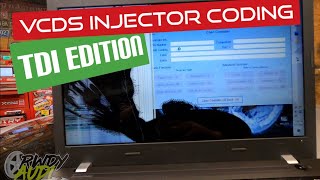
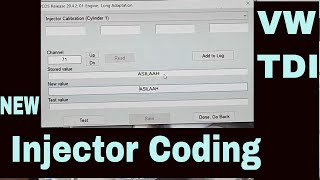
Typical fix: Replace the cylinder 2 fuel injector and its associated seals and hold-down bolt. The new injector's multi-digit IMA code must be programmed into the ECM 🎬 Watch: How to program and code your new injectors after installation. for proper calibration.
Est. part cost: $300-$500
Rare But Worth Checking
- Fuel Injector Wiring Harness Issue: → Shop Engine Wiring Harness The wiring or connector for the cylinder 2 injector can become damaged, corroded, or suffer from fretting (micro-vibrations causing poor contact), leading to an intermittent electrical connection that mimics a failing injector. It's much cheaper to fix than replacing the injector itself.
- Low Engine Compression in Cylinder 2: If the cylinder can't create proper compression due to worn piston rings, valve issues, or a head gasket leak, it won't produce power, triggering the balance fault. This is a serious mechanical issue and is less common than fuel system problems.
- High-Pressure Fuel Pump (HPFP) Failure Debris: A failing HPFP can send metal shavings throughout the entire fuel system, clogging injectors. This is a catastrophic and expensive failure. While P0266 alone doesn't point to this, if it's accompanied by a P0087 (Rail Pressure Too Low) code and a no-start or severe stalling condition, the HPFP is a strong suspect.
Diagnosis Steps
- Check for Software Updates (MANDATORY FIRST STEP): Contact a VW dealer with your VIN. Ask if TSB 2035464 or Emissions Service Action 23O6 are open for your vehicle. If so, have the free software update performed before any other diagnosis.
- Scan for All Codes: Use an OBD-II scanner to confirm P0266 and check for any other related codes, such as misfire (P0302) or other injector balance faults (P0263, P0269, P0272).
- Analyze Injector Balance with a Diagnostic Tool: If the software is up-to-date, use a tool like VCDS to view 'Injector Quantity Deviation' in Engine Measuring Value Block 13 at idle. Compare the value for cylinder 2 to the others. A value consistently outside the +/- 1.5 mg/stroke range strongly suggests a problem with that injector or cylinder.
- Inspect the Wiring: Visually inspect the wiring harness and connector going to the cylinder 2 fuel injector. Unplug it and check for corrosion or damage on the pins. Ensure a snug fit when reconnected.
- Perform an Injector 'Swap' Test: For advanced DIYers, if injector #2 has a high deviation value, you can swap it with a known good injector (e.g., from cylinder #3). Clear codes and re-check MVB 13. If the high deviation value 'follows' the injector to cylinder #3, the injector is confirmed bad. If the high deviation stays on cylinder #2, the problem is mechanical or electrical to that cylinder.
- Check Engine Mechanical Health: If the injector and wiring seem okay, a compression test should be performed on all cylinders to rule out a mechanical engine problem in cylinder 2.
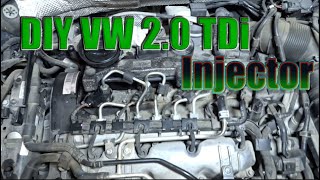
- Isolate the Injector: If compression is good and the fault points to the injector, the final step is to replace the cylinder 2 fuel injector. 🎬 Watch: This step-by-step guide shows you how to replace a CJAA injector. After replacement, the new injector's calibration code (IMA code) must be programmed into the ECM using a tool like VCDS.
Parts You'll Likely Need
- Diesel Fuel Injector
(OEM #03L130277A / 03L130277S (reman))— If the ECM software update does not fix the code, the injector itself is the most likely hardware failure.
Trusted brands: Bosch (OEM)
OEM price range: $350-$450
Aftermarket price range: $250-$350 (Bosch Remanufactured) - Fuel Injector Seal Kit
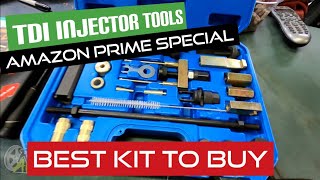
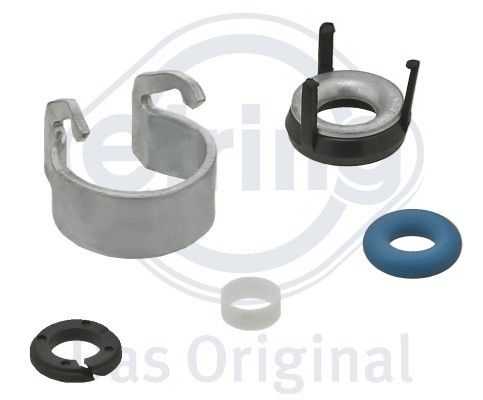
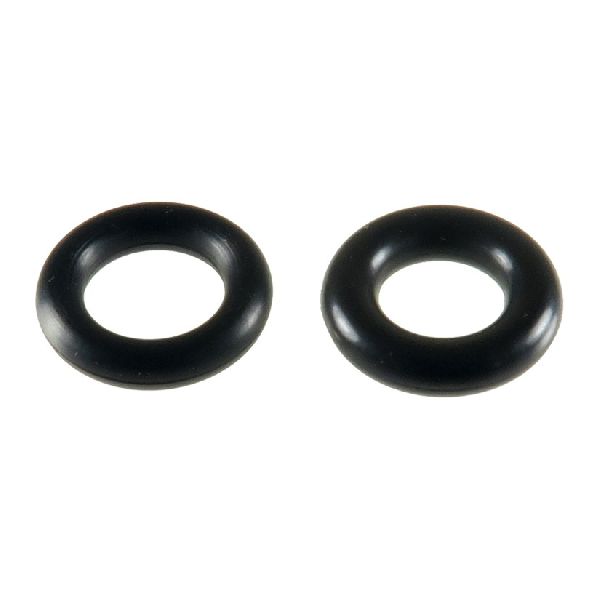
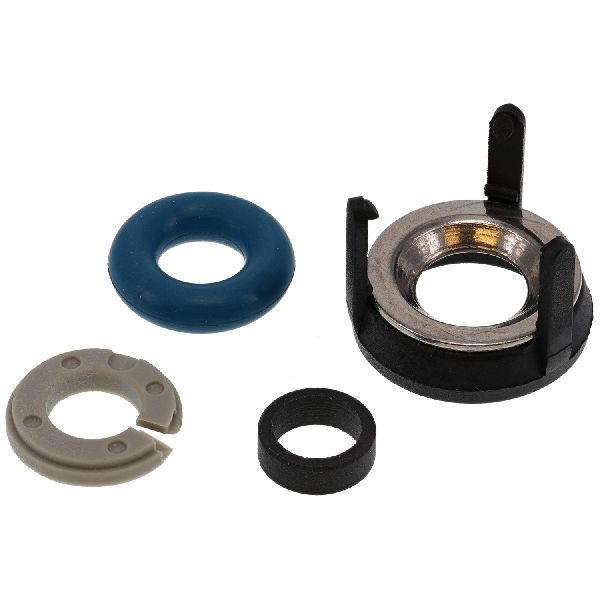
(OEM #03L130519)— New seals are required whenever a fuel injector is removed and reinstalled to prevent compression and fuel leaks. 🎬 See how to properly install injectors and which tool kits work best. The kit typically includes a copper washer and O-rings.
Trusted brands: Bosch, Elring, Victor Reinz
OEM price range: $20-$40
Aftermarket price range: $10-$25 - Fuel Injector Hold Down Bolt
(OEM #WHT003187)— This is a single-use, torque-to-yield (stretch) bolt and MUST be replaced any time an injector is removed to ensure proper clamping force.
Trusted brands: Genuine VW/Audi
OEM price range: $5-$10
Related Codes That Often Appear With This One
- P0302 — A P0302 (Cylinder 2 Misfire Detected) can occur if the contribution from cylinder 2 is low enough to be considered a complete misfire.
- P0263, P0269, P0272 — These are the contribution/balance fault codes for cylinders 1, 3, and 4. The overly sensitive software issue often caused multiple injector balance codes to appear at the same time, as documented in TSB 2035464.
- P0087 — This code for 'Fuel Rail/System Pressure - Too Low' can indicate a failing High-Pressure Fuel Pump (HPFP), which can be a root cause of injector failure due to fuel starvation or contamination.
Technical Service Bulletins (TSBs) & Recalls
- VW TSB 2035464 (Supersedes 01-14-14, 01-14-19, V011419): MIL ON, Cylinder Contribution/Balance Faults Stored in ECM Fault Memory (P0263, P0266, P0269, P0272).
- VW Emissions Service Action / Recall 23O6: ECM Software update to assure tailpipe emissions are optimized and to reduce the chance of the MIL illuminating.
Platform-Specific Known Issues
- The primary vehicle-specific issue is the ECM software's over-sensitivity to minor injector deviations, which was addressed by Volkswagen via TSB 2035464 and recall campaign 23O6. Owners should always verify this has been performed before considering expensive hardware replacement.
- Forum users on TDIClub frequently report that even after the software update, injectors can fail. A common repair story involves identifying the faulty injector using VCDS, replacing it with a Bosch remanufactured unit (03L130277S), coding the new injector, and resolving the issue.
Mechanic-Grade Diagnostic Values
- Injector Quantity Deviation at idle (VCDS) — expected: Close to 0.0 mg/stroke for all cylinders.. Failure: A cylinder consistently reading above +1.5 mg/stroke or below -1.5 mg/stroke suggests a fueling issue. Values approaching +/- 2.99 mg/stroke indicate a severe problem.
- Fuel Rail Pressure at idle (VCDS) — expected: Approximately 250 bar.. Failure: Significantly lower pressure (e.g., 80 bar while cranking) can indicate a weak High-Pressure Fuel Pump (HPFP) or major leak, which can starve the injectors.
- Injector Solenoid Resistance — expected: Approximately 180-200 kOhms for the piezo stack. A reading of around 120 ohms may indicate a failure in a different type of injector but serves as a reference point for electrical testing.. Failure: An open circuit (infinite resistance) or a short (near zero resistance) indicates a failed injector solenoid.
- Injector Hold-Down Bolt Torque — expected: This is a torque-to-yield bolt. The procedure is to tighten to 8 Nm (approx. 6 ft-lbs) PLUS an additional 270-degree (3/4) turn.. Failure: Incorrect torque can lead to combustion leaks (too loose) or bolt failure (too tight). The bolt must be replaced whenever it is removed.
Scan Tool Commands That Help
- VCDS (VAG-COM): Injector Quantity Adjustment (IMA) Coding — This is mandatory after replacing a fuel injector. The multi-digit calibration code printed on the new injector must be entered into the ECM to ensure the computer knows its precise flow characteristics for accurate fueling.
- VCDS (VAG-COM): Adapting Injector Minimum Deviation Quantity — This is a basic setting/adaptation function that can sometimes be run after an injector replacement to help the ECM fine-tune the idle stability. It's a longer procedure that runs the engine under various conditions.
- VCDS or ODIS: Fuel System Venting / Bleeding — After replacing an injector or opening the high-pressure fuel lines, air is introduced into the system. This guided function runs the in-tank and high-pressure pumps to purge air, preventing a no-start condition and protecting the HPFP from running dry.
Wiring & Ground Locations
- Injector Connector (N31 for Cyl. 2) — On top of the fuel injector, under the plastic engine cover. It's a two-pin connector.. Corrosion, spread pins, or wire damage at this connector can cause an intermittent electrical signal to the injector, mimicking a mechanical injector fault and triggering P0266.
- Engine Block Ground Strap — Typically located on the driver's side of the engine block, connecting the block to the chassis near the battery tray or frame rail.. A corroded or loose main engine ground can cause a host of bizarre electrical issues, including erratic sensor readings and improper operation of actuators like fuel injectors. While not a direct cause, it should be checked if multiple electrical faults are present.
Real Owner Repair Stories
- TDIClub Forum User (2010 VW Jetta TDI (CJAA)) — Rough idle, hesitation, and P0266 code.
❌ Tried (didn't work) Initial diagnosis pointed to the injector, but the first step was verifying the software was up to date.
✅ What actually fixed it The software was already current. Using VCDS, the owner observed the injector deviation for cylinder #2 was at +2.99 mg/stroke (the maximum readable value). They replaced the #2 fuel injector, the hold-down bolt, and the seal kit. After coding the new injector's IMA value with VCDS, the deviation returned to near zero and the P0266 code was resolved. - Ross-Tech Forum User (2010 VW Golf TDI (CJAA)) — Car would not start, multiple fault codes present after a suspected HPFP failure.
❌ Tried (didn't work) Replaced HPFP, but car still wouldn't start and rail pressure was low (80 bar)., Tested injectors at a Bosch service center, which reported all 4 were bad.
✅ What actually fixed it The user suspected an electrical issue preventing the injectors from firing. Using a noid light on the injector connector showed no signal during cranking. The ultimate problem was not posted in a final resolution, but the diagnostic path correctly shifted from a mechanical injector issue to an electrical control problem (ECM or wiring), which is a critical distinction for a technician to make.
OEM Part Supersession History
03L130277A→03L130277S (Bosch Remanufactured), 03L130855AX (VW Remanufactured)— Standard part lifecycle. The 'S' or 'X' suffix typically denotes a remanufactured unit from the original equipment manufacturer (Bosch/VW).
Heads up: There are no known incompatibilities between these versions as long as they are for the CBEA/CJAA engine. Always ensure the correct IMA code from the new injector is programmed into the ECM.
Model Year Variations Within This Range
- 2009-2014: The CBEA (found in earlier models like 2009-2010 Jetta) and CJAA (found in later models) engines are very similar. The primary difference relevant to this repair is that the CBEA has a balance shaft module driven by a hex key in the oil pan, while the CJAA does not. This has no direct impact on the P0266 fault or injector replacement procedure itself, but is a key identifier for the engine type.
Diagnostic Flowchart
Other Known Issues on This Vehicle
Issues unrelated to this code that are worth knowing about as an owner of this generation:
- High-Pressure Fuel Pump (HPFP) Failure 🔴 High — Common on pre-2012 models. Failure can occur without warning, often between 60k-120k miles. Misfueling with gasoline drastically increases failure risk. (Ref: VW TSB V011011 / 2023624 addresses symptoms but no recall was issued for the pump itself.)
- Diesel Particulate Filter (DPF) Clogging 🟠 Medium — Frequent, especially for vehicles used primarily for short trips which prevents passive regeneration. Warning lights often appear after 50k miles. (Ref: VW TSB 01-14-11 / 2034898 addresses P0401 with DPF replacement if soot is found.)
- Intercooler Icing (Winter Months) 🟠 Medium — Occurs in cold, humid climates. Condensation freezes in the intercooler, and upon thawing, can be ingested by the engine causing hydrolock or sudden limp mode. Most common on 2009-2011 models. (Ref: VW issued a TSB and a cold weather intercooler adapter kit (Part No. 1K0145832B) to mitigate the issue.)
- Intake Manifold Flap Motor Failure 🟡 Low — Common failure around 80k-150k miles. The plastic actuator arm on the intake manifold runner control motor breaks, setting a P2015 fault code and causing a loss of power.
- Timing Belt Failure due to Accessory Pulley Failure 🔴 High — The timing belt itself is robust, but failure of an accessory pulley (alternator, A/C compressor) can send debris into the timing belt path, causing it to jump time or snap, leading to catastrophic engine damage. Regular inspection of accessory components is key.
Used vs. New Parts: Buying Guide for This Vehicle
When a used part is the smart pick: Buying a used injector is a significant gamble and generally not recommended unless on a very tight budget and the part's history is known. These injectors are high-precision components sensitive to contamination from a failing HPFP or improper storage. A used part may have come from a vehicle with a contaminated fuel system.
Donor-vehicle mileage cap: roughly under 80000 miles for the part to have meaningful remaining life.
What to inspect on the donor part:
- Ensure the copper crush washer is still on the tip; if it's missing, it could be in the donor engine's cylinder.
- Inspect the nozzle for any signs of physical damage or heavy carbon buildup.
- The electrical connector should be clean and free of corrosion or damage.
- Ask the seller if the donor vehicle had any known HPFP issues. If so, avoid the part.
OEM-only on this vehicle (don't cheap out):
- Fuel Injector Hold Down Bolt (WHT003187) - This is a torque-to-yield bolt and MUST be new for every installation.
Aftermarket brands forum-validated for this vehicle:
- Bosch Remanufactured (P/N: 03L130277S or 0986435367) - This is the OEM supplier, and their remanufacturing process replaces all critical wear components and is tested to OE specs. This is the most trusted and reliable option besides a brand new OEM part.
Brands owners have reported issues with on this vehicle:
- Unnamed/white-box eBay or Amazon rebuilders - Many non-authorized rebuilders reuse critical components, don't have proper test equipment, and use inferior quality Chinese parts. Bosch has stated that over 50-70% of non-authorized remanufactured injectors they tested failed to meet specifications out of the box.
Real Owner Stories
Aggregated from forums and TSBs cited above. Mileages and costs reflect what owners reported in those sources.
2010 Volkswagen Jetta 2.0L TDI
Symptoms: Owner experienced a P0266 code. Diagnostic scan with VCDS showed injector #2 had a deviation of +2.99 mg/str.
What fixed it: After confirming the ECM software was already updated, the owner replaced the cylinder 2 fuel injector and seals, then coded the new injector to the ECM. This resolved the fault code.
Source hint: TDIClub Forum - Thread: 'P0266 Cylinder 2 Contribution/Balance'
2009-2014 Volkswagen Jetta 2.0L TDI
Symptoms: Check Engine Light with code P0266 remained even after the dealership performed the ECM software update per the TSB.
What fixed it: The faulty injector was identified using VCDS. The issue was resolved by replacing the injector with a Bosch remanufactured unit (part number 03L130277S) and coding the new injector's IMA value to the ECM.
Source hint: vehicle_specific_issues section citing TDIClub forum reports
Related OBD-II Codes
Frequently Asked Questions
My mechanic wants to replace the fuel injector for code P0266 on my Jetta TDI. What should I do first?
Is there a recall for the P0266 code on my 2009-2014 Jetta TDI?
How can I test the fuel injectors on my TDI myself?
I'm replacing the cylinder 2 injector. Is there a special procedure I need to follow?
Does the P0266 injector issue affect other VW or Audi models?
Could my P0266 code be caused by the common High-Pressure Fuel Pump (HPFP) failure?
Helpful Videos
We Have This Part in Stock


The information in this article is provided for general reference and educational purposes only. Vehicle specifications, procedures, and part compatibility can vary by production date, trim level, and region. Always consult your vehicle's factory service manual and verify part numbers before purchasing or performing repairs. Safety-critical components such as airbags, seat belts, and braking systems should be installed by a qualified professional.
- Volkswagen Jetta:
- 🧭 Diagnostic Flowchart
- 🎬 Helpful Videos
- 🛍️ Shop This Part
- What's Unique About the 2009-2014 Volkswagen Jetta
- Symptoms You May Notice
- Most Likely Causes
- Rare But Worth Checking
- Diagnosis Steps
- Parts You'll Likely Need
- Related Codes That Often Appear With This One
- Technical Service Bulletins (TSBs) & Recalls
- Platform-Specific Known Issues
- Mechanic-Grade Diagnostic Values
- Scan Tool Commands That Help
- Wiring & Ground Locations
- Real Owner Repair Stories
- OEM Part Supersession History
- Model Year Variations Within This Range
- Other Known Issues on This Vehicle
- Used vs. New Parts: Buying Guide for This Vehicle
- Real Owner Stories
- 2010 Volkswagen Jetta 2.0L TDI
- 2009-2014 Volkswagen Jetta 2.0L TDI
- Related OBD-II Codes
- Frequently Asked Questions
- 🎟️ Get 5% Off