

P0301 on 2017-2019 Toyota Highlander Hybrid: Cylinder 1 Misfire Causes and Fixes
P0301 on a 2017-2019 Highlander Hybrid indicates a misfire in cylinder 1. A common cause is a faulty ignition coil, often addressed by a Toyota TSB (T-SB-0148-19) that involves an ECM reprogram and possible coil replacement. Before replacing parts, check if this TSB applies. Other causes include worn spark plugs or, more rarely, fuel injectors or low compression. Expect to pay $150-$300 for a single coil and plug replacement at a shop.
- Before buying any parts, check if TSB T-SB-0148-19 applies to your vehicle's VIN and has been performed. It could be a free or warranty-covered ECM fix.
- Cylinder 1 is in the rear bank against the firewall, making access for DIY diagnosis and repair significantly more difficult than the front cylinders.
- If basic ignition parts (coil, plug) don't solve the P0301, more serious mechanical issues like low compression or a faulty fuel injector should be investigated.
What's Unique About the 2017-2019 Toyota Highlander Hybrid
For this specific Highlander Hybrid model and year range, Toyota issued a Technical Service Bulletin (T-SB-0148-19) to address P0301 and other misfire codes. The bulletin points towards a software issue in the Engine Control Module (ECM) that can lead to false misfire detection. The primary fix is an ECM reprogram performed by a dealer, which may be covered under the Toyota Federal Emission Warranty (96 months or 80,000 miles). This is a crucial, platform-specific issue to be aware of before replacing parts unnecessarily. While ignition coils are a common failure point, this TSB suggests the root cause is often electronic, though a coil replacement may still be required as part of the TSB procedure. Manufacturer service bulletin T-SB-0148-19 explicitly notes that some vehicles may exhibit a MIL ON condition with DTC P0301 (Cylinder 1 Misfire Detected) among other cylinder-specific codes.
Symptoms You May Notice
- Check Engine Light (CEL) is on or flashing
- Rough or vibrating idle
- Hesitation or stumbling during acceleration
- Reduced engine power
- Decreased fuel economy
- A smell of gasoline from the exhaust
- Hard starting
- Replacing spark plugs and ignition coils without first checking for the TSB (T-SB-0148-19). The issue could be resolved with an ECM reprogram at a dealership, which is the first step recommended by Toyota for this specific issue.
Most Likely Causes
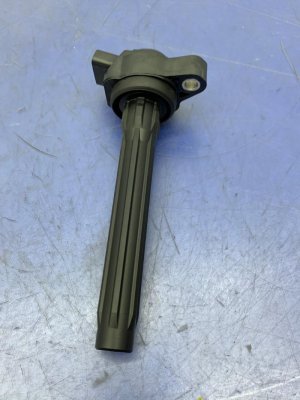
- Faulty Ignition Coil 🔴 High Probability → Shop Ignition Coil Ignition coils are a common failure item on many modern engines, including the 2GR family. Heat and vibration lead to eventual failure. A specific TSB for this vehicle (T-SB-0148-19) also points to potential coil issues in conjunction with ECM logic, making it a primary suspect.
How to confirm: Swap the ignition coil from cylinder 1 with another cylinder (e.g., cylinder 3, also in the rear bank, or cylinder 2 in the front bank). Clear the codes and drive the vehicle. If the code returns for the cylinder you moved the coil to (e.g., P0303 or P0302), the coil is bad. If the P0301 code returns, the coil is likely not the issue. Accessing the rear bank requires some disassembly. 🎬 Watch: A helpful shortcut for replacing rear ignition coils.
Typical fix: Replace the faulty ignition coil. It is often recommended to replace the corresponding spark plug at the same time. Given the difficulty of accessing the rear bank, some owners choose to replace all three rear coils and plugs at once.
Est. part cost: $50-$120 - Worn or Fouled Spark Plug 🟡 Medium Probability → Shop Spark Plug Spark plugs are a routine maintenance item. Toyota specifies a 60,000-mile replacement interval for the iridium plugs on the 2GR-FKS, a similar engine. Plugs can fail earlier or become fouled, causing a misfire.
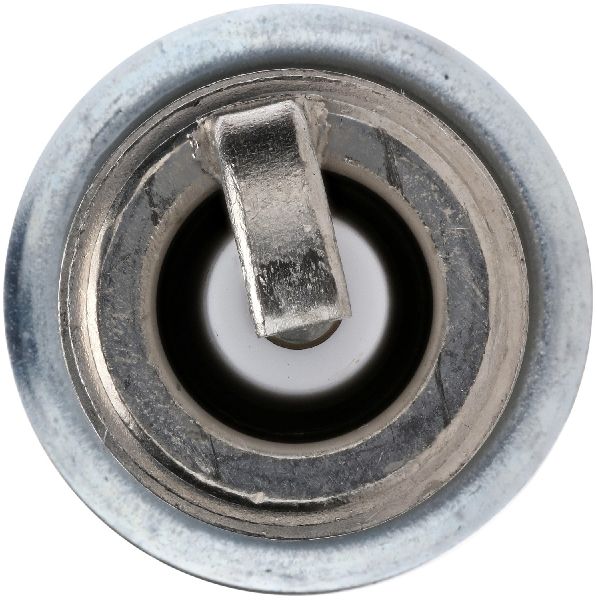
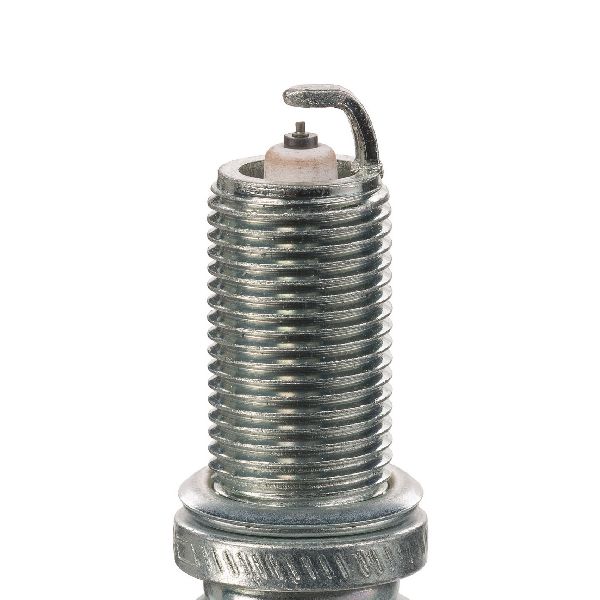
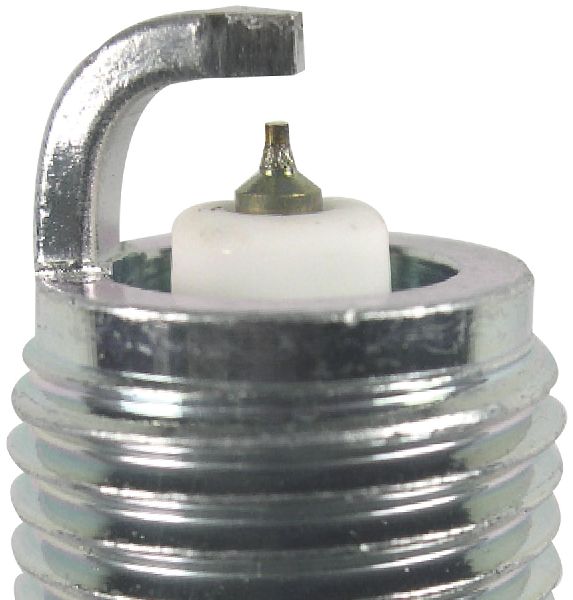
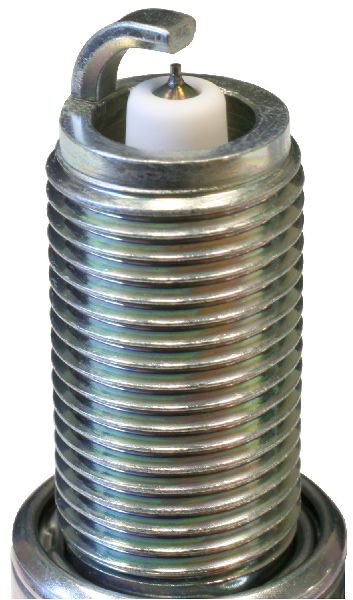
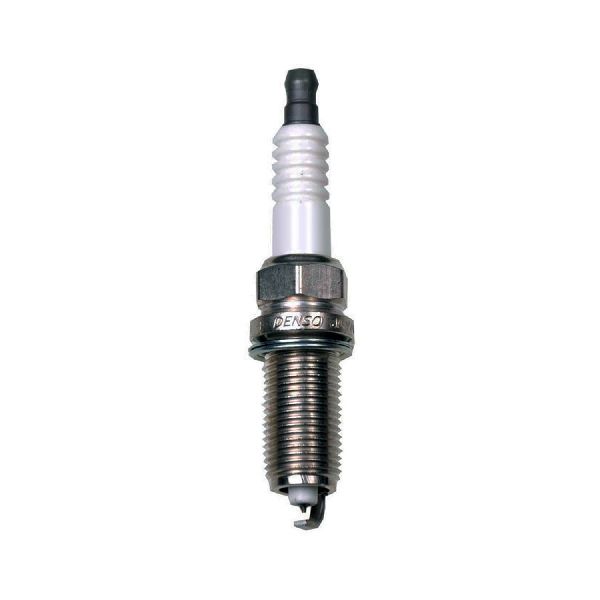
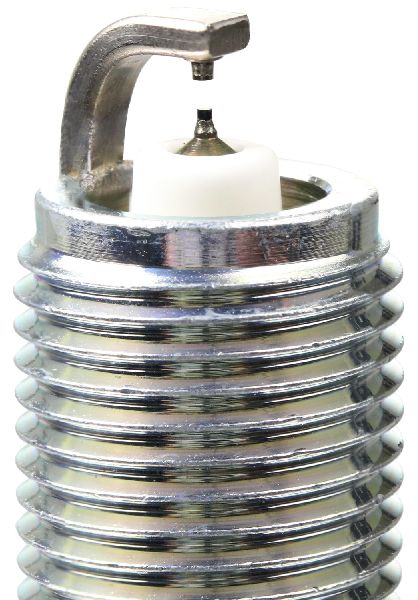
How to confirm: Remove the spark plug from cylinder 1. Inspect it for wear (worn electrode), carbon fouling, oil, or damage. The electrode should be sharp and the ceramic insulator clean. Compare it to a new plug. The gap should also be checked; for the specified Denso FK20HBR8, the gap is 0.031" (0.8mm).
Typical fix: Replace the spark plug. It is best practice to replace all six spark plugs at the same time to ensure even performance, especially if they are near their service life. 🎬 See this step-by-step spark plug replacement walkthrough.
Est. part cost: $15-$30 per plug - Clogged or Faulty Fuel Injector ⚪ Low Probability → Shop Fuel Injector The 2GR-FXS uses both port and direct injection (D-4S). While generally reliable, injectors can become clogged or fail electronically. A Reddit user with a similar Toyota V6 reported a P0303 was ultimately solved by replacing a bad fuel injector after coils and plugs failed to fix it.
How to confirm: This is more difficult for a DIYer. A professional can perform a fuel injector balance test. You can also try swapping the injector with another cylinder, similar to an ignition coil, but this is a much more involved job requiring removal of the fuel rail.
Typical fix: Replace the faulty fuel injector. Sometimes, a professional fuel system cleaning can resolve a clogged injector.
Est. part cost: $100-$250
Rare But Worth Checking
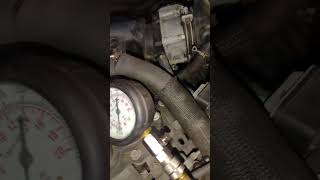
- Low Engine Compression: A YouTube video of a 2018 Highlander with a persistent P0301 showed low compression in cylinder 1 (75 PSI vs. 150 PSI in a healthy cylinder) as the root cause after ignition parts were swapped without success. 🎬 Watch: Diagnostic steps for a persistent P0301 compression issue. This is a serious mechanical issue that could indicate a problem with piston rings, valves, or the head gasket and requires engine repair.
- Vacuum Leak: A leak in a vacuum hose or intake manifold gasket near cylinder 1 can lean out the air/fuel mixture and cause a misfire. This would typically be accompanied by a hissing sound and possibly other lean codes.
- Leaking Spark Plug Tube Seals: → Shop Spark Plug If the seals for the spark plug tubes on the valve cover fail, oil can leak into the spark plug wells, fouling the plug and causing a misfire. A user on a Tacoma forum with a similar 2GR engine experienced this issue, which required replacing the valve cover gaskets and tube seals.
- Intake Manifold Issues (EGR related): → Shop Engine Intake Manifold While documented on other Toyota hybrid platforms like the Prius V, manufacturer bulletin T-SB-0116-15 Rev notes that misfire codes including P0301 can occur during light acceleration while the EGR system is active, requiring an intake manifold replacement.
- Cold Start Rough Idle: Manufacturer bulletin T-SB-0147-16 describes a condition where a rough idle or tapping noise occurs at cold start, potentially illuminating the check engine light with P0301 due to ECM logic issues.
Diagnosis Steps
- Check for Toyota Technical Service Bulletin T-SB-0148-19. Contact a Toyota dealer with your VIN to see if this TSB applies and if the ECM reprogram has been performed. This is the most critical first step and may be covered under warranty.
- If the TSB doesn't apply or has been done, proceed with standard diagnosis.
- Visually inspect the engine bay for any obvious issues like damaged wiring, vacuum hoses, or signs of rodents.
- Identify cylinder 1. On the 2GR-FXS engine, it is the cylinder closest to the passenger side on the bank against the firewall. Accessing this bank is difficult and may require removing the upper intake manifold and wiper cowl assembly.
- Swap the ignition coil from cylinder 1 with another cylinder (e.g., cylinder 2 in the front bank). Clear the codes and see if the misfire code follows the coil (e.g., changes to P0302). If it does, the coil is faulty.
- If the misfire stays on cylinder 1, inspect the spark plug for wear, fouling, or damage. Check for oil in the spark plug tube, which would indicate a leaking valve cover gasket/tube seal. Replace the plug if necessary.
- If the ignition components are good, the next steps are more advanced. This includes testing the fuel injector (which may require swapping it with another cylinder) and performing an engine compression test to check for mechanical problems like bad rings or valves.
Parts You'll Likely Need
- Ignition Coil
(OEM #90919-02280)— This is a primary cause of misfires and is specifically mentioned as a potential replacement part in the vehicle's TSB. The original part number 90919-02280 has been superseded by 90919-A2013.
Trusted brands: Denso (OEM), NGK
OEM price range: $90-$140
Aftermarket price range: $40-$80 - Spark Plug (Iridium)
(OEM #Denso FK20HBR8 (Toyota P/N: 90919-01263))— A worn or fouled spark plug is a common cause for an isolated cylinder misfire. It's a standard maintenance item that wears out over time. The OEM plug is a Denso Iridium Long Life plug.
Trusted brands: Denso (OEM), NGK
OEM price range: $20-$35
Aftermarket price range: $15-$25
Related Codes That Often Appear With This One
- P0300 — If the misfire is intermittent or occurs on multiple cylinders, a P0300 (Random/Multiple Cylinder Misfire Detected) may be stored alongside P0301.
- P0302, P0303, P0304, P0305, P0306 — If other cylinders are also misfiring, their respective codes will be present. The TSB for this vehicle specifically lists all individual cylinder misfire codes as being related to the ECM logic issue.
- P1603, P1604, P1605 — As noted in NHTSA ODI #11534554, misfire codes like P0301 can be accompanied by engine stall and stability malfunction codes.
Technical Service Bulletins (TSBs) & Recalls
- T-SB-0148-19: MIL ON with Misfire DTC(s) P0301, P0302, P0303, P0304, P0305, and/or P0306.
- T-SB-0116-15 Rev: Misfire DTCs during light acceleration while the EGR system is active; suggests intake manifold replacement.
- T-SB-0147-16: Rough idle and vibration at cold start with misfire codes; involves updating Engine Control Module logic.
Platform-Specific Known Issues
- Toyota Technical Service Bulletin T-SB-0148-19 was released for 2017-2019 Highlander Hybrids for misfire DTCs P0301-P0306. The fix involves reprogramming the ECM and, if diagnosis points to it, replacing the faulty ignition coil. This repair may be covered under the Federal Emission Warranty (96 months/80,000 miles).
Mechanic-Grade Diagnostic Values
- Ignition Coil Primary Resistance — expected: ~0.46 Ohms. Failure: A reading significantly higher or lower than the specification.
- Ignition Coil Secondary Resistance — expected: ~15.70 kOhms. Failure: A reading significantly outside the expected range, indicating an internal short or open.
- Spark Plug Gap — expected: 0.031 inches (0.8mm) for Denso FK20HBR8. Failure: An incorrect gap can lead to a weak spark. These iridium plugs should not be re-gapped as the fine tip is easily damaged.
- Low-Side Fuel Pressure (at idle) — expected: 304 to 343 kPa (44 to 49.7 psi). Failure: Pressure below this range could indicate a weak fuel pump or a leak, potentially causing a lean misfire. Pressure above could indicate a faulty regulator.
- Engine Compression (Cranking) — expected: ~150 PSI. Failure: A reading significantly lower, such as 75 PSI, indicates a serious mechanical engine problem (e.g., piston rings, valves, head gasket).
Hidden / Shadow Codes Worth Checking
- Mode $06 Misfire Counters: The ECM tracks misfire counts for each cylinder over the current and previous 10 driving cycles, even if the count isn't high enough to set a CEL. This data can reveal intermittent or developing misfires on cylinder 1 or other cylinders before a code is triggered. (see via Using a professional scan tool or Toyota's Techstream software, navigate to the Misfire Monitor data list. Look for parameters like 'Cylinder 1 Misfire Count' and 'EWMA' (Exponentially Weighted Moving Average) which shows historical misfire data.)
Scan Tool Commands That Help
- Toyota Techstream: Power Balance Test (or Check the Cylinder Compression) — This active test allows the technician to shut off fuel injectors to individual cylinders one by one while the engine is idling. When a healthy cylinder is shut off, the RPM drop should be noticeable and consistent. If shutting off cylinder 1 causes little or no change in RPM, it confirms that cylinder is not contributing power, narrowing down the problem.
- Toyota Techstream: Control the Injection Mode — For the D-4S system on the 2GR-FXS, this test allows a technician to manually switch between port and direct injection. This can help diagnose if a misfire is related to a specific injector set (e.g., if the misfire only occurs when commanded to direct injection mode, it points to an issue with the direct injector for cylinder 1).
- Toyota Techstream: Misfire Monitor — This data list provides real-time and historical misfire counts per cylinder. It is essential for diagnosing intermittent misfires that may not set a hard code immediately. A technician can watch the 'Misfire Rate' for cylinder 1 under various load conditions to confirm an active misfire.
Real Owner Repair Stories
- YouTube channel 'T&N Auto Service' (2018 Toyota Highlander 3.5L) — Check Engine Light with code P0301.
❌ Tried (didn't work) Swapped ignition coil from cylinder 1 to cylinder 4; P0301 returned., Swapped spark plug from cylinder 1 to cylinder 4; P0301 returned.
✅ What actually fixed it A compression test revealed the true cause. Cylinder 4 (a healthy cylinder) had 150 PSI of compression, while the misfiring cylinder 1 had only 75 PSI. The low compression indicated a mechanical engine failure, requiring an engine rebuild or replacement. - Reddit user in r/MechanicAdvice (2016 Toyota Highlander XLE (2GR-FKS engine), 57,000 miles) — Persistent P0301, later accompanied by P0300 and P0032 (O2 sensor heater circuit).
❌ Tried (didn't work) Replaced spark plug in cylinder 1 (initially misidentified cylinder 2)., Replaced all six spark plugs., Replaced ignition coil on cylinder 1.
✅ What actually fixed it The user eventually replaced the O2 sensor to resolve the P0032 code, which cleared all codes for a week, but the P0301 and P0300 returned. The final resolution was not posted, but the story highlights a common diagnostic path where replacing coils and plugs does not solve the issue, and other codes can complicate the diagnosis. - NHTSA ODI #11395950 — An owner reported that their vehicle misfired twice in a week, with a shop reading the code as P0301. The technician suggested the vehicle be taken to a dealer for a potential fix under the powertrain warranty.
- NHTSA ODI #11534554 — A service department diagnosed a vehicle with codes P0300, P0301, P0302, P0303, and P0306, along with engine stall codes P1603, P1604, and P1605.
When the Usual Fixes Don't Work
- While the TSB addressing an ECM software glitch is a critical first step, it is not a guaranteed fix. If the ECM has been updated and a P0301 code persists or returns, it is essential to proceed with traditional hands-on diagnosis. As seen in a documented repair, after swapping coils and plugs failed to resolve the P0301, the root cause was found to be severe low compression in the cylinder, a purely mechanical failure unrelated to the ECM logic. This underscores that while the TSB is a common issue for this platform, it should not cause a technician to overlook fundamental engine health checks.
OEM Part Supersession History
90919-02280→90919-A2013— Toyota frequently updates part numbers to reflect design improvements, manufacturing changes, or different suppliers. The new part is the current official replacement.
Heads up: There are no known incompatibilities; 90919-A2013 is the correct direct replacement for 90919-02280 on this vehicle.
Diagnostic Flowchart
Other Known Issues on This Vehicle
Issues unrelated to this code that are worth knowing about as an owner of this generation:
- Low-Pressure Fuel Pump Failure 🔴 High — Widespread enough to trigger a major safety recall (NHTSA #20V682000). Affects 2017-2019 model years. (Ref: Recall 20V682000 (Toyota numbers 20TA02 / 20TB02). The fix is a dealer replacement of the fuel pump assembly.)
- Abnormal Rear Suspension Noise 🟡 Low — Common enough for Toyota to issue a TSB. Owners report a squeak, squawk, or groan noise from the rear suspension over uneven roads or when stopping. (Ref: T-SB-0211-17)
- Knocking Noise from Fuel Tank 🟡 Low — A noticeable knocking noise from the fuel tank area may occur at idle with a full tank of gas. (Ref: T-SB-0016-18)
- Peeling/Bubbling Chrome Wheels 🟡 Low — Some vehicles with clad/chrome wheels may experience cosmetic bubbling or peeling of the wheel coating. (Ref: T-TT-0528-19)
Used vs. New Parts: Buying Guide for This Vehicle
When a used part is the smart pick: For this repair, using used parts is generally not recommended for the primary failure items. However, if a larger component like an intake manifold (if cracked) or a wiring harness connector were the cause, a used part from a low-mileage donor vehicle could be a cost-effective option.
Donor-vehicle mileage cap: roughly under 70000 miles for the part to have meaningful remaining life.
What to inspect on the donor part:
- For any electronic part, check for signs of corrosion on pins or cracks in the plastic housing.
- Verify the part number on the used component matches the OEM part number required for your vehicle.
- Ask for the VIN of the donor vehicle to check its history and confirm compatibility.
OEM-only on this vehicle (don't cheap out):
- Ignition Coils: Forum users and mechanics strongly advise against cheap, unbranded aftermarket coils, reporting high failure rates. While OEM is best, Denso-branded parts sold directly are considered equivalent to Toyota-branded parts and are a reliable choice.
- Fuel Injectors: Due to the complexity of the D-4S system, using OEM or OEM-supplier (Denso) injectors is highly recommended to ensure correct flow rates and spray patterns.
Aftermarket brands forum-validated for this vehicle:
- Denso (for ignition coils and spark plugs - this is the OEM supplier)
- NGK (for ignition coils and spark plugs)
Brands owners have reported issues with on this vehicle:
- Unbranded, low-cost ignition coil sets sold on platforms like Amazon or eBay. While tempting, they have a reputation for premature failure, which can be especially costly on this engine given the labor to access the rear bank.
Real Owner Stories
Aggregated from forums and TSBs cited above. Mileages and costs reflect what owners reported in those sources.
2017 Highlander Hybrid XLE — 125000 miles
Symptoms: Check engine light with codes P3190, P0301, and P0305.
What fixed it: The owner was investigating cleaning the fuel injectors as a potential fix for poor engine power and cylinder 1 and 5 misfires.
Source hint: r/MechanicAdvice
Toyota V6 (2GR family)
Symptoms: Misfire code P0303 that persisted after replacing spark plugs and ignition coils.
What fixed it: Replacing a bad fuel injector.
Source hint: Reddit r/mechanic - Mystery issue
Toyota Tacoma (2GR-FKS)
Symptoms: Oil found on the spark plugs during inspection.
What fixed it: Replacing the valve cover gaskets and spark plug tube seals.
Source hint: Tacoma World - 2gr fe engine oil on spark pl
Related OBD-II Codes
Frequently Asked Questions
Is there a Technical Service Bulletin for misfires on the 2017-2019 Highlander Hybrid?
Will the repair for P0301 be covered under my Toyota warranty?
Where is Cylinder 1 located on the 2GR-FXS engine?
Why is it recommended to replace all rear spark plugs and coils at once on this vehicle?
Could a fuel pump issue cause my P0301 misfire code?
What is the correct spark plug gap for the 2017-2019 Highlander Hybrid 3.5L?
Helpful Videos
Used OEM Parts in Stock
New Aftermarket Parts Available

The information in this article is provided for general reference and educational purposes only. Vehicle specifications, procedures, and part compatibility can vary by production date, trim level, and region. Always consult your vehicle's factory service manual and verify part numbers before purchasing or performing repairs. Safety-critical components such as airbags, seat belts, and braking systems should be installed by a qualified professional.
- Toyota Highlander Hybrid:
- 🧭 Diagnostic Flowchart
- 🎬 Helpful Videos
- 🛍️ Shop This Part
- What's Unique About the 2017-2019 Toyota Highlander Hybrid
- Symptoms You May Notice
- Most Likely Causes
- Rare But Worth Checking
- Diagnosis Steps
- Parts You'll Likely Need
- Related Codes That Often Appear With This One
- Technical Service Bulletins (TSBs) & Recalls
- Platform-Specific Known Issues
- Mechanic-Grade Diagnostic Values
- Hidden / Shadow Codes Worth Checking
- Scan Tool Commands That Help
- Real Owner Repair Stories
- When the Usual Fixes Don't Work
- OEM Part Supersession History
- Other Known Issues on This Vehicle
- Used vs. New Parts: Buying Guide for This Vehicle
- Real Owner Stories
- 2017 Highlander Hybrid XLE — 125000 miles
- Toyota V6 (2GR family)
- Toyota Tacoma (2GR-FKS)
- Related OBD-II Codes
- Frequently Asked Questions
- 🎟️ Get 5% Off