

P0304 on 2015-2021 Jeep Renegade: Cylinder 4 Misfire Causes and Fixes
On a 2015-2021 Jeep Renegade with the 2.4L engine, a P0304 code is frequently caused by a failing MultiAir actuator for cylinder 4, not just a bad spark plug or coil. This is a known issue, often appearing with codes P1064 or P106B. Before condemning the actuator, check for oil in the spark plug wells from a leaking valve cover gasket and ensure the correct engine oil (full synthetic 0W-20) is used, as the MultiAir system is oil-dependent.
- For the 2015-2021 Jeep Renegade 2.4L, P0304 is very often caused by a failed MultiAir actuator, not just a simple tune-up part.
- Always check for additional codes. P1064 or P106B appearing with P0304 strongly points to the MultiAir actuator as the culprit.
- Before replacing parts, check for oil in the spark plug well for cylinder 4. If oil is present, you must replace the valve cover gasket set along with the spark plug.
- Ensure the engine oil is at the proper level and is the correct specification, as the MultiAir system relies on it to function.
What's Unique About the 2015-2021 Jeep RENEGADE

The 2015-2021 Jeep Renegade primarily uses the 2.4L 'Tigershark' engine, which features Fiat's MultiAir technology. This system replaces a traditional intake camshaft with electro-hydraulic actuators to control the intake valves. While innovative, the MultiAir actuator assembly (often called the 'brick') is a very common failure point and a primary cause for misfire codes like P0304. The system's reliance on clean, correct engine oil for hydraulic actuation makes it sensitive to maintenance. This specific failure pattern is acknowledged in manufacturer Technical Service Bulletins.
Diagnostic Flowchart

Tap your situation to follow the diagnostic path that matches what you're seeing on this vehicle.
Symptoms You May Notice
- Rough running engine or rough idle.
- Check Engine Light is on or flashing.
- Hesitation or stumbling during acceleration.
- Loss of engine power.
- Difficulty starting the engine.
- Smell of unburned fuel from the exhaust.
- Audible ticking noise from the top of the engine, which can sometimes indicate a MultiAir system problem.
- Replacing only the spark plug or ignition coil when the root cause is a failed MultiAir actuator. If codes P1064 or P106B are present, the problem is almost certainly the actuator.
- Replacing only the spark plugs when the spark plug wells are full of oil. The fix will be temporary as the new plugs will quickly become fouled until the leaking valve cover gasket is replaced.
- Ignoring the engine oil level and type. On a MultiAir engine, incorrect or low oil is not just a maintenance issue; it's a direct cause of component failure.
Most Likely Causes

- Failed MultiAir Actuator (Oil Supply Solenoid) 🔴 High Probability The MultiAir system's hydraulic actuators are a known weak point on the 2.4L engine. TSBs #1805723 and #1801621, along with owner complaint #11656821, directly link P0304 to codes P1064 (Cylinder 4 Oil Supply Solenoid Valve Stuck) and P106B, confirming this specific failure. Forum users frequently report this as the ultimate fix after trying plugs and coils.
How to confirm: Scan for accompanying codes like P1064 or P106B. If these are present with P0304, the MultiAir actuator is the most likely culprit. Diagnosis requires a professional with an advanced scan tool to monitor actuator performance.
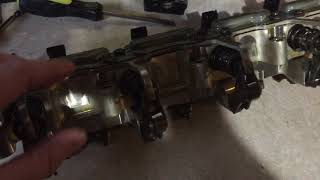
Typical fix: Replace the entire MultiAir actuator assembly, often referred to as the 'MultiAir brick'.
Est. part cost: $800 - $1200 - Fouled or Worn Spark Plugs 🟡 Medium Probability → Shop Spark Plug A very common issue on the 2.4L engine is a leaking valve cover gasket that allows oil to seep into the spark plug tubes, fouling the plugs and coils and causing misfires. This is documented across all platform mates.
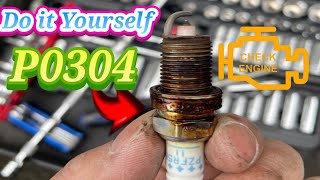
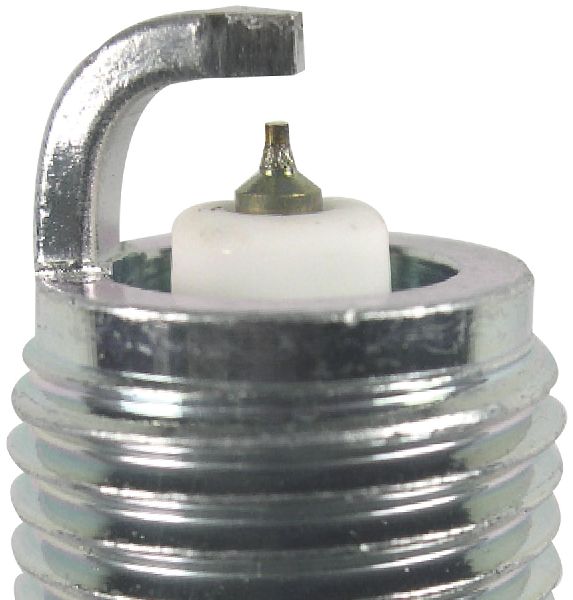
How to confirm: Remove the ignition coil from cylinder 4. If the coil boot is wet with oil, the valve cover gasket and spark plug tube seals have failed. Inspect the spark plug for wear, carbon buildup, or oil contamination. Ensure the spark plug gap is correct, typically between 1.0mm and 1.1mm (0.040"-0.043"), though Pass 2 noted 0.047 inches.
Typical fix: Replace all four spark plugs (OEM NGK Iridium plugs are recommended). If oil is present, you must also replace the valve cover gasket set 🎬 See how to remove and replace the valve cover gasket. to prevent a repeat failure.
Est. part cost: $40 - $80 for plugs, $50 - $100 for gasket set - Failed Ignition Coil or Coil Boot 🟡 Medium Probability → Shop Ignition Coil
How to confirm: Swap the ignition coil from cylinder 4 with another cylinder (e.g., cylinder 3). Clear the codes and drive the vehicle. If the code changes to P0303, the ignition coil is faulty. Inspect the coil boot for oil saturation or damage.
Typical fix: Replace the faulty ignition coil. Per TSB 08-027-20, sometimes only the ignition coil boot and spring need to be replaced, using a specific dielectric grease (Molykote G-5008) during installation.
Est. part cost: $40 - $90 for a coil, $15 - $30 for a boot kit - Low, Incorrect, or Dirty Engine Oil ⚪ Low Probability The MultiAir system is hydraulically actuated by engine oil. Low oil levels, incorrect viscosity, or dirty oil can starve the actuators, causing them to malfunction and trigger misfires. These engines are also known for excessive oil consumption, making regular oil level checks critical. Using anything other than full synthetic 0W-20 oil that meets Chrysler specification MS-6395 can lead to these issues.
How to confirm: Check the engine oil level and condition immediately. Verify that the oil meets the manufacturer's specifications (full synthetic SAE 0W-20, MS-6395). An oil change with the correct filter and oil is a crucial first step.
Typical fix: Top off or change the engine oil and filter using the correct OEM-specified products.
Est. part cost: $50 - $90 for an oil change
Rare But Worth Checking
- Clogged Fuel Injector: → Shop Fuel Injector Less common than ignition or MultiAir issues, but can cause a lean misfire on a single cylinder. Can be tested by swapping injectors between cylinders, but this is more labor-intensive.
- Low Cylinder Compression: A mechanical engine problem like a bad valve, worn piston rings, or a failed head gasket can cause a misfire. A Reddit user reported a blown head gasket as the cause for their P0304 after other fixes failed. This is a worst-case scenario and should be investigated with a compression and leak-down test after all other causes are ruled out.
Diagnosis Steps
- Check the engine oil level and condition immediately. Ensure it is full and is a full synthetic 0W-20 oil meeting Chrysler MS-6395 specs. If the oil is low, old, or incorrect, an oil change should be your first step.
- Use an OBD-II scanner to check for other codes. The presence of P1064 or P106B is a critical clue pointing directly to the MultiAir actuator.
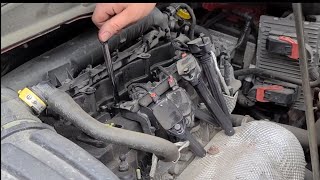
- Remove the ignition coil from cylinder 4 (second from the driver's side on the 2.4L). Inspect the spark plug well for any signs of oil. If oil is present, the valve cover gasket needs replacement.
- Inspect the spark plug from cylinder 4. Look for wear, damage, or fouling (oil or carbon). Verify the gap is correct (typically 1.0mm-1.1mm).
- If no oil is present, swap the ignition coil from cylinder 4 with another cylinder (e.g., cylinder 2). Clear the codes and see if the misfire moves to P0302. If it does, the coil is bad. If not, the coil is likely good.
- If the misfire remains on cylinder 4 after swapping the coil, and codes P1064/P106B are present, the MultiAir actuator is the confirmed cause.
- If ignition components and oil are good and no other codes are present, consider a more advanced diagnosis. This includes testing the fuel injector or performing a cylinder compression and leak-down test to check for mechanical engine issues like bad valves or a failed head gasket.
Parts You'll Likely Need
- MultiAir Actuator Assembly
(OEM #5047980AE)— This is the most common major failure causing P0304 on the 2.4L Renegade, especially when paired with P1064/P106B, as documented in TSBs.
Trusted brands: Mopar
OEM price range: $1000 - $1300
Aftermarket price range: $800 - $1100 - Spark Plug
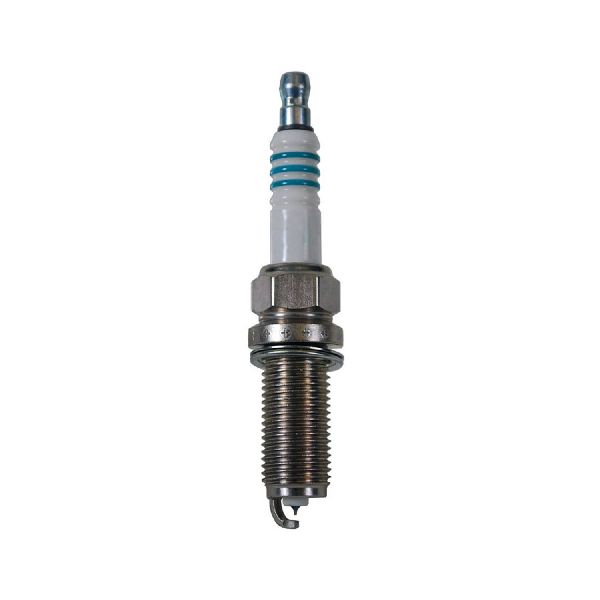
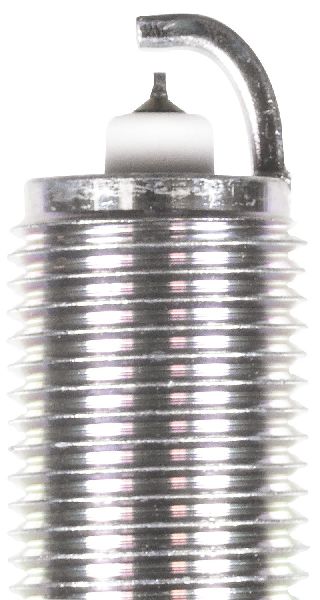
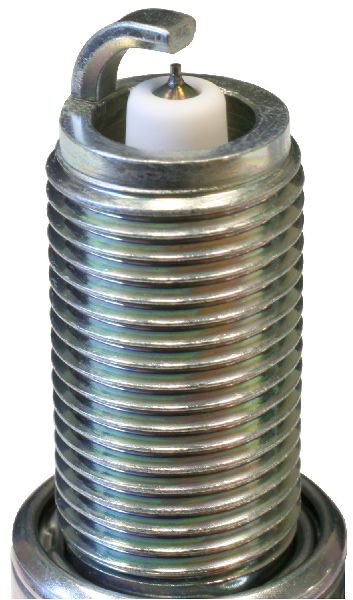
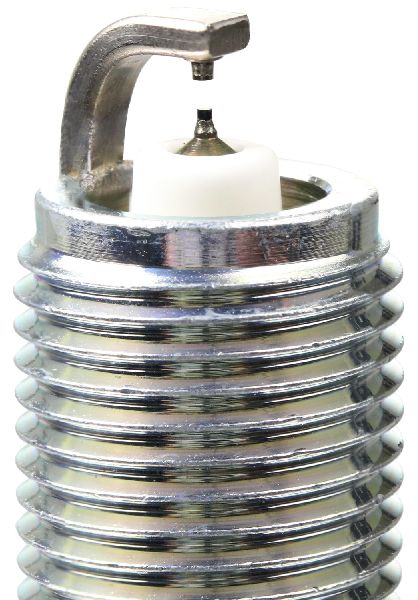
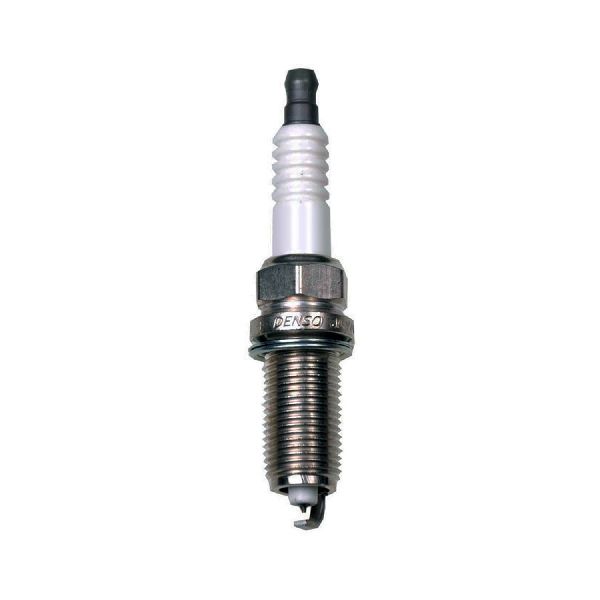
(OEM #NGK LZFR5C-11 or equivalent Iridium)— A routine maintenance item and a primary suspect for any misfire code. Must be gapped correctly (approx. 1.0-1.1mm). Often fouled by oil from a leaking valve cover gasket on this engine.
Trusted brands: NGK, Champion
OEM price range: $15 - $25 per plug
Aftermarket price range: $8 - $15 per plug - Valve Cover Gasket Set
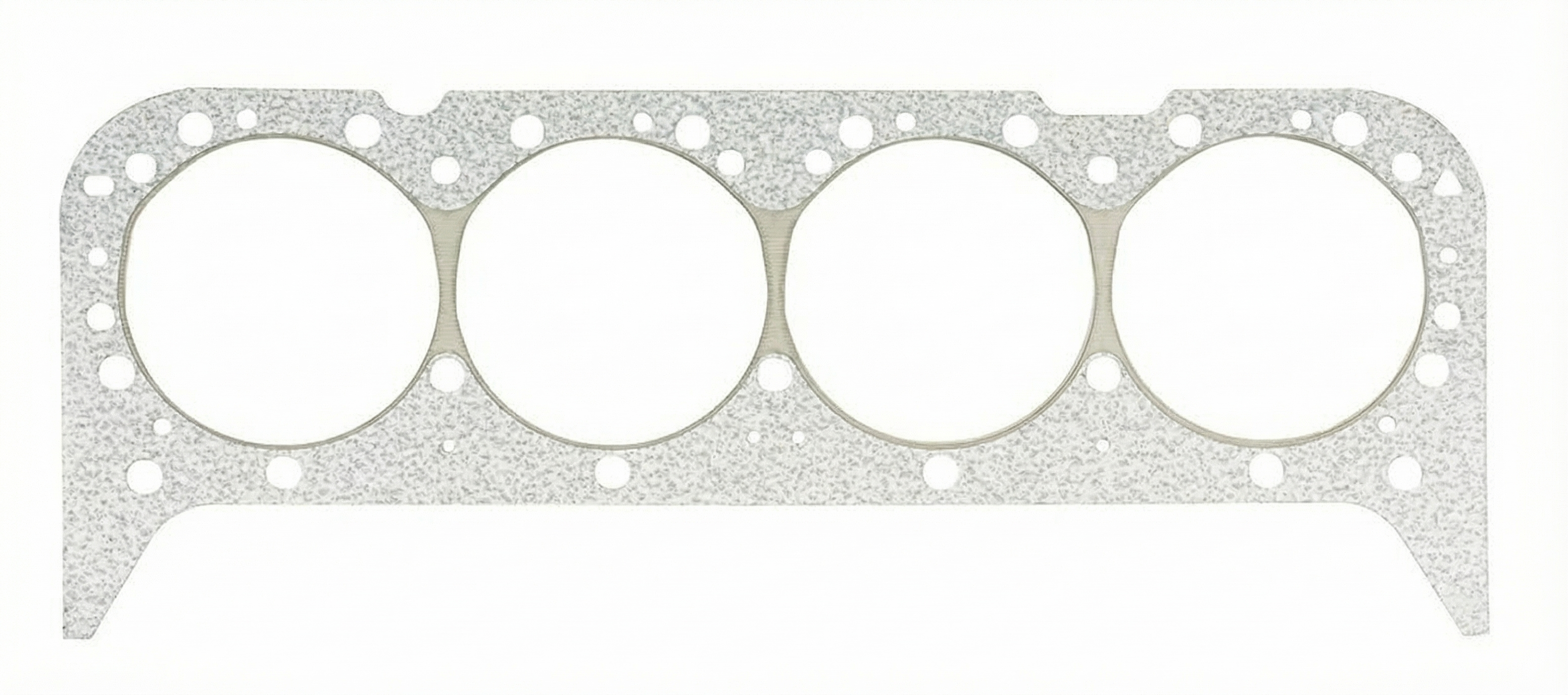
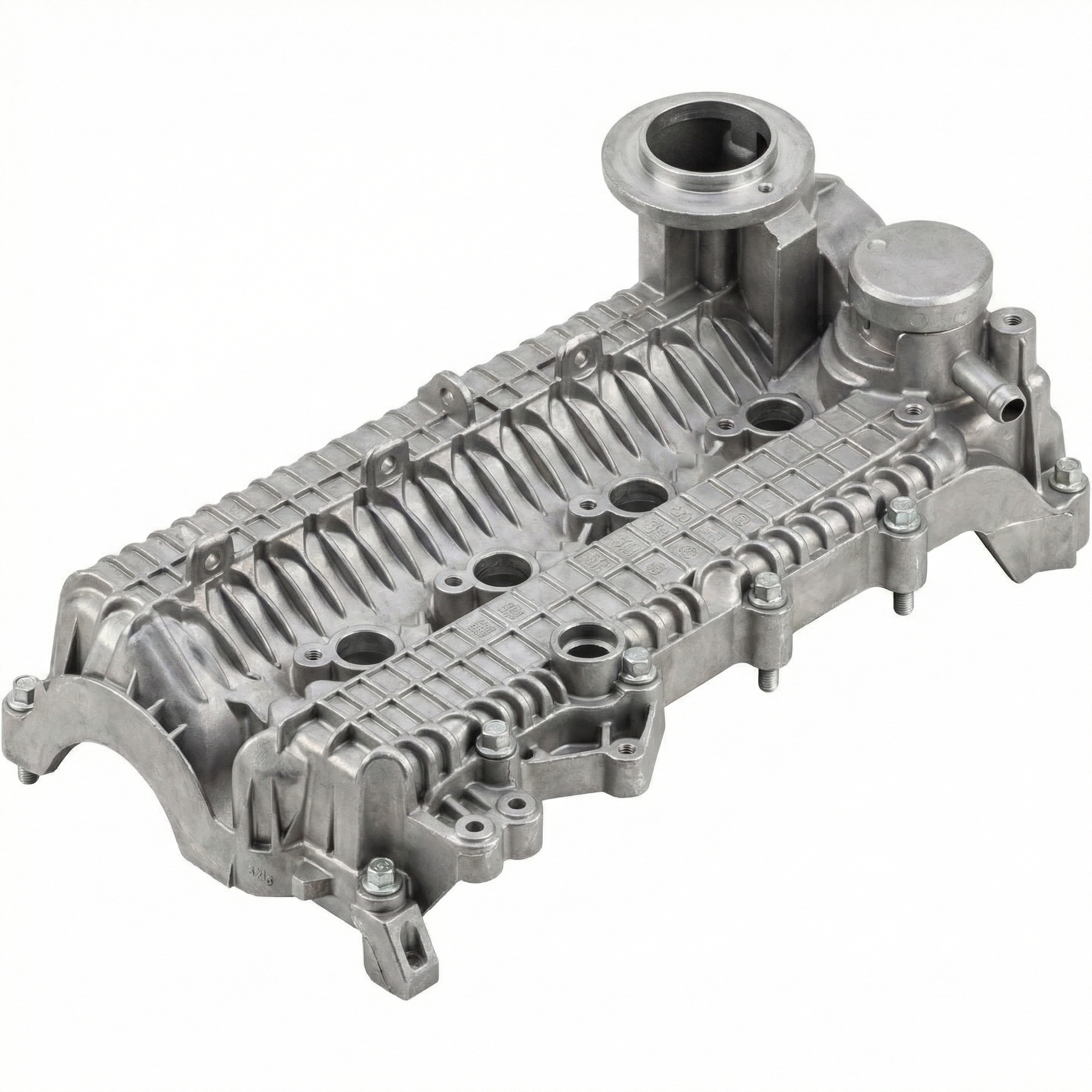
(OEM #68194923AB)— Required if oil is found in the spark plug wells, which is a very common problem on the 2.4L Tigershark engine leading to misfires. The kit should include the main gasket and spark plug tube seals.
Trusted brands: Mopar, Fel-Pro
OEM price range: $70 - $120
Aftermarket price range: $40 - $80 - Ignition Coil
(OEM #68242286AA)— A common failure point for misfires. Can be damaged by oil saturation from a leaking valve cover gasket.
Trusted brands: Mopar, NGK, Standard Motor Products
OEM price range: $60 - $100
Aftermarket price range: $40 - $80
Related Codes That Often Appear With This One
- P1064 — Indicates the Cylinder 4 Oil Supply Solenoid Valve (part of the MultiAir actuator) is stuck. This code is a strong pointer to a failed MultiAir brick. [TSB #1805723, ODI #11656821]
- P106B — Indicates the Cylinder 4 Oil Supply Solenoid Valve is out of range, also pointing directly to a MultiAir actuator failure. [TSB #1805723, ODI #11656821, 42]
- P0300 — Stands for 'Random/Multiple Cylinder Misfire'. This may appear alongside P0304 if the issue is systemic, such as a failing MultiAir brick affecting multiple cylinders, a major vacuum leak, or issues stemming from low oil pressure. [TSB #08-027-20]
- P0301, P0302, P0303 — Misfire codes for other cylinders. Their presence alongside P0304 suggests a more widespread problem, such as a failing MultiAir brick affecting multiple cylinders or a major vacuum leak. [TSB #1805723]
Technical Service Bulletins (TSBs) & Recalls
- 1805723: Links P0304 with MultiAir solenoid codes P1064 and P106B.
- 08-027-20: Details a procedure for replacing only the ignition coil boots for P0300-P0304 misfire codes on the 2.4L engine across multiple vehicle platforms.
- 1801621: Also links P0304 with MultiAir solenoid codes.
- 18-047-19 REV. A: Lists P0304 as a potential DTC related to other powertrain issues.
- 18-081-19: Lists P0304 as a potential DTC.
Platform-Specific Known Issues
- Owner Experience: The Oil Consumption & MultiAir Link: Many owners on forums like Reddit have noted that their 2.4L engine consumes oil between changes. One user with a P0304 on a platform-mate Jeep Cherokee was specifically advised to check oil level, noting that low or incorrect oil is a primary cause of MultiAir system failure. This highlights that for this engine, oil level is not just a routine check but a critical diagnostic step for misfires.
- Repair Story: The Misdiagnosis Loop: A common story found in owner forums involves a P0304 code where the owner or a shop first replaces the spark plug in cylinder 4. When the code returns, they replace the ignition coil. When the code returns again, further diagnosis finally reveals either oil flooding the spark plug well (requiring a valve cover gasket) or the presence of codes P1064/P106B, confirming the expensive MultiAir 'brick' was the cause all along.
- TSB 08-027-20: The Coil Boot Fix: FCA issued a specific TSB to address misfire codes P0300-P0304 on the 2.4L engine by simply replacing the ignition coil boots, not the entire coil assembly. This suggests that the boot itself can fail or that an improper seal is a common issue. The TSB covers the Renegade, Cherokee, Compass, Dart, and other platform mates, indicating a widespread, recognized problem with a potentially low-cost solution.
Mechanic-Grade Diagnostic Values
- Ignition Coil Primary Resistance — expected: 0.56 - 0.68 Ohms. Failure: A reading outside this range indicates a faulty coil winding.
- Ignition Coil Secondary Resistance — expected: 7.8 - 9.6 kOhms. Failure: A reading outside this range indicates a faulty secondary coil winding.
- Fuel Injector Resistance — expected: Approximately 12 Ohms. Failure: A significantly different reading on one injector compared to the others, or an open/short circuit, indicates a bad injector.
- Fuel Pressure — expected: Static pressure at 43.5 PSI (3 Bar). Failure: Low fuel pressure can cause misfires on multiple cylinders and may trigger code P0087.
Scan Tool Commands That Help
- wiTECH (Dealer Tool): Misfire TLC Relearn / Clear Mis-fire TLC — After a repair, this function resets the adaptive learning tables related to misfire detection.
- wiTECH (Dealer Tool): OBDII Monitors > Mis-fire Mon SWC screen — This screen provides live data on misfire counts per cylinder, allowing a technician to see which cylinder is misfiring in real-time without waiting for a DTC to set.
- wiTECH 2.0 J2534 Application: System Tests and Routines — The dealer-level tool can run specific routines to test components like VVT solenoids or fuel injectors individually, which helps pinpoint faults without swapping parts.
Wiring & Ground Locations
- Cylinder 4 Fuel Injector Wiring — At the fuel injector connector for the fourth cylinder.. A wiring diagram for a 2016 Renegade 2.4L shows the wire colors for the injector, which is essential for checking signal integrity from the PCM. For example, pin 66 (BLK/PNK) is listed in a PCM connector diagram, which could be related to the injector driver circuit. A damaged wire or loose connection can mimic a failed injector.
- Engine Control Module (ECM/PCM) — On the 2016 Renegade 2.4L, the ECM is located on the cylinder head, above the individual VVT solenoids for each cylinder.. Its location exposes it to heat and vibration. Knowing the physical location is critical for inspecting the main connectors for corrosion or damage that could cause a misfire or other sensor faults.
Real Owner Repair Stories
- Reddit user in r/JeepRenegade (2017 Jeep Renegade) — Check engine light with code P106B (Cylinder 4 Oil Supply Solenoid Valve Switch On Time Out Of Range).
❌ Tried (didn't work) Initial diagnosis pointed to a single VVT solenoid.
✅ What actually fixed it The user discovered that on the 2.4L MultiAir engine, the individual solenoids are integrated into the entire MultiAir actuator ('brick'). The required repair was the replacement of the complete actuator assembly, not just a single solenoid.
OEM Part Supersession History
5047980AA, 5047980AB, 5047980AC, 5047980AD→5047980AE— Progressive updates and improvements to the MultiAir actuator assembly to enhance durability and performance.
Heads up: While all listed part numbers are for the 2.4L MultiAir, it is critical to use the latest version (5047980AE) for repairs to benefit from the engineering updates. No programming is required for this direct-fit replacement.
Model Year Variations Within This Range
- 2019-2021: A facelift in 2019 introduced revised styling, new LED lighting options, and significant powertrain changes. The 2.4L 'Tigershark' engine became standard equipment, while a new 1.3L turbocharged engine was introduced as an optional upgrade. This means a later model-year Renegade may have a different engine entirely, for which the causes of a misfire would be different.
- 2015-2018: Pre-facelift models offered the 2.4L engine as an optional upgrade over the standard 1.4L Turbo engine.
Helpful Videos
Used OEM Parts in Stock
New Aftermarket Parts Available

The information in this article is provided for general reference and educational purposes only. Vehicle specifications, procedures, and part compatibility can vary by production date, trim level, and region. Always consult your vehicle's factory service manual and verify part numbers before purchasing or performing repairs. Safety-critical components such as airbags, seat belts, and braking systems should be installed by a qualified professional.
- Jeep RENEGADE:
- 🧭 Diagnostic Flowchart
- 🎬 Helpful Videos
- 🛍️ Shop This Part
- What's Unique About the 2015-2021 Jeep RENEGADE
- Symptoms You May Notice
- Most Likely Causes
- Rare But Worth Checking
- Diagnosis Steps
- Parts You'll Likely Need
- Related Codes That Often Appear With This One
- Technical Service Bulletins (TSBs) & Recalls
- Platform-Specific Known Issues
- Mechanic-Grade Diagnostic Values
- Scan Tool Commands That Help
- Wiring & Ground Locations
- Real Owner Repair Stories
- OEM Part Supersession History
- Model Year Variations Within This Range
- 🎟️ Get 5% Off