

P0365 on 2011-2019 Ford Explorer 3.5L V6: Camshaft Sensor Causes and Fixes
P0365 on a 3.5L V6 Explorer most often means the Bank 1 exhaust camshaft position sensor has failed. This sensor is on the cylinder bank closer to the firewall. A replacement sensor is affordable and a common DIY fix. Before replacing it, check for damaged wiring and ensure the engine oil is clean and at the proper level, as this engine's timing system is sensitive to oil condition.
- P0365 points to the exhaust camshaft sensor on the firewall side of the engine (Bank 1).
- Before buying parts, always check your engine oil level and condition first. Milky oil is a sign of a severe internal water pump failure.
- The most common fix is replacing the faulty camshaft position sensor, which is an accessible and aff
What's Unique About the 2011-2019 Ford Explorer
The 3.5L V6 'Cyclone' engine in this generation of Explorer is generally reliable, but it is sensitive to oil level and condition. The Variable Camshaft Timing (VCT) system, which this sensor helps monitor, is operated by oil pressure. Low or dirty oil can affect the VCT system's performance, sometimes triggering sensor-related codes like P0365. While the most common cause is a simple sensor failure, it's important to rule out oil-related issues first on this particular engine. Furthermore, this engine features an internal, timing-chain-driven water pump. A failure of this pump can contaminate the engine oil with coolant, leading to sludging and oil pressure issues that can manifest as timing and sensor codes.
Symptoms You May Notice
- Check Engine Light is on
- Difficulty starting the engine, or long crank times
- Rough or uneven idle
- Engine stalling, especially at low speeds or when stopping
- Hesitation or loss of power during acceleration
- Reduced fuel economy
- Engine misfires
- Replacing the wrong sensor (e.g., the intake sensor or the sensor on Bank 2, which is near the radiator).
- Replacing the sensor without checking the wiring harness for damage first.
- Mistaking a timing chain or VCT phaser issue for a simple sensor failure.
Most Likely Causes
- Failed Camshaft Position Sensor 🔴 High Probability → Shop Engine Camshaft Position Sensor Sensors are exposed to extreme heat cycles and potential oil contamination, leading to internal failure over time.
How to confirm: Swap the Bank 1 exhaust ('B') sensor with the Bank 1 intake ('A') sensor. They are typically the same part number. Clear codes and drive. If the code changes to P0340 (Intake sensor 'A' circuit fault), the sensor is bad. You can also test the sensor with a multimeter for resistance.
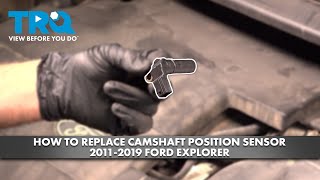
Typical fix: Replace the Bank 1 exhaust camshaft position sensor. 🎬 Watch: How to replace the camshaft position sensor
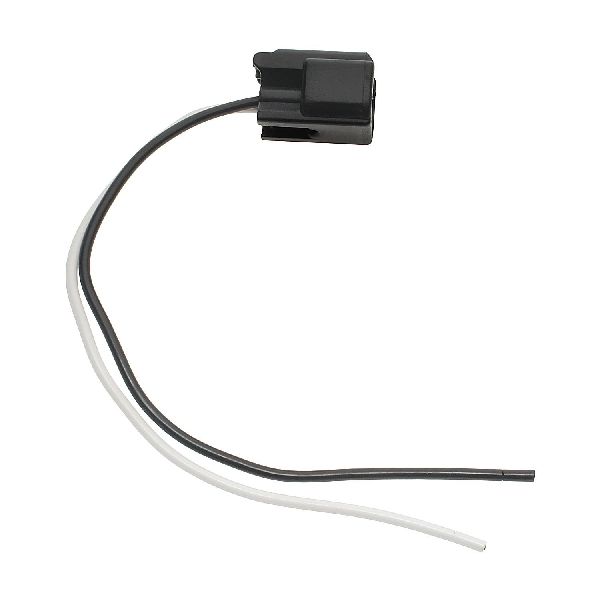
Est. part cost: $25-$70 - Damaged Wiring or Connector 🟡 Medium Probability The engine bay environment can cause wiring to become brittle or connectors to get contaminated with oil or dirt. The harness near the firewall can be subject to chafing.
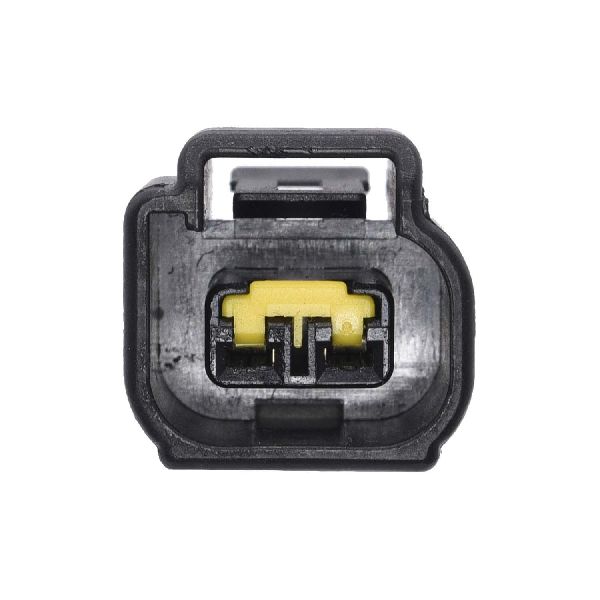
How to confirm: Visually inspect the sensor's wiring harness and connector for any signs of chafing, breaks, corrosion, or oil saturation. Check for oil inside the connector itself. Perform a 'wiggle test' on the harness with the engine running to see if it causes a stall or stumble.
Typical fix: Repair the damaged section of wiring or clean/replace the connector.
Est. part cost: $5-$30 - Low or Dirty Engine Oil ⚪ Low Probability The VCT system relies on clean oil at the correct pressure. Sludge or low levels can impede the function of the cam phasers, which the PCM may misinterpret as a sensor circuit fault. This is particularly relevant if the internal water pump is failing and contaminating the oil.
How to confirm: Check the engine oil level on the dipstick and inspect its condition. If it's low, milky ('chocolate milk' appearance), or very dirty, this could be the root cause.
Typical fix: Perform an oil and filter change. If the oil is milky, it indicates a serious internal water pump failure, which is a known and expensive issue on this engine requiring immediate professional attention.
Est. part cost: $40-$80
Rare But Worth Checking
- Stretched Timing Chain or Failed VCT Phaser: → Shop Engine Timing Chain While less common for just a P0365 code, the 3.5L V6 is known for timing chain issues. If you hear a rattling noise on startup, or if P0365 is accompanied by correlation codes (like P0016, P0017, etc.), a mechanical timing problem is likely.
- Damaged Reluctor Wheel on Camshaft: → Shop Engine Camshaft The sensor takes its reading from a toothed wheel on the camshaft. In rare cases, this wheel can become damaged, slip, or accumulate metallic debris, causing an incorrect signal even with a good sensor.
- Failing Powertrain Control Module (PCM): This is extremely rare, and all other possibilities (sensor, wiring, mechanical) should be exhaustively ruled out before considering the PCM as the cause. A diagnostic scan tool that can communicate with the PCM is needed to verify this.
Diagnosis Steps
- Read the code with an OBD-II scanner and confirm P0365 is present. Note any other codes and freeze-frame data.
- Check the engine oil level and condition. Top off or change if necessary. If oil is milky, stop immediately and suspect an internal water pump failure.
- Locate the Bank 1 exhaust camshaft position sensor. Bank 1 is the cylinder head against the firewall. There are two sensors on this bank; the exhaust sensor ('B') is typically the one closer to the transmission. A vehicle-specific diagram is recommended for positive identification.
- Inspect the sensor's electrical connector for a secure fit, and check the wiring harness for any visible damage, chafing, or oil contamination. Check for 5V reference voltage at the connector with the key on, engine off.
- If wiring looks good, swap the Bank 1 exhaust sensor with the Bank 1 intake sensor. They are often the same part.
- Clear the codes and test drive the vehicle. If the code returns as P0340 (Bank 1 Intake Sensor 'A' Circuit), the original sensor is faulty and needs to be replaced.
- If the P0365 code returns after the swap, the problem is likely in the wiring, the VCT solenoid for that camshaft, or a more complex mechanical issue.
- If a mechanical issue is suspected (e.g., startup rattle, correlation codes), seek professional diagnosis to inspect the timing system.
Parts You'll Likely Need
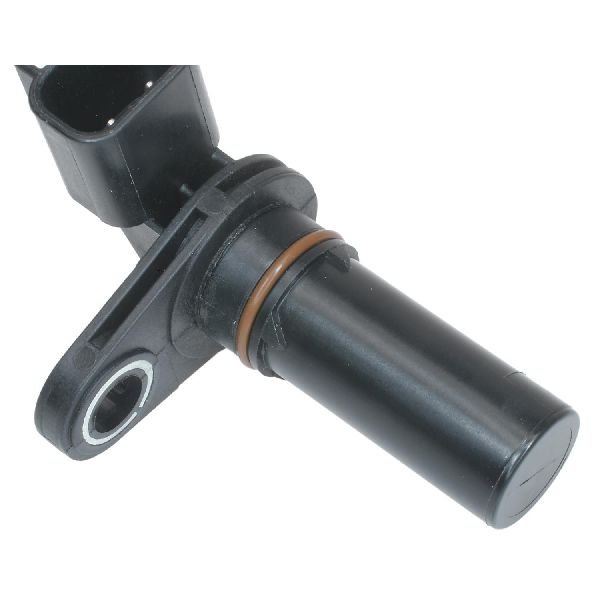
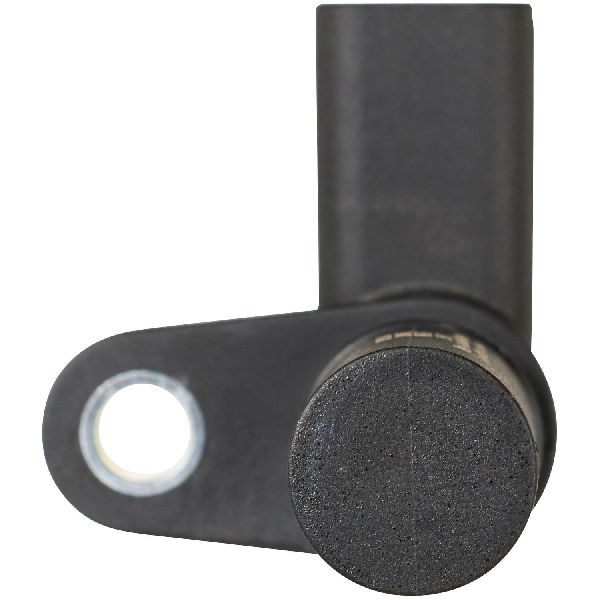
- Camshaft Position Sensor (Bank 1 Exhaust)
(OEM #BR3Z-6B288-B)— This is the most frequent cause of a P0365 code, failing from heat and age.
Trusted brands: Motorcraft, Bosch, Delphi, NTK/NGK
OEM price range: $50-$90
Aftermarket price range: $25-$70
Related Codes That Often Appear With This One
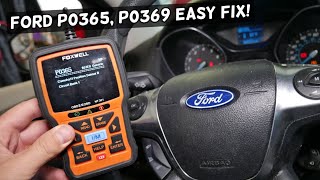
- P0369 — P0369 indicates an intermittent fault 🎬 See this quick fix for codes P0365 and P0369 in the same circuit, while P0365 indicates a more constant or 'hard' fault. They often appear together as a sensor begins to fail.
- P0016 / P0017 / P0018 / P0019 — These are crankshaft-camshaft correlation codes. If you see one of these with P0365, it strongly suggests a mechanical timing issue (like a stretched chain or failed VCT phaser) rather than just a sensor failure.
Technical Service Bulletins (TSBs) & Recalls
- TSB 20-2423 (F-150/Navigator): While not for the Explorer specifically, it addresses excessive oil consumption on the 3.5L engine platform leading to DTCs P0365/P0369, showing a link between oil issues and this code family.
- SSM 49821: This Special Service Message applies to various 2015-2021 Ford vehicles and lists numerous camshaft correlation DTCs (P0011-P0025). While not directly for P0365, it indicates Ford's awareness of timing system issues on these engines that could be related.
- Bulletin #SSM 47983: A manufacturer service bulletin notes that vehicles equipped with a 3.5L EcoBoost engine may exhibit excessive oil consumption with or without DTC P0365 and/or P0369, and recommends replacing both valve covers if no external leaks are found.
- Bulletin #SSM 50116: This bulletin describes how a wiring harness directly above the steering shaft u-joint near the upper brake pedal mount may come in contact with the shaft, potentially setting DTC P0365 among many others.
Platform-Specific Known Issues
- The 3.5L V6 engine family can be susceptible to timing chain stretching. While P0365 alone doesn't confirm this, if it's paired with startup rattles or correlation codes, the timing system should be inspected professionally.
- A Ford TSB (20-2423) for the related 3.5L EcoBoost engine in F-150s links excessive oil consumption directly to codes P0365 and P0369, highlighting the sensitivity of this engine platform to oil condition.
- The internal water pump is a significant point of failure on this engine. A leak can be external (coolant dripping near the passenger side A/C compressor) or internal (coolant mixing with oil). Oil contamination from a failing pump can cause VCT system problems and trigger codes like P0365 before a total pump failure occurs.
Mechanic-Grade Diagnostic Values
- CMP Sensor Connector Voltage (Key On, Engine Off) — expected: The reference/power wire and the signal wire should both read approximately 5V. The ground wire should have continuity to chassis ground (0 Ohms).. Failure: Voltage below 4.5V or above 5.5V on the reference or signal wire, or high resistance on the ground wire, points to a wiring or PCM issue.
- CMP Sensor Signal Test (Hall-Effect Sensor) — expected: With the sensor connected and backprobed, the signal wire should read ~5V. When a ferrous metal object (like a wrench) is passed in front of the sensor tip, the voltage should drop to nearly 0V.. Failure: If the voltage does not drop when metal is introduced, the sensor is faulty.
- VCT Solenoid Internal Resistance — expected: 5 - 15 Ohms.. Failure: A reading outside this range, or an open circuit (infinite resistance), indicates a failed solenoid which can sometimes trigger sensor codes due to incorrect cam phasing.
Scan Tool Commands That Help
- Ford IDS (or equivalent): VVT Actuator Functional Test — Use this command when the sensor and wiring have been confirmed to be in good condition, but the code persists. This test actively commands the VCT solenoids to check for a mechanical response from the cam phasers, helping to differentiate between an electrical fault and a mechanical timing problem.
- Ford IDS / FORScan: Reset All Adaptations / Camshaft Profile Correction Reset — This function should be performed after replacing timing components, VCT solenoids, or sometimes even just the sensor, to clear the PCM's learned values and allow it to adapt to the new components correctly.
Wiring & Ground Locations
- Bank 1 Camshaft Position Sensors — On the rear cylinder head (closer to the firewall). Accessing them often requires removing upper air intake components.. This is the physical location of the sensor group in question. P0365 specifically refers to the 'B' (exhaust) sensor on this bank.
- G100 / G101 — On the 3.5L non-turbo engine, G100 is at the front of the engine, and G101 is on the left side of the engine compartment.. The CMP sensors require a clean ground path. A corroded or loose connection at these primary engine grounds can introduce electrical noise or voltage drops, causing intermittent or faulty sensor signals.
Real Owner Repair Stories
- YouTube channel 'FordTechMakuloco' (2013 Ford F-150 3.5L EcoBoost (similar engine architecture)) — Codes P0365 and P0369, no power, very slow acceleration.
❌ Tried (didn't work) Initial diagnosis might point to a bad sensor or wiring.
✅ What actually fixed it The reluctor wheel (tone ring) on the Bank 1 exhaust camshaft had slipped significantly from its original position. The final repair required replacing the entire Bank 1 exhaust camshaft.
Documented NHTSA Reports
- An owner reported in NHTSA ODI #11466062 that their vehicle would stall and require the driver to "give it some gas before the engine quits," with codes P0365 or P0369 occurring despite having the cam sensor replaced multiple times.
- NHTSA ODI #11592638 describes a diagnostic finding where codes P0365 and P0369 were present due to a broken oil pump belt, which necessitated an engine replacement.
- In NHTSA ODI #11035325, an owner reported that a technician found grease being thrown onto a sensor, causing a Check Engine Light with multiple codes including P0340 and P0365.
OEM Part Supersession History
BR3Z-6B288-A→BR3Z-6B288-B— Standard part revision and update by Ford.AT4Z-6B288-A→BR3Z-6B288-B— Supersession of an earlier part number used on related 3.5L/3.7L engines.F4TZ-12K073-C→Motorcraft DU-87— This is the service part number cross-reference. Note that DU-87 also fits many other Ford engines, including the 7.3L Powerstroke, so always verify application.
Diagnostic Flowchart
Other Known Issues on This Vehicle
Issues unrelated to this code that are worth knowing about as an owner of this generation:
- Internal Water Pump Failure 🔴 High — Common after 80,000-120,000 miles. Failure can cause catastrophic engine damage if coolant mixes with oil and is not addressed immediately.
- Power Transfer Unit (PTU) Failure 🔴 High — Common on AWD models. The 'lifetime' fluid overheats due to proximity to the exhaust, thickens into sludge, and causes bearing/gear failure. Preventative fluid changes every 30,000 miles are recommended. (Ref: TSB 19-2017 (for fluid leaks))
- Electronic Throttle Body Malfunction 🟠 Medium — Widespread issue causing sudden power loss and the vehicle entering 'limp mode'. Often sets codes P2111 or P2112. (Ref: Customer Satisfaction Program 16B32 extended the warranty on this part.)
- Cracked Exhaust Manifold / Exhaust Odor in Cabin 🟠 Medium — Particularly on Police Interceptor Utility models, but also affects civilian versions. Can allow carbon monoxide to enter the cabin. (Ref: Multiple TSBs (e.g., 14-0130, 17-0044) issued to address sealing the cabin.)
- Power Steering Rack Failure 🔴 High — The electronic power steering rack is a common failure point, leading to loss of power assist. It is an expensive repair. (Ref: Multiple recalls were issued for steering components on early models.)
Used vs. New Parts: Buying Guide for This Vehicle
When a used part is the smart pick: For a critical and relatively inexpensive electronic sensor like a camshaft position sensor, buying new is almost always the smarter choice. A used part offers no guarantee of remaining lifespan. A used wiring pigtail/connector could be a sensible choice if only the connector is damaged and a new one is unavailable.
Donor-vehicle mileage cap: roughly under 80000 miles for the part to have meaningful remaining life.
What to inspect on the donor part:
- For a pigtail, ensure the wiring is flexible and not brittle.
- Check the connector for any signs of cracking, corrosion on the pins, or oil contamination.
- Ensure the locking tab is intact and functional.
OEM-only on this vehicle (don't cheap out):
- While not the primary fix, if timing components (chains, phasers) are required, using OEM Ford/Motorcraft parts is highly recommended due to the complexity of the job and the known sensitivity of this engine's timing system.
Aftermarket brands forum-validated for this vehicle:
- Motorcraft (OEM)
- Bosch
- Delphi
- NTK/NGK
Brands owners have reported issues with on this vehicle:
- Some forum users and reviews have reported premature failures or incorrect fitment with store brands like Duralast for this specific type of sensor, sometimes due to incorrect physical orientation of the sensor body on its bracket.
Real Owner Stories
Aggregated from forums and TSBs cited above. Mileages and costs reflect what owners reported in those sources.
2014 Ford Explorer 3.5L
Symptoms: P0365 and other codes present; swapping sensors did not resolve the issue.
What fixed it: Replacement of a failed secondary timing chain on Bank 1.
Source hint: r/AskMechanics (Reddit)
2011-2019 Ford Explorer 3.5L
Symptoms: P0365 code active; owner replaced the Bank 1 exhaust sensor but the code persisted initially.
What fixed it: Replacing the Bank 1 exhaust sensor, performing a throttle body cleaning, and resetting the PCM by disconnecting the battery.
Source hint: explorerforum.com
2012 Ford Explorer 3.5L
Symptoms: P0365 code triggered; technician identified the sensor location on the rear bank (Bank 1) near the transmission.
What fixed it: Repair of a wiring concern at the sensor connector.
Source hint: r/Ford (Reddit)
Related OBD-II Codes
Frequently Asked Questions
Where is the Bank 1 exhaust camshaft position sensor located on my 2011-2019 Explorer 3.5L?
Could my P0365 code be related to the internal water pump issue known on the 3.5L Cyclone engine?
Does TSB 20-2423 apply to my Explorer's P0365 code?
Can I test the sensor myself before buying a new one?
Is there a specific wiring issue I should look for on this vehicle?
Why did my P0365 code stay active after I replaced the sensor?
Helpful Videos

Used OEM Parts in Stock
New Aftermarket Parts Available


The information in this article is provided for general reference and educational purposes only. Vehicle specifications, procedures, and part compatibility can vary by production date, trim level, and region. Always consult your vehicle's factory service manual and verify part numbers before purchasing or performing repairs. Safety-critical components such as airbags, seat belts, and braking systems should be installed by a qualified professional.
- Ford Explorer:
- 🧭 Diagnostic Flowchart
- 🎬 Helpful Videos
- 🛍️ Shop This Part
- What's Unique About the 2011-2019 Ford Explorer
- Symptoms You May Notice
- Most Likely Causes
- Rare But Worth Checking
- Diagnosis Steps
- Parts You'll Likely Need
- Related Codes That Often Appear With This One
- Technical Service Bulletins (TSBs) & Recalls
- Platform-Specific Known Issues
- Mechanic-Grade Diagnostic Values
- Scan Tool Commands That Help
- Wiring & Ground Locations
- Real Owner Repair Stories
- Documented NHTSA Reports
- OEM Part Supersession History
- Other Known Issues on This Vehicle
- Used vs. New Parts: Buying Guide for This Vehicle
- Real Owner Stories
- 2014 Ford Explorer 3.5L
- 2011-2019 Ford Explorer 3.5L
- 2012 Ford Explorer 3.5L
- Related OBD-II Codes
- Frequently Asked Questions
- 🎟️ Get 5% Off