

P0463 on 2010-2015 Chevrolet Camaro: Fuel Level Sensor Circuit High Input Fixes
On a 2010-2015 Camaro, P0463 almost always means the fuel level sensor in the gas tank has failed. This causes an inaccurate or dead fuel gauge, often stuck on full. The fix is to replace the sensor, which is often part of the fuel pump module. Accessing the sensor requires dropping the fuel tank, making it a moderately difficult repair.
- P0463 on a 2010-2015 Camaro means your fuel gauge is not to be trusted.
- The most likely culprit is a failed primary fuel level sensor (Sensor 'A') inside the fuel tank.
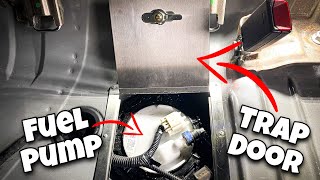
- Repair requires dropping the fuel tank, as there is no access panel under the rear seat.
- While you can drive the car, use the trip meter to track fuel to avoid running out of gas.
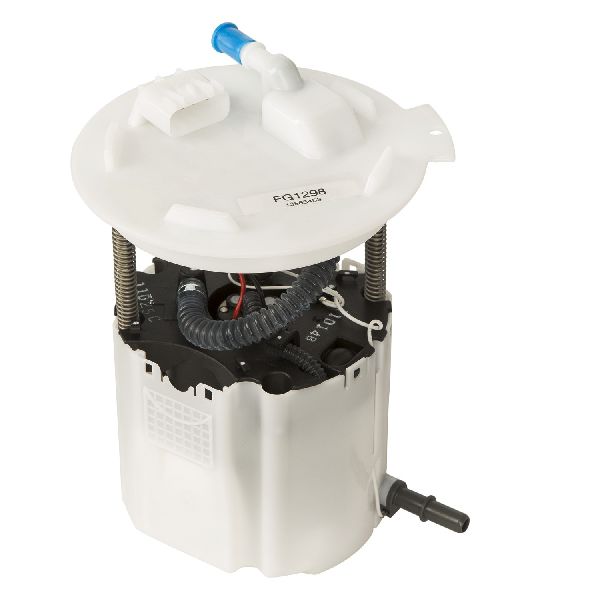
- It's common practice to replace the entire fuel pump module while the tank is out for this repair.
What's Unique About the 2010-2015 Chevrolet Camaro
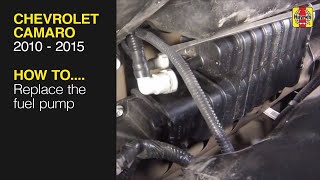
The 2010-2015 fifth-generation Camaro uses a saddle-style fuel tank that straddles the driveshaft, requiring two separate fuel level sensors. Sensor 'A' (the primary sensor) is part of the fuel pump module on the driver's side, while Sensor 'B' is on the passenger's side. A P0463 code specifically points to the primary sensor or its circuit. The most common point of failure is the sensor's resistive card wearing out, a well-documented issue in many GM vehicles from this era. Unlike some sedans, there is no access panel under the rear seat; replacing either sensor requires dropping the fuel tank, 🎬 See this step-by-step fuel pump replacement walkthrough exhaust, and driveshaft.
Symptoms You May Notice
- Check Engine Light is on
- Fuel gauge reads incorrectly (e.g., stuck on full, empty, or fluctuates wildly)
- Low fuel warning light may be illuminated constantly
- Fuel range / 'Distance to Empty' display is inaccurate
- Replacing the instrument cluster. The gauge itself is rarely the problem; it simply displays the faulty information it receives from the PCM/BCM.
Most Likely Causes
- Faulty Fuel Level Sensor (Sending Unit) 🔴 High Probability → Shop Fuel Tank Sending Unit The resistive contacts on the fuel level sensor wear out over time, creating an open circuit. This is a very common failure on many GM platforms from this period due to the materials used on the sensor's resistor card.
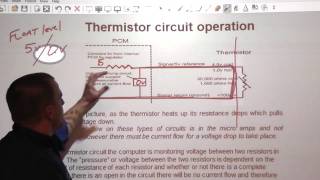
How to confirm: Test the sensor's resistance with a multimeter while moving the float arm. 🎬 Watch: How to test a GM fuel sending unit For most GM vehicles of this era, the resistance should sweep smoothly from approximately 40 ohms (empty) to 250 ohms (full). An open circuit (infinite resistance) or erratic readings confirm failure.
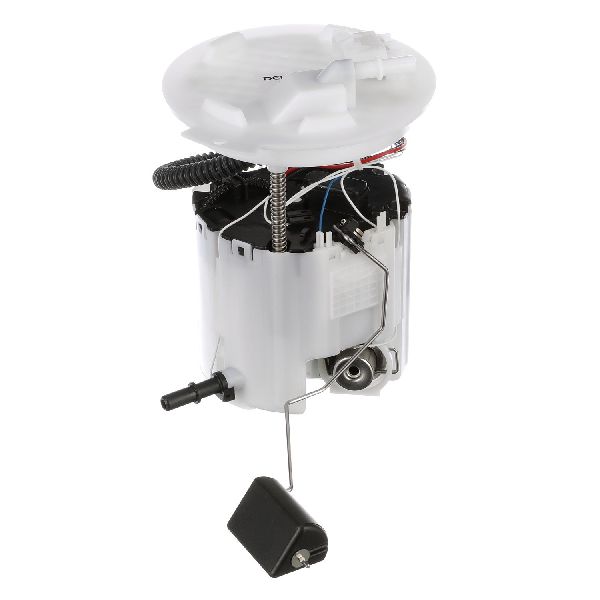
Typical fix: Replace the faulty fuel level sensor. On the Camaro, the primary sensor (Sensor 'A') is integrated into the driver's side fuel pump module. The sensor can sometimes be purchased separately, but it is often replaced as a complete module.
Est. part cost: $75 - $250 - Damaged Wiring or Loose Connection 🟡 Medium Probability The wiring harness running to the fuel tank is exposed under the vehicle and can be damaged by road debris or corrosion. A forum user on a GM truck forum with the same code reported rodents chewing through the wires near the tank, which is a plausible scenario for the Camaro as well.
How to confirm: Visually inspect the wiring harness from the fuel tank to the main body for any breaks, chafing, or corrosion at the connectors. Perform a continuity test on the signal and ground wires.
Typical fix: Repair the damaged section of the wiring harness or clean/replace the corroded connector.
Est. part cost: $10 - $50 - Poor Ground Connection ⚪ Low Probability
How to confirm: Locate the ground strap for the fuel tank and ensure it is clean, tight, and free of corrosion. Test for high resistance between the sensor's ground terminal and the vehicle chassis.
Typical fix: Clean the grounding point on the chassis and re-secure the ground strap.
Est. part cost: $1 - $10
Rare But Worth Checking
- Faulty Powertrain Control Module (PCM) or Body Control Module (BCM): This is extremely rare. Before suspecting the PCM or BCM, all other possibilities, including the sensor, wiring, and grounds, must be exhaustively ruled out. A faulty module is the least likely cause.
- Faulty Fuel Pump Driver Control Module (FPCM): → Shop Fuel Pump While less common for an isolated P0463, a failing FPCM can cause various fuel system-related codes and erratic behavior. It's a known issue on this platform, though typically associated with codes like P069E.
Diagnosis Steps
- Scan the vehicle's computer for P0463 and any other related codes. Confirm P0463 is the primary code.
- Use a scan tool with live data to observe the voltage reading from Fuel Level Sensor 1 (or A). A reading that is stuck high (typically near 5 volts) confirms the PCM's observation.
- Perform a visual inspection of the wiring harness leading to the fuel tank. Look for obvious signs of damage, corrosion, or loose connections, paying close attention to areas near the exhaust or suspension components.
- To access the fuel pump and sensor connectors, the fuel tank must be lowered. This involves removing the exhaust system and driveshaft for clearance.
- Once accessible, disconnect the fuel level sensor connector. Check for a 5-volt reference and a good ground at the connector with a multimeter to ensure circuit integrity from the PCM.
- If the circuit is good, remove the fuel pump module/sending unit from the driver's side of the tank.
- Test the fuel level sensor itself by measuring its resistance while manually moving the float arm. The resistance should change smoothly from ~40Ω (empty) to ~250Ω (full). If it reads open (OL) or has dead spots, the sensor is faulty.
- If the sensor tests good, the problem is likely in the wiring harness. Perform a pin-to-pin continuity and resistance test of the harness between the tank and the BCM/PCM.
Parts You'll Likely Need
- Fuel Level Sensor
(OEM #13592330)— This is the most common failure point for the P0463 code. The internal resistor wears out, causing an open circuit and a high voltage signal. This part number corresponds to the sensor for the right (passenger) side, which is Sensor 'B', but is often cited in relation to fuel level issues. The primary sensor is typically part of the main pump module.
Trusted brands: ACDelco, GM Genuine Parts
OEM price range: $75 - $140
Aftermarket price range: $50 - $100 - Fuel Pump Module Assembly (V6)
(OEM #13592337)— For the 3.6L V6 models, the primary fuel level sensor (Sensor 'A') is integrated with the fuel pump module. Replacing the entire assembly is often easier and addresses the fuel pump as a preventative measure. This part number supersedes 13577471, 13585453, and 19208721.
Trusted brands: ACDelco, Delphi
OEM price range: $250 - $400
Aftermarket price range: $150 - $300 - Fuel Pump Module Assembly (V8)
(OEM #13592335)— For the 6.2L V8 models (SS), the aprimary fuel level sensor (Sensor 'A') is integrated with the fuel pump module. This part number is specific to the V8 and supersedes 13577475, 13585454, and 19208719.
Trusted brands: ACDelco, Delphi
OEM price range: $250 - $400
Aftermarket price range: $150 - $300
Related Codes That Often Appear With This One
- P0462 — This is the opposite code, 'Fuel Level Sensor Circuit Low Input.' Seeing both codes intermittently can point to a failing sensor with an erratic signal that is shorting out and opening up.
- P2068 — This code refers to 'Fuel Level Sensor 'B' Circuit High'. Since the Camaro has two sensors, seeing both P0463 and P2068 together strongly indicates a wiring or ground issue common to both sensors, or a simultaneous failure of both sending units.
Technical Service Bulletins (TSBs) & Recalls
- 17-NA-204: While for Silverado/Sierra trucks, this GM bulletin addresses a range of fuel level sensor codes including P0463. It acknowledges issues with the in-tank fuel pump module causing inaccurate gauge readings, indicating a known pattern of component failure across GM products of the era.
- 18-NA-365: This bulletin for other GM vehicles also lists P0463 and points to a blocked transfer jet in the primary fuel pump module. While not specific to the Camaro, it shows that fuel transfer issues within the saddle tank can also trigger these codes.
Platform-Specific Known Issues
- No Under-Seat Access Panel: Unlike many other vehicles with saddle tanks, the 5th Gen Camaro does not have an access panel under the rear seat cushion. Service of either fuel level sensor or the fuel pump requires the fuel tank to be dropped from underneath the vehicle, which significantly increases labor time and complexity.
- Owner Experience on Camaro5 Forum: A thread titled 'Fuel gauge problem' on Camaro5.com details a user's experience with a gauge that would drop to empty and trigger the check engine light. Multiple members confirmed the cause was a bad sending unit (fuel level sensor) requiring tank removal. One user quoted a dealer repair cost of over $1,000, highlighting the labor-intensive nature of the job.
Mechanic-Grade Diagnostic Values
- Fuel Level Sensor Resistance Sweep — expected: Smoothly sweeps from ~40 Ohms (empty) to ~250 Ohms (full).. Failure: A reading of OL (Open Loop/infinite resistance) at any point, or erratic jumps in value, confirms a failed sensor.
- Fuel Level Sensor Signal Voltage (Live Data on Scan Tool) — expected: Varies with fuel level, but should be well below 5 volts.. Failure: A voltage reading stuck at or near 5.0 volts indicates an open in the circuit, which is the direct trigger for P0463.
- Sensor Ground Circuit Voltage Drop (at pump connector, key on) — expected: Near 0.0 Volts (less than 100mV or 0.1V).. Failure: A reading significantly above 0.1V, especially a high reading like 5V, indicates an open or high resistance in the ground circuit, which can cause the signal voltage to read high.
Scan Tool Commands That Help
- GDS2 / Tech2: Instrument Panel Cluster > Output Control > Fuel Gauge Sweep — Use this bidirectional command to force the fuel gauge needle to sweep from empty to full. If the gauge moves correctly during this test, it proves the instrument cluster and its internal motor are working. This effectively rules out the gauge as the cause of the problem and isolates the fault to the sensor, wiring, or control module.
Wiring & Ground Locations
- PCM Connector X1, Pin 16 — The Powertrain Control Module (PCM) is located on the passenger side of the engine bay. The X1 connector is the black connector, closer to the front of the vehicle.. This is the specific pin for the primary Fuel Level Sensor Signal (Sensor 'A'). The wire is Dark Blue. Probing this wire is essential for end-to-end circuit testing between the PCM and the fuel tank.
- Fuel Pump Driver Control Module (FPCM) — Located inside the vehicle, behind the passenger side rear interior trim panel.. While not the most common cause for an isolated P0463, the FPCM controls the fuel pump and processes some fuel system data. Knowing its location is critical if related codes like P069E are present or if the module itself is suspected.
- Fuel Pump Assembly Connector — On top of the driver's side of the fuel tank.. This is the primary connection point for testing the sensor circuit. The signal wire is Dark Blue, and the sensor ground is a Brown/White wire.
OEM Part Supersession History
13577471, 13585453, 19208721→13592337— Standard part consolidation and minor design updates by the manufacturer.
Heads up: These part numbers are for the V6 fuel pump module. The new part (13592337) is the correct service replacement for all previous versions.13577475, 13585454, 19208719→13592335— Standard part consolidation and minor design updates by the manufacturer.
Heads up: These part numbers are for the V8 (SS) fuel pump module. The new part (13592335) is the correct service replacement for all previous versions.
Model Year Variations Within This Range
- 2010-2011 vs 2012-2015: The 3.6L V6 engine was updated in 2012 from the LLT to the LFX. While the primary fuel pump module part number for the V6 spans the entire generation, other fuel system components like the high-pressure fuel pump are different and not interchangeable. Always verify your specific engine before ordering any fuel system parts.
Diagnostic Flowchart
Other Known Issues on This Vehicle
Issues unrelated to this code that are worth knowing about as an owner of this generation:
- Premature Timing Chain Wear (3.6L V6 LLT Engine) 🔴 High — Common on 2010-2011 models, typically between 50,000 and 100,000 miles. Often attributed to extended oil change intervals. (Ref: While other GM vehicles with this engine had a special coverage program, the Camaro was often excluded, leading to costly owner repairs.)
- Ignition Key Recall (Switchblade Key) 🔴 High — Affected all 2010-2014 models. The driver's knee could bump the large key fob, turning the engine off while driving. (Ref: NHTSA Recall 14V-346 (GM Recall #14294). The fix was to replace the integrated switchblade key with a separate key and fob.)
- Torque Converter Shudder (Automatic Transmission) 🟠 Medium — Common across many GM 6-speed and 8-speed automatic transmissions of this era. Feels like driving over rumble strips at light throttle. (Ref: Multiple TSBs exist for various GM models, generally recommending a specific fluid flush procedure with an updated transmission fluid.)
- Air Conditioning System Failures 🟠 Medium — Compressor failures and refrigerant leaks are commonly reported. A specific issue on 2011 models could cause the compressor to fail to engage or disengage. (Ref: A service campaign (#11122) was issued for 2011 models to reprogram the Body Control Module (BCM) to prevent compressor damage.)
- Key Stuck in Ignition 🟡 Low — Owners report the key getting stuck in the ignition and being unable to remove it after parking. This is often related to the shifter position sensor or the ignition lock solenoid.
Used vs. New Parts: Buying Guide for This Vehicle
When a used part is the smart pick: For this specific repair, using a used part is almost never a smart choice. The fuel level sensor itself is a wear item, and the fuel pump motor has a finite lifespan. The labor to drop the fuel tank is significant, and installing a used part carries a high risk of having to repeat the entire job soon after.
Donor-vehicle mileage cap: roughly under 40000 miles for the part to have meaningful remaining life.
What to inspect on the donor part:
- If forced to use a used part, source it from a vehicle with the lowest possible mileage.
- Ensure the plastic housing and connectors are not brittle or cracked.
- Verify the part number exactly matches the required OEM number for your vehicle's engine (V6 vs. V8).
OEM-only on this vehicle (don't cheap out):
- Fuel Pump Module Assembly
Aftermarket brands forum-validated for this vehicle:
- ACDelco (Original Equipment)
- GM Genuine Parts
- Delphi (often the OEM supplier)
Brands owners have reported issues with on this vehicle:
- Unbranded, 'white-box' parts from online marketplaces. The potential for premature failure is very high and not worth the risk given the labor-intensive installation.
Real Owner Stories
Aggregated from forums and TSBs cited above. Mileages and costs reflect what owners reported in those sources.
2010-2015 Chevrolet Camaro
Symptoms: The fuel gauge would drop to empty and trigger the check engine light.
What fixed it: Replacement of the fuel sending unit (fuel level sensor), which required removing the fuel tank.
Cost: $1,000+
Source hint: Camaro5.com thread titled 'Fuel gauge problem'
2010-2015 Chevrolet Camaro SS
Symptoms: The fuel gauge was reading full and then would suddenly drop to empty.
What fixed it: Replacement of the fuel level sensor. Some users opted to replace the entire fuel pump module while the tank was out.
Source hint: LS1Tech.com technical discussions regarding P0463
Documented NHTSA Reports
GM Platform Fuel Level Failure
Symptoms: An owner reported that the fuel gauge began acting erratically, reading empty regardless of the actual fuel level, and triggered code P0463 for high fuel input.
What fixed it: NHTSA ODI #10407281 describes this failure as a cause for failing state inspections due to the active check engine light.
Persistent Fuel Codes
Symptoms: A report indicates that even after replacing the fuel pump module, codes P0452 and P0463 remained active.
What fixed it: NHTSA ODI #11615682 notes that simply replacing the module may not always resolve the circuit issue, requiring deeper diagnostic investigation.
Intermittent Gauge and Light
Symptoms: The fuel gauge would read empty and the check engine light would illuminate intermittently.
What fixed it: NHTSA ODI #10759346 and NHTSA ODI #10691136 both document cases where P0463 was the active code when the fuel gauge failed to provide a reading.
Multiple Sensor Replacements
Symptoms: A vehicle had two fuel level sensors installed, but the check engine light continued to return with codes P0463, P069E, and C0045.
What fixed it: NHTSA ODI #11399819 highlights that these codes can persist despite component replacement if the underlying circuit or module communication issues are not addressed.
Related OBD-II Codes
Frequently Asked Questions
Can I access the fuel level sensor through a panel under the rear seat of my 5th Gen Camaro?
Is there a TSB for fuel level sensor issues that applies to my Camaro?
What is the typical resistance range for the fuel sending unit on this vehicle?
Why is the labor cost so high for a P0463 repair on a Camaro?
Is the P0463 code related to the 3.6L V6 timing chain issue?
Should I replace the whole fuel pump or just the sensor?
Helpful Videos
Used OEM Parts in Stock
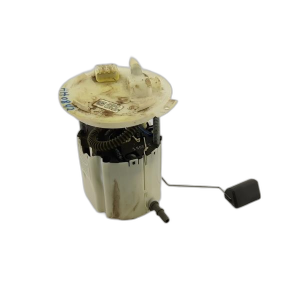
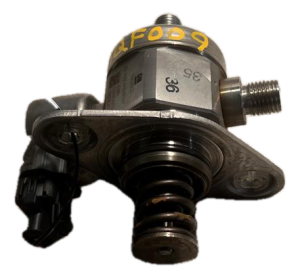
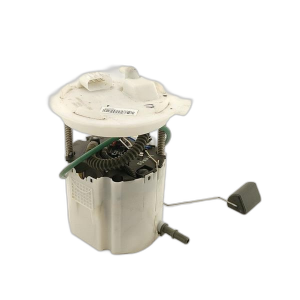
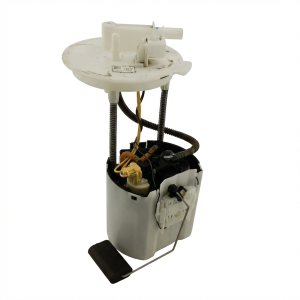
New Aftermarket Parts Available



The information in this article is provided for general reference and educational purposes only. Vehicle specifications, procedures, and part compatibility can vary by production date, trim level, and region. Always consult your vehicle's factory service manual and verify part numbers before purchasing or performing repairs. Safety-critical components such as airbags, seat belts, and braking systems should be installed by a qualified professional.
- Chevrolet Camaro:
- 🧭 Diagnostic Flowchart
- 🎬 Helpful Videos
- 🛍️ Shop This Part
- What's Unique About the 2010-2015 Chevrolet Camaro
- Symptoms You May Notice
- Most Likely Causes
- Rare But Worth Checking
- Diagnosis Steps
- Parts You'll Likely Need
- Related Codes That Often Appear With This One
- Technical Service Bulletins (TSBs) & Recalls
- Platform-Specific Known Issues
- Mechanic-Grade Diagnostic Values
- Scan Tool Commands That Help
- Wiring & Ground Locations
- OEM Part Supersession History
- Model Year Variations Within This Range
- Other Known Issues on This Vehicle
- Used vs. New Parts: Buying Guide for This Vehicle
- Real Owner Stories
- 2010-2015 Chevrolet Camaro
- 2010-2015 Chevrolet Camaro SS
- Documented NHTSA Reports
- GM Platform Fuel Level Failure
- Persistent Fuel Codes
- Intermittent Gauge and Light
- Multiple Sensor Replacements
- Related OBD-II Codes
- Frequently Asked Questions
- 🎟️ Get 5% Off