

P0463 on 2005-2010 Chrysler 300: Fuel Level Sensor Circuit High Input Causes and Fixes
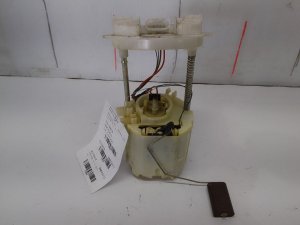
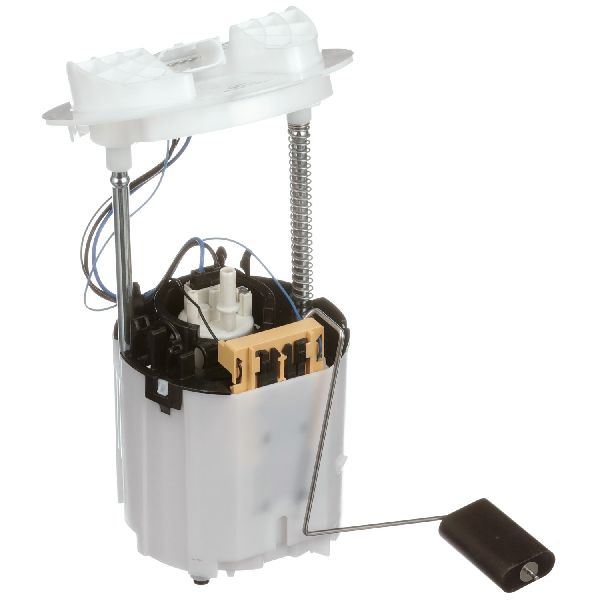
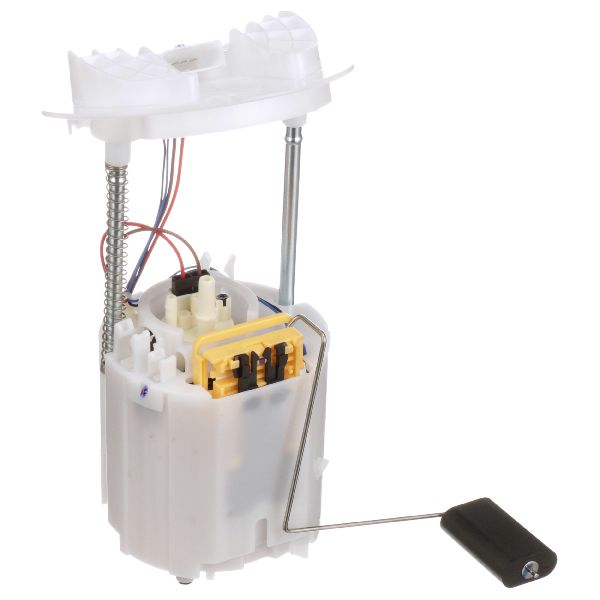
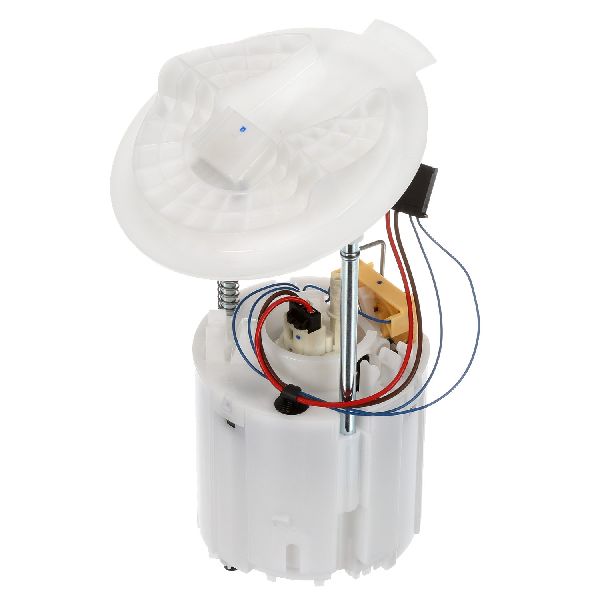
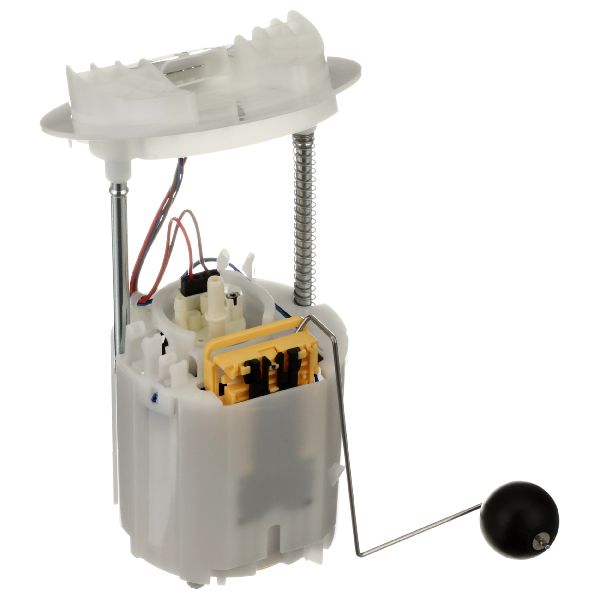
On a 2005-2010 Chrysler 300, code P0463 is almost always caused by a failed fuel level sending unit, which is part of the passenger-side fuel pump module. The PCM detects a voltage higher than expected, causing the fuel gauge to read full. Expect to replace the entire module for around $100-$250 in parts for a DIY fix.
- P0463 on a Chrysler 300 points directly to a problem with the passenger-side fuel level sensor.
- The most likely fix is replacing the entire passenger-side fuel pump module, as the sensor is built into it.
- You can still drive the car, but you cannot trust the fuel gauge and risk running out of gas.
- Before buying parts, check the wiring connector on top of the fuel tank for corrosion, as this can be a simpler fix.
- The repair can be done by a DIYer with moderate experience, as it requires removing the back seat and handling fuel system components.
What's Unique About the 2005-2010 Chrysler 300
The 2005-2010 Chrysler 300 (and its LX platform mates like the Dodge Charger and Magnum) uses a saddle-style fuel tank that straddles the driveshaft. 🎬 See how the dual-pump saddle tank system is configured. To measure fuel accurately across both lobes of the tank, it employs two separate fuel level sending units. Code P0463 specifically refers to an issue with the 'A' circuit, which is the primary sending unit located on the passenger side of the fuel tank, integrated into the main fuel pump assembly. The secondary sender ('B' circuit) is on the driver's side. This two-sender design is the most important platform-specific detail for diagnosing this code.
Symptoms You May Notice
- Check Engine Light is on
- Fuel gauge is stuck on 'Full'
- Fuel gauge fluctuates erratically before failing
- Low fuel warning light may be on constantly, even with a full tank
- In some cases, the fuel gauge may read empty after being stuck on full for a period.
- Replacing the instrument cluster (dashboard gauges). The gauge itself is rarely the problem; it simply displays the faulty data sent from the PCM.
- Replacing the driver's side (secondary) fuel sending unit. While it can also fail (often setting a P2068 code), code P0463 specifically points to the 'A' circuit, which is the passenger side unit.
Most Likely Causes
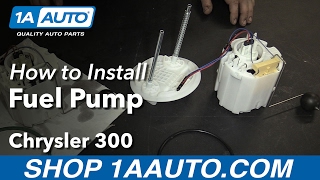
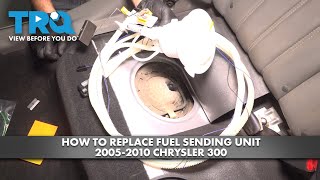
- Faulty Fuel Level Sending Unit (Passenger Side) 🔴 High Probability → Shop Fuel Tank Sending Unit The sending unit is a wearable component with a variable resistor that fails over time. The resistor card wears out, causing an open in the circuit, which the PCM interprets as maximum voltage (beyond full). On this platform, it is integrated with the fuel pump module. 🎬 Watch: Step-by-step guide to replacing the passenger side sending unit.
How to confirm: Access the top of the fuel tank by removing the rear seat cushion. Disconnect the sender and measure the resistance across its terminals with a multimeter while manually moving the float arm. A failed sender will show no change in resistance or an open circuit (infinite resistance). A good sender should show a smooth sweep of resistance, typically in the range of 73 ohms (empty) to 10 ohms (full).
Typical fix: Replace the entire passenger-side fuel pump module, which includes the new sending unit. Access is under the rear seat.
Est. part cost: $100-$250 - Wiring Harness or Connector Damage 🟡 Medium Probability The wiring and connector are located under the rear seat cushion, where they can be susceptible to moisture, corrosion, or physical damage from items stored in the back seat or from spills.
How to confirm: Visually inspect the wiring harness and the connector at the top of the fuel pump module for any signs of corrosion (green or white powder), frayed wires, or loose pins. A short to power on the signal wire can also cause this code. Use a multimeter to check for continuity and proper voltage on the signal wire from the PCM.
Typical fix: Clean any corrosion from the connector terminals using a contact cleaner and a small brush. Repair or replace any damaged sections of the wiring harness.
Est. part cost: $5-$50 - Poor Ground Connection ⚪ Low Probability The fuel system components rely on a solid ground to the chassis. Over time, rust or corrosion can weaken this connection, leading to high resistance in the circuit, which can be misinterpreted by the PCM.
How to confirm: Locate the fuel tank's ground strap and inspect it for corrosion or looseness. Test the ground circuit with a multimeter to ensure there is minimal resistance (less than 1 ohm) between the pump connector and a known-good chassis ground.
Typical fix: Clean the ground connection point on the chassis and the strap terminal with a wire brush and re-secure it tightly. Apply dielectric grease to prevent future corrosion.
Est. part cost: $1-$10
Rare But Worth Checking
- Faulty Powertrain Control Module (PCM): This is very rare. Before suspecting the PCM, all other possibilities, including the sensor, wiring, and grounds, must be exhaustively ruled out. A faulty PCM typically causes multiple, unrelated codes and is the last component to consider.
Diagnosis Steps
- Confirm the P0463 code using an OBD-II scanner.
- Remove the rear seat bottom cushion to access the fuel pump and sending unit covers. The primary 'A' unit is on the passenger side.
- Disconnect the battery.
- Remove the passenger side cover plate (typically held by three 10mm nuts). Visually inspect the electrical connector on top of the fuel pump module for corrosion or damage.
- If the connector looks good, disconnect it. Test the wiring harness for the correct reference voltage from the PCM and for a good ground connection.
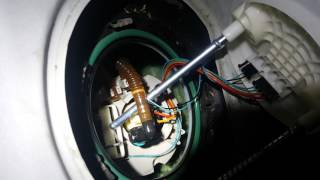
- If wiring is confirmed to be good, the sending unit is the likely culprit. Clean the area around the lock ring to prevent debris from falling into the tank. Use a brass punch or a specialized tool to turn the lock ring counter-clockwise and remove it.
- Carefully lift the fuel pump module out of the tank, being mindful of the float arm. With the module removed, test the fuel level sensor's resistance with a multimeter while moving the float arm up and down. The resistance should change smoothly. If it's stuck at a high reading or shows an open circuit, the unit has failed.
- If the sending unit tests good, a more complex wiring trace or a PCM fault is possible, which may require professional diagnosis.
Parts You'll Likely Need
- Fuel Pump and Sending Unit Assembly (Passenger Side)
(OEM #68494735AB (this part may supersede older numbers like 5136022AD). Always verify with VIN.)— This is the most common failure point for code P0463. The sending unit is integrated into the fuel pump module, so the entire assembly is typically replaced.
Trusted brands: Mopar, Delphi, Spectra Premium, TRQ, Dorman, Carter
OEM price range: $180-$430
Aftermarket price range: $90-$150
Technical Service Bulletins (TSBs) & Recalls
- TSB 21-011-05: While not directly for P0463, this TSB for the NAG1 transmission shudder is relevant to the platform. It details a procedure to flush the transmission and seal the fill tube to prevent water contamination, a common issue on these vehicles.
Platform-Specific Known Issues
- Owner on 300cforums.com reported getting P0463 with a full tank reading. After replacing the passenger side fuel pump assembly, the gauge returned to normal. The owner noted the importance of getting a new lock-ring seal to prevent fuel odors.
- A Dodge Charger owner on Reddit with P0463 noted the code was intermittent at first before the gauge failed completely to 'Full'. The fix was a new passenger-side fuel pump module.
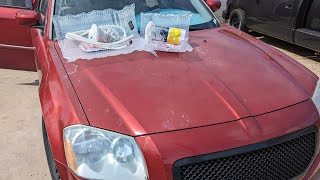
- Several owners have noted that using a brass punch and hammer is critical for removing the plastic lock ring without breaking it, 🎬 Watch this DIY walkthrough for removing the fuel pump safely. as specialized tools are not always available.
Mechanic-Grade Diagnostic Values
- Fuel Level Sensor 'A' (Passenger Side) Resistance — expected: Approximately 73 Ohms (±5) at Empty and 10 Ohms (±2) at Full. The key is a smooth, linear change when moving the float arm, with no dropouts or open (infinite) readings.. Failure: An open circuit (infinite resistance), a fixed reading that doesn't change with float movement, or erratic jumps in resistance.
- Fuel Level Sensor Signal Wire Voltage (at pump connector, unplugged) — expected: Approximately 5 volts Key-On Engine-Off (KOEO). Some technicians report seeing system voltage (12V) as normal on some Mopar vehicles.. Failure: Zero volts, indicating an open wire from the PCM, or a voltage shorted to ground.
Scan Tool Commands That Help
- Chrysler wiTECH / wiTECH 2.0: Network Topology View / Actuator Tests — If a new sending unit does not fix the code, a dealer-level tool like wiTECH can be used. The Network Topology view can confirm if the PCM is communicating with other modules correctly. The 'Actuators' or 'System Tests' section may allow for bidirectional control to test related components or view raw data from the Body Control Module (BCM) that processes the fuel level signal, helping to isolate a wiring or module fault.
Wiring & Ground Locations
- Fuel Pump Fuse — In the trunk fuse box (near the battery). It is typically a 20A yellow fuse.. While a blown fuse usually causes a no-start condition, it's a primary check. Power from this fuse goes to the fuel pump relay.
- Fuel Pump Relay — In the trunk fuse box, next to the 20A fuel pump fuse.. A faulty relay could cause intermittent power issues, though it's more likely to cause a no-start than a P0463 code.
- Fuel Pump Connector (Passenger Side) — Under the rear passenger-side seat, on top of the fuel pump module access cover.. This is the primary test point. The three smaller wires are for the sending unit signal and ground. The two thicker wires are for the fuel pump motor itself (typically a Dark Blue/Orange for power and Black/Orange for ground).
Real Owner Repair Stories
- 2CarPros Forum / General Technician Knowledge (2012 Chrysler 300 (LX Platform, next generation but same principle)) — No-start condition after replacing fuel pump, followed by a P0463 and an empty fuel gauge reading after getting the pump to run.
❌ Tried (didn't work) Installing a new aftermarket fuel pump which resulted in a no-start.
✅ What actually fixed it The aftermarket fuel pump was internally wired incorrectly. The pin for the fuel level sender signal was where the pump's ground pin should have been. The owner had to manually create a ground to get the pump to work, which disabled the fuel gauge. The final fix was to re-pin the vehicle's connector to match the incorrect layout of the aftermarket pump, or return the pump for one wired correctly.
OEM Part Supersession History
5136022AD, 5136022AF, 5136022AG, etc.→05136022AM (and others)— Revisions to improve reliability or change suppliers.
Heads up: There are numerous revisions of this part. While most are physically interchangeable, using the vehicle's VIN to verify the latest correct part number is critical to ensure compatibility with the vehicle's electronics.
Model Year Variations Within This Range
- 2005-2010: Minor variations in wire colors at the fuel pump connector and slight layout differences in the trunk fuse panel have been noted between early (2005-2007) and later (2008-2010) models. However, the fundamental diagnostic procedure, component locations (passenger side pump, trunk fuse box), and failure mode remain the same across the generation.
Diagnostic Flowchart
Other Known Issues on This Vehicle
Issues unrelated to this code that are worth knowing about as an owner of this generation:
- Shifter Stuck in Park ('Pink Thingy' Failure) 🔴 High — Extremely common on 2005-2007 models with the NAG1/W5A580 5-speed automatic. A small plastic park-lock lever inside the shifter assembly breaks, immobilizing the vehicle. (Ref: No recall, but widely documented. Aftermarket metal replacement parts (e.g., Dorman 924-706) are the permanent fix.)
- Front Suspension Clunking/Rattling 🟠 Medium — Very common. Caused by premature wear of front suspension components, most notably sway bar bushings and tension strut/control arm bushings.
- 5.7L HEMI 'Tick' (MDS Lifter/Camshaft Failure) 🔴 High — A well-known issue on 5.7L HEMI engines equipped with the Multi-Displacement System (MDS). A ticking noise can be a precursor to lifter and/or camshaft failure, often requiring expensive repairs.
- NAG1 (W5A580) Transmission Shudder 🟠 Medium — Owners may experience a shudder during light acceleration, particularly when the torque converter clutch engages. This is often caused by fluid contamination, even with small amounts of water. (Ref: TSB 21-011-05 addresses this, recommending a fluid flush, filter replacement, and sealing the dipstick tube.)
- Alternator Failure 🟠 Medium — Premature alternator failure is frequently reported. The alternator is located in a difficult-to-access position at the bottom of the engine, making replacement labor-intensive.
Used vs. New Parts: Buying Guide for This Vehicle
When a used part is the smart pick: Purchasing a used fuel pump assembly is strongly discouraged. The fuel level sender is a primary failure point and a wear item. A used part may have the same fault or fail shortly after installation. It should only be considered in an extreme budget situation from a verified low-mileage donor vehicle.
Donor-vehicle mileage cap: roughly under 50000 miles for the part to have meaningful remaining life.
What to inspect on the donor part:
- Verify the donor vehicle's mileage.
- Inspect the electrical connector for zero signs of corrosion or heat damage.
- Check the part number; newer revisions are preferable.
- Avoid parts from vehicles that have been sitting for years, as the sender can be damaged by old fuel.
Aftermarket brands forum-validated for this vehicle:
- Delphi
- Spectra Premium
- Carter
- Dorman
- TRQ
Brands owners have reported issues with on this vehicle:
- Unbranded, exceptionally low-cost units from online marketplaces pose a risk of being wired incorrectly from the factory, which can lead to significant diagnostic confusion.
Real Owner Stories
Aggregated from forums and TSBs cited above. Mileages and costs reflect what owners reported in those sources.
Chrysler 300C
Symptoms: The fuel gauge was giving a full tank reading and the P0463 code was present.
What fixed it: Replacing the passenger side fuel pump assembly and installing a new lock-ring seal.
Source hint: 300cforums.com
Dodge Charger
Symptoms: The code was intermittent at first before the fuel gauge failed completely to 'Full'.
What fixed it: Installation of a new passenger-side fuel pump module.
Source hint: Reddit r/AskAMechanic thread titled '2014 dodge charger rt code p0463'
Related OBD-II Codes
Frequently Asked Questions
My 2005 Chrysler 300 has a transmission shudder; is there a TSB for this even though I have a P0463 code?
Which side of my Chrysler 300 should I check first for the P0463 fuel sensor issue?
Do I need a special tool to remove the fuel pump lock ring on my 300C?
Why is my fuel gauge stuck on 'Full' even when I know the tank is lower?
Can I just replace the sensor, or do I need the whole pump assembly?
Is there a risk of fuel smells after I fix the P0463 sensor?
Helpful Videos
Used OEM Parts in Stock
New Aftermarket Parts Available


The information in this article is provided for general reference and educational purposes only. Vehicle specifications, procedures, and part compatibility can vary by production date, trim level, and region. Always consult your vehicle's factory service manual and verify part numbers before purchasing or performing repairs. Safety-critical components such as airbags, seat belts, and braking systems should be installed by a qualified professional.
- Chrysler 300:
- 🧭 Diagnostic Flowchart
- 🎬 Helpful Videos
- 🛍️ Shop This Part
- What's Unique About the 2005-2010 Chrysler 300
- Symptoms You May Notice
- Most Likely Causes
- Rare But Worth Checking
- Diagnosis Steps
- Parts You'll Likely Need
- Technical Service Bulletins (TSBs) & Recalls
- Platform-Specific Known Issues
- Mechanic-Grade Diagnostic Values
- Scan Tool Commands That Help
- Wiring & Ground Locations
- Real Owner Repair Stories
- OEM Part Supersession History
- Model Year Variations Within This Range
- Other Known Issues on This Vehicle
- Used vs. New Parts: Buying Guide for This Vehicle
- Real Owner Stories
- Chrysler 300C
- Dodge Charger
- Related OBD-II Codes
- Frequently Asked Questions
- 🎟️ Get 5% Off