

P0463 on 2010-2015 Hyundai Tucson: Fuel Level Sensor Circuit High Causes and Fixes
This code almost always means the fuel level sending unit inside the gas tank has failed. Your fuel gauge will be inaccurate, and you risk running out of gas unexpectedly. The fix is to replace the sending unit, which is often part of the complete fuel pump assembly. Access is typically under the rear driver's-side seat.
- P0463 on a 2010-2015 Tucson means your fuel gauge is unreliable due to a problem with the fuel level sensor circuit.
- The most likely culprit is the fuel level sending unit itself, which has failed inside the gas tank.
- You can still drive the car, but you must track your mileage manually to avoid running out of gas.
- The repair involves replacing the sending unit, which is often part of the fuel pump assembly. Due to the fire risk of handling gasoline, this job is best left to a professional.
- Before buying parts, verify the correct OEM part number for your specific Tucson using its VIN.
What's Unique About the 2010-2015 Hyundai Tucson
For the second-generation (2010-2015) Hyundai Tucson, this code is a straightforward issue with few platform-specific quirks. The problem is almost always located within the fuel tank at the fuel level sending unit. Unlike some vehicles with complex electrical issues, the Tucson's fuel system for these years is relatively conventional. A major advantage for DIY repair is that the fuel pump and sending unit are accessible via a service panel under the rear seat on the driver's side, eliminating the need to drop the entire fuel tank. The primary challenge is that the sending unit is typically integrated with the fuel pump module, meaning the entire assembly is often replaced as one unit.
Symptoms You May Notice
- Check Engine Light is on
- Fuel gauge reads incorrectly (may be stuck on full, empty, or fluctuate randomly)
- Low fuel warning light is always on or never comes on
- Running out of fuel unexpectedly even when the gauge shows fuel is available
- Fuel gauge reading changes erratically after filling up
- Replacing the fuel pump when only the sending unit is bad. However, they are often sold as a single assembly, making this less of a financial mistake.
- Replacing the instrument cluster before properly diagnosing the sending unit and wiring.
- Assuming the problem is a bad ground without testing, as a bad ground would more likely affect the entire fuel pump operation, not just the level sensor.
Most Likely Causes
- Failed Fuel Level Sending Unit 🔴 High Probability → Shop Fuel Tank Sending Unit The variable resistor on the sending unit can wear out over time from the float arm's constant movement. This wear creates 'dead spots' or an open circuit, leading to an infinite or out-of-range high resistance reading that triggers the P0463 code.
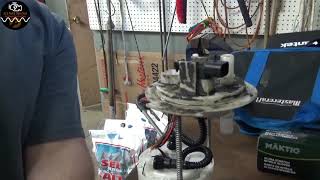
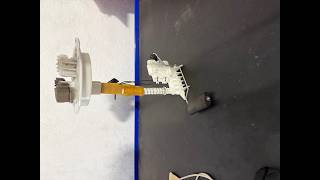
How to confirm: Access the fuel pump assembly and use a multimeter to test the resistance of the sending unit's terminals while manually moving the float arm. 🎬 See how to test the sensor without removing the fuel pump. The resistance should change smoothly. For many Hyundai/Kia models, resistance is high when full and low when empty. A typical range is approximately 7 Ohms (Empty) to 110 Ohms (Full). An infinite resistance reading (OL) or erratic jumps confirm the sender is bad.
Typical fix: Replace the fuel level sending unit. On this Tucson, it is often sold as part of the complete fuel pump module.
Est. part cost: $100-$250 - Damaged Wiring or Connector 🟡 Medium Probability The wiring connector on top of the fuel tank is exposed to debris and moisture under the rear seat carpet, which can lead to corrosion. Wires can also be damaged from road debris or improper service. A broken locking tab on the connector is a known issue, which can cause it to loosen over time.
How to confirm: Visually inspect the wiring harness and connector at the top of the fuel tank for corrosion, broken wires, or loose pins. Perform a continuity test on the signal wire between the PCM and the fuel pump connector. Check for a stable ground connection.
Typical fix: Clean the connector terminals with a contact cleaner or repair the damaged section of the wiring harness. If the connector's locking tab is broken, secure it firmly with a zip tie or replace the connector pigtail.
Est. part cost: $5-$50 - Stuck Fuel Float Arm ⚪ Low Probability Less common, but the mechanical arm that the float is attached to can become bent or stuck due to debris in the tank or if the vehicle has sat for a very long time, causing old fuel to gum up components. This prevents it from moving with the fuel level.
How to confirm: Visually inspect the float arm for damage or obstruction after removing the fuel pump assembly from the tank.
Typical fix: Free the stuck arm or replace the fuel level sending unit assembly if the arm is damaged.
Est. part cost: $100-$250
Rare But Worth Checking
- Faulty Instrument Cluster: → Shop Instrument Cluster While rare, a failure within the instrument cluster's circuitry can cause incorrect fuel gauge readings. This is usually suspected only after the sending unit and wiring have been confirmed to be in good working order through rigorous testing. A diagnostic check would involve verifying the signal wire has continuity and correct voltage all the way to the cluster's input pin.
- Faulty Powertrain Control Module (PCM): A PCM failure is extremely unlikely to be the cause of a P0463 code and should be considered a last resort after all other possibilities have been exhausted by a professional. In some cases, as noted in NHTSA ODI #11218601 for a similar Hyundai model, the PCM may trigger P0463 alongside catalytic converter codes (P0420), requiring a comprehensive diagnostic to determine if the issues are related.
Diagnosis Steps
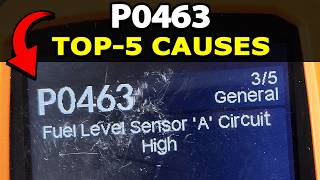
- Read the code from the PCM using an OBD-II scanner to confirm P0463 is present. 🎬 Watch: A quick overview of P0463 causes and common solutions.
- Observe the fuel gauge. Note if it is stuck on full, empty, or behaving erratically.
- Use a scan tool with live data capability to view the voltage or resistance reading from the fuel level sensor. A high, fixed voltage (often near 5V) or infinite resistance points to an open circuit.
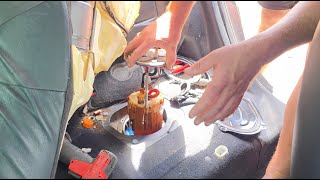
- Gain access to the top of the fuel tank by removing the rear driver's side seat cushion and the black metal access panel.
- Inspect the electrical connector on the fuel pump assembly for any signs of corrosion, damage, or loose connections. Pay close attention to the locking tab, which is known to break.
- If the wiring appears intact, disconnect the connector and use a multimeter set to Ohms to test the resistance across the fuel level sender pins on the pump assembly side.
- While monitoring the resistance, have a helper gently rock the vehicle to make the fuel slosh. The resistance reading should fluctuate. An infinite reading (OL) indicates an open circuit and a faulty sender.
- If the sender tests good, the problem is likely in the wiring. Perform a continuity test on the signal and ground wires from the fuel pump connector back to the PCM.
- If all wiring and the sender test good, the issue may be with the instrument cluster or PCM, which requires advanced diagnostics.
Parts You'll Likely Need
- Fuel Pump Sender Assembly
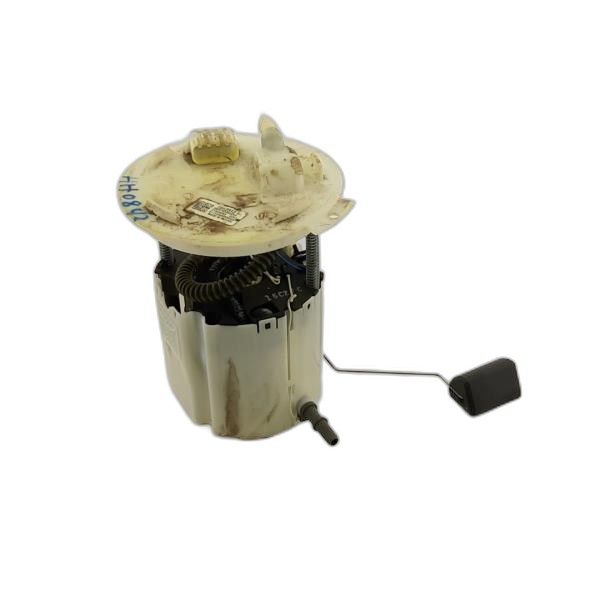
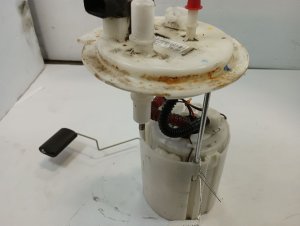
(OEM #94460-2S500)— This is the most common failure point for the P0463 code. The internal variable resistor wears out, causing an open circuit. This part contains the fuel level float, arm, and sensor. This part number is listed for 2010-2012 Tucson models with 2.0L and 2.4L engines.
Trusted brands: Hyundai (Genuine OEM), Delphi, Spectra Premium, Beck Arnley
OEM price range: $150-$200
Aftermarket price range: $100-$160 - Fuel Pump Sender Assembly
(OEM #94460-2S510)— An alternate part number exists for some models within this year range, specifically listed for 2009-2013 models. It is critical to verify the correct part number using the vehicle's VIN before ordering.
Trusted brands: Hyundai (Genuine OEM)
OEM price range: $150-$200
Aftermarket price range: $100-$160
Platform-Specific Known Issues
- Fuel Pump Access Panel: → Shop Fuel Pump The fuel pump and sending unit can be accessed by removing the rear seat cushion on the driver's side. Under the carpet, there is a black metal plate held by four screws. Removing this plate exposes the top of the fuel pump assembly. 🎬 Watch: Step-by-step guide to replacing the fuel pump and sender unit.
Mechanic-Grade Diagnostic Values
- Fuel Level Sensor Resistance — expected: Approximately 7 Ohms (Empty) to 110 Ohms (Full). Resistance should change smoothly when moving the float.. Failure: A reading of infinite resistance (OL) indicates an open circuit (common for P0463). Jumps or dead spots also indicate failure.
- Fuel Level Sensor Signal Voltage (at PCM or sensor connector) — expected: Signal should be between ~0.5V (Full) and ~4.5V (Empty) on a 5V reference system. Note: Hyundai resistance is inverse to some other makes.. Failure: A voltage reading stuck high, near 5V, indicates an open in the signal circuit or a failed sensor, triggering P0463.
Scan Tool Commands That Help
- Hyundai GDS (Global Diagnostic System): Live Data / Current Data — Use this function to monitor the 'Fuel Level Sensor' voltage or resistance value in real-time. This allows a technician to see the exact value the PCM is receiving without back-probing wires initially. Wiggling the harness while watching this data can help identify intermittent open circuits.
- Hyundai GDS (Global Diagnostic System): Actuation Test — While there isn't a direct actuation test for the passive fuel level sensor, the GDS can be used to command the instrument cluster gauges to perform a sweep test. If the fuel gauge moves correctly during the sweep but reads incorrectly otherwise, it helps isolate the fault to the sending unit or wiring, rather than the cluster itself.
Wiring & Ground Locations
- Fuel Pump Assembly Connector — On top of the fuel tank, accessible under the rear driver's-side seat cushion beneath a metal access plate.. This is the primary connection point for the fuel level sensor. It is a common point for corrosion, loose pins, or physical damage (like a broken locking tab) that can cause an open circuit and trigger P0463.
- ECM/PCM Connector — For the 2.0L/2.4L engines, the ECM is typically located in the engine compartment. For a 2011 2.0L, the fuel sender signal may route to a specific pin on connectors labeled [CHG-K] or [CHG-A].. This is the termination point for the fuel level sensor signal. A continuity test from the fuel pump connector to the correct pin here will confirm if the wiring harness is intact or has an open circuit.
Real Owner Repair Stories
- YouTube video by 'Taller Ojeda' (Hyundai Tucson (generation consistent with 2010-2015)) — Vehicle would stall intermittently while driving, particularly on bumpy roads.
❌ Tried (didn't work) A previous mechanic had attempted a temporary fix with a wire wrapped around the connector, which failed.
✅ What actually fixed it The locking tab on the main fuel pump electrical connector was broken, causing the connector to vibrate loose and lose connection. The final fix was to secure the connector firmly with electrical tape and a strategically placed wire to prevent it from backing out, restoring a permanent connection. - NHTSA ODI #10958317 (Hyundai Owner Report) — An owner reported that the P0463 and P0464 codes caused the fuel gauge to suddenly change readings while driving, which they described as extremely dangerous due to the risk of unexpected fuel depletion.
- NHTSA ODI #11315420 (Hyundai Owner Report) — One owner noted that while the fuel level sensor part itself was relatively inexpensive, it was integrated into the fuel pump assembly, complicating the repair.
OEM Part Supersession History
94460-2S500→Unknown, but coexists with 94460-2S510— Part variation for different model years or configurations within the 2010-2015 range.
Heads up: Part number 94460-2S500 is generally listed for 2010-2012 models, while 94460-2S510 is listed for a broader 2009-2013 range. Using the vehicle's VIN to verify the correct part is critical as the resistance curves or physical fit may differ.
Diagnostic Flowchart
Other Known Issues on This Vehicle
Issues unrelated to this code that are worth knowing about as an owner of this generation:
- Theta II Engine Failure 🔴 High — Affects 2.0L and 2.4L engines, particularly 2014-2015 models. Caused by manufacturing debris leading to premature connecting rod bearing wear, potentially causing engine seizure. (Ref: Subject of multiple recalls, class-action lawsuits, and extended warranties (up to 15 years/150,000 miles for certain conditions).)
- Excessive Oil Consumption 🟠 Medium — Common in both 2.0L and 2.4L engines. Can be caused by worn piston rings or cylinder walls, requiring frequent oil top-offs. (Ref: NHTSA has investigated claims of sudden oil leaks from drain pan assembly failures.)
- ABS Module Fire Risk 🔴 High — An internal short circuit in the Anti-Lock Brake System (ABS) module could occur, creating a fire risk even when the vehicle is parked. (Ref: Recalls were issued (e.g., NHTSA campaign 20V543) for affected models to replace the ABS module or related fuses.)
- Transmission Hesitation/Shifting Issues 🟡 Low — Some owners, particularly of the 2011 model year, reported issues with the transmission hesitating or kicking out of gear. (Ref: Later TSBs (e.g., for the 2016+ models) addressed similar issues with TCU software updates, but less formal documentation exists for the 2010-2015 generation.)
Used vs. New Parts: Buying Guide for This Vehicle
When a used part is the smart pick: A used fuel pump assembly from a junkyard is a risky choice for this repair. The fuel level sending unit is a wear item, and a used part may have limited remaining life or could be faulty already. It only makes sense if the budget is extremely tight and the donor vehicle is known to be very low mileage.
Donor-vehicle mileage cap: roughly under 50000 miles for the part to have meaningful remaining life.
What to inspect on the donor part:
- Verify the donor vehicle's mileage is low.
- Inspect the electrical connector pins on the used assembly for any signs of corrosion or overheating (discoloration).
- If possible, test the resistance of the sending unit on the bench before purchase by moving the float arm and checking for a smooth sweep with a multimeter.
Aftermarket brands forum-validated for this vehicle:
- Delphi
- Spectra Premium
- Beck Arnley
Brands owners have reported issues with on this vehicle:
- Unbranded, no-name parts sold on marketplaces are a significant gamble and often fail prematurely.
Real Owner Stories
Aggregated from forums and TSBs cited above. Mileages and costs reflect what owners reported in those sources.
2010 Hyundai Tucson — ~130000 miles
Symptoms: Erratic fuel gauge readings where the needle would jump from half full to empty while driving on flat roads; dashboard showed 1/4 tank but the vehicle ran out of gas unexpectedly.
What fixed it: Replacement of the fuel level sending unit.
Source hint: Owner report from AliExpress citation
2007 Hyundai Santa Fe
Symptoms: The vehicle threw codes P0463 and P0464. A dealer incorrectly suggested these codes indicated an imminent fuel pump failure.
What fixed it: The owner tracked mileage to avoid running out of fuel, noting the issue was with the fuel sensor rather than the pump's ability to deliver fuel.
Source hint: Hyundai Forums - hyundai-forums.com thread regarding P0464 and P0463
Hyundai Owner Report — NHTSA ODI #10845942
Symptoms: The fuel gauge would fall and give false readings. Diagnostics revealed a combination of codes including P0464 (intermittent), P0463 (high input), and P2069 (circuit high on sensor B).
What fixed it: The repair required addressing the fuel level sensor circuits, with the owner reporting a repair cost close to $900.
Hyundai Owner Report — NHTSA ODI #10960401
Symptoms: Immediately after filling up with gas, the fuel gauge would drop to zero and the Check Engine Light would illuminate with codes P2067, P0463, and P0464.
What fixed it: While the gauge would eventually begin working again, its accuracy remained in question, indicating a failing sensor sweep.
Related OBD-II Codes
Frequently Asked Questions
Where is the fuel pump access panel located on the 2010-2015 Hyundai Tucson?
Is there a common wiring issue I should check before replacing the fuel sender on my Tucson?
Can I replace just the fuel level sending unit, or do I need the whole pump assembly?
What are the typical resistance values for a healthy Hyundai fuel sender?
Are there any major engine recalls I should be aware of while fixing my 2014-2015 Tucson?
My Tucson's fuel gauge is erratic; could this be related to the ABS recall?
Helpful Videos

![How to Fix P0463 Engine Code in 2 Minutes [1 DIY Method / Only $11.5]](https://img.youtube.com/vi/vmZ6y3GoXH4/mqdefault.jpg)
Used OEM Parts in Stock
New Aftermarket Parts Available


The information in this article is provided for general reference and educational purposes only. Vehicle specifications, procedures, and part compatibility can vary by production date, trim level, and region. Always consult your vehicle's factory service manual and verify part numbers before purchasing or performing repairs. Safety-critical components such as airbags, seat belts, and braking systems should be installed by a qualified professional.
- Hyundai Tucson:
- 🧭 Diagnostic Flowchart
- 🎬 Helpful Videos
- 🛍️ Shop This Part
- What's Unique About the 2010-2015 Hyundai Tucson
- Symptoms You May Notice
- Most Likely Causes
- Rare But Worth Checking
- Diagnosis Steps
- Parts You'll Likely Need
- Platform-Specific Known Issues
- Mechanic-Grade Diagnostic Values
- Scan Tool Commands That Help
- Wiring & Ground Locations
- Real Owner Repair Stories
- OEM Part Supersession History
- Other Known Issues on This Vehicle
- Used vs. New Parts: Buying Guide for This Vehicle
- Real Owner Stories
- 2010 Hyundai Tucson — ~130000 miles
- 2007 Hyundai Santa Fe
- Hyundai Owner Report — NHTSA ODI #10845942
- Hyundai Owner Report — NHTSA ODI #10960401
- Related OBD-II Codes
- Frequently Asked Questions
- 🎟️ Get 5% Off