

P0500 on 2016-2022 Honda Pilot: Causes and Fixes for Vehicle Speed Faults
On a 2016-2022 Pilot, P0500 is almost always caused by a single failed ABS wheel speed sensor. You must use an ABS-capable scanner to identify which of the four sensors is bad. Expect to pay $40-$80 for an aftermarket sensor and $50-$70 for an OEM part.
- P0500 on a 2016-2022 Pilot means there is a fault in the ABS wheel speed sensor system, not a transmission speed sensor.
- You MUST use an ABS-capable scan tool to diagnose this code properly; it will pinpoint which of the four wheel sensors is at fault.
- The most common fix is replacing a single failed ABS wheel speed sensor.
- Symptoms include an inoperative speedometer, harsh shifting, and ABS/VSA warning lights.
- Before replacing a sensor, always inspect its wiring and connector for damage, as that can be a cheaper fix.
What's Unique About the 2016-2022 Honda Pilot
Unlike many older vehicles (including previous generation Hondas) that use a single Vehicle Speed Sensor (VSS) on the transmission, the 2016-2022 Pilot uses a more modern system. It calculates the vehicle's speed by averaging the signals from the four individual ABS wheel speed sensors, one located at each wheel hub. Therefore, a P0500 code on this vehicle points to a fault within the ABS sensor system, not a traditional VSS that doesn't exist on this platform for speedometer functions.
Symptoms You May Notice
- Check Engine Light is illuminated
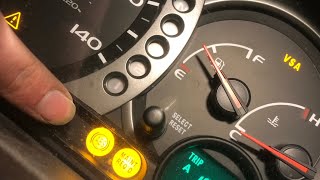
- ABS, VSA (Vehicle Stability Assist), or Traction Control warning lights are on
- Speedometer and odometer are inoperative or show erratic readings
- Harsh, late, or erratic automatic transmission shifting
- Cruise control is inoperative
- Possible hesitation during acceleration
- Flashing 'D' (Drive) indicator light on the gear selector
- Searching for and attempting to replace a Vehicle Speed Sensor (VSS) on the transmission. This part does not exist for this function on the 2016-2022 Pilot.
- Replacing a random ABS wheel speed sensor without first using an ABS-capable scanner to identify the specific faulty corner.
- Replacing the PCM when the issue is a simple wiring or sensor fault.
Most Likely Causes
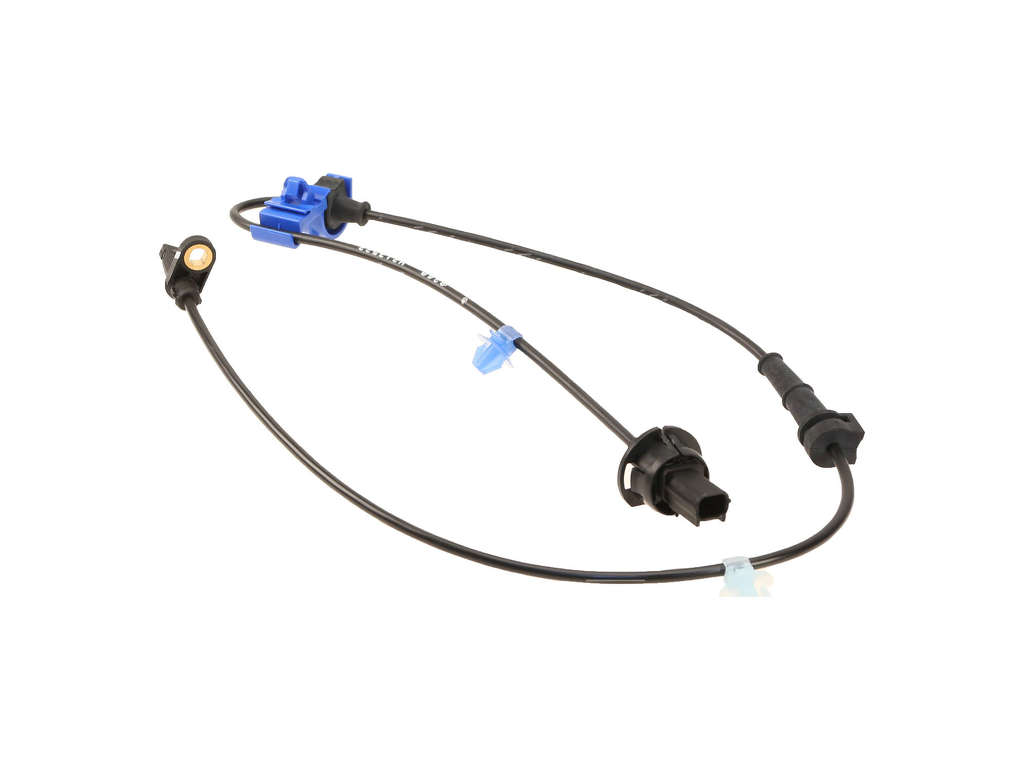
- Failed ABS Wheel Speed Sensor 🔴 High Probability → Shop ABS Wheel Speed Sensor These sensors are exposed to harsh conditions at the wheel hubs, including water, dirt, road salt, and vibrations, which can lead to internal failure or corrosion over time. Forum users on Reddit and other Honda forums frequently report these lights appearing and tracing them back to a single bad sensor.
How to confirm: Use an OBD-II scanner capable of reading ABS/Chassis codes. The scanner will store a specific code (e.g., C0031, C0034, etc.) pointing to the exact sensor that has failed (e.g., 'Left Front Wheel Speed Sensor Circuit'). You can also monitor live data from all four sensors while driving; the faulty one will read 0 MPH or have an erratic signal compared to the others. 🎬 Watch: Step-by-step ABS sensor diagnosis and replacement guide A multimeter can also be used to check the sensor. For passive sensors, check resistance; a reading of 'OL' (Open Loop) indicates a failed sensor when compared to a known good one. For active sensors, a more reliable test is to check for AC voltage generation while spinning the wheel; a good sensor should produce a small voltage (e.g., >100mV AC).
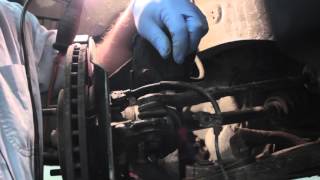
Typical fix: Replace the failed ABS wheel speed sensor at the corresponding wheel. 🎬 See this walkthrough for replacing a tricky rear sensor
Est. part cost: $40-$80 - Damaged Wiring or Connector to an ABS Sensor 🟡 Medium Probability The wiring harness leading to the wheel speed sensors can be damaged by road debris, improper servicing (like during a brake job), or corrosion from road salt and moisture. The wires can also break internally near the connector from repeated suspension movement.
How to confirm: After identifying the problematic corner with a scanner, visually inspect the entire length of the sensor's wiring harness for breaks, chafing, or corrosion at the connector. Tug gently on the wires at the connector to check for internal breaks.
Typical fix: Repair the damaged section of wire or replace the connector pigtail. In some cases, the sensor is sold with the harness attached.
Est. part cost: $15-$40 - Damaged or Corroded ABS Tone Ring ⚪ Low Probability The tone ring, which is part of the wheel bearing/hub assembly or CV axle, can accumulate rust or debris, or get damaged, preventing the sensor from getting a clean reading. This is more common in areas with heavy road salt usage.
How to confirm: Visually inspect the tone ring for missing teeth, heavy rust buildup, or physical damage. This requires removing the wheel and potentially the brake rotor.
Typical fix: Clean the tone ring with a wire brush. If it is damaged, the CV axle or wheel hub assembly will likely need to be replaced.
Est. part cost: $150-$400
Rare But Worth Checking
- Faulty ABS Control Module: → Shop ABS Control Module If a wheel speed sensor and its wiring test good but the code persists, the ABS module itself may be at fault. This is uncommon and should be diagnosed by a professional. 🎬 Watch: How to diagnose ABS and VSA dash lights It may be accompanied by communication codes like U0121.
- Faulty Powertrain Control Module (PCM): This is extremely rare. All other possibilities should be exhausted before considering a PCM failure.
Diagnosis Steps
- Connect an OBD-II scanner that can read ABS/Chassis codes to the vehicle's diagnostic port.
- Read the trouble codes from the ABS control module. Note the specific code that identifies the faulty wheel sensor (e.g., 'Right Rear Wheel Speed Sensor Circuit').
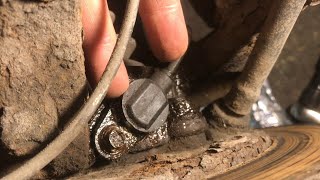
- Visually inspect the identified sensor, its connector, and the wiring harness for any obvious signs of damage, corrosion, or loose connections.
- If no visual faults are found, use the scanner's live data feature to monitor the speed of all four wheels while driving slowly. Confirm that the sensor identified by the code is providing an erratic, incorrect, or zero reading compared to the others.
- If the sensor signal is bad, test the circuit. Disconnect the sensor and check for proper voltage and ground at the connector. If power and ground are present, the sensor itself is the likely culprit.
- Alternatively, test the sensor. For passive sensors, check internal resistance with a multimeter, comparing the reading to a known-good sensor on another wheel; a significantly different reading (especially an open circuit 'OL') confirms a bad sensor. For active sensors, check for AC voltage generation (>100mV) while spinning the wheel.
- If the circuit tests bad, trace the wiring back toward the ABS module to find the break or short.
- Inspect the ABS tone ring on the corresponding axle or wheel hub for damage or heavy rust.
- After repair, clear all codes from the PCM and ABS module and perform a test drive to ensure the speedometer works and no warning lights return. The ABS light may require driving a short distance to self-clear.
Parts You'll Likely Need
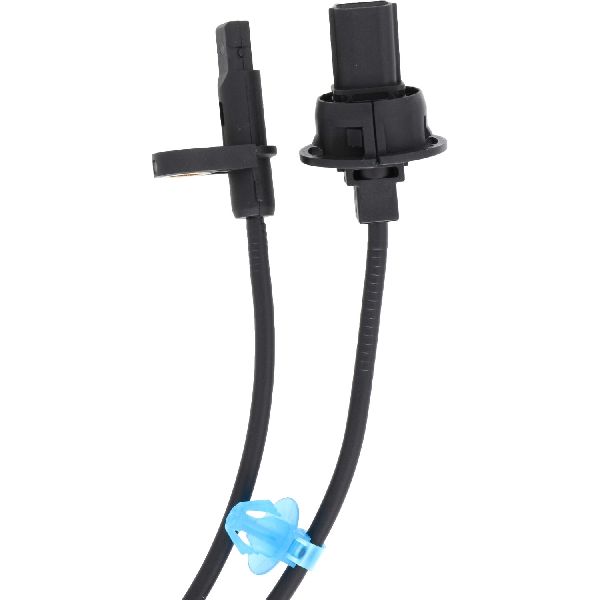
- ABS Wheel Speed Sensor
(OEM #Front Left: 57455-TG7-A02, Front Right: 57450-TG7-A02, Rear Left (FWD): 57475-TZ5-A02, Rear Right (FWD): 57470-TZ5-A02, Rear Left (AWD): 57475-TG7-A03, Rear Right (AWD): 57470-TG7-A03)— This is the most common failure point for a P0500 code on this vehicle. There are four unique sensors, one for each wheel, with different part numbers for front/rear and FWD/AWD.
Trusted brands: Honda (OEM), NTK, Delphi, Beck/Arnley, Standard Motor Products, TRQ
OEM price range: $50-$70
Aftermarket price range: $35-$80
Related Codes That Often Appear With This One
- C0031-C003A — These are chassis codes specific to the wheel speed sensors. A P0500 code will almost always be accompanied by one of these codes, which will tell you exactly which wheel's sensor circuit is having a problem.
Platform-Specific Known Issues
- Real-World Forum Experience: A thread on Reddit for a similar generation Honda shows a user experiencing intermittent ABS, VSA, and Brake lights. The suggested fix, after confirming no codes are stored, is to check for a loose wheel speed sensor connector or damaged wiring, which can cause the ECU to temporarily lose contact with the sensor while driving.
- Older Model Battery Terminal Corrosion: On slightly older Pilot models, a common cause for multiple ABS/VSA related lights was corrosion on a secondary power wire at the positive battery terminal. While not directly documented for the 2016+ models, checking the battery terminals for clean, tight connections is a valid and easy first step in any electrical diagnosis.
Mechanic-Grade Diagnostic Values
- Passive ABS Wheel Speed Sensor Resistance — expected: Typically 800 - 2500 Ohms, but should be compared to a known-good sensor on the same vehicle.. Failure: A reading of 'OL' (Open Loop) or a value significantly different from the other wheel sensors on the vehicle.
- ABS Wheel Speed Sensor AC Voltage Output (Passive or Active) — expected: Greater than 100-200 millivolts (0.1-0.2 VAC) when the wheel is spun by hand.. Failure: No AC voltage is generated, or the voltage is erratic while the wheel is spun at a steady speed.
Scan Tool Commands That Help
- Honda Diagnostic System (HDS) or equivalent: VSA Sensor Neutral Position Memorization — After replacing an ABS/VSA component, disconnecting the battery, or if VSA/ABS lights are on without a specific sensor code. This recalibrates the steering angle and yaw rate sensors.
- Honda Diagnostic System (HDS) or equivalent: Clear Learned Values / Reset Transmission Adaptive Values — If harsh or erratic shifting persists after fixing the P0500 code and restoring the speed signal. This forces the Transmission Control Module (TCM) to relearn shift points with the correct speed data.
Wiring & Ground Locations
- G401 / G402 — Located near the VSA OFF switch assembly in the dashboard area.. These are the primary ground points for the VSA switch cluster. A poor ground here could cause erratic behavior in the VSA system, which is directly linked to the wheel speed sensors.
- Engine Bay Grounding Post (unofficial) — A threaded, unused hole on the driver's side fender structure, near the air intake. An M6x1.0 bolt can be installed to create a convenient and solid ground point.. Provides a clean, accessible ground point for testing electrical circuits in the engine bay, which is easier than reaching the factory grounding strap located low in the engine compartment.
Real Owner Repair Stories
- Honda-related repair forum comment (Honda vehicle with VSA/ABS system) — Persistent VSA and ABS lights that would not clear.
❌ Tried (didn't work) Replacing the ABS sensor four times.
✅ What actually fixed it The technician finally discovered that the tip of the original ABS sensor had broken off and was lodged inside the wheel bearing assembly, interfering with the new sensor's reading. Removing the broken piece and installing a new sensor resolved the issue. - Honda-related repair forum comment (Honda vehicle with VSA/ABS system) — VSA light and several other warning lights were on.
❌ Tried (didn't work) Taking the vehicle to a dealership, who diagnosed a failed VSA module and quoted $4000 for the repair.
✅ What actually fixed it The owner took the car home, unplugged the VSA control module connector, waited 10 seconds, and plugged it back in. This simple reset fixed all the issues and the lights went away.
Model Year Variations Within This Range
- 2016-2022: No significant variations affecting the diagnosis of P0500 have been identified within this generation. The mid-cycle refresh in 2019 primarily involved powertrain and infotainment changes, not the fundamental architecture of the ABS/VSA system used for speed calculation.
Diagnostic Flowchart
Other Known Issues on This Vehicle
Issues unrelated to this code that are worth knowing about as an owner of this generation:
- Faulty Fuel Injectors 🔴 High — Common enough that Honda issued a warranty extension to 10 years/150,000 miles. Often appears with codes P0300-P0306, P0420/P0430, and P219A/B. (Ref: TSB 20-100, 21-010)
- 9-Speed Transmission Issues (Touring/Elite Trims) 🟠 Medium → Shop Transmission Assembly — Widespread complaints of harsh shifting, hesitation, and juddering. Multiple software updates have been released to improve behavior. (Ref: TSB 20-029, 16-008)
- Infotainment System Glitches 🟠 Medium — Common reports of the screen freezing, going black, or making crackling/popping noises. Often requires a system reboot or software update. (Ref: TSB 23-047 (for related rearview camera issue))
- Connecting Rod Bearing Wear 🔴 High — A manufacturing error led to a recall for premature connecting rod bearing wear, which could cause engine seizure. Affects certain 2016-2019 models. (Ref: NHTSA Recall 23V-751)
- Failing Auto Start/Stop Feature 🟡 Low — A very common complaint where the system fails to restart the engine or stutters. Can be caused by a weak battery or software issues.
Used vs. New Parts: Buying Guide for This Vehicle
When a used part is the smart pick: For an ABS wheel speed sensor, buying a used part is not recommended. It is an exposed electronic component that fails due to age, heat cycles, and moisture. The cost of a reliable aftermarket part is low enough that the risk and labor of installing a used part with unknown remaining life is not a smart choice.
OEM-only on this vehicle (don't cheap out):
- While not strictly 'OEM-only', it is strongly advised to use either a genuine Honda sensor or a sensor from a known OEM supplier.
Aftermarket brands forum-validated for this vehicle:
- NTK (often the original manufacturer for Honda)
- Delphi
- Beck/Arnley (known for repackaging OEM parts)
Brands owners have reported issues with on this vehicle:
- Generic, unbranded sensors from eBay or Amazon, as they have a high reported failure rate.
- BWD (BorgWarner) has been cited by some users for out-of-spec sensors.
Real Owner Stories
Aggregated from forums and TSBs cited above. Mileages and costs reflect what owners reported in those sources.
2014 Honda Pilot
Symptoms: Intermittent ABS, VSA, and Brake lights appearing while driving.
What fixed it: Checking for a loose wheel speed sensor connector or damaged wiring that was causing the ECU to temporarily lose contact with the sensor.
Source hint: Reddit r/Honda
Related OBD-II Codes
Frequently Asked Questions
Why is my 2016-2022 Honda Pilot's speedometer not working and the 'D' light flashing?
Can I use a standard OBD-II code reader to find which sensor is causing the P0500 code?
Is there a recall for the fuel injector issues that sometimes appear alongside these lights?
Could my Pilot's 9-speed transmission shifting issues be related to the P0500 code?
My VSA and Traction Control lights are on with P0500; is this common for the Pilot?
Should I check my battery if I see multiple ABS and VSA warning lights?
Helpful Videos
We Have This Part in Stock


The information in this article is provided for general reference and educational purposes only. Vehicle specifications, procedures, and part compatibility can vary by production date, trim level, and region. Always consult your vehicle's factory service manual and verify part numbers before purchasing or performing repairs. Safety-critical components such as airbags, seat belts, and braking systems should be installed by a qualified professional.
- Honda Pilot:
- 🧭 Diagnostic Flowchart
- 🎬 Helpful Videos
- 🛍️ Shop This Part
- What's Unique About the 2016-2022 Honda Pilot
- Symptoms You May Notice
- Most Likely Causes
- Rare But Worth Checking
- Diagnosis Steps
- Parts You'll Likely Need
- Related Codes That Often Appear With This One
- Platform-Specific Known Issues
- Mechanic-Grade Diagnostic Values
- Scan Tool Commands That Help
- Wiring & Ground Locations
- Real Owner Repair Stories
- Model Year Variations Within This Range
- Other Known Issues on This Vehicle
- Used vs. New Parts: Buying Guide for This Vehicle
- Real Owner Stories
- 2014 Honda Pilot
- Related OBD-II Codes
- Frequently Asked Questions
- 🎟️ Get 5% Off