

P0500 on 2001-2003 Mazda Protege: Vehicle Speed Sensor Causes and Fixes
On a 2001-2003 Mazda Protege, P0500 means a loss of vehicle speed signal. The cause depends on if you have ABS. If you don't have ABS, it's likely the Vehicle Speed Sensor (VSS) on the transmission (~$25-$70). If you have ABS, it's likely a faulty front wheel speed sensor (~$30-$80). A scan tool that can read ABS codes is essential for ABS-equipped cars.
- The very first step is to determine if your Protege has ABS, as this dictates the entire diagnostic path.
- If you do not have ABS, the problem is almost certainly the Vehicle Speed Sensor (VSS) on the transmission or its wiring.
- If you have ABS, the problem is most likely one of the front ABS wheel speed sensors or its wiring. You will need a scan tool that can read ABS data to find the faulty one.
- Before buying any parts, always perform a thorough visual inspection of the sensor's wiring and connector, as damage here is a common and inexpensive fix.
What's Unique About the 2001-2003 Mazda Protege
The key to solving P0500 on a 3rd generation Protege is knowing if your car has ABS. Models without ABS use a traditional Vehicle Speed Sensor (VSS) mounted on the transaxle. However, models equipped with ABS do not have this transmission sensor for speed calculation; instead, they derive vehicle speed from the front ABS wheel speed sensors. The ABS control module then sends this calculated speed signal to the instrument cluster and PCM. This crucial difference means a P0500 code points to completely different parts depending on your car's factory options, a common point of confusion for owners and even some technicians.
Symptoms You May Notice
- Check Engine Light is on
- Speedometer reads 0 MPH or behaves erratically.
- Odometer does not accumulate miles
- Harsh or incorrect shifting (automatic transmission models).
- Cruise control will not engage.
- ABS and/or Brake warning light may be illuminated on the dashboard.
- For automatic models, a harsh jolt when shifting from Park into Drive.
- Replacing the transmission-mounted VSS on a car that has ABS. If the car has ABS, it does not use the transmission sensor for the speedometer, so replacing it will not fix the problem.
- Replacing the PCM when the issue is a simple wiring break or a faulty sensor.
- Using a basic code reader on an ABS-equipped car. A standard reader will only show P0500 from the engine computer, but not the specific ABS code (e.g., a C-code) that would pinpoint which wheel speed sensor is at fault.
Most Likely Causes
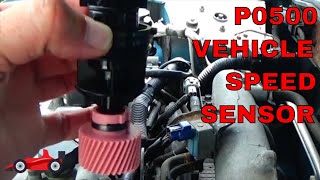
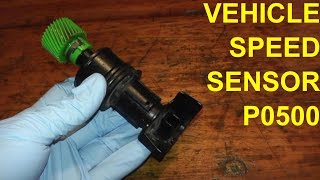
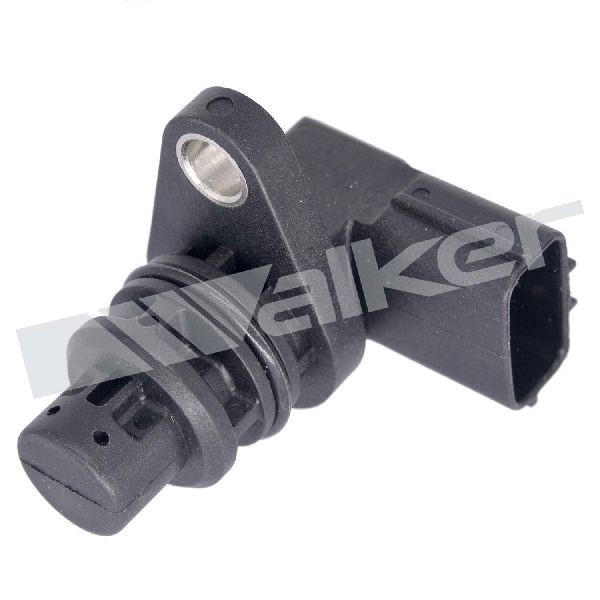
- Failed Vehicle Speed Sensor (VSS) - for NON-ABS models 🔴 High Probability → Shop Drive Shaft Sensor The sensor is located on the transmission, exposed to heat, vibration, and potential fluid leaks, leading to failure over time. The plastic gear on the end can also wear out or break.
How to confirm: First, confirm your vehicle does NOT have ABS (no ABS light on the dash at startup). Locate the sensor on the transaxle housing, near the back. It is accessible from the top after removing the battery and air intake assembly. Inspect wiring for damage. Use a scan tool to monitor vehicle speed; if it stays at 0 while driving, the sensor is the prime suspect. The sensor can be tested with a multimeter.
Typical fix: Replace the Vehicle Speed Sensor. It is held in by a single 10mm bolt and has an electrical connector. Ensure you get the correct part for your transmission type (manual vs. automatic), as they are different.
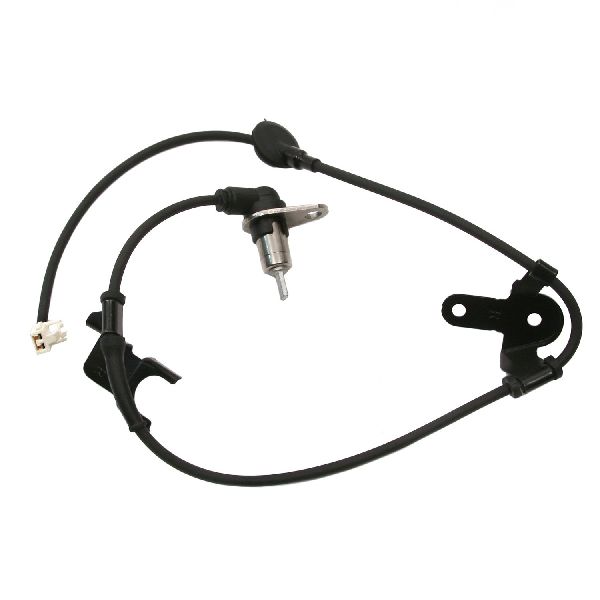
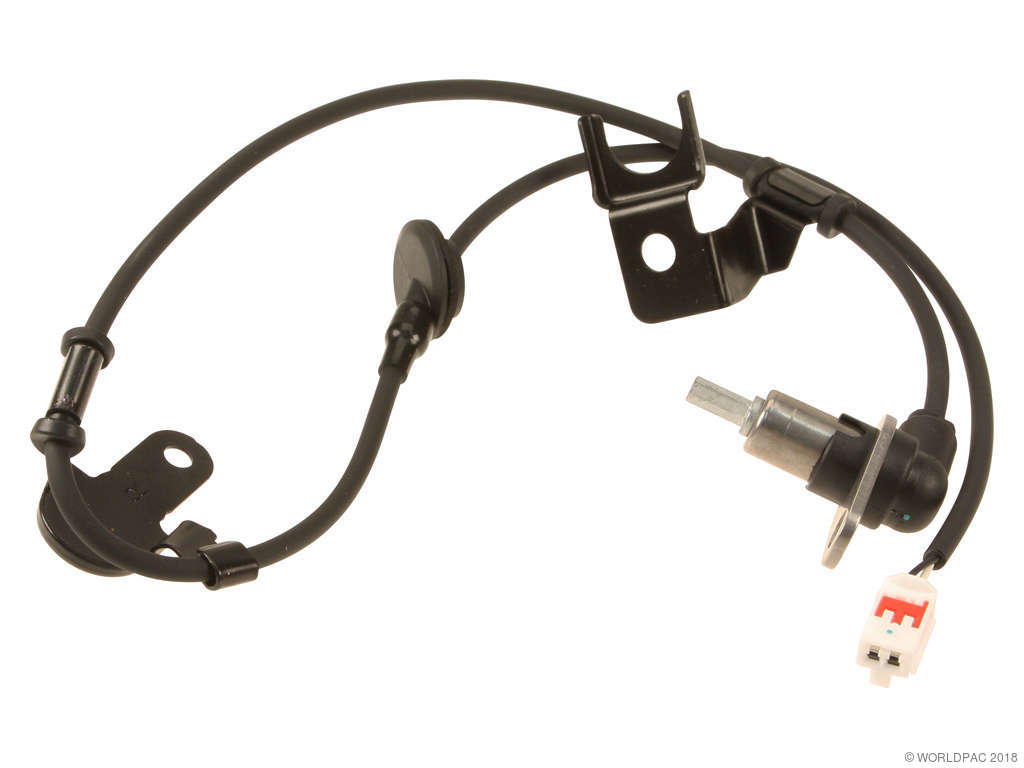
Est. part cost: $25-$70 - Failed ABS Wheel Speed Sensor - for ABS-equipped models 🔴 High Probability → Shop ABS Wheel Speed Sensor Wheel speed sensors are located at the wheels, exposed to water, dirt, and physical damage from road debris. The wiring is also prone to damage from suspension movement, steering, and rubbing against the wheel or other components.
How to confirm: Confirm your vehicle has ABS. Use a scan tool capable of reading ABS module data to view the speed from each of the four wheel sensors while driving. The sensor that reads 0 or has an erratic signal while the others are working is the faulty one. Visually inspect the sensor and its wiring for breaks, corrosion, or a buildup of metallic debris on the sensor tip. Forum users specifically mention the right rear sensor as a common failure point on Mazdaspeed Protege models.
Typical fix: Replace the faulty ABS wheel speed sensor. The sensor is located on the wheel hub/knuckle and is usually held in by a small bolt.
Est. part cost: $30-$80 - Damaged Wiring or Connector 🟡 Medium Probability Wiring harnesses can become brittle from heat and age. The wires leading to the transmission VSS or wheel speed sensors can be damaged by road debris, improper servicing, or rubbing against other components. One owner on YouTube discovered their P0500 was caused by the wheel speed sensor wires rubbing against the wheel itself. 🎬 Watch: Diagnosing a wheel speed sensor wiring issue
How to confirm: Visually inspect the entire length of the wiring harness from the sensor to where it joins the main loom. Look for cracks, chafing, melting, or corrosion in the connector pins. Wiggle the connector and wiring while monitoring the speed signal on a scan tool to see if the signal cuts in and out.
Typical fix: Repair the broken section of wire or replace the damaged connector pigtail. Soldering and using heat-shrink tubing is the most reliable repair method.
Est. part cost: $5-$25
Rare But Worth Checking
- Faulty Instrument Cluster: → Shop Instrument Cluster On ABS-equipped models, the speed signal from the ABS module goes to the instrument cluster first, which then relays it to the PCM. A failure within the cluster's circuit board can interrupt this signal, causing a P0500 even if the speedometer itself appears to work correctly. This is a known failure mode on other vehicles where the cluster acts as a gateway.
- Faulty ABS Control Module: → Shop ABS Control Module For ABS-equipped cars, the ABS module itself can fail, preventing it from processing or sending out the vehicle speed signal. This would typically be accompanied by other ABS-specific trouble codes and a persistent ABS warning light. One owner on Mazdas247.com traced their issue to a loss of power at the ABS module due to a broken wire.
- Faulty Powertrain Control Module (PCM): This is extremely rare. The PCM is the last component to suspect after all sensors, wiring, and other modules have been thoroughly tested and confirmed to be working.
Diagnosis Steps
- Identify your system: Turn the key to the 'ON' position. Does an 'ABS' light appear on the dashboard for a few seconds? If yes, you have an ABS-equipped model. If no, you have a non-ABS model. This is the most important step.
- For NON-ABS models: Locate the Vehicle Speed Sensor (VSS) on the top, rear of the transaxle housing. Access requires removing the battery and air intake assembly. Visually inspect the sensor and its electrical connector and wiring for any obvious damage, corrosion, or fluid contamination.
- For ABS-equipped models: You will need a scan tool that can read live data from the ABS module. Connect the scanner and monitor the data for all four wheel speed sensors while driving slowly. Identify any sensor that reads 0 MPH or has a signal that differs significantly from the others.
- Test the circuit: If a sensor is suspect (either VSS or ABS sensor), disconnect it and test for power and ground at the connector with a multimeter. Check for continuity on the signal wire back to the appropriate module (PCM or ABS module). Check PCM pin #58 for the signal on non-ABS cars.
- Test the sensor: If the wiring checks out, test the sensor itself according to the factory service manual's procedure. This may involve checking its internal resistance or generating a signal by spinning the wheel.
- Replace the faulty component: Based on your findings, replace the faulty sensor or repair the damaged wiring. For non-ABS models, be sure to order the correct VSS for your transmission type (Manual vs. Automatic).
- Clear code and test drive: After the repair, clear the P0500 code with a scan tool and take the vehicle for a test drive to ensure the speedometer works correctly and the Check Engine Light does not return.
Parts You'll Likely Need
- Vehicle Speed Sensor (for Non-ABS models) — This is the direct source of the speed signal for cars without ABS and is a common failure point. Note that manual and automatic transmission versions have different parts.
Trusted brands: Standard Motor Products (e.g., SU6386 for MT, SU6385 for AT), NTK, Delphi
OEM price range: $90-$150
Aftermarket price range: $25-$70 - ABS Wheel Speed Sensor (for ABS models)
(OEM #BP4K-43-711B (Front, may supersede older numbers))— On cars with ABS, one of the front wheel speed sensors failing is the most common cause for a P0500 code. The wiring is also a frequent point of failure.
Trusted brands: Standard Motor Products (e.g., ALS1225), Delphi, Bosch
OEM price range: $120-$200
Aftermarket price range: $30-$80
Platform-Specific Known Issues
- VSS Part Number Confusion (Non-ABS): Owners frequently order the wrong VSS because the part is different for manual and automatic transmissions. A forum post on ClubProtege.com clarifies the different part numbers (SU6386 for MT, SU6385 for AT) and appearance.
- ABS Module Power Loss: → Shop ABS Control Module A user on Mazdas247.com diagnosed their P0500 and inoperative speedometer by tracing the fault to a broken power wire leading to the ABS control module. After bypassing the broken wire with a new 12v switched source, the system began working again, indicating the sensors and module were otherwise fine.
- Communication Loss and Multiple Codes: In some Mazda platforms, a P0500 can appear as part of a "long list" of codes related to a loss of communication, including U0121 and P0685, which can make diagnostics difficult for technicians (NHTSA ODI #10895729).
Mechanic-Grade Diagnostic Values
- ABS Wheel Speed Sensor Resistance — expected: 800 - 1500 Ohms (General Spec). Failure: An open circuit (infinite resistance) or a reading significantly outside the expected range. A practical test is to compare the resistance of the suspect sensor to the sensor on the opposite side; they should be very close.
- ABS Wheel Speed Sensor AC Voltage Output (Passive Sensor) — expected: 50 - 700 mV AC while spinning the wheel by hand at approximately one revolution per second.. Failure: A low or non-existent AC voltage reading indicates a faulty sensor or an excessive air gap.
- VSS Signal at PCM (Non-ABS Models) — expected: A varying frequency or voltage signal on Pin 58 (Green/Red wire) of the PCM connector as vehicle speed increases.. Failure: No signal or a static voltage indicates a problem with the VSS or the wiring between the sensor and the PCM.
Wiring & Ground Locations
- PCM Pin 58 — At the Powertrain Control Module (PCM), which is located behind the right side of the dashboard.. For non-ABS models, this is the specific pin where the VSS signal (Green/Red wire) arrives at the engine computer. It is the definitive point to test if the signal is reaching the PCM.
- ABS Control Module — In the left rear corner of the engine compartment.. For ABS-equipped models, this module processes wheel speed data and sends it to the cluster and PCM. Its connector is a key test point for power, ground, and sensor inputs.
- G11 — A ground point located at the right side of the dash.. A poor ground at this location could affect the PCM or other in-dash electronics like the instrument cluster, potentially interrupting the speed signal.
- G14 — A ground point located at the left rear of the engine.. This is a primary engine-area ground. A loose or corroded connection here can cause a wide range of sensor and module issues, including problems with the ABS or VSS circuits.
Real Owner Repair Stories
- Mazdas247.com user 'Geezer000' (2003 Mazda Protege with ABS) — Speedometer stopped working after flickering, ABS and brake lights were on, P0500 code present.
❌ Tried (didn't work) Researching wiring diagrams, Checking voltage at the instrument cluster, Confirming front ABS sensors were the source of the signal
✅ What actually fixed it The owner discovered there was no power to the 'Z' connection at the ABS module connector. Suspecting a broken Black/Blue wire from the fuse box, they bypassed it by running a new 12V switched power wire to the ABS module, which restored all function. - TacomaWorld (principle applies) (Toyota Tacoma (similar signal path as ABS Protege)) — Intermittent P0500 check engine light, but the speedometer worked perfectly fine.
❌ Tried (didn't work) Replacing the Vehicle Speed Sensor (VSS) would not have worked, as the issue was downstream.
✅ What actually fixed it The owner identified that the instrument cluster processes the speed signal before sending it to the PCM. The fault was a cold solder joint on the cluster's circuit board that interrupted the signal *after* it was used for the speedometer but *before* it was sent to the PCM. Re-soldering the connections on the circuit board fixed the problem.
Diagnostic Flowchart
Other Known Issues on This Vehicle
Issues unrelated to this code that are worth knowing about as an owner of this generation:
- Premature Body Rust 🔴 High — Extremely common, especially in salt-belt regions. Typically starts appearing within 3-5 years. Common areas include rear wheel arches, rocker panels, and strut towers.
- EGR Valve Failure 🟠 Medium — Very common, especially in colder climates due to moisture causing internal rust and sticking. Often leads to P0401, rough idle, and stalling. (Ref: Mazda issued TSBs (e.g., 01-028/05) and an updated 'Canadian' EGR valve (FSY1-18-W00) with coolant passages to prevent freezing.)
- Variable Tumble Control System (VTCS) Rattle/Failure 🟡 Low — Common issue where butterfly valves in the intake manifold become loose or the actuator fails, causing a rattling noise on cold starts. (Ref: Mazda issued a TSB acknowledging the noise but did not offer a permanent fix. Many owners opt to remove the butterfly valves entirely.)
- Automatic Transmission (FN4A-EL) Failure 🟠 Medium → Shop Transmission Assembly — A significant number of owners report issues like harsh shifting, delayed engagement, and premature failure, sometimes just after the warranty period.
- FS-DE Engine Oil Consumption / Spun Bearings 🔴 High — Less common than other issues but catastrophic when it occurs. Some FS-DE engines are prone to high oil consumption or sudden connecting rod bearing failure, sometimes with little warning.
Used vs. New Parts: Buying Guide for This Vehicle
When a used part is the smart pick: For this repair, used parts are a very smart choice. Key electronic modules like the ABS Control Module and Instrument Cluster can be expensive new, and used units from a junkyard are a cost-effective alternative. VSS and ABS wheel speed sensors are also good candidates to pull from a low-mileage donor vehicle.
Donor-vehicle mileage cap: roughly under 120000 miles for the part to have meaningful remaining life.
What to inspect on the donor part:
- Prioritize vehicles with low mileage to ensure more remaining life on electronic components.
- Inspect the donor vehicle for major front-end or side collisions that could have damaged the ABS module, sensors, or wiring harnesses.
- If possible, choose a donor from a dry climate to minimize the chance of corrosion on connectors and circuit boards.
- When pulling a part, inspect the connector pins for any green or white corrosion before purchasing.
OEM-only on this vehicle (don't cheap out):
- No parts for this specific repair are strictly 'OEM-only'. Quality aftermarket sensors and rebuilt modules are widely available and effective.
Aftermarket brands forum-validated for this vehicle:
- Standard Motor Products (SMP)
- NTK
- Delphi
- Bosch
Brands owners have reported issues with on this vehicle:
- Unnamed, no-brand 'white box' parts from online marketplaces can have high failure rates and are best avoided unless no other option is available.
Real Owner Stories
Aggregated from forums and TSBs cited above. Mileages and costs reflect what owners reported in those sources.
2003 Mazda Protege DX 5-speed (FS-DE)
Symptoms: Speedometer stopped working.
What fixed it: Replacement of the transmission-mounted Vehicle Speed Sensor (VSS) using part SU6386.
Source hint: Mazdas247.com - '2003 Protege DX 5 speed - speedometer stopped working! VSS or gears?'
2001-2003 Mazda Protege (ABS equipped)
Symptoms: P0500 code and speedometer doesn't work.
What fixed it: Traced the fault to a broken power wire leading to the ABS control module; bypassed with a new 12v switched source.
Source hint: Mazdas247.com - 'P0500 code and speedometer doesn't work.'
2001-2003 Mazda Protege
Symptoms: P0500 code caused by wheel speed sensor wires rubbing.
What fixed it: Repairing the wheel speed sensor wires that had rubbed against the wheel itself.
Source hint: YouTube owner video cited in 'Damaged Wiring or Connector' section
Mazda Owner (NHTSA ODI #10895729)
Symptoms: An owner reported a long list of codes including U0121, P0500, and P0685, most of them connected to a loss of communication.
What fixed it: The dealer was unable to find the problem after two hours of diagnostics, highlighting the complexity of communication-related speed sensor codes.
Related OBD-II Codes
Frequently Asked Questions
How can I tell if my 2001-2003 Protege uses a VSS or ABS sensors for the speedometer signal?
I have a manual transmission Protege without ABS; which VSS part number do I need?
Where is the VSS located on the FS-DE 2.0L transaxle?
My speedometer is dead and I have a P0500, but my sensors test fine. What else could it be?
Is there a specific wheel sensor that fails more often on the Mazdaspeed Protege?
Can I use the same VSS for both automatic and manual 2.0L Proteges?
Helpful Videos

We Have This Part in Stock


The information in this article is provided for general reference and educational purposes only. Vehicle specifications, procedures, and part compatibility can vary by production date, trim level, and region. Always consult your vehicle's factory service manual and verify part numbers before purchasing or performing repairs. Safety-critical components such as airbags, seat belts, and braking systems should be installed by a qualified professional.
- Mazda Protege:
- 🧭 Diagnostic Flowchart
- 🎬 Helpful Videos
- 🛍️ Shop This Part
- What's Unique About the 2001-2003 Mazda Protege
- Symptoms You May Notice
- Most Likely Causes
- Rare But Worth Checking
- Diagnosis Steps
- Parts You'll Likely Need
- Platform-Specific Known Issues
- Mechanic-Grade Diagnostic Values
- Wiring & Ground Locations
- Real Owner Repair Stories
- Other Known Issues on This Vehicle
- Used vs. New Parts: Buying Guide for This Vehicle
- Real Owner Stories
- 2003 Mazda Protege DX 5-speed (FS-DE)
- 2001-2003 Mazda Protege (ABS equipped)
- 2001-2003 Mazda Protege
- Mazda Owner (NHTSA ODI #10895729)
- Related OBD-II Codes
- Frequently Asked Questions
- 🎟️ Get 5% Off