

P0502 on 2010-2015 Toyota Prius: Wheel Speed Sensor and ABS Faults
On a 2010-2015 Prius, P0502 is almost always caused by a faulty wheel speed sensor or its wiring. The car uses the ABS system, not a transmission sensor, to detect speed. A scan tool that can read ABS 'C' codes (e.g., C1235 for front right) is essential for diagnosis. Expect to pay $100-$250 to replace a single wheel speed sensor at a shop.
- On a 2010-2015 Prius, P0502 is an ABS system problem, not a transmission sensor problem.
- Always scan for 'C' codes in the ABS module first; this will usually identify the specific faulty wheel speed sensor.
- The most likely fix is replacing a single faulty wheel speed sensor.
- Before replacing a sensor, always perform a quick visual inspection of its wiring for obvious damage and check the sensor's magnetic tip for debris.
- Ignoring this code means driving without a functional speedometer, ABS, or traction control, and potentially without regenerative braking.
What's Unique About the 2010-2015 Toyota Prius
The key difference for the 2010-2015 Prius is its complete reliance on the ABS wheel speed sensors for vehicle speed data. There is no traditional Vehicle Speed Sensor (VSS) on the transaxle. Therefore, a P0502 code is fundamentally an issue within the broader ABS and wheel speed sensing system. Any diagnosis that focuses on finding a transmission-mounted sensor is incorrect for this vehicle and will lead to wasted time and money. The root cause is almost always an ABS-related code (C-code).
Symptoms You May Notice
- Check Engine Light is on
- ABS warning light is on
- Traction Control/VSC warning light is on
- Red 'BRAKE' warning light may be on
- Speedometer reads 0 MPH or is erratic
- Cruise control will not engage
- Regenerative braking is disabled
- Possible erratic behavior from the hybrid system, which relies on speed data
- Tire Pressure Monitoring System (TPMS) light may come on
- Replacing a non-existent Vehicle Speed Sensor (VSS) on the transaxle. This vehicle uses the wheel speed sensors for its speed reading.
- Replacing the wheel speed sensor without first checking for and cleaning metallic debris from the magnetic tip.
- Using very cheap, low-quality aftermarket sensors which may be faulty out of the box or fail quickly, leading to a repeat diagnosis.
Most Likely Causes
- Faulty Wheel Speed Sensor 🔴 High Probability → Shop ABS Wheel Speed Sensor Wheel speed sensors are exposed to the elements, road debris, and constant vibration, making them a common failure point on most modern vehicles. Corrosion, especially in rust-belt states, can cause the single bolt holding the sensor to seize, complicating replacement.
How to confirm: Scan the ABS/Skid Control ECU for codes. A code like C1235 (Front Right), C1236 (Front Left), C1237 (Rear Right), or C1238 (Rear Left) will pinpoint the exact sensor circuit that has failed. You can also use a scan tool to view live data from all four sensors while driving to see which one is not reporting or providing an erratic signal.
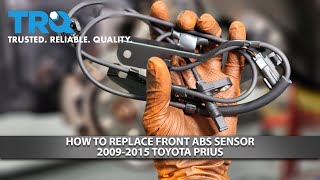
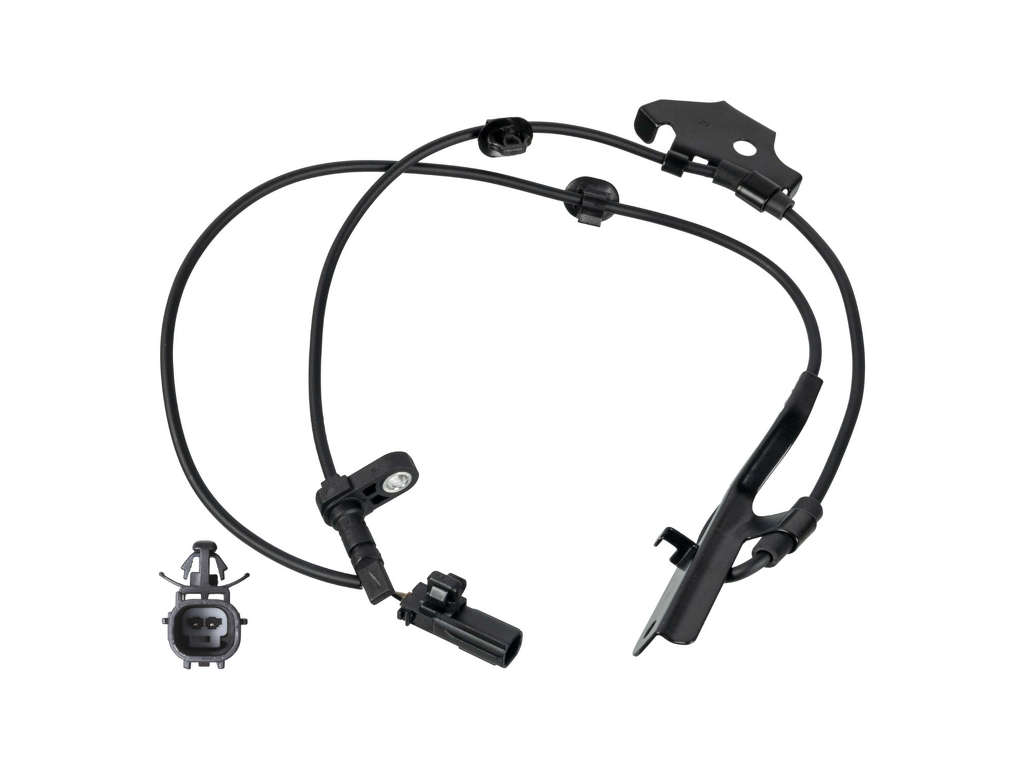
Typical fix: Replace the faulty wheel speed sensor. They are typically sold as a sensor with an integrated wiring pigtail. It is held in by a single 10mm bolt. Using high-quality OEM or reputable aftermarket sensors (like Denso) is recommended, as cheap sensors are a common source of repeat failures.
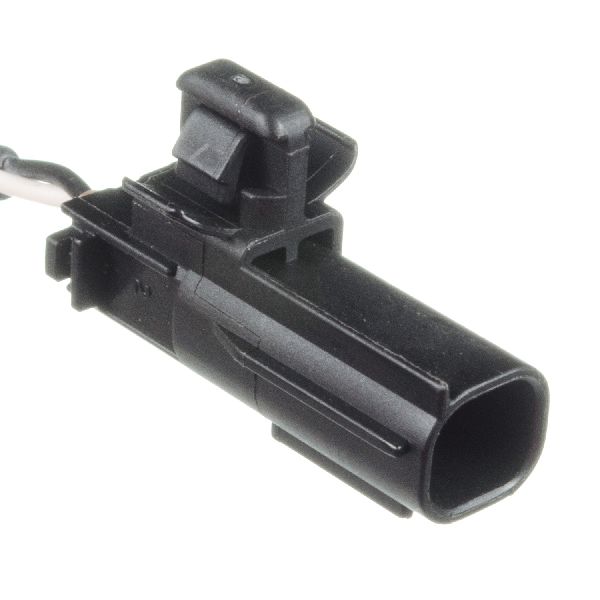
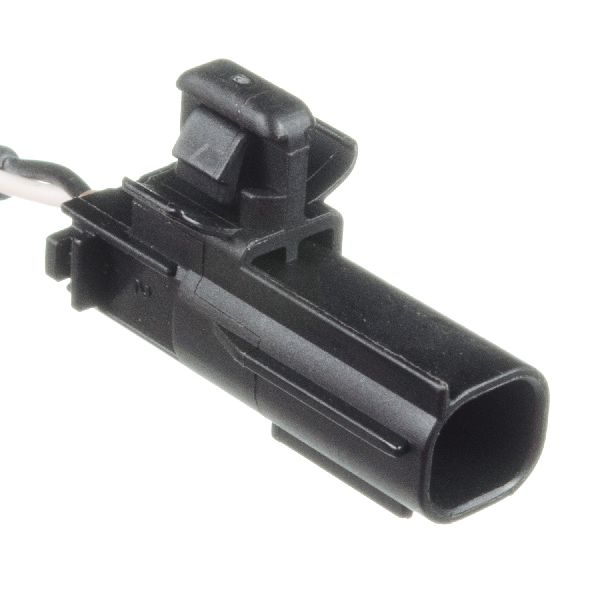
Est. part cost: $40-$120 - Damaged Wheel Speed Sensor Wiring or Connector 🟡 Medium Probability → Shop ABS Wheel Speed Sensor The wiring harness leading to each wheel hub is susceptible to damage from road debris, corrosion, or stretching during suspension work. The plastic inner fender liner can be damaged, exposing the wiring to direct impact. The rear harnesses, in particular, have clips that can be difficult to release without breaking. 🎬 See this guide on rear harness clips
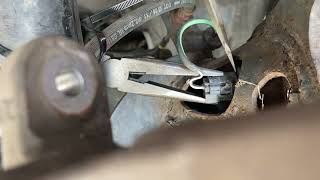
How to confirm: Visually inspect the wiring harness from the back of the wheel hub to where it enters the main body harness. Look for chafed wires, breaks, or corrosion in the connector. A multimeter can be used to check for continuity and proper voltage at the sensor connector. The rear harness connector is located inside the vehicle, requiring removal of trunk trim panels.
Typical fix: Repair the damaged section of wiring or replace the connector pigtail. In some cases, the entire wheel speed sensor harness (from the sensor to the body connector) needs to be replaced. Aftermarket harnesses are available.
Est. part cost: $10-$60 - Damaged or Debris-Covered Tone Ring ⚪ Low Probability The tone ring, which the wheel speed sensor reads, is integrated into the wheel bearing/hub assembly. While durable, severe corrosion or metallic debris from a failing CV joint or other source can stick to the magnetic sensor tip and disrupt the reading.
How to confirm: When removing the wheel speed sensor, inspect its magnetic tip for metallic debris. A code C1235, for example, can specifically mean 'Foreign object is attached to the tip of the front speed sensor RH'. Visually inspect the tone ring through the sensor opening for broken teeth or heavy rust.
Typical fix: Clean the debris off the sensor tip. If the code returns, the tone ring itself may be damaged, which requires replacing the entire wheel hub assembly.
Est. part cost: $150-$300
Rare But Worth Checking
- Faulty Skid Control (ABS) ECU: While uncommon, the computer module that interprets the sensor signals can fail. This would typically be suspected only after all sensors and wiring have been confirmed to be good. It may also be accompanied by communication-related trouble codes or multiple, persistent wheel speed sensor codes that don't resolve with sensor replacement.
- Faulty Instrument Cluster: → Shop Instrument Cluster In some Toyota systems, the instrument cluster acts as a gateway for data on the CAN bus network. A failure within the cluster can, in rare cases, disrupt the speed signal communication to the ECM.
- Failing 12V Auxiliary Battery: A weak 12V battery can cause a host of random electronic issues and warning lights on a Prius, including ABS and communication codes. If multiple, seemingly unrelated codes are present, the 12V battery's health should be tested first.
Diagnosis Steps
- Connect an OBD-II scanner capable of reading codes from all modules (Engine, ABS, etc.). A tool like Toyota's Techstream or a high-quality bidirectional scanner is ideal.
- Check for any codes in the ABS/Skid Control system first. Any 'C' codes will point you directly to the root cause (e.g., C1235 for the front right wheel speed sensor circuit).
- If ABS codes are present, diagnose and fix them first. This will almost always resolve the P0502 code.
- If no ABS codes are present, use the scanner's live data function to monitor the output of all four wheel speed sensors while driving. Look for a sensor that reads 0, has an erratic signal, or lags compared to the others.
- Raise the vehicle and spin the suspect wheel by hand while monitoring live data to confirm the sensor is not reading.
- Visually inspect the wiring and connector for the suspect wheel speed sensor for any signs of damage, corrosion, or looseness.
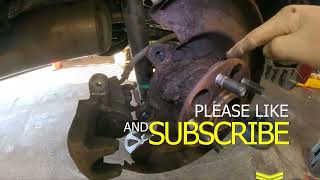
- Remove the 10mm bolt holding the sensor and inspect the magnetic tip for any attached metallic debris. Clean it and reinstall to see if the code clears.
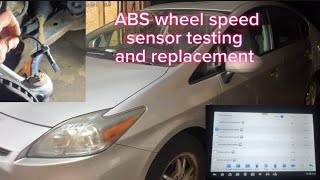
- If wiring appears intact and the sensor is clean, test the sensor's circuit for proper voltage and ground according to the vehicle's service manual. A multimeter can be used to check for continuity in the wiring harness. 🎬 Watch: How to test and replace the sensor
- If the sensor and wiring test good but the problem persists, the issue may be with the Skid Control ECU or the instrument cluster, which may require professional diagnosis.
Parts You'll Likely Need
- Wheel Speed Sensor
(OEM #Front Left: 89543-47030; Front Right: 89542-47030; Rear (Left/Right): 89544-47030 (Part numbers can vary, always verify with VIN))— This is the most common failure point that causes the P0502 code on a Prius. One of the four sensors fails, causing the ABS module to send an invalid speed signal to the ECM.
Trusted brands: Toyota (OEM), Denso, NTK, Standard Motor Products (SMP)
OEM price range: $150-$250
Aftermarket price range: $40-$120 - ABS Wheel Speed Sensor Wiring Harness
(OEM #Example (Rear): 89516-47090)— If the wiring is damaged beyond a simple repair, the pigtail or the entire harness section may need to be replaced.
Trusted brands: Toyota (OEM), Dorman, Carquest
OEM price range: $70-$120
Aftermarket price range: $30-$60
Related Codes That Often Appear With This One
- C-codes (e.g., C1235, C1236, C1237, C1238) — These are ABS codes that specify which wheel speed sensor circuit is malfunctioning. A C-code is the root cause, and P0502 is the resulting symptom reported by the engine computer.
- U0121 — This code means 'Lost Communication with ABS module'. If this code is present, it indicates a network problem between the ABS computer and the engine computer, which is the root cause of the P0502.
Platform-Specific Known Issues
- Owner experiences frequently highlight the importance of using high-quality sensors. Many forum threads detail stories where cheap aftermarket sensors from online marketplaces failed quickly or were dead on arrival, causing the owner to repeat the repair.
- Damage to the wiring harness is often caused by road debris after the plastic fender liner gets torn or broken.
Diagnostic Flowchart
Other Known Issues on This Vehicle
Issues unrelated to this code that are worth knowing about as an owner of this generation:
- Brake Actuator / Accumulator Failure 🔴 High — Common issue, often occurring after 100,000 miles. Can result in a sudden loss of braking assist. (Ref: Recalls and warranty extensions have been issued, but coverage may vary by year and VIN.)
- Inverter (IPM) Failure 🔴 High — A known issue where the Intelligent Power Module (IPM) within the inverter can fail from heat stress, causing the car to stall or enter a low-power limp mode. (Ref: Toyota issued recalls and warranty enhancements (e.g., for DTC P0A94) to update software or replace the IPM.)
- Excessive Oil Consumption 🟠 Medium — Common in higher-mileage vehicles (often over 100k miles) due to issues with piston ring design, leading to carbon buildup. (Ref: Toyota issued TSB T-SB-0168-16 describing an oil consumption test and repair procedure (piston and ring replacement).)
- Head Gasket Failure / EGR Clogging 🟠 Medium — The EGR (Exhaust Gas Recirculation) system can clog with carbon, leading to poor engine cooling in cylinder 1, which can eventually cause head gasket failure and engine misfires. (Ref: TSB T-SB-0075-13 addresses DTC P0401 for insufficient EGR flow.)
- Inverter Coolant Pump Failure 🔴 High — The electric pump that cools the hybrid inverter can fail, leading to inverter overheating and system shutdown. (Ref: Subject to recalls on earlier generations, and remains a potential failure point. Can trigger DTC P0A93.)
Real Owner Stories
Aggregated from forums and TSBs cited above. Mileages and costs reflect what owners reported in those sources.
2010-2015 Toyota Prius 1.8L
Symptoms: ABS light, TPMS light, no cruise control, and no regenerative braking after hitting an animal.
What fixed it: Repairing the broken wheel speed sensor wire harness that was damaged when the fender liner was torn.
Source hint: Reddit (r/prius) post: 'Fixed a broken wheel speed sensor wire harness'
2010-2015 Toyota Prius 1.8L
Symptoms: Recurring C1235 code that only appeared at high speeds (above 70 mph) even after cleaning and replacing the sensor.
What fixed it: The thread suggests the issue was a subtle problem with the tone ring or the Skid Control ECU when standard sensor replacement failed.
Source hint: PriusChat thread titled 'reoccurring C1235 code'
2010-2015 Toyota Prius 1.8L
Symptoms: No speedometer and TPMS light stayed on after replacing sensors with cheap parts from Amazon.
What fixed it: The owner had to address the use of low-quality sensors which caused more problems than the original failure.
Source hint: PriusChat thread titled 'abs wheel sensor replaced and wheel bearing still issues'
Related OBD-II Codes
Frequently Asked Questions
Why is my Prius speedometer reading 0 MPH and my regenerative braking disabled?
Which specific wheel speed sensor is causing my P0502 code?
Can I use a cheap aftermarket wheel speed sensor from an online marketplace?
I hit road debris and now have ABS and TPMS lights on. What should I check?
Where is the connector for the rear wheel speed sensor located on my Prius?
Could a bad wheel bearing cause a P0502 code?
Helpful Videos

We Have This Part in Stock


The information in this article is provided for general reference and educational purposes only. Vehicle specifications, procedures, and part compatibility can vary by production date, trim level, and region. Always consult your vehicle's factory service manual and verify part numbers before purchasing or performing repairs. Safety-critical components such as airbags, seat belts, and braking systems should be installed by a qualified professional.
- Toyota Prius:
- 🧭 Diagnostic Flowchart
- 🎬 Helpful Videos
- 🛍️ Shop This Part
- What's Unique About the 2010-2015 Toyota Prius
- Symptoms You May Notice
- Most Likely Causes
- Rare But Worth Checking
- Diagnosis Steps
- Parts You'll Likely Need
- Related Codes That Often Appear With This One
- Platform-Specific Known Issues
- Other Known Issues on This Vehicle
- Real Owner Stories
- 2010-2015 Toyota Prius 1.8L
- 2010-2015 Toyota Prius 1.8L
- 2010-2015 Toyota Prius 1.8L
- Related OBD-II Codes
- Frequently Asked Questions
- 🎟️ Get 5% Off