

P0506 on 2001-2003 Toyota Prius: Idle RPM Lower Than Expected Causes and Fixes
On a first-generation Toyota Prius, the P0506 code is almost always caused by a dirty electronic throttle body. Carbon and oil buildup restricts airflow at idle. Cleaning the throttle body bore and plate with a dedicated cleaner is the most common fix, costing under $20 and taking about an hour of DIY time.
- The P0506 code on a 2001-2003 Prius is most likely due to a dirty throttle body, not a failed part.
- This vehicle does NOT have an Idle Air Control (IAC) valve; do not look for one.
- The primary diagnostic step and most common fix is to clean the throttle body plate and bore with appropriate cleaner, following Toyota's recommended procedure (spray on rag, not into bore).
- If cleaning doesn't work, the next step is to check for vacuum leaks, paying close attention to the PCV system.
- Stalling at stops is a potential symptom, so it's best to address this code promptly for safety.
What's Unique About the 2001-2003 Toyota Prius
Unlike many cars from this era, the 2001-2003 Prius does not have a separate Idle Air Control (IAC) valve. Instead, it uses an Electronic Throttle Body (ETB), where the main throttle plate is controlled by a motor to precisely regulate airflow at all times, including idle. This means that common advice to 'clean the IAC valve' does not apply here; the problem and solution are centered entirely on the throttle body itself. Toyota issued a Technical Service Bulletin (T-TT-0362-15) acknowledging that a dirty throttle body can cause low or rough idle after the 12V battery is disconnected, as the ECM's learned memory for the dirty throttle position is lost.
Symptoms You May Notice
- Rough or low idle
- Engine stalling when coming to a stop or at idle
- Difficulty starting the engine
- Illuminated Check Engine Light
- Hesitation or stumbling on initial acceleration
- Replacing the Idle Air Control (IAC) Valve. This vehicle does not have one; idle is managed by the electronic throttle body.
Most Likely Causes
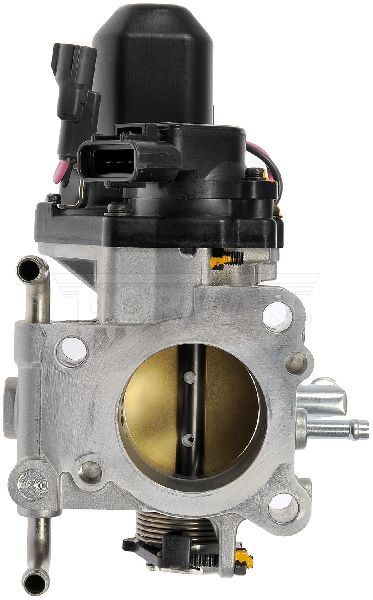
- Dirty Throttle Body 🔴 High Probability → Shop Fuel Injection Throttle Body The Atkinson cycle engine (1NZ-FXE) and its PCV system can contribute to the buildup of carbon and oil deposits in the intake tract over time. This gunk restricts the tiny air gap around the throttle plate needed for idle, causing the idle speed to drop below the ECM's target. This is a well-documented issue for this model.
How to confirm: Visually inspect the inside of the throttle body and the edges of the throttle plate for a black, sticky layer of carbon buildup. This is done by removing the air cleaner box assembly.
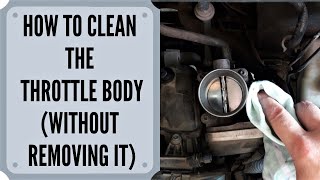
Typical fix: Carefully clean the throttle body bore and both sides of the throttle plate using a dedicated throttle body cleaner and a soft cloth or brush. Do not spray cleaner directly into the throttle body; spray it on the rag. 🎬 See how to clean the throttle body without removing it Gently push the throttle plate open to clean the edges. It is also wise to clean the MAF sensor with a dedicated MAF cleaner while you have it apart.
Est. part cost: $10-$20 - Vacuum Leak 🟡 Medium Probability After 20+ years, rubber vacuum hoses and intake gaskets can become brittle, crack, or split, allowing unmetered air to enter the engine. Common culprits include the PCV hose and intake manifold gaskets.
How to confirm: With the engine running, listen for hissing sounds around the intake manifold, vacuum lines, and PCV system. A smoke test is the most effective method, where a smoke machine fills the intake system and leaks are visually identified by escaping smoke. Also check that the oil cap is tight and the dipstick is fully seated.
Typical fix: Replace the cracked hose, leaking gasket, or faulty component. The PCV valve and its associated hoses are common points of failure.
Est. part cost: $5-$50
Rare But Worth Checking
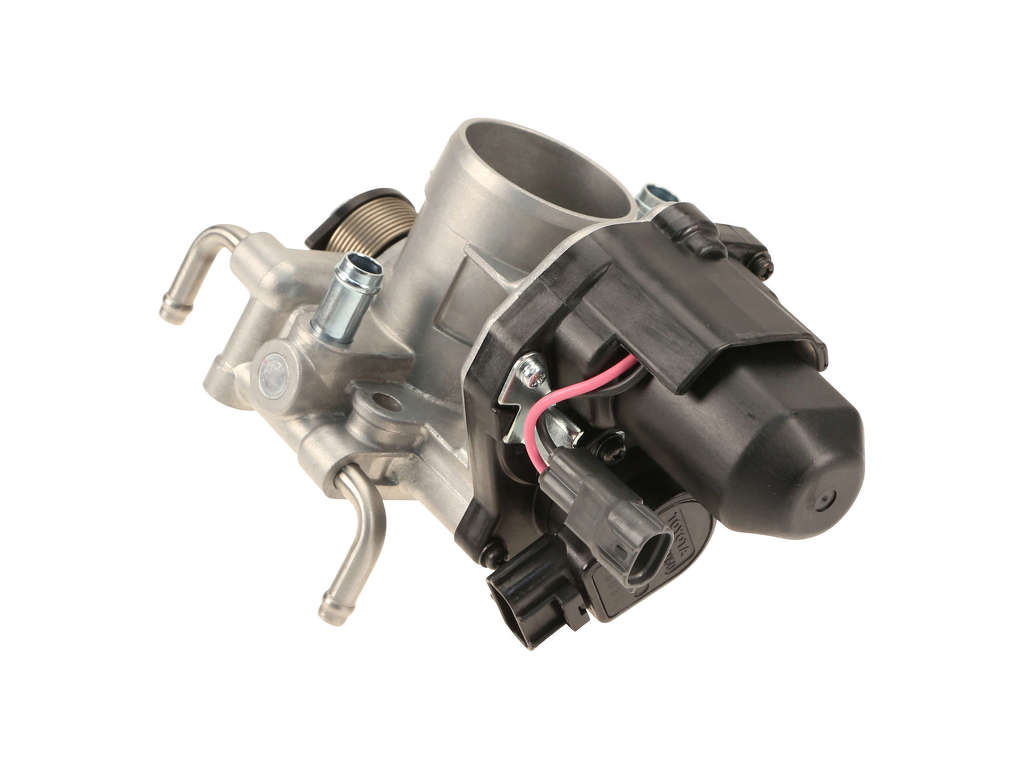
- Failing Electronic Throttle Body (ETB): → Shop Fuel Injection Throttle Body If a thorough cleaning does not resolve the issue and there are no vacuum leaks, the motor or position sensor within the throttle body assembly itself may be failing. This is much less common than a simple dirty throttle body. Replacement is the only fix.
- Powertrain Control Module (PCM) Issue: In very rare cases, a software glitch or hardware failure in the PCM could cause incorrect idle commands. This should only be considered after all other possibilities have been exhaustively ruled out. Early Gen 1 Priuses had some ECU-related issues, though not typically for this specific code.
Diagnosis Steps
- Confirm the P0506 code is present using an OBD-II scanner.
- Visually inspect the air intake hose between the air filter box and the throttle body for cracks or loose connections.
- Remove the air cleaner assembly to access the throttle body.
- Inspect the throttle body bore and plate for carbon buildup. This is the most likely cause.
- If dirty, disconnect the 12V battery negative terminal. Disconnect the throttle body electrical connector. Clean the throttle body using a dedicated throttle body cleaner sprayed onto a soft rag, not directly into the bore. Gently move the plate to clean all surfaces and edges.
- While the intake is apart, it is recommended to also clean the Mass Airflow (MAF) sensor using a dedicated MAF sensor cleaner.
- Reconnect the throttle body connector, air cleaner assembly, and battery terminal. The tightening torque for the throttle body bolts is 15 ft-lbs if removed.
- Start the car and let it idle for at least 3-5 minutes. The ECM will automatically perform an idle relearn procedure to adapt to the clean throttle body.
- If the code returns, check for vacuum leaks. Listen for hissing noises or perform a smoke test to find any leaks in hoses (especially PCV) or gaskets.
- If no leaks are found and the throttle body is clean, the issue may be the electronic throttle body assembly itself, which may require replacement.
Parts You'll Likely Need
- Throttle Body Cleaner — This is required to clean the carbon buildup from the throttle body, which is the most common cause of P0506 on this vehicle.
Trusted brands: CRC, Gumout, Permatex
Aftermarket price range: $10-$20 - Electronic Throttle Body Assembly
(OEM #22030-21020)— If cleaning the throttle body and checking for vacuum leaks does not fix the problem, the throttle body assembly itself may have failed and requires replacement.
Trusted brands: Toyota (Genuine), Aisin, Denso
OEM price range: $400-$600
Aftermarket price range: $150-$300 - Throttle Body Gasket
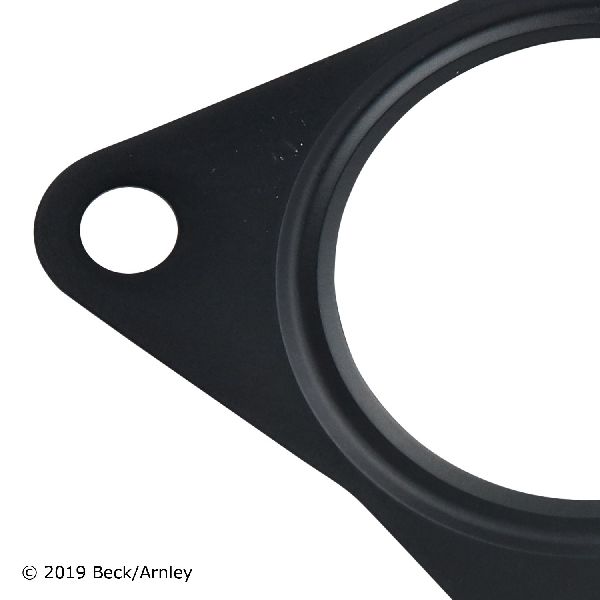
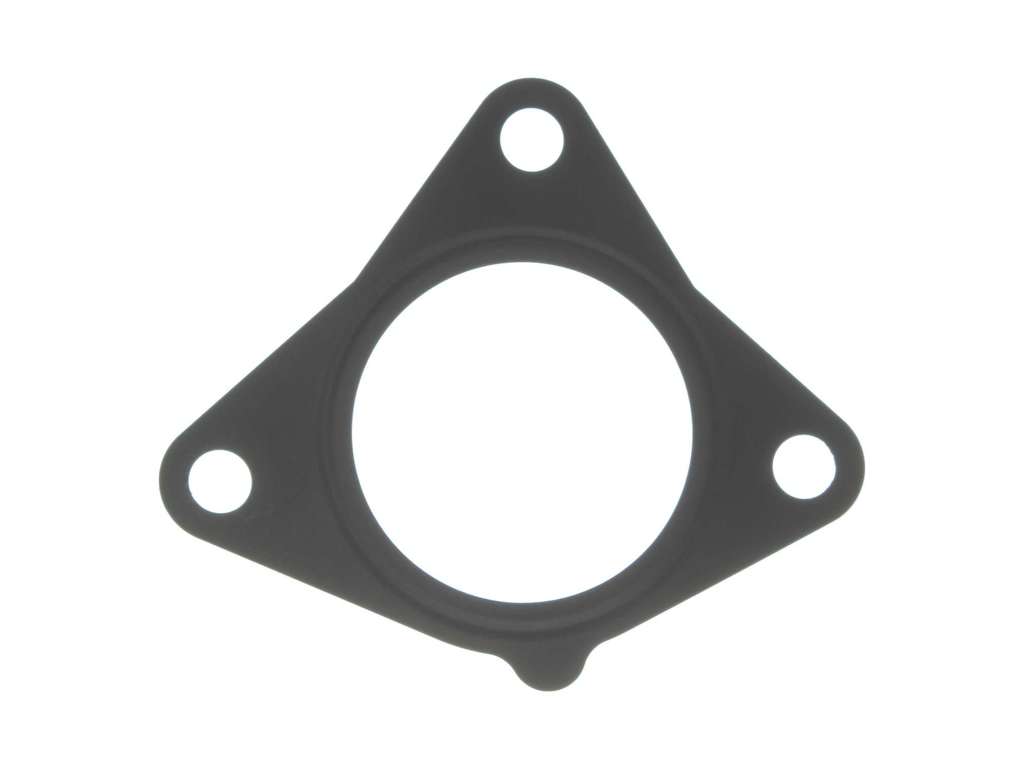
(OEM #22271-21030)— If the throttle body is fully removed for cleaning, it is best practice to replace the gasket to prevent vacuum leaks.
Trusted brands: Toyota (Genuine), Fel-Pro
OEM price range: $5-$10
Aftermarket price range: $2-$5
Related Codes That Often Appear With This One
- P3190, P3191, P3101 - These codes relate to 'Engine Does Not Start' or 'Poor Engine Power' and Toyota issued a Customer Support Program (ZTI) and TSB (T-SB-0180-09) for the 2001-2003 Prius, noting that cleaning the throttle body is the primary repair for these issues as well. 🎬 Watch: Understanding P3190 and P3191 codes on your Prius
Technical Service Bulletins (TSBs) & Recalls
- T-SB-0180-09: Addresses MIL ON for codes P3190, P3191, and P3101, where the primary repair procedure is cleaning the throttle body. This TSB was part of a warranty extension program (ZTI) for 2001-2003 Prius models.
- T-TT-0362-15: A Toyota Tech Tip for multiple models including the 2001-2003 Prius, noting that a hard start or low/rough idle can occur after 12V power interruption. The recommended action is to inspect and clean the throttle body for excessive deposits.
Platform-Specific Known Issues
- Idle Relearn after Battery Disconnect: Toyota issued TSB T-TT-0362-15 which states that after a 12V battery disconnect, the car may have a hard start or low/rough idle because the ECM's learned values for a dirty throttle body are erased. The fix is to clean the throttle body. This confirms the sensitivity of the system to carbon buildup.
Mechanic-Grade Diagnostic Values
- Throttle Position Sensor (TPS) Resistance — expected: 1.2 to 3.5 kΩ at 25°C (77°F) between terminals 1 and 4 of the sensor connector.. Failure: Resistance outside of this range indicates a faulty position sensor.
- Throttle Control Motor Resistance — expected: 50 MΩ or more at 25°C (77°F) between the motor terminals.. Failure: Resistance lower than 50 MΩ suggests a fault in the motor windings.
- Throttle Position Sensor Voltage (VTA1) — expected: Approximately 0.69V at fully closed, increasing with throttle opening.. Failure: Voltage that is stuck, erratic, or does not correspond to throttle plate movement.
- Throttle Position Sensor Voltage (VTA2) — expected: Approximately 2.25V at fully closed, increasing with throttle opening. The ECM expects a specific voltage difference between VTA1 and VTA2 at all times.. Failure: If VTA1 is within 0.02V of VTA2, the ECM determines a short circuit. An incorrect voltage difference between VTA1 and VTA2 will also set a fault.
Wiring & Ground Locations
- E1 (in ECM Connector E3) — This is the main ground pin for the Engine Control Module (ECM). The ECM is located in the engine compartment.. A poor ground at this point can cause a wide range of erratic sensor readings and control issues, including incorrect throttle control, potentially leading to idle problems. A continuity check from pin E3-3 to the chassis should show less than 1 Ω.
- Throttle Body Connector — Directly on the Electronic Throttle Body assembly, at the front of the engine.. This is the connector where all voltage and resistance tests for the throttle position sensor (VTA1, VTA2) and the throttle control motor (M+, M-) are performed. Corrosion or loose pins here will directly cause throttle-related codes.
Real Owner Repair Stories
- PriusChat user 'arthur92710' (Gen 1 Prius (year not specified, but same issue)) — Engine stalling, red triangle warning light, and trouble codes indicating a throttle body issue.
❌ Tried (didn't work) The user received a dealer quote for a new throttle body assembly for over $1,200.
✅ What actually fixed it The owner purchased a used throttle body from a junkyard for $100 and installed it themselves. The car ran fine after the replacement.
Diagnostic Flowchart
Other Known Issues on This Vehicle
Issues unrelated to this code that are worth knowing about as an owner of this generation:
- High Voltage (HV) Battery Failure 🔴 High — Common after 10-15 years or 100,000-150,000 miles. Gen 1 batteries were known to have leaking issues. (Ref: A recall was issued to reseal the Gen 1 batteries to prevent electrolyte leaks.)
- Multi-Function Display (MFD) Failure 🟠 Medium — Very common failure. The screen can go blank, become unresponsive to touch, or reboot intermittently, losing control of climate and audio functions. (Ref: TSB EL002-05 was issued for later models, but the problem is widespread across early generations.)
- Brake Actuator Assembly Failure 🔴 High — A common and expensive failure. Symptoms include a persistent buzzing noise from the engine bay, ABS/VSC/Brake warning lights, and diagnostic codes like C1256.
- Transaxle (Transmission) Failure 🔴 High — Less common than battery or MFD issues, but a known potential failure point that can be very expensive. Some reports of shorted windings in the motor-generators (MGs).
- Engine Oil Consumption 🟠 Medium — The 1NZ-FXE engine can begin to consume oil at higher mileage (over 100k miles), often due to sticking piston rings.
Used vs. New Parts: Buying Guide for This Vehicle
When a used part is the smart pick: A used throttle body is a very sensible and cost-effective repair if the original unit has a confirmed electronic failure (motor or sensor) and cleaning has not resolved the issue. Since a new OEM assembly is expensive, a used part from a reputable salvage yard can save hundreds of dollars.
Donor-vehicle mileage cap: roughly under 150000 miles for the part to have meaningful remaining life.
What to inspect on the donor part:
- Check for physical damage to the housing or electrical connector.
- Ensure the seller has a good reputation and offers a return policy or short-term warranty.
- If possible, inspect the throttle bore for excessive scoring or damage, though some carbon is expected.
- Source from a vehicle that was in a rear-end collision, suggesting the engine components were likely functional at the time of the accident.
OEM-only on this vehicle (don't cheap out):
- While the entire assembly is often recommended as OEM, if only the sensor is being replaced, using an OE-supplier like Aisin or Denso is critical to avoid compatibility issues.
Aftermarket brands forum-validated for this vehicle:
- Aisin (often the original equipment manufacturer)
- Denso (original equipment manufacturer)
- NGK (for the position sensor only)
Brands owners have reported issues with on this vehicle:
- Unbranded, low-cost throttle bodies from online marketplaces are frequently reported on forums to have poor calibration, short lifespans, or cause other drivability issues.
Real Owner Stories
Aggregated from forums and TSBs cited above. Mileages and costs reflect what owners reported in those sources.
2001-2003 Toyota Prius 1NZ-FXE
Symptoms: A user experienced issues after cleaning the throttle body and sought troubleshooting steps for a car not running well.
What fixed it: Checking for vacuum leaks (specifically the PCV hose, oil cap, and dipstick) and confirming the idle relearn procedure.
Source hint: PriusChat.com - 'Prius Not Running Well after Throttle Body Cleaning'
2001-2003 Toyota Prius 1NZ-FXE
Symptoms: Hard start or low/rough idle occurring specifically after a 12V power interruption/battery disconnect.
What fixed it: Inspecting and cleaning the throttle body for excessive carbon deposits.
Source hint: T-TT-0362-15: A Toyota Tech Tip for multiple models including the 2001-2003 Prius
2001-2003 Toyota Prius 1NZ-FXE
Symptoms: The community discussed the standard fix for idle-related issues on the Gen 1 platform.
What fixed it: Cleaning the butterfly flap edges of the electronic throttle body and lubricating the axle.
Source hint: PriusChat.com - 'throttle body cleaning tips?'
Related OBD-II Codes
Frequently Asked Questions
Does my 2001-2003 Prius have an Idle Air Control (IAC) valve that I should clean to fix P0506?
Why did my Prius start idling roughly and stalling immediately after I replaced the 12V battery?
Is there a TSB or warranty extension for the throttle body issues on the 2001-2003 Prius?
Can I spray throttle body cleaner directly into the intake of my 1NZ-FXE engine?
What is the correct torque specification if I remove the throttle body to clean it?
Are there other common maintenance items I should perform while fixing P0506?
Helpful Videos
We Have This Part in Stock


The information in this article is provided for general reference and educational purposes only. Vehicle specifications, procedures, and part compatibility can vary by production date, trim level, and region. Always consult your vehicle's factory service manual and verify part numbers before purchasing or performing repairs. Safety-critical components such as airbags, seat belts, and braking systems should be installed by a qualified professional.
- Toyota Prius:
- 🧭 Diagnostic Flowchart
- 🎬 Helpful Videos
- 🛍️ Shop This Part
- What's Unique About the 2001-2003 Toyota Prius
- Symptoms You May Notice
- Most Likely Causes
- Rare But Worth Checking
- Diagnosis Steps
- Parts You'll Likely Need
- Related Codes That Often Appear With This One
- Technical Service Bulletins (TSBs) & Recalls
- Platform-Specific Known Issues
- Mechanic-Grade Diagnostic Values
- Wiring & Ground Locations
- Real Owner Repair Stories
- Other Known Issues on This Vehicle
- Used vs. New Parts: Buying Guide for This Vehicle
- Real Owner Stories
- 2001-2003 Toyota Prius 1NZ-FXE
- 2001-2003 Toyota Prius 1NZ-FXE
- 2001-2003 Toyota Prius 1NZ-FXE
- Related OBD-II Codes
- Frequently Asked Questions
- 🎟️ Get 5% Off