

P0700 on 2001-2026 Acura MDX: Transmission Control System Malfunction Guide
P0700 on an Acura MDX means the transmission control module (TCM) has detected a fault and asked the main computer to turn on the check engine light. The first step is always to scan the TCM for more specific codes; do not replace any parts based on P0700 alone. Common causes include faulty transmission pressure switches or low/dirty fluid.
- P0700 is a general alert from your transmission; it is not a diagnosis. You MUST scan the Transmission Control Module (TCM) for the specific, underlying codes.
- For 2001-2013 MDX models, faulty transmission fluid pressure switches are a highly probable cause of shifting problems that trigger P0700.
- Always check the level and condition of your transmission fluid first. Use only genuine Acura DW-1 fluid for any top-offs or changes.
- Do not immediately assume you need a new transmission. The actual cause is often a much cheaper, externally-mounted component like a sensor or solenoid.
- If you have a 2016-2020 MDX with the 9-speed transmission, inquire with an Acura dealer about any available software updates, as this can sometimes resolve shifting issues.
What's Unique About the 2001-2026 Acura MDX
The Acura MDX has used several different automatic transmissions across its generations, and the cause of a P0700 code can vary significantly. Early first-generation models (2001-2002) were known for high rates of transmission failure. Later generations saw improvements but are commonly affected by failing transmission fluid pressure switches, a frequent issue on many Honda and Acura vehicles. Third-generation models (2016-2020) with the ZF 9-speed transmission had their own unique set of software-related issues that could trigger this code, sometimes addressed by a technical service bulletin (TSB) or warranty extension.
Generation note: The 2001-2026 range covers four MDX generations: - 1st Gen (2001-2006): Known for severe transmission issues, including complete failure and torque converter problems. Pressure switch failures are also common. - 2nd Gen (2007-2013): Failing 3rd and 4th gear transmission fluid pressure switches are a very common cause of P0700, often accompanied by harsh or erratic shifting. Torque converter shudder is also a known issue. - 3rd Gen (2014-2020): Used both a Honda 6-speed (2014-15) and a ZF 9-speed (2016-20) automatic. The 6-speed can suffer from torque converter judder (TSB 16-062). The 9-speed models are known for software issues, harsh shifting, and even unexpected shifts to neutral, leading to a class-action lawsuit. - 4th Gen (2022-2026): Uses a Honda-built 10-speed automatic. While newer, causes for P0700 would still point to fluid issues, sensor failures, or potential software glitches.
Symptoms You May Notice
- Check Engine Light is on
- Flashing 'D' (Drive) indicator light on the dashboard
- Harsh, erratic, or delayed shifting
- Transmission getting stuck in one gear (limp mode)
- Vehicle feels sluggish or has a loss of power
- Decreased fuel economy
- Shuddering or vibration at steady speeds
- Replacing the entire transmission when only a simple, external component like a pressure switch or solenoid has failed.
- Replacing the TCM without first thoroughly diagnosing the sensors, solenoids, and wiring.
- Using non-genuine transmission fluid. Acura transmissions are sensitive and should only use Honda/Acura DW-1 ATF.
Most Likely Causes
- Failed Transmission Fluid Pressure Switch(es) 🔴 High Probability → Shop Transmission Assembly This is a well-documented and extremely common failure point on Honda/Acura 5-speed and 6-speed automatic transmissions, prevalent in 1st and 2nd generation MDX models. These switches can fall out of their specified pressure range without failing completely, causing shift problems before a specific code is set.
How to confirm: Scan the TCM for codes that point to specific clutch packs or pressure switches (e.g., P0847, P0848, P0872, P0873). The switches can be tested for continuity with a multimeter. A popular DIY repair documented on forums like AcuraZine. NHTSA ODI #11286456 describes a case where P0700 was accompanied by P1740, indicating a 4th pressure switch failure and clutch pressure failure.
Typical fix: Replace the faulty pressure switch(es). For 2nd Gen MDX, owners often replace all three switches at once as a preventative measure. A DIY video for a 2008 MDX shows the replacement process and part numbers needed to resolve erratic shifting.
Est. part cost: $40-$120 - Low or Degraded Transmission Fluid 🟡 Medium Probability → Shop Transmission Assembly Neglecting fluid changes allows varnish and debris to build up, which can clog solenoids and fluid passages, leading to shifting problems. For 3rd Gen models with the ZF 9-speed, specialists recommend 30,000-mile fluid changes, more frequent than the maintenance minder suggests.
How to confirm: Check the transmission fluid dipstick (if equipped) or service plug. The fluid should be at the correct level, bright red, and not smell burnt. Dark, brown, or metallic fluid indicates a problem.
Typical fix: Perform a transmission fluid drain-and-fill using only genuine Honda/Acura DW-1 fluid. Multiple drain-and-fills may be needed to replace a majority of the old fluid. Do NOT perform a high-pressure 'flush'.
Est. part cost: $50-$150 - Faulty Shift Solenoid or Linear Solenoid 🟡 Medium Probability → Shop Transmission Valve Body
How to confirm: Scan the TCM for solenoid-specific codes (e.g., P0750-P0770 range). Solenoids can be tested for resistance with a multimeter and checked for mechanical function. Cleaning the solenoid screens is a common first step.
Typical fix: Remove and clean the solenoid screens. If cleaning doesn't work or the solenoid tests bad, it must be replaced. They are often located on the exterior of the transmission housing.
Est. part cost: $70-$300 - Faulty Transmission Control Module (TCM) ⚪ Low Probability → Shop Transmission Assembly
How to confirm: This is typically diagnosed by exclusion. If a scan tool cannot communicate with the TCM, or if P0700 is the ONLY code present and all wiring/sensors/solenoids test good, the TCM may be at fault.
Typical fix: Replace the TCM. This may require programming by a dealership or specialized shop.
Est. part cost: $200-$600
Rare But Worth Checking
- Internal Transmission Failure: → Shop Transmission Assembly On early 1st generation models (2001-2003), complete transmission failure was extremely common. If the fluid is full of metal shavings, a rebuild or replacement is likely necessary. NHTSA ODI #10325921 (Acura TL reference) notes that when P0700 appears with P0740 (Torque Converter Clutch) and P0730 (Incorrect Gear Ratio), a full transmission and torque converter replacement may be recommended.
- Faulty Wiring Harness: Damage to the wiring harness leading to the transmission can cause short circuits or open connections, leading to erratic behavior and codes. Check for corrosion on connectors.
- Torque Converter Clutch (TCC) Failure: → Shop Automatic Transmission Torque Converter Often seen with code P0741. On early models, this could be a sign of impending transmission failure. On later models, it can be caused by degraded fluid leading to shudder, and may be addressed with a fluid flush and software update per TSB 16-062.
Diagnosis Steps
- Check the level and condition of the automatic transmission fluid (ATF). Ensure it is full, clean, and does not smell burnt. Use only Honda/Acura DW-1 ATF.
- Use an OBD-II scanner capable of accessing the Transmission Control Module (TCM) to read the transmission-specific trouble codes. The P0700 code is just a general indicator; the other codes are what matter.
- Record all codes found in the TCM. A 2005 MDX owner on a forum reported P0700 along with P1710 and several other system codes, indicating a complex issue.
- Research the specific codes found. For example, codes P0847/P0848 for pressure switches are very common and point to a specific repair.
- Inspect the wiring harness and connectors at the transmission for any visible damage, corrosion, or loose connections.
- Based on the specific codes, test the relevant components (e.g., pressure switches, solenoids) using a multimeter to check for correct resistance or continuity per the factory service manual.
- If no other codes are present besides P0700, and a scan tool cannot communicate with the TCM, suspect a faulty TCM or a power/ground issue to the module.
- After performing repairs, clear all codes from both the ECM and TCM and perform a test drive to ensure the problem is resolved.
Parts You'll Likely Need
- Transmission Fluid Pressure Switch (3rd/4th Gear)
(OEM #Varies by generation. 2nd Gen (2007-2013) often uses (2x) 28600-RKE-004 and (1x) 28610-RKE-004. 1st Gen (2003-06) may use 28610-RAY-003 and 28600-RAY-003. Always verify with VIN.)— These switches for the clutch packs are an extremely common failure item on 1st and 2nd generation MDX models, causing harsh or erratic shifting.
Trusted brands: Acura (OEM)
OEM price range: $50-$70 per switch
Aftermarket price range: $20-$40 per switch - Acura DW-1 Automatic Transmission Fluid
(OEM #08200-9008)— Low or dirty fluid is a primary cause of transmission problems. Using the correct OEM fluid is critical for proper transmission performance and longevity, especially in the sensitive ZF 9-speed and Honda transmissions.
Trusted brands: Acura (OEM)
OEM price range: $12-$18 per quart
Aftermarket price range: Not Recommended
Related Codes That Often Appear With This One
- P0730-P0736 — These codes indicate incorrect gear ratios, often a symptom of slipping clutches, faulty solenoids, or pressure issues that trigger the main P0700 code.
- P0741 — This code points to a malfunction in the Torque Converter Clutch (TCC) circuit. This is a common issue, and the diagnostic approach is to first address any other transmission codes, check fluid, and inspect the TCC solenoid and its wiring.
- P0750-P0770 — This range of codes relates to specific shift solenoid failures. The TCM will set one of these and then request the P0700 code from the ECM.
- P0840-P0849 — This range of codes points directly to faults in the transmission fluid pressure sensor/switch circuits, a very common cause on the MDX.
Technical Service Bulletins (TSBs) & Recalls
- TSB 16-062: Addresses torque converter judder on 2012-2015 MDX models by recommending a PGM-FI software update and a specific transmission fluid flush procedure.
- TSB 17-026: Provides a warranty extension for 2016-2017 MDX models for issues including transmission chirps during 3-4 shift and poor shift quality, related to the ZF 9-speed.
- TSB 06-003: An early TSB for 2003-2004 models specifically for torque converter shudder or vibration between 35-40 MPH.
Platform-Specific Known Issues
- High rate of complete transmission failure, especially in 2001-2003 models. Often related to the torque converter or internal clutch packs failing.
- Extremely common failure of the 3rd and 4th gear pressure switches, leading to erratic shifting, high revs before shifting, and the flashing 'D' light.
- The ZF 9-speed transmission is known for software glitches causing harsh shifts, hesitation, and lurching. A class-action lawsuit was filed over these issues, which included sudden deceleration or shifts to neutral.
Mechanic-Grade Diagnostic Values
- Shift Solenoid 'C' Coil Resistance (1st Gen) — expected: 12-25 Ohms (Factory spec: 13.8-17.1 Ohms). Failure: 0 Ohms indicates a short, O.L. (infinite) indicates an open circuit.
- A/T Clutch Pressure Control Solenoid Valve A Resistance (1st Gen, 2003-2006) — expected: 3 - 10 Ohms. Failure: A reading outside this range indicates a faulty solenoid.
- Transmission Pressure Switch Installation Torque (1st/2nd Gen) — expected: 14 ft-lbs. Failure: Over-torquing can damage the new switch or the transmission case.
Scan Tool Commands That Help
- Honda Diagnostic System (HDS): TCM Reset — Used to clear learned values and adaptations from the Transmission Control Module after a repair or fluid service. This can help resolve shifting issues.
- Honda Diagnostic System (HDS): Data List — To view live data from transmission sensors, such as pressure switch status, solenoid commands, and fluid temperature, which is critical for diagnosing intermittent or performance-related faults.
- Manual Reset (No Scanner): ECU/TCM Adaptation Reset — For many modern push-start and key-start Honda/Acura vehicles, turning the ignition to ON (II), pressing the gas pedal to the floor for 30 seconds, then turning off and restarting can reset learned throttle and transmission shift adaptations. This can improve shift quality if the car has adapted to jerky stop-and-go driving.
Wiring & Ground Locations
- Transmission Ground Cable — For 2nd Gen MDX (2010-2013), a specific ground cable (PN 32601-STX-A01) is used. There is also a main ground strap near the transmission mount, located behind and under the battery tray area.. A corroded or loose transmission ground can cause a host of electrical issues, including erratic sensor readings and poor communication between the TCM and other modules, potentially triggering a P0700 code.
- Main Chassis Ground — A primary ground point is located on the chassis directly in front of the battery, on top of the high beam bulb area.. The main battery-to-chassis ground is critical for the entire vehicle's electrical system. A poor connection here can cause voltage drops and communication errors across all modules, including the TCM.
- 3rd/4th Gear Pressure Switch Connectors (1st/2nd Gen) — The 3rd gear switch is behind the driver's side front wheel well splash guard. The 4th gear switch is in the engine bay, under the air intake tube.. These connectors are common points of failure. Knowing their location is essential for testing and replacing the high-failure-rate pressure switches that often cause P0700.
Real Owner Repair Stories
- YouTube user 'Fixit Philip' (2008 Acura MDX) — Terrible shifting problems, revving too high then shifting hard. RPMs would bounce all over the place, and the transmission would shift up and down erratically.
❌ Tried (didn't work) The user did not specify other attempted fixes, but directly addressed the shifting issue.
✅ What actually fixed it Replacing all three transmission pressure switches (two of P/N 28600-RKE-004 and one of P/N 28610-RKE-004) solved all of the shifting issues. The fix was confirmed to be working for 2-3 months after the repair. - AcuraZine Forum User (2004 Acura MDX) — Check Engine Light with code P0741 (Torque Converter Clutch Circuit).
❌ Tried (didn't work) The user initially performed a drain and fill of the transmission fluid, but the code returned.
✅ What actually fixed it The user did not explicitly state a final fix, but the community consensus in the thread strongly suggested that P0741 on this generation is almost always a sign of impending internal transmission failure, not just a bad solenoid. - NHTSA ODI #11286456 — An owner reported that their vehicle generated codes P0700 (A/T System Malfunction), P1740 (4th Pressure Switch Failure), and P1750 (Clutch Pressure Failure) at approximately 192,000 miles.
OEM Part Supersession History
28610-RAY-003→28610-RKE-004— Part update/revision for the 3rd gear pressure switch.28500-P6H-003→28500-P6H-013— Part update/revision for Shift Solenoid 'C' on 1st Gen models.
Model Year Variations Within This Range
- 2001-2002: These models have only a single 3rd gear pressure switch, whereas 2003-2006 models have both a 3rd and 4th gear pressure switch.
- 2016-2020 (with ZF 9-Speed): The fluid change and level check procedure is significantly more complex than on the Honda-built transmissions. It requires the vehicle to be at a specific temperature (around 104-115°F) to check the level correctly via a side plug, and the filter is internal, requiring transmission removal to replace.
- 2014+: Newer models with push-button start have a specific, non-scanner procedure to reset transmission adaptations which may differ slightly from older, key-start models.
Diagnostic Flowchart
Other Known Issues on This Vehicle
Issues unrelated to this code that are worth knowing about as an owner of this generation:
- Variable Cylinder Management (VCM) Oil Consumption 🔴 High — Common on 2nd and 3rd Gen models with the J35/J37 V6. Piston rings can become clogged with carbon, leading to excessive oil burning, especially over 100,000 miles. (Ref: A class-action lawsuit was settled for some Honda/Acura models, but for MDX it's a widely known issue often addressed by installing a 'VCM muzzler' device.)
- Torque Converter Judder/Shudder 🟠 Medium → Shop Automatic Transmission Torque Converter — Very common on 2nd Gen (2012-2013) and early 3rd Gen (2014-2015) models, typically felt between 20-60 mph. Caused by deteriorated transmission fluid. (Ref: TSB 16-062 and 16-063 address this by recommending a PCM software update and a specific transmission fluid flush procedure.)
- ZF 9-Speed Transmission Harsh Shifting & Software Glitches 🔴 High → Shop Transmission Assembly — Prevalent on 2016-2018 models. Owners report jerky shifting, hesitation, and sometimes unexpected shifts to neutral. Reliability improved in 2019-2020 models after software revisions. (Ref: Multiple software updates were released. TSB 17-026 extended the warranty for some 2016-2017 models due to transmission issues. A class-action lawsuit was filed regarding this transmission.)
- Infotainment System Lag, Freezing, or Blank Screen 🟡 Low — Reported across 3rd and 4th generation models. Issues include slow response, system freezing, and problems with Android Auto/Apple CarPlay. A recall was issued for some 2025 models for a blank screen issue. (Ref: Recall RKZ for 2025 MDX models. For other models, dealers sometimes perform software updates.)
- Timing Belt Replacement 🔴 High — Not a failure, but a critical maintenance item on all J-series V6 engines used through 2020. The belt, tensioner, and water pump must be replaced around every 7 years or 100,000 miles to prevent catastrophic engine failure.
- Parasitic Battery Drain from HandsFreeLink (HFL) Module 🟠 Medium → Shop Vehicle Battery — Common on 2nd Gen (2007-2013) models. The Bluetooth module fails internally and stays powered on, draining the battery overnight. (Ref: No recall, but a well-documented problem. The common fix is to disconnect the HFL module, which is located in the overhead console.)
Used vs. New Parts: Buying Guide for This Vehicle
When a used part is the smart pick: For major hard parts like the transmission case itself or external mounting brackets, a used part from a low-mileage donor can be a cost-effective option. Complete used transmissions are a gamble, especially for 1st Gen models known for high failure rates, but can be considered if from a reputable recycler with a warranty.
Donor-vehicle mileage cap: roughly under 80000 miles for the part to have meaningful remaining life.
What to inspect on the donor part:
- Check the color and smell of the transmission fluid from the donor vehicle if possible; it should be red, not dark brown or burnt-smelling.
- Ask for the VIN of the donor vehicle to verify its year, model, and mileage.
- Inspect for physical damage, corrosion, or stripped bolt holes on the transmission case and connectors.
OEM-only on this vehicle (don't cheap out):
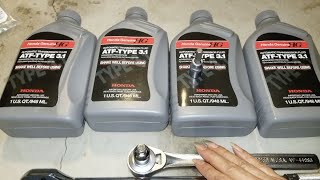
- Transmission Fluid (Acura DW-1 or ATF Type 3.1 for ZF 9-speed)
- Transmission Fluid Pressure Switches
- Transmission Control Module (TCM)
Aftermarket brands forum-validated for this vehicle:
- Standard Motor Products (SMP) for solenoids and sensors
- WVE (a brand of NTK) for electrical components
Brands owners have reported issues with on this vehicle:
- Unbranded, no-name pressure switches and solenoids from online marketplaces are frequently reported on forums to fail quickly or be dead-on-arrival.
Real Owner Stories
Aggregated from forums and TSBs cited above. Mileages and costs reflect what owners reported in those sources.
2005 Acura MDX — 180000 miles
Symptoms: The car loses propulsion after driving a short distance; owner found codes P0700 and P1710.
What fixed it: The owner sought advice for a complex issue involving multiple system codes and loss of propulsion.
Source hint: CarKiller Forum: 'Transmission trouble 2005 MDX'
2008 Acura MDX
Symptoms: Severe shifting problems and erratic transmission behavior.
What fixed it: Replacement of all three transmission pressure switches.
Source hint: YouTube: '2008 Acura MDX transmission pressure switch replacement'
2003-2006 Acura MDX
Symptoms: Pressure switches wearing and going out of spec without throwing a specific code, leading to potential clutch wear.
What fixed it: Replacing the 3rd & 4th gear transmission switches/sensors as a DIY repair.
Source hint: AcuraZine: ''03-'06 MDX - 3rd & 4th Gear Transmission Switches / Sensors DIY'
2001 Acura MDX — 192,000 miles
Symptoms: The vehicle generated transmission codes P0700 (A/T System Malfunction), P1740 (4th Pressure Switch Failure), and P1750 (Clutch Pressure Failure).
What fixed it: Diagnostic codes identified specific pressure switch and clutch pressure failures.
Source hint: NHTSA ODI #11286456
Related OBD-II Codes
Frequently Asked Questions
My 2008 MDX has a flashing 'D' light and erratic shifting; which parts are most likely to fail?
Does TSB 16-062 apply to the torque converter vibration I'm feeling in my 2014 MDX?
I have a 2017 MDX with the ZF 9-speed transmission that chirps during shifts. Is there a known fix?
Can I use any transmission fluid to fix the P0700 code in my Acura MDX?
My 2003 MDX vibrates between 35-40 MPH. Is this a known transmission problem?
Is there a class-action lawsuit regarding the transmission in newer MDX models?
Helpful Videos




The information in this article is provided for general reference and educational purposes only. Vehicle specifications, procedures, and part compatibility can vary by production date, trim level, and region. Always consult your vehicle's factory service manual and verify part numbers before purchasing or performing repairs. Safety-critical components such as airbags, seat belts, and braking systems should be installed by a qualified professional.
- Acura MDX:
- 🧭 Diagnostic Flowchart
- 🎬 Helpful Videos
- What's Unique About the 2001-2026 Acura MDX
- Symptoms You May Notice
- Most Likely Causes
- Rare But Worth Checking
- Diagnosis Steps
- Parts You'll Likely Need
- Related Codes That Often Appear With This One
- Technical Service Bulletins (TSBs) & Recalls
- Platform-Specific Known Issues
- Mechanic-Grade Diagnostic Values
- Scan Tool Commands That Help
- Wiring & Ground Locations
- Real Owner Repair Stories
- OEM Part Supersession History
- Model Year Variations Within This Range
- Other Known Issues on This Vehicle
- Used vs. New Parts: Buying Guide for This Vehicle
- Real Owner Stories
- 2005 Acura MDX — 180000 miles
- 2008 Acura MDX
- 2003-2006 Acura MDX
- 2001 Acura MDX — 192,000 miles
- Related OBD-II Codes
- Frequently Asked Questions
- 🎟️ Get 5% Off