

P0700 on 2002-2008 BMW 7-Series: Transmission Control System Malfunction Causes and Fixes
On a 2002-2008 BMW 7-Series (E65/E66), P0700 is a general alert from the transmission. The most common cause is a transmission fluid leak from a failed mechatronics sealing sleeve, leading to low fluid levels and shifting problems. A proper diagnosis requires a BMW-specific scanner to read the underlying transmission codes, as P0700 itself does not specify the fault.
- P0700 is just a warning light request; the real, detailed codes are stored in the Transmission Control Module (TCM/EGS).
- A BMW-specific scan tool is mandatory for accurate diagnosis.
- The most likely culprit is a transmission fluid leak, commonly from the mechatronics sealing sleeve, a cheap part that requires significant labor to replace.
- Always check for fluid leaks at the transmission pan and electrical connector before assuming a major internal failure.
- When servicing the transmission, use only approved fluid like ZF Lifeguard 6 and consider replacing the pan/filter assembly and sealing sleeve as preventative maintenance.
What's Unique About the 2002-2008 BMW 7-Series
The 2002-2008 7-Series (E65/E66 generation) uses a ZF 6-speed automatic transmission (primarily the 6HP26). These transmissions are notorious for developing fluid leaks from specific plastic and rubber components that become brittle with age and heat cycles. The most common failure point is the mechatronics sealing sleeve, which is the electrical pass-through connector on the side of the transmission. When it fails, it causes fluid loss, which leads to a host of pressure-related fault codes within the TCM, triggering the P0700 in the engine computer. Problems with the valve body (mechatronics unit) are also extremely common.
Symptoms You May Notice
- Check Engine Light is on.
- Transmission warning light on the instrument cluster (often a gear symbol with an exclamation mark).
- Vehicle enters 'limp mode' or 'failsafe mode', typically stuck in 2nd or 3rd gear.
- Harsh, erratic, or delayed gear shifts, especially a harsh 2-1 downshift.
- Slipping out of gear or hesitation during acceleration.
- Noticeable decrease in fuel economy.
- Inability to shift out of Park, especially when the transmission is hot.
- Replacing the entire transmission without proper diagnosis. The P0700 code is often caused by serviceable parts like seals, solenoids, or the valve body, costing far less than a full transmission replacement.
- Clearing the code without reading the specific TCM faults. This ignores the root cause, and the problem will quickly return. A generic OBD-II scanner may only show P0700 and not the crucial manufacturer-specific codes. 🎬 Watch: Why generic scanners miss the real P0700 cause.
- Assuming the TCM is bad. The module itself is rarely the point of failure compared to the hydraulic and electrical components it controls.
- Performing a fluid change without fixing the underlying leak or solenoid problem. While fresh fluid may temporarily improve symptoms, it will not resolve the mechanical or electrical fault.
Most Likely Causes
- Low Transmission Fluid due to Mechatronics Sealing Sleeve Leak 🔴 High Probability → Shop Transmission Assembly The ZF 6HP transmission's plastic sealing sleeve and its integrated O-rings are known to become brittle and crack from heat and age, causing a persistent fluid leak where the wiring harness connects to the transmission. This is one of the most common issues on this platform.
How to confirm: Visually inspect the round electrical connector on the passenger side of the transmission for signs of reddish-brown fluid leakage. The leak can wick up the wiring harness, potentially damaging the TCM. A BMW-specific scan tool will likely show pressure control or gear ratio monitoring fault codes stored in the TCM due to the low fluid.
Typical fix: Replace the mechatronics sealing sleeve, the transmission pan/filter assembly, and refill with the correct specification of transmission fluid (e.g., ZF Lifeguard 6). This requires draining the fluid and removing the transmission pan to access the sleeve.
Est. part cost: $75-$200 - Faulty Mechatronics Unit (Valve Body or Solenoids) 🔴 High Probability → Shop Transmission Valve Body The solenoids within the mechatronics unit are a known weak point. They wear out over time, leading to internal pressure loss, which causes shifting problems like harsh 2-1 downshifts, gear ratio errors, and slipping. Debris in the fluid can also clog solenoid passages.
How to confirm: A BMW-specific scan tool is required to read specific solenoid performance codes (e.g., P0985, P0986) or pressure control faults from the TCM. Symptoms are often worse when the transmission is hot.
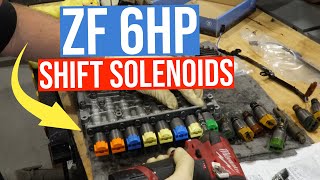
Typical fix: The common repair is to replace the full set of shift solenoids. This requires removing the transmission pan and the mechatronics unit. While the unit is out, it is best practice to also replace the four sealing tubes and the bridge seal adapter that connect the mechatronics to the transmission case. In severe cases, a remanufactured valve body may be needed. 🎬 Watch: Step-by-step guide to replacing ZF 6-speed solenoids.
Est. part cost: $300-$800 for a solenoid kit and seals; $1200+ for a rebuilt mechatronics unit. - Low Transmission Fluid due to Pan Gasket Leak 🟡 Medium Probability → Shop Transmission Assembly The original ZF transmission pans are made of plastic and have an integrated filter and gasket. The plastic can warp or crack over time, especially if over-torqued, causing the gasket to leak.
How to confirm: Inspect the transmission oil pan for wetness or drips, especially around the sealing edge and drain plug. Leaks are often more apparent after a drive.
Typical fix: Replace the entire transmission pan assembly, which includes a new integrated filter and gasket. Refill the transmission with the correct fluid following the proper temperature-dependent procedure. Some owners upgrade to a more durable aluminum pan.
Est. part cost: $100-$250 - Damaged Mechatronics Bridge Seal/Adapter 🟡 Medium Probability This rectangular rubber seal sits between the mechatronics valve body and the transmission case, sealing critical hydraulic passages. It is known to flatten and become brittle, causing internal pressure loss that leads to shifting faults like flaring between gears or delayed reverse engagement. It is often replaced preventatively during any mechatronics service.
How to confirm: This is impossible to confirm without disassembly. It's typically suspected when specific gear ratio error codes are present alongside other mechatronics-related symptoms. The part itself is inexpensive.
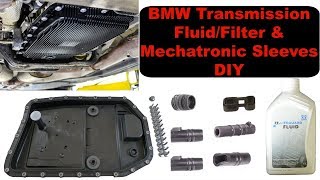
Typical fix: Replace the bridge seal. This requires removing the transmission pan and the mechatronics unit. It is almost always replaced along with the four round tube seals for the valve body. 🎬 See this complete walkthrough for replacing seals and fluid.
Est. part cost: $20-$40
Rare But Worth Checking
- Faulty Transmission Control Module (TCM/EGS): → Shop Transmission Assembly While the TCM itself can fail, it's much less common than fluid leaks or solenoid issues. This should only be considered after all other possibilities, including wiring, have been thoroughly ruled out. Sometimes, fluid leaking from the mechatronics sleeve can travel up the wiring harness and contaminate the TCM, causing failure.
- Wiring Harness Damage: Damage to the wiring between the TCM and the transmission can cause communication loss or short circuits, leading to a P0700 code. Inspect the harness for any signs of physical damage, corrosion, or oil contamination from a leaking sleeve. A faulty crankshaft position sensor can also sometimes trigger a P0700 code, as the TCM uses its signal for RPM data.
Diagnosis Steps
- Connect a BMW-compatible diagnostic scanner (e.g., ISTA, INPA, or a high-end professional scanner like Foxwell or Autel) to the OBD-II port.
- Scan the Engine Control Module (ECM/DME) to confirm the P0700 code.
- Crucially, access and scan the Transmission Control Module (TCM/EGS) for specific fault codes. Document all codes found, as these will point to the root cause.
- With the vehicle on a level lift, check the transmission fluid level. This must be done with the engine running and the transmission fluid at a specific temperature (typically 30-50°C), by removing the fill plug. If fluid does not seep out, it is low. This procedure is dangerous without proper equipment and knowledge.
- Carefully inspect the exterior of the transmission for fluid leaks, paying close attention to the plastic oil pan and the round electrical connector (mechatronics sleeve) on the passenger side.
- Based on the specific codes from the TCM, plan the repair. For example, solenoid codes point to a mechatronics service, while pressure codes with a visible leak point to seal replacement.
- If leaks or solenoid faults are confirmed, the typical repair involves dropping the pan, replacing the leaking seals (sleeve, pan gasket) and/or the solenoids and bridge/tube seals.
- After repairs are complete and the transmission is refilled with the correct fluid (e.g., ZF Lifeguard 6), clear all fault codes from both the ECM and TCM.
- Perform a transmission adaptation reset using the scan tool. This is a critical step that allows the TCM to relearn the clutch fill times and pressure characteristics with the new components.
- Perform a gentle test drive, allowing the transmission to shift through all gears smoothly to complete the adaptation process.
Parts You'll Likely Need
- Mechatronics Sealing Sleeve
(OEM #24347588725)— This is the most common failure point for fluid leaks on the ZF 6HP transmission used in this vehicle.
Trusted brands: ZF (OEM), Elring, CRP Rein, URO Parts
OEM price range: $15-$25
Aftermarket price range: $10-$20 - Transmission Oil Pan and Filter Kit
(OEM #24152333907 or 24117571227)— The plastic pan has an integrated filter and gasket and is prone to leaking or cracking. It is recommended to be replaced during any fluid service.
Trusted brands: ZF (OEM), Vaico, Febi, URO (offers an aluminum upgrade pan)
OEM price range: $120-$180
Aftermarket price range: $80-$140 - Mechatronics Seal Adapter (Bridge Seal)
(OEM #24347571211)— This seal between the valve body and transmission case hardens and fails, causing internal pressure loss and shift faults. It is replaced whenever the mechatronics unit is removed.
Trusted brands: ZF (OEM), URO Parts
OEM price range: $10-$20
Aftermarket price range: $5-$15 - Mechatronics Valve Body Sealing Sleeves (Set of 4)
(OEM #24107536339, 24107536340, 24107536341)— These four tubular seals also fail and cause internal pressure leaks. They are replaced along with the bridge seal when servicing the mechatronics unit.
Trusted brands: ZF (OEM)
OEM price range: $20-$30 (for the set)
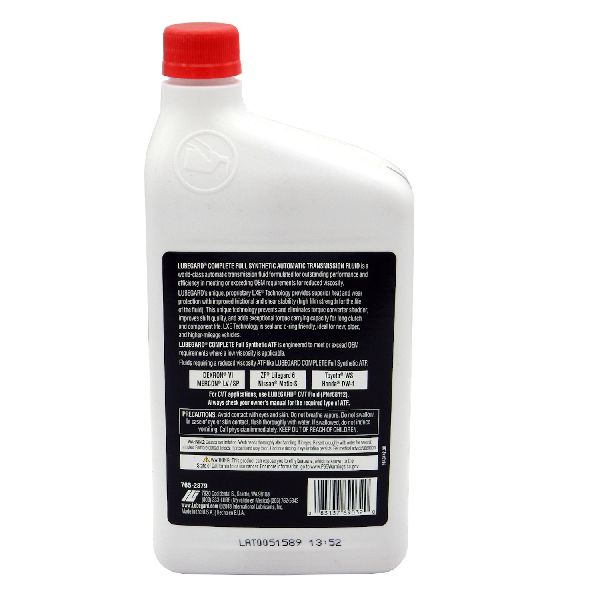
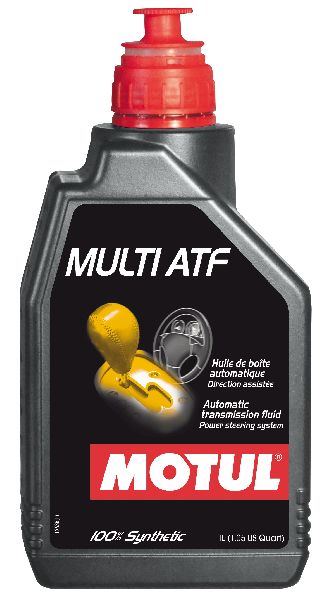
Aftermarket price range: $15-$25 - Automatic Transmission Fluid — Correct fluid is critical for transmission health. ZF Lifeguard 6 (Shell M-1375.4) is the OEM fluid. Using incorrect fluid can cause shifting problems and damage. A typical pan drop service requires 6-7 liters.
Trusted brands: ZF Lifeguard 6 (OEM), Pentosin ATF1, Liqui Moly Top Tec 1800, Shell M-1375.4
OEM price range: $20-$25 per liter
Aftermarket price range: $15-$20 per liter
Related Codes That Often Appear With This One
- P07xx — P0700 is a general request code. It will almost always be accompanied by more specific P07xx codes (e.g., P0721 for an output speed sensor, P0746 for a pressure control solenoid) stored in the Transmission Control Module.
- Manufacturer-specific codes (P1xxx) — BMW uses proprietary codes in the TCM to indicate specific faults. For example, P1727 indicates a communication issue between the ECM and TCM, which can be related to other faults. A BMW-specific scanner is needed to read these.
Technical Service Bulletins (TSBs) & Recalls
- BMW TSB 24 08 06: This technical service bulletin addresses the procedure for replacing the mechatronic sealing sleeve, acknowledging it as a known issue.
Platform-Specific Known Issues
- NHTSA Recall 12V502000: Affects 2005-2008 models. A software issue can cause the transmission to shift to Neutral instead of Park when the engine is shut off, creating a rollaway risk. Dealers perform a software update to fix this.
Mechanic-Grade Diagnostic Values
- ZF 6HP26 Solenoid Resistance — expected: EDS Solenoids (blue/yellow caps): ~5 Ohms. MV Solenoids (black caps): ~12 Ohms. MV Solenoid (green cap): ~25 Ohms.. Failure: An open circuit (infinite resistance) or a reading significantly outside the expected range indicates a failed solenoid.
Hidden / Shadow Codes Worth Checking
- 5088: Transmission Selector Switch (L1-L4) Sensor Faulty. This is a very common code indicating a failure of the gear position sensor, which is integrated into the mechatronics conductor plate. (see via BMW-specific scan tool like ISTA or INPA is required to read codes from the EGS (TCM).)
- 4F81 to 4F97: Gear Ratio Monitoring Faults. These codes indicate clutch slipping in a specific gear, often caused by internal hydraulic pressure loss from bad seals (bridge seal, tube seals) or failing solenoids. (see via BMW-specific scan tool (ISTA, INPA, etc.).)
- 507B, 507C, 507D: Parking Gear Sensor Implausible Signal or Inability to Engage/Disengage Park. These point to a fault with the parking lock mechanism or its controlling solenoid (MV2). (see via BMW-specific scan tool (ISTA, INPA, etc.).)
Scan Tool Commands That Help
- ISTA/INPA: Reset Adaptation Values (or 'Delete adaptations/variants') — This is a mandatory step after replacing any transmission components like solenoids, the valve body, or seals. It clears the learned values for clutch pressures and fill times, forcing the TCM to relearn the characteristics of the new parts. Failure to do this often results in continued poor shifting.
- ISTA: Service Functions -> Powertrain -> Transmission Control -> Adjustment -> Display and reset adaptation values — This is the specific menu path within the ISTA software to access the transmission adaptation reset function.
Wiring & Ground Locations
- EGS / TCM (Transmission Control Module) — The EGS is not on the transmission itself. It is located in the electronics box (E-box) in the engine bay, on the right (passenger) side, under the cabin microfilter housing.. Technicians need to know that fluid leaking from the mechatronics sleeve can wick all the way up the wiring harness and damage the remotely-located EGS module, causing communication faults. The module itself should be inspected for fluid contamination if the sleeve is found to be leaking.
- Transmission Ground Strap — The main transmission ground strap typically runs from the transmission bell housing or case to a grounding point on the vehicle's chassis. Its exact location can vary slightly, but it's a thick, braided metal strap visible from underneath the vehicle.. A corroded or loose ground strap can cause a host of intermittent electrical issues, including communication errors between the EGS and the mechatronics unit, potentially triggering a P0700 code. It's a simple but critical check during diagnosis.
Real Owner Repair Stories
- YouTube video from a DIYer (BMW E60 (shares 6HP transmission with E65)) — Transmission fault, car would not recognize gear position (no PRNDL display), and threw fault code 5088 (Sensor gearbox selector switch L1-L4).
❌ Tried (didn't work) Many forum users reported replacing the entire gear shifter assembly or solenoids with no success for this specific code.
✅ What actually fixed it The problem was a failed circuit board for the Hall effect sensors on the mechatronics unit that reads the gear selector position. The fix was to remove the mechatronics unit, drill out the plastic rivets holding the black TCM cover, and replace the small, inexpensive circuit board inside. - Bimmerfest forum user (High-mileage BMW with 6HP26) — Transmission running fine, but decided to do preventative maintenance.
❌ Tried (didn't work) N/A - preventative maintenance
✅ What actually fixed it After replacing the pan, fluid, bridge seal, tube seals, and all solenoids, the car would not start after sitting overnight, seeming to lose communication. This highlights a potential risk even with preventative repairs; a new component or a disturbed connection can introduce a new, complex electronic fault. The user did not post a final resolution to the no-start, but the initial repair fixed the shifting.
OEM Part Supersession History
Various older versions→24347588725— This is the most current and commonly cited part number for the Mechatronics Sealing Sleeve (the electrical connector sleeve). Older versions may have been made of materials more prone to becoming brittle.N/A→1068298044— This is the ZF part number for the complete shift solenoid kit (typically 3 yellow, 3 blue, 1 black). While individual solenoids can be bought, buying the matched and updated kit is recommended for a full refresh.
Heads up: There are different solenoid kits depending on the transmission build date and specific vehicle application (e.g., BMW vs Jaguar). It is critical to verify the correct kit for the specific vehicle's transmission.
Model Year Variations Within This Range
- 2002-2005 (Pre-LCI) vs. 2006-2008 (LCI): In March 2005, BMW introduced the Life Cycle Impulse (LCI) facelift. This included significant exterior styling changes to the controversial design. More importantly, the V8 engines were updated (e.g., N62 engine replaced with larger displacement versions), and the iDrive system was updated for better usability. While the core ZF 6HP26 transmission remained, software tuning and electronic integration may differ between pre-LCI and LCI cars.
- 2002-2008: Different engines received different variants of the ZF 6-speed. Most V8/V12 models (745i, 750i, 760i) used the 6HP26. The 730i used the lighter-duty 6HP19. High-torque diesels like the 745d used the heavy-duty 6HP32. While P0700 is common to all, the specific internal failure points and torque converter specs can vary.
Diagnostic Flowchart
Other Known Issues on This Vehicle
Issues unrelated to this code that are worth knowing about as an owner of this generation:
- N62 V8 Engine Valve Stem Seal Failure 🔴 High — Extremely common, typically occurs between 70,000 and 120,000 miles. Causes significant oil consumption and blue/gray smoke from the exhaust, especially on startup.
- N62 V8 Engine Coolant Transfer Pipe Leak 🔴 High — Very common failure. The seal on a coolant pipe located deep within the engine 'V' fails, causing a coolant leak from a weep hole at the front of the engine. Repair is labor-intensive, though aftermarket solutions exist to avoid full engine disassembly.
- N62 V8 Engine Alternator Bracket Gasket Leak 🟠 Medium — A common oil leak source. A gasket behind the alternator mounting bracket fails, causing a significant oil leak. Repair requires supporting the engine and lowering the front subframe for access, making it a labor-intensive job.
- iDrive System Malfunctions 🟡 Low — Early E65 models were pioneers of the iDrive system, which was prone to freezing, crashing, or becoming unresponsive. Sometimes resolved with a software update or a system reset, but can occasionally require module replacement.
- Parking Brake (EMF) Module Failure 🟠 Medium — The Electronic Parking Brake module can fail, leading to an inability to engage or disengage the parking brake and a warning light on the dash. Requires replacement of the module.
- Soft-Close Door Actuator Failure 🟡 Low — The motors/actuators for the soft-close door feature can fail over time, preventing the door from latching automatically.
Used vs. New Parts: Buying Guide for This Vehicle
When a used part is the smart pick: A complete, used transmission assembly from a reputable salvage yard can be a cost-effective choice IF the original transmission has confirmed catastrophic internal hard-part failure (like destroyed clutch packs or planetary gears) and the cost of a full rebuild is prohibitive. It is generally not recommended for typical P0700 faults, which are serviceable.
Donor-vehicle mileage cap: roughly under 80000 miles for the part to have meaningful remaining life.
What to inspect on the donor part:
- Verify the donor vehicle's mileage and check its history for accidents or flood damage.
- Inspect the fluid from the donor transmission. If it's dark, burnt-smelling, or contains metallic particles, reject the unit.
- Ensure the donor is the exact same model and year range to guarantee compatibility of the bellhousing, torque converter, and electronics.
- Look for a seller that offers a warranty, even if it's only 30-90 days.
OEM-only on this vehicle (don't cheap out):
- Mechatronics Sealing Sleeve
- Mechatronics Bridge Seal and Tube Seals
- Transmission Pan/Filter Assembly (OEM ZF is preferred)
- Transmission Fluid (ZF Lifeguard 6 or an approved equivalent ONLY)
Aftermarket brands forum-validated for this vehicle:
- ZF (Original Equipment Manufacturer for the transmission and most service parts like seals and solenoids)
- Sonnax (for high-quality valve body repair kits and individual components)
Brands owners have reported issues with on this vehicle:
- Unbranded, generic solenoid kits or seals from online marketplaces. The quality control is often poor, and they can fail quickly, requiring the entire labor-intensive job to be redone.
Real Owner Stories
Aggregated from forums and TSBs cited above. Mileages and costs reflect what owners reported in those sources.
2002-2008 BMW 7-Series (E65/E66)
Symptoms: Transmission malfunction warning, P0700 code present, and the car experienced harsh shifting and gear ratio errors.
What fixed it: Replacement of the mechatronics solenoids, bridge and tube seals, and the sealing sleeve.
Source hint: https://www.bimmerfest.com/threads/e65-p0700-transmission-malfunction.1398532/
2006 BMW 750i
Symptoms: The vehicle would unexpectedly shift into Neutral instead of Park when the engine was shut off.
What fixed it: Dealer-applied software update per NHTSA Recall 12V502000.
Source hint: NHTSA Recall 12V502000
Related OBD-II Codes
Frequently Asked Questions
My 2006 750i is rolling when I turn it off instead of staying in Park. Is there a fix for this?
I see reddish-brown fluid leaking from a round connector on the passenger side of my 7-Series transmission. What is this?
My BMW 7-Series has a harsh 2-1 downshift and a gear symbol with an exclamation mark. What parts do I likely need?
Can I just replace the gasket on my leaking transmission pan?
Is there a specific transmission fluid I must use for my E65/E66 7-Series?
Why did my mechanic say he needs to perform an 'adaptation reset' after fixing my transmission leak?
Helpful Videos
We Have This Part in Stock

The information in this article is provided for general reference and educational purposes only. Vehicle specifications, procedures, and part compatibility can vary by production date, trim level, and region. Always consult your vehicle's factory service manual and verify part numbers before purchasing or performing repairs. Safety-critical components such as airbags, seat belts, and braking systems should be installed by a qualified professional.
- BMW 7-Series:
- 🧭 Diagnostic Flowchart
- 🎬 Helpful Videos
- 🛍️ Shop This Part
- What's Unique About the 2002-2008 BMW 7-Series
- Symptoms You May Notice
- Most Likely Causes
- Rare But Worth Checking
- Diagnosis Steps
- Parts You'll Likely Need
- Related Codes That Often Appear With This One
- Technical Service Bulletins (TSBs) & Recalls
- Platform-Specific Known Issues
- Mechanic-Grade Diagnostic Values
- Hidden / Shadow Codes Worth Checking
- Scan Tool Commands That Help
- Wiring & Ground Locations
- Real Owner Repair Stories
- OEM Part Supersession History
- Model Year Variations Within This Range
- Other Known Issues on This Vehicle
- Used vs. New Parts: Buying Guide for This Vehicle
- Real Owner Stories
- 2002-2008 BMW 7-Series (E65/E66)
- 2006 BMW 750i
- Related OBD-II Codes
- Frequently Asked Questions
- 🎟️ Get 5% Off