

P0700 on 2005-2010 Chrysler 300: Transmission System Fault Causes and Fixes
P0700 on a 2005-2010 Chrysler 300 is a general alert from the transmission. The most common underlying cause is a faulty conductor plate or a leaking electrical connector on the NAG1 transmission, often putting the car in 'limp mode.' A proper diagnosis requires a scanner that can read transmission codes.
- P0700 is just an alert; you MUST scan the Transmission Control Module (TCM) for the real codes.
- The most likely cause on a 2005-2010 Chrysler 300 is a failed conductor plate or a leaking 13-pin electrical connector.
- Check the round electrical connector on the transmission for fluid leaks. This is a cheap, easy, and critical inspection.
- When replacing the conductor plate, always replace the filter, fluid, pan gasket, and the 13-pin electrical connector at the same time for a complete and lasting repair.
- This vehicle requires a special tool to check the transmission fluid level; it does not have a standard dipstick.
What's Unique About the 2005-2010 Chrysler 300
The first-generation Chrysler 300 (2005-2010) primarily uses the Mercedes-Benz designed NAG1 (also known as W5A580 or Mercedes 722.6) 5-speed automatic transmission. This transmission is known for two very common failure points that trigger a P0700 code: a faulty electrical conductor plate and a leaking 13-pin electrical connector plug. The connector leak is particularly notorious, as transmission fluid can wick up the wiring harness and potentially damage the Transmission Control Module (TCM), which is located in the passenger-side footwell/kick panel area.
Symptoms You May Notice
- Check Engine Light is on
- Vehicle enters "limp mode" (stuck in 2nd gear)
- Harsh or erratic shifting
- Delayed gear engagement
- Inability to shift gears
- Stalling when coming to a stop
- Transmission warning light on dashboard
- Limp mode temporarily clears after restarting the engine.
- Sudden Auto-Park engagement or loss of gear engagement, as noted in NHTSA ODI #11705503.
- Replacing the entire transmission without first diagnosing the specific TCM codes. Many shops may quote a full transmission replacement when a much cheaper conductor plate or connector is the actual problem.
- Replacing the TCM when the actual fault is ATF contamination from the 13-pin connector wicking up the harness. The TCM itself might be fine if cleaned properly.
Most Likely Causes
- Faulty Conductor Plate 🔴 High Probability The integrated plastic input/output speed sensors on the original conductor plate are a known weak point in the NAG1 transmission, failing from heat cycles and age. Debris and clutch material can also accumulate on the magnetic sensors, causing erratic readings.
How to confirm: Scan the TCM for codes related to input/output speed sensors (e.g., P0715, P2767). These codes almost always point to a failed conductor plate.
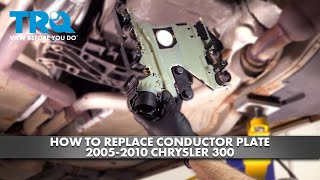
Typical fix: Replace the conductor plate, which is located on top of the valve body inside the transmission. 🎬 Watch: Step-by-step guide to replacing the conductor plate. This repair also requires replacing the transmission fluid, filter, pan gasket, and the 13-pin electrical connector as a best practice.
Est. part cost: $100-$300 - Leaking 13-Pin Electrical Connector (Pilot Bushing) 🔴 High Probability The two O-rings on the connector sleeve degrade over time, allowing transmission fluid to leak. This is an extremely common issue on the NAG1/722.6 transmission.
How to confirm: Visually inspect the round electrical connector on the front passenger side of the transmission case. If ATF is present on the outside of the plug or inside the electrical pins, it must be replaced. 🎬 See how to identify and fix this common connector leak.
Typical fix: Replace the 13-pin connector sleeve. This is a relatively simple and inexpensive part to replace from outside the transmission. It's critical to also clean the harness connector with electrical contact cleaner to prevent future issues. If the leak is severe, the fluid may have wicked up the harness to the TCM, requiring inspection and cleaning of the TCM connectors as well.
Est. part cost: $10-$30 - Low or Incorrect Transmission Fluid 🟡 Medium Probability → Shop Transmission Assembly These vehicles do not come with a transmission dipstick from the factory, making it difficult for owners to check the fluid level. A special service tool is required. Using the wrong fluid type (like ATF+4 instead of the required MB 236.14 spec) can cause shifting problems and long-term damage.
How to confirm: Use a NAG1-specific dipstick tool to check the fluid level. The level must be checked when the transmission is at operating temperature (around 80°C or 176°F) with the engine running and the shifter in Park or Neutral. The fluid should be translucent red/brown and not smell burnt.
Typical fix: Perform a transmission fluid and filter change using the correct fluid type meeting MB-Approval 236.14 (e.g., Shell ATF 134, Fuchs Titan ATF 4134). Do NOT use Chrysler ATF+4.
Est. part cost: $80-$180 - Faulty Shift Solenoid ⚪ Low Probability → Shop Transmission Valve Body While less common than the conductor plate, individual solenoids on the valve body can fail electronically or become stuck from debris in the fluid.
How to confirm: A TCM scan will show a specific code for a solenoid circuit fault (e.g., P0753, P0758, P0763). The faulty solenoid can be identified and tested for resistance with a multimeter.
Typical fix: Replace the specific solenoid identified by the trouble code. Solenoids are located on the valve body and are accessible after removing the transmission pan.
Est. part cost: $40-$100 per solenoid
Rare But Worth Checking
- Failed Transmission Control Module (TCM): → Shop Transmission Assembly This is rare, but can happen if the leaking 13-pin connector allows fluid to travel all the way up the wiring harness and into the TCM itself, causing a short. If P0700 is the only code present and all other components test good, the TCM may be the culprit.
- Internal Mechanical Failure: If the transmission fluid contains excessive metal shavings (a fine metallic paste on the pan magnet is normal), it points to a severe internal mechanical problem like clutch pack failure, requiring a transmission rebuild or replacement.
- Valve Body Failure: → Shop Transmission Valve Body Beyond the electronics, the hydraulic/mechanical part of the valve body can wear or crack, causing pressure losses and shifting issues. This is less common than the electronic components attached to it.
- Loss of Communication: NHTSA ODI #10545062 describes an instance where P0700 was related to a loss of communication with the PCM, leading to vehicle stalling.
Diagnosis Steps
- Scan the Transmission Control Module (TCM) with a compatible OBD-II scanner to retrieve the specific transmission codes (e.g., P0715, P0720, etc.). This is the most critical step.
- Check the transmission fluid level and condition using a NAG1-specific dipstick tool. The engine must be running and the fluid at operating temperature (80°C / 176°F) for an accurate reading.
- Inspect the 13-pin electrical connector on the passenger side of the transmission for any signs of fluid leakage. Unplug it and check for oil inside the connector pins.
- If fluid has leaked, follow the wiring harness up toward the cabin and inspect the TCM connector (located in the passenger footwell area, behind the kick panel) for fluid contamination.
- Based on the codes found in the TCM, test the specific component. If codes point to speed sensor failure (P0715, P2767), the conductor plate is the confirmed cause.
- If codes point to a specific solenoid, that solenoid's resistance should be tested before replacement. This can be done at the 13-pin connector or directly at the solenoid with the pan removed. 🎬 Watch: How to test solenoids and the conductor plate remotely.
- If no other codes are present besides P0700 and the fluid/connector are good, investigate potential wiring issues between the TCM and transmission. Note that NHTSA ODI #10706654 reports cases where P0700 appeared alongside U0100, suggesting intermittent communication faults.
Parts You'll Likely Need
- Transmission Conductor Plate
(OEM #52108308AC)— This is the most common point of failure on the NAG1 transmission, containing the failure-prone speed sensors.
Trusted brands: Mopar, Dorman (917-678), Standard Motor Products (SMP), Febi Bilstein
OEM price range: $200-$300
Aftermarket price range: $100-$180 - Transmission Electrical Connector Plug (Pilot Bushing)
(OEM #68021352AA)— The O-rings on this part frequently fail, causing fluid leaks that lead to shifting problems and damage to other electronics. It is highly recommended to replace this during any internal transmission service.
Trusted brands: Mopar, URO Parts, Vaico
OEM price range: $15-$30
Aftermarket price range: $10-$20 - Transmission Filter and Pan Gasket Kit
(OEM #52108325AA)— Must be replaced any time the transmission pan is removed, such as for a conductor plate replacement.
Trusted brands: Mopar, ATP, Wix
OEM price range: $30-$50
Aftermarket price range: $15-$30 - NAG1 Automatic Transmission Fluid (MB 236.14 Spec) — The correct fluid is required for service. Approx. 5-6 quarts are needed for a pan drop and filter change. Do NOT use ATF+4.
Related Codes That Often Appear With This One
- P0715 — Input/Turbine Speed Sensor Circuit Malfunction. This sensor is integrated into the conductor plate.
- P0720 — Output Speed Sensor Circuit Malfunction. This sensor is also integrated into the conductor plate.
- P0758 — Shift Solenoid 'B' Electrical. This points to a specific solenoid issue rather than the conductor plate's sensors.
- P2638 — Torque Management Feedback Signal 'A' Range/Performance. This can be triggered by the faulty speed sensor data from the conductor plate.
- P2767 — Input/Turbine Speed Sensor 'B' Circuit No Signal. This is another common code pointing directly to conductor plate failure.
- U0100 — Lost Communication with ECM/PCM. This code may appear alongside P0700 during intermittent electrical failures, as documented in NHTSA ODI #10706654.
Technical Service Bulletins (TSBs) & Recalls
- 21-002-05A: Addresses the common leak from the transmission electrical connector plug, which can cause shifting problems and trigger fault codes.
- 21-010-08: An updated TSB that supersedes a previous version (21-016-07) and relates to flashing the PCM to resolve certain transmission stuttering issues, which could be investigated if a purely electronic/software issue is suspected.
- Bulletin #S2321000006: Specifically addresses the "Service Transmission" message illumination when Diagnostic Trouble Code (DTC) P0700-E4 is set.
Platform-Specific Known Issues
- A Technical Service Bulletin (TSB) #21-002-05A was issued for the leaking transmission plug that causes shifting issues. This was later updated by TSB 21-010-08, which provides revised information for addressing transmission-related faults.
Mechanic-Grade Diagnostic Values
- Shift Solenoid Resistance (1-2/4-5, 2-3, 3-4) — expected: 2.5 - 6.5 Ohms, ideally around 4.0 Ohms. Failure: A reading outside this range, or a significant difference between solenoids, indicates a faulty solenoid.
- Pressure Regulating Solenoid Resistance (Modulating & Shift Pressure) — expected: 2.5 - 6.5 Ohms, ideally around 5.0 Ohms. Failure: A reading outside this range indicates a faulty solenoid.
- Torque Converter Clutch (TCC) PWM Solenoid Resistance — expected: 2.0 - 4.0 Ohms, ideally around 3.0 Ohms. Failure: A reading outside this range indicates a faulty TCC solenoid.
Scan Tool Commands That Help
- Chrysler wiTECH or equivalent advanced scanner: Reset Learned Adaptives (NAG1) — This procedure should be performed after replacing the transmission, TCM, conductor plate, or valve body to reset the transmission's shift calibrations to factory settings and allow it to relearn.
- Chrysler wiTECH or equivalent advanced scanner: Transmission Quicklearn — Used to fix harsh or delayed shifting, especially after a battery disconnect or replacement of major transmission components. It forces the TCM to relearn shift points and clutch fill volumes.
- Chrysler wiTECH or equivalent advanced scanner: Store Adaptives — After performing the driving portion of the adaptation procedure, this command can be used to manually save the new adaptive values without having to wait for the automatic 10-minute storage interval.
Wiring & Ground Locations
- G300 — Below the left 'B' pillar (for 6.1L models).. This is a primary body ground. A poor connection here can cause a host of intermittent electronic issues, including problems with the transmission control module and related sensors.
- G301 — Behind the left side of the dash (for non-6.1L models).. Serves as a key grounding point for instrument panel and control modules. A loose or corroded G301 can lead to communication errors and false trouble codes from the TCM.
- Transmission Control Module (TCM) — Located in the passenger-side footwell area, behind the kick panel or below the steering column depending on the specific model year and configuration.. This is the brain of the transmission. It's critical to inspect its connectors for fluid contamination that may have wicked up from a leaking 13-pin connector at the transmission.
- 13-Pin Connector (to Conductor Plate) — On the front passenger side of the transmission case, connecting the main harness to the conductor plate inside the transmission.. This is the single most common point for fluid leaks that cause electronic failures. The pins can be tested here for solenoid resistance without dropping the transmission pan.
Real Owner Repair Stories
- 300CForums.com user (2006 Chrysler 300C) — Car went into limp mode, stuck in one gear. Check engine light on with code P0700.
❌ Tried (didn't work) Initially thought it might be a simple fluid issue.
✅ What actually fixed it The user scanned for specific transmission codes and found faults pointing to the speed sensors. The final fix was replacing the conductor plate, the 13-pin connector sleeve, the filter, and the fluid. This resolved the limp mode and cleared all codes. - YouTube video by 'The Redneck Tech' (Vehicle with NAG1 / 722.6 transmission (process shown is applicable to the Chrysler 300)) — Transmission fluid leaking from the electrical connector, causing limp mode and transmission codes.
❌ Tried (didn't work) Cleaning the connector provided a temporary fix but the problem returned.
✅ What actually fixed it Replacing the 13-pin connector sleeve (pilot bushing) with its new O-rings stopped the leak. The fix also involved thoroughly cleaning the harness-side connector with electrical contact cleaner to remove all residual transmission fluid. - NHTSA ODI #11705503 — An owner reported sudden Auto-Park engagement, hard shifting, and loss of gear engagement with code P0700 present. The issue reportedly began following an A/C compressor failure.
- NHTSA ODI #10545062 — One owner reported that a diagnostic retrieved code P0700 related to a loss of communication with the PCM, which caused the vehicle to stall.
OEM Part Supersession History
52108308AB→52108308AC— Revision and improvement of the conductor plate assembly.
Heads up: The newer part number (52108308AC) is the correct and current replacement for the original.
Diagnostic Flowchart
Used vs. New Parts: Buying Guide for This Vehicle
When a used part is the smart pick: For this specific repair, using used parts is generally not recommended for the electronic components. The primary failures (conductor plate, connector O-rings) are due to age, heat, and material degradation. A used part from a junkyard is likely to have similar wear and a high risk of premature failure. A used valve body assembly might be considered if the original is physically damaged (cracked), but the solenoids and conductor plate should still be replaced with new units.
Donor-vehicle mileage cap: roughly under 80000 miles for the part to have meaningful remaining life.
What to inspect on the donor part:
- Verify the donor vehicle was not in a severe front-end collision that could have damaged the transmission.
- If possible, check the color and smell of the transmission fluid from the donor vehicle. Dark, burnt-smelling fluid indicates a hard life and potential internal damage.
- Ask for the VIN to check the vehicle's history for reported transmission problems.
OEM-only on this vehicle (don't cheap out):
- While not strictly 'OEM-only', using a Mopar or a reputable OEM-supplier (like Febi Bilstein) for the conductor plate and 13-pin connector is highly recommended for reliability.
Aftermarket brands forum-validated for this vehicle:
- Dorman (for conductor plate, part #917-678).
- Standard Motor Products (SMP)
- URO Parts (for the 13-pin connector)
Brands owners have reported issues with on this vehicle:
- Unbranded, no-name conductor plates and connectors from online marketplaces are a significant gamble. Many forum users report these failing quickly, forcing them to do the labor-intensive job a second time.
Real Owner Stories
Aggregated from forums and TSBs cited above. Mileages and costs reflect what owners reported in those sources.
2005 Chrysler 300c
Symptoms: Vehicle experienced classic limp mode symptoms. A deeper scan revealed a P0758 code was also present along with the P0700.
What fixed it: The presence of a P0758 code pointed to a specific shift solenoid issue, which requires replacing the faulty solenoid on the valve body.
Source hint: Reddit r/MechanicAdvice: 2005 Chrysler 300c p0700
NHTSA Reported Issue
Symptoms: An owner reported taking the vehicle to the dealer multiple times with no codes found, until eventually U0100 and P0700 were retrieved using a personal scan tool.
What fixed it: This case (NHTSA ODI #10706654) highlights the difficulty of diagnosing intermittent communication faults that may not always be present during a dealership visit.
Related OBD-II Codes
Frequently Asked Questions
My 2006 Chrysler 300 is stuck in 2nd gear (limp mode). Do I need a whole new transmission?
How do I check the transmission fluid on my Chrysler 300? I can't find a dipstick.
What type of transmission fluid should I use for a 2005-2010 Chrysler 300? Is ATF+4 okay?
I found transmission fluid on the round electrical plug on the side of my transmission. Is this related to my P0700 code?
My mechanic found code P0715 along with P0700. What does that mean for my 300?
My 2007 Dodge Charger has the same P0700 code and symptoms. Does this information apply?
Helpful Videos

We Have This Part in Stock


The information in this article is provided for general reference and educational purposes only. Vehicle specifications, procedures, and part compatibility can vary by production date, trim level, and region. Always consult your vehicle's factory service manual and verify part numbers before purchasing or performing repairs. Safety-critical components such as airbags, seat belts, and braking systems should be installed by a qualified professional.
- Chrysler 300:
- 🧭 Diagnostic Flowchart
- 🎬 Helpful Videos
- 🛍️ Shop This Part
- What's Unique About the 2005-2010 Chrysler 300
- Symptoms You May Notice
- Most Likely Causes
- Rare But Worth Checking
- Diagnosis Steps
- Parts You'll Likely Need
- Related Codes That Often Appear With This One
- Technical Service Bulletins (TSBs) & Recalls
- Platform-Specific Known Issues
- Mechanic-Grade Diagnostic Values
- Scan Tool Commands That Help
- Wiring & Ground Locations
- Real Owner Repair Stories
- OEM Part Supersession History
- Used vs. New Parts: Buying Guide for This Vehicle
- Real Owner Stories
- 2005 Chrysler 300c
- NHTSA Reported Issue
- Related OBD-II Codes
- Frequently Asked Questions
- 🎟️ Get 5% Off