

P0700 on 2006-2010 Dodge Charger: Transmission Fault Causes and Fixes
P0700 on a 2006-2010 Dodge Charger means the transmission computer (TCM) has stored a fault code, which is separate from the main engine computer. This often puts the car in 'limp mode,' stuck in one gear. The most common causes are a leaking 13-pin electrical connector plug or a failed conductor plate inside the transmission. A scan tool that can read specific transmission codes is required for an accurate diagnosis.
- P0700 is not the real problem; it's a sign that you need to scan the Transmission Control Module (TCM) for more specific codes.
- Do not drive the vehicle extensively; limp mode is a protective measure to prevent catastrophic transmission failure.
- The most likely culprits on a 2006-2010 Charger are a leaking electrical connector, a bad conductor plate, or low/dirty fluid.
- Start diagnosis by checking for transmission fluid leaks at the passenger side of the transmission.
- This is not a beginner-friendly DIY repair; professional diagnosis is highly recommended to avoid costly misdiagnosis.
What's Unique About the 2006-2010 Dodge Charger
The 2006-2010 Dodge Charger (LX platform) primarily uses the Mercedes-designed NAG1 (also known as W5A580 or 722.6) 5-speed automatic transmission. Unlike many vehicles where transmission control is integrated into the main engine computer, these Chargers have a separate, dedicated Transmission Control Module (TCM) located inside the cabin, under the driver's side dashboard near the steering column. Common failures on this specific transmission often relate to the valve body's electronics, specifically the conductor plate and the main 13-pin electrical connector plug, which is prone to leaking fluid and wicking it up the harness.
Symptoms You May Notice
- Check Engine Light is on
- Vehicle is stuck in one gear (limp mode, usually 2nd or 3rd)
- Harsh or erratic shifting
- Delayed engagement when shifting into Drive or Reverse
- Inability to shift gears manually using the autostick feature
- Reduced fuel economy
- Transmission temperature warning light may be on
- Replacing the entire transmission without proper diagnosis. The issue is often a much cheaper electronic component like the conductor plate or connector plug.
- Replacing the Powertrain Control Module (PCM) when the separate Transmission Control Module (TCM) is the actual control unit for the NAG1 transmission.
- Clearing the P0700 code without reading the underlying TCM codes, leading to the problem quickly returning.
- Replacing the conductor plate when the actual issue is fluid wicking up the harness and contaminating the TCM.
Most Likely Causes
- Leaking Transmission Electrical Connector Plug (13-pin) 🔴 High Probability → Shop Transmission Assembly The NAG1 transmission's 13-pin electrical connector is a very common leak point due to failed O-rings. These vehicles also lack a traditional dipstick, making fluid level checks less straightforward for DIYers, which can allow a small leak to become a major low-fluid problem.
How to confirm: Visually inspect for red ATF fluid leaking from the round, black 13-pin connector on the front passenger side of the transmission case. A special service dipstick tool is required to check the fluid level through the cap-sealed service tube in the engine bay. The fluid level must be checked when the transmission is at a specific temperature (e.g., 87-97 mm at 80°C/176°F), which should be verified with a scan tool.
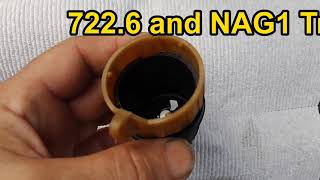
Typical fix: Replace the connector plug, which includes new O-rings. 🎬 See how to identify and fix these common connector leaks. This is often done during a transmission fluid and filter service. The correct fluid (ATF+4 or equivalent like Shell ATF 134/MB 236.14) is critical.
Est. part cost: $15-$50 for the connector plug, filter, and gasket. $80-$150 for the correct fluid. - Failed Conductor Plate (Valve Body Electronics) 🔴 High Probability The conductor plate, which houses the transmission's input and output speed sensors and communicates with the solenoids, is a well-documented weak point on the NAG1 transmission. The plastic and integrated electronics degrade over time with heat cycles, leading to sensor failure.
How to confirm: A transmission-capable scanner will show specific codes related to speed sensor faults (e.g., P0717, P2767) or solenoid communication errors stored in the TCM. This is the most definitive way to confirm.
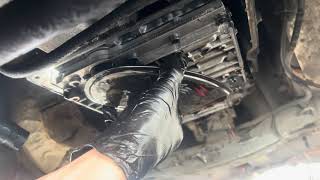
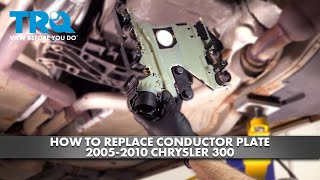
Typical fix: The transmission pan and valve body must be dropped to replace the conductor plate. 🎬 Watch: Step-by-step guide to replacing the NAG1 conductor plate. This job is almost always done along with a fluid and filter change and a new 13-pin connector plug.
Est. part cost: $150-$350 - Failed Shift Solenoid or Valve Body 🟡 Medium Probability → Shop Transmission Valve Body Solenoids can fail electrically or stick mechanically due to fluid contamination or age. While durable, they are a serviceable component.
How to confirm: Specific codes pointing to a particular solenoid (e.g., codes in the P0750-P0798 range) will be stored in the TCM. A mechanic can also test solenoid resistance with a multimeter after dropping the pan or remotely from the TCM connector.
Typical fix: Replace the faulty solenoid(s) or the entire valve body assembly. This requires dropping the transmission pan.
Est. part cost: $50-$150 for a single solenoid, $300-$700 for a complete valve body assembly. - Faulty Transmission Control Module (TCM) ⚪ Low Probability → Shop Transmission Assembly Fluid from a severely leaking 13-pin connector plug can wick up the wiring harness and physically travel into the TCM, which is located inside the car under the dash, shorting it out. Electrical failure can also occur, though it's less common than other components.
How to confirm: If the scanner cannot communicate with the TCM, or if P0700 is the only code present with no other specific transmission codes, the module itself may be faulty. A physical inspection of the TCM and its connectors for oily residue is a key step.
Typical fix: Replace the TCM. A replacement may need to be programmed to the vehicle's VIN. The source of the fluid leak (the 13-pin connector) must also be fixed.
Est. part cost: $100-$400 for a used or remanufactured unit.
Rare But Worth Checking
- Damaged Internal Wiring Harness: → Shop Transmission Wiring Harness The wiring harness inside the transmission is submerged in hot fluid and can become brittle or damaged over time, causing intermittent shorts or open circuits.
- Weak Battery or Poor Ground Connection: → Shop Vehicle Battery The TCM and other modules are sensitive to voltage. A weak battery, corroded terminals, or a bad ground strap can cause erratic behavior and trigger fault codes without an actual transmission component failure.
- Cracked or Faulty Shifter Assembly (ESM): Less common, but cracks in the electronic shifter module's circuit board can cause communication issues and trigger a P0700 code, sometimes accompanied by a U0404 code.
Diagnosis Steps
- Scan for codes in BOTH the Engine Control Module (ECM) and the Transmission Control Module (TCM) using a capable scan tool. A basic OBD-II reader will likely only show P0700.
- Record all specific transmission codes (e.g., P07xx, P27xx) as these point to the root cause.
- Inspect the transmission for fluid leaks, paying close attention to the round 13-pin electrical connector on the passenger side.
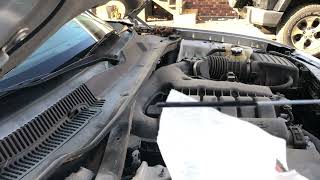
- Check the transmission fluid level and condition using the correct procedure. This requires a special dipstick tool and knowing the transmission fluid temperature from the scan tool. 🎬 Watch: How to correctly check fluid levels without a dipstick. The level is measured in millimeters and varies with temperature.
- If speed sensor codes (P0717, P2767) are present, the conductor plate is the most likely culprit.
- If solenoid-specific codes (P0750-P0798) are present, diagnose that specific solenoid circuit.
- If no specific codes are present besides P0700, or if communication with the TCM is impossible, inspect the TCM under the driver's dash for fluid contamination from a wicking harness.
- Test the battery and check main ground connections. The NAG1 is sensitive to low voltage.
Parts You'll Likely Need
- Transmission Conductor Plate
(OEM #52108308AC)— This is the most common internal electronic failure point on the NAG1 transmission, containing speed sensors that frequently fail.
Trusted brands: Mopar, Dorman (917-678), Bosch
OEM price range: $250-$350
Aftermarket price range: $120-$200 - Transmission Electrical Connector Plug (13-pin)
(OEM #68021352AA)— The O-rings on this connector fail, causing the most common leak on this transmission, which can lead to low fluid levels and fluid wicking that damages other electronics.
Trusted brands: Mopar, Febi Bilstein, URO Parts
OEM price range: $20-$40
Aftermarket price range: $10-$25 - Transmission Filter and Pan Gasket Kit
(OEM #52108325AA)— Required for any service that involves dropping the transmission pan, such as replacing the conductor plate or solenoids.
Related Codes That Often Appear With This One
- P0717 — Input/Turbine Speed Sensor Circuit No Signal. This sensor is integrated into the conductor plate.
- P0730 — Incorrect Gear Ratio. This is a generic code indicating that the transmission is slipping, often a symptom of a conductor plate, low fluid, or solenoid failure.
- P2767 — Input/Turbine Speed Sensor 'B' Circuit No Signal. Also related to the conductor plate.
- P0758 — Shift Solenoid 'B' Electrical. This points to a specific solenoid issue rather than the conductor plate.
Technical Service Bulletins (TSBs) & Recalls
- TSB 21-013-16 REV. A: While for a different transmission (9-speed), this TSB from 2016 highlights the importance of performing a 'Quick Learn' procedure with a scan tool after transmission repairs or module replacement to ensure proper shift quality. This principle applies to the NAG1 as well.
- TSB 21-013-13: Discusses the transmission adaptation learn procedure, which is critical for shift quality after component replacement on Chrysler vehicles. It specifies the temperature and torque ranges required for the procedure.
- No specific TSB directly addresses P0700 as a standalone fault, as it is a generic indicator code. TSBs typically focus on the underlying cause, such as a specific component failure or a software update to improve shift quality.
Platform-Specific Known Issues
- The NAG1 transmission's 13-pin connector is highly prone to leaking ATF, which can travel up the wiring harness and damage the TCM.
- These vehicles do not have a standard transmission dipstick, requiring a special tool to check the fluid level, which complicates DIY diagnosis.
Mechanic-Grade Diagnostic Values
- Solenoid Resistance from TCM Connector — expected: TCC Solenoid: ~2.5-3.0 Ohms. Shift Pressure Regulating & Modulating Pressure Solenoids: ~5.0-5.5 Ohms. All other Shift Solenoids (1-2/4-5, 2-3, 3-4): ~4.0-4.5 Ohms.. Failure: Readings that are open (infinite resistance), shorted (zero resistance), or significantly outside the expected range indicate a failed solenoid or wiring issue.
- Valve Body to Transmission Case Bolt Torque — expected: 71-80 inch-pounds (8-9 Nm).. Failure: Over-torquing can warp the valve body, causing sticking valves. Under-torquing can cause fluid pressure leaks.
- TCM Power and Ground Check — expected: With ignition on, battery voltage should be present at the Fused Transmission Relay Output circuit pin. With ignition off, continuity to ground (less than 5 ohms) should be present at the ground circuit pin.. Failure: No voltage or a poor ground can prevent the TCM from operating and communicating, setting a P0700.
Scan Tool Commands That Help
- Chrysler wiTECH or capable aftermarket (Autel, JScan): Reset Learned Adaptives (NAG1) — This must be performed after replacing the transmission, TCM, valve body, or conductor plate to reset shift calibrations to factory settings. Failure to do so can result in poor shift quality.
- Chrysler wiTECH or capable aftermarket (Autel, JScan): Store Adaptives — After performing the adaptation drive cycle, this command can be used to manually save the new adaptive values immediately, rather than waiting for the 10-minute automatic save interval.
- Chrysler wiTECH or capable aftermarket: Quick Learn — A function recommended by Chrysler after major component replacement or sometimes even after a battery disconnect to improve shift quality by recalibrating the TCM.
Wiring & Ground Locations
- Transmission Control Module (TCM) — Inside the cabin, under the driver's side dashboard, near the steering column.. This is the brain of the transmission. It can be damaged by fluid wicking up the harness from the 13-pin connector. Technicians can test solenoid and sensor circuits remotely by back-probing the TCM connector pins.
- 13-Pin Transmission Connector — On the front passenger side of the transmission case, pointing towards the front of the vehicle.. This is the single most common leak point on the NAG1 transmission. The pins inside connect the TCM to all internal electronics (conductor plate, solenoids). Pin 13 is battery power, Pin 14 is ground.
- TCM Ground Circuit (Z910) — The main ground connection for the TCM is typically located on the chassis near the relay panel or under the dash.. A poor ground connection can cause low voltage to the TCM, leading to erratic behavior, communication loss, and false fault codes. This should be checked if the TCM is unresponsive to a scan tool.
- TCM Connector Pins for Solenoid Testing — At the multi-pin connector on the TCM itself.. Pin 38 is the common power feed for all solenoids. By measuring resistance between pin 38 and the specific pin for each solenoid (e.g., Pin 36 for Line Pressure, Pin 16 for 2-3 shift), a technician can test the entire solenoid circuit without dropping the transmission pan.
Real Owner Repair Stories
- YouTube video by 'Reparacion de transmisiones automaticas' (Vehicle with 722.6 / NAG1 Transmission) — Transmission in fail-safe (limp mode), will not shift. Shift solenoid electrical code stored.
❌ Tried (didn't work) Testing solenoid resistance from the TCM, which showed all solenoids were within specification.
✅ What actually fixed it The wiring harness was contaminated with transmission fluid that had wicked up from the leaking 13-pin connector. The fix was to thoroughly clean the harness connectors at the transmission and at the TCM with electrical cleaner. Although the TCM itself was not full of fluid, the connector was wet and causing communication issues.
OEM Part Supersession History
52108308AB→52108308AC— Revision to improve reliability of the integrated speed sensors and plastic housing.
Model Year Variations Within This Range
- 2009-2010: The 5.7L Hemi V8 in the R/T model received a variable valve timing (VVT) system starting in 2009, which increased horsepower from 340 to 368. While this doesn't directly change the P0700 diagnosis (as the NAG1 transmission remained the same), the engine control strategy is different, which could potentially affect related diagnostic paths if engine data is considered.
- 2007-2010: Starting in 2007, the base SE model could be optioned with a smaller 2.7L V6 and a 4-speed automatic transmission, which is a completely different powertrain from the 3.5L/5.7L/6.1L engines that used the 5-speed NAG1. A P0700 on a 2.7L model would have entirely different causes and fixes not related to the NAG1-specific parts like the conductor plate or 13-pin plug.
Diagnostic Flowchart
Used vs. New Parts: Buying Guide for This Vehicle
When a used part is the smart pick: A used Transmission Control Module (TCM) from a reputable salvage yard can be a cost-effective option, especially if the original failed due to fluid contamination. Ensure the donor vehicle has low mileage and was not in a flood.
Donor-vehicle mileage cap: roughly under 100000 miles for the part to have meaningful remaining life.
What to inspect on the donor part:
- For a used TCM, inspect the connector pins for any signs of corrosion or oily residue.
- Verify the part number on the used module matches the original exactly.
- Ask for the VIN of the donor car to check its history if possible.
OEM-only on this vehicle (don't cheap out):
- Transmission Electrical Connector Plug (13-pin)
- Transmission Filter and Pan Gasket
Aftermarket brands forum-validated for this vehicle:
- Conductor Plate: Dorman (917-678) is a widely available and generally accepted alternative to OEM Mopar.
- Solenoids: Bosch (often the original supplier to Mercedes/Mopar).
Brands owners have reported issues with on this vehicle:
- Unbranded, no-name conductor plates and solenoids from online marketplaces are a significant gamble. Failures are common due to poor quality plastics and electronics that can't withstand the transmission fluid and heat, often failing shortly after installation.
Real Owner Stories
Aggregated from forums and TSBs cited above. Mileages and costs reflect what owners reported in those sources.
2005 Chrysler 300C
Symptoms: Vehicle went into limp mode with shifting issues.
What fixed it: Diagnosis with a capable scanner revealed a specific fault code, P0758, pointing to a solenoid issue, which is often related to the conductor plate assembly.
Source hint: Reddit r/MechanicAdvice: 2005 Chrysler 300c p0700
Dodge owner (unspecified model)
Symptoms: Vehicle was in limp mode with a P0700 code present.
What fixed it: A transmission fluid and filter change temporarily resolved the issue, suggesting the problem was related to fluid condition or an internal component affected by the fluid service.
Source hint: DodgeForum.com: TCM code p0700 transmission control module
Documented NHTSA Reports
NHTSA ODI #11655418
Symptoms: An owner reported that the vehicle required several restart attempts and was eventually towed. Diagnostic codes U0100 and P0700 were retrieved.
What fixed it: A dealer attempted to flash the computer, but the failure persisted.
NHTSA ODI #11645715
Symptoms: While driving on the highway, the vehicle jerks as if it wants to stall. The owner noted that codes U0100 and P0700 appear intermittently along with other fault codes.
NHTSA ODI #11562385
Symptoms: An owner experienced intermittent starting issues that became more frequent. Diagnostics at multiple shops showed P0700 and U1000 codes.
NHTSA ODI #11011481
Symptoms: The check engine light would randomly turn on and off, and the engine required significant effort to restart. DTCs P0700 and U0100 were present.
Related OBD-II Codes
Frequently Asked Questions
My 2008 Charger is stuck in one gear. Is this the conductor plate failure I've read about?
I found a puddle of red fluid under my Charger. Where is the transmission leak most likely coming from?
How do I check the transmission fluid on my 2006-2010 Charger? I can't find a dipstick.
My mechanic says my Transmission Control Module (TCM) is full of oil and needs to be replaced. How could that happen?
My basic code reader only shows P0700. What does that mean?
What is the correct transmission fluid for my 2009 Charger with the 5-speed automatic?
After replacing parts in my transmission, the car still shifts harshly. What did my mechanic miss?
Helpful Videos

We Have This Part in Stock


The information in this article is provided for general reference and educational purposes only. Vehicle specifications, procedures, and part compatibility can vary by production date, trim level, and region. Always consult your vehicle's factory service manual and verify part numbers before purchasing or performing repairs. Safety-critical components such as airbags, seat belts, and braking systems should be installed by a qualified professional.
- Dodge Charger:
- 🧭 Diagnostic Flowchart
- 🎬 Helpful Videos
- 🛍️ Shop This Part
- What's Unique About the 2006-2010 Dodge Charger
- Symptoms You May Notice
- Most Likely Causes
- Rare But Worth Checking
- Diagnosis Steps
- Parts You'll Likely Need
- Related Codes That Often Appear With This One
- Technical Service Bulletins (TSBs) & Recalls
- Platform-Specific Known Issues
- Mechanic-Grade Diagnostic Values
- Scan Tool Commands That Help
- Wiring & Ground Locations
- Real Owner Repair Stories
- OEM Part Supersession History
- Model Year Variations Within This Range
- Used vs. New Parts: Buying Guide for This Vehicle
- Real Owner Stories
- 2005 Chrysler 300C
- Dodge owner (unspecified model)
- Documented NHTSA Reports
- NHTSA ODI #11655418
- NHTSA ODI #11645715
- NHTSA ODI #11562385
- NHTSA ODI #11011481
- Related OBD-II Codes
- Frequently Asked Questions
- 🎟️ Get 5% Off