

P0700 on 2011-2015 Kia Sorento: Transmission Fault Causes and Fixes
P0700 means your Sorento's transmission computer has detected a fault. The most common underlying causes are a failed Transmission Fluid Temperature Sensor or a faulty Inhibitor Switch. A proper diagnosis requires scanning the transmission module for specific codes like P0711, P0713, or P0705 to find the root problem.
- P0700 is a general alert; you MUST scan the transmission computer for the real, specific trouble codes.
- For a 2011-2015 Sorento, the most likely culprits are a bad transmission fluid temperature sensor (P0711) or a bad inhibitor switch (P0705).
- This transmission has no dipstick. Checking the fluid is a complex procedure that must be done at a specific temperature (122-140°F).
- Using the correct Kia SP-IV (or compatible) transmission fluid is critical for the longevity and performance of the transmission.
- Due to the need for a specialized scanner and the complexity of the most common repairs, this is a job best left to a qualified mechanic.
What's Unique About the 2011-2015 Kia Sorento
On the 2011-2015 Sorento (second generation, XM) equipped with the A6MF1 or A6MF2 6-speed automatic transmission, the P0700 code is frequently a precursor to more specific codes related to two common failure points: the internal transmission fluid temperature sensor and the external inhibitor switch. Unlike many vehicles with a simple dipstick, this Sorento uses a 'sealed' transmission, which makes checking the fluid level a more involved process that is dependent on temperature. This design can lead to neglected fluid service, and degraded fluid can accelerate the failure of these sensitive electronic components.
Symptoms You May Notice
- Check Engine Light is on
- Harsh, erratic, or delayed shifting
- Vehicle enters 'limp mode' (stuck in one gear, usually 3rd)
- Inability to start the engine (if inhibitor switch fails)
- Shifting into gear feels like a jolt or thump
- Decreased fuel economy
- PRNDL gear position indicator on the dashboard is blank, flashing, or incorrect
- Replacing the entire transmission without diagnosing the specific underlying code. Many issues are caused by inexpensive sensors or switches.
- Clearing the P0700 code without reading the specific TCM codes. The P0700 will simply return until the root cause is fixed.
- Replacing the ECM/PCM when the fault lies within the transmission system or TCM.
Most Likely Causes
- Failed Transmission Fluid Temperature Sensor 🔴 High Probability → Shop Transmission Assembly This sensor, which is integrated into the internal wiring harness, is a very common failure item on this generation of Sorento and related Hyundai/Kia models with the 6-speed automatic transmission. It is constantly submerged in hot transmission fluid, leading to eventual failure.
How to confirm: Scan the TCM for codes P0711 (Range/Performance), P0712 (Circuit Low), or P0713 (Circuit High). A technician can also monitor the sensor's live data stream for erratic or illogical temperature readings (e.g., showing -40°F or over 300°F). A key check is to compare the TFT sensor reading to the Intake Air Temp (IAT) sensor on a cold engine; they should be within 5-7 degrees of each other.
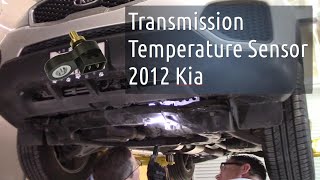
Typical fix: The sensor is part of a wiring harness assembly located inside the transmission, attached to the valve body. The transmission side cover must be removed, the fluid drained, and the entire harness/sensor assembly replaced. 🎬 Watch: Step-by-step guide to replacing the internal temperature sensor. The transmission is then refilled with the correct SP-IV fluid.
Est. part cost: $30-$60 - Failed Inhibitor Switch (Neutral Safety Switch) 🟡 Medium Probability → Shop Transmission Park Inhibitor Switch The inhibitor switch is a known issue on many Kia models of this era, with service bulletins issued for similar vehicles. It is mounted on the exterior of the transmission case and is exposed to road salt, water, and debris, which can lead to internal corrosion and failure.
How to confirm: Scan the TCM for code P0705 (Transmission Range Sensor Circuit Malfunction). Other symptoms include the gear indicator on the dash not matching the shifter position, reverse lights not working, or the vehicle only starting in Neutral but not in Park.
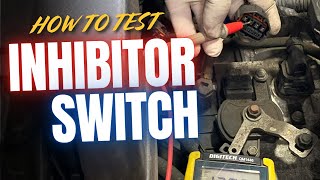
Typical fix: Replace the inhibitor switch. This part is located on the exterior of the transmission, typically under the battery and air filter housing, requiring their removal for access. 🎬 See this walkthrough for replacing the transmission inhibitor switch.
Est. part cost: $45-$85 - Low or Degraded Transmission Fluid 🟡 Medium Probability → Shop Transmission Assembly The transmission is 'sealed' with no dipstick, which discourages routine checks and service. Over time, the fluid breaks down from heat and loses its lubricating and hydraulic properties, which can cause overheating, solenoid issues, and harsh shifting that triggers a P0700 code.
How to confirm: The fluid level must be checked via a specific procedure involving a check/fill plug while the transmission is at a specific operating temperature (122-140°F or 50-60°C). Dark, burnt-smelling fluid indicates a problem and the need for service.
Typical fix: Perform a transmission fluid drain and fill using the correct Kia SP-IV compatible fluid. A full fluid exchange may be recommended if the fluid is heavily degraded.
Est. part cost: $50-$120 for fluid - Failed Shift Solenoid(s) ⚪ Low Probability → Shop Transmission Valve Body
How to confirm: Scan the TCM for specific solenoid codes (e.g., P0750-P0774). A technician can test the resistance of the specific solenoid and check its wiring. A similar Kia model report in NHTSA ODI #11080071 noted that a P0700 can be accompanied by a P0748 code, indicating a fault with the pressure control solenoid or the transaxle control module.
Typical fix: The faulty solenoid(s) must be replaced. This requires removing the transmission pan and sometimes the valve body to gain access.
Est. part cost: $50-$150 per solenoid
Rare But Worth Checking
- Damaged Wiring Harness: The main wiring harness leading to the transmission can become chafed or corroded, causing intermittent communication errors. This should be inspected, especially if multiple, seemingly unrelated transmission codes are present or if sensor replacements do not solve the issue.
- Faulty Transmission Control Module (TCM): → Shop Transmission Assembly While possible, TCM failure is rare. It should only be considered after all other possibilities, including sensors, solenoids, wiring, and fluid, have been thoroughly ruled out by a professional.
Diagnosis Steps
- Connect an OBD-II scanner capable of reading manufacturer-specific codes to the vehicle.
- Read codes from the Transmission Control Module (TCM), not just the Engine Control Module (ECM). Note all codes present (e.g., P0711, P0705, etc.).
- If codes like P0711/P0712/P0713 are present, diagnose the transmission temperature sensor and its circuit. This is the most likely culprit.
- If code P0705 is present, diagnose the inhibitor switch and its circuit. Check for no-start in Park and correct gear display.
- If other solenoid or sensor codes are present, follow the specific diagnostic procedure for those codes.
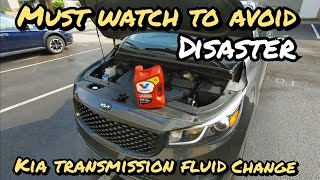
- Check the transmission fluid level and condition using the proper procedure. The fluid must be between 122-140°F (50-60°C) to get an accurate reading from the overflow plug. 🎬 Watch: How to properly drain and refill the transmission fluid.
- Inspect the main transmission wiring harness and connectors for any visible damage, corrosion, or loose connections.
- If no other codes are present or diagnosis is inconclusive, a professional may need to monitor live data from the TCM while driving to identify the fault.
Parts You'll Likely Need
- Transmission Fluid Temperature Sensor / Internal Wire Harness
(OEM #46386-3B900)— This is a very common failure point that triggers a P0700 code via a P0711, P0712, or P0713 code. The sensor is integrated into this harness.
Trusted brands: Kia/Hyundai (OEM), Standard Motor Products, Dorman
OEM price range: $30-$50
Aftermarket price range: $25-$40 - Inhibitor Switch / Neutral Safety Switch
(OEM #42700-3B700)— This switch frequently fails, causing a P0705 code, which in turn triggers the P0700. Symptoms include no-start conditions and erratic shifting.
Trusted brands: Kia/Hyundai (OEM), Mando, Dorman
OEM price range: $60-$85
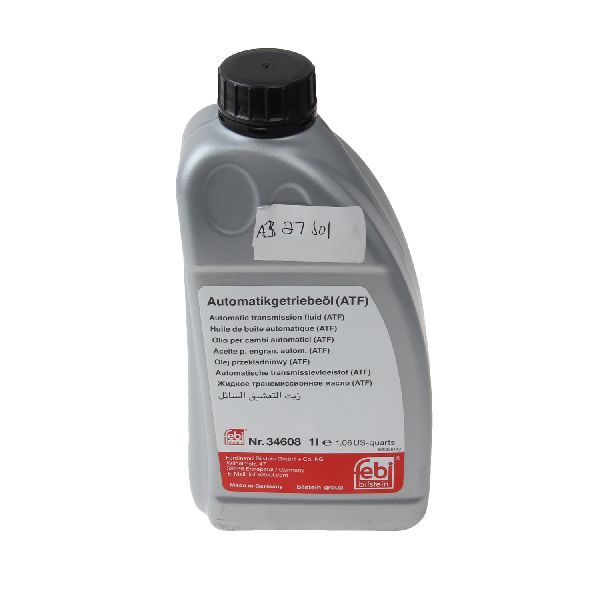
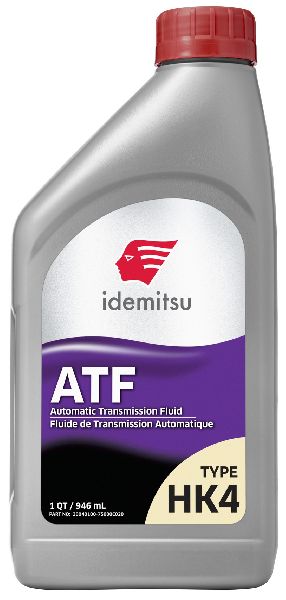
Aftermarket price range: $45-$70 - Automatic Transmission Fluid (SP-IV) — Required when replacing internal components like the temperature sensor, or for routine service to prevent issues. Must be SP-IV or a compatible equivalent.
Trusted brands: Kia/Hyundai SP-IV, Valvoline MaxLife Full Synthetic ATF, Castrol Transmax Full Synthetic Multi-Vehicle
OEM price range: $18-$25 per quart
Aftermarket price range: $8-$12 per quart
Related Codes That Often Appear With This One
- P0711 — This code directly indicates a fault with the transmission fluid temperature sensor's performance, a primary cause of P0700 on this vehicle.
- P0712 / P0713 — These codes indicate the transmission fluid temperature sensor circuit is low (short) or high (open), respectively, pointing directly to a sensor or wiring failure.
- P0705 — This code indicates a fault in the transmission range sensor (inhibitor switch) circuit, another common cause of P0700 on the Sorento.
Technical Service Bulletins (TSBs) & Recalls
- TSB TRA071: For some 2017-2018 models, addresses a TCM software update to improve shift logic, which can be related to issues that trigger a P0700.
- TSB CHA065: For some 2014-2015 models, provides an ECM software update for issues that can include MIL illumination.
- TSB TRA046: Provides the correct transmission fluid checking procedure for the 6-speed automatic transmission, which is critical for preventing fluid-related issues.
- TSB CHA111: Addresses noise from the steering system on some 2018-2020 models, not directly related to P0700 but relevant to the vehicle generation.
Platform-Specific Known Issues
- Temperature Sensor Failure is Extremely Common: Numerous owners on forums like Kia-Forums.com and SorentoNation.com have documented getting the P0700 code accompanied by P0711, P0712, or P0713. In the vast majority of these cases, the fix was replacing the internal transmission wire harness which contains the temperature sensor (part 46386-3B900). This is considered the number one cause for P0700 on this platform.
- Inhibitor Switch causing No-Start: → Shop Transmission Park Inhibitor Switch Another frequently reported scenario involves the P0700 and P0705 codes appearing together, often resulting in the engine failing to crank in Park but starting in Neutral. This is a classic symptom of a failed or misadjusted inhibitor switch. Kia has issued service bulletins for this issue on similar models.
Mechanic-Grade Diagnostic Values
- Transmission Fluid Temperature (TFT) Sensor Resistance — expected: ~2.51 kΩ at 68°F (20°C). Failure: A significantly different reading, or an open/short circuit. Resistance should decrease as temperature increases.
- Transmission Fluid Temperature (TFT) Sensor Voltage — expected: ~3.2 V at 104°F (40°C), dropping to ~0.29 V at 302°F (150°C). Failure: Voltage that is stuck, erratic, or does not correspond to the temperature change.
- Variable Force Solenoid (VFS) Resistance — expected: 5.1 Ω. Failure: Resistance outside of this value indicates a faulty solenoid coil.
- On/Off Shift Solenoid (SSA/SSB) Resistance — expected: 10-11 Ω. Failure: Resistance outside of this range indicates a faulty solenoid coil.
Scan Tool Commands That Help
- Kia GDS (or compatible high-level scanner like Autel): Resetting Auto T/A Values (Reset Adaptive Values) — This function must be performed after replacing the transmission, valve body, internal wiring harness/temp sensor, or solenoids. It clears the learned shift pressure values, allowing the TCM to relearn with the new components.
- Kia GDS (or compatible high-level scanner): Adaptive Values Relearn Procedure — After resetting the adaptive values, a specific drive cycle must be performed to 'teach' the TCM the correct solenoid duty cycles and line pressures. This involves accelerating gently through all gears (1-6) at 10-20% throttle, repeated multiple times, and shifting through P-R-N-D.
Wiring & Ground Locations
- TCU2 Fuse — Located in the engine room fuse box.. A Kia Technical Service Bulletin regarding inhibitor switch diagnosis suggests checking the TCU2 fuse as a preliminary step.
- Rear Combination Lamp Harness Ground — Located at the rear of the vehicle, securing the tail light harness.. A TSB for P0705 and related symptoms notes that checking and retightening this ground bolt can resolve the issue, suggesting a shared or sensitive ground path.
- TFT Sensor Connector Pins — Pins 9 and 13 on the main transmission case connector.. These are the specific pins for testing the Transmission Fluid Temperature sensor circuit resistance without opening the transmission.
OEM Part Supersession History
46386-3B000, 46386-3B010→46386-3B900— Standard part evolution and improvement for the transmission fluid temperature sensor/harness assembly.42700-3B700→42700-26700— Part number update for the inhibitor switch. The replacement part may look physically different from the original.
Heads up: According to a Kia TSB, the replacement inhibitor switch may appear different from the original part being replaced, but is the correct fitment.
Model Year Variations Within This Range
- 2014-2015: The 2014 model year received a major refresh with a re-engineered chassis, a new optional 3.3L GDI V6 engine (replacing the 3.5L), and cosmetic updates. The base 2.4L GDI four-cylinder engine also saw a power increase. While the 6-speed automatic transmission remained, these chassis and engine changes could affect component access and some specific procedures.
Diagnostic Flowchart
Used vs. New Parts: Buying Guide for This Vehicle
When a used part is the smart pick: For external, mechanical components like brackets or levers. Given the low cost and high failure rate of electronic parts like the inhibitor switch and internal temperature sensor, buying used is generally not recommended as they offer no guarantee of remaining life.
Donor-vehicle mileage cap: roughly under 80000 miles for the part to have meaningful remaining life.
What to inspect on the donor part:
- For an inhibitor switch, check for clean, uncorroded electrical pins.
- Ensure the plastic housing is not cracked or showing signs of extreme heat exposure.
- Verify the lever arm moves smoothly without binding.
OEM-only on this vehicle (don't cheap out):
- Transmission Fluid Temperature Sensor / Internal Wire Harness: This part lives in a harsh environment of hot ATF. The cost difference between OEM and aftermarket is minimal, and OEM provides the highest assurance of correct resistance values and material durability. Given the high labor cost to access it, using a non-OEM part is a significant risk.
Aftermarket brands forum-validated for this vehicle:
- Dorman: Offers direct replacement inhibitor switches (P/N 511-110, 511-111, 511-112) and is a widely available alternative to OEM.
Brands owners have reported issues with on this vehicle:
- Unbranded, no-name electronic sensors from online marketplaces should be avoided. The risk of incorrect calibration or premature failure is high, and the labor to replace them again outweighs any initial cost savings.
Real Owner Stories
Aggregated from forums and TSBs cited above. Mileages and costs reflect what owners reported in those sources.
2011-2015 Kia Sorento
Symptoms: Check Engine Light is on with code P0700, accompanied by more specific codes like P0711, P0712, or P0713.
What fixed it: Replacing the internal transmission wire harness which contains the integrated temperature sensor (part 46386-3B900).
Source hint: Vehicle Specific Issue: Temperature Sensor Failure is Extremely Common
2011-2015 Kia Sorento
Symptoms: The engine fails to crank when the shifter is in Park, but it starts correctly when in Neutral. Codes P0700 and P0705 are present.
What fixed it: Replacing the failed or misadjusted inhibitor switch located on the exterior of the transmission.
Source hint: Vehicle Specific Issue: Inhibitor Switch causing No-Start
2011 Sorento
Symptoms: Check Engine Light on with three codes stored simultaneously: P0700, P0713 (Temp Sensor High), and P0705 (Range Sensor).
What fixed it: The root causes were identified as both the Transmission Temperature Sensor and the Inhibitor Switch, requiring diagnosis and replacement of the faulty components.
Source hint: Kia-Forums.com: 2011 Sorento P0700, P0713, P0705
Kia Sorento (2011-2015)
Symptoms: Check Engine Light on with error codes P0700 and P0711.
What fixed it: The issue was identified as a common failure of the transmission fluid temperature sensor, which is part of the internal wire harness that needs to be replaced.
Source hint: Reddit r/MechanicAdvice: error code p0700 and p0711. need advice.
Documented NHTSA Reports
Kia Transmission Faults
Symptoms: An owner reported that the check engine light would come on and off intermittently. Diagnostic testing revealed fault codes P0700 and P0748, indicating a fault with the transaxle or a failed transaxle control module.
Source hint: NHTSA ODI #11080071
Related OBD-II Codes
Frequently Asked Questions
My 2011 Sorento has a P0700 code and won't start in Park, but it will start in Neutral. What's the most likely cause?
I have codes P0700 and P0711 on my 2014 Sorento. What part do I need to fix this?
How do I check the transmission fluid on my 2012 Sorento? I can't find a dipstick.
What type of transmission fluid should I use for a drain and fill on my Sorento?
My mechanic says the transmission temperature sensor is reading -40°F. Is the sensor definitely bad?
Is the P0700 code on my Sorento always a major transmission problem?
Helpful Videos


We Have This Part in Stock





The information in this article is provided for general reference and educational purposes only. Vehicle specifications, procedures, and part compatibility can vary by production date, trim level, and region. Always consult your vehicle's factory service manual and verify part numbers before purchasing or performing repairs. Safety-critical components such as airbags, seat belts, and braking systems should be installed by a qualified professional.
- Kia Sorento:
- 🧭 Diagnostic Flowchart
- 🎬 Helpful Videos
- 🛍️ Shop This Part
- What's Unique About the 2011-2015 Kia Sorento
- Symptoms You May Notice
- Most Likely Causes
- Rare But Worth Checking
- Diagnosis Steps
- Parts You'll Likely Need
- Related Codes That Often Appear With This One
- Technical Service Bulletins (TSBs) & Recalls
- Platform-Specific Known Issues
- Mechanic-Grade Diagnostic Values
- Scan Tool Commands That Help
- Wiring & Ground Locations
- OEM Part Supersession History
- Model Year Variations Within This Range
- Used vs. New Parts: Buying Guide for This Vehicle
- Real Owner Stories
- 2011-2015 Kia Sorento
- 2011-2015 Kia Sorento
- 2011 Sorento
- Kia Sorento (2011-2015)
- Documented NHTSA Reports
- Kia Transmission Faults
- Related OBD-II Codes
- Frequently Asked Questions
- 🎟️ Get 5% Off