

P0700 on 2006-2013 Suzuki Grand Vitara: Transmission Control System Malfunction Causes and Fixes
P0700 on a 2006-2013 Grand Vitara means the transmission has a problem. It's a general alert, so you must scan the Transmission Control Module (TCM) for specific codes. The most likely causes are low or dirty fluid, faulty shift solenoids, or wiring issues. A full system scan is mandatory for accurate diagnosis.
- P0700 is a general alert from the transmission; the real problem is identified by other codes stored in the Transmission Control Module (TCM).
- You MUST use a scanner that can read TCM codes to diagnose the problem correctly.
- Common culprits are old fluid, failed shift solenoids, and wiring issues. Start with the simplest checks first.
- Due to Suzuki's market exit, OEM parts may be harder to find, but many transmission components are shared with other vehicles using the same Aisin transmission.
What's Unique About the 2006-2013 Suzuki Grand Vitara
The third-generation Grand Vitara (2006-2013) used a 5-speed automatic transmission, designated Aisin A750E/F or TB-50LS, which is generally reliable but not immune to issues as it ages. Owners have reported problems like jerky shifting, delays when engaging gears, and getting stuck in one gear, which can all trigger a P0700 code. These symptoms often point to issues with shift solenoids, the valve body, or the transmission control unit itself, especially after 80,000-120,000 km. Because Suzuki has exited the US market, sourcing some specific parts or finding dealer-level diagnostic support can be more challenging, making accurate initial diagnosis even more critical.
Symptoms You May Notice
- Check Engine Light is on
- Transmission warning lamp may also be illuminated
- Harsh, jerky, or delayed shifting
- Transmission getting stuck in one gear (limp mode)
- Delayed engagement when shifting from Park to Drive or Reverse
- Flaring or slipping between gears (engine RPMs increase but speed does not)
- Grinding or banging noises during shifts
- Reduced fuel economy
- Inability to shift into certain gears
- Replacing the Engine Control Module (ECM) instead of diagnosing the transmission issue.
- Assuming the transmission needs a full rebuild without first checking for simpler electrical faults, sensor issues, or fluid problems.
- Replacing a shift solenoid when the root cause is a wiring problem or a clogged passage in the valve body.
Most Likely Causes
- Low or Dirty Transmission Fluid 🔴 High Probability → Shop Transmission Assembly Over time, transmission fluid breaks down from heat and contamination with clutch material. Suzuki, like many manufacturers of the era, may have claimed the fluid was 'lifetime' or had long service intervals, leading to neglect. Burnt, dark fluid indicates overheating and loss of lubricating properties.
How to confirm: Check the transmission fluid level and condition via the dipstick (if equipped). The fluid should be bright red and clear. If it's brown, black, smells burnt, or has metal particles, it's a clear sign of a problem.
Typical fix: Perform a transmission fluid and filter change. A simple drain-and-fill replaces only a portion 🎬 See how to perform a quick transmission fluid drain. of the fluid, while a full fluid exchange using a specialized machine is more thorough. Use the correct ATF specified for the vehicle (e.g., JWS 3309 or equivalent).
Est. part cost: $60-$180 for fluid and filter - Faulty Shift Solenoids 🟡 Medium Probability → Shop Transmission Valve Body Solenoids are electro-mechanical valves that control fluid flow to engage gears. They are a known failure point in many automatic transmissions of this era, including the Aisin units used by Suzuki. They can fail electrically (short/open circuit) or become clogged with debris from old fluid, causing them to stick.
How to confirm: Scan the TCM for specific solenoid-related codes (e.g., P0750, P0753, P0758). A mechanic can perform a resistance test on the solenoid and check for proper voltage at the connector.
Typical fix: Replace the faulty shift solenoid(s). This is often done by dropping the transmission oil pan. Sometimes they are sold in a pack or as part of a valve body assembly.
Est. part cost: $40-$120 per solenoid - Wiring or Connector Issues 🟡 Medium Probability The wiring harness to the transmission is exposed to heat, vibration, and the elements. Connectors can corrode, and wires can chafe or break, leading to intermittent or total loss of signal between the TCM and transmission components.
How to confirm: Visually inspect the wiring harness and connectors for any signs of damage, corrosion, melting, or loose connections. Pay close attention to the main connector at the transmission case and any points where the harness contacts metal brackets. Use a multimeter to check for continuity, shorts to ground, and proper voltage at the TCM and solenoid connectors.
Typical fix: Clean corroded connectors with electrical contact cleaner and apply dielectric grease. Repair or replace any damaged sections of the wiring harness. In some cases, a new harness pigtail is required.
Est. part cost: $20-$250 - Faulty Transmission Control Module (TCM) ⚪ Low Probability → Shop Transmission Assembly While less common, the TCM itself can fail due to internal circuit problems, often triggered by heat, moisture intrusion, or voltage spikes from a failing battery or alternator.
How to confirm: This is usually a diagnosis of exclusion after all other possibilities (fluid, solenoids, wiring, sensors) have been ruled out. A diagnostic tool may show a loss of communication with the TCM (e.g., U0101) or internal processor fault codes.
Typical fix: Replace the TCM. The new module must be the correct part number for the vehicle's year, engine, and drivetrain configuration and may require programming to the vehicle's VIN.
Est. part cost: $200-$600 (often remanufactured)
Rare But Worth Checking
- Faulty Valve Body: → Shop Transmission Valve Body The valve body is a complex maze of channels and valves that directs fluid. Sticking valves or worn channels, often caused by dirty fluid, can lead to harsh shifts and solenoid codes even if the solenoids themselves are good. Sometimes, replacing the entire valve body assembly is a more effective repair than individual solenoids.
- Internal Transmission Mechanical Failure: → Shop Transmission Assembly If the transmission fluid contains a significant amount of metal shavings (more than a fine paste on the pan magnet), it's a strong indicator of serious internal wear on clutches, bands, or gears. This may require a transmission rebuild or replacement. As a cross-manufacturer reference, NHTSA ODI #10452851 describes a Suzuki Verona experiencing transmission jerking when shifting from 2nd to 3rd gear with codes P0783, P0741, and P0700.
- Failed Input/Output Speed Sensors: The TCM relies on input and output speed sensors to know when to shift. If one of these sensors fails or provides an erratic signal, the TCM can become confused, triggering a P0700 and other specific sensor codes (e.g., P0715, P0720).
- Transmission Range Sensor: → Shop Transmission Assembly While less common on the Grand Vitara, other Suzuki models have seen P0700 paired with P0705. NHTSA ODI #10498496 and NHTSA ODI #10638284 both identify the transmission range sensor as the failing component when these codes appear together.
Diagnosis Steps
- Scan the Engine Control Module (ECM) with an OBD-II scanner to confirm the P0700 code.
- Use an advanced scan tool capable of communicating with the Transmission Control Module (TCM) to retrieve the specific transmission-related fault codes (P07xx, U-codes). This is the most critical step.
- Record and research the specific TCM codes found. These codes will direct your diagnosis (e.g., to a specific solenoid circuit or sensor).
- Check the transmission fluid level and condition. Look for fluid that is low, dark, smells burnt, or contains debris.
- Inspect the transmission wiring harness and all related connectors for visible damage, corrosion, or loose pins. Pay special attention to the main harness connector on the transmission housing and check for chafe points against the chassis or engine components.
- Based on the specific TCM codes, perform targeted tests. For a solenoid code, test the solenoid's resistance and check for voltage and ground at its connector. For a sensor code, check the sensor's output signal.
- If communication with the TCM is not possible (U0101), inspect the TCM's power and ground connections and the CAN bus wiring before condemning the module itself.
- If fluid and electrical components check out, the problem may be mechanical within the valve body or the transmission itself, which may require more advanced hydraulic pressure testing.
Parts You'll Likely Need
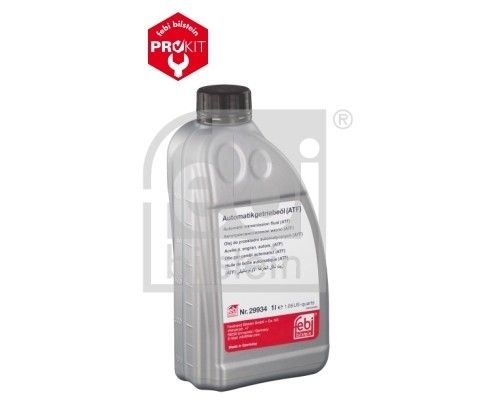
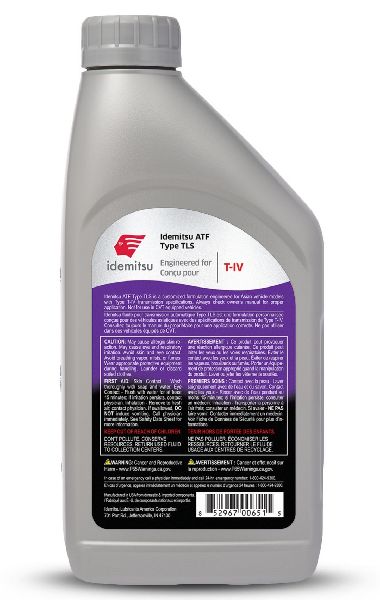
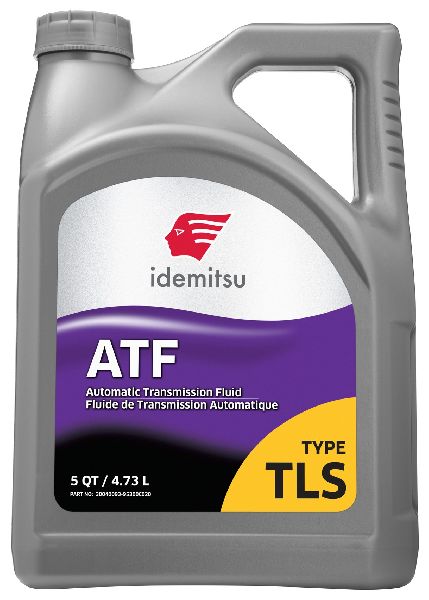
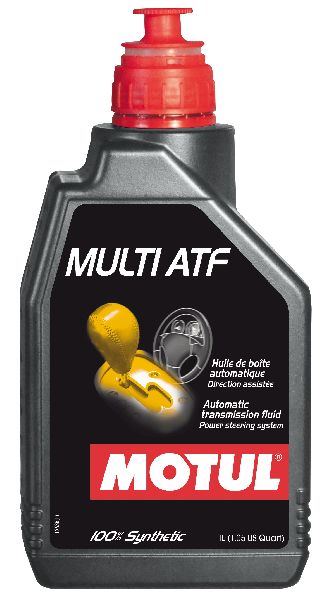
- Automatic Transmission Fluid
(OEM #SUZUKI ATF 3317 or equivalent JWS 3309 fluid)— Low or dirty fluid is a primary cause of transmission problems. A fluid and filter service is a common first step and essential for longevity.
Trusted brands: Idemitsu TLS (JWS 3309), AISIN ATF-0T4 (JWS 3309), Mobil ATF 3309
OEM price range: $15-$25 per quart
Aftermarket price range: $10-$20 per quart - Transmission Shift Solenoid
(OEM #e.g., 26581-54J30-000 (Solenoid No. 2), 26581-54J70-000 (Solenoid No. 3))— Shift solenoids are a frequent failure point on these transmissions, leading to specific shifting issues and triggering P0700.
Trusted brands: Rostra, Aisin, Sonnax (offers oversized valve kits)
OEM price range: $80-$200 per solenoid
Aftermarket price range: $40-$120 per solenoid - Transmission Control Module (TCM)
(OEM #e.g., 38880-66J7, 38880-54J00)— Though a less common failure, a faulty TCM can be the root cause after all other electrical and fluid checks pass. It may require programming upon replacement.
Trusted brands: OEM (Suzuki), Remanufactured (e.g., from specialist electronics rebuilders)
OEM price range: $500-$900
Aftermarket price range: $200-$600 (remanufactured)
Related Codes That Often Appear With This One
- P07xx — P0700 is a general code. It will almost always be accompanied by more specific P07xx codes (like P0750 for a shift solenoid fault or P0715 for an input speed sensor fault) that pinpoint the actual problem within the transmission system.
- P0705 — Often seen alongside P0700 in Suzuki vehicles. NHTSA ODI #10503320 describes a vehicle that ran normally after being restarted, but returned codes P0700 and P0705 when scanned.
- U0101 — This code indicates a loss of communication with the TCM. If seen with P0700, it strongly suggests a wiring issue, a bad connector, or a failed TCM.
Technical Service Bulletins (TSBs) & Recalls
- TSB No. TS 05 12057 - Relates to the shift lock module replacement for the safety recall on 2006-2007 models.
Platform-Specific Known Issues
- A safety recall (Campaign PE, NHTSA ID 07V-579) was issued for 2006 and certain 2007 models for a faulty shift lock module that could allow the vehicle to be shifted out of Park without the brake pedal depressed. While not directly causing a P0700, it highlights a known issue with the shifter assembly.
- Some owners on Suzuki forums have noted that a weak or failing battery can cause random electrical issues, including erroneous transmission fault codes. Before expensive repairs, ensure the battery and charging system are healthy.
Mechanic-Grade Diagnostic Values
- Shift Solenoid Resistance (4-Speed A/T) — expected: 11 - 15 ohms at 20°C (68°F). Failure: Resistance outside of this range indicates a faulty solenoid coil.
- Line Pressure Control (SLT) Solenoid Resistance (Aisin A750E/F) — expected: 5.5 - 5.6 ohms at 20°C (68°F). Failure: Resistance outside this narrow range, or any continuity to ground, points to a faulty solenoid or wiring.
- TCM Power Supply Voltage (at battery terminals, engine running) — expected: 13.5 to 14.5 volts. Failure: Voltage that is too low or too high can cause erratic behavior in the TCM and other modules, potentially triggering fault codes.
Scan Tool Commands That Help
- SUZUKI Scan Tool (SDT-II) or equivalent professional scanner: AT learned initialize / TCM LEARNED INITIALIZE — This function should be performed after replacing the transmission, the TCM, or other major hardware components. It erases the stored adaptive learning values, forcing the TCM to relearn shift points and pressures with the new components. It can also be used if the vehicle condition is unstable (e.g., RPM flares) which may have caused incorrect adaptations.
Wiring & Ground Locations
- Transmission Control Module (TCM) — Located behind the glove box. You need to remove the glove box assembly to access it.. This is the brain of the transmission. Knowing its location is critical for checking power, ground, and communication lines (CAN bus) if you suspect a module or wiring issue.
- TCM Ground Wires (Connector E92) — Pins E92-1, E92-23, and E92-6 on the TCM connector serve as grounds.. A poor ground connection at the TCM is a common cause of erratic electronic behavior and can trigger a P0700 and other communication or false sensor codes. Verifying a solid ground at these pins is a key electrical diagnostic step.
- Main Transmission Wiring Harness — Runs from the TCM, through the firewall, and down to the transmission case. It is susceptible to damage near hot exhaust components and where it might rub against the chassis or engine block.. Chafing or melting of this harness can cause shorts or open circuits for multiple solenoids and sensors at once, leading to a P0700 and various specific codes. A visual and physical inspection of the harness routing is crucial.
Real Owner Repair Stories
- Carly community forum (2007 Suzuki Grand Vitara, gasoline engine, 246,870 km) — Transmission indicator and check engine lights on, felt like it was stuck in emergency mode, not shifting properly, slipping, rough shifting, grinding noises.
❌ Tried (didn't work) Initial visual inspection of wiring did not reveal the problem.
✅ What actually fixed it The vehicle was taken to a workshop where a corroded connector was found to be the culprit. Cleaning and securing the connection resolved all symptoms and codes for a cost of 95€. - CarKiller forum user (2006 Suzuki Grand Vitara V6, 116,000+ miles) — Delay of 1.5 to 3 seconds when shifting from Park to Reverse or Drive, with a buck or kick upon engagement. Forward gears (1-5) shifted normally while driving.
❌ Tried (didn't work) The user was given an immediate diagnosis from a shop to rebuild the transmission, which they were skeptical of.
✅ What actually fixed it The final fix is not posted, but the symptoms (delayed engagement with brown fluid) strongly pointed towards internal wear or hydraulic pressure loss, likely from worn internal clutches or seals, which a fluid change alone would not fix. This highlights a scenario where a rebuild might be necessary despite some normal shifting behavior. - NHTSA ODI #10575695 — An owner reported that the check engine light (P0700 and P0705) would only occur when reversing, which a mechanic identified as a transmission sensor issue.
Model Year Variations Within This Range
- 2006-2008 vs 2009-2013: The primary engines changed. Early models predominantly used the 2.7L V6, while later models used the 2.4L I4 and an optional 3.2L V6. While many used the same Aisin 5-speed automatic, the TCM part numbers and software calibrations are specific to the engine and drivetrain configuration. A TCM from a 2.7L V6 model will not work correctly in a 2.4L I4 model.
Diagnostic Flowchart
Used vs. New Parts: Buying Guide for This Vehicle
When a used part is the smart pick: A used Transmission Control Module (TCM) from a reputable salvage yard can be a cost-effective option, provided the part number matches exactly and the donor vehicle had no transmission issues. Complete wiring harnesses are also good candidates for used purchase if the original is damaged beyond simple repair.
Donor-vehicle mileage cap: roughly under 80000 miles for the part to have meaningful remaining life.
What to inspect on the donor part:
- For a TCM, ensure the part numbers are an exact match to your original module.
- Check the donor vehicle's history if possible to ensure it wasn't salvaged due to a transmission failure.
- Inspect connectors on any used electronic part or harness for corrosion, bent pins, or signs of water intrusion.
- For a wiring harness, check for any signs of previous repairs, brittleness, or chafing, especially near mounting points.
OEM-only on this vehicle (don't cheap out):
- While aftermarket solenoids exist, OEM Aisin solenoids are often recommended for reliability and to avoid compatibility issues within the valve body.
Aftermarket brands forum-validated for this vehicle:
- Idemitsu or Mobil for JWS 3309 transmission fluid.
- Sonnax for valve body repair kits and oversized valves, which can be a permanent fix for known wear issues.
- Aisin for solenoids and other internal transmission hard parts.
Brands owners have reported issues with on this vehicle:
- Be cautious with unbranded, generic shift solenoid kits from online marketplaces, as their quality control and coil resistance may not meet OEM specifications, leading to repeat failures.
Real Owner Stories
Aggregated from forums and TSBs cited above. Mileages and costs reflect what owners reported in those sources.
2007 Suzuki Grand Vitara 2.7 V6 — 62137 miles
Symptoms: After about 10 minutes of driving, the stability light would turn on, the vehicle felt like it was braking on its own, and the transmission would be stuck indicating 5th gear when shifted to manual mode.
What fixed it: The owner did not report a final fix. A commenter advised that the P0700 code meant there were more specific transmission codes that needed to be retrieved with an advanced scanner.
Source hint: Opinautos
2007 Grand Vitara XL-7
Symptoms: The vehicle set a P0700 code and exhibited harsh shifting.
What fixed it: The issue was resolved by replacing two shift solenoids located inside the transmission oil pan.
Source hint: suzuki-forums.com
2006-2013 Suzuki Grand Vitara
Symptoms: Owners experienced random electrical issues, which included erroneous transmission fault codes appearing.
What fixed it: The problem was traced back to a weak or failing battery. Ensuring the battery and charging system were healthy resolved the false codes.
Source hint: Suzuki forums (cited in vehicle_specific_issues)
Related OBD-II Codes
Frequently Asked Questions
My Grand Vitara is a 2006 model. Is there a recall I should know about related to the shifter?
I'm getting a P0700 code and other weird electrical problems. Could my battery be the cause?
If my Transmission Control Module (TCM) is faulty, can I just swap in a used one?
What kind of transmission fluid should I use for my 2006-2013 Grand Vitara?
My mechanic suggested a 'drain-and-fill' for the transmission fluid. Is this sufficient?
I was told the transmission fluid in my Grand Vitara is 'lifetime' fluid. Is this correct?
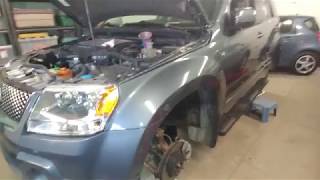
Helpful Videos

We Have This Part in Stock


The information in this article is provided for general reference and educational purposes only. Vehicle specifications, procedures, and part compatibility can vary by production date, trim level, and region. Always consult your vehicle's factory service manual and verify part numbers before purchasing or performing repairs. Safety-critical components such as airbags, seat belts, and braking systems should be installed by a qualified professional.
- Suzuki Grand Vitara:
- 🧭 Diagnostic Flowchart
- 🎬 Helpful Videos
- 🛍️ Shop This Part
- What's Unique About the 2006-2013 Suzuki Grand Vitara
- Symptoms You May Notice
- Most Likely Causes
- Rare But Worth Checking
- Diagnosis Steps
- Parts You'll Likely Need
- Related Codes That Often Appear With This One
- Technical Service Bulletins (TSBs) & Recalls
- Platform-Specific Known Issues
- Mechanic-Grade Diagnostic Values
- Scan Tool Commands That Help
- Wiring & Ground Locations
- Real Owner Repair Stories
- Model Year Variations Within This Range
- Used vs. New Parts: Buying Guide for This Vehicle
- Real Owner Stories
- 2007 Suzuki Grand Vitara 2.7 V6 — 62137 miles
- 2007 Grand Vitara XL-7
- 2006-2013 Suzuki Grand Vitara
- Related OBD-II Codes
- Frequently Asked Questions
- 🎟️ Get 5% Off