

P0700 on 2000-2004 Toyota Tundra: Transmission Control System Malfunction Explained
P0700 is a general alert from your Tundra's engine computer that the transmission has a problem. It means you must scan the Transmission Control Module (TCM) for more specific codes. The most common underlying issues are failing shift solenoids (especially P0770 for the lock-up solenoid) or low transmission fluid.
- P0700 is not a diagnosis; it's a starting point. You must use a scanner that can read transmission codes to find the real problem.
- On a 2000-2004 Tundra, the most likely culprits are a failing shift solenoid (especially the TCC/lock-up solenoid, P0770) or low/dirty transmission fluid.
- Always check the transmission fluid level and condition first, as it's the easiest and cheapest potential fix.
- Do not drive the vehicle extensively with this code, as you risk causing severe, expensive damage to the transmission.
What's Unique About the 2000-2004 Toyota Tundra
The first-generation Toyota Tundra (2000-2004) uses the robust Aisin A340 series 4-speed automatic transmission (A340E for 2WD, A340F for 4WD). While generally reliable with many units exceeding 200,000 miles, these transmissions are well-documented to experience issues with shift solenoids as they age. The P0700 code on this truck is very frequently a precursor to finding a more specific code related to a shift solenoid (like P0750, P0755) or, most commonly, P0770 for the torque converter lock-up solenoid ('Solenoid E' or 'SL').
Symptoms You May Notice
- Check Engine Light is on
- Transmission warning light may be on
- Harsh, erratic, or delayed shifting
- Transmission slipping between gears
- Vehicle stuck in one gear (limp mode)
- Failure to shift into the highest gear on the highway
- Engine revs higher than usual at cruising speed
- Decreased fuel economy
- Replacing the ECM/PCM when the fault is in the transmission.
- Rebuilding or replacing the entire transmission without first diagnosing specific electrical faults like solenoids or sensors, which are far more common and cheaper to fix.
- Replacing the torque converter for a P0770 code when it's just the lock-up solenoid that has failed.
Most Likely Causes
- Failing Shift Solenoid(s) 🔴 High Probability → Shop Transmission Valve Body The Aisin A340 transmission's solenoids are a known failure point after many years and miles. The lock-up solenoid (SL or TCC, which triggers P0770) is particularly common. They can fail electrically (open or short circuit) or become clogged with debris, causing them to stick.
How to confirm: Scan the TCM for specific solenoid codes (e.g., P0750, P0753, P0755, P0758, or the very common P0770). Test the resistance of the suspect solenoid with a multimeter; for the shift solenoids and TCC solenoid on the A340, the resistance should typically be between 11 and 15 ohms. A reading of 0 or infinity indicates a failed solenoid. You can also apply 12V from the battery to the solenoid terminals to listen for a 'click', indicating mechanical operation.
Typical fix: Replace the faulty solenoid. This is done by draining the fluid, dropping the transmission pan, removing the filter, and then unplugging and unbolting the solenoid from the valve body. Many owners recommend replacing all solenoids as a set while the pan is off.
Est. part cost: $50-$150 per solenoid, $200-$400 for a full kit - Low or Dirty Transmission Fluid 🟡 Medium Probability → Shop Transmission Assembly Leaks can develop over time from the pan gasket, cooler lines, or seals. Fluid also degrades, losing its hydraulic properties and picking up contaminants that can clog solenoid passages.
How to confirm: Check the transmission fluid level using the dipstick when the engine is warm and running in Park. The fluid should be bright red and not smell burnt. Dark, brown, or metallic-flecked fluid indicates internal wear and contamination. Low fluid is a very common cause for shifting issues.
Typical fix: Top off with the correct fluid type (Toyota Type T-IV or a compatible equivalent). If the fluid is dirty, perform a drain-and-fill (or several) or a full fluid exchange and replace the transmission filter.
Est. part cost: $10-$20 per quart of fluid - Faulty Transmission Speed Sensor (Input or Output) ⚪ Low Probability → Shop Transmission Assembly These magnetic sensors can fail electronically over time or become contaminated with metallic debris, providing incorrect or no signal to the TCM about shaft speeds.
How to confirm: Scan the TCM for specific speed sensor codes (e.g., P0717, P0720). Monitor live data from the sensors with an advanced scan tool to check for erratic or missing signals while driving.
Typical fix: Replace the faulty speed sensor. They are typically located on the outside of the transmission case and are relatively easy to access and replace.
Est. part cost: $40-$100 - Damaged Wiring or Connectors ⚪ Low Probability The wiring harness leading to the transmission can become damaged from heat, road debris, or oil contamination, causing shorts or open circuits. The main connector on the transmission is a common point to check for corrosion or loose pins.
How to confirm: Visually inspect the wiring harness going to the transmission for any signs of chafing, melting, or corrosion at the main connector. Perform a continuity test on the wires for the circuit indicated by the secondary trouble code.
Typical fix: Repair the damaged section of wire or clean/replace the connector.
Est. part cost: $10-$50 for repair materials
Rare But Worth Checking
- Faulty Transmission Control Module (TCM): → Shop Transmission Assembly This is very rare. Before condemning the TCM, all other possibilities (solenoids, sensors, wiring, fluid) must be exhaustively ruled out. A TCM failure might be suspected if P0700 appears alone with no other codes, or if communication with the TCM is impossible.
- Internal Mechanical Failure / Faulty Valve Body: → Shop Transmission Valve Body A clogged valve body passage or a failing torque converter can also trigger electronic codes like P0770. Metal shavings in the pan are a strong indicator of a more serious mechanical problem requiring a transmission rebuild or replacement.
Diagnosis Steps
- Connect an OBD-II scanner capable of reading transmission codes to the vehicle's diagnostic port.
- Record the P0700 code and, more importantly, any other codes stored in the Transmission Control Module (TCM). Freeze frame data is crucial for context.
- Address the most specific transmission codes first. For example, if you have P0770, begin diagnosing the TCC lock-up solenoid circuit.
- Check the transmission fluid level and condition. The engine must be running and at operating temperature, with the gear selector in Park. The fluid should be at the 'HOT' mark and appear clean and red.
- If fluid is low, top it off with Toyota Type T-IV fluid, clear codes, and test drive. If dirty or burnt, perform a drain-and-fill and replace the filter.
- Inspect the main transmission wiring harness and connector for any visible damage, corrosion, or loose connections. Clean connectors with electrical contact cleaner if necessary.
- If a specific solenoid code is present (like P0770), drain the fluid and drop the transmission pan to access the valve body. Identify the suspect solenoid.
- Test the solenoid's resistance with a multimeter. It should be within 11-15 ohms. Also, test for function by briefly applying 12V power and listening for a click. Replace if it fails either test.
- If all components and wiring test good, the issue may be a clogged passage in the valve body, a more complex internal mechanical problem, or a faulty TCM, though the latter is rare.
Parts You'll Likely Need
- Transmission Lock-Up Solenoid (Solenoid E/SL)
(OEM #35280-30050)— This is the most frequent cause of P0770, the most common specific code found with P0700 on this truck.
Trusted brands: Aisin (OEM), Rostra, Standard Motor Products
OEM price range: $150-$250
Aftermarket price range: $40-$90 - Transmission Shift Solenoid (No. 1 or No. 2)
(OEM #35250-50030 (No. 2))— The primary 1-2 and 2-3 shift solenoids are also common failure points.
Trusted brands: Aisin (OEM), Denso, Rostra
OEM price range: $100-$230
Aftermarket price range: $30-$80 - Transmission Fluid (Toyota Type T-IV)
(OEM #00279-000T4)— Required for any service involving dropping the pan, and essential for correcting low fluid levels.
Trusted brands: Toyota, Idemitsu (OEM supplier), Aisin
OEM price range: $10-$15/quart
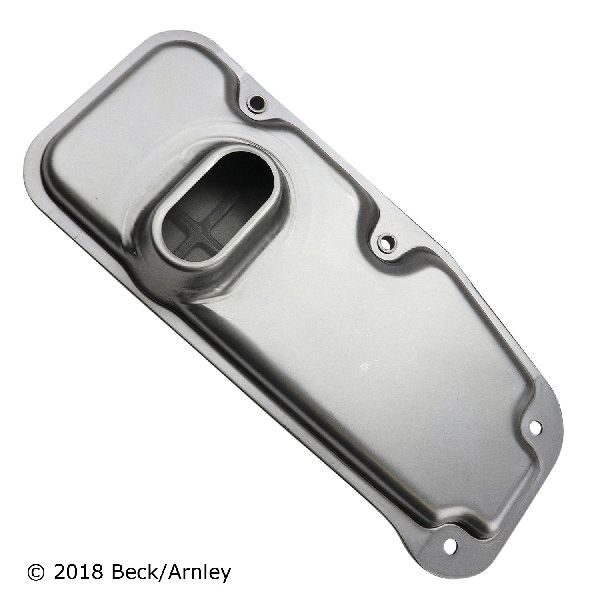
Aftermarket price range: $8-$12/quart - Transmission Filter Kit
(OEM #35330-60030)
Related Codes That Often Appear With This One
- P0770 — This is the most common companion code on this Tundra. It specifically indicates a fault with the Torque Converter Clutch (TCC) lock-up solenoid circuit, also known as 'Solenoid E' or 'Solenoid SL'.
- P0750-P0768 — These codes point to specific issues with the shift solenoids (A, B, C, D). P0700 is the general alert for these more specific faults.
- P0715, P0717, P0720, P0722 — These codes relate to faults in the input (turbine) or output speed sensor circuits, which the TCM needs to monitor for proper shifting.
Technical Service Bulletins (TSBs) & Recalls
- Toyota TSB TC005-04 - MIL ON DTC P0770: Toyota issued a technical service bulletin for some 2004 model year vehicles (including Tundra) addressing a P0770 code. The bulletin notes that an updated torque converter and a modified lock-up solenoid were made available to address some conditions that could cause this code. While not a recall, it acknowledges the issue from the factory.
Platform-Specific Known Issues
- Owner Experience: P0700 and P0770 Solenoid Replacement: A user on Tundras.com with a 2002 Tundra reported a P0700 code, which a more advanced scanner revealed to be a P0770 (Shift Solenoid E). The owner confirmed the fluid level was correct. The fix was to drop the transmission pan and replace the lock-up (SL) solenoid on the valve body. This is a very typical repair story for this generation of Tundra.
- Forum Consensus on Solenoid Replacement: On a TacomaWorld forum thread discussing a P0770 on a similar A340 transmission, the consensus among experienced owners was that if you are going to the trouble of dropping the pan to replace one solenoid, it is wise to replace all three (Shift 1, Shift 2, and Lock-up) at the same time to prevent having to do the job again in the near future.
Mechanic-Grade Diagnostic Values
- Shift Solenoid (No. 1, No. 2) and Lock-up Solenoid (SL/TCC) Resistance — expected: 11 - 15 Ω at 20°C (68°F). Failure: A reading of 0 ohms (short circuit) or infinite/OL (open circuit).
- System Voltage at TCM/ECM — expected: 13.5 to 14.5 volts with the engine running.. Failure: Low or high voltage can cause erratic behavior in control modules and trigger various codes, including P0700.
Scan Tool Commands That Help
- Toyota Techstream: Active Test for Solenoids (SL, S1, S2, etc.) — This allows a technician to command individual solenoids on and off while the vehicle is stationary to verify their electrical operation and listen for the physical 'click' from the solenoid inside the transmission, helping to isolate a faulty solenoid without first dropping the pan.
- Generic OBD-II Scanner / Battery Disconnect: → Shop Vehicle Battery Reset ECU / Clear Adaptive Memory — After a repair (like replacing a solenoid) or as a first-step diagnostic for unusual shifting behavior. Disconnecting the negative battery terminal for 15-30 minutes will clear the TCM's learned shift adaptations. This forces the module to relearn shift patterns and can sometimes resolve minor software glitches, though it will not fix a hard fault.
Wiring & Ground Locations
- Engine Control Module (ECM/TCM) — Behind the right side of the dashboard, accessible by removing the glove box assembly.. This is the control center that sets P0700 and stores the specific transmission codes. All solenoid and sensor wiring terminates here, making it a central point for electrical testing (pinpoint tests) if a wiring fault is suspected.
- Main Engine/Transmission Ground — The main ground cable from the battery attaches to the engine block, down low near the back of the engine where it mates to the transmission, on the driver's side.. The transmission solenoids are grounded through the transmission body itself. A corroded or loose main engine-to-chassis ground can create electrical noise and voltage issues, leading to erratic solenoid behavior and triggering fault codes.
- Transmission Main Connector — On the exterior of the transmission case, where the main vehicle wiring harness connects to the internal transmission wiring.. This is a primary point of failure for wiring issues. It's exposed to road debris, heat, and fluid contamination. Inspecting for corroded pins, pushed-out pins, or a loose connection is a key step when diagnosing any electrical transmission code.
Real Owner Repair Stories
- TundraTalk.net forum user (Toyota Tundra (year not specified, but 1st Gen)) — Harsh shifting, slamming into gear, and a P1760 code (related to the SLT solenoid, similar diagnostic path to P0770).
❌ Tried (didn't work) Replaced the suspect solenoid twice., Replaced the internal transmission wiring harness.
✅ What actually fixed it The cause was an intermittent short in the external wiring harness leading to the transmission. The shop eventually found and repaired the damaged wire, which resolved the code and shifting issues. - Tundras.com forum user (2000 Toyota Tundra 4.7L V8) — Check engine light with P0770, vehicle stuck in limp mode.
❌ Tried (didn't work) Initial diagnosis pointed to a bad solenoid.
✅ What actually fixed it The owner replaced the lock-up (SL) solenoid with an aftermarket Rostra part. This temporarily fixed the issue, but the transmission failed completely about 400 miles later. The owner noted in retrospect that the large amount of metallic debris in the pan was a sign of a larger mechanical failure, and the solenoid was just a symptom. The final fix was a replacement transmission.
When the Usual Fixes Don't Work
- In one documented case, a user with a solenoid-related code (P1760) replaced the solenoid and internal harness twice without success. The actual problem was an intermittent short in the external wiring harness, which is often overlooked in favor of replacing the more accessible internal components. This highlights the importance of thorough wiring diagnosis from the TCM to the transmission connector before condemning internal parts.
OEM Part Supersession History
35280-50020→35280-30050— Standard part number update/revision by Toyota.
Heads up: The new part number (35280-30050) is the correct replacement for the original.
Model Year Variations Within This Range
- 2000-2004: The A340 transmission family has over 15 different valve bodies depending on the year, engine (V6 vs V8), and drivetrain (2WD vs 4WD). For the Tundra, the V8 models introduced in 2000 did away with the throttle valve (TV) cable and use a different solenoid arrangement than earlier A340s found in other Toyota models. It is critical to match the valve body casting ID number if replacing the entire unit, otherwise new codes can be set.
- 2000-2004: There are at least 9 different stock transmission pans and 13 different filters for the A340 family. While most 1st Gen Tundras use a common setup, it's crucial to verify the correct filter and pan gasket for your specific vehicle to avoid leaks or fitment issues.
Diagnostic Flowchart
Other Known Issues on This Vehicle
Issues unrelated to this code that are worth knowing about as an owner of this generation:
- Frame Rust Perforation 🔴 High — Very common, especially in states with high road salt use. Led to a massive recall and frame replacement program. (Ref: Toyota initiated a Limited Service Campaign (LSC) and recall for 2000-2003 models, later extending some actions to 2004-2006 models.)
- Lower Ball Joint Failure 🔴 High — A critical safety issue affecting all first-generation Tundras. Failure can be catastrophic, leading to wheel separation. (Ref: Safety Recalls issued for 2002-2006 models (e.g., NHTSA 07V013000), but the design makes it a weak point on all 2000-2006 trucks.)
- Cracked Exhaust Manifolds 🟠 Medium — Common on the 4.7L V8 (2UZ-FE), causing a ticking noise, especially when the engine is cold.
- Secondary Air Injection System Failure 🟠 Medium — The air pump and/or switching valves are prone to failure from moisture intrusion, leading to a check engine light. More common on later models but can occur.
- Pink Milkshake (Transmission/Coolant Mixing) 🔴 High — Can occur if the internal radiator partition separating coolant and transmission fluid fails, mixing the two fluids and destroying the transmission.
Used vs. New Parts: Buying Guide for This Vehicle
When a used part is the smart pick: For major components like a complete valve body assembly or the entire transmission, a used part from a reputable salvage yard can be a cost-effective option, especially if the donor vehicle has documented low mileage. Given the high cost of a new transmission, this is a common repair strategy.
Donor-vehicle mileage cap: roughly under 150000 miles for the part to have meaningful remaining life.
What to inspect on the donor part:
- Check the color and smell of the transmission fluid from the donor vehicle. It should be reddish and not smell burnt.
- Ask for a vehicle history report if possible to check for accidents or maintenance records.
- Inspect the transmission case for cracks or heavy corrosion.
- If buying a valve body, ensure the casting ID number matches your original part exactly.
OEM-only on this vehicle (don't cheap out):
- Transmission Control Module (TCM): Due to programming and compatibility requirements, a used or new OEM module is the only reliable choice if this rare failure occurs.
Aftermarket brands forum-validated for this vehicle:
- Aisin (This is the Original Equipment Manufacturer for Toyota, so their parts are equivalent to genuine Toyota parts).
- Rostra (A widely used and generally accepted aftermarket brand for solenoids, though some purists prefer OEM).
- Standard Motor Products (SMP) is another common aftermarket supplier.
Brands owners have reported issues with on this vehicle:
- Unbranded, no-name solenoid kits from online marketplaces should be avoided. One owner reported a complete transmission failure shortly after installing a non-OEM solenoid, suspecting it may have contributed to the failure, although significant metal in the pan indicated a pre-existing mechanical issue.
Real Owner Stories
Aggregated from forums and TSBs cited above. Mileages and costs reflect what owners reported in those sources.
2002 Toyota Tundra
Symptoms: Check Engine Light on with code P0700; an advanced scanner revealed the underlying code was P0770 (Shift Solenoid E). The owner confirmed the fluid level was correct before proceeding.
What fixed it: Dropped the transmission pan and replaced the lock-up (SL) solenoid on the valve body.
Source hint: Tundras.com - Thread: 'Code P0770 - Shift Solenoid E Malfunction'
2002 Toyota Tundra SR5
Symptoms: Vehicle threw a P0700 code. The discussion emphasized that this general code was being caused by an underlying P0770 solenoid issue.
What fixed it: The diagnostic process identified a bad lock-up solenoid after checking fluid levels and performing electrical tests.
Source hint: Tundras.com - Thread: '2002 Tundra SR5 Code P0700'
Related OBD-II Codes
Frequently Asked Questions
I have a 2004 Tundra with a P0770 code; is there a specific factory bulletin for this?
What specific transmission is in my 2000-2004 Tundra that causes these P0700 codes?
What should the resistance be for the shift solenoids on my A340 transmission?
Which fluid should I use to top off my 2000-2004 Tundra transmission?
If I find one bad solenoid in my Tundra's valve body, should I only replace that one?
Can a P0700 code on my Tundra be caused by something as simple as low fluid?
Helpful Videos
We Have This Part in Stock

The information in this article is provided for general reference and educational purposes only. Vehicle specifications, procedures, and part compatibility can vary by production date, trim level, and region. Always consult your vehicle's factory service manual and verify part numbers before purchasing or performing repairs. Safety-critical components such as airbags, seat belts, and braking systems should be installed by a qualified professional.
- Toyota Tundra:
- 🧭 Diagnostic Flowchart
- 🎬 Helpful Videos
- 🛍️ Shop This Part
- What's Unique About the 2000-2004 Toyota Tundra
- Symptoms You May Notice
- Most Likely Causes
- Rare But Worth Checking
- Diagnosis Steps
- Parts You'll Likely Need
- Related Codes That Often Appear With This One
- Technical Service Bulletins (TSBs) & Recalls
- Platform-Specific Known Issues
- Mechanic-Grade Diagnostic Values
- Scan Tool Commands That Help
- Wiring & Ground Locations
- Real Owner Repair Stories
- When the Usual Fixes Don't Work
- OEM Part Supersession History
- Model Year Variations Within This Range
- Other Known Issues on This Vehicle
- Used vs. New Parts: Buying Guide for This Vehicle
- Real Owner Stories
- 2002 Toyota Tundra
- 2002 Toyota Tundra SR5
- Related OBD-II Codes
- Frequently Asked Questions
- 🎟️ Get 5% Off