

P0720 on 2005-2015 Toyota Tacoma: Output Speed Sensor Circuit Causes and Fixes
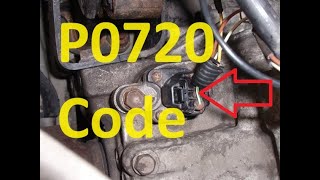
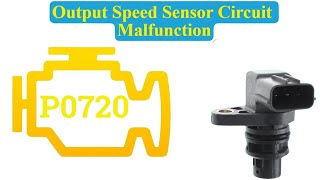
On a 2005-2015 Tacoma, P0720 is almost always a failed Output Speed Sensor located on the passenger side of the transmission. This causes harsh shifting and may put the truck in limp mode. The sensor itself is the most common failure point, and replacement is a straightforward DIY job. Do not confuse this with the ABS wheel speed sensors which provide the speedometer signal.
- P0720 on a 2005-2015 Tacoma indicates a problem with the Output Speed Sensor circuit on the transmission, not the ABS sensors that run the speedometer.
- The most common symptoms are harsh/erratic shifting and the Check Engine Light.
- The most probable cause is a failed sensor, which is located on the passenger side of the transmission and is relatively easy to replace.
- Before replacing parts, always inspect the wiring and connector for damage, as this is a common and cheap fix.
What's Unique About the 2005-2015 Toyota Tacoma
A common point of confusion on the 2nd Generation Tacoma (2005-2015) is the difference between the transmission's Output Speed Sensor (OSS) and the vehicle's speedometer reading. While the P0720 code specifically refers to the OSS on the transmission housing, the speedometer on these trucks gets its signal from the ABS wheel speed sensors. Therefore, if you have a P0720 code with shifting problems but your speedometer works, the issue is almost certainly the transmission's output sensor or its wiring. If your speedometer is also malfunctioning, you may have a separate issue with the ABS system, which would likely trigger other codes (like P0500 or ABS-specific codes).
Generation note: This guide covers the entire second generation (2nd Gen) of the Toyota Tacoma (2005-2015). The information regarding the automatic transmission (A750F/E) and the role of the output speed sensor is consistent across this generation. Forum discussions confirm that A750F transmissions from various years within this generation, and even from other models like the 4Runner, are physically interchangeable, suggesting consistent sensor design and placement.
Symptoms You May Notice
- Check Engine Light is on
- Harsh, erratic, or delayed gear shifts
- Transmission may feel like it's slipping or failing to engage a gear
- Vehicle may enter 'limp mode,' getting stuck in a single gear (often 3rd or 4th)
- Inability to use cruise control
- Hesitation or stalling when coming to a stop
- Reduced fuel economy
- Replacing an ABS wheel speed sensor to fix a P0720 code. On this truck, the ABS sensors provide the signal for the speedometer, while the P0720 code is for the separate sensor on the transmission that controls shifting.
- Replacing the entire transmission when only the external speed sensor is faulty.
Most Likely Causes
- Faulty Transmission Output Speed Sensor (OSS) 🔴 High Probability → Shop Transmission Assembly The sensor is an electronic component that can fail with age and heat cycles. Its location on the exterior of the transmission makes it susceptible to damage from road debris and moisture. The sensor can also become clogged with metallic debris from normal transmission wear, interfering with its signal.
How to confirm: After confirming the code, the sensor can be tested with a multimeter for resistance. While specifications vary, a typical resistance for this type of sensor is between 560-680 Ohms. A reading far outside this range indicates a faulty sensor. A live data scan tool can also be used to monitor the sensor's output while driving; the reading should be smooth and proportional to vehicle speed, not erratic or zero.
Typical fix: Replace the output speed sensor. On the A750 automatic transmission, it is located on the passenger side of the transmission housing, held in by a single 12mm bolt. Always replace the O-ring and coat the new one with clean ATF before installation.
Est. part cost: $50 - $150 - Damaged Wiring or Corroded Connector 🟡 Medium Probability The wiring harness leading to the sensor is exposed under the vehicle and can be damaged by road debris, corrosion from road salt, or become brittle over time. Owners in the Rust Belt are particularly susceptible.
How to confirm: Visually inspect the wiring harness and connector for any signs of fraying, breaks, or green/white corrosion on the pins. Perform a continuity test on the wires between the sensor connector and the ECM. A 'wiggle test' on the harness while monitoring live data can also reveal intermittent connection issues.
Typical fix: Repair the damaged section of wire or replace the connector pigtail. Clean any corrosion from the connector pins using an electrical contact cleaner. In cases of severe corrosion, the harness section may need to be replaced.
Est. part cost: $10 - $40 - Low or Contaminated Transmission Fluid ⚪ Low Probability → Shop Transmission Assembly The A750 transmission is a 'sealed' unit without a dipstick, making fluid level checks uncommon for many owners. While not a direct cause of sensor electrical failure, extremely low or degraded fluid can cause erratic transmission behavior, overheating, and internal component wear that may trigger various codes, including P0720.
How to confirm: The fluid level must be checked via the overflow plug on the transmission pan with the vehicle at a specific temperature (typically 104-113°F). This is a more involved process than a traditional dipstick check. The fluid should be bright red, not brown or black, and have no burnt smell.
Typical fix: Perform a transmission drain and fill, or a full fluid exchange, using the correct Toyota-specific transmission fluid (Toyota ATF WS).
Est. part cost: $75 - $200 for fluid
Rare But Worth Checking
- Faulty Engine Control Module (ECM/PCM): → Shop Engine Control Module (ECM) This is very rare. The ECM should only be considered as the cause after the sensor, wiring, and fluid have all been thoroughly checked and ruled out.
- Damaged Reluctor Ring: The sensor reads a toothed ring (reluctor ring) on the output shaft. While extremely rare, if this ring is damaged or has missing teeth, it will cause an erratic signal. This would typically require significant transmission disassembly to inspect and repair.
Diagnosis Steps
- Read the code with an OBD-II scanner to confirm P0720 is present.
- Note any other pending or active codes. P0720 can sometimes appear with other transmission-related codes if shifting is severely affected.
- Visually inspect the Output Speed Sensor and its connector on the passenger side of the transmission. Look for obvious damage, loose connections, or corrosion.
- Inspect the wiring harness leading to the sensor for any signs of damage, fraying, or melting.
- If a scan tool with live data is available, monitor the 'Output Shaft Speed' PID while driving. An erratic or zero reading confirms a problem in the circuit. A normal reading at 37 mph should be approximately 2800 rpm.
- If no scan tool is available, disconnect the sensor and use a multimeter to test its internal resistance. Compare the reading to the factory specification (a common range is 560-680 Ohms, but vehicle-specific data is best).
- If the sensor tests good, perform a continuity test on the wiring between the sensor connector and the ECM to rule out a broken wire. Resistance should be below 1 Ω between the corresponding pins at the sensor connector and ECM connector.
- Check the transmission fluid level and condition. Although a less likely cause, it's a critical maintenance item.
- If the sensor and wiring are confirmed to be good, the issue may be with the ECM, but this is highly unlikely.
Parts You'll Likely Need
- Transmission Output Speed Sensor (VSS)
(OEM #89413-0C011)— This is the most common failure point for the P0720 code. It directly provides the signal that the ECM is reporting as faulty. This part number may be superseded or have alternates like 89413-32010.
Trusted brands: Denso (OEM supplier), Aisin, Standard Motor Products (SMP), NTK
OEM price range: $120-$180
Aftermarket price range: $50-$100
Platform-Specific Known Issues
- Owner Experience: Sensor vs. Wiring: A user on a forum for a similar vehicle with P0720 replaced both input and output speed sensors, but the code returned. The problem was ultimately traced to a chafed wiring harness near the PCM, a reminder to always inspect wiring thoroughly before replacing more expensive parts.
- Repair Story: Simple Sensor Swap: On TacomaWorld, multiple owners report that for a straightforward P0720 with harsh shifting but a working speedometer, replacing the sensor (part # 89413-0C011) and its O-ring was a 15-minute fix that immediately solved the problem. One owner noted, 'easiest sensor I've ever replaced,' confirming the DIY-friendly nature of the repair.
Mechanic-Grade Diagnostic Values
- Output Speed Sensor internal resistance — expected: 560 - 680 Ohms. Failure: A reading significantly outside this range, or an open/infinite reading.
- Continuity of wiring harness (Sensor to ECM) — expected: Below 1 Ω. Failure: High resistance or an open circuit (infinite ohms) indicates a broken wire.
- Wiring harness short to ground test — expected: 10 kΩ or higher. Failure: A low resistance reading indicates a short to ground in the harness.
- Live Data: Output Shaft Speed (SPD NOUT) — expected: Approx. 2800 rpm at 37 mph (60 km/h). Failure: Reading is 0, erratic, or does not change with vehicle speed.
Scan Tool Commands That Help
- Toyota Techstream: Data List > Powertrain / Engine and ECT > SPD (NOUT) — This is the primary function to monitor the live output speed sensor signal reported to the ECM. It's used to confirm if the signal is absent, erratic, or incorrect while driving, which is a definitive test for the sensor/circuit.
- Toyota Techstream: Utility > Reset Memory (AT Initialization) — This function should be performed after replacing major transmission components or the ECM to reset the transmission's adaptive learning values. While not strictly required for a simple sensor swap, it can be useful if shifting behavior doesn't immediately return to normal.
Wiring & Ground Locations
- ECM Connector — Behind the right side of the dash, typically accessible by removing the glove compartment.. This is the termination point for the output speed sensor wiring. Technicians need to access these pins (e.g., NOTO, NOTB) to perform continuity and short-to-ground tests on the harness between the sensor and the computer.
- Engine/Transmission Ground Straps — Key grounds include one from the negative battery terminal to the inner fender, one to the engine block, and a strap from the firewall to the rear of the cylinder head. Another major ground point is on the frame rail near the rear driver's side shock mount.. A poor ground connection for the engine or ECM can introduce electrical noise or voltage offsets, potentially causing the ECM to misinterpret the sensor's signal and trigger a P0720 code, even if the sensor and its dedicated wiring are good.
Real Owner Repair Stories
- YouTube user 'Project Time Garage' (Ford 7.3L Powerstroke (different vehicle, but highly relevant electrical principle)) — P0720 code, truck takes off in 2nd gear, flashing OD light. Scan tool showed 8-20 mph reading while stopped.
❌ Tried (didn't work) Replacing the VSS (vehicle speed sensor), Replacing the alternator with a used unit (worked for two days then failed)
✅ What actually fixed it The root cause was AC ripple voltage from a failing alternator's rectifier bridge, which was feeding electrical noise into the PCM and causing a false speed reading. Unplugging the alternator made the false reading disappear. A brand new, quality alternator permanently fixed the issue.
OEM Part Supersession History
89413-0C010, 89413-32010, 89413-32011→89413-0C011— Standard part evolution and consolidation by Toyota.
Heads up: The listed part numbers are generally interchangeable for this application. 89413-0C011 is the most current replacement.
Model Year Variations Within This Range
- 2005-2015: While the A750F/E transmission was used throughout the 2nd generation, Toyota may have issued different part numbers for the transmission assembly itself over the years. However, internal components like solenoids, wiring harnesses, and sensors are reported to be interchangeable across the entire 2005-2015 range for the A750F. No significant variations affecting the P0720 diagnosis have been noted.
Diagnostic Flowchart
Other Known Issues on This Vehicle
Issues unrelated to this code that are worth knowing about as an owner of this generation:
- Frame Rust/Corrosion 🔴 High — Extremely common, especially in 'salt belt' regions. Led to a warranty extension/recall program where Toyota inspected and either treated, repaired, or repurchased affected trucks. (Ref: Customer Support Program (Not a formal recall for all years))
- Secondary Air Injection System Failure 🟠 Medium — Common on 2012-2015 models with the 4.0L V6. The pump or valves fail, often due to moisture, triggering codes like P2440, P2442, and P2445, and putting the truck in 'limp mode'. (Ref: TSB T-SB-0033-17_Rev, T-SB-0333-17, and an extended warranty campaign.)
- Rear Leaf Spring Fracture 🔴 High — Common on 2005-2011 models. Springs could corrode and fracture, potentially puncturing the fuel tank or a brake line. (Ref: NHTSA Campaign ID: 14V604000 (Recall))
- Front Wheel Bearing Failure 🟠 Medium — Known to fail prematurely, sometimes before 100,000 miles. Requires a press to replace, making it a difficult DIY job.
- Seized Front Brake Caliper Pistons 🟠 Medium — The caliper pistons, particularly the lower ones, are prone to seizing due to corrosion, leading to uneven pad wear, pulling, and overheating brakes.
Used vs. New Parts: Buying Guide for This Vehicle
When a used part is the smart pick: A used wiring harness pigtail from a junkyard is a viable option if only the connector is damaged. A used sensor is generally not recommended due to the low cost of a new aftermarket part and the electronic nature of the failure.
Donor-vehicle mileage cap: roughly under 80000 miles for the part to have meaningful remaining life.
What to inspect on the donor part:
- For a wiring pigtail, inspect for brittle plastic, corrosion on pins, and any signs of cracking or fraying wires.
- Ensure the donor vehicle was not in a flood or fire.
- Check that the locking tab on the connector is intact and functional.
OEM-only on this vehicle (don't cheap out):
- Engine Control Module (ECM) - Aftermarket or improperly matched used ECMs can cause a host of issues. If the ECM is suspected, OEM is the only reliable path.
Aftermarket brands forum-validated for this vehicle:
- Denso (often the Original Equipment supplier)
- Aisin (another OE supplier for Toyota)
- Standard Motor Products (SMP)
- NTK
Brands owners have reported issues with on this vehicle:
- Unbranded, 'white-box' sensors from online marketplaces should be avoided. Forum users and mechanics frequently report that cheap, no-name electronic sensors have high failure rates, may not meet OE specifications, and can cause persistent diagnostic issues.
Real Owner Stories
Aggregated from forums and TSBs cited above. Mileages and costs reflect what owners reported in those sources.
2005-2015 Toyota Tacoma
Symptoms: Harsh shifting but the speedometer continued to work correctly.
What fixed it: Replacing the sensor (part # 89413-0C011) and its O-ring. The owner described it as a 15-minute fix and the 'easiest sensor I've ever replaced.'
Source hint: TacomaWorld.com
Toyota Tacoma (2nd Gen)
Symptoms: The P0720 code returned even after replacing both input and output speed sensors.
What fixed it: The problem was traced to a chafed wiring harness near the PCM.
Source hint: vehicle_specific_issues: Owner Experience: Sensor vs. Wiring
Related OBD-II Codes
Frequently Asked Questions
Where is the Output Speed Sensor located on my 2005-2015 Tacoma with the A750 transmission?
What is the specific Toyota part number for the replacement sensor?
Why is my speedometer still working even though I have a P0720 code and shifting issues?
What resistance should I look for when testing the Output Speed Sensor with a multimeter?
Can I check the transmission fluid level myself on my 2005-2015 Tacoma?
Is there a specific type of transmission fluid I must use for the A750 transmission?
Helpful Videos
We Have This Part in Stock

The information in this article is provided for general reference and educational purposes only. Vehicle specifications, procedures, and part compatibility can vary by production date, trim level, and region. Always consult your vehicle's factory service manual and verify part numbers before purchasing or performing repairs. Safety-critical components such as airbags, seat belts, and braking systems should be installed by a qualified professional.
- Toyota Tacoma:
- 🧭 Diagnostic Flowchart
- 🎬 Helpful Videos
- 🛍️ Shop This Part
- What's Unique About the 2005-2015 Toyota Tacoma
- Symptoms You May Notice
- Most Likely Causes
- Rare But Worth Checking
- Diagnosis Steps
- Parts You'll Likely Need
- Platform-Specific Known Issues
- Mechanic-Grade Diagnostic Values
- Scan Tool Commands That Help
- Wiring & Ground Locations
- Real Owner Repair Stories
- OEM Part Supersession History
- Model Year Variations Within This Range
- Other Known Issues on This Vehicle
- Used vs. New Parts: Buying Guide for This Vehicle
- Real Owner Stories
- 2005-2015 Toyota Tacoma
- Toyota Tacoma (2nd Gen)
- Related OBD-II Codes
- Frequently Asked Questions
- 🎟️ Get 5% Off