

P0730 on 2007-2013 GMC Sierra 1500: Incorrect Gear Ratio Causes and Fixes
P0730 on a 2007-2013 GMC Sierra means the transmission is slipping. The most common causes are low/dirty transmission fluid or failing shift solenoids. A fluid and filter change is the first step; if that doesn't work, expect to replace solenoids or, in severe cases, the entire transmission.
- P0730 indicates transmission slippage and should be addressed immediately to prevent severe damage.
- Always start diagnosis by checking the transmission fluid level and condition. This is the most common and cheapest potential fix.
- The code is serious and driving is not recommended. The vehicle could enter limp mode or lose power unexpectedly.
- If a fluid change doesn't fix the issue, the problem is likely failing shift solenoids or internal mechanical wear, requiring professional service.
- Be aware of which transmission your truck has (4-speed or 6-speed), as the specific weak points can differ.
What's Unique About the 2007-2013 GMC Sierra 1500
The 2007-2013 GMC Sierra 1500 (GMT900 generation) primarily used two different automatic transmissions: the 4-speed 4L60-E and the 6-speed 6L80. While both can set a P0730 code, their specific failure points differ. The 6L80 is known for torque converter issues and internal failures like a broken 3-5-R wave plate, which can lead to this code. The 4L60-E has its own well-documented history of failures, most notably the 3-4 clutch pack, which can burn out and cause slipping that triggers a P0730. Diagnosis must consider which transmission is in the truck, as the most probable cause can vary significantly between the two.
Symptoms You May Notice
- Check Engine Light is on
- Transmission slipping between gears
- Harsh or delayed shifting
- Engine RPMs are higher than usual for the vehicle's speed
- Vehicle enters "limp mode" (stuck in one gear, usually 2nd or 3rd)
- Reduced fuel economy
- Vehicle may not move or has delayed engagement from Park to Drive/Reverse
- Flashing of the "Tow/Haul" light if equipped
- Replacing only the speed sensors without checking for mechanical slip. While faulty sensors can cause similar codes, P0730 is more often related to a true slip condition where the sensor readings are accurate.
- Assuming the transmission is bad and replacing it without first checking fluid level/condition and testing solenoids, which are much cheaper fixes.
Most Likely Causes
- Low or Dirty Transmission Fluid 🔴 High Probability → Shop Transmission Assembly Fluid level can drop due to leaks from pan gaskets, cooler lines, or seals. Fluid also degrades over time, losing its hydraulic properties and picking up clutch material, which can clog passages.
How to confirm: Check the transmission fluid dipstick (if equipped on 4L60-E) for level and condition. The fluid should be bright red and clear, not brown, black, or smell burnt. For sealed transmissions like the 6L80, this must be checked via a fill plug on the side of the transmission, a more involved process.
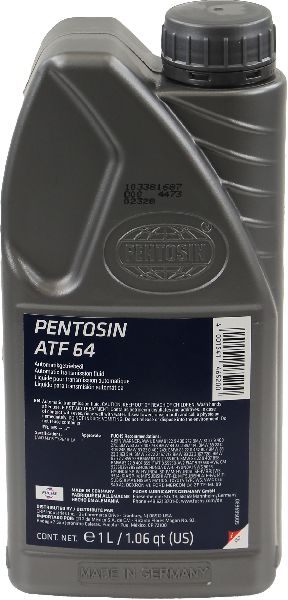
Typical fix: Top off the fluid if low. If the fluid is dirty or burnt, perform a transmission fluid and filter change. Use only the recommended fluid type, ACDelco DEXRON-VI.
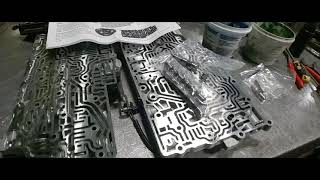
Est. part cost: $50-$150 - Failed Shift Solenoid(s) 🟡 Medium Probability → Shop Transmission Valve Body Solenoids are electronic valves that control fluid flow to engage gears. Over time, they can fail electrically or become clogged with debris. On the 6L80, the solenoids are part of the TEHCM (Transmission Electro-Hydraulic Control Module) inside the pan, which is a common failure point.
How to confirm: A professional scan tool can command specific solenoids to activate and monitor the response. Resistance checks can also be performed on the solenoid coils. This requires dropping the transmission pan.
Typical fix: Replace the faulty shift solenoid(s). For the 4L60-E, individual solenoids can be replaced. For the 6L80, the entire TEHCM/solenoid body is often replaced as a unit.
Est. part cost: $50-$450 - Internal Mechanical Failure (Worn Clutches/Bands) 🟡 Medium Probability High mileage, heavy towing, and infrequent fluid changes accelerate wear. For the 4L60-E, the 3-4 clutch pack is a notorious weak point. 🎬 Watch: 4L60-E teardown and 3-4 clutch failure inspection For the 6L80, the 3-5-R wave plate is known to break, 🎬 See: Common 6L80 failure points and how to fix them sending metal through the transmission and causing multiple gear engagement issues.
How to confirm: This is a diagnosis of exclusion. If fluid and electronics are good, but slipping persists, internal failure is likely. A transmission pressure test can provide clues, but definitive diagnosis requires disassembly. Finding significant metallic debris in the pan is a strong indicator.
Typical fix: Complete transmission rebuild or replacement with a remanufactured unit.
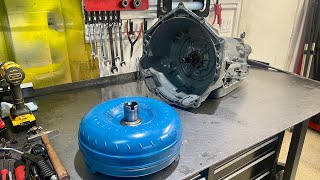
Est. part cost: $1800-$4000 - Failing Torque Converter ⚪ Low Probability → Shop Automatic Transmission Torque Converter The torque converter clutch (TCC) can wear out, or the converter itself can fail internally, creating debris that contaminates the entire system. GM transmissions of this era, particularly the 6L80, are known for TCC shudder issues that can escalate and contribute to setting this code.
How to confirm: A scan tool can monitor TCC slip speed. A stall speed test can also be performed by a technician to check for internal converter problems. Shuddering felt around 40-50 mph is a common symptom.
Typical fix: Replace the torque converter. This requires removing the transmission.
Est. part cost: $200-$600
Rare But Worth Checking
- Clogged Transmission Filter: → Shop Transmission Assembly Often a symptom of a larger problem (like clutch material shedding from a failing 3-4 pack or a broken wave plate), a clogged filter can starve the pump for fluid, causing low pressure and slipping.
- Faulty Transmission Control Module (TCM): → Shop Transmission Assembly While less common than mechanical or hydraulic issues, the TCM can fail. On 6L80 models, the TCM is integrated with the valve body and solenoids (TEHCM), making it more susceptible to heat and vibration-related failure. 🎬 Watch: Step-by-step guide to removing the 6L80 TCM
- Damaged Wiring or Connectors: Corrosion or damage to the wiring harness leading to the transmission can cause intermittent signal loss from the input/output speed sensors or to the solenoids.
Diagnosis Steps
- Check the transmission fluid level and condition. If low, top it off and check for leaks. If dirty or burnt, a fluid and filter change is the next step.
- Use a professional OBD-II scanner to check for other transmission-related codes (like P0700 or P0731-P0736) that can help narrow down the problem.
- Review live data on the scan tool, comparing Engine RPM, Input Speed Sensor (ISS) RPM, and Output Speed Sensor (OSS) RPM to confirm the slip in real-time. A significant difference between what the ISS and OSS report, that doesn't match the commanded gear ratio, confirms a slip.
- Inspect the transmission wiring harness and connectors for any visible damage, corrosion, or loose connections, paying close attention to where the harness may rub against the chassis or engine components.
- If the fluid is clean and the level is correct, perform a transmission line pressure test to check for a weak pump or internal leaks.
- If pressure is good, test the shift solenoids. This can be done via scan tool commands or by checking their resistance with a multimeter after removing the transmission oil pan.
- If all other tests pass, the issue is likely a significant internal mechanical problem (worn clutches, broken wave plate, failing torque converter) requiring a transmission rebuild or replacement.
Parts You'll Likely Need
- Transmission Fluid and Filter Kit
(OEM #Fluid: 10-9395 (Gallon), 10-9394 or 88865601 (Quart) - ACDelco DEXRON-VI. Filter kits are transmission-specific (4L60-E vs 6L80).)— The first and most important step in addressing a P0730 code is ensuring the fluid is clean, at the correct level, and the filter is not clogged.
Trusted brands: ACDelco
OEM price range: $80-$150
Aftermarket price range: $50-$100 - Transmission Shift Solenoid
(OEM #4L60-E A/B Solenoid: 24230298. 6L80: Solenoids are part of the TEHCM assembly, e.g., 24254908, but must be matched to the vehicle.)— Shift solenoids are a common failure point that can cause slipping and incorrect gear ratios.
Trusted brands: ACDelco, Bosch, Rostra
OEM price range: $60-$400
Aftermarket price range: $30-$250 - Remanufactured Transmission Assembly — If the code is caused by severe internal wear (clutches, bands, pump, wave plate), a complete transmission replacement is often more cost-effective than a rebuild.
Trusted brands: ACDelco, Jasper, Monster Transmission
OEM price range: $2500-$3500
Aftermarket price range: $1800-$2800
Related Codes That Often Appear With This One
- P0731-P0736 — These are gear-specific ratio error codes (e.g., P0731 for 1st gear). P0730 is a general ratio error, and it is often accompanied by a more specific code that can help pinpoint which gear circuit has the problem.
- P0700 — P0700 is a generic code indicating the TCM has detected a fault and has requested the Check Engine Light be turned on. It almost always appears with other transmission-specific codes like P0730.
Technical Service Bulletins (TSBs) & Recalls
- TSB 05-07-30-017B: Addresses transmission shudder between 40-50 mph on 4L60E transmissions, caused by rainwater getting into the fluid through the dipstick tube. While not a direct cause for P0730, the resulting fluid contamination can lead to conditions that set the code.
Platform-Specific Known Issues
- 4L60-E 3-4 Clutch Pack Failure: A very common failure on the 4L60-E transmission is the burnout of the 3-4 clutch pack. This results in a slip or no engagement in 3rd and 4th gears, which will set a P0730 and often a P0733/P0734. An owner on GM-Trucks.com described his 2008 Silverado with a 4L60E losing 3rd and 4th gear, which was diagnosed as a failed 3-4 clutch pack requiring a rebuild.
- 6L80 Broken 3-5-R Wave Plate: The 6L80 transmission is known for the spring-like 'wave plate' for the 3-5-R clutch pack to break. When it fails, pieces of the plate can travel through the transmission, damaging other components and clogging the valve body. This typically causes slipping in 3rd, 5th, and Reverse, triggering a P0730 code.
- 6L80 Torque Converter Failure: → Shop Automatic Transmission Torque Converter A catastrophic failure of the torque converter clutch (TCC) is a well-documented issue on the 6L80. The clutch material disintegrates, sending metallic debris throughout the entire transmission. This debris contaminates the fluid, clogs the filter, destroys the valve body and TEHCM, and ultimately leads to complete transmission failure, with P0730 being one of the primary codes set. In these cases, a simple torque converter replacement is insufficient; a full transmission rebuild or replacement is required.
Mechanic-Grade Diagnostic Values
- 4L60-E Shift Solenoid (1-2 or 2-3) Resistance — expected: 20-40 Ohms. Failure: A reading outside this range, or showing an open (infinite) or shorted (near zero) circuit, indicates a failed solenoid coil.
- 4L60-E EPC (Pressure Control) Solenoid Resistance — expected: 3.5 - 8.0 Ohms. Failure: A reading outside this range points to a faulty EPC solenoid.
- 6L80 Shift Solenoid (On/Off type) Resistance — expected: 20-24 Ohms. Failure: A reading outside this range indicates a failed solenoid coil within the TEHCM.
- 6L80 Pressure Control Solenoids (PWM type) Resistance — expected: 3-8 Ohms. Failure: A reading outside this range indicates a failed PWM solenoid within the TEHCM.
- 6L80 Transmission Line Pressure at Idle (Park/Neutral) — expected: 45-80 PSI. Failure: Significantly lower pressure suggests a weak pump, clogged filter, or major internal hydraulic leak.
- 6L80 Transmission Line Pressure at WOT Stall — expected: >200-300 PSI. Failure: Failure to build high pressure under load confirms a major hydraulic integrity problem (pump, clutches, seals).
- 6L80 Internal Pressure Switch Test (within TEHCM) — expected: Near Open Loop (OL) with no pressure; ~10 Ohms when pressure is applied (e.g., with a pencil eraser).. Failure: Failure to switch between OL and ~10 Ohms indicates a failed pressure switch membrane or circuit on the TEHCM board.
Scan Tool Commands That Help
- GM Tech2 / GDS2: Solenoid Valve State Control / Actuator Test — This bidirectional command allows a technician to manually activate and deactivate each shift and pressure control solenoid while monitoring sensor data. It is used to confirm if a specific solenoid is electrically functional and responding to commands from the TCM, helping to isolate a faulty solenoid from a wiring or mechanical issue.
- GM SPS2 (Techline Connect) with J2534 Interface: Replace and Reprogram ECU — This service function is mandatory when replacing the 6L80 TEHCM. The new or used module is blank and must be programmed with the vehicle-specific calibration file from GM's servers, matched to the VIN. Failure to program will result in a no-start condition or immediate limp mode.
- GM Tech2 / GDS2: Transmission Service Fast Learn / Reset Adapts — After a TEHCM replacement and programming, or after a major transmission repair, this procedure must be performed. It guides the TCM through a process of applying clutches and measuring the fluid volume needed to fill them (Clutch Volume Indexes), ensuring smooth and properly timed shifts.
Wiring & Ground Locations
- G103 — On the front of the passenger side cylinder head.. This is a primary ground location for the Engine Control Module (ECM). A poor connection here can cause a wide range of erratic sensor readings and communication issues between the ECM and TCM, potentially leading to incorrect commands or fault codes.
- Engine Block to Chassis/Firewall Ground — A braided ground strap typically located at the rear of the engine, connecting the cylinder head or block to the vehicle's firewall.. This is a main ground path for the entire powertrain. Corrosion or breakage of this strap is a common issue and can cause intermittent electrical problems, including faulty sensor data and erratic transmission behavior.
- G303 — On the lower left 'B' pillar (for extended and crew cab models).. This is an interior body ground. While less likely to be the primary cause, modules located inside the cab rely on clean grounds like this. A poor connection could potentially affect communication on the CAN bus network that the TCM uses.
- Transmission Harness Connector — The main round connector on the passenger side of the transmission case.. All power and signals to the internal solenoids and sensors pass through this connector. Check for corrosion on the pins, moisture intrusion, or a loose connection. The harness itself should be inspected for chafing where it may rub against the frame or exhaust.
Real Owner Repair Stories
- Aggregated owner reports from multiple forums and technical articles (2009-2013 GMC Sierra 1500 with 6L80 Transmission) — Sudden onset of harsh shifting, slipping, vehicle entering limp mode, and flashing Tow/Haul light, accompanied by P0730 and often P0741 (TCC Stuck Off).
❌ Tried (didn't work) Performing a transmission fluid and filter change. While the fluid is found to be dark and full of metallic or clutch material, the change does not resolve the slipping., Replacing the TEHCM/valve body assembly. The new TEHCM may work briefly but quickly fails or shows the same symptoms due to contamination from the rest of the system.
✅ What actually fixed it A complete transmission rebuild or replacement with a remanufactured unit. The root cause was a catastrophic failure of the Torque Converter Clutch (TCC), which disintegrated and sent metal debris throughout the entire transmission. This debris destroyed the oil pump, scored the valve body, and clogged the solenoids in the TEHCM. A full replacement was the only permanent solution.
OEM Part Supersession History
24241350, 24252114 (Early 6L80)→24256861, 24256863 (Later 6L80 in this generation)— Hardware and software updates to improve solenoid design and pressure switch reliability.
Heads up: TEHCMs are NOT interchangeable between year groups. Installing a 2010+ TEHCM into a 2008 vehicle, or vice-versa, will result in a no-start condition or immediate limp mode because the internal logic and required calibrations are different. The correct part must be matched by VIN and the Tag ID printed on the module.
Model Year Variations Within This Range
- 2007-2008: These model years predominantly used the 4-speed 4L60-E automatic transmission, especially with V6 and 5.3L engines. The diagnostic focus for P0730 on these trucks should be on the 3-4 clutch pack, pressure control solenoid (EPC), and shift solenoids.
- 2009-2013: These model years transitioned to the 6-speed 6L80 as the standard transmission. The diagnostic focus for P0730 shifts dramatically to the torque converter, the integrated TEHCM (TCM/solenoid assembly), and the 3-5-R wave plate.
Diagnostic Flowchart
Other Known Issues on This Vehicle
Issues unrelated to this code that are worth knowing about as an owner of this generation:
- Active Fuel Management (AFM) Lifter Failure 🔴 High — Common on 5.3L and 6.2L engines, especially over 70,000 miles. Can be triggered by oil pressure issues or simply wear and tear on the complex lifters. (Ref: Numerous TSBs exist regarding oil consumption and AFM diagnosis, but no widespread recall for lifter failure itself.)
- Cracked Dashboard 🟠 Medium — Extremely common across the entire GMT900 lineup. Cracks typically appear above the passenger airbag and on the driver's side near the instrument cluster, often regardless of mileage or sun exposure. (Ref: No recall was issued. A class-action lawsuit was filed regarding the issue, alleging it was a safety hazard due to potential airbag interference.)
- Rear Wheel Well Rust 🟠 Medium — Prevalent in regions that use road salt. The design of the rear fender lip can trap dirt and moisture, leading to rust bubbling from the inside out. (Ref: No TSB or recall. Prevention involves regular cleaning of the fender lips and drain plugs.)
- Excessive Oil Consumption 🟠 Medium — Often linked to the AFM system, where issues with piston rings and the PCV system can lead to burning oil, particularly on 2010-2013 models with the 5.3L engine. (Ref: Subject of a class-action lawsuit. GM has TSBs addressing oil consumption diagnosis.)
Used vs. New Parts: Buying Guide for This Vehicle
When a used part is the smart pick: A complete, low-mileage used transmission assembly can be a cost-effective choice if its history is verifiable and it comes with a warranty. Individual hard parts (e.g., planetary gear sets, drums) from a donor transmission are excellent value for a professional rebuilder.
Donor-vehicle mileage cap: roughly under 100000 miles for the part to have meaningful remaining life.
What to inspect on the donor part:
- Check the fluid condition if possible. If it's brown, black, smells burnt, or contains visible metal flakes, avoid it.
- Obtain the VIN of the donor vehicle to check for its specific transmission type (4L60-E vs. 6L80) and any reported service history.
- Inspect the case for cracks or damage, especially around mounting points.
- For a 6L80, assume the torque converter is bad and replace it as a rule, as TCC failure is the most common killer of these units.
OEM-only on this vehicle (don't cheap out):
- Transmission Electro-Hydraulic Control Module (TEHCM) for 6L80: Due to the complexity and critical need for correct VIN programming, a new OEM (ACDelco) or a professionally remanufactured unit from a top-tier rebuilder (e.g., Sonnax) is strongly recommended. Cheap, unbranded online units have a very high failure and DOA rate.
Aftermarket brands forum-validated for this vehicle:
- Sonnax (For internal rebuild components, valve body upgrades, and remanufactured TEHCMs)
- TransGo (For shift kits that address known hydraulic issues)
- Jasper (For complete remanufactured transmission assemblies)
- Monster Transmission (For complete remanufactured transmission assemblies)
Brands owners have reported issues with on this vehicle:
- Unbranded, no-name TEHCMs and shift solenoids from marketplaces like eBay or Amazon. While cheap, they are a significant gamble and often fail to program or have high infant mortality rates.
Real Owner Stories
Aggregated from forums and TSBs cited above. Mileages and costs reflect what owners reported in those sources.
2008 Silverado 4L60E
Symptoms: Losing 3rd and 4th gear; transmission slipping.
What fixed it: Transmission rebuild due to a failed 3-4 clutch pack.
Source hint: vehicle_specific_issues: 4L60-E 3-4 Clutch Pack Failure
2010 Sierra
Symptoms: Experiencing P0700 and P0730 codes with symptoms of transmission slipping.
What fixed it: Diagnostic path suggested checking fluid, torque converter, or internal damage like a cracked drum.
Source hint: GM-Trucks.com Forum - Thread on P0730 and P0700
2011 Silverado 1500 6L80 — ~125000 miles
Symptoms: Incorrect gear ratio code P0730 on a 6-speed transmission.
What fixed it: Potential torque converter replacement or full rebuild, as fluid changes are often insufficient for this code at higher mileage.
Source hint: Reddit r/mechanicadvice - 2011 Silverado P0730
Related OBD-II Codes
Frequently Asked Questions
My 2008 Silverado with the 4L60-E is slipping in 3rd and 4th gear; is this a known issue?
I have a 2010 Sierra with P0700 and P0730; what should I check first?
What is the 'wave plate' issue I hear about on the 6-speed GMC Sierra transmissions?
Can rainwater cause transmission problems on my 2007-2013 Sierra?
What specific transmission fluid should I use for my 2007-2013 GMC Sierra 1500?
Is it true that the 6L80 transmission solenoids are harder to replace than the 4L60-E?
Helpful Videos
We Have This Part in Stock

The information in this article is provided for general reference and educational purposes only. Vehicle specifications, procedures, and part compatibility can vary by production date, trim level, and region. Always consult your vehicle's factory service manual and verify part numbers before purchasing or performing repairs. Safety-critical components such as airbags, seat belts, and braking systems should be installed by a qualified professional.
- GMC Sierra 1500:
- 🧭 Diagnostic Flowchart
- 🎬 Helpful Videos
- 🛍️ Shop This Part
- What's Unique About the 2007-2013 GMC Sierra 1500
- Symptoms You May Notice
- Most Likely Causes
- Rare But Worth Checking
- Diagnosis Steps
- Parts You'll Likely Need
- Related Codes That Often Appear With This One
- Technical Service Bulletins (TSBs) & Recalls
- Platform-Specific Known Issues
- Mechanic-Grade Diagnostic Values
- Scan Tool Commands That Help
- Wiring & Ground Locations
- Real Owner Repair Stories
- OEM Part Supersession History
- Model Year Variations Within This Range
- Other Known Issues on This Vehicle
- Used vs. New Parts: Buying Guide for This Vehicle
- Real Owner Stories
- 2008 Silverado 4L60E
- 2010 Sierra
- 2011 Silverado 1500 6L80 — ~125000 miles
- Related OBD-II Codes
- Frequently Asked Questions
- 🎟️ Get 5% Off