

P0730 on 2013-2018 Hyundai Santa Fe: Incorrect Gear Ratio Causes and Fixes
P0730 on a 2013-2018 Santa Fe indicates internal transmission slippage. While low fluid is the first check, this code is often a sign of a more serious issue. Common causes include a failed internal transmission temperature sensor or, frequently, a mechanical failure requiring transmission replacement as outlined in Hyundai TSB 24-AT-002H.
- P0730 is a serious code on a 2013-2018 Santa Fe indicating transmission slippage.
- Always check the transmission fluid level and condition first, using the correct SP-IV fluid.
- A faulty internal Transmission Fluid Temperature (TFT) sensor is a very common cause and should be investigated, especially if codes P0711-P0713 are also present.
- Be prepared for a diagnosis of internal mechanical failure, which would require a costly transmission rebuild or replacement, as this is a known issue addressed by Hyundai TSB 24-AT-002H.
What's Unique About the 2013-2018 Hyundai Santa Fe
For this generation of Santa Fe, which uses the 6-speed A6MF/A6LF family of automatic transmissions, code P0730 is a serious warning. Hyundai has issued a specific Technical Service Bulletin (TSB 24-AT-002H) that provides a diagnostic path for this code which often concludes with transmission replacement due to internal clutch failure. Additionally, a very common failure point on these transmissions is the internal fluid temperature sensor, which can cause incorrect line pressure and trigger this code, a problem addressed in TSB 14-AT-010.
Symptoms You May Notice
- Check Engine Light is on
- Transmission slipping between gears (engine RPMs flare up without an increase in speed)
- Harsh, jerky, or delayed shifting
- Vehicle gets stuck in one gear (fail-safe or 'limp mode')
- Poor or sluggish acceleration
- Reduced fuel economy
- Vehicle may stall after driving at high speeds
- Replacing only the input or output speed sensors without checking fluid condition or investigating the internal temperature sensor.
- Assuming any transmission slip means the entire unit is bad without first diagnosing the more common and less expensive temperature sensor failure.
- Performing a simple fluid drain-and-fill on a transmission with heavily contaminated fluid, which may not resolve blockages in the valve body or solenoids.
Most Likely Causes
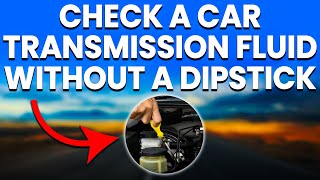
- Low or Degraded Transmission Fluid 🔴 High Probability → Shop Transmission Assembly These transmissions are sensitive to fluid level and condition. Many do not have a dipstick, leading to neglected service. 🎬 Watch: How to check transmission fluid without a dipstick Low fluid reduces hydraulic pressure needed to engage clutches, causing slip.
How to confirm: The fluid level must be checked via a fill/level plug on the side of the transmission while the vehicle is level and at a specific temperature (typically 122-140°F or 50-60°C). Check the fluid for a dark, burnt appearance or smell, which indicates degradation and possible clutch material contamination.
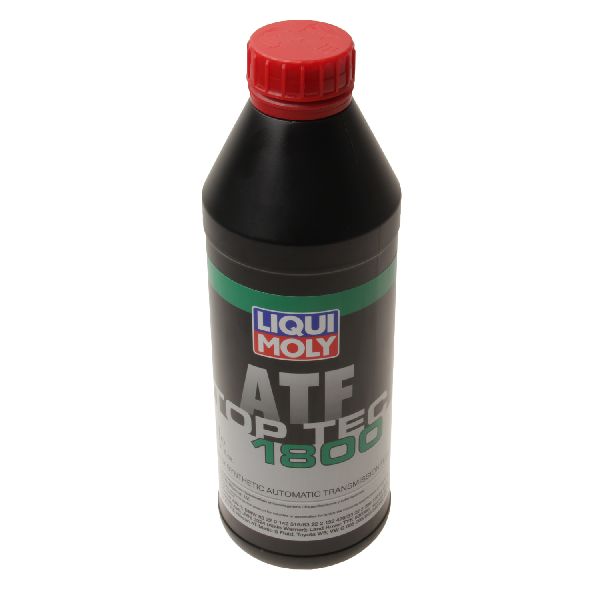
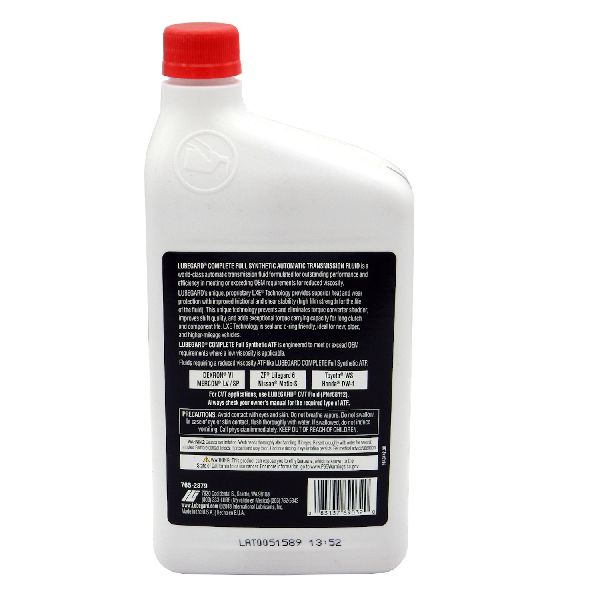
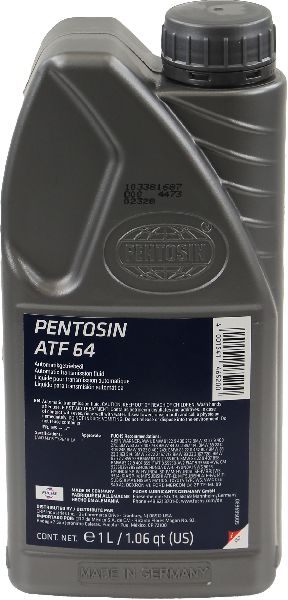
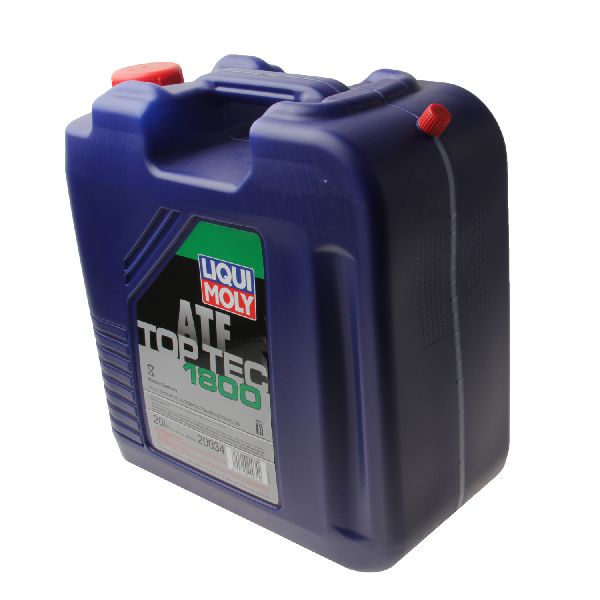
Typical fix: Perform a transmission fluid drain-and-fill or a full fluid exchange. It is critical to use only fluid that meets the Hyundai SP-IV specification. If the fluid is very burnt or contains metal, it's a sign of internal damage that a fluid change alone will not fix.
Est. part cost: $75-$150 - Failed Transmission Fluid Temperature (TFT) Sensor 🟡 Medium Probability → Shop Transmission Assembly The TFT sensor is a very common failure point on this transmission, as documented in Hyundai TSB 14-AT-010. A faulty sensor sends incorrect temperature data to the TCM, which then calculates incorrect line pressures, leading to poor shifting and slippage.
How to confirm: Scan for related codes like P0711, P0712, or P0713. A scan tool may show an erratic or nonsensical temperature reading (e.g., stuck at -40°F). The sensor's resistance can also be tested against its specification chart.
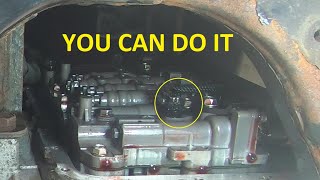
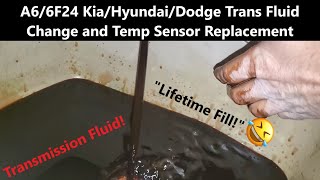
Typical fix: Replace the transmission fluid temperature sensor. This is a labor-intensive job as the sensor is located inside the transmission, attached to the valve body or internal wiring harness, requiring removal of the side transmission cover. 🎬 See this step-by-step transmission temperature sensor replacement guide Many technicians replace the entire internal wiring harness which includes the sensor.
Est. part cost: $30-$60 for the sensor, $150-$250 for the full harness. - Internal Mechanical Failure 🟡 Medium Probability Hyundai TSB 24-AT-002H directly addresses P0730 and points to internal clutch slip as a primary cause, often requiring a full transmission replacement or rebuild. Wear on clutch packs, seals, or other internal components is a known issue.
How to confirm: This is typically diagnosed by a professional after all other possibilities (fluid, sensors, solenoids) have been ruled out. A technician may perform line pressure tests and inspect the fluid in the pan for excessive clutch material or metal shavings.
Typical fix: The transmission must be removed from the vehicle and either rebuilt by a specialist or replaced with a new or remanufactured unit. A Reddit user reported a dealer quote of ~$4,100 for a replacement on a high-mileage Santa Fe.
Est. part cost: $2500-$5000 - Faulty Shift Solenoid or Valve Body ⚪ Low Probability → Shop Transmission Valve Body
How to confirm: Scan for solenoid-specific codes (e.g., P0750-P0774). A technician can command solenoids on and off with a bi-directional scan tool and perform resistance checks on the solenoid coils. Debris can also clog solenoid passages.
Typical fix: Replace the specific faulty solenoid or the entire valve body assembly. This requires removing the transmission oil pan or side cover.
Est. part cost: $50-$700, depending on replacing a single solenoid vs. the entire assembly.
Rare But Worth Checking
- Failing Torque Converter: → Shop Automatic Transmission Torque Converter The internal lock-up clutch can fail, causing slippage. This is often seen with code P0741 for the torque converter clutch circuit.
- Faulty Input/Output Speed Sensors: → Shop Automatic Transmission Speed Sensor While possible, failure of these sensors is less common and usually triggers specific sensor codes (e.g., P0721, P0723) in addition to P0730.
- TCM Software Issue: In some cases, outdated Transmission Control Module (TCM) software can cause erroneous codes. A dealer can check for and apply any available updates.
Diagnosis Steps
- Scan the TCM for all stored trouble codes. Note any codes that accompany P0730, especially for specific gears (P0731-P0735) or sensors (P0711-P0713).
- Check the transmission fluid level and condition. This must be done at a specific operating temperature (122-140°F / 50-60°C) with the vehicle level. Note if the fluid is low, dark, or has a burnt smell.
- If the fluid is low, top it off with Hyundai SP-IV ATF, clear codes, and re-test. If the fluid is very dirty or burnt, a fluid and filter service is a good next step, but may not fix an underlying mechanical issue.
- Using a scan tool, monitor live data for the Transmission Fluid Temperature (TFT) sensor. Look for erratic or illogical readings. If TFT sensor codes (P0711-P0713) are present, diagnose the sensor circuit. This is a high-probability cause on this vehicle.
- If no other codes are present, refer to TSB 24-AT-002H. This involves checking for software updates and performing tests that may lead to diagnosing internal solenoid, valve body, or mechanical failure.
- If internal failure is suspected, professional diagnosis involving hydraulic pressure tests is required before condemning the transmission.
Parts You'll Likely Need
- Transmission Fluid Temperature Sensor
(OEM #46386-3B900)— This sensor is a very common failure point documented in TSB 14-AT-010 and can cause the shifting issues that trigger P0730. It is often sold as part of the internal wiring harness.
Trusted brands: Hyundai (OEM)
OEM price range: $30-$60
Aftermarket price range: $20-$40 - Automatic Transmission Fluid (SP-IV)
(OEM #00232-19045)— Correct fluid level and condition are critical for proper transmission function. This is the first and most important check.
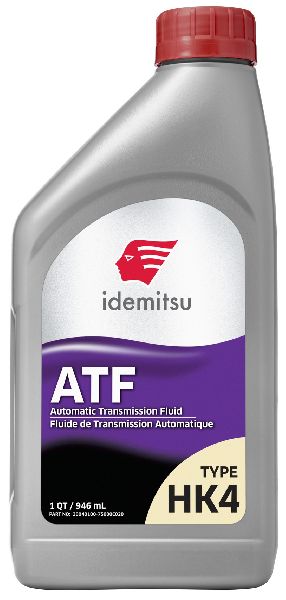
Trusted brands: Hyundai (OEM), Idemitsu TLS-LV, AISIN ATF-0WS, ENEOS
OEM price range: $15-$25 per quart
Aftermarket price range: $10-$20 per quart - Automatic Transmission Assembly
(OEM #e.g., 45000-3BCC0)— Per Hyundai TSB 24-AT-002H, this code frequently indicates a non-serviceable internal mechanical failure, making replacement the required fix. A remanufactured unit is a common repair.
Trusted brands: Hyundai (OEM), Maval (Remanufactured)
OEM price range: $3500-$5000
Aftermarket price range: $2500-$4000 (Remanufactured)
Related Codes That Often Appear With This One
- P0731-P0735 — These are specific incorrect ratio codes for each gear (1st, 2nd, etc.). P0730 is a general code, while these can help pinpoint 🎬 Watch: Learn the common causes and fixes for code P0730 which gear's hydraulic circuit or clutch pack is failing.
- P0711, P0712, P0713 — These codes point directly to a fault with the Transmission Fluid Temperature (TFT) sensor. A bad TFT sensor is a common cause of P0730 on this vehicle.
- P0741 — This code indicates a problem with the Torque Converter Clutch (TCC) circuit. A slipping TCC can be misinterpreted by the TCM as a gear ratio error, triggering P0730.
Technical Service Bulletins (TSBs) & Recalls
- TSB 24-AT-002H: AUTOMATIC TRANSMISSION INCORRECT RATIO DTC P0731, P0732, P0733, P0734, P0735, P0736, P0729, P076F & P0730.
- TSB 14-AT-010: Addresses issues with the Transmission Fluid Temperature sensor on the A6MF/A6LF transmissions.
- TSB Bulletin #23-01-019H: While issued for other models like the Venue, this bulletin confirms Hyundai's diagnostic path for P0730 involves performing a TCU update and, if necessary, replacing the transmission assembly.
- TSB Bulletin #24-01-018H: Similarly notes that vehicles may experience an illuminated warning light for P0730 and P0731, requiring a TCU update or IVT replacement.
- TSB Bulletin #22-01-030H: Outlines software updates to optimize distance traveled since DTCs were cleared for codes including P0730 and P0741.
- TSB Bulletin #Campaign T5B Dea: Directs technicians to perform ECU and TCU updates to resolve conditions triggering P0730 and P0731.
Platform-Specific Known Issues
- Widespread failure of the internal Transmission Fluid Temperature (TFT) sensor, as acknowledged by Hyundai in TSB 14-AT-010, is a primary suspect for P0730 when not accompanied by other specific gear ratio codes.
- The A6MF/A6LF family of transmissions in these vehicles are covered under TSB 24-AT-002H, which outlines a diagnostic procedure for incorrect ratio codes that often leads to transmission replacement due to internal clutch slip.
Mechanic-Grade Diagnostic Values
- Transmission Fluid Temperature (TFT) Sensor Resistance — expected: 2.51 kΩ at 68°F (20°C), 1.11 kΩ at 104°F (40°C), 0.61 kΩ at 140°F (60°C). See full chart in source.. Failure: An open circuit (infinite resistance) or a reading that is drastically different from the value expected for the measured fluid temperature.
- On/Off Shift Solenoid (SSA, SSB) Resistance — expected: 10-11 Ohms. Failure: Resistance significantly outside this range, or an open/shorted circuit.
- Variable Force Solenoid (VFS/Linear) Resistance — expected: 5.1 Ohms. Failure: Resistance significantly outside this range, or an open/shorted circuit.
Scan Tool Commands That Help
- Hyundai GDS (Global Diagnostic System): Resetting Auto T/A Values (Transmission Adaptive Values) — This procedure is mandatory after replacing the transmission, valve body, or TCM. It erases the learned shift pressure values, forcing the TCM to relearn the clutch apply characteristics with the new components to ensure smooth shifting and prevent damage.
Wiring & Ground Locations
- Gc101 — Located on the left rear of the engine compartment.. The transmission case and its sensors rely on a solid ground connection to the chassis, typically through the engine block. A corroded or loose main engine ground can cause erratic sensor readings and communication issues with the TCM, potentially contributing to incorrect ratio codes.
- Gf02 — Located in the right kick panel area inside the cabin.. Interior grounds like this are crucial for the proper function of control modules, including the Transmission Control Module (TCM). A poor ground at this location could cause the TCM to malfunction, leading to incorrect commands or fault codes.
Real Owner Repair Stories
- Reddit user on r/Hyundai (High-mileage Hyundai Santa Fe (year not specified, but within generation)) — Transmission failure symptoms leading to a P0730 diagnosis.
❌ Tried (didn't work) Not specified, but the diagnosis led directly to transmission replacement.
✅ What actually fixed it The vehicle was taken to a dealer who diagnosed an internal failure and quoted a full transmission replacement. The total cost was $4,100 ($1,900 for the part, $1,800 for labor), confirming that this code often results in a major repair as suggested by Hyundai's TSBs.
OEM Part Supersession History
46386-3B000→46386-3B900— Improved design or manufacturing process for the Transmission Fluid Temperature (TFT) sensor.
Heads up: The newer part number 46386-3B900 replaces the older 46386-3B000 and 46386-3B010. When replacing, it is highly recommended to replace the entire internal wiring harness, as updated harnesses often have the new sensor integrated.
Model Year Variations Within This Range
- 2013-2018: The specific model of the 6-speed transmission (A6GF1, A6MF1/2, A6LF1/2/3) varies depending on the engine installed (2.4L, 2.0T, 3.3L V6). While they are all in the 'A6' family, they have different torque capacities and some internal hard parts are not interchangeable. When sourcing a used transmission, it is critical to match the transmission model from the donor vehicle to the original, as a unit from a 2.4L will not work correctly in a vehicle with a 3.3L V6.
Diagnostic Flowchart
Other Known Issues on This Vehicle
Issues unrelated to this code that are worth knowing about as an owner of this generation:
- Theta II Engine Failure (2.0T & 2.4L GDI) 🔴 High — Widespread across 2013-2018 models. Failures can occur at various mileages, often manifesting as engine knock, seizing, or excessive oil consumption. (Ref: Multiple recalls (e.g., NHTSA 17V-226) and a major class-action lawsuit settlement which extended warranties and provided reimbursements.)
- Flexible Steering Coupler Wear 🟠 Medium — Very common. Owners typically notice a clicking or clunking sound in the steering column when turning, especially at low speeds. Usually appears after 50,000 miles. (Ref: No recall, but it is a widely recognized problem. The part itself is inexpensive, but labor can be significant if the entire steering column is removed.)
- Panoramic Sunroof Rattle or Malfunction 🟡 Low — Common complaint. Owners report creaking, rattling, and popping noises from the sunroof assembly, especially over bumps or on uneven roads. In some cases, the roof can get stuck or fail to operate. (Ref: No recall, but dealers have performed repairs ranging from lubrication to full assembly replacement under warranty.)
- Peeling Exterior Paint 🟡 Low — Frequently reported, especially on white and silver vehicles. Paint can peel off in large sheets, often starting on the roof or hood. (Ref: Hyundai has extended the paint warranty for this issue on some models and colors, but coverage can be inconsistent.)
- Crankshaft Position Sensor Failure 🟠 Medium — A known issue that can cause random engine stalling, especially when the engine is hot, followed by a no-start condition until it cools down.
Used vs. New Parts: Buying Guide for This Vehicle
When a used part is the smart pick: If a full transmission replacement is needed, a certified used unit from a reputable salvage yard with a warranty can be a significant cost saving over a new or remanufactured unit.
Donor-vehicle mileage cap: roughly under 80000 miles for the part to have meaningful remaining life.
What to inspect on the donor part:
- Verify the donor vehicle's VIN to ensure the engine and transmission model (e.g., A6MF2 vs A6LF1) match your vehicle exactly.
- If possible, check the color and smell of the transmission fluid from the donor unit. Dark, burnt-smelling fluid is a major red flag.
- Obtain a parts and labor warranty (e.g., 6 months or more) from the salvage yard.
- Inspect the case for any cracks or damage, especially around the mounting points and bellhousing.
OEM-only on this vehicle (don't cheap out):
- Transmission Fluid Temperature (TFT) Sensor / Internal Wiring Harness: Given the high labor cost to access this part, using a genuine OEM component is strongly recommended to ensure reliability and correct temperature readings.
- Transmission Control Module (TCM): If the TCM is diagnosed as faulty, a new or dealer-supplied unit is the safest option to avoid software and compatibility issues.
Aftermarket brands forum-validated for this vehicle:
- For valve body rebuilds: Transgo and Sonnax offer well-regarded valve body repair kits.
- For transmission fluid: Idemitsu TLS-LV and AISIN ATF-0WS are known to be compatible SP-IV equivalents.
Brands owners have reported issues with on this vehicle:
- No specific brands were consistently reported as problematic in user forums, but caution is advised with unbranded, low-cost electronic sensors and solenoids from online marketplaces.
Real Owner Stories
Aggregated from forums and TSBs cited above. Mileages and costs reflect what owners reported in those sources.
2017 Santa Fe Limited Ultimate — ~120000 miles
Symptoms: Transmission failure requiring replacement.
What fixed it: Full transmission replacement.
Cost: $4,100-$4,100
Source hint: Reddit thread titled 'Santa Fe transmission failure, should I replace!'
Related OBD-II Codes
Frequently Asked Questions
My 2013-2018 Santa Fe is throwing P0730; is there a specific TSB I should tell my mechanic about?
Can a bad temperature sensor cause the P0730 gear ratio code on my Santa Fe?
What specific transmission fluid should I use for my 2013-2018 Santa Fe to avoid shifting issues?
I don't see a dipstick; how do I check the fluid level to diagnose P0730?
Is P0730 related to the Theta II engine recalls on the Santa Fe?
If my fluid is burnt and has metal shavings, will a flush fix the P0730 code?
Helpful Videos

We Have This Part in Stock


The information in this article is provided for general reference and educational purposes only. Vehicle specifications, procedures, and part compatibility can vary by production date, trim level, and region. Always consult your vehicle's factory service manual and verify part numbers before purchasing or performing repairs. Safety-critical components such as airbags, seat belts, and braking systems should be installed by a qualified professional.
- Hyundai Santa Fe:
- 🧭 Diagnostic Flowchart
- 🎬 Helpful Videos
- 🛍️ Shop This Part
- What's Unique About the 2013-2018 Hyundai Santa Fe
- Symptoms You May Notice
- Most Likely Causes
- Rare But Worth Checking
- Diagnosis Steps
- Parts You'll Likely Need
- Related Codes That Often Appear With This One
- Technical Service Bulletins (TSBs) & Recalls
- Platform-Specific Known Issues
- Mechanic-Grade Diagnostic Values
- Scan Tool Commands That Help
- Wiring & Ground Locations
- Real Owner Repair Stories
- OEM Part Supersession History
- Model Year Variations Within This Range
- Other Known Issues on This Vehicle
- Used vs. New Parts: Buying Guide for This Vehicle
- Real Owner Stories
- 2017 Santa Fe Limited Ultimate — ~120000 miles
- Related OBD-II Codes
- Frequently Asked Questions
- 🎟️ Get 5% Off