

P0730 on 2010-2015 Hyundai Tucson: Incorrect Gear Ratio Causes and Fixes
On a 2010-2015 Tucson, P0730 often indicates a serious internal transmission problem. While checking the fluid and temperature sensor is a first step, a Hyundai Technical Service Bulletin (TSB 24-AT-002H) points to transmission replacement if no other solenoid codes are present. This is a costly repair, and a known issue on the A6MF1 transmission shared with the Kia Sportage.
- P0730 on a 2010-2015 Tucson is a serious code that requires immediate attention to prevent further damage.
- Always start diagnosis by checking the transmission fluid level and condition. Use only Hyundai SP-IV fluid.
- A Hyundai TSB (24-AT-002H) exists for this code. The official procedure may lead to a full transmission replacement if no other faults are found.
- A faulty transmission fluid temperature sensor is a possible, less-severe cause that should be investigated before condemning the transmission.
- Due to the complexity and the high probability of a major repair, this code is best diagnosed and repaired by a professional technician.
What's Unique About the 2010-2015 Hyundai Tucson
The 2010-2015 Tucson (LM generation) uses a 6-speed automatic transmission (A6MF1). While many issues can cause a P0730 code, Hyundai has issued Technical Service Bulletins (like TSB 14-AT-011 and the logic in 24-AT-002H) that specifically address this code. The TSB's diagnostic path often leads to a full transmission replacement if simpler electrical faults aren't found, suggesting a known potential for internal mechanical failure in this transmission series. A very common preceding fault is the failure of the transmission fluid temperature sensor, which is part of the internal wiring harness and can cause the erratic shifting that leads to this code.
Symptoms You May Notice
- Check Engine Light is on
- Transmission slipping (engine RPMs increase but speed does not)
- Harsh, erratic, or delayed shifting
- Vehicle enters 'limp mode' (stuck in one gear, usually 3rd or 4th)
- Reduced fuel economy
- Inability to engage reverse gear
- Vehicle may fail to move from a stop
- Replacing only the input or output speed sensors. While these sensors provide the data, they rarely fail in a way that produces a P0730 code without also setting a specific sensor code (like P0717 or P0722). The root cause is more often hydraulic or mechanical slip.
Most Likely Causes
- Low or Contaminated Transmission Fluid 🔴 High Probability → Shop Transmission Assembly The A6MF1 transmission is a 'sealed' unit without a traditional dipstick, making fluid level checks less straightforward for owners and potentially leading to neglected fluid. Leaks can develop over time, and fluid is critical for hydraulic pressure.
How to confirm: The fluid level must be checked via a fill plug on the side of the transmission case, typically with the vehicle running and at a specific temperature. The fluid should be bright red (if using OEM SP-IV) and not smell burnt. Dark, brown, or burnt-smelling fluid indicates a problem.
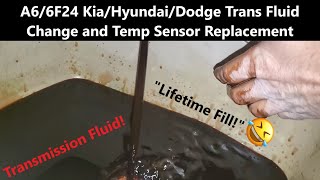
Typical fix: If low, top off with Hyundai Genuine SP-IV fluid and check for leaks. If dirty, perform a fluid drain-and-fill. This may not fix underlying damage but is a mandatory first step.
Est. part cost: $50-$150 - Internal Mechanical Transmission Failure 🟡 Medium Probability → Shop Transmission Assembly Hyundai TSBs direct technicians to replace the transmission if P0730 is present without other solenoid codes, indicating a known failure pattern of worn clutch packs or other internal components. Valve body bores are also a known weak point, showing significant wear even at low mileage (40k miles), which can cause shift quality issues leading to this code.
How to confirm: This is a diagnosis of exclusion. If fluid level is correct and all electronic components (sensors, solenoids, wiring) test good, the issue is internal (worn clutches, failed pump, worn valve body bores). A transmission specialist may perform a pressure test to confirm.
Typical fix: Replacement of the automatic transmission assembly with a new or remanufactured unit. This is the most common outcome for a persistent P0730 on this platform.
Est. part cost: $2500-$4500 - Faulty Transmission Fluid Temperature Sensor 🟡 Medium Probability → Shop Transmission Assembly This sensor is a widely reported failure point on the A6MF1 transmission. It is integrated into a flat ribbon-style internal wiring harness which has known dependability issues. An incorrect temperature reading causes the TCM to apply incorrect shift pressures, causing harsh/erratic shifts that can trigger ratio codes.
How to confirm: Use a diagnostic scan tool to monitor the transmission fluid temperature reading. If it's erratic, stuck at an extreme value (e.g., -40°F or 250°F), or doesn't change with engine temperature, the sensor is faulty. This often triggers P0711, P0712, or P0713 as well. The resistance should be around 2.51k Ohms at 68°F (20°C).
Typical fix: Replace the internal transmission wiring harness, which contains the integrated temperature sensor. This requires dropping the transmission pan and valve body.
Est. part cost: $100-$200 for the harness - Faulty Shift Solenoids or Valve Body ⚪ Low Probability → Shop Transmission Valve Body
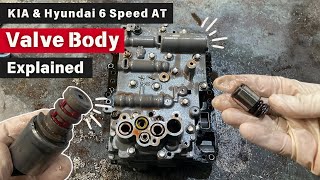
How to confirm: A professional scan tool can command individual solenoids to check for response. Often, specific solenoid circuit codes (e.g., P0750-P0770) will accompany P0730 if this is the cause. Debris can also clog solenoid passages. Variable force solenoids should have a resistance of approximately 5.1 ohms, while on/off solenoids should measure 10-11 ohms. 🎬 Watch: How to clean and test A6MF1 transmission solenoids
Typical fix: Replace the specific faulty solenoid or the entire valve body assembly. This requires removing the transmission pan.
Est. part cost: $200-$800
Rare But Worth Checking
- Faulty Transmission Control Module (TCM): → Shop Transmission Assembly While rare, a failing TCM can cause incorrect calculations and trigger this code. This should only be considered after all other possibilities, especially wiring, have been thoroughly exhausted.
Diagnosis Steps
- Check the transmission fluid level and condition. This is more complex on a sealed transmission and must be done correctly. If the fluid is dark or smells burnt, internal damage is likely.
- Use an OBD-II scanner to check for any other transmission-related codes. Pay close attention to gear-specific ratio codes (P0731-P0736) or temperature sensor codes (P0711-P0713).
- If temperature sensor codes are present, diagnose the sensor circuit. This will likely lead to replacing the internal wiring harness.
- If solenoid codes are present, diagnose those first as per the shop manual.
- If no other codes are present, use a scan tool to monitor live data for the transmission fluid temperature sensor, input speed sensor, and output speed sensor. Ensure the readings are logical and change as expected.
- Inspect the transmission wiring harness and connectors for any visible damage, corrosion, or loose connections.
- If the fluid is good, the sensors read correctly, and there are no other codes, the problem is likely internal to the transmission, per Hyundai's TSBs.
- At this point, professional diagnosis is required to confirm if the issue is a valve body, torque converter, or internal clutch pack failure, which typically leads to a transmission replacement.
Parts You'll Likely Need
- Automatic Transmission Assembly
(OEM #Example: 45000-3BCC0, 45000-3BBS4 (Part numbers vary by year, engine, and 2WD/AWD. Must verify by VIN))— As per Hyundai TSBs, this is the prescribed fix if P0730 exists without other electronic fault codes, indicating a known pattern of internal failure.
Trusted brands: Hyundai (OEM Remanufactured)
OEM price range: $3000-$4500
Aftermarket price range: $2500-$4000 (Remanufactured) - Automatic Transmission Fluid
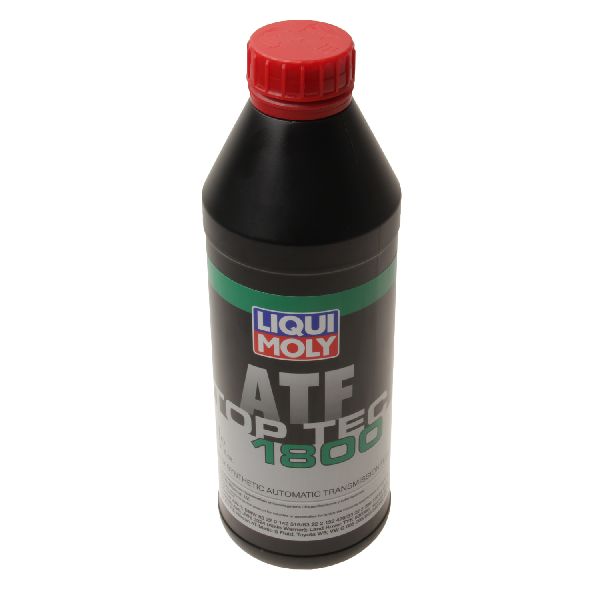
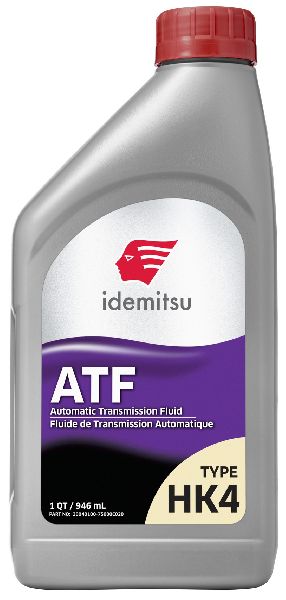
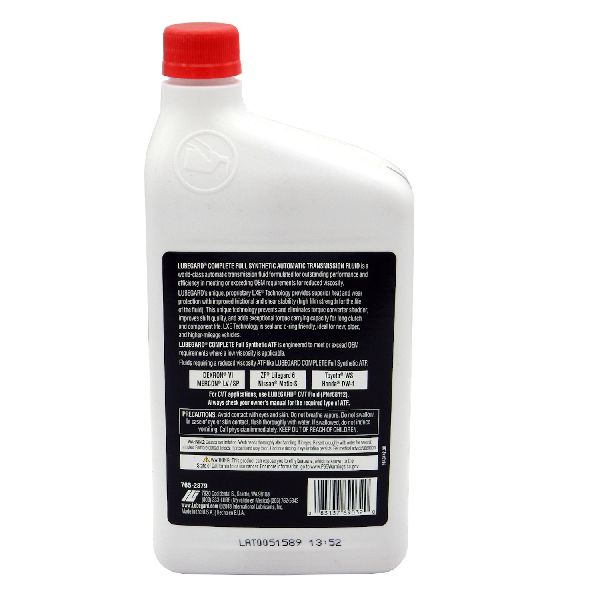
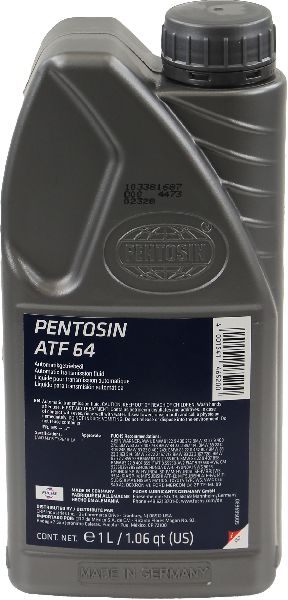
(OEM #00232-19045 (SP-IV))— The first step in diagnosis is ensuring the fluid level is correct and the fluid is in good condition. The system requires Hyundai Genuine SP-IV fluid.
Trusted brands: Hyundai
OEM price range: $15-$25 per quart - Transmission Internal Wire Harness (includes Temp Sensor)
(OEM #46307-3B650 (Varies by specific model, VIN verification is critical))— A faulty temperature sensor is a very common cause of erratic shifting and P0730. The sensor is integrated into this harness and is not sold separately for many models.
Trusted brands: Hyundai (OEM)
OEM price range: $100-$200
Aftermarket price range: $70-$150
Related Codes That Often Appear With This One
- P0731-P0736 — These are gear-specific incorrect ratio codes (e.g., P0731 for 1st gear). They often appear with the general P0730 code and help pinpoint which gear's clutch circuit is failing.
- P0711, P0712, P0713 — These codes point directly to a fault with the Transmission Fluid Temperature Sensor circuit. Seeing these alongside P0730 makes the temperature sensor/internal harness a prime suspect.
- P0741 — This code indicates a problem with the Torque Converter Clutch (TCC) solenoid circuit. A failing torque converter can cause slipping and trigger P0730.
Technical Service Bulletins (TSBs) & Recalls
- TSB 24-AT-002H (or similar logic in older TSBs): Provides the diagnostic procedure for incorrect ratio DTCs, including P0730, on the A6MF1 transmission. It advises replacing the transmission if no solenoid DTCs are found.
- TSB 13-AT-012: Addresses DTCs P0711, P0712, & P0713 related to the oil temperature sensor. It provides a detailed procedure for testing and replacing the sensor or the integrated harness, which is a common precursor to the P0730 code.
- TSB Bulletin #23-01-019H: While issued for other models like the Venue, this bulletin highlights Hyundai's broader strategy for P0730, which involves performing a TCU update and, if necessary, replacing the transmission assembly.
- TSB Bulletin #24-01-018H: Notes that vehicles may experience an illuminated warning light due to TCU codes including P0730 and P0741, requiring a software update or transmission replacement.
- TSB Bulletin #22-01-030H: Describes a software update to optimize distance traveled displays and address a cluster of transmission codes including P0730 and P0731.
- TSB Bulletin #Campaign T5B Dea: Outlines procedures to perform ECU and TCU updates to resolve conditions triggering P0730 and P0731, noting that transmission replacement may be required if updates do not resolve the fault.
Platform-Specific Known Issues
- Owner on Hyundai-Forums.com with a 2011 Tucson reported P0730 along with other gear ratio codes. After a dealer diagnosis, the transmission was replaced under warranty. The user noted the car would go into limp mode frequently before the fix.
- A Reddit user with a 2012 Tucson described the classic symptoms of harsh shifting and limp mode leading to a P0730 code. The dealership diagnosed a failed temperature sensor and replaced the internal wiring harness, which resolved the issue without needing a full transmission replacement.
Mechanic-Grade Diagnostic Values
- Variable Force Solenoid (VFS) Resistance — expected: 5.1 Ohms. Failure: A reading significantly higher or lower than 5.1 Ohms, or an open/short circuit.
- On/Off Shift Solenoid Resistance — expected: 10-11 Ohms. Failure: A reading outside this range indicates a faulty solenoid coil.
- Transmission Fluid Temperature (TFT) Sensor Resistance — expected: Approximately 2.51k Ohms at 68°F (20°C). Failure: An open/short circuit, or a resistance value that does not correlate with the actual fluid temperature.
- Transmission Fluid Temperature (TFT) Sensor Voltage — expected: Approximately 3.2 Volts at 104°F (40°C). Failure: Voltage that is stuck high or low, or does not decrease as the fluid warms up.
Scan Tool Commands That Help
- Hyundai GDS (Global Diagnostic System): Resetting Auto T/A Values — This is a mandatory procedure after replacing the transmission, valve body, or TCM. It erases all learned clutch-wear adaptations. Failure to perform this reset can result in persistent harsh shifts or shift quality complaints even with new parts.
- Hyundai GDS (Global Diagnostic System): Relearn Adaptive Values (Driving Procedure) — This must be performed immediately after resetting the adaptive values. It involves a specific driving cycle, typically accelerating gently through the gears multiple times, to allow the TCM to learn the new clutch fill times and pressures.
Wiring & Ground Locations
- GHG03 — Under the center of the dash.. This is a major ground point for various interior and powertrain components. A poor connection here could potentially affect TCM operation or sensor readings.
- GHG05 — Located at the left rear of the engine compartment.. This is a key ground point in the engine bay. Corrosion or a loose connection here can cause erratic behavior from engine and transmission sensors that share this ground path.
- GF01 / GF02 — Located at the left 'A' pillar.. These are primary chassis ground points. The 4WD ECM grounds here, and issues could potentially impact communication with the TCM.
- ATM Solenoid Valve Connector — On top of the transaxle assembly.. This is the main electrical connector for all internal transmission solenoids and sensors. It is a critical point for checking power, ground, and signal integrity to the transmission. Corrosion or damage here will directly cause transmission faults.
Real Owner Repair Stories
- JustAnswer professional mechanic discussion, cited by Go-Parts.com (2011-2012 Hyundai Tucson (with same A6MF1 transmission)) — Persistent slipping and flare on gears 2 and 6, triggering ratio codes.
❌ Tried (didn't work) Complete teardown and replacement of all clutches and seals, Flow testing all solenoids, Replacing speed sensors, Replacing the internal transmission harness
✅ What actually fixed it The final diagnosis concluded the only remaining cause was a malfunctioning valve body due to worn internal passages losing hydraulic pressure. Replacing the valve body resolved the issue.
OEM Part Supersession History
46307-3B610, 46307-3B620→46307-3B650— Updated design to improve reliability of the integrated Transmission Fluid Temperature sensor and ribbon harness.
Heads up: Using an older part number when the newer one is available is not recommended due to the known failure pattern of the original design.
Diagnostic Flowchart
Other Known Issues on This Vehicle
Issues unrelated to this code that are worth knowing about as an owner of this generation:
- Theta II Engine Failure (Rod Bearing Wear) 🔴 High — Widespread across multiple model years (primarily 2014-2015 for Tucson). Can occur at various mileages, often preceded by a knocking noise. (Ref: Subject of multiple recalls, a major class-action lawsuit, and warranty extensions (up to 15 years/150,000 miles for qualifying failures).)
- Flexible Steering Coupler Disintegration 🟠 Medium — Extremely common. Owners report a clicking or clunking noise from the steering column, especially at low speeds, that progresses over time. (Ref: Hyundai extended the warranty for this part (TSB 17-ST-002). The part itself (OEM #56315-2K000-FFF) is very cheap, but labor can be several hundred dollars.)
- Leaking Oil Pan Sealant 🟠 Medium — Common on 2011-2013 models. The sealant used on the oil pan can degrade, leading to oil leaks that could potentially cause engine damage or fire if severe. (Ref: Hyundai issued a recall (NHTSA #19V063000) to address this issue.)
- Exploding Panoramic Sunroof 🟡 Low — Reported sporadically but with enough frequency to trigger a class-action lawsuit. The large glass panel can shatter without impact. (Ref: A 2019 lawsuit settlement resulted in extended coverage for affected owners.)
- ABS Module Internal Leak / Fire Risk 🔴 High — Affects multiple Hyundai/Kia models, including the 2010-2013 Tucson. The ABS module can leak brake fluid internally, causing an electrical short and potential for an engine compartment fire, even when parked. (Ref: Subject of a major recall (NHTSA #23V651000). Owners were advised to park outside and away from structures until the repair was completed.)
Used vs. New Parts: Buying Guide for This Vehicle
When a used part is the smart pick: A complete used transmission assembly from a low-mileage, rear-ended donor vehicle can be a cost-effective alternative to a new or remanufactured unit, which is very expensive. Given that internal mechanical failure is a common outcome for P0730, this is a viable option.
Donor-vehicle mileage cap: roughly under 75000 miles for the part to have meaningful remaining life.
What to inspect on the donor part:
- Verify the donor vehicle's VIN to confirm the exact transmission model (A6MF1) and ensure compatibility.
- Check the color and smell of the transmission fluid from the donor unit if possible. Bright red fluid without a burnt smell is a good sign.
- Ask for a vehicle history report to check for prior accidents or major repairs.
- Prefer units from reputable auto recyclers that offer a short-term warranty (e.g., 30-90 days).
OEM-only on this vehicle (don't cheap out):
- Transmission Internal Wire Harness (including Temp Sensor)
- Transmission Control Module (TCM)
Aftermarket brands forum-validated for this vehicle:
- Sonnax (for valve body repair kits)
- Transgo (for valve body repair kits)
Brands owners have reported issues with on this vehicle:
- Unbranded, no-name internal wiring harnesses from online marketplaces have a high failure rate and are best avoided.
Real Owner Stories
Aggregated from forums and TSBs cited above. Mileages and costs reflect what owners reported in those sources.
2011 Hyundai Tucson
Symptoms: The vehicle would go into limp mode frequently and threw P0730 along with other gear ratio codes.
What fixed it: The dealership diagnosed the issue and replaced the transmission assembly under warranty.
Source hint: Hyundai-Forums.com thread titled '2011 Tucson transmission problem p0730 p0732 p0733 p0734 p0735'
2012 Hyundai Tucson
Symptoms: Experienced harsh shifting and the vehicle entering limp mode; scan revealed a P0730 code.
What fixed it: The dealership diagnosed a failed temperature sensor and replaced the internal wiring harness.
Source hint: Reddit r/Cartalk post 'p0730_code_incorrect_gear_ratio'
Related OBD-II Codes
Frequently Asked Questions
My 2011 Tucson is stuck in 3rd gear and showing P0730; does TSB 24-AT-002H apply to me?
Can a faulty temperature sensor cause a P0730 code on a 2012 Tucson?
How do I check the transmission fluid on my 2013 Tucson to rule out P0730 causes?
Is the P0730 code related to the steering clunking noise in my 2014 Tucson?
If my Tucson has P0730 and no other codes, what is the likely fix according to Hyundai?
Helpful Videos


We Have This Part in Stock


The information in this article is provided for general reference and educational purposes only. Vehicle specifications, procedures, and part compatibility can vary by production date, trim level, and region. Always consult your vehicle's factory service manual and verify part numbers before purchasing or performing repairs. Safety-critical components such as airbags, seat belts, and braking systems should be installed by a qualified professional.
- Hyundai Tucson:
- 🧭 Diagnostic Flowchart
- 🎬 Helpful Videos
- 🛍️ Shop This Part
- What's Unique About the 2010-2015 Hyundai Tucson
- Symptoms You May Notice
- Most Likely Causes
- Rare But Worth Checking
- Diagnosis Steps
- Parts You'll Likely Need
- Related Codes That Often Appear With This One
- Technical Service Bulletins (TSBs) & Recalls
- Platform-Specific Known Issues
- Mechanic-Grade Diagnostic Values
- Scan Tool Commands That Help
- Wiring & Ground Locations
- Real Owner Repair Stories
- OEM Part Supersession History
- Other Known Issues on This Vehicle
- Used vs. New Parts: Buying Guide for This Vehicle
- Real Owner Stories
- 2011 Hyundai Tucson
- 2012 Hyundai Tucson
- Related OBD-II Codes
- Frequently Asked Questions
- 🎟️ Get 5% Off