

P0730 on 2009-2012 Porsche 911: PDK Incorrect Gear Ratio Causes and Fixes
On a 2009-2012 Porsche 911 with a PDK transmission, code P0730 indicates a serious internal fault, often triggering a 'Transmission Emergency Run' warning. The most common cause is a failing distance/speed sensor pack inside the transmission, which is a known weak point. Other causes include the mechatronics unit or fluid issues. This is not a DIY fix; it requires a specialist with Porsche-specific diagnostic tools (PIWIS) to read the critical sub-codes (like P1731-P1734) that pinpoint the senso
- P0730 on a 997.2 Porsche 911 is a critical transmission fault that requires immediate professional attention.
- Do not use a generic OBD-II scanner; a Porsche-specific tool is mandatory for accurate diagnosis.
- The most likely causes are internal to the PDK transmission, specifically the sensor pack or mechatronics unit.
- Avoid dealers who immediately recommend a full transmission replacement. Seek out an independent Porsche specialist who is experienced in PDK component-level repair.
- Do not continue to drive the vehicle, as this can lead to catastrophic and extremely expensive transmission failure.
What's Unique About the 2009-2012 Porsche 911
The 2009-2012 Porsche 911 (generation 997.2) was among the first to feature the sophisticated PDK (Porsche Doppelkupplung) dual-clutch transmission, replacing the Tiptronic automatic. A P0730 code on this platform is rarely a simple fix. For years, Porsche dealers would not service the transmission's internals and would only offer a complete, and very expensive, transmission replacement, often costing over $20,000. However, a robust independent specialist market has since emerged. These shops can diagnose and replace the specific failed component—most often the internal distance sensor unit—for a fraction of the cost of a new gearbox.
Symptoms You May Notice
- "Transmission Emergency Run" message displayed on the instrument cluster.
- Vehicle enters limp mode, often stuck in a single gear or only allowing even or odd gears.
- Harsh, jerky, or delayed gear shifts, sometimes described as a 'clunk'.
- A noticeable loss of power, as if the clutch is slipping.
- Grumbling, grinding, or other unusual noises from the transmission area, especially when shifting into Drive or Reverse.
- Complete loss of forward or reverse gears.
- Sudden sound like a rock hitting the bottom of the car at the moment of failure.
- Replacing only the transmission fluid without proper diagnosis. While low or old fluid can cause issues, P0730 on a PDK almost always signals a hardware failure (usually the sensor) that a fluid change alone will not fix.
- Replacing the entire transmission. Dealers often recommend this because they do not service internal components. An independent specialist can often perform a targeted repair of the distance sensor for a fraction of the cost.
Most Likely Causes
- Faulty PDK Distance/Speed Sensor Unit 🔴 High Probability The internal sensor board that measures shaft speeds and the physical position of the gear selector forks is the most common failure point in the 7DT family of PDK transmissions. Its electronics, produced in the late 2000s, are susceptible to failure from heat and vibration over time, causing the TCU to lose track of what the transmission is doing.
How to confirm: A Porsche-specific scan tool (PIWIS) is required. A P0730 code will almost always be accompanied by one or more specific sensor codes, such as P1731, P1732, P1733, or P1734, which directly name a 'Shift rod displacement sensor' as having an implausible signal. These codes are definitive proof of sensor failure.
Typical fix: Replacement of the internal PDK sensor board/unit. This is a major repair requiring transmission removal and partial disassembly. Porsche does not sell 🎬 Watch: Step-by-step distance and speed sensor replacement walkthrough. this part separately, so the repair must be done by an independent specialist using an OEM or aftermarket sensor unit.
Est. part cost: $800-$2400 for the sensor unit, depending on OEM or aftermarket source. - Failing Mechatronics Unit (Valve Body) 🟡 Medium Probability → Shop Transmission Valve Body The mechatronics unit is the electro-hydraulic 'brain' of the PDK. Its solenoids can fail and internal passages can become clogged, leading to incorrect hydraulic pressure and an inability to properly engage gears, which can cause a ratio fault. Failures often manifest when the transmission fluid is hot.
How to confirm: Diagnosis involves running pressure tests and solenoid activations with a PIWIS scanner. Specific pressure-related fault codes may accompany P0730. Live data may show pressure deviations from specified values. Solenoid resistance can be checked; they should measure approximately 5.6 ohms.
Typical fix: Replacement of the mechatronics unit, which must be coded to the vehicle. Some specialists may be able to repair the existing unit by replacing faulty solenoids.
Est. part cost: $2000-$4000 for a new unit, or around $600 for a solenoid kit. - Low or Degraded PDK Fluid 🟡 Medium Probability
How to confirm: Check the transmission fluid level and condition. This must be done at a specific temperature (typically 40°C) using a scan tool, as there is no dipstick. The PDK has two separate fluid chambers (clutch fluid and gear oil); the clutch fluid (ATF) is critical for hydraulic control. Fluid that is dark, burnt, or contains clutch material indicates a serious problem.
Typical fix: Perform a full PDK clutch fluid and filter service using only Porsche-approved fluid (e.g., Pentosin FFL-3). If the fluid is heavily contaminated, internal damage is likely and a fluid change alone will not solve the issue.
Est. part cost: $400-$600 for fluid and filter kit - Internal Mechanical Failure ⚪ Low Probability
How to confirm: This is usually diagnosed after ruling out sensors, fluid, and mechatronics. Symptoms like loud grinding or banging noises strongly suggest mechanical damage. An inspection of the fluid and pan for excessive metal debris is a key indicator.
Typical fix: Complete transmission rebuild or replacement. This is the most expensive outcome.
Est. part cost: $15000-$25000 for a replacement transmission from Porsche.
Rare But Worth Checking
- Faulty Transmission Control Unit (TCU): → Shop Transmission Assembly A Rennlist forum member noted that the external TCU, located inside the car, can fail and cause a P0730 code. This is a much simpler and cheaper fix than any internal transmission work, so it's worth investigating as a possibility, though it is uncommon.
- Wiring Harness Damage: Damage to the wiring between the TCU and the transmission can cause communication errors and trigger various fault codes, including P0730. A wiring diagram is critical for diagnosing this.
Diagnosis Steps
- Scan the vehicle with a Porsche-specific diagnostic tool (PIWIS) to retrieve the exact Porsche fault description for P0730 and, most importantly, any other stored codes like P1731-P1738.
- If P173x codes are present, the distance sensor has failed. The diagnosis is complete.
- If no sensor codes are present, proceed with checking the PDK clutch fluid level and condition using the correct procedure (vehicle level, scan tool monitoring fluid temperature of 40°C).
- Analyze live data from the transmission input and output speed sensors to check for erratic or missing signals.
- Review live data for shift rod positions and hydraulic pressures during attempted shifts.
- Inspect the transmission wiring harness and connectors for any signs of damage or corrosion.
- If mechatronics failure is suspected, specific hydraulic pressure tests and solenoid activation tests must be performed with the scan tool. Check solenoid resistance at the TCU connector; values should be around 5.6 ohms.
- If significant metal debris is found in the fluid pan, suspect internal mechanical failure, which may require transmission replacement.
Parts You'll Likely Need
- PDK Distance Sensor / Speed Sensor Unit
(OEM #0501325775 (ZF Part Number))— This is the most common hardware failure point inside the PDK transmission that leads to a P0730 code, almost always accompanied by P173x codes.
Trusted brands: T-Design (Aftermarket), MLR Engineering (Aftermarket), PopoRacing (Aftermarket), XeMODeX (Aftermarket)
OEM price range: Not sold by Porsche; must be sourced via aftermarket.
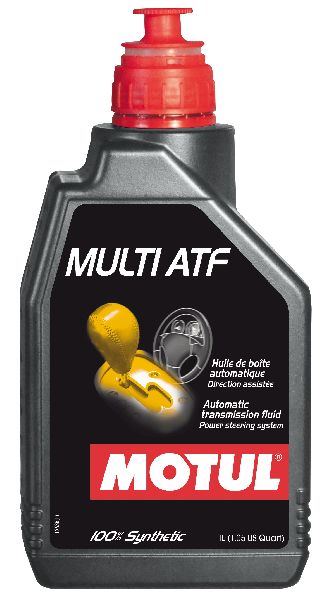
Aftermarket price range: $800 - $2400 - PDK Transmission Fluid and Filter/Pan Kit — Required for any internal PDK service and should be the first step in maintenance-based troubleshooting. The filter is integrated into the pan.
Trusted brands: Porsche (OEM), Pentosin FFL-3 (Fluid), Motul
OEM price range: $400-$600
Aftermarket price range: $300-$500 - Mechatronics Solenoid Kit
(OEM #0501214958 (ZF OEM PN for Orange EDS solenoid))— If diagnosis points to a specific solenoid failure within the valve body, replacing the individual solenoids is a cost-effective repair compared to replacing the entire mechatronics unit.
Trusted brands: ZF (OEM), MLR Engineering
OEM price range: $40-$150 per solenoid.
Aftermarket price range: $300-$600 for a full kit.
Related Codes That Often Appear With This One
- P1731-P1738 — These codes relate specifically to the distance/displacement sensor for the shift rods (e.g., P1731: Displ. Sensor Shift Rod Gears 4/6, Implausible Signal). The presence of any of these codes alongside P0730 is a near-certain diagnosis of a failed PDK sensor pack.
- P0700 — This is a generic code indicating the Transmission Control Module (TCM) has stored a fault and has requested the Malfunction Indicator Lamp (MIL) be turned on. It will always be present with other transmission-specific codes like P0730.
- P17Dx, P17Ex — These codes can relate to speed sensor plausibility faults, which are part of the same internal sensor unit that houses the distance sensors.
Technical Service Bulletins (TSBs) & Recalls
- Porsche Technical Information (TI) 3730 ENU 35/09 (Jan 17, 2012): While not a recall, this bulletin provides dealers with updated diagnostic flow charts for troubleshooting various electrical, pressure, and temperature faults within the PDK transmission, underscoring the complexity of diagnosis.
Platform-Specific Known Issues
- Real-World Repair Scenario: Sensor Failure: A common owner experience, documented frequently on forums like Rennlist, involves driving normally when the 'Transmission Emergency Run' warning suddenly appears. The car may get stuck in one gear. A tow to an independent Porsche specialist is required. The specialist uses a PIWIS scanner and finds codes P0730 and P1731. This confirms the internal distance sensor has failed. The dealer would quote ~$25,000 for a new transmission. The independent shop, however, quotes approximately $4,000-$6,000 to remove the transmission, open the case, replace the failed sensor with a modern aftermarket unit (like one from T-Design), re-seal and reinstall the transmission, and perform the final fluid fill and calibration.
Mechanic-Grade Diagnostic Values
- PDK Mechatronics Solenoid Resistance — expected: 5.6 ohms. Failure: A reading significantly different from 5.6 ohms indicates a faulty solenoid or wiring harness issue. However, a correct resistance reading does not guarantee the solenoid is mechanically sound.
- PDK Clutch Fluid Temperature for Calibration/Fill — expected: At least 60°C (140°F) for calibration to begin; 40°C (104°F) for fluid level check.. Failure: Attempting calibration below the required temperature may cause the procedure to fail. Incorrect fluid level checks will result in over or under-filling.
Scan Tool Commands That Help
- Porsche PIWIS Tester: PDK Calibration (after part replacement) — This 'long cal' is required after replacing the full transmission or the mechatronics (valve body) unit. It wipes all previous adaptation data and recalibrates shift rods, clutch pressures, and hydraulics. It is a complex, multi-stage process that can be prone to failure if conditions aren't perfect.
- Porsche PIWIS Tester: PDK Calibration (without previous part replacement) — This 'short cal' is the correct procedure to run after replacing the internal distance sensor. It does not wipe all adaptation data but re-learns the shift rod positions and clutch characteristics. It is less intensive than the 'long cal'.
- Porsche PIWIS Tester: Engine torque loss adaptation — This procedure MUST be performed before starting any PDK calibration. It allows the engine and transmission control units to synchronize torque values. The engine is run at idle for 3 minutes with A/C off, then 3 minutes with A/C on.
- Porsche PIWIS Tester: PDK Fill Mode — This function is required when refilling the PDK clutch fluid to ensure there are no air pockets in the system, which could cause shifting problems or calibration failures.
Wiring & Ground Locations
- Transmission Control Unit (TCU) — On a 997.2, the TCU is located inside the car on the driver's side, behind the rear interior trim panel, near the B-pillar. Access requires removing the door sill trim and rear side panel.. In rare cases, the TCU itself can fail. Technicians also need to access its connectors to perform resistance checks on transmission solenoids and sensors without removing the transmission pan.
- PDK Main Transmission Connector (A-connector) — The large, round electrical connector on the transmission case.. This is the main interface between the car's wiring harness and all the internal electronics of the PDK. Pins can be tested here for continuity and resistance. For example, the clutch pressure sensors can be tested at pins A11, A12, and A13 (5V supply).
Real Owner Repair Stories
- Rennlist forum member (2009 Porsche 987.2 Boxster (same PDK family as 997.2)) — Laggy drive off, delayed clutch engagement, and harsh, 'slamming' shifts into odd gears.
❌ Tried (didn't work) Driving carefully to adapt to the issue for 5 years.
✅ What actually fixed it The owner replaced all of the mechatronics unit solenoids with an aftermarket kit. After replacement, they used a PIWIS clone to run the fluid fill procedure and then performed a 'calibration with parts replacement'. This completely resolved the laggy engagement and harsh shifting. - Reddit user comment (Porsche 981 (similar PDK)) — PDK Failure.
❌ Tried (didn't work) An initial repair to fix the distance sensor failed after one year.
✅ What actually fixed it The owner had the entire transmission replaced with a used PDK unit for a total cost of $10,000 at an independent shop.
OEM Part Supersession History
Varies by year (e.g., 9G1.317.897.00 for 2009-2012)→Varies (e.g., 9G1.317.897.05 for 2012-2015)— Minor updates and revisions to the mechatronics (valve body) unit.
Heads up: Valve bodies for 991-generation cars include an extra check valve for the auto start/stop feature and are not directly compatible with 997.2 models. It is critical to verify the part number on the existing valve body before ordering a replacement.
Model Year Variations Within This Range
- 2009-2012: While the core ZF 7DT45 transmission is the same across the 997.2 generation, Porsche and ZF made continuous minor revisions to internal components like sensors and solenoids. A known issue with a faulty crimp on the temperature sensor harness was more common on earlier models and was addressed in later production. However, the primary distance sensor failure can occur on any year in this range.
Diagnostic Flowchart
Other Known Issues on This Vehicle
Issues unrelated to this code that are worth knowing about as an owner of this generation:
- High-Pressure Fuel Pump (HPFP) Failure 🔴 High — A well-documented common failure point on the 9A1 DFI engine. Can occur at varying mileages, some as low as 12,000 miles, with some owners replacing the pump multiple times. Symptoms include difficult cold starts, stalling, and a 'reduced engine power' warning.
- Intake Valve Carbon Buildup 🟠 Medium — An inherent issue for all early direct-injection (DFI) engines, including the 9A1. Oil vapor from the crankcase ventilation system bakes onto the back of intake valves since there is no fuel to wash them clean. This causes a gradual loss of performance over tens of thousands of miles and may eventually require physical cleaning (e.g., walnut blasting).
- Bore Scoring 🔴 High — While far less common than in the previous 997.1 M97 engine, the 997.2's 9A1 engine can still suffer from cylinder bore scoring. It is considered a low-frequency but high-cost potential failure, typically seen at higher mileages. A pre-purchase borescope inspection is often recommended.
- Coolant Crossover Pipe Leaks 🟠 Medium — The rubber and metal coolant pipes located at the front of the car can perish or corrode over time, leading to coolant leaks. A sweet smell of coolant around the front of the car is a key symptom.
Used vs. New Parts: Buying Guide for This Vehicle
When a used part is the smart pick: A complete used PDK transmission can be a last resort if the original unit has catastrophic mechanical damage (e.g., cracked case, destroyed gearsets). However, it is a significant gamble, as the used unit may have the same common sensor or mechatronics issues. A used mechatronics unit is generally not recommended due to the difficulty in confirming its condition and the requirement for vehicle-specific programming.
Donor-vehicle mileage cap: roughly under 50000 miles for the part to have meaningful remaining life.
What to inspect on the donor part:
- Obtain a vehicle history report (CarFax/AutoCheck) for the donor car to check for accidents or flood damage.
- Request diagnostic codes from the donor car before the transmission was pulled. A unit from a car with existing P0730 or P173x codes is worthless.
- Ask for maintenance records, specifically proof of PDK fluid services. A transmission with regular fluid changes is a better bet.
- Visually inspect the exterior for any cracks or damage to the case, connectors, and cooling lines.
OEM-only on this vehicle (don't cheap out):
- PDK Clutch Fluid (Pentosin FFL-3 is the OEM supplier and is acceptable). Using non-approved fluids is a major risk.
- Mechatronics Unit (If replacing the whole unit, a new Porsche part is the only way to guarantee compatibility and successful programming).
Aftermarket brands forum-validated for this vehicle:
- T-Design (Distance Sensor)
- XeMODeX (Distance Sensor)
- PopoRacing (Distance Sensor)
- MLR Engineering (Solenoids)
Brands owners have reported issues with on this vehicle:
- Unbranded, generic distance sensors from marketplaces like eBay or Amazon without a warranty or significant community backing can be risky, as installation is labor-intensive and repeat failures are costly.
Real Owner Stories
Aggregated from forums and TSBs cited above. Mileages and costs reflect what owners reported in those sources.
2010 Porsche 911 S (997.2)
Symptoms: While driving normally, the 'Transmission Emergency Run' warning suddenly appeared on the dash and the car became stuck in a single gear.
What fixed it: An independent specialist confirmed a failed internal distance sensor using a PIWIS scanner (codes P0730 and P1731). The fix involved removing the transmission, opening the case, and replacing the failed sensor with an aftermarket unit.
Cost: $4000-$6000
Source hint: Rennlist.com: 'PDK 997.2 2010 S problem - P0730'
Related OBD-II Codes
Frequently Asked Questions
My Porsche dealer quoted me nearly $25,000 for a new transmission to fix code P0730. Is this my only option?
How can I be sure the P0730 code on my 911 is caused by the common PDK distance sensor failure?
Can a simple PDK fluid and filter change fix the P0730 code?
Since Porsche doesn't sell the internal PDK sensor separately, how is the repair performed?
Is a special tool required to properly diagnose the P0730 fault on this car?
Does the Porsche Technical Bulletin 3730 ENU 35/09 provide a direct fix for this problem?
My 2010 Porsche Panamera has a P0730 code. Is the cause likely the same as on the 911?
Helpful Videos
We Have This Part in Stock



The information in this article is provided for general reference and educational purposes only. Vehicle specifications, procedures, and part compatibility can vary by production date, trim level, and region. Always consult your vehicle's factory service manual and verify part numbers before purchasing or performing repairs. Safety-critical components such as airbags, seat belts, and braking systems should be installed by a qualified professional.
- Porsche 911:
- 🧭 Diagnostic Flowchart
- 🎬 Helpful Videos
- 🛍️ Shop This Part
- What's Unique About the 2009-2012 Porsche 911
- Symptoms You May Notice
- Most Likely Causes
- Rare But Worth Checking
- Diagnosis Steps
- Parts You'll Likely Need
- Related Codes That Often Appear With This One
- Technical Service Bulletins (TSBs) & Recalls
- Platform-Specific Known Issues
- Mechanic-Grade Diagnostic Values
- Scan Tool Commands That Help
- Wiring & Ground Locations
- Real Owner Repair Stories
- OEM Part Supersession History
- Model Year Variations Within This Range
- Other Known Issues on This Vehicle
- Used vs. New Parts: Buying Guide for This Vehicle
- Real Owner Stories
- 2010 Porsche 911 S (997.2)
- Related OBD-II Codes
- Frequently Asked Questions
- 🎟️ Get 5% Off