

P0730 on 2006-2012 Toyota RAV4 3.5L V6: Incorrect Gear Ratio Causes and Fixes
On a 2006-2012 RAV4 V6, code P0730 usually points to a problem with the U151E/F automatic transmission, most often caused by old, low fluid or failing shift solenoids. A fluid and filter change is the first step, but be prepared for a potential solenoid replacement, which requires dropping the transmission pan. This is a common issue across several Toyota and Lexus models using this transmission.
- P0730 on your RAV4 V6 indicates transmission slippage and should be addressed immediately to prevent severe damage.
- The most likely and least expensive cause is old, burnt, or low transmission fluid. Start by having the fluid level and condition professionally checked.
- If a fluid and filter change doesn't solve the problem, the next most likely cause is failing shift solenoids inside the transmission.
- This is not a beginner-friendly DIY repair. Checking the fluid level is complex, and replacing parts requires removing the transmission pan.
- Always use Toyota Genuine ATF WS fluid to ensure proper transmission performance and longevity.
What's Unique About the 2006-2012 Toyota RAV4
The 3.5L V6 RAV4 from this era uses the Aisin-built U151E (FWD) or U151F (AWD) 5-speed automatic transmission. While generally reliable, this transmission is known to be sensitive to fluid quality and has a known pattern of shift solenoid failure with age and mileage. Unlike some simpler codes, P0730 on this specific vehicle often points toward either a significant lack of maintenance (old fluid causing sticky valves) or the beginning of an electro-hydraulic component failure within the transmission, most commonly the linear shift solenoids (SL1, SL2, SL3) or the line pressure control solenoid (SLT). A less common but significant issue is wear within the valve body bores, which causes hydraulic pressure leaks that new solenoids alone cannot fix.
Symptoms You May Notice
- Check Engine Light is on
- Transmission slipping (engine revs up between shifts or during acceleration)
- Harsh, jerky, or delayed shifting
- Vehicle enters 'limp mode' (stuck in a single gear, usually 3rd)
- Poor or hesitant acceleration
- Decreased fuel economy
- Vehicle may stall when coming to a stop after highway driving
- Replacing the input or output speed sensors. While these sensors provide the data for the ratio calculation, they rarely fail in a way that produces a general P0730 code without also setting a specific sensor code (e.g., P0721, P0723).
- Immediately assuming the transmission needs a full rebuild. The issue is often resolved with less expensive repairs like a fluid service or solenoid replacement, which should always be the first steps after confirming fluid level.
Most Likely Causes
- Low or Degraded Transmission Fluid 🔴 High Probability → Shop Transmission Assembly The U151E transmission is sensitive to fluid condition, and a standard drain-and-fill only replaces about 3.5 liters of the 8.8-liter total capacity, allowing contaminants to build up over time if not serviced regularly. Burnt or contaminated fluid can cause solenoids and valves to stick.
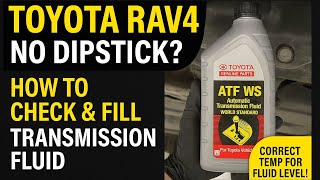
How to confirm: Check the transmission fluid level and condition. The fluid should be bright red and clear, not dark brown, black, or smelling burnt. Note: This transmission does not have a traditional dipstick; the level must be checked via a specific procedure involving an overflow plug and a check plug 🎬 Watch: How to check fluid levels on transmissions without a dipstick. at a specific fluid temperature (typically 97-115°F or 36-46°C).
Typical fix: Perform a series of drain-and-fills or a full fluid exchange using the correct Toyota Genuine ATF WS (World Standard) fluid. A single drain-and-fill is often not enough to resolve the issue if the fluid is very dirty.
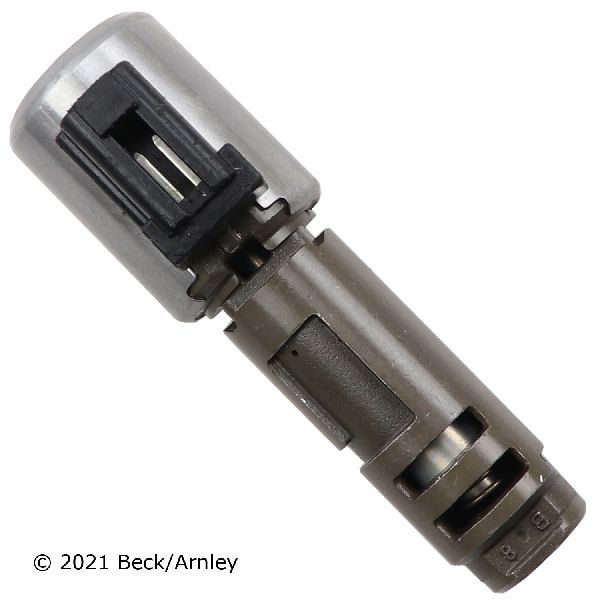
Est. part cost: $60-$150 for fluid - Faulty Shift Solenoids 🟡 Medium Probability → Shop Transmission Valve Body The linear shift solenoids (SL1, SL2, SL3) and the line pressure solenoid (SLT) in the U151E are known failure points. They can become sticky from debris or fail electrically, causing incorrect hydraulic pressure and leading to slippage. The SLT solenoid, which controls overall line pressure, is a frequent culprit.
How to confirm: A professional scan tool can perform an active test to command the solenoids and monitor the response. Another method is to check the resistance of each solenoid with a multimeter after removing the transmission pan. A failed solenoid will be out of its specified resistance range.
Typical fix: Replace the faulty solenoid or, more commonly, the entire set of main shift solenoids. This requires removing the transmission pan and valve body. 🎬 See this walkthrough on replacing the SL2 solenoid and valve body.
Est. part cost: $200-$400 for a solenoid kit - Clogged Transmission Filter (Strainer) 🟡 Medium Probability → Shop Transmission Assembly If the transmission fluid is old, clutch material and other debris can clog the filter, starving the transmission pump of fluid and reducing hydraulic pressure needed for gear engagement.
How to confirm: This is typically found during a fluid service. If the fluid is dark and burnt, and the pan contains excessive metallic debris or a sludge-like material, the filter is likely clogged.
Typical fix: Replace the transmission filter and pan gasket while performing a fluid change.
Est. part cost: $30-$60
Rare But Worth Checking
- Internal Mechanical Failure: This is a worst-case scenario. If the fluid is full of clutch material or metal shavings, it indicates worn-out clutch packs, a failing one-way sprag clutch, or other hard parts. The only fix is a complete transmission rebuild or replacement.
- Failing Torque Converter: → Shop Automatic Transmission Torque Converter While possible, a failing torque converter often presents with other symptoms like shuddering at specific speeds or code P0741 (Torque Converter Clutch Circuit Performance or Stuck Off). It's less likely to be the sole cause of a P0730 code without other signs.
- Faulty ECM/TCM: A failure of the Engine Control Module (which contains the Transmission Control Module logic) is very rare but can cause this code. All other possibilities, including wiring and connectors, should be exhausted before considering replacing the computer.
Diagnosis Steps
- Scan for all stored trouble codes to see if any other codes are present, especially gear-specific codes (P0731-P0735) or solenoid codes.
- Check the transmission fluid level and condition. This is a critical first step. The vehicle must be level and the transmission at a specific temperature (typically 97-115°F or 36-46°C) to get an accurate reading from the check plug.
- Inspect the fluid for a burnt smell or the presence of metal/clutch material. Dark, burnt fluid suggests significant wear or overheating.
- If the fluid is low or dirty, perform a drain-and-fill with Toyota ATF WS fluid and replace the filter. Clear the codes and test drive to see if the problem returns. A second or third drain-and-fill may be necessary.
- If the problem persists, inspect the transmission wiring harness and connectors for any damage, corrosion, or loose connections.
- Using an advanced scan tool, monitor live data for the input and output speed sensors to confirm they are reading correctly. Observe the 'Gear Ratio' value during a test drive to see when the slip occurs.
- If solenoids are suspected, drop the transmission pan to access and test them. Check the resistance of each solenoid and compare to factory specifications. For the U151E, typical values are: SL1, SL2, SL3: 4.5–6.0 Ohms. SLT (Line Pressure): 4.5–6.0 Ohms. S4, SR, DSL (TCC): 11–15 Ohms.
- If solenoids and fluid are good, the problem is likely internal to the transmission (worn clutches, valve body issues, failing pump), requiring professional disassembly and inspection.
Parts You'll Likely Need
- Automatic Transmission Fluid (ATF WS)
(OEM #00289-ATFWS)— This is the required fluid for the U151E transmission and is necessary for any fluid service. Using non-specified fluid can cause shifting problems.
Trusted brands: Toyota Genuine
OEM price range: $12-$20 per quart - U151E Transmission Solenoid Kit — Shift solenoids are a common failure point causing this code. They are often replaced as a set for reliability.
Trusted brands: Rostra, Aisin (OEM supplier), Sonnax (offers repair kits)
OEM price range: $400-$600
Aftermarket price range: $200-$400 - U151E Transmission Filter Kit
(OEM #35330-0W020)— A clogged filter restricts fluid flow and should be replaced during any service where the pan is dropped.
Trusted brands: Wix (58010), ATP, Toyota Genuine
OEM price range: $40-$60
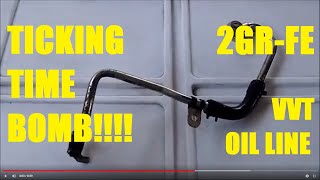
Aftermarket price range: $20-$40 - VVT-i Oil Line (All-Metal Update)
(OEM #15772-31030)— While not a cause of P0730, this is a critical preventative repair for all 2006-2010 V6 RAV4s to avoid catastrophic engine failure. The original rubber hose is a known defect.
Trusted brands: Toyota Genuine
OEM price range: $40-$70
Related Codes That Often Appear With This One
- P0731-P0735 — These codes correspond to incorrect gear ratios in specific gears (1st, 2nd, etc.). P0730 is a general code, while these are more specific, helping to narrow down when the slip is occurring.
- P0741 — Torque Converter Clutch Circuit Performance or Stuck Off. If the torque converter is also having issues engaging or disengaging its lockup clutch, this code may appear alongside P0730.
- P2714 — Pressure Control Solenoid 'D' Performance/Stuck Off. This code points more directly to a solenoid performance issue, often accompanying the general ratio error of P0730.
Technical Service Bulletins (TSBs) & Recalls
- TSB-0318-08: Addresses the common steering intermediate shaft clunk on 2006-2008 models.
- Limited Service Campaign (related to TSB-0094-09): Covers the replacement of the defective rubber VVT-i oil line on 2006-2010 models to prevent engine failure.
- T-SB-0201-11: Details the replacement of rubber oil cooler lines for the tow package on other 2GR-FE vehicles, a relevant concern for RAV4s with the same equipment.
Platform-Specific Known Issues
- A Reddit user with a P0730 code noted their transmission fluid seemed dirty despite being changed the previous year, highlighting how quickly fluid condition can impact these transmissions.
Mechanic-Grade Diagnostic Values
- Shift Solenoid SL1, SL2, SL3 Resistance — expected: 4.5 - 6.0 Ohms. Failure: A reading outside this range indicates a faulty solenoid coil.
- Line Pressure Solenoid SLT Resistance — expected: 4.5 - 6.0 Ohms. Failure: A reading outside this range indicates a faulty solenoid coil.
- Solenoid S4, SR, and DSL (TCC) Resistance — expected: 11 - 15 Ohms. Failure: A reading outside this range indicates a faulty solenoid coil.
Scan Tool Commands That Help
- Toyota Techstream: Active Test: SOLENOID (SL1), (SL2), (SL3), (SLT), etc. — To individually command each shift solenoid ON or OFF while the vehicle is stopped to verify its mechanical operation. This helps isolate a single sticky or electrically failed solenoid without removing the valve body.
- Toyota Techstream: Utility: Reset Memory — This is a mandatory step after replacing the transmission, valve body, or shift solenoids. It clears the learned adaptive shift values from the ECM/TCM. Failure to reset can cause continued harsh shifting or slipping as the computer tries to use old data with new parts. A road test is required afterward for the TCM to relearn.
Wiring & Ground Locations
- ECM Location — Behind the glove compartment, to the right. Requires removing the glove box assembly and a side kick panel to access the mounting brackets and connectors.. The ECM controls the transmission. A poor connection at the main ECM connectors or a faulty ground for the ECM itself could cause erratic transmission behavior.
- ECM Body Ground — A wire harness ground connected to the chassis near the ECM. The specific ground point for a 2008 RAV4 is identified as B30 in wiring diagrams.. A corroded or loose ECM ground can cause a host of electrical issues, including incorrect sensor readings and faulty command signals to the transmission solenoids.
- Engine Harness Grounds — The 2GR-FE has key grounding points on the cylinder heads. One is on the side of the head underneath the throttle body area, and another is on the valve cover.. These grounds are critical for the proper operation of all engine and transmission sensors. A poor engine ground can create a voltage differential, leading to incorrect data being sent to the ECM.
- Main Starter/Transmission Ground — A large gauge wire that bolts to the top of the transmission case. This provides the main ground path for the starter motor and the transmission housing.. While primarily for the starter, a poor ground at this location can affect the entire transmission case and the sensors mounted to it.
Real Owner Repair Stories
- Professional Rebuilder Testimony (YouTube) (General U-Series Toyota Transmissions (including U151E)) — Flared shifts, slide bumps, delayed engagement.
❌ Tried (didn't work) Cleaning and reusing the original linear solenoids (SL1, SL2, SL3, SLT). The rebuilder stated this 'never worked out' for him and the problems returned.
✅ What actually fixed it Always replacing the four main linear solenoids (SL1, SL2, SL3, SLT) as a set during an overhaul, followed by a mandatory 'Reset Memory' procedure with a scan tool to clear the old adaptive shift data.
OEM Part Supersession History
Varies→Varies— Toyota frequently updates part numbers for solenoids and other transmission components.
Heads up: A Toyota Technical Service Bulletin (TC003-04) explicitly states that part numbers are not included in documentation due to frequent changes. Always use the vehicle's VIN to source the correct, current part number from a dealer parts catalog to ensure compatibility.
Model Year Variations Within This Range
- 2006-2012: The required transmission fluid is Toyota Genuine ATF WS (World Standard). Earlier Toyota models often used Type T-IV fluid. Using the incorrect fluid type (like T-IV in a WS transmission) can lead to shift problems, torque converter shudder, and eventually this code.
Diagnostic Flowchart
Other Known Issues on This Vehicle
Issues unrelated to this code that are worth knowing about as an owner of this generation:
- VVT-i Oil Line Rupture 🔴 High — Common on 2006-2010 models with the original rubber/metal hose. Failure can occur at any mileage and leads to rapid, catastrophic oil loss and engine seizure. (Ref: Limited Service Campaign (LSC) announced by Toyota; TSB-0094-09 is one of the related documents.)
- Intermediate Steering Shaft Clunk/Noise 🟠 Medium — Prevalent in 2006-2008 models, causing a clunking or popping noise when turning the steering wheel at low speeds. It is an annoyance but not typically a safety failure. (Ref: TSB-0318-08 (supersedes ST001-08) describes the issue and the fix, which involves replacing the shaft with an improved part.)
- Water Pump Failure 🟠 Medium — Known to fail prematurely, sometimes around 60,000-100,000 miles, leading to coolant leaks. If not addressed, it can cause overheating and engine damage. More common on earlier models (approx. 2006-2010).
- Engine Oil Cooler Line Leak (Towing Package) 🔴 High — Affects V6 models equipped with the factory tow package. The rubber sections of the oil cooler lines can degrade and leak or burst, causing rapid oil loss. Similar to the VVT-i line issue. (Ref: T-SB-0201-11 addresses this for Highlander, Sienna, and Venza, but the same engine and similar parts are used on the RAV4.)
Used vs. New Parts: Buying Guide for This Vehicle
When a used part is the smart pick: A complete, low-mileage used transmission from a reputable salvage yard can be a cost-effective alternative to a full rebuild, but it carries risk. A used ECM is also a viable option, though it may require programming to the vehicle.
Donor-vehicle mileage cap: roughly under 80000 miles for the part to have meaningful remaining life.
What to inspect on the donor part:
- For a used transmission, check the fluid color and smell from the donor vehicle if possible. Bright red, clear fluid is a good sign; dark, burnt-smelling fluid is a major red flag.
- Verify the donor vehicle's mileage and accident history (avoid heavy front-end collisions that could damage the transmission).
- Ask for a warranty from the salvage yard (typically 30-90 days).
OEM-only on this vehicle (don't cheap out):
- Transmission Fluid (use Toyota Genuine ATF WS only)
- ECM/TCM (while used is an option, avoid no-name aftermarket modules)
Aftermarket brands forum-validated for this vehicle:
- Sonnax (for valve body repair 'Zip Kits' and other internal components)
- Rostra (for aftermarket shift solenoids)
- Aisin (OEM supplier for the transmission and many of its components, including solenoids)
Brands owners have reported issues with on this vehicle:
- Unbranded, generic solenoid kits from online marketplaces. Professional rebuilders report high failure rates and inconsistent performance with cheap, no-name solenoids.
Real Owner Stories
Aggregated from forums and TSBs cited above. Mileages and costs reflect what owners reported in those sources.
2006-2012 Toyota RAV4 2GR-FE 3.5L V6
Symptoms: The transmission fluid appeared dirty and contaminated despite having been changed only one year prior.
What fixed it: The owner noted the impact of fluid condition on the transmission, highlighting the need for frequent monitoring of fluid quality to prevent P0730.
Source hint: Reddit user cited in vehicle_specific_issues
2006-2012 Toyota RAV4 2GR-FE 3.5L V6
Symptoms: Owner experienced transmission problems including the P0730 code and other related shifting issues.
What fixed it: Successful resolution was achieved through fluid changes or solenoid replacement.
Source hint: RAV4World Forums - 'Transmission problem P0730 and more'
Related OBD-II Codes
Frequently Asked Questions
My 2007 RAV4 V6 has a P0730 code; can I check the transmission fluid level myself with a dipstick?
Does TSB-0318-08 relate to my P0730 transmission code?
What type of transmission fluid should I use for my 2006-2012 RAV4 V6 to fix shifting issues?
Is there a known engine issue I should check while fixing my transmission on a 2006-2010 RAV4 V6?
If a single drain-and-fill doesn't clear my P0730 code, what is the next step?
What are the specific resistance values for the solenoids in the U151E transmission?
Helpful Videos

We Have This Part in Stock


The information in this article is provided for general reference and educational purposes only. Vehicle specifications, procedures, and part compatibility can vary by production date, trim level, and region. Always consult your vehicle's factory service manual and verify part numbers before purchasing or performing repairs. Safety-critical components such as airbags, seat belts, and braking systems should be installed by a qualified professional.
- Toyota RAV4:
- 🧭 Diagnostic Flowchart
- 🎬 Helpful Videos
- 🛍️ Shop This Part
- What's Unique About the 2006-2012 Toyota RAV4
- Symptoms You May Notice
- Most Likely Causes
- Rare But Worth Checking
- Diagnosis Steps
- Parts You'll Likely Need
- Related Codes That Often Appear With This One
- Technical Service Bulletins (TSBs) & Recalls
- Platform-Specific Known Issues
- Mechanic-Grade Diagnostic Values
- Scan Tool Commands That Help
- Wiring & Ground Locations
- Real Owner Repair Stories
- OEM Part Supersession History
- Model Year Variations Within This Range
- Other Known Issues on This Vehicle
- Used vs. New Parts: Buying Guide for This Vehicle
- Real Owner Stories
- 2006-2012 Toyota RAV4 2GR-FE 3.5L V6
- 2006-2012 Toyota RAV4 2GR-FE 3.5L V6
- Related OBD-II Codes
- Frequently Asked Questions
- 🎟️ Get 5% Off