

P0731 on 2010-2015 Hyundai Tucson: Gear 1 Incorrect Ratio Causes and Fixes
P0731 on a 2010-2015 Tucson means the transmission is slipping in first gear. While low fluid is a possible cause, Hyundai TSB 20-AT-001H indicates this code often points to an internal transmission failure requiring a complete replacement, a repair that can cost over $4,000. This is a known issue with the A6MF1 6-speed automatic transmission used in this vehicle.
- P0731 means the transmission is slipping in 1st gear.
- Always check for other transmission codes first. If P0731 is alone, the problem is likely serious.
- Due to a Hyundai TSB, an isolated P0731 code strongly points to an internal failure requiring transmission replacement.
- This vehicle has a sealed transmission, so checking the fluid is not a simple DIY task.
- Do not continue to drive with these symptoms, as it can cause catastrophic transmission failure and is a safety risk.
What's Unique About the 2010-2015 Hyundai Tucson
For the 2010-2015 (LM generation) Tucson, equipped with the A6MF1 6-speed automatic transmission, the presence of code P0731 by itself is particularly significant. Hyundai issued Technical Service Bulletin (TSB) 20-AT-001H, which covers this specific model and code. The TSB advises that if P0731 is found without any other codes for solenoids or sensors, the likely cause is an internal mechanical failure, often of the underdrive clutch pack. In these cases, Hyundai's recommended repair is not to fix individual components but to replace the entire transmission assembly. Additionally, these models feature a 'sealed' transmission without a traditional dipstick, making a simple fluid check more complex for a DIYer and often overlooked.
Symptoms You May Notice
- Check Engine Light is on
- Transmission slipping or engine RPMs flare up during acceleration from a stop
- Harsh or delayed engagement into first gear, sometimes with a clunk
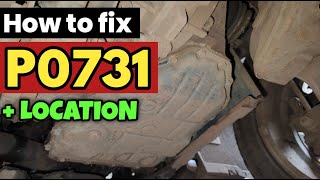
- Vehicle enters 'limp mode' (gets stuck in 3rd or 4th gear) 🎬 Watch: Understanding the P0731 incorrect ratio code.
- Poor or sluggish acceleration from a standstill
- Decreased fuel economy
- Transmission overheating
- Replacing the input or output speed sensors when P0731 is the only code present. The TSB indicates this is unlikely to be the root cause without a corresponding sensor-specific code.
- Replacing a single shift solenoid 🎬 Watch: Symptoms, causes, and solutions for code P0731. when the underlying issue is a larger internal mechanical failure. This will not solve the problem if the clutch pack is worn out.
Most Likely Causes
- Low or Dirty Transmission Fluid 🟡 Medium Probability → Shop Transmission Assembly The transmission is 'sealed' and lacks a dipstick, making it easy for fluid level/condition to be overlooked during routine maintenance. Fluid can also leak from a potentially improperly manufactured cooler hose, an issue noted in a recall for some 2011 models.
How to confirm: The vehicle must be lifted level, warmed to a specific temperature (typically 50-60°C or 122-140°F), and the fill plug on the side of the transmission removed to check the level. The fluid should be bright red and not smell burnt. This is best done by a professional.
Typical fix: Perform a transmission fluid drain-and-fill or a complete flush using the correct Hyundai-specified fluid (SP-IV).
Est. part cost: $75-$150 - Internal Transmission Failure 🔴 High Probability → Shop Transmission Assembly As documented in Hyundai TSB 20-AT-001H, an isolated P0731 code (with no other solenoid codes) on the A6MF1 transmission points to a known pattern of internal failure, such as a worn underdrive clutch pack. 🎬 Watch: A6MF1 transmission teardown to see internal components.
How to confirm: After confirming the fluid level and condition are correct, a professional scan tool is used to verify no other transmission codes are present. If P0731 is the only code, the TSB directs the diagnosis to internal failure.
Typical fix: Replace the entire automatic transmission assembly with a new or remanufactured unit.
Est. part cost: $3500-$5500 - Faulty Input or Output Speed Sensor ⚪ Low Probability The input and output speed sensors are integrated into a single internal wire harness (P/N 46307-3B650) that is a known failure point due to heat and fluid exposure, as addressed in TSB 20-AT-011H.
How to confirm: Monitor the live data from both sensors with an OBD-II scanner while driving. A sensor that drops out or provides an erratic reading is faulty. Often, a failing speed sensor will also set its own specific code (e.g., P0717 for input, P0722 for output).
Typical fix: Replace the internal transmission wire harness, which contains both sensors. This requires removing the transmission pan and valve body.
Est. part cost: $85-$150 - Faulty Valve Body or Shift Solenoid ⚪ Low Probability → Shop Transmission Valve Body Varnish and debris can cause passages within the valve body to wear, leading to pressure loss even if solenoids test correctly.
How to confirm: This is a likely cause only if other solenoid-specific codes (e.g., P0753 for Shift Solenoid A) are present along with P0731. A technician can test solenoid resistance with a multimeter or command the solenoid with a high-end scan tool.
Typical fix: Replace the specific faulty solenoid or the entire valve body assembly. This requires removing the transmission oil pan.
Est. part cost: $200-$900
Rare But Worth Checking
- Damaged Wiring Harness: Check the wiring going to the transmission for any signs of corrosion, chafing, or rodent damage, as this can interrupt signals from the speed sensors or to the solenoids. The harness running over the transmission case can become brittle from heat cycles.
- Faulty Transmission Control Module (TCM): → Shop Transmission Assembly A failing TCM is rare but possible. This should only be considered after all other mechanical and electrical possibilities have been exhaustively ruled out by a professional.
Diagnosis Steps
- Check for other DTCs. If P0731 is the only code, proceed. If solenoid or sensor codes are present, diagnose those first.
- Professionally check the transmission fluid level and condition. The transmission is sealed, so this requires lifting the vehicle and removing a fill plug at a specific temperature (50-60°C).
- If the fluid is low or dirty, perform a drain-and-fill with Hyundai SP-IV fluid, clear the code, and test drive.
- If the fluid is fine and the code returns, refer to TSB 20-AT-001H. The next step is to inspect the external wiring and connectors for damage.
- If wiring is intact and no other codes are present, the diagnosis per the TSB points to internal failure.
- The final step is to replace the transmission assembly, clear all codes, and perform the transmission relearn procedure with a compatible scan tool.
Parts You'll Likely Need
- Automatic Transmission Assembly — Per Hyundai TSB 20-AT-001H, this is the recommended repair when P0731 is the only code present, indicating a non-serviceable internal failure.
Trusted brands: Hyundai (OEM Remanufactured), Jasper (Aftermarket Remanufactured), Moveras (Aftermarket Remanufactured)
OEM price range: $3500-$5500
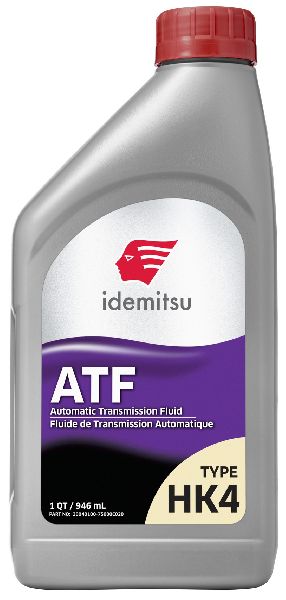
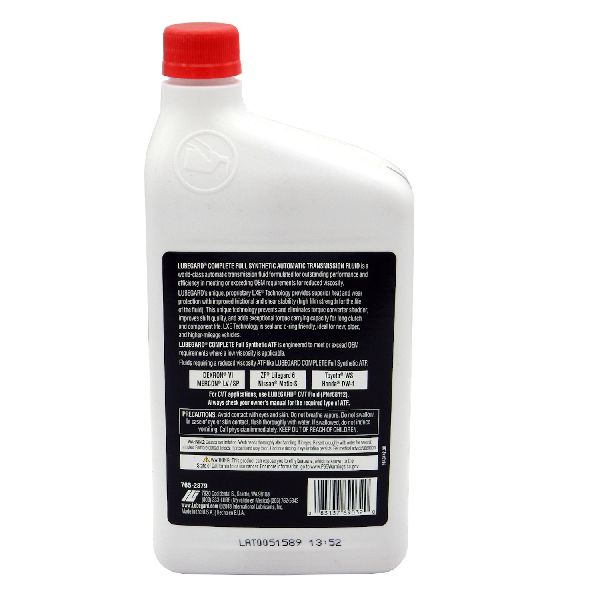
Aftermarket price range: $3000-$4500 - Automatic Transmission Fluid (SP-IV)
(OEM #00232-19045)— Required for any fluid service or transmission replacement. Using the correct fluid type is critical for the function and longevity of the A6MF1 transmission.
Trusted brands: Hyundai (OEM), Idemitsu, ENEOS
OEM price range: $15-$25 per quart
Aftermarket price range: $10-$18 per quart - Transmission Input/Output Speed Sensor
(OEM #Input: 42620-39200, Output: 42621-39052 (Verify by VIN))— A potential, though less likely, cause of the code. May be replaced as part of the diagnostic process if its signal is erratic or if a sensor-specific code is present.
Trusted brands: Delphi, Dorman, NTK/Standard Motor Products
OEM price range: $120-$200
Aftermarket price range: $85-$150
Related Codes That Often Appear With This One
- P0732, P0733, P0734, etc. — These are incorrect ratio codes for other gears. If multiple codes are present, it points to a more widespread transmission problem, such as low fluid pressure or a major internal failure.
- P0753 — This is a code for Shift Solenoid 'A'. If seen with P0731, it points the diagnosis toward an electrical or solenoid/valve body issue rather than an immediate internal mechanical failure.
- P0717, P0722 — These codes indicate a fault with the Input or Output Speed Sensor circuits, respectively. If one of these is present, the sensor itself becomes a primary suspect for causing the incorrect ratio calculation.
Technical Service Bulletins (TSBs) & Recalls
- 20-AT-001H: Addresses incorrect ratio DTCs including P0731 for a wide range of Hyundai vehicles, including the 2010-2015 Tucson. Advises that if the code is present without other solenoid DTCs, the transmission assembly should be replaced due to internal clutch slip.
- A newer TSB, 24-AT-002H, addresses the same issue on newer models, showing this is a persistent problem with Hyundai's 6-speed automatic transmissions.
- Bulletin #5NP-R6Y5M-01: A manufacturer service bulletin for the Sonata platform explicitly lists P0731 as a "Gear 1 Incorrect Ratio" error, reinforcing the commonality of this code across Hyundai's powertrain lineup.
- Bulletin #22-01-030H: Notes that for certain vehicles, a TCU update is required to resolve conditions involving P0731 and other transmission codes, while also optimizing the distance traveled display since DTCs were cleared.
- Bulletin #Campaign T5B Dea: This record indicates that for some models, a combined ECU and TCU update is necessary, and if the condition persists, the transmission assembly should be replaced to resolve P0731.
Platform-Specific Known Issues
- Owner Experience: Transmission Replacement at 105,000 miles: → Shop Transmission Assembly A user on Quora discussed the decision of whether to replace the transmission on their 2011 Tucson at 105,000 miles, highlighting that this failure can occur around this mileage. The consensus was that if the rest of the vehicle is in good shape, replacing the transmission for ~$2,500-$4,000 can be more economical than buying a new car.
- Cross-Model Pattern: Manufacturer records such as Bulletin #23-01-019H and Bulletin #24-01-018H show that Hyundai has addressed P0731 across multiple platforms (Venue and Accent), often recommending a TCU update or full transmission replacement to resolve the illuminated warning light.
Mechanic-Grade Diagnostic Values
- Variable Force Solenoid (VFS) Resistance — expected: 5.1 - 5.3 Ohms. Failure: A reading outside this range indicates a faulty solenoid coil.
- On/Off Shift Solenoid Resistance — expected: 10 - 11 Ohms. Failure: A reading outside this range suggests a problem with the solenoid.
- Transmission Fluid Temperature (TFT) Sensor Voltage — expected: Approximately 3.2V at 104°F (40°C) and 0.29V at 302°F (150°C).. Failure: Voltage readings that do not correspond to the fluid temperature indicate a faulty sensor.
Scan Tool Commands That Help
- Hyundai GDS (Global Diagnostic System): Resetting Auto T/A values — This function must be performed after replacing the transmission, valve body, or TCM to erase the old adaptive learning values and prevent poor shift quality.
- Hyundai GDS (Global Diagnostic System): Actuation Test — To individually command each shift solenoid on and off. This can help identify a mechanically stuck solenoid that might otherwise pass an electrical resistance test.
- Hyundai GDS (Global Diagnostic System): Adaptive Value Relearn Procedure — After resetting the adaptive values, a specific drive cycle must be performed to allow the TCM to relearn clutch fill times and pressures for optimal shift quality. This involves a series of slow accelerations and decelerations.
Wiring & Ground Locations
- TCU Connector Pin 8 — At the Transmission Control Unit (TCU) main connector.. This is the signal wire for the Input Speed Sensor. A technician can back-probe this pin to check for a clean signal from the sensor.
- TCU Connector Pin 9 — At the Transmission Control Unit (TCU) main connector.. This is the signal wire for the Output Speed Sensor. Checking for a proper signal here can confirm if the sensor and its wiring are functioning correctly.
- TCU Connector Pins 34 & 35 — At the Transmission Control Unit (TCU) main connector.. These are ground pins for the TCU. A poor ground connection at these points can cause erratic behavior and false codes.
- 91880-2S100 — This is the part number for the main transmission ground wiring assembly.. A corroded or loose main ground for the transmission can cause a wide range of electrical issues, including incorrect sensor readings that could lead to a P0731 code.
Model Year Variations Within This Range
- 2010-2015: The 2010-2015 Tucson uses the A6MF1 6-speed automatic where the input and output speed sensors are part of an internal wiring harness (P/N 46307-3B650). This differs from some earlier (pre-2010) or later generation models which may use externally mounted sensors.
Diagnostic Flowchart
Other Known Issues on This Vehicle
Issues unrelated to this code that are worth knowing about as an owner of this generation:
- Theta II Engine Failure / Excessive Oil Consumption 🔴 High — Widespread across models with the 2.4L Theta II engine. Can manifest as knocking, seizure, or high oil use, often appearing after 60,000 miles. (Ref: Subject of multiple recalls (e.g., NHTSA 20V746) and a major class-action lawsuit providing extended warranties and a Knock Sensor Detection System (KSDS) software update.)
- ABS Module Fire Risk 🔴 High — Affects a wide range of 2010-2015 Tucsons. The ABS module can short circuit internally, potentially causing a fire even when the vehicle is parked and turned off. (Ref: Subject of a major safety recall (e.g., NHTSA #20V520000). The fix involves installing a new relay kit in the fuse box.)
- Steering Column Coupler Noise 🟡 Low — Very common. A flexible rubber coupler in the electronic power steering column wears out, causing a distinct clicking or clunking noise when turning the steering wheel. (Ref: No recall, but a well-documented issue. The replacement part (OEM # 56315-2K000-FFF) is inexpensive, but labor can be several hundred dollars as the steering column must be disassembled.)
- Transmission Cooler Hose Leak 🟠 Medium → Shop Transmission Assembly — Primarily affects certain 2011 models. An improperly manufactured cooler hose can leak transmission fluid, leading to low fluid levels, transmission damage, and the potential for P0731. (Ref: A recall was issued for affected 2011 models to inspect and replace the hose if necessary.)
Used vs. New Parts: Buying Guide for This Vehicle
When a used part is the smart pick: Given the high failure rate and specific internal issues documented in TSBs for the A6MF1 transmission, purchasing a used unit from a junkyard is extremely risky and generally not recommended. A remanufactured transmission from a reputable supplier with a long-term warranty is a much smarter investment.
Donor-vehicle mileage cap: roughly under 60000 miles for the part to have meaningful remaining life.
What to inspect on the donor part:
- Verify the exact transmission model code (e.g., A6MF1) etched on the case, as there are many similar-looking but incompatible variations.
- Ask for the VIN of the donor vehicle to check its service history for any transmission-related complaints or repairs.
- Inspect the fluid from the donor transmission if possible. Dark, burnt-smelling fluid is a major red flag.
- Inquire about the reason the donor vehicle was salvaged. A front-end collision is preferable to a cause that might be related to powertrain failure.
OEM-only on this vehicle (don't cheap out):
- Transmission Assembly: While aftermarket remanufactured units are available, an OEM remanufactured unit is often the safest bet to ensure compatibility and inclusion of the latest internal updates.
- Transmission Control Module (TCM): If the TCM is suspected, replacement should be with an OEM part to ensure correct software and compatibility.
Aftermarket brands forum-validated for this vehicle:
- Jasper Remanufactured Transmissions
- Moveras Remanufactured Transmissions
Brands owners have reported issues with on this vehicle:
- Unbranded or white-box transmission assemblies from online marketplaces with short or non-existent warranties.
Real Owner Stories
Aggregated from forums and TSBs cited above. Mileages and costs reflect what owners reported in those sources.
2011 Hyundai Tucson — 105000 miles
Symptoms: The owner faced a decision on whether to replace the transmission after it failed at this mileage.
What fixed it: Replacement of the transmission assembly with a new or remanufactured unit.
Cost: $2,500-$4,000
Source hint: Quora discussion on 2011 Tucson transmission replacement
2011 Hyundai Tucson — 140000 miles
Symptoms: Owner experienced the P0731 code and sought confirmation on the diagnosis from other users.
What fixed it: The diagnosis was confirmed as a known issue per the TSB, typically requiring transmission replacement due to internal failure.
Source hint: Hyundai-Forums.com: 2011 Tucson P0731 code
Related OBD-II Codes
Frequently Asked Questions
Does TSB 20-AT-001H apply to my 2013 Hyundai Tucson with a P0731 code?
Can I check the transmission fluid level myself on my 2011 Tucson?
Is there a recall for the transmission fluid leaks that cause P0731?
What specific transmission fluid should I use for my 2014 Tucson?
My Tucson is stuck in 3rd or 4th gear; is this related to P0731?
Could a faulty wire harness cause the P0731 code on my Tucson?
Helpful Videos

We Have This Part in Stock



The information in this article is provided for general reference and educational purposes only. Vehicle specifications, procedures, and part compatibility can vary by production date, trim level, and region. Always consult your vehicle's factory service manual and verify part numbers before purchasing or performing repairs. Safety-critical components such as airbags, seat belts, and braking systems should be installed by a qualified professional.
- Hyundai Tucson:
- 🧭 Diagnostic Flowchart
- 🎬 Helpful Videos
- 🛍️ Shop This Part
- What's Unique About the 2010-2015 Hyundai Tucson
- Symptoms You May Notice
- Most Likely Causes
- Rare But Worth Checking
- Diagnosis Steps
- Parts You'll Likely Need
- Related Codes That Often Appear With This One
- Technical Service Bulletins (TSBs) & Recalls
- Platform-Specific Known Issues
- Mechanic-Grade Diagnostic Values
- Scan Tool Commands That Help
- Wiring & Ground Locations
- Model Year Variations Within This Range
- Other Known Issues on This Vehicle
- Used vs. New Parts: Buying Guide for This Vehicle
- Real Owner Stories
- 2011 Hyundai Tucson — 105000 miles
- 2011 Hyundai Tucson — 140000 miles
- Related OBD-II Codes
- Frequently Asked Questions
- 🎟️ Get 5% Off