

P0731 on 2004-2008 Suzuki Forenza: Gear 1 Incorrect Ratio Causes and Fixes
This code means the transmission is slipping in 1st gear. The most common fix is to service the transmission fluid and filter. If that doesn't work, the issue is likely a failed shift solenoid inside the transmission. A full fluid and filter service costs around $150-$250.
- P0731 indicates a slip in 1st gear, and your first step should always be to check the transmission fluid level and condition.
- This vehicle uses a ZF 4HP16 transmission that requires a specific fluid type (Esso LT71141 or a certified equivalent).
- Beyond fluid, the most likely causes are a bad shift solenoid or a faulty speed sensor.
- Be aware that the external Transmission Range Sensor is a very common failure point on the Forenza and can cause symptoms that mimic an internal transmission fault.
What's Unique About the 2004-2008 Suzuki Forenza
The Suzuki Forenza is a rebadged Daewoo Lacetti equipped with a ZF 4HP16 automatic transmission. While P0731 points to an internal slip, this specific vehicle platform is widely known for failures of the external Transmission Range Sensor (TRS), also known as the neutral safety switch. A faulty TRS can cause a wide range of severe shifting problems, including harsh engagement and forcing the transmission into 'limp mode,' which closely mimic the symptoms of an internal failure like P0731.
Symptoms You May Notice
- Check Engine Light is illuminated
- Transmission is stuck in a higher gear ('limp mode')
- Delayed or harsh, clunking shifts into Drive or Reverse
- Vehicle has very poor acceleration from a stop
- Engine RPMs flare up without an increase in speed (slipping)
- Whining or grinding noise from the transmission area
- Noticeable delay or jolt when the transmission attempts to shift into first gear.
- Replacing the entire transmission without first inspecting the fluid condition, testing the shift solenoids, or considering the common Transmission Range Sensor failure.
Most Likely Causes
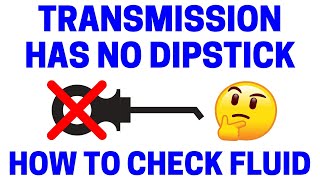
- Low or Dirty Transmission Fluid 🔴 High Probability → Shop Transmission Assembly The ZF 4HP16 transmission does not have a dipstick for easy checking, leading to neglected fluid service. Old, burnt, or low fluid cannot provide the necessary hydraulic pressure for the clutches to engage properly, causing slippage.
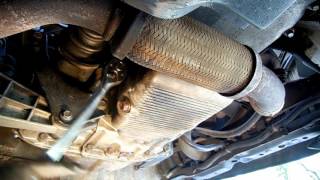
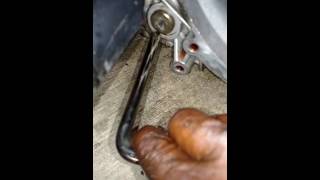
How to confirm: The fluid level and condition must be checked via the fill plug on the side of the transmission case, located above the driver's side axle. The vehicle must be level and running. A 5/16" or 8mm square head socket is required 🎬 Watch: See the specific tool needed for the fill plug. to remove the plug. Fluid should dribble out when full; if not, it's low. The fluid should be reddish/brown and not smell burnt.
Typical fix: Perform a transmission fluid drain-and-fill and replace the filter. Because a single drain only removes a fraction of the total fluid, at least three drain-and-fill cycles are recommended to replace most of the old fluid.
Est. part cost: $50-$100 - Faulty Shift Solenoid 🟡 Medium Probability → Shop Transmission Valve Body Solenoids are electro-hydraulic valves that control fluid flow to engage gears. They can fail electrically or become clogged with debris from old fluid, preventing 1st gear from engaging.
How to confirm: A professional scan tool can often command the solenoid to activate to test its function. Resistance can also be checked at the solenoid's connector. This requires removing the transmission oil pan to access the valve body where the solenoids are located.
Typical fix: Replace the faulty solenoid. Solenoids are typically located on the valve body inside the transmission.
Est. part cost: $40-$80 per solenoid - Faulty Input or Output Speed Sensor ⚪ Low Probability If either the input or output speed sensor sends incorrect data to the TCM, the gear ratio calculation will be wrong, triggering the code even if there is no mechanical slip.
How to confirm: Use a scan tool to monitor the live data from both the input and output speed sensors while driving. The readings should be smooth and correlate with vehicle speed. Any erratic readings or dropouts indicate a faulty sensor.
Typical fix: Replace the faulty speed sensor. The output speed sensor is often located on the exterior of the transmission case, making it easier to replace than the input sensor.
Est. part cost: $30-$70 - Internal Mechanical Failure ⚪ Low Probability Severe overheating or high mileage can lead to worn-out internal components like clutch packs, seals, or a failing oil pump, causing a loss of hydraulic pressure.
How to confirm: This is diagnosed after all other possibilities (fluid, solenoids, sensors) have been ruled out. A transmission pressure test is a key indicator. The fluid will often be very dark, black, and smell burnt.
Typical fix: The transmission must be removed and either rebuilt or replaced.
Est. part cost: $1500-$3000+
Rare But Worth Checking
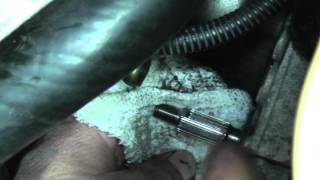
- Failed Transmission Range Sensor (TRS): → Shop Transmission Assembly This part (also called a neutral safety switch) is a notoriously common failure on the Forenza. While it usually sets a P0705 code, its failure causes limp mode and erratic shifting that can be misdiagnosed as an internal P0731 fault. If you have shifting problems, this part should be a prime suspect. 🎬 Watch: Step-by-step guide to installing a new range sensor.
Diagnosis Steps
- Check the transmission fluid level and condition. This is the first and most important step. The fluid should be at the correct level and not appear dark black or smell burnt.
- Scan for other transmission-related codes. Codes like P0700, P0705, or other P073x codes provide critical diagnostic clues.
- Use a scan tool to monitor live data from the Input Speed Sensor (ISS) and Output Speed Sensor (OSS). Verify they are providing rational signals.
- Inspect the wiring harness and connectors going to the transmission, including the main connector and the Transmission Range Sensor connector, for any signs of corrosion or damage.
- If fluid and sensors are good, the next step is to test the shift solenoids. This involves dropping the transmission pan to access the valve body.
- If solenoids test good, perform a transmission line pressure test to check for a failing oil pump or internal hydraulic leaks.
- If all other tests pass, the issue is likely an internal mechanical failure requiring a transmission rebuild or replacement.
Parts You'll Likely Need
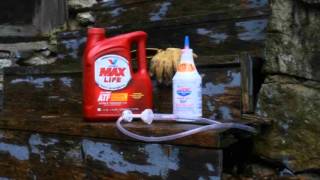
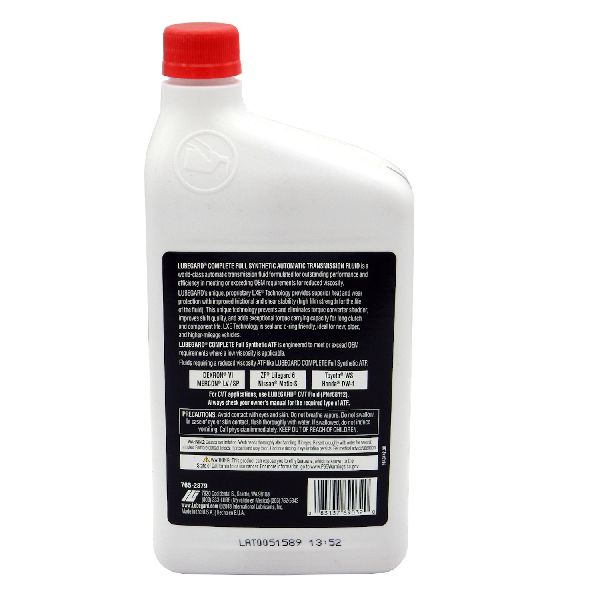
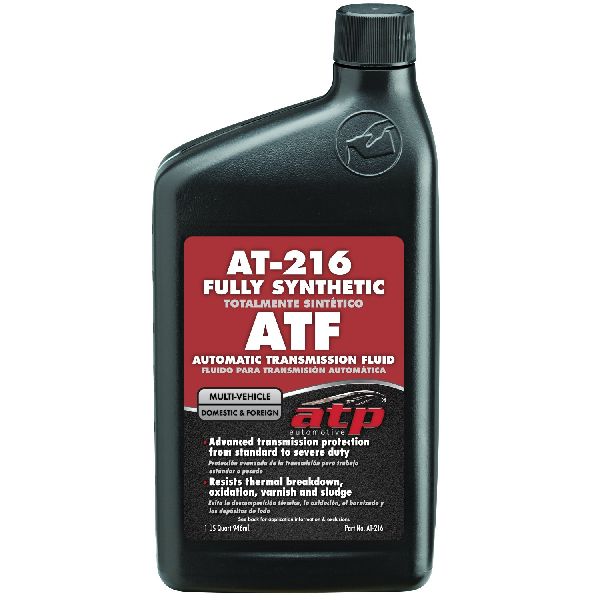
- Automatic Transmission Fluid — The most common cause of this code is low or degraded fluid. The specified fluid is Esso LT71141, but compatible multi-vehicle synthetic fluids are available.
Trusted brands: Valvoline MaxLife, Pentosin ATF 1, Idemitsu ATF
OEM price range: $20-$30 per quart
Aftermarket price range: $8-$15 per quart - Transmission Filter Kit
(OEM #93742054 / 24230704 (GM))— A clogged filter restricts fluid flow, causing low pressure and slipping. It should always be replaced during a fluid service.
Trusted brands: Wix 58886, ATP B-411, Fram FT1223
OEM price range: $40-$70
Aftermarket price range: $20-$40 - Shift Solenoid — A specific solenoid controls the hydraulic circuit for 1st gear. If it fails, the gear cannot engage properly.
Trusted brands: Rostra, ACDelco (GM equivalent), ZF
OEM price range: $70-$120
Aftermarket price range: $40-$80 - Transmission Range Sensor
(OEM #93742966)— Though it typically sets a P0705, this part is a very common failure on the Forenza and causes symptoms like limp mode and harsh shifting that can be confused with a P0731 fault.
Trusted brands: Standard Motor Products NS319, Dorman 265-853, ACDelco D2263C
OEM price range: $80-$150
Aftermarket price range: $30-$60
Related Codes That Often Appear With This One
- P0700 — P0700 is a generic code indicating the Transmission Control Module (TCM) has stored a fault. It almost always appears alongside specific transmission codes like P0731.
- P0705 — This code points directly to a fault in the Transmission Range Sensor circuit. Given the high failure rate of this part on the Forenza, it may appear with or be the underlying cause of symptoms related to P0731.
- P0732, P0733, P0734 — If multiple incorrect gear ratio codes are present, it strongly suggests a systemic problem like low fluid pressure from a clogged filter or failing pump, rather than an issue with a single gear's clutch or solenoid.
Technical Service Bulletins (TSBs) & Recalls
- TS 15 04067 - Details an updated procedure for replacing the leaking valve cover gasket, recommending the use of RTV sealant.
Platform-Specific Known Issues
- Owner Experience: Multiple Drain and Fills: An owner documented the process of performing three consecutive drain-and-fills on their 2004 Forenza's ZF 4HP16 transmission. The fluid was black with a burnt odor on the first drain, showing significant improvement by the third drain. This highlights the necessity of multiple fluid changes to resolve issues caused by degraded fluid.
- DIY Tool for Fill/Drain Plugs: Because the 5/16" square plugs on the transmission are in an awkward location, one owner created a custom tool by grinding down a faucet seat wrench to the correct size. This allowed for better leverage to open the plugs, which can be very tight.
Mechanic-Grade Diagnostic Values
- Shift Solenoid 1 & 2 Resistance — expected: 26.5 ± 0.5 ohms at 20°C (68°F). Failure: A reading outside this range indicates a faulty solenoid coil.
- Pressure Control Solenoid (EDS 3, 4, 5, 6) Resistance — expected: 5.7 ± 0.45 ohms at 20°C (68°F). Failure: An out-of-spec reading points to a failing pressure control solenoid.
- Input Speed Sensor (A/T ISS) Resistance — expected: 825 - 835 ohms at 20°C (68°F). Failure: Resistance outside this range suggests a defective input speed sensor.
- Output Speed Sensor (A/T OSS) Resistance — expected: High resistance, in the Mega-ohm (MΩ) range.. Failure: A low or open reading indicates a failed sensor. One real-world test showed a good sensor at 22.9 MΩ.
Wiring & Ground Locations
- Transmission Control Module (TCM) — Located under the dashboard, to the left of the steering column. It has three connectors, typically labeled A (Blue), B (Green), and C (Gray).. The TCM is the brain of the transmission. All sensor inputs and solenoid outputs are processed here. Checking for corrosion or damage at its connectors is a key diagnostic step.
- Valve Body Harness Connector (16-pin) — This is the main electrical connector on the transmission case, connecting the internal components (solenoids, sensors) to the external vehicle harness.. This is the primary point for testing component resistance without dropping the transmission pan. For example, Shift Solenoid 1 can be tested between pins 3 and 12, and the Input Speed Sensor between pins 15 and 16.
Real Owner Repair Stories
- YouTube channel 'Cajas Automaticas', Chevrolet Optra (rebadged Forenza) (Chevrolet Optra with ZF4HP16 transmission) — Hold light flashing, harsh shifting, multiple transmission codes.
❌ Tried (didn't work) Initial diagnosis pointed towards individual component failure.
✅ What actually fixed it The entire internal valve body wiring harness was replaced. The old harness showed correct resistance for some components but was failing intermittently. Replacing the complete harness, which includes connectors for all solenoids and sensors, resolved all transmission issues.
OEM Part Supersession History
93742187→93742966— Part number update for the Transmission Range Sensor (Neutral Safety Switch).
Heads up: Both part numbers refer to the same 9-pin switch for the 4-speed automatic and are interchangeable for the 2004-2008 model years.
Diagnostic Flowchart
Other Known Issues on This Vehicle
Issues unrelated to this code that are worth knowing about as an owner of this generation:
- Timing Belt and/or Tensioner/Pulley Failure 🔴 High — The timing belt has a recommended replacement interval of around 60,000 miles. The plastic idler pulleys and tensioner are also common failure points. Since the 2.0L is an interference engine, a belt failure will cause catastrophic valve and piston damage.
- Leaking Valve Cover Gasket 🟠 Medium — Very common issue causing oil to leak onto the exhaust manifold (creating a burning smell) and into the spark plug wells (causing misfires). Suzuki released a TSB (TS 15 04067) detailing an updated procedure using RTV sealant in the corners. (Ref: TS 15 04067)
- Camshaft Position Sensor (CMP) Failure 🟠 Medium — A failing CMP sensor can cause rough running, loss of power, stalling, or a no-start condition. It often triggers codes like P0340 or P0342.
- Overheating Daytime Running Light (DRL) Module 🔴 High — A known defect where the DRL module can overheat, melt, and potentially cause a fire in the engine bay. This was subject to a safety recall. (Ref: NHTSA Campaign ID: 07V070000 (Suzuki Recall 4006))
- Throttle Body / Actuator Failure 🟠 Medium — Can cause a lack of power, erratic idle, and trigger various throttle position sensor codes.
Used vs. New Parts: Buying Guide for This Vehicle
When a used part is the smart pick: For this vehicle, sourcing a complete used transmission from a reputable salvage yard is a very common and cost-effective strategy if internal mechanical failure is diagnosed. The cost of a used unit is often less than the labor to rebuild the original. External components like the Transmission Range Sensor (TRS) are also good candidates for used parts.
Donor-vehicle mileage cap: roughly under 120000 miles for the part to have meaningful remaining life.
What to inspect on the donor part:
- Check the color and smell of the transmission fluid from the donor vehicle if possible. Bright red/brown fluid without a burnt smell is a good sign.
- Look for a vehicle with documented service history or one that appears well-maintained.
- Inspect the transmission case for any cracks, heavy corrosion, or signs of previous repairs (e.g., excessive RTV sealant).
- Ensure the main electrical connector pins are straight and free of corrosion.
OEM-only on this vehicle (don't cheap out):
- Internal seals and clutch packs. When rebuilding, using a high-quality master kit with new components is critical for longevity.
Aftermarket brands forum-validated for this vehicle:
- Wix, Fram (Filter Kits)
- Valvoline MaxLife, Pentosin (Compatible ATF)
- Rostra, ACDelco (Solenoids)
- Standard Motor Products (SMP), Dorman (Transmission Range Sensor)
Brands owners have reported issues with on this vehicle:
- Unnamed, no-brand 'white box' electrical sensors and solenoids from online marketplaces are a significant gamble and often have incorrect resistance values or poor-quality seals that fail quickly.
Real Owner Stories
Aggregated from forums and TSBs cited above. Mileages and costs reflect what owners reported in those sources.
2004 Suzuki Forenza 2.0L
Symptoms: The transmission fluid was black and had a burnt odor, leading to P0731-related shifting issues.
What fixed it: The owner performed three consecutive drain-and-fills on the ZF 4HP16 transmission, which resulted in a significant improvement in the fluid's condition and color.
Source hint: vehicle_specific_issues: Owner Experience: Multiple Drain and Fills
Related OBD-II Codes
Frequently Asked Questions
I can't find a transmission dipstick on my 2006 Forenza. How do I check the fluid level for a P0731 code?
My mechanic said the fluid is very dirty. Is one drain-and-fill enough to fix the shifting problems?
The transmission fill plug is extremely tight. Is there a trick or special tool for it?
My Forenza has a P0731 code and also a burning oil smell. Are these two problems related?
Are other cars built on the same platform as the Forenza also prone to this P0731 transmission code?
If my transmission fluid level and condition are good, what is the next most likely cause for P0731?
Could a bad sensor cause my Forenza to go into 'limp mode' with a P0731, or is it definitely an internal transmission failure?
Helpful Videos
We Have This Part in Stock


The information in this article is provided for general reference and educational purposes only. Vehicle specifications, procedures, and part compatibility can vary by production date, trim level, and region. Always consult your vehicle's factory service manual and verify part numbers before purchasing or performing repairs. Safety-critical components such as airbags, seat belts, and braking systems should be installed by a qualified professional.
- Suzuki Forenza:
- 🧭 Diagnostic Flowchart
- 🎬 Helpful Videos
- 🛍️ Shop This Part
- What's Unique About the 2004-2008 Suzuki Forenza
- Symptoms You May Notice
- Most Likely Causes
- Rare But Worth Checking
- Diagnosis Steps
- Parts You'll Likely Need
- Related Codes That Often Appear With This One
- Technical Service Bulletins (TSBs) & Recalls
- Platform-Specific Known Issues
- Mechanic-Grade Diagnostic Values
- Wiring & Ground Locations
- Real Owner Repair Stories
- OEM Part Supersession History
- Other Known Issues on This Vehicle
- Used vs. New Parts: Buying Guide for This Vehicle
- Real Owner Stories
- 2004 Suzuki Forenza 2.0L
- Related OBD-II Codes
- Frequently Asked Questions
- 🎟️ Get 5% Off