

P0733 on 2020-2023 Lincoln Aviator: Gear 3 Incorrect Ratio Causes and Fixes
On a 2020-2023 Aviator, code P0733 almost always indicates a serious internal failure in the 10R60/10R80 transmission, not a simple sensor issue. The most common causes are a faulty main valve body or a failed CDF clutch drum, a well-documented design flaw acknowledged by Lincoln TSBs. This is a professional repair requiring transmission removal, costing $1,500 to $7,000+.
- P0733 on a 2020-2023 Aviator is a serious code that points to a major internal transmission problem, not a simple fix.
- The issue is almost always a faulty main control valve body or a failed CDF clutch drum, both of which are known problems addressed in Lincoln Technical Service Bulletins.
- Do not continue to drive the vehicle. This can turn a targeted (though expensive) repair into a complete transmission replacement costing thousands more.
- This is not a DIY repair. The vehicle must be diagnosed and repaired by a qualified transmission specialist.
- When speaking with a repair shop, referencing TSBs 22-2428 and 23-2351 can help guide the diagnosis.
What's Unique About the 2020-2023 Lincoln Aviator
The 2020-2023 Aviator uses the Ford 10R60 or 10R80 10-speed automatic transmission, which is subject to several Technical Service Bulletins (TSBs) for this specific code. Unlike many vehicles where this code could be a simple sensor or fluid issue, on the Aviator it strongly points to one of two well-documented mechanical/hydraulic failures: a faulty main control valve body or, more commonly, a design flaw in the 'CDF' clutch drum assembly that causes a major internal pressure leak. This issue is so prevalent across the 10R transmission family that it's considered a factory defect.
Symptoms You May Notice
- Harsh, jerky, or delayed shifts, especially into or out of third gear.
- Transmission slipping (engine RPMs flare up without an increase in speed).
- Vehicle hesitates or lunges forward when shifting.
- Check Engine Light or Wrench Light is illuminated.
- Transmission gets stuck in one gear or enters a limited-gear 'limp mode'.
- A burning smell from the transmission area due to overheating fluid.
- Loud noises or clunks during shifting.
- Replacing input or output speed sensors. While these sensors report the problem, they are almost never the cause of a gear ratio code on this transmission. The code indicates a mechanical slip, not a sensor failure.
- Assuming a simple fluid change will fix the problem. While low or dirty fluid can cause issues, P0733 on the 10R80/10R60 transmission is typically a symptom of a larger mechanical or hydraulic failure. A fluid change may temporarily mask symptoms but will not fix the underlying issue.
- Performing a transmission flush. A high-pressure flush can dislodge debris from a failing component and circulate it throughout the transmission, potentially causing more damage to the valve body and solenoids.
Most Likely Causes
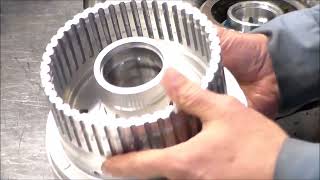
- CDF Clutch Cylinder Sleeve Failure 🔴 High Probability → Shop Automatic Transmission Coast Clutch Hub This is a widely documented design flaw in the 10R80/10R60 transmission family. Multiple TSBs (e.g., #22-2428, #23-2351) link P0733 to 'axial movement of the CDF clutch cylinder sleeve causing hydraulic circuit leaks.' The sleeve, which lacks a proper retaining lip in original designs, 'walks' out of its bore, uncovering hydraulic passages and causing a catastrophic pressure loss that prevents the C, D, and F clutch packs from engaging properly.
How to confirm: A technician must perform specific hydraulic pressure tests or clutch circuit leak tests as outlined in the factory service manual or relevant TSBs. This confirms an internal leak before transmission removal. A high-end scan tool is needed to command the solenoids during testing.
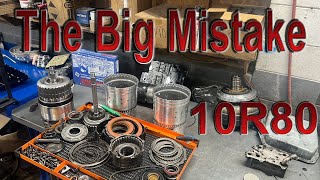
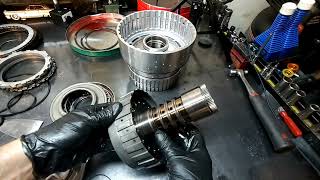
Typical fix: The transmission must be removed and disassembled to replace the faulty CDF clutch drum with an updated part (JL3Z-7H351-B) that has a machined lip to prevent the sleeve from moving. This is a complete transmission overhaul. 🎬 Watch: Visual breakdown of the CDF drum failure
Est. part cost: $140-$210 - Main Control Valve Body Failure 🟡 Medium Probability → Shop Transmission Valve Body Valves or solenoids within the main control body can stick or fail, leading to incorrect fluid pressure and shifting problems. TSB 21-2434 specifically identifies this as a cause for P0733 and other shift-related codes on the 2020-2022 Aviator. Debris from a failing CDF drum can also lodge in the valve body, causing it to fail as a secondary issue.
How to confirm: A technician can use a high-end scan tool to perform a 'break-in' routine outlined in the TSB. If the issue persists, or if pressure tests isolate the leak to the valve body, it is deemed faulty.
Typical fix: Replacement of the main control valve body assembly with an updated part (L1MZ-7A100-F). This is done after dropping the transmission pan and is less labor-intensive than a full overhaul. 🎬 See: Step-by-step 10R80 valve body replacement
Est. part cost: $550-$1300 (includes a refundable core charge of ~$200) - Low or Contaminated Transmission Fluid ⚪ Low Probability → Shop Transmission Assembly While this is a possible cause for any automatic transmission, it is rarely the root cause for a P0733 on this specific platform. It is more often a symptom of the CDF drum failure shedding debris into the fluid.
How to confirm: Check the transmission fluid level and condition according to the manufacturer's procedure. The fluid should be at the correct level, red in color, and not smell burnt or contain metallic particles. The 10R80 does not have a traditional dipstick, so this must be checked at a shop.
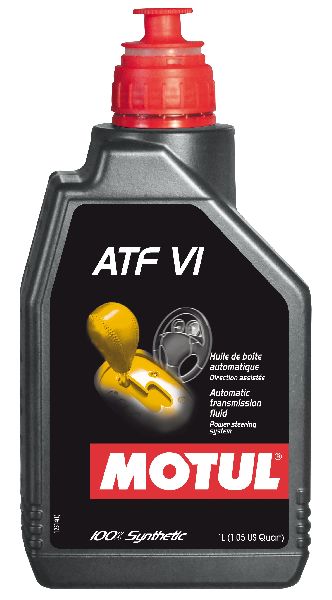
Typical fix: Perform a transmission fluid drain and fill using the correct Motorcraft MERCON ULV fluid. This is rarely the final fix for this code on this platform but is a mandatory first check.
Est. part cost: $120-$200
Rare But Worth Checking
- TCM Software Issue: While less common as the sole cause, outdated software can cause harsh shifting or misinterpretation of sensor data. TSBs often recommend reprogramming the PCM/TCM to the latest calibration as a mandatory first step in the diagnostic process before replacing any parts. 🎬 Watch: Diagnostic walkthrough of a 10-speed transmission
Diagnosis Steps
- Verify the transmission fluid level and condition using the manufacturer's procedure. Check for burnt smell or metallic debris, which indicates severe internal wear.
- Use a professional scan tool (like Ford's FDRS) to check for any other transmission-related DTCs and to view live data, including commanded vs. actual gear and slip data.
- Check for and review all applicable TSBs (e.g., 22-2428, 23-2351, 21-2434) for this specific vehicle VIN.
- As recommended by TSBs, perform the PCM/TCM software update to the latest calibration and run the 'Accelerated Main Control Break-In' routine with the scan tool.
- If symptoms persist, perform transmission fluid pressure tests as outlined in the service manual to isolate the location of a potential hydraulic leak (e.g., valve body vs. CDF clutch circuit). This is the definitive step to condemn the CDF drum or valve body.
- Based on pressure test results, inspect and/or replace the main control valve body.
- If pressure tests indicate a leak in the CDF clutch circuit, the transmission must be removed and disassembled to inspect and replace the CDF clutch drum assembly with the updated part.
Parts You'll Likely Need
- CDF Clutch Drum Assembly (Updated)
(OEM #JL3Z-7H351-B)— This is the most common point of failure. The updated part has a machined lip to prevent the internal sleeve from moving and causing a hydraulic leak. It supersedes older part numbers HL3Z-7H351-A and JL3Z-7H351-A.
Trusted brands: Motorcraft
OEM price range: $140-$210 - Main Control Valve Body Assembly
(OEM #L1MZ-7A100-F)— A known cause of shifting issues and gear ratio codes due to internal sticking valves, as cited in TSBs. This part supersedes L1MZ-7A100-B.
Trusted brands: Motorcraft
OEM price range: $365-$550 (plus a $200 refundable core charge)
Aftermarket price range: $400-$800 (Remanufactured) - Automatic Transmission Fluid (MERCON ULV)
(OEM #XT-12-QULV)— This specific fluid is required for any service on the 10R80/10R60 transmission. Using the wrong fluid will cause damage and shift quality issues. Approximately 9-10 quarts are needed for a pan drop service.
Trusted brands: Motorcraft
OEM price range: $10-$15 per quart
Related Codes That Often Appear With This One
- P0732 — This is an incorrect ratio code for 2nd gear. The underlying hydraulic issue in the CDF drum or valve body often affects multiple gear circuits simultaneously.
- P0729, P0731, P0734, P0735, P0736 — These are all gear ratio error codes for other gears. TSBs 22-2428 and 23-2351 list this entire family of codes as being caused by the same faulty valve body or CDF drum issue.
- P2700-P2705 — These codes relate to the apply time and performance of specific transmission clutches. They often appear with gear ratio codes when there is a hydraulic leak preventing a clutch from engaging properly.
Technical Service Bulletins (TSBs) & Recalls
- TSB 23-2351: Addresses harsh/delayed shifts and a long list of DTCs including P0733, pointing to software, valve body, or CDF clutch cylinder sleeve movement as possible causes.
- TSB 22-2428: Supersedes many previous TSBs and provides a comprehensive diagnostic procedure for harsh shifts and DTCs including P0733, again citing the valve body and CDF clutch sleeve as primary suspects.
- TSB 21-2434: Specifically calls out P0733 on 2020-2022 Aviators and suggests a main control valve body issue, prescribing a diagnostic 'break-in' procedure.
Platform-Specific Known Issues
- The 10R60/10R80 transmission in this vehicle is known for a design flaw in the CDF clutch drum where a sleeve can move, causing a loss of hydraulic pressure that triggers codes like P0733.
- Multiple TSBs have been issued by Ford/Lincoln that group P0733 with a wide range of other transmission codes, all pointing to either the CDF drum or the main control valve body as the root cause.
- Owner forums for platform mates like the Ford F-150 and Explorer are filled with reports of this exact failure, often resulting in dealer-quoted repairs of $4,000-$9,000 for a transmission overhaul or replacement.
Mechanic-Grade Diagnostic Values
- Shift Solenoid Resistance — expected: 5.0 - 5.4 Ohms at 68°F (20°C). Failure: A reading outside of this range indicates a faulty solenoid coil.
- Transmission Fluid Temperature (TFT) Sensor Resistance — expected: 37k-16k Ohms at 69°F-104°F (20°C-40°C). Failure: Resistance values that do not correlate with the fluid temperature suggest a faulty sensor. For example, at operating temperature (195°F-230°F), the resistance should be much lower, around 2.7K-1.5k Ohms.
- CDF Clutch Circuit Leak Test Pressure — expected: Pressure decay should be within a specified limit when the circuit is pressurized to 1900-2000kPa (275-290 PSI) using a specialized transducer kit.. Failure: A rapid drop in pressure indicates a hydraulic leak within the CDF clutch circuit, confirming the drum has failed.
Scan Tool Commands That Help
- Ford FDRS (Ford Diagnostic & Repair System): Transmission Clutch Circuit Leak Test — This is the definitive bidirectional test outlined in TSBs to diagnose a leaking CDF clutch drum. The tool commands specific solenoids and pressures while a required Pressure Vacuum Transducer (PVT) kit measures the leak-down rate.
- Ford FDRS: Clear Transmission Adaptive Tables — This is mandatory after replacing the valve body, CDF drum, or entire transmission. It erases the learned shift pressure adjustments, forcing the TCM to relearn the characteristics of the new components.
- Ford FDRS: Transmission Characterization / Solenoid Body Strategy — Required when replacing the main control valve body. The new valve body has a unique 13-digit strategy code etched on it that must be programmed into the TCM for correct hydraulic operation and shifting.
- Ford FDRS or FORScan: Accelerated Main Control Break-In — This procedure, outlined in TSBs, cycles the solenoids and valves to purge air and verify operation after a software update or valve body replacement. It can sometimes resolve shift quality issues if no hard parts have failed.
Wiring & Ground Locations
- C175T — The main electrical connector on the passenger side of the 10R80 transmission case.. This is the primary interface between the TCM and all internal transmission electronics, including speed sensors and solenoids. Checking for corrosion, pin damage, or a loose connection here is a crucial first step for any electrical diagnosis related to the transmission.
- Main Chassis Ground — Typically located behind the driver's side kick panel.. A poor ground connection for the TCM or related modules can cause erratic electronic behavior, including incorrect sensor readings or faulty solenoid commands that could mimic internal transmission issues. While not a common cause for P0733, it's a foundational check.
- TCM Power/Ground Pins — At the Transmission Control Module connector. A specific wiring diagram for the 2020-2023 Aviator is required for exact pin numbers.. Verifying stable power and a clean ground directly at the TCM is essential to rule out the module itself or its direct wiring as the source of the problem before condemning expensive internal components.
Real Owner Repair Stories
- Ford F150 Forum (2019 Ford F-150 with 88K miles (same 10R80 transmission)) — Hard transmission shifts, then would not shift into reverse. Check engine light with code P0733.
❌ Tried (didn't work) The user did not report trying other fixes before getting the professional diagnosis.
✅ What actually fixed it The Ford dealer's pinpoint test for P0733 led directly to the conclusion that the C clutch was slipping. The diagnosis confirmed the CDF drum had failed and required removal and inspection/replacement of the drum assembly.
OEM Part Supersession History
HL3Z-7H351-A / JL3Z-7H351-A→JL3Z-7H351-B— The original CDF clutch drum design allowed an internal sleeve to 'walk' out of its bore due to a worn bushing. The updated JL3Z-7H351-B part features a redesigned drum with a machined retaining lip that physically prevents the sleeve from moving, permanently fixing the hydraulic leak issue.
Heads up: The older part numbers should never be used for replacement as the failure is guaranteed to repeat. Only the updated 'B' revision or newer should be installed.
Model Year Variations Within This Range
- 2020 - Mid-2022: Vehicles built on or before August 15, 2022, were equipped from the factory with the original, faulty CDF clutch drum design that is prone to failure.
- Mid-2022 - 2023: Vehicles built on or after August 16, 2022, should have the updated CDF clutch drum (part JL3Z-7H351-B or newer) installed from the factory, making the primary cause of P0733 much less likely. For these later models, a valve body failure or other internal issue would be a more probable cause.
Diagnostic Flowchart
Other Known Issues on This Vehicle
Issues unrelated to this code that are worth knowing about as an owner of this generation:
- Air Suspension Failure 🟠 Medium — Common complaint, can occur at any mileage. Symptoms include uneven ride height, 'Air Suspension Fault' messages, and hissing noises from leaking air springs or lines. (Ref: TSB #SSM 51640, TSB #SSM 51621)
- PHEV High-Voltage Battery Failure 🔴 High — Specific to Grand Touring (PHEV) models. Can cause sudden loss of power or 'Stop Safely Now' warnings. Multiple recalls have been issued. (Ref: NHTSA Recall #23V-626)
- Backup Camera Malfunction 🟡 Low — Widespread issue across 2020-2024 models. Camera may flicker, distort, or go blue, sometimes due to electromagnetic interference from a cell phone. (Ref: NHTSA Recall #24V368)
- 3.0L EcoBoost Intake Valve Fracture 🔴 High — Affects some 2021-2022 models. A faulty batch of intake valves can fracture and fall into the engine, causing catastrophic failure. (Ref: NHTSA Recall filed August 2024)
- Loose Interior/Exterior Trim 🟡 Low — Reported on 2020-2025 models. C-pillar trim and rear window bars may detach due to insufficient adhesive. (Ref: NHTSA Recall #25S66)
- Seat Belt Chime Malfunction 🟡 Low — Affects 2020-2023 models with Revel Audio. The seat belt warning chime may not sound for the required duration. (Ref: NHTSA Recall #22C35)
Used vs. New Parts: Buying Guide for This Vehicle
When a used part is the smart pick: For this specific failure, buying a complete used transmission assembly is a high-risk option. It only makes sense if the donor vehicle's build date is confirmed to be after August 16, 2022, ensuring it has the updated CDF drum, and it comes with a warranty from a reputable recycler.
Donor-vehicle mileage cap: roughly under 30000 miles for the part to have meaningful remaining life.
What to inspect on the donor part:
- Verify the vehicle build date from the donor VIN to be post-August 2022.
- Inspect fluid from the donor transmission; it must be bright red and free of metallic particles or a burnt smell.
- Obtain a vehicle history report for the donor to check for prior accidents or transmission service, which could indicate hidden problems.
OEM-only on this vehicle (don't cheap out):
- CDF Clutch Drum Assembly
- Main Control Valve Body Assembly
- Motorcraft MERCON ULV Fluid
Aftermarket brands forum-validated for this vehicle:
- Sonnax (Offers a 'CDF Drum Saver Kit' to modify an original drum, for professional use).
Brands owners have reported issues with on this vehicle:
- No-name, unverified rebuild kits or individual solenoids from online marketplaces. The tolerances and software compatibility of the 10R80 are too sensitive for low-quality parts.
Real Owner Stories
Aggregated from forums and TSBs cited above. Mileages and costs reflect what owners reported in those sources.
2019 Ford F-150 — 88000 miles
Symptoms: Experienced hard shifts and a no-reverse condition. Dealer diagnosis confirmed P0733.
What fixed it: The dealer determined the CDF drum had failed, requiring transmission removal and inspection.
Source hint: f150forum.com - '10R80 Transmission failure/replacement'
2018 Ford F-150
Symptoms: Vehicle exhibited hesitation and threw codes P0732 and P0733.
What fixed it: Internal hydraulic leak issues common to the 10R80 platform (CDF drum/valve body).
Source hint: Reddit r/mechanic - 'Help with fix'
2020 Lincoln Aviator
Symptoms: Owner reported multiple electronic 'quirks' and drive faults, expressing frustration with the vehicle's reliability and the need for an extended warranty.
What fixed it: Diagnostic procedures for drive faults often involve TSB-prescribed software updates or valve body routines.
Source hint: blueovalforums.com - '2020 Aviator- Drive Fault and Air Suspension Fault'
Related OBD-II Codes
Frequently Asked Questions
Does TSB 21-2434 apply to my 2021 Lincoln Aviator for code P0733?
What is the 'CDF clutch cylinder sleeve' issue I keep hearing about for the Aviator?
My Aviator is jerking into third gear; could this be the valve body?
How much does it cost to fix the CDF drum failure on a Lincoln Aviator?
Can a software update fix my P0733 transmission code?
Is the P0733 code related to the air suspension faults on my 2020 Aviator?
Helpful Videos
We Have This Part in Stock


The information in this article is provided for general reference and educational purposes only. Vehicle specifications, procedures, and part compatibility can vary by production date, trim level, and region. Always consult your vehicle's factory service manual and verify part numbers before purchasing or performing repairs. Safety-critical components such as airbags, seat belts, and braking systems should be installed by a qualified professional.
- Lincoln Aviator:
- 🧭 Diagnostic Flowchart
- 🎬 Helpful Videos
- 🛍️ Shop This Part
- What's Unique About the 2020-2023 Lincoln Aviator
- Symptoms You May Notice
- Most Likely Causes
- Rare But Worth Checking
- Diagnosis Steps
- Parts You'll Likely Need
- Related Codes That Often Appear With This One
- Technical Service Bulletins (TSBs) & Recalls
- Platform-Specific Known Issues
- Mechanic-Grade Diagnostic Values
- Scan Tool Commands That Help
- Wiring & Ground Locations
- Real Owner Repair Stories
- OEM Part Supersession History
- Model Year Variations Within This Range
- Other Known Issues on This Vehicle
- Used vs. New Parts: Buying Guide for This Vehicle
- Real Owner Stories
- 2019 Ford F-150 — 88000 miles
- 2018 Ford F-150
- 2020 Lincoln Aviator
- Related OBD-II Codes
- Frequently Asked Questions
- 🎟️ Get 5% Off