

P0733 on 2003-2010 Porsche Cayenne: Gear 3 Incorrect Ratio Causes and Fixes
On a 2003-2010 Porsche Cayenne, code P0733 almost always points to a problem with the Aisin TR-60SN transmission's valve body. The most common fix is replacing the valve body, which is a several-thousand-dollar repair at a shop. Low or dirty fluid can also be a cause and should be the first check, but often does not solve the underlying wear issue.
- P0733 on a 2003-2010 Cayenne means the transmission is slipping in 3rd gear.
- The most likely cause is a faulty transmission valve body, a known weak point on this vehicle's Aisin transmission.
- Always check the transmission fluid level and condition first, as low or old fluid can cause similar issues.
- This is not a DIY-friendly repair for most home mechanics; professional service is strongly recommended.
- Ignoring the problem will lead to further, more expensive damage, likely requiring a full transmission rebuild.
What's Unique About the 2003-2010 Porsche Cayenne
The first-generation Porsche Cayenne (models 955 and 957) uses a six-speed automatic transmission known as the Aisin TR-60SN (also called the VW 09D). This transmission is shared with the Volkswagen Touareg and Audi Q7 of the same era. While generally robust, its most notorious and well-documented weak point is the valve body. Over time, solenoids wear and bores within the aluminum valve body can cause hydraulic pressure losses, leading to harsh shifting, slippage, and ratio codes like P0733. This issue is so common that valve body replacement is often the go-to fix after verifying fluid level and condition.
Generation note: This guide covers the first-generation Porsche Cayenne, which includes the 955 (2003-2006) and the facelifted 957 (2008-2010). Both model series use the same Aisin TR-60SN automatic transmission, and the causes and fixes for P0733 are identical across this entire year range.
Symptoms You May Notice
- Check Engine Light is on
- "Transmission Fault" or similar warning on the dashboard
- Vehicle enters 'limp mode' (may get stuck in one gear, often 3rd or 4th)
- Harsh or delayed shifting, especially into or out of 3rd gear.
- Transmission slipping (engine RPMs rise but vehicle speed does not increase).
- Noticeable thud or bang when shifting
- Reduced fuel efficiency.
- Replacing only the shift solenoids. While a single solenoid can fail, the more common issue on the TR-60SN is wear of the valve body itself. Replacing just the solenoids often doesn't fix the underlying pressure loss from worn bores.
- Assuming the transmission needs a full rebuild immediately. Due to the prevalence of valve body issues, this component should be the primary suspect before condemning the entire transmission, assuming the fluid is not full of metal debris.
Most Likely Causes
- Failing Transmission Valve Body 🔴 High Probability → Shop Transmission Valve Body The Aisin TR-60SN transmission used in the Cayenne is known for valve body issues. Wear in the solenoid bores leads to pressure loss, causing slippage and incorrect gear ratios. This is the most common point of failure for these symptoms after fluid issues are ruled out.
How to confirm: After confirming fluid level and condition are good, a professional will use a scan tool to monitor solenoid commands and line pressure. Often, this is a diagnosis of exclusion when fluid/filter changes don't resolve the symptoms. A tell-tale sign is that symptoms are worse when the transmission is hot.
Typical fix: Replace the entire valve body with a new or remanufactured unit. Some specialists can rebuild the original by reaming bores and installing oversized valves and other components from kits like the Sonnax Zip Kit (TR60SN-ZIP).
Est. part cost: $1500-$2500 - Low or Degraded Transmission Fluid (ATF) 🟡 Medium Probability → Shop Transmission Assembly Porsche originally specified a very long, 160,000-mile service interval for the transmission fluid, which many experts now believe is far too long. Old, degraded fluid loses its hydraulic properties, and low fluid levels caused by minor leaks prevent the system from building the pressure needed to hold gears.
How to confirm: Check the transmission fluid level and condition. The fluid should be checked with the engine running at a specific temperature (35-45°C). Dark, burnt-smelling, or metallic-flecked fluid indicates a problem.
Typical fix: Perform a transmission fluid and filter change. This is a good first step, but if the valve body is already worn, it may not be a permanent solution. Many owners report symptoms returning shortly after a fluid change if the valve body is the root cause.
Est. part cost: $150-$300 - Worn Internal Clutch Packs ⚪ Low Probability This is often a consequence of long-term driving with a faulty valve body or low fluid pressure, which allows the clutch plates for 3rd gear to slip and burn out. It is not typically the primary failure.
How to confirm: This is diagnosed by dropping the transmission pan and finding excessive clutch material (a metallic slurry or chunks) in the fluid and pan. A transmission pressure test may also show pressure loss at the clutch drum.
Typical fix: Complete transmission rebuild or replacement.
Est. part cost: $3000-$7000
Rare But Worth Checking
- Faulty Transmission Speed Sensor: → Shop Transmission Assembly An input or output speed sensor could fail, providing incorrect data to the TCM. This is less common than valve body failure and would likely be accompanied by other sensor-specific fault codes (e.g., P0722).
- Faulty Transmission Control Module (TCM): → Shop Transmission Assembly While possible, electronic failure of the TCM is rare. It should only be considered after all mechanical and hydraulic possibilities have been exhaustively ruled out. A forum user on Rennlist mentioned a dealer wanting to swap this part to test, but it's an unlikely fix.
Diagnosis Steps
- Verify the code with a quality OBD-II scanner.
- Check the transmission fluid level and condition. This must be done at a specific operating temperature (typically 35-45°C) with the engine running, per the manufacturer's procedure. Note any burnt smell or metallic particles.
- If the fluid is low, top it off with the correct specification fluid (e.g., Pentosin ATF-1, Toyota Type T-IV, Mobil 3309) and check for leaks.
- If the fluid is old or dirty, perform a fluid and filter change. Clear codes and test drive to see if symptoms return, especially once the transmission is fully warmed up.
- If symptoms persist, use an advanced scan tool (like Porsche PIWIS) to monitor transmission line pressure and the command status of the shift solenoids while driving.
- If pressure is low or erratic, especially when hot, the valve body is the most likely culprit.
- Inspect the wiring harness and connectors to the transmission for any damage or corrosion.
- If the fluid was full of metal debris, internal damage (like worn clutch packs) is likely, and a transmission rebuild or replacement is necessary.
Parts You'll Likely Need
- Transmission Valve Body
(OEM #955-325-039-13)— This is the most common failure point on the Aisin TR-60SN transmission that causes gear ratio codes.
Trusted brands: Porsche (OEM), RevMax (Remanufactured), Sonnax (rebuild kits, e.g., TR60SN-ZIP)
OEM price range: $2500-$3500
Aftermarket price range: $1200-$1800 (Remanufactured) - Transmission Filter and Gasket Kit
(OEM #955-397-016-00 (Gasket), 955-307-403-01 (Filter))— This should be replaced any time the transmission pan is removed, such as for a fluid change or valve body replacement.
Trusted brands: Vaico, Febi, Porsche (OEM)
OEM price range: $80-$120
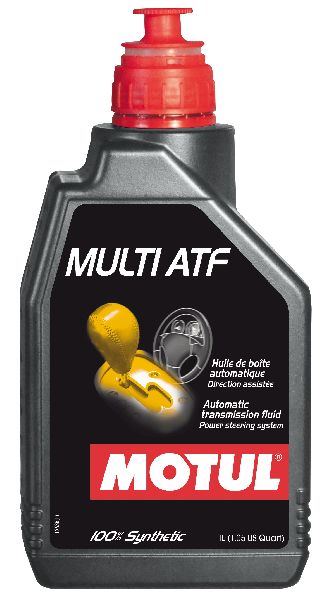
Aftermarket price range: $40-$70 - Automatic Transmission Fluid (ATF) — Correct, clean fluid is critical for hydraulic pressure and transmission function. A fluid change is the first step in diagnosis. You will need 6-8 liters for a pan drop and refill.
Trusted brands: Pentosin ATF 1, Toyota Type T-IV, Mobil 3309
OEM price range: $25-$40 per liter
Aftermarket price range: $15-$25 per liter
Related Codes That Often Appear With This One
- P0734 — This code indicates 'Gear 4 Incorrect Ratio.' It's common to see multiple incorrect ratio codes (P0733, P0734, P0735) together, which strongly points to a systemic pressure issue from a failing valve body or low fluid.
- P0735 — This code indicates 'Gear 5 Incorrect Ratio.' Seeing it with P0733 further strengthens the diagnosis of a widespread hydraulic issue, not just a problem with a single gear's clutch pack.
- P0730 — This is a general 'Incorrect Gear Ratio' code. It often appears alongside more specific gear ratio codes like P0733 and points to a general transmission control problem.
Technical Service Bulletins (TSBs) & Recalls
- No specific TSB directly addressing P0733 for the 2003-2010 Cayenne was found in public databases. However, Porsche has issued numerous TSBs for their PIWIS diagnostic tool updates and special tools for transmission work, which would be used in diagnosing this code.
Platform-Specific Known Issues
- A recall was issued for the shifter cable bushing on many Cayenne models, which could detach and cause a rollaway risk when parked. While not directly related to the P0733 code, it is a known transmission-area issue for this vehicle.
Mechanic-Grade Diagnostic Values
- PWM (Pulse Width Modulated) Solenoid Resistance — expected: Approx. 5.0 Ohms at 68°F (20°C).. Failure: Infinite resistance (open circuit) or zero resistance (short circuit). Resistance should be within 0.5 Ohms of other similar solenoids.
- On/Off Shift Solenoid Resistance — expected: Approx. 10 to 15 Ohms at 68°F (20°C).. Failure: A reading far outside the expected range, or an open/shorted circuit.
- Solenoid Activation Test — expected: A distinct 'click' should be heard when 9V or 12V is briefly applied to the solenoid's terminals.. Failure: No click indicates the solenoid is mechanically stuck or electrically burned out.
Scan Tool Commands That Help
- Porsche PIWIS Tester: Reset Adaptation Values / Automatic Programming — This is a critical step after replacing the valve body, solenoids, or performing a fluid service. The TCM learns and adapts to wear over time; resetting these values forces it to relearn the clutch fill times and pressures for the new/clean components, which is essential for smooth shifting.
- Launch X431 (or similar advanced aftermarket scanner): Transmission Adaption / Reset — Forum users report success using high-level aftermarket tools like the Launch X431 to perform the transmission adaptation reset, which may be a more accessible option than the dealer-level PIWIS tool. The Durametric tool is reported to be less capable for this specific function on this model.
Wiring & Ground Locations
- Main Engine Ground Strap — Connects from the alternator to the left front frame rail. The cable is approximately one foot long.. A poor engine or transmission ground can cause erratic sensor readings and unpredictable behavior from control modules, including the TCM. While not a primary cause, it's a foundational check for any electrical diagnosis.
- TCM Connectors — The Tiptronic control module has a main 52-pin plug. There are also separate connectors for the solenoids (14-pin) and sensors (8-pin) on the transmission side.. Checking these connectors for corrosion, damage, or fluid intrusion is a key diagnostic step. Fluid can wick up the wiring harness into the TCM connector, causing faults.
- Under-Carpet Wiring Harness — In the cabin floor, particularly under the front passenger's seat area where the TCM is located.. Blocked sunroof or cowl drain tubes are a known Cayenne issue, allowing water to pool in the cabin floor and corrode wiring harnesses. This can cause a wide range of electrical issues, including transmission faults, that may be misdiagnosed as a component failure.
Real Owner Repair Stories
- Rennlist user 'flyn-hawn' (2008 Porsche Cayenne GTS, 115k miles) — When slowing down and re-accelerating, the transmission would feel like it didn't know which gear to select and would bump or clunk.
❌ Tried (didn't work) A first replacement valve body from RevMax was installed. Shifting was still mediocre and got progressively worse over 150 miles, eventually clunking when shifting into Drive or Reverse.
✅ What actually fixed it A second, different remanufactured valve body was sent by RevMax under warranty. This replacement immediately solved the problem, with the transmission shifting 'like new.' This highlights that even remanufactured parts can be defective. - RennTech user 'darrinsmith' and 'mtnrat' (2003 Porsche Cayenne Turbo) — Very harsh shifts from 1-2-3 under load, described as 'getting rear-ended by a truck.' Hesitant shifts and RPM flaring during normal driving.
✅ What actually fixed it Replacing the original valve body with a new or remanufactured unit. Multiple users in the thread confirmed this DIY repair completely solved their shifting problems. One user noted, 'I put in a revmax valve body and now every shift is smooth and perfect.'
OEM Part Supersession History
Various early part numbers→955-325-039-00 (and subsequent revisions like -13)— Aisin updated the valve body design in 2005 to improve reliability and address solenoid failures common in early units.
Heads up: There is significant confusion regarding visually different '2-port' and '3-port' valve bodies. Forum user experience confirms that for a Cayenne Turbo, the newer style '3-port' valve body (PN 95532503900) is the correct replacement for an older '2-port' style, and it works without requiring a TCU software update. It is crucial to provide a VIN to the parts supplier to ensure the correct variant is ordered.
Model Year Variations Within This Range
- 2003-2004: These early 955 models were equipped with the first-generation Aisin TR-60SN valve body, which was more prone to solenoid failure. Aisin released an updated, more reliable valve body design in 2005. Early models were also subject to a software update TSB to correct hard shifting.
- 2008-2010 (957): While the transmission hardware is largely the same as post-2005 models, the 957 generation featured direct-injected engines and updated infotainment (PCM). These changes do not directly affect the cause of P0733 but are important for overall vehicle identification.
Diagnostic Flowchart
Other Known Issues on This Vehicle
Issues unrelated to this code that are worth knowing about as an owner of this generation:
- V8 Plastic Coolant Pipe Failure 🔴 High — Extremely common on 2003-2006 V8 models (955 generation). It is considered a matter of 'when,' not 'if,' they will fail. Failure can occur at any mileage but is frequent after 60,000 miles. (Ref: Porsche released an updated aluminum pipe kit to permanently fix the issue.)
- Driveshaft Center Support Bearing Failure 🟠 Medium — Very common across all 2003-2010 models. The rubber support for the bearing cracks and perishes, causing a thumping or vibration under acceleration. Failure is common after 80,000-100,000 miles.
- V8 Cylinder Bore Scoring 🔴 High — A known issue, particularly for 4.5L and 4.8L V8 engines (non-Turbo models are more prone) used in cold climates. It can lead to high oil consumption, piston slap (ticking noise), and eventual engine failure. Onset can vary widely from 20k to over 150k miles.
- Starter Motor Failure (Secondary to Coolant Leak) 🟠 Medium — The starter motor is located in the 'V' of the engine, directly under the failure-prone coolant pipes. When the pipes leak, they fill the engine valley with coolant, which then spills onto and ruins the starter.
Used vs. New Parts: Buying Guide for This Vehicle
When a used part is the smart pick: A used valve body is highly discouraged due to the component's inherent wear-prone nature. Even remanufactured units have reported inconsistencies. A complete used transmission from a verified low-mileage donor is a viable alternative to a full rebuild if internal hard parts (clutches, drums) are damaged, but not for a valve-body-only issue.
Donor-vehicle mileage cap: roughly under 80000 miles for the part to have meaningful remaining life.
What to inspect on the donor part:
- Verify the donor vehicle was running with no transmission fault codes prior to removal.
- Check service records if available, looking for regular fluid changes.
- If possible, inspect the transmission fluid from the donor unit; it should be reddish/brown and not smell burnt or contain visible metal particles.
- Ensure no physical damage to the transmission case, connectors, or cooling lines.
OEM-only on this vehicle (don't cheap out):
- While the valve body can be aftermarket/reman, if performing a full rebuild, using OEM or OEM-equivalent (e.g., ZF, Aisin) seals, gaskets, and clutch packs is highly recommended for longevity.
Aftermarket brands forum-validated for this vehicle:
- Valve Body Rebuild Kits: Sonnax (TR60SN-ZIP) is the industry standard for addressing valve body bore wear.
- Remanufactured Valve Bodies: RevMax, Valve Body Pro. Note: Quality can be inconsistent, so purchase from a supplier with a good warranty.
- Transmission Fluid: Pentosin ATF 1, Toyota Type T-IV, Mobil 3309 are all correct JWS 3309 specification fluids and are proven alternatives to the more expensive Porsche-branded fluid.
Brands owners have reported issues with on this vehicle:
- Generic, unbranded valve bodies sold on platforms like eBay and Amazon. These are often just used parts that have been cleaned, not properly rebuilt and tested, and have a high failure rate.
Related OBD-II Codes
Frequently Asked Questions
My Cayenne's P0733 symptoms are much worse when the transmission is hot. What does that indicate?
Porsche's original service interval for the transmission fluid was 160,000 miles. Could my fluid really be the problem?
My mechanic found a lot of metallic debris in the transmission pan. Is a fluid change enough to fix it?
Is the fix for P0733 the same on a Volkswagen Touareg or Audi Q7?
What specific transmission fluid should I use for my 2003-2010 Cayenne?
My mechanic mentioned a Sonnax Zip Kit. What is that for?
Is there a specific recall from Porsche that covers the P0733 code?
Helpful Videos
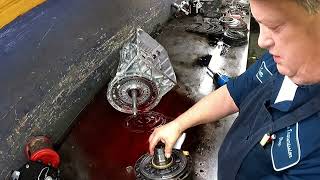
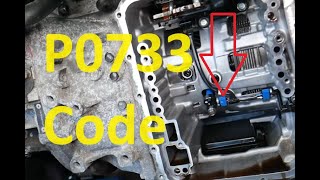
![What is P0733 Engine Code [Quick Guide]](https://img.youtube.com/vi/Q9QGWpw5pqs/mqdefault.jpg)

We Have This Part in Stock


The information in this article is provided for general reference and educational purposes only. Vehicle specifications, procedures, and part compatibility can vary by production date, trim level, and region. Always consult your vehicle's factory service manual and verify part numbers before purchasing or performing repairs. Safety-critical components such as airbags, seat belts, and braking systems should be installed by a qualified professional.
- Porsche Cayenne:
- 🧭 Diagnostic Flowchart
- 🎬 Helpful Videos
- 🛍️ Shop This Part
- What's Unique About the 2003-2010 Porsche Cayenne
- Symptoms You May Notice
- Most Likely Causes
- Rare But Worth Checking
- Diagnosis Steps
- Parts You'll Likely Need
- Related Codes That Often Appear With This One
- Technical Service Bulletins (TSBs) & Recalls
- Platform-Specific Known Issues
- Mechanic-Grade Diagnostic Values
- Scan Tool Commands That Help
- Wiring & Ground Locations
- Real Owner Repair Stories
- OEM Part Supersession History
- Model Year Variations Within This Range
- Other Known Issues on This Vehicle
- Used vs. New Parts: Buying Guide for This Vehicle
- Related OBD-II Codes
- Frequently Asked Questions
- 🎟️ Get 5% Off