

P0736 on 2018-2023 Lincoln Navigator: Reverse Gear Incorrect Ratio Causes and Fixes
On a 2018-2023 Lincoln Navigator, P0736 almost always indicates a serious internal issue with the 10R80 transmission. The most likely causes are a faulty main control valve body or a failed CDF clutch drum, both of which are known issues often documented in Lincoln/Ford Technical Service Bulletins (TSBs). A repair typically requires transmission removal and replacement of the failed component with an updated part.
- P0736 on a 2018-2023 Navigator indicates a serious internal transmission problem, not a simple sensor issue.
- The first diagnostic step should be to check for and apply any available TCM/PCM software updates from a dealer, as this is the least invasive potential fix.
- The most common mechanical failures are a faulty main control valve body or a failed CDF clutch drum, both of which are known issues with the 10R80 transmission.
- This is not a DIY-friendly repair. You will need a professional transmission shop with experience on the Ford 10R80 to diagnose and fix the problem correctly.
What's Unique About the 2018-2023 Lincoln Navigator
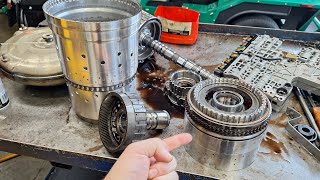
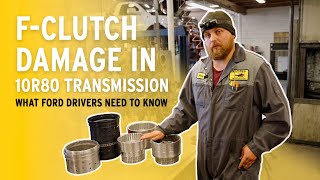
The 2018-2023 Navigator uses the Ford/Lincoln 10R80 10-speed automatic transmission, which has well-documented issues that can cause a P0736 code. Unlike generic transmission problems, this code on the 10R80 frequently points to one of two specific mechanical failures: sticking valves in the main control valve body or, more seriously, the axial movement of the CDF (Clutch D/E/F) clutch cylinder sleeve, which causes a major internal hydraulic leak. Ford has released numerous TSBs, with 24-2046 being the most current, to address these known problems 🎬 Watch: Learn about common 10R80 transmission failures and problems. which often require significant mechanical repair.
Symptoms You May Notice
- Check Engine Light is on
- Transmission will not shift into reverse at all
- Significant delay (2-5 seconds) before reverse engages, sometimes requiring higher RPM
- Harsh, clunking, or grinding noise when shifting into reverse
- Transmission slipping while in reverse
- Inability to back the vehicle up
- Replacing transmission speed sensors. On the 10R80 transmission, a P0736 code is very rarely caused by a faulty sensor; it is almost always a mechanical or hydraulic fault within the transmission, confirmed by TSBs and repair shop experiences.
- Performing only a transmission fluid and filter change. If the code is being caused by a failed CDF drum or a faulty valve body, a fluid change will not solve the problem and the code will return quickly. It is a wasted expense if metal debris is present.
Most Likely Causes
- Internal Mechanical Failure (CDF Clutch Drum) 🔴 High Probability A widely documented failure point on the 10R80 transmission is the bushing/sleeve for the 'CDF' (Clutch D, E, F) clutch cylinder. This sleeve can "walk out" of its bore, uncovering a hydraulic circuit and causing a massive internal pressure leak that prevents the reverse clutch from engaging. This is explicitly mentioned in Ford TSB 24-2046 and older bulletins.
How to confirm: This requires transmission disassembly and inspection. A technician will look for the out-of-position sleeve on the CDF drum. 🎬 Watch: See a teardown of the CDF drum bushing failure. Updated parts have a staked-in bushing or a machined lip to prevent this failure.
Typical fix: The transmission must be removed and partially rebuilt to replace the CDF drum with an updated part (OEM part # JL3Z-7D391-A). All contaminated fluid and debris must be cleaned from the system, and the torque converter is often replaced as a precaution.
Est. part cost: $450-$900 - Faulty Main Control Valve Body 🟡 Medium Probability → Shop Transmission Valve Body Sticking valves in the main control (valve body) are a known issue on the 10R80, as noted in multiple TSBs like 24-2046. Debris from normal wear or the initial stages of a CDF drum failure can cause valves to hang up, preventing correct hydraulic pressure from being routed to engage reverse.
How to confirm: A technician may first attempt a 'Transmission Accelerated Main Control Break In' procedure outlined in TSBs using the FDRS scan tool. If that fails, or if guided diagnostics point to it, the valve body must be removed for inspection, overhaul, or replacement.
Typical fix: Replacement of the main control valve body assembly. The transmission pan is dropped, the old valve body is removed, and a new one is installed. A common part number is JL1Z-7A100-A for the Navigator/Expedition. The new valve body's solenoid strategy must be programmed into the TCM using FDRS.
Est. part cost: $800-$1800 - PCM/TCM Software Issue ⚪ Low Probability Ford has issued TSBs stating that shift quality issues can be caused by software logic. However, for a hard fault code like P0736, a software update is unlikely to be the sole fix. It is typically performed as a first step or in conjunction with a mechanical repair.
How to confirm: A Ford/Lincoln dealership or a qualified shop with access to the Ford Diagnostic and Repair System (FDRS) can check the current software calibration and see if an update is available per TSB 24-2046.
Typical fix: Reprogramming the Powertrain Control Module (PCM) or Transmission Control Module (TCM) to the latest software version. This will not fix a mechanical failure.
Est. part cost: $100-$300 - Low or Contaminated Transmission Fluid ⚪ Low Probability → Shop Transmission Assembly While this can cause issues on any automatic transmission, it's a less likely root cause for a P0736 on the 10R80 unless there is a significant external leak. More often, contaminated, burnt, or glittery fluid is a *symptom* of the internal mechanical failure (like the CDF drum) shedding clutch and metal material.
How to confirm: Check the transmission fluid level and condition. The 10R80 does not have a traditional dipstick, so this must be done by a technician from under the vehicle. The fluid must be at the correct level and should be red and clear, not dark, burnt-smelling, or full of metallic particles.
Typical fix: If the fluid is just low, top it off with the correct Motorcraft MERCON ULV fluid and check for leaks. If the fluid is heavily contaminated, a simple fluid change will not fix the underlying mechanical damage and the transmission requires disassembly.
Est. part cost: $20-$60
Diagnosis Steps
- Scan for all diagnostic trouble codes. Note if other gear ratio codes (P0731-P0735, etc.) or the Ford-specific P1701 are present, as this reinforces a mechanical failure diagnosis.
- Check for applicable Technical Service Bulletins (TSBs) based on the vehicle's VIN. TSB 24-2046 is the primary document for diagnosing this code.
- Check for available PCM/TCM software updates using Ford's FDRS. This is a common first step recommended by TSBs, but expect it not to be the final solution for P0736.
- With the vehicle on a lift, check the transmission fluid level and condition. The fluid must be Motorcraft MERCON ULV. Look for a burnt smell or metallic particles, which indicate internal damage.
- If fluid is full and clean and software is updated, diagnosis proceeds to the main control valve body per the diagnostic procedure in TSB 24-2046, which may include running the 'Transmission Accelerated Main Control Break In' command.
- If the valve body is not the cause, the transmission must be removed from the vehicle for inspection and replacement of the CDF clutch drum assembly.
Parts You'll Likely Need
- CDF Clutch Drum Assembly (Updated)
(OEM #JL3Z-7D391-A)— The sleeve in the original drum (HL3Z-7D391-A) can walk out, causing a major hydraulic leak. Replacement with this updated, staked-bushing or machined-lip drum is required for a permanent fix.
Trusted brands: Motorcraft
OEM price range: $450-$900
Aftermarket price range: $350-$700 - Transmission Main Control Valve Body
(OEM #JL1Z-7A100-A)— A common failure point on the 10R80, where internal valves stick, causing hydraulic pressure issues. Replacement is often required if a software update and break-in procedure fail.
Trusted brands: Motorcraft
OEM price range: $1000-$1800
Aftermarket price range: $700-$1400 - Motorcraft MERCON ULV Automatic Transmission Fluid
(OEM #XT-12-QULV)— This is the only specified fluid for the 10R80 transmission. Using any other fluid can cause damage. A full fluid replacement (approx. 13 quarts) is required for any internal repair.
Trusted brands: Motorcraft
OEM price range: $15-$25 per quart
Related Codes That Often Appear With This One
- P0731-P0735 — These codes indicate incorrect ratios for forward gears. If they appear with P0736, it strongly points to a systemic problem like a failing valve body or a CDF drum failure affecting multiple clutch packs, as all are listed in TSB 24-2046.
- P0729, P076F, P07D9, P07F6, P07F7 — These are incorrect ratio codes for gears 6 through 10. Their presence with P0736 confirms a major hydraulic or mechanical failure affecting the entire transmission, not an isolated issue.
- P1701 — This is a Ford-specific code for 'Reverse Engagement Error'. It is a direct companion to the generic P0736 code and points to the exact same set of underlying mechanical or hydraulic issues within the 10R80.
Technical Service Bulletins (TSBs) & Recalls
- TSB 24-2046: The most current and comprehensive bulletin. It directly lists P0736 and attributes the cause to sticking valves in the main control valve body and/or axial movement of the CDF clutch cylinder sleeve. It provides the full diagnostic and repair procedure.
- SSM 47755: A Special Service Message that specifically calls out the CDF clutch sleeve walking out of the drum, causing a no reverse condition and setting DTC P0736.
- TSB 23-2302: Addresses general harsh/delayed shifts. Important
Platform-Specific Known Issues
- Multiple Ford/Lincoln TSBs have been issued for the 10R80 transmission addressing harsh shifts, delayed engagement, and various gear ratio codes including P0736. The root causes are consistently identified as either software, the main control valve body, or the CDF clutch drum sleeve.
Mechanic-Grade Diagnostic Values
- Shift Solenoid (A-F) Coil Resistance — expected: 5.0 - 5.4 Ohms at 68°F (20°C). Failure: A reading outside this range, or an open/infinite reading, indicates a faulty solenoid coil.
Hidden / Shadow Codes Worth Checking
- P1701: Reverse Engagement Error. This is a Ford-specific DTC that is more direct than the generic P0736 and often appears alongside it, confirming the fault is specific to the reverse command. (see via A professional scan tool with access to Ford-specific codes, such as Ford's IDS/FDRS or a high-end aftermarket scanner.)
Scan Tool Commands That Help
- Ford FDRS/IDS: PCM - Transmission Accelerated Main Control Break In — This procedure, mentioned in TSBs, is used to attempt to free sticking valves in the main control valve body before resorting to a costly replacement.
- Ford FDRS/IDS, FORScan: Clear Transmission Adaptive Tables — This is a mandatory step after any transmission repair, including valve body or CDF drum replacement. It erases the TCM's learned shift pressures and forces a relearn process.
- Ford FDRS/IDS: Solenoid Body Strategy Download — This is required when a new main control (valve body) is installed. The technician must enter the 13-digit solenoid characterization ID that comes with the new part to ensure the TCM can control it correctly.
Real Owner Repair Stories
- Reddit user on r/f150 (2018 Ford F-150 with 145k miles) — Crazy shifting problems, floating between gears and then slamming into another.
❌ Tried (didn't work) Transmission relearn procedure, Replacement of the main control valve body
✅ What actually fixed it The ultimate cause was the CDF drum failure. The user found the relevant TSB which confirmed the diagnosis, and the fix was to replace the CDF drum assembly. - Ford F150 Forum user (2018 Ford F-150 3.5L EcoBoost with 47k miles) — Rough 3-4 shifts while towing and sporadic clunking. Described as inconsistent shifting that the TCM couldn't adapt to.
❌ Tried (didn't work) Initial diagnosis pointed towards software or valve body, but the mechanic determined the root cause was internal.
✅ What actually fixed it The transmission was rebuilt under extended warranty. The cause was confirmed to be the CDF sleeve moving, causing pressure variations. The rebuild with updated parts resolved the inconsistent shifting.
OEM Part Supersession History
HL3Z-7D391-A→JL3Z-7D391-A— The original CDF clutch drum design had a press-fit bushing/sleeve that was prone to 'walking out' of its bore. The updated part (JL3Z-7D391-A) and subsequent revisions feature a machined lip or are staked to physically prevent the sleeve from moving, providing a permanent fix to the hydraulic leak issue.
Model Year Variations Within This Range
- 2018-2022 (mid-year): Vehicles built on or before August 15, 2022, were likely equipped with the original, failure-prone CDF clutch drum. Vehicles built after this date are more likely to have the updated drum from the factory, reducing the probability of this specific failure. A dealer can check the vehicle's build date by VIN to help determine which version it has.
Diagnostic Flowchart
Other Known Issues on This Vehicle
Issues unrelated to this code that are worth knowing about as an owner of this generation:
- 3.5L EcoBoost Cam Phaser Rattle on Cold Start 🔴 High — Very common on 2017-2020 models, typically appearing between 40,000-80,000 miles. A rattling noise lasting 2-5 seconds after a cold start is the primary symptom. (Ref: Ford Customer Satisfaction Program 21N03 and TSB 23-2143 address this by replacing the original VCT cam phasers with updated parts.)
- Harsh/Erratic Shifting and Engagement 🟠 Medium — Widespread characteristic of the 10R80 transmission, often described as 'busy' shifting, clunky low-speed downshifts, or delayed engagement into Drive. Not always indicative of a failure, but a common owner complaint. (Ref: Multiple TSBs (e.g., 23-2302) have been released with software updates to the PCM/TCM to improve the adaptive learning shift strategy.)
- SYNC 3 Infotainment System Glitches 🟡 Low — Owners report occasional issues with the infotainment screen freezing, becoming unresponsive to touch, or going black, often requiring a system reset. (Ref: Various software updates have been released to improve stability. Some TSBs like 23-2104 address related module communication issues.)
Used vs. New Parts: Buying Guide for This Vehicle
When a used part is the smart pick: For this specific repair, sourcing a complete used transmission from a late-model (late-2022 or newer) donor vehicle that was wrecked with low mileage can be a viable option. This increases the chance of getting a unit with the factory-updated CDF drum. A used valve body is generally not recommended due to the high failure rate and the need for specific programming.
Donor-vehicle mileage cap: roughly under 40000 miles for the part to have meaningful remaining life.
What to inspect on the donor part:
- Verify the donor vehicle's build date is after August 2022 to maximize the chance of getting an updated CDF drum.
- Check the CARFAX or service history for any prior transmission repairs. A previous CDF drum replacement with the updated part is a positive sign.
- Inspect the fluid if possible. It should be bright red and clear, not dark, burnt, or containing glittery metal particles.
- Look for a warranty from the salvage yard, even if it's only 30-90 days.
OEM-only on this vehicle (don't cheap out):
- CDF Clutch Drum Assembly: While aftermarket solutions exist, the Ford OEM updated part (JL3Z-7D391-A) is the most proven and reliable fix.
- Main Control Valve Body: Due to the complex electronics and requirement for solenoid strategy programming, a new or Ford-remanufactured OEM valve body is the safest choice to avoid compatibility issues.
- Transmission Fluid: Only use Motorcraft MERCON ULV (XT-12-QULV). Use of any other fluid type can cause severe damage.
Aftermarket brands forum-validated for this vehicle:
- For complete transmission replacement, companies like Tier One and Monster Transmission offer 'built' units with upgraded components designed to exceed OEM specifications, which is a good option for performance or heavy-towing applications.
Brands owners have reported issues with on this vehicle:
- Unbranded, low-cost valve bodies from online marketplaces should be avoided. They often have incorrect solenoid characterization, leading to immediate shifting problems and are a common source of frustration for technicians.
Real Owner Stories
Aggregated from forums and TSBs cited above. Mileages and costs reflect what owners reported in those sources.
2018 F-150
Symptoms: No reverse, check engine light on with code P0736.
What fixed it: The issue was diagnosed as the common CDF drum failure, which required a dealer repair involving transmission removal.
Cost: $4000-$5000
Source hint: f150forum.com thread titled '2018 F150 10 speed no reverse check engine light p0736'
2018 Expedition
Symptoms: A sudden and complete loss of the ability to shift into reverse.
What fixed it: The dealer diagnosed the CDF clutch bushing as the cause, which necessitated removing the transmission to perform the repair.
Source hint: expeditionforum.com thread titled '2018 Expedition No Reverse'
F-150
Symptoms: Vehicle would not go into reverse and had a P0736 code stored.
What fixed it: The problem was identified as the well-known CDF drum bushing failure, which is the common culprit for this specific symptom.
Source hint: f150forum.com thread titled 'No Reverse P0736 Code'
Related OBD-II Codes
Frequently Asked Questions
What is the main Technical Service Bulletin (TSB) I should reference for a P0736 code on my 2019 Lincoln Navigator?
My dealer wants to perform a software update first. Is that likely to fix the 'no reverse' issue?
What exactly is the 'CDF drum failure' that is so common on the 10R80 transmission?
If the CDF drum needs to be replaced, is there an updated part number I should ensure my mechanic uses?
Is it possible the valve body is the cause of my P0736 code instead of the CDF drum?
I have a 2018 Ford Expedition with the same symptoms and code. Does this information apply to my vehicle?
What type of transmission fluid should be used in my Navigator's 10R80 transmission?
Helpful Videos
We Have This Part in Stock

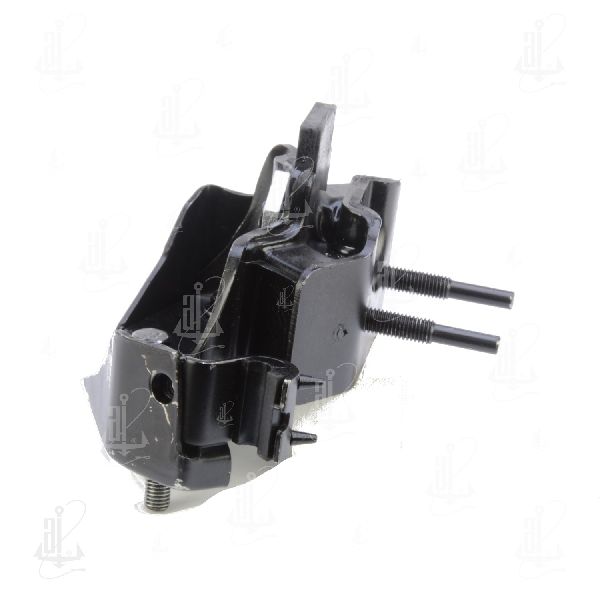

The information in this article is provided for general reference and educational purposes only. Vehicle specifications, procedures, and part compatibility can vary by production date, trim level, and region. Always consult your vehicle's factory service manual and verify part numbers before purchasing or performing repairs. Safety-critical components such as airbags, seat belts, and braking systems should be installed by a qualified professional.
- Lincoln Navigator:
- 🧭 Diagnostic Flowchart
- 🎬 Helpful Videos
- 🛍️ Shop This Part
- What's Unique About the 2018-2023 Lincoln Navigator
- Symptoms You May Notice
- Most Likely Causes
- Diagnosis Steps
- Parts You'll Likely Need
- Related Codes That Often Appear With This One
- Technical Service Bulletins (TSBs) & Recalls
- Platform-Specific Known Issues
- Mechanic-Grade Diagnostic Values
- Hidden / Shadow Codes Worth Checking
- Scan Tool Commands That Help
- Real Owner Repair Stories
- OEM Part Supersession History
- Model Year Variations Within This Range
- Other Known Issues on This Vehicle
- Used vs. New Parts: Buying Guide for This Vehicle
- Real Owner Stories
- 2018 F-150
- 2018 Expedition
- F-150
- Related OBD-II Codes
- Frequently Asked Questions
- 🎟️ Get 5% Off