

P0740 on 2004-2008 Mazda RX-8: Torque Converter Clutch Circuit Malfunction Guide
On a 2004-2008 Mazda RX-8, code P0740 typically points to a faulty Torque Converter Clutch (TCC) solenoid inside the transmission. This is an electrical fault code, but can sometimes be triggered by internal mechanical transmission problems like a worn clutch pack or failing torque converter. Replacing the solenoid is a common fix, but thorough diagnosis is key to avoid repeat failures.
- P0740 on a Mazda RX-8 indicates an electrical fault in the torque converter clutch solenoid circuit.
- The most common causes are a failed TCC solenoid, bad wiring, or low/dirty transmission fluid.
- While it's an electrical code, it can sometimes be a symptom of a more serious internal mechanical problem in the transmission.
- Diagnosis should begin with checking fluid and wiring before condemning the solenoid.
- Due to the complexity and risk of misdiagnosis, professional service is highly recommended for this repair.
What's Unique About the 2004-2008 Mazda RX-8
The 2004-2005 Mazda RX-8 (Series 1) uses a specific 4-speed automatic transmission, the RC4A-EL, which is Mazda's designation for a variant of the Aisin-Warner AW-4. While P0740 is a generic code, owner experiences on this platform show that it can be a precursor to more significant transmission issues. In some cases, replacing the TCC solenoid does not fix the problem, and the code returns because of an underlying mechanical failure, such as a worn internal clutch pack or a failing torque converter bearing that contaminates the system with debris. This makes proper diagnosis crucial before simply replacing parts.
Symptoms You May Notice
- Check Engine Light is on
- AT (Automatic Transmission) warning light may be on
- Reduced fuel economy
- Transmission may not shift into the highest gear or may feel like it's slipping at highway speeds
- Engine RPMs are higher than usual at cruising speed
- Vehicle may stall when coming to a stop (if the TCC is stuck engaged)
- Harsh or delayed shifts
- Replacing the torque converter when the issue is only a bad solenoid or wiring.
- Replacing the TCC solenoid when the true cause is a worn internal clutch pack causing slippage, which the computer misinterprets as a TCC circuit fault.
Most Likely Causes
- Failed Torque Converter Clutch (TCC) Solenoid 🔴 High Probability → Shop Automatic Transmission Torque Converter Solenoids are electro-mechanical parts that wear out over time from heat and constant use. It is the most cited cause for a circuit malfunction code.
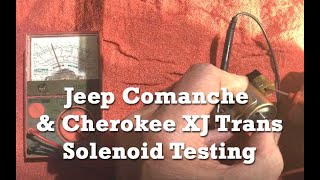
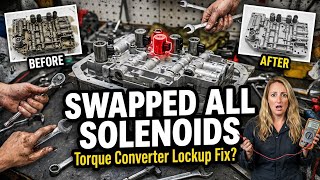
How to confirm: Using a multimeter, test the resistance of the solenoid. 🎬 Watch: How to test and remove solenoids on an AW4 transmission. According to service documentation, the resistance should be between 11.6-16.6 ohms. This can be tested at the transmission's main electrical connector before removing the pan. An infinite reading indicates an open circuit. A scan tool can also be used to command the solenoid on/off to check for an audible click or change in operation, 🎬 Watch: Testing results after a TCC solenoid swap. though bidirectional support on this model is limited.
Typical fix: Replace the TCC solenoid (also called the Lock-Up Solenoid), which is located inside the transmission on the valve body. This requires draining the fluid and removing the transmission pan.
Est. part cost: $50-$150 - Low or Dirty Transmission Fluid 🟡 Medium Probability → Shop Transmission Assembly Neglected maintenance can lead to fluid breakdown, which causes poor hydraulic pressure and can clog solenoid passages or cause overheating.
How to confirm: Check the transmission fluid dipstick for level and condition. The fluid should be at the correct level, pink/red in color, and not smell burnt. Dark, burnt fluid indicates a problem and likely internal wear.
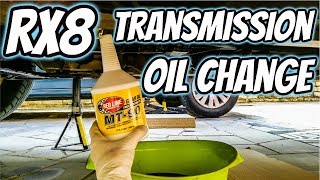
Typical fix: Perform a transmission fluid and filter change. If the fluid is very dirty, a full flush may be recommended by a professional. Ensure Mazda M-V (Type M5) or a compatible equivalent fluid is used. 🎬 See this step-by-step guide for changing your RX-8 transmission fluid.
Est. part cost: $75-$200 for fluid and filter - Damaged Wiring or Connectors 🟡 Medium Probability The wiring harness to the transmission is exposed to heat and road debris, which can cause wires to fray, break, or connectors to become corroded.
How to confirm: Visually inspect the external wiring harness leading to the transmission for any signs of damage. Check for continuity and voltage at the connector for the TCC solenoid circuit using a multimeter and a wiring diagram. The TCC solenoid wire can be traced from terminal 2W at the TCM.
Typical fix: Repair the damaged section of wire or replace the faulty connector.
Est. part cost: $10-$50 - Internal Transmission Mechanical Failure ⚪ Low Probability → Shop Transmission Assembly Forum discussions indicate that sometimes P0740 is a symptom of a larger problem. A failing torque converter bearing can send metal shavings into the valve body, clogging passages, or a worn internal clutch pack can cause slipping that the PCM misinterprets as a TCC circuit fault.
How to confirm: This is difficult to confirm without professional tools. A transmission specialist can use a scan tool to monitor torque converter slip speed and line pressures. A high slip rate when lock-up is commanded points to a mechanical issue. One owner reported a shop diagnosed a worn 1st gear clutch pack as the root cause after solenoid replacement did not fix the issue.
Typical fix: This often requires a transmission rebuild or replacement.
Est. part cost: $2000-$4000+
Rare But Worth Checking
- Faulty Powertrain Control Module (PCM): → Shop Engine Control Module (ECM) This is very rare. The PCM should only be considered after all other possibilities, including solenoids, wiring, and internal transmission mechanics, have been exhaustively ruled out.
Diagnosis Steps
- Read the code with an OBD-II scanner and document any other codes present.
- Check the transmission fluid level and condition. If low, top it off. If dark, burnt, or contains metal shavings, suspect internal transmission damage.
- Visually inspect the transmission wiring harness and connectors for any obvious damage, corrosion, or loose connections.
- Use a professional scan tool to monitor live data. Observe the PCM's command for the TCC solenoid and the actual torque converter slip RPM. A slip rate over 100 RPM when lockup is commanded can indicate a problem.
- If possible, use the scan tool to manually command the TCC solenoid on and off to see if it responds. Note that bidirectional support on this platform is limited.
- Before dropping the pan, test the TCC solenoid resistance at the main transmission connector. Using a multimeter and wiring diagram, check the resistance between the appropriate pin for the TCC solenoid (fed by TCM terminal 2W) and a good ground. It should be 11.6-16.6 ohms. If it is out of spec, the solenoid is faulty.
- If the external wiring and solenoid resistance test good, drop the transmission pan to access the internal components.
- Visually inspect the internal wiring harness for damage. Check for power and ground at the solenoid's connector inside the transmission to rule out an internal wiring issue.
- If the solenoid and all wiring are good, the problem is likely a mechanical issue within the valve body, the torque converter itself, or another internal transmission component. At this point, professional diagnosis is strongly recommended.
Parts You'll Likely Need
- Torque Converter Clutch (TCC) Solenoid
(OEM #RC4A-SOL03 (Component Part Number))— This solenoid is the most common electrical failure point in the TCC circuit that triggers code P0740. Mazda may not sell this part individually, requiring purchase of a solenoid pack.
Trusted brands: Rostra (P/N: 52-0484 for Lock-Up Solenoid), Sonnax, Standard Motor Products (P/N: TCS386)
OEM price range: $150-$300 (for pack)
Aftermarket price range: $50-$150 (for single solenoid) - Automatic Transmission Fluid (ATF)
(OEM #0000-77-112E-01 (for 1 Quart bottle of Mazda ATF M-V))— Fluid must be replaced when the transmission pan is removed to service the solenoid. Use a fluid that meets Mazda M-V (Type M5) specifications.
Trusted brands: Mazda Genuine ATF M-V, Idemitsu Type-M, Castrol Transmax Full Synthetic Multi-Vehicle
OEM price range: $15-$25 per quart
Aftermarket price range: $10-$18 per quart - Transmission Pan Gasket — The gasket should always be replaced when the transmission pan is removed to prevent leaks.
Trusted brands: Fel-Pro, Mahle, OEM Mazda
OEM price range: $20-$40
Aftermarket price range: $10-$25
Related Codes That Often Appear With This One
- P0741 — P0741 indicates 'TCC System Stuck Off', which can be a related performance issue, whereas P0740 is a purely electrical circuit fault.
- P0742 — P0742 indicates 'TCC System Stuck On', which is the opposite performance fault of P0741 but is related to the same system.
Technical Service Bulletins (TSBs) & Recalls
- TSB 05-001/05: Addresses harsh shifts and other AT issues on some 2004-2005 models via a TCM software update (reprogramming). While not directly for P0740, it relates to the overall electronic control of the transmission.
- TSB 05-004/08: Details the 'TRANSMISSION OIL COOLER FLUSHING PROCEDURE'. This is a critical procedure that must be performed after any repair involving internal transm
Platform-Specific Known Issues
- Secondary Failure Due to Torque Converter Debris: → Shop Automatic Transmission Torque Converter In some RX-8s, the P0740 code is not the primary problem but a symptom. A failing bearing in the torque converter can release metallic debris into the transmission fluid. This debris then circulates and clogs the fine passages in the valve body and can cause the TCC solenoid to stick or fail electrically. In this scenario, just replacing the solenoid will not be a permanent fix, as the new solenoid will soon be contaminated as well. This is why checking the fluid for metallic content is a critical diagnostic step.
Mechanic-Grade Diagnostic Values
- TCC Solenoid Valve Resistance — expected: 11.6 - 16.6 ohms. Failure: A reading outside this range, or infinite resistance (open circuit), indicates a faulty solenoid.
- TCC Solenoid Valve Current (via scan tool) — expected: Greater than 200mA when commanded ON. Failure: Current below 200mA for 5+ seconds when commanded ON will trigger the DTC P0740.
- Torque Converter Slip Speed (Live Data) — expected: Near 0 RPM when TCC is commanded to lock at cruising speed.. Failure: A consistent slip of over 100 RPM when lock-up is commanded suggests a mechanical issue with the clutch or torque converter, not necessarily an electrical one.
Scan Tool Commands That Help
- Mazda IDS (Integrated Diagnostic System): TCM Live Data Monitoring (PIDs) — Use to monitor TCC solenoid command state (On/Off), TCC duty cycle (%), and torque converter slip speed (RPM) to verify if the computer is commanding lock-up and if the transmission is responding mechanically.
- Mazda IDS (Integrated Diagnostic System): TCM Reprogramming / Re-flash — If a Technical Service Bulletin (TSB) indicates that updated software is available to fix control logic issues. TSB 05-001/05 addresses shift quality on 2004-2005 models and is an example of such a re-flash.
Wiring & Ground Locations
- TCM Pin 2W — At the Transmission Control Module (TCM) connector.. This is the specific terminal that sends the control signal to the TCC solenoid valve. Testing for voltage here and checking continuity from this pin to the transmission connector is a key step in diagnosing a circuit fault.
- Engine Block / Transmission Case Ground — The transmission case itself grounds to the engine block, which is then grounded to the chassis via straps.. A poor engine-to-chassis ground can cause intermittent and strange electrical behavior in all transmission solenoids, including the TCC solenoid. The starter also grounds through this path.
- Chassis Grounds under Airbox/Battery — On the crossmember located beneath the battery tray and airbox assembly.. These are major chassis ground points for the engine bay wiring harness. Corrosion here can affect various systems, including the TCM and its sensor inputs.
Real Owner Repair Stories
- RX8Club.com user 'AMCsellout?' (2004 Mazda RX-8 (Automatic)) — Check Engine Light with code P0740.
❌ Tried (didn't work) Replacing the TCC solenoid. The P0740 code returned after replacement.
✅ What actually fixed it A professional transmission shop diagnosed a worn 1st gear clutch pack. The transmission was slipping mechanically, which the PCM misinterpreted as a torque converter lock-up failure, triggering the P0740 circuit code. The final fix was a complete transmission rebuild, which cost approximately $3,000. - NHTSA ODI #10537207 — While reported on a different Mazda model (Tribute), an owner described receiving the "dreaded news" of a P0740 code along with four other transmission-related codes, which resulted in the vehicle failing to move properly after coming to a stop at a red light.
"I Checked Everything" — The Actual Cause
- While not a smoke test issue, a similar pattern exists for P0740. A technician can perform all electrical checks—verifying wiring continuity from the TCM, checking for shorts, and confirming the TCC solenoid's resistance is within spec (11.6-16.6 ohms)—and find no faults. However, the code may still persist. The actual cause, as seen in a real repair story, can be internal mechanical slippage from a worn clutch pack that the computer misinterprets as an electrical circuit problem. This mechanical slip is invisible to a multimeter and requires a scan tool to observe slip data or a professional teardown to identify.
When the Usual Fixes Don't Work
- The most common fix for P0740 is replacing the TCC solenoid. However, there is strong forum evidence of this repair failing to solve the problem. In one documented case, a 2004 RX-8 had the P0740 code return immediately after a solenoid replacement. The root cause was not in the TCC circuit at all, but a worn-out 1st gear clutch pack inside the transmission. The resulting slippage was flagged by the PCM as a TCC fault. The only permanent solution was a full transmission rebuild. This highlights the importance of not blindly replacing the solenoid based on the code definition alone.
Model Year Variations Within This Range
- 2004-2005 (North America): These models were equipped with the 4-port engine and the 4-speed RC4A-EL automatic transmission, to which this guide is most applicable.
- 2006-2008: Models with an automatic transmission in this period received a 6-port engine and a new 6-speed automatic. While they can still log a P0740 code, the internal components, solenoids, and valve body are different from the 4-speed, so diagnosis and parts will vary.
Diagnostic Flowchart
Other Known Issues on This Vehicle
Issues unrelated to this code that are worth knowing about as an owner of this generation:
- Apex Seal Failure / Low Engine Compression 🔴 High — A well-known and critical issue for rotary engines. Risk increases significantly after 80,000 miles, but can happen earlier due to poor maintenance or other system failures. Symptoms include difficulty starting when hot, rough idle, and a noticeable loss of power.
- Ignition System Failure (Coils, Plugs, Wires) 🟠 Medium — Very common. Coils, plugs, and wires are considered a frequent maintenance item, often requiring replacement every 30,000 miles. A weak ignition system leads to unburnt fuel, which can destroy the catalytic converter and accelerate engine wear.
- Weak/Slow Starter Motor 🟠 Medium — Early models (2003-2005) were equipped with a weaker 1.2kW starter motor that struggles to crank the engine fast enough, especially when hot or as the engine wears. This exacerbates hot start problems. Upgrading to the later, more powerful 2.0kW starter is a very common and recommended fix. (Ref: Mazda issued a service bulletin to allow owners to upgrade to a more powerful starter motor.)
- Engine Flooding 🟡 Low — Common if the engine is shut off before it has fully warmed up. Excess fuel can remain in the combustion chamber, preventing the engine from restarting. While not damaging, it requires a specific 'de-flooding' procedure to resolve.
- Catalytic Converter Failure 🔴 High — Often a direct consequence of a failing ignition system. Unburnt fuel from misfires overheats and melts the internal structure of the catalytic converter, causing a severe exhaust blockage and loss of power.
Used vs. New Parts: Buying Guide for This Vehicle
When a used part is the smart pick: For a complex internal repair where a full transmission rebuild is quoted at $3,000+, sourcing a complete, low-mileage used transmission from a reputable auto recycler can be a viable, cost-effective alternative. Individual used solenoids are generally not recommended due to the high labor cost to install them.
Donor-vehicle mileage cap: roughly under 70000 miles for the part to have meaningful remaining life.
What to inspect on the donor part:
- Verify the donor vehicle's mileage.
- If possible, check the transmission fluid on the donor unit; it should be reddish and not smell burnt.
- Ask for any available service history for the donor car.
- Source from a recycler that offers a warranty (e.g., 60-90 days) on used mechanical parts.
OEM-only on this vehicle (don't cheap out):
- Complete Transmission Assembly (Used OEM is often preferable to a low-quality aftermarket rebuild)
- Transmission Control Module (TCM) - must be compatible with the vehicle's specific year and configuration.
Aftermarket brands forum-validated for this vehicle:
- Sonnax (for valve body repair kits and upgraded components)
- Rostra (for individual solenoids)
- Standard Motor Products (for individual solenoids)
Brands owners have reported issues with on this vehicle:
- Dorman (A user review reported a Dorman replacement TCC solenoid failed shortly after installation, causing the code to return)
Real Owner Stories
Aggregated from forums and TSBs cited above. Mileages and costs reflect what owners reported in those sources.
2004-2008 Mazda RX-8 1.3L Rotary
Symptoms: The owner experienced a P0740 code and replaced the TCC solenoid, but the code returned shortly after.
What fixed it: A professional diagnosis revealed a worn 1st gear clutch pack was causing slippage that the computer misinterpreted as a TCC circuit fault.
Source hint: rx8club.com: 'Failed TCC solenoid : code P0740'
2004-2008 Mazda RX-8 1.3L Rotary
Symptoms: The P0740 code appeared specifically alongside the 'AT' (Automatic Transmission) warning light.
What fixed it: Testing the solenoids via the main transmission connector to confirm an electrical fault before proceeding with solenoid replacement.
Source hint: rx8club.com: 'P0740 and AT light'
Related OBD-II Codes
Frequently Asked Questions
Is there a TSB for transmission issues on my 2004-2005 Mazda RX-8?
What is the correct transmission fluid for the RX-8 RC4A-EL transmission?
How can I test the TCC solenoid on my RX-8 without removing the transmission pan?
Can engine issues like low compression cause transmission codes on the RX-8?
What should I do if I find metal shavings in my transmission fluid while diagnosing P0740?
Is the RX-8 transmission related to any other vehicles?
Helpful Videos
We Have This Part in Stock




The information in this article is provided for general reference and educational purposes only. Vehicle specifications, procedures, and part compatibility can vary by production date, trim level, and region. Always consult your vehicle's factory service manual and verify part numbers before purchasing or performing repairs. Safety-critical components such as airbags, seat belts, and braking systems should be installed by a qualified professional.
- Mazda RX-8:
- 🧭 Diagnostic Flowchart
- 🎬 Helpful Videos
- 🛍️ Shop This Part
- What's Unique About the 2004-2008 Mazda RX-8
- Symptoms You May Notice
- Most Likely Causes
- Rare But Worth Checking
- Diagnosis Steps
- Parts You'll Likely Need
- Related Codes That Often Appear With This One
- Technical Service Bulletins (TSBs) & Recalls
- Platform-Specific Known Issues
- Mechanic-Grade Diagnostic Values
- Scan Tool Commands That Help
- Wiring & Ground Locations
- Real Owner Repair Stories
- "I Checked Everything" — The Actual Cause
- When the Usual Fixes Don't Work
- Model Year Variations Within This Range
- Other Known Issues on This Vehicle
- Used vs. New Parts: Buying Guide for This Vehicle
- Real Owner Stories
- 2004-2008 Mazda RX-8 1.3L Rotary
- 2004-2008 Mazda RX-8 1.3L Rotary
- Related OBD-II Codes
- Frequently Asked Questions
- 🎟️ Get 5% Off