

P0741 on 2005-2014 Chrysler 300: Torque Converter Clutch Fixes
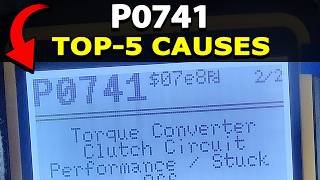
P0741 on a Chrysler 300 means the torque converter clutch is failing to lock up. This is often caused by a faulty TCC solenoid, worn valve body, or the torque converter itself. Start by checking transmission fluid level and condition, but expect a potential repair involving internal transmission components. On the common 5-speed NAG1, the conductor plate which houses the solenoids is a primary suspect.
- P0741 on your Chrysler 300 means the torque converter isn't locking up as it should, leading to poor fuel economy and extra heat.
- Always start diagnosis by checking the transmission fluid level and condition. For the NAG1 transmission, you will need a special dipstick tool.
- The most common fixes involve replacing the transmission conductor plate, the valve body, or the torque converter itself.
- This is not a simple DIY fix for most people; professional service is recommended due to the need to access internal transmission parts.
- Do not ignore this code. The excess heat generated can quickly lead to much more severe and expensive transmission damage.
What's Unique About the 2005-2014 Chrysler 300
The 2005-2014 Chrysler 300 spans two generations and used different primary transmissions. First-generation models (2005-2010) and many second-gen V8s (2011-2014) feature the Mercedes-Benz sourced 5-speed automatic, known as the NAG1, W5A580, or Mercedes 722.6. Second-generation V6 models (and later V8s) began phasing in the ZF 8-speed automatic (e.g., 845RE, 8HP45) starting in the 2012 model year. While the root cause of P0741 (a failure in the torque converter lock-up system) is the same, the specific components are different. For the extremely common NAG1 transmission, diagnosis frequently points toward the conductor plate (which houses all solenoids and speed sensors), the valve body itself, or the torque converter.
Generation note: This guide covers the first generation (2005-2010, LX platform) and the early second generation (2011-2014, LD platform). The first generation primarily used the NAG1 5-speed automatic (W5A580). The second generation used both the NAG1 (mainly on V8s) and the newer ZF 8-speed automatic. While the causes are similar, the specific parts and part numbers will differ significantly between the 5-speed and 8-speed transmissions.
Symptoms You May Notice
- Check Engine Light is on
- Vehicle may feel like it's shuddering or vibrating at highway speeds, similar to driving over rumble strips
- Engine RPM is higher than usual at cruising speeds
- Noticeable decrease in fuel economy
- Transmission may feel like it's slipping or shifts may feel harsh/delayed
- In some cases, the engine may stall when coming to a stop if the clutch fails to disengage
- Replacing only the TCC solenoid when the issue is a worn bore in the valve body or a failing conductor plate.
- Assuming the transmission is completely failed and needs a full rebuild when the issue is a more serviceable component like the conductor plate or valve body.
- Replacing the torque converter without addressing fluid contamination, which can cause the new converter to fail prematurely.
Most Likely Causes
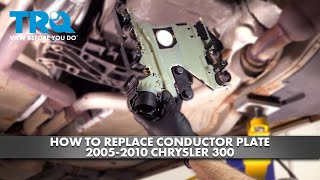
- Faulty Valve Body or Conductor Plate 🔴 High Probability → Shop Transmission Valve Body On the common NAG1 transmission, the conductor plate is a known high-failure item. It's a plastic circuit board sitting atop the valve body that houses all the solenoids and the input/output speed sensors. The plastic becomes brittle with heat and age, and the integrated speed sensors fail, leading to limp mode or shifting faults. The valve body itself can also have worn bores (e.g., TCC regulator valve bore) or sticking valves that prevent proper hydraulic pressure.
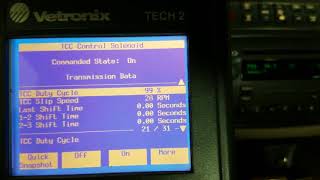
How to confirm: A technician can use a high-end scan tool to monitor TCC slip RPM and command the TCC solenoid on/off. If the solenoid is commanded but the slip doesn't change, and electrical circuits are good, the issue is likely hydraulic or mechanical within the valve body or converter. Air testing the passages with the valve body removed can also pinpoint leaks.
Typical fix: Replace the conductor plate. It is also common to replace the 13-pin electrical connector plug at the same time, as its O-rings are a known leak point. If valve body bores are worn, the valve body may need to be replaced or repaired with oversized valve kits from companies like Sonnax.
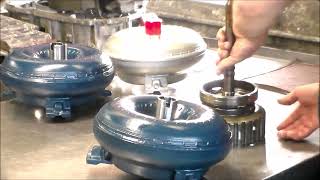
Est. part cost: $200-$600 - Worn or Failed Torque Converter 🔴 High Probability → Shop Automatic Transmission Torque Converter The internal clutch material within the torque converter can wear out over time, especially with high mileage, preventing it from locking up effectively. Debris from a failing converter can also contaminate the entire transmission.
How to confirm: This is typically diagnosed after ruling out all other possibilities (fluid, electrical, and valve body). If all other components are functioning correctly, the torque converter itself is the likely culprit. A worn hub on the converter can also cause a pressure leak at the input shaft seal, which can be diagnosed with an air test.
Typical fix: Replace the torque converter. This is a major repair that requires removing the transmission from the vehicle.
Est. part cost: $250-$800 - Low or Dirty Transmission Fluid 🟡 Medium Probability → Shop Transmission Assembly Neglected maintenance can lead to fluid that is low or contaminated with clutch material, which can clog solenoid screens and valve body passages, impeding hydraulic pressure. The wrong fluid type can also cause this code.
How to confirm: Check the transmission fluid level and condition. The NAG1 transmission requires a special dipstick tool (like p/n A1405891521) as it does not come with one from the factory. The fluid should be bright red and not smell burnt. Dark, brown, or metallic-flecked fluid indicates a problem.
Typical fix: Perform a transmission fluid and filter change. If the fluid is heavily contaminated, this may be a temporary fix or could indicate a more severe internal problem like a failing torque converter.
Est. part cost: $100-$250 - Faulty TCC Solenoid 🟡 Medium Probability → Shop Transmission Valve Body
How to confirm: The solenoid's resistance can be tested with a multimeter; a typical reading should be between 10-30 ohms. 🎬 Watch: How to perform a quick solenoid test On NAG1 transmissions, the TCC solenoid is a separate, replaceable component on the valve body, but it is often replaced along with the conductor plate as part of a larger service.
Typical fix: On NAG1 transmissions, the TCC solenoid can be replaced individually. However, since the conductor plate is a more common failure point and requires the same labor to access, both are often replaced together.
Est. part cost: $150-$400 (for conductor plate)
Rare But Worth Checking
- Wiring Harness Damage: The wiring harness leading to the transmission can be damaged by road debris or heat, causing an open or short in the TCC solenoid circuit. A visual inspection of the harness and the 13-pin connector is always a good idea.
- Faulty Transmission Control Module (TCM): → Shop Transmission Assembly While rare, the TCM itself can fail. This should only be considered after all other electrical, mechanical, and hydraulic causes have been exhaustively ruled out.
Diagnosis Steps
- Check and verify the transmission fluid level and condition. This is the first and most crucial step. For the NAG1, this requires a special service dipstick.
- Use an advanced OBD-II scanner to check for any other related transmission codes (like P0740, P0730, P2767) and to view live data, specifically monitoring Engine RPM, Transmission Input Speed, TCC Slip RPM, and TCC command status. 🎬 Watch: Understanding P0741 causes and diagnostic fixes
- Command the TCC solenoid ON and OFF with the scan tool while driving at a steady speed (around 45-55 mph) to see if the slip RPM changes as expected.
- If the TCC does not respond to commands, inspect the transmission wiring harness and the 13-pin round connector for any visible damage, corrosion, or fluid leaks. Fluid wicking up the harness from a bad connector seal is common.
- Perform electrical tests on the TCC solenoid circuit as outlined in the factory service manual. This involves checking for opens, shorts to ground, and shorts to power.
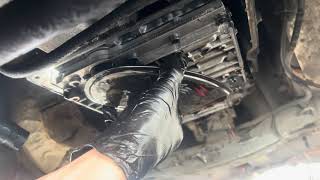
- If electrical circuits are intact, drop the transmission pan to inspect for excessive metal debris. A small amount of fine grey material is normal, but large flakes or chunks indicate serious internal damage.
- If the pan is relatively clean, the problem is likely the TCC solenoid, conductor plate, or valve body. The conductor plate is the most common culprit on the NAG1 transmission.
- If all of the above components are verified to be good, the torque converter itself is the most likely cause of the failure.
Parts You'll Likely Need
- Transmission Conductor Plate (NAG1)
(OEM #52108308AC)— This plate houses the TCC solenoid control circuitry and speed sensors. It's a very common failure point on the NAG1/722.6 transmission and is often replaced to resolve solenoid-related and speed sensor codes.
Trusted brands: Mopar, Bosch, Dorman
OEM price range: $250-$400
Aftermarket price range: $150-$250 - Torque Converter
(OEM #R8004096AC (Superseded by other numbers))— If the internal clutch lining is worn out or the converter is damaged internally, it won't engage properly, leading to high slip RPM and this code.
Related Codes That Often Appear With This One
- P0740 — P0740 indicates an electrical fault in the TCC circuit (like a bad coil in the solenoid), while P0741 indicates a performance problem (slippage). They can appear together if an electrical fault is causing the performance issue.
- P0730 — P0730 (Incorrect Gear Ratio) can accompany P0741 if the transmission is experiencing significant internal slippage beyond just the torque converter clutch, often pointing to a failing conductor plate speed sensor.
- P2767 — P2767 (Input/Turbine Speed Sensor 'B' Circuit No Signal) is a very common code to see with P0741 on NAG1 transmissions, as the sensor is integrated into the conductor plate that is a frequent cause of TCC issues.
Technical Service Bulletins (TSBs) & Recalls
- TSB 02-005-14: Addresses a rattle noise from the front strut area when driving over bumps, a common complaint unrelated to the P0741 code but relevant to the vehicle platform.
Mechanic-Grade Diagnostic Values
- TCC Actual Slip vs. Desired Slip (Live Data) — expected: Actual slip should be within 60 RPM of desired slip when TCC is commanded to 'Slip Mode'.. Failure: If actual slip exceeds desired slip by more than 60 RPM three times in one key cycle, code P0741 will set.
- TCC Solenoid Resistance — expected: 10-30 Ohms. Failure: A reading outside of this range indicates a faulty solenoid coil.
Scan Tool Commands That Help
- Chrysler wiTECH or equivalent advanced scanner: Reset Transmission Adaptives / Quick Learn — This procedure should be performed after replacing the valve body, conductor plate, TCM, or entire transmission to reset learned values and establish a new baseline for shift and TCC apply pressures.
- Chrysler wiTECH or equivalent advanced scanner: Store Adaptives — After performing the adaptation drive cycle, this function can be used to manually save the new values without waiting for the automatic 10-minute storage interval.
Wiring & Ground Locations
- 13-Pin Transmission Connector (Pilot Bushing) — On the front passenger side of the NAG1/722.6 transmission case, where the main vehicle harness connects.. This connector is a notorious leak point. The O-rings fail, allowing transmission fluid to seep out and, more critically, wick up the wiring harness into the TCM, causing erratic behavior and codes. The connector itself contains a 7mm bolt for removal.
Real Owner Repair Stories
- Gears Magazine article detailing a shop diagnosis (2012 Dodge Charger with NAG1/722.6 transmission) — Check engine light with code P0741. Customer reported lock-up seemed to be working fine.
❌ Tried (didn't work) Initial inspection showed clean fluid and no debris in the pan., The valve body and solenoid were hot-tanked and tested, and were found to be functioning correctly.
✅ What actually fixed it An air check of the torque converter revealed a leak in the apply circuit. Replacing the torque converter resolved the P0741 code.
OEM Part Supersession History
52108308AB→52108308AC— Revision to improve reliability of the integrated speed sensors and plastic housing.
Heads up: The Mopar part number 52108308AC is an equivalent to the Mercedes part number 1402701261. They are generally interchangeable for this application.
Model Year Variations Within This Range
- 2012-2014: Starting in 2012, V6-powered Chrysler 300s began using the ZF 8-speed automatic transmission (845RE). V8 models retained the NAG1 5-speed for a few more years. While P0741 still points to a TCC issue, the internal components (solenoids, valve body, torque converter) are completely different and not interchangeable between the NAG1 and the 8-speed.
Diagnostic Flowchart
Other Known Issues on This Vehicle
Issues unrelated to this code that are worth knowing about as an owner of this generation:
- Shifter Stuck in Park ('Pink Thingy' Failure) 🔴 High — Extremely common on 2005-2007 models with the NAG1 5-speed. A small plastic hook on the park interlock lever breaks, immobilizing the vehicle. (Ref: No recall exists for this mechanical failure.)
- HEMI (5.7L/6.1L/6.4L) MDS Lifter Failure 🔴 High — Common on HEMI engines, particularly those with the Multi-Displacement System (MDS). A ticking noise is an early symptom, which can escalate to a misfire (P0300-series codes) and catastrophic camshaft/engine damage if ignored.
- Alternator Failure 🔴 High — Widespread on 2011-2014 models, especially with the 3.6L V6. The alternator can fail suddenly, causing the vehicle to stall without warning. This was subject to a major safety recall. (Ref: NHTSA Recall #14V-634 (later expanded) and others.)
- Front Suspension Clunk/Rattle Noise 🟠 Medium — Commonly reported across all years. Noises over bumps are often caused by worn sway bar links, sway bar bushings, or control arm bushings. (Ref: Multiple TSBs exist, including 02-005-14 for front strut noise and others for control arm bushings.)
- Transmission Shifting Problems (Software Related) 🟡 Low → Shop Transmission Assembly — Owners of various model years report rough shifting or shuddering that can sometimes be resolved with a software update to the TCM or PCM.
Used vs. New Parts: Buying Guide for This Vehicle
When a used part is the smart pick: A complete used valve body assembly from a low-mileage donor can be a cost-effective solution if a worn bore is suspected and you lack the tools for repair. A used torque converter can be an option but is risky without knowing its history.
Donor-vehicle mileage cap: roughly under 75000 miles for the part to have meaningful remaining life.
What to inspect on the donor part:
- For a valve body, check the date code on the unit; newer is better.
- For a torque converter, inspect the hub for scoring and ensure the drain plug is intact. Ask for the vehicle's history to avoid buying a part that already caused a P0741.
- Check the 13-pin connector area for any signs of fluid leaks or physical damage.
OEM-only on this vehicle (don't cheap out):
- Transmission Fluid (Use only ATF+4 or the specified fluid for your transmission type; do not use universal fluids).
Aftermarket brands forum-validated for this vehicle:
- Sonnax (For valve body repair kits and oversized valves)
- Bosch / Siemens / VDO (Often the original manufacturer for the conductor plate, sold under different brands)
- FCP Euro (Known for selling OE-quality parts where the manufacturer logo is removed)
Brands owners have reported issues with on this vehicle:
- Unbranded, deeply discounted conductor plates from online marketplaces can have high failure rates or use lower-quality plastics and sensors.
Real Owner Stories
Aggregated from forums and TSBs cited above. Mileages and costs reflect what owners reported in those sources.
2005-2015 Chrysler 300 (NAG1 Transmission)
Symptoms: The vehicle experienced limp mode and shifting faults due to integrated speed sensors failing on the plastic circuit board.
What fixed it: Replacement of the conductor plate and the 13-pin electrical connector plug.
Source hint: Chrysler 300 (2005-2015) NAG1 Transmission Conductor Plate Explained - Go-Parts.com
Chrysler 300 / Dodge (722.6/NAG1 Transmission)
Symptoms: Pressure loss leading to P0741 caused by a worn converter hub.
What fixed it: Diagnosis via air-check process followed by torque converter replacement.
Source hint: P0741with a 722.6 Transmission Torque Converter Issues: Diagnosis and Solutions - YouTube
Dodge / Chrysler 300 (NAG1 5 Spd Transmission)
Symptoms: Transmission codes and performance issues related to the valve body components.
What fixed it: Removing the valve body and replacing the conductor plate.
Source hint: How to replace NAG1 5 Spd Transmission Conductor Plate - YouTube
Related OBD-II Codes
Frequently Asked Questions
I have a rattle noise from my front struts on my Chrysler 300; is this related to the P0741 code?
How do I check the transmission fluid level on my Chrysler 300 with the NAG1 transmission?
Is it true that the conductor plate is a common failure point for the Chrysler 300's 5-speed transmission?
Should I replace the electrical connector when fixing the conductor plate?
Can a worn valve body cause the P0741 code on my 300?
What should the resistance be for the TCC solenoid on a Chrysler 300?
Helpful Videos

We Have This Part in Stock


The information in this article is provided for general reference and educational purposes only. Vehicle specifications, procedures, and part compatibility can vary by production date, trim level, and region. Always consult your vehicle's factory service manual and verify part numbers before purchasing or performing repairs. Safety-critical components such as airbags, seat belts, and braking systems should be installed by a qualified professional.
- Chrysler 300:
- 🧭 Diagnostic Flowchart
- 🎬 Helpful Videos
- 🛍️ Shop This Part
- What's Unique About the 2005-2014 Chrysler 300
- Symptoms You May Notice
- Most Likely Causes
- Rare But Worth Checking
- Diagnosis Steps
- Parts You'll Likely Need
- Related Codes That Often Appear With This One
- Technical Service Bulletins (TSBs) & Recalls
- Mechanic-Grade Diagnostic Values
- Scan Tool Commands That Help
- Wiring & Ground Locations
- Real Owner Repair Stories
- OEM Part Supersession History
- Model Year Variations Within This Range
- Other Known Issues on This Vehicle
- Used vs. New Parts: Buying Guide for This Vehicle
- Real Owner Stories
- 2005-2015 Chrysler 300 (NAG1 Transmission)
- Chrysler 300 / Dodge (722.6/NAG1 Transmission)
- Dodge / Chrysler 300 (NAG1 5 Spd Transmission)
- Related OBD-II Codes
- Frequently Asked Questions
- 🎟️ Get 5% Off