

P0741 on 1995-2001 Ford Explorer 4.0L V6: TCC Solenoid, Valve Body, and Fixes
On a 1995-2001 Ford Explorer, code P0741 usually points to a problem within the 5R55E or 4R55E automatic transmission, most often a failing Torque Converter Clutch (TCC) solenoid, worn valve body bores, or blown separator plate gaskets. Expect to spend $200-$500 for a solenoid and fluid service, or more if the valve body needs repair or replacement.
- P0741 on a second-gen Explorer is a serious transmission code, usually not a simple sensor fix.
- The most probable causes are a worn valve body or a bad TCC solenoid, both located inside the transmission.
- Start your diagnosis by checking the transmission fluid level and condition. Burnt or dark fluid is a bad sign.
- Due to the known issues with the 5R55E valve body, simply replacing the TCC solenoid may not fix the problem if the valve bores are worn.
- This repair is best left to a professional or a very experienced DIYer, as it requires removing the valve body and can lead to further damage if done incorrectly.
What's Unique About the 1995-2001 Ford Explorer
The 1995-2001 Ford Explorer with the 4.0L V6 used the 4R55E (1995-96) and, more commonly, the 5R55E (1997-2001) automatic transmissions. These transmissions are known for specific wear-and-tear issues that directly cause the P0741 code. Worn bores within the aluminum valve body, particularly the TCC regulator valve bore, can lead to hydraulic pressure leaks, preventing the TCC from engaging properly even if the solenoid is functional. Additionally, blown gaskets on the valve body separator plate are a frequent failure point, leading to similar pressure loss and shifting problems. This issue is so common that many owners and shops proceed directly to inspecting these components after verifying fluid level.
Generation note: This range covers the second-generation Ford Explorer (1995-2001). The key difference is the transmission: 1995-1996 models typically have the 4R55E, while 1997-2001 models have the updated 5R55E. Both are very similar and prone to the same valve body and solenoid issues that cause P0741. The 4.0L V6 engine also came in an OHV version (1995-2001) and a more powerful SOHC version (1997-2001), but the transmission issues are the primary factor for this code.
Symptoms You May Notice
- Check Engine Light is on
- Overdrive (O/D) light flashing.
- Vehicle fails to shift into the final gear (overdrive)
- Engine RPMs are higher than normal at highway speeds
- Reduced fuel economy
- Transmission shudder or vibration, especially under light acceleration at cruising speeds, sometimes described as driving over rumble strips.
- Transmission overheating
- Harsh or delayed shifts, particularly after the transmission has warmed up.
- Whining noises from the engine area or poor shifting after exiting an expressway, as noted in NHTSA ODI #11376846.
- Replacing only the torque converter when the root cause is a worn valve body. The new converter will not be able to lock up if the hydraulic pressure is insufficient.
- Replacing only the TCC solenoid when the valve body bores are worn or the separator plate gasket is blown. The problem will often return, especially once the transmission warms up.
Most Likely Causes
- Worn Valve Body Bores 🔴 High Probability → Shop Transmission Valve Body The aluminum valve bodies in the 4R55E/5R55E transmissions are known to wear over time, particularly the TCC regulator valve bore and the EPC bore. This wear allows hydraulic fluid to leak past the valve, preventing the pressure needed to engage the torque converter clutch. This is a very common diagnosis after a TCC solenoid replacement fails to fix the code.
How to confirm: This is difficult to confirm without removing the valve body for inspection and vacuum testing. A transmission specialist can sometimes diagnose this based on symptoms and pressure tests. Often, this is diagnosed after replacing the TCC solenoid doesn't solve the problem.
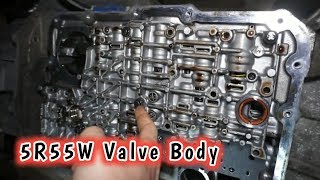
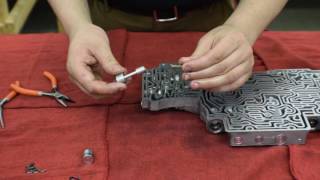
Typical fix: The valve body must be repaired by re-sleeving the worn bores or replaced with a remanufactured unit. Aftermarket solutions are very popular. The Sonnax Zip Kit (Part #4R44E-5R55E-ZIP) is designed to seal these pressure losses without requiring special tools. For more severe wear, Sonnax offers oversized valve kits like the EPC & TCC Relief Valve Kit (Part #37947-40K), which requires a special tool kit for installation. TransGo also offers a popular shift kit (SK 44-55E) 🎬 See how to install a shift kit to fix valve body wear. that addresses these issues.
Est. part cost: $100-$300 for a repair kit, $300-$600 for a remanufactured valve body. - Failed Torque Converter Clutch (TCC) Solenoid 🔴 High Probability → Shop Automatic Transmission Torque Converter The TCC solenoid is an electronic component that lives in a high-heat environment and cycles thousands of times. It can fail electrically or become clogged with debris from normal transmission wear. It is often the first part replaced when trying to solve a P0741 code.
How to confirm: A mechanic can use a scan tool to command the TCC solenoid on and off to check for an electrical response. The solenoid's resistance can also be tested with a multimeter after removing the transmission pan. A clicking sound when voltage is applied is a good sign, but doesn't rule out internal leaks or sticking.
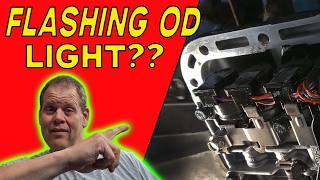
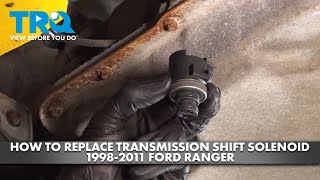
Typical fix: Replace the TCC solenoid. 🎬 Watch: How to replace the TCC solenoid to fix flashing OD lights. In the 4R55E/5R55E, solenoids are often replaced as a complete 'solenoid block' 🎬 Watch this step-by-step guide for replacing the transmission solenoid pack. or 'solenoid pack'. For 1997-up models, the TCC solenoid is a distinct part within the assembly. It's crucial to get the correct part, as there are versions with and without an 'inductive signature' depending on the year.
Est. part cost: $60-$150 for a single solenoid or $200-400 for a complete solenoid block. - Low or Dirty Transmission Fluid 🟡 Medium Probability → Shop Transmission Assembly Over time, transmission fluid (ATF) breaks down and becomes contaminated with clutch material and metal shavings. This dirty fluid can clog the small passages in the valve body and the TCC solenoid, preventing proper operation. Using the incorrect fluid (anything other than MERCON V) can also cause issues.
How to confirm: Check the transmission fluid dipstick. The fluid should be bright red and clear. If it is dark brown, black, or smells burnt, it is degraded. Low fluid level can also cause pressure issues.
Typical fix: Perform a transmission fluid and filter change. Use only the specified fluid (Mercon V for these models). Note: If the fluid is severely burnt or full of debris, a simple fluid change may not be enough to fix a pre-existing mechanical issue and could even worsen slipping in a high-mileage transmission.
Est. part cost: $50-$120 for fluid and a filter kit. - Blown Valve Body Separator Plate Gaskets 🟡 Medium Probability → Shop Transmission Valve Body The gaskets between the valve body and the separator plate are a known weak point and can 'blow out', causing cross-leaks between hydraulic circuits. This prevents proper pressure from being routed to engage the TCC. Forum users frequently report finding 'pooched' or blown-out gaskets upon inspection.
How to confirm: Requires removal and disassembly of the valve body to visually inspect the gaskets for tears or deformities. The damage is often visible around the edges of the gasket channels.
Typical fix: Replace the separator plate and gaskets. Ford later produced an updated plate with bonded gaskets to prevent this failure. This is a common 'while you're in there' upgrade when servicing the valve body or solenoids.
Est. part cost: $30-$70 for an updated plate and gasket set.
Rare But Worth Checking
- Failing Torque Converter: → Shop Automatic Transmission Torque Converter While less common than solenoid or valve body issues, the internal clutch within the torque converter itself can wear out and fail to lock up. NHTSA ODI #11514302 notes a case where a dealership diagnosed a bad torque converter and valve body together for this code. This is usually accompanied by a significant amount of debris in the transmission pan and may make an 'awful sound' when in gear and stopped. A remanufactured torque converter for this application might have an OEM part number like F85Z7902AARM.
- Damaged Wiring: The wiring harness inside the transmission can become brittle from heat and fluid exposure, leading to intermittent connections to the TCC solenoid. Also, check the external wiring harness from the PCM to the transmission for any damage. NHTSA ODI #11721087 suggests that issues with the lead frame can also trigger P0741 and P1744.
Diagnosis Steps
- Check the transmission fluid level and condition. If it is low, top it off. If it is dark, burnt, or full of debris, a fluid and filter change is a good first step, but be prepared for more significant issues.
- Use a capable OBD-II scanner to monitor live data. Watch the Torque Converter Clutch Slip RPM (TCC Slip). When the PCM commands lock-up (usually at steady cruising speed above 40 MPH), this value should drop to near zero. If it remains high (e.g., engine RPM - input shaft RPM > 150-200 RPM), the clutch is not engaging.
- If the slip is high, determine if it's an electrical or hydraulic problem. A mechanic can command the TCC solenoid on/off with a scan tool. An audible click from the transmission pan indicates the solenoid is likely working electrically.
- Drop the transmission pan and inspect for debris. A small amount of fine, grey material on the magnet is normal. Large metal shavings or chunks of clutch material indicate a serious internal failure, likely requiring a rebuild or replacement.
- With the pan off, inspect the wiring to the solenoids for damage. Test the resistance of the TCC solenoid with a multimeter and compare it to the manufacturer's specification.
- If the solenoid tests good electrically, the problem is likely hydraulic. Inspect the valve body separator plate gaskets for any signs of being blown out or 'pooched'.
- If gaskets are intact, the most likely remaining cause is a worn valve body (requiring repair kits or replacement) or, more rarely, a failing torque converter.
Parts You'll Likely Need
- Torque Converter Clutch (TCC) Solenoid
(OEM #F77Z-7G136-AA (1997-up w/ inductive signature))— This is one of the most common failure points for P0741. It is an electro-hydraulic valve that directly controls the TCC lock-up function and is a serviceable part.
Trusted brands: Motorcraft, BorgWarner, Rostra - Valve Body Repair Kit — Used to address wear in the valve body bores that causes hydraulic pressure loss, a root cause of P0741 that solenoid replacement alone won't fix.
Trusted brands: Sonnax (Zip Kit 4R44E-5R55E-ZIP), TransGo (SK 44-55E) - Valve Body Separator Plate Gasket — The original gaskets are a known failure point, leading to pressure cross-leaks. Often replaced with an updated bonded-gasket plate.
Trusted brands: Ford, Sonnax - Transmission Filter Kit (w/ Pan Gasket) — Must be replaced whenever the transmission pan is removed for service.
Trusted brands: Motorcraft, Wix, ATP - MERCON V Automatic Transmission Fluid — This is the required fluid type for the 5R55E transmission. Using the wrong fluid can cause shifting problems and damage.
Trusted brands: Motorcraft, Valvoline, Castrol
Related Codes That Often Appear With This One
- P1744 — This code is for 'Torque Converter Clutch System Performance' and is very closely related to P0741. Some Ford TSBs address these two codes together, indicating a common root cause, often pointing to a valve body replacement. NHTSA ODI #11195793 describes a situation where both P0741 and P1744 appeared simultaneously, resulting in a critical decrease in gas mileage.
- P0734 / P0735 — Codes for 'Incorrect Gear Ratio' in 4th or 5th gear can appear alongside P0741 if the transmission is slipping severely or if the TCC failure is causing the computer to detect an unexpected RPM difference.
Technical Service Bulletins (TSBs) & Recalls
- TSB 18-2160: While for a newer 10R80 transmission, this TSB shows a pattern where Ford links P0741 and P1744 codes directly to a faulty main control valve body, recommending replacement. This reinforces the valve body as a primary suspect for these codes across Ford platforms.
Platform-Specific Known Issues
- The Diagnostic Cascade: Fluid, Solenoid, Valve Body: → Shop Transmission Valve Body Owners of these vehicles typically follow a predictable, and often frustrating, path to repair. The first step is almost always a transmission fluid and filter change. When this doesn't resolve the P0741 code, the next step is replacing the TCC solenoid or the entire solenoid block. If the code still returns (often when the transmission gets hot), the root cause is almost certainly a hydraulic leak within the valve body, due to either worn bores or blown separator plate gaskets. Many forum threads document this exact progression.
- Heat-Related Failure: A very common report from owners is that the transmission shifts fine when cold, but the P0741 code, flashing O/D light, and lock-up failure only begin after 15-20 minutes of driving when the transmission fluid has reached operating temperature. This strongly points to a hydraulic leak that worsens as the fluid thins out with heat, and internal components expand.
Diagnostic Flowchart
Real Owner Stories
Aggregated from forums and TSBs cited above. Mileages and costs reflect what owners reported in those sources.
1995-2001 Ford Explorer 4.0L V6
Symptoms: The P0741 code was set, but all electrical tests on the transmission components passed.
What fixed it: The owner was diagnosed with a worn valve body bore, which was preventing hydraulic pressure from engaging the torque converter clutch. Another owner recommended a DIY valve body replacement.
Cost: $300-$300
Source hint: Ford Truck Enthusiasts Forums thread titled 'P0741 code'
1995-2001 Ford Explorer 4.0L V6
Symptoms: The transmission shifts perfectly when cold, but after 15-20 minutes of driving, the O/D light starts flashing and the torque converter fails to lock up, triggering the P0741 code.
What fixed it: The problem was identified as an internal hydraulic leak that worsens as the transmission fluid heats up and thins, pointing to a worn valve body or failing gaskets as the root cause.
Source hint: Vehicle Specific Issues: Heat-Related Failure
1995-2001 Ford Explorer 4.0L V6
Symptoms: After a fluid and filter change failed to fix the P0741 code, the TCC solenoid was replaced. The code still returned, especially when the transmission was fully warmed up.
What fixed it: The ultimate cause was a hydraulic leak within the valve body, which required either repairing the worn bores with a kit (like a Sonnax Zip Kit) or replacing the entire valve body assembly.
Source hint: Vehicle Specific Issues: The Diagnostic Cascade
Ford Owner Experience
Symptoms: An owner reported that their O/D light started to flash really fast every time they drove. A diagnostic check revealed error code P0741 for the torque converter clutch (NHTSA ODI #10331898).
What fixed it: While the owner was quoted $1700 for a repair, this report highlights the common nature of the flashing O/D light symptom in conjunction with the TCC error.
Related OBD-II Codes
Frequently Asked Questions
My Explorer's O/D light only starts flashing and the P0741 code appears after I've been driving for 15-20 minutes. Why does it only happen when the transmission is hot?
I already replaced the TCC solenoid on my Explorer, but the P0741 code came back. What should I check next?
What is the correct transmission fluid for my 2000 Ford Explorer 4.0L V6?
Are there any DIY-friendly kits to fix the worn valve body on my 5R55E transmission?
I'm dropping the pan to replace the TCC solenoid. Is there anything else I should replace while I'm in there?
I need to buy a new TCC solenoid for my 1998 Explorer. Are they all the same?
Helpful Videos
We Have This Part in Stock

The information in this article is provided for general reference and educational purposes only. Vehicle specifications, procedures, and part compatibility can vary by production date, trim level, and region. Always consult your vehicle's factory service manual and verify part numbers before purchasing or performing repairs. Safety-critical components such as airbags, seat belts, and braking systems should be installed by a qualified professional.
- Ford Explorer:
- 🧭 Diagnostic Flowchart
- 🎬 Helpful Videos
- 🛍️ Shop This Part
- What's Unique About the 1995-2001 Ford Explorer
- Symptoms You May Notice
- Most Likely Causes
- Rare But Worth Checking
- Diagnosis Steps
- Parts You'll Likely Need
- Related Codes That Often Appear With This One
- Technical Service Bulletins (TSBs) & Recalls
- Platform-Specific Known Issues
- Real Owner Stories
- 1995-2001 Ford Explorer 4.0L V6
- 1995-2001 Ford Explorer 4.0L V6
- 1995-2001 Ford Explorer 4.0L V6
- Ford Owner Experience
- Related OBD-II Codes
- Frequently Asked Questions
- 🎟️ Get 5% Off