

P0741 on 2005-2010 Scion tC: Torque Converter Clutch 'Stuck Off' Causes and Fixes
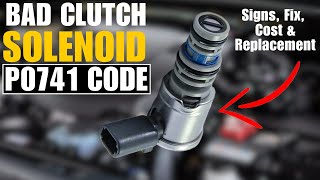
On a 2005-2010 Scion tC, P0741 most often points to a faulty torque converter clutch (TCC) solenoid, also known as Shift Solenoid 'SL'. This is a very common failure point on the U241E transmission. The fix involves dropping the transmission pan to replace the solenoid. Expect to pay around $75-$150 for an aftermarket part and 2-3 hours of labor.
- P0741 on your Scion tC means the torque converter isn't locking up at highway speeds, which hurts fuel economy and creates extra heat.
- The most likely culprit is a failed Torque Converter Clutch (TCC) Solenoid, which is located inside the transmission oil pan.
- Start your diagnosis by checking the transmission fluid level and condition. Low or dirty fluid can cause this code.
- Replacing the solenoid is a viable DIY for an experienced mechanic but is best left to a professional for most owners as it involves working inside the transmission.
- Do not immediately agree to a full transmission replacement; a solenoid replacement is a much more common and less expensive fix for this specific code.
What's Unique About the 2005-2010 Scion tC
The first-generation Scion tC uses a Toyota U241E 4-speed automatic transmission paired with the 2AZ-FE engine. For this specific application, Toyota service documents refer to the torque converter clutch solenoid as 'Shift Solenoid Valve SL'. While the causes are common across many vehicles, owner forums for the Scion tC confirm that this code on high-mileage models is a known issue, often resolved by replacing this specific solenoid without needing a full transmission rebuild. Some owners report driving with the code for extended periods with only a loss of fuel economy, though this is not recommended.
Symptoms You May Notice
- Check Engine Light is on
- Engine RPM is higher than usual at highway speeds
- Noticeable decrease in fuel economy
- Vehicle may feel like it's losing power, hesitating, or slipping under load, especially uphill
- A slight shudder or vibration at cruising speeds as the TCC attempts to engage
- In some cases, the transmission may feel slow or harsh when shifting
- Transmission overheating, though this may not be immediately obvious 🎬 See a breakdown of common symptoms and replacement costs. to the driver
- Replacing the entire transmission when only a solenoid is needed. Many shops may quote a full rebuild or replacement as a default for transmission codes, but for P0741 on this platform, the solenoid is a very common and much cheaper fix.
- Immediately replacing the torque converter. The solenoid and fluid should always be checked first, as they are far more common failure points and significantly less expensive to service.
Most Likely Causes
- Faulty Torque Converter Clutch (TCC) Solenoid / Shift Solenoid SL 🔴 High Probability → Shop Automatic Transmission Torque Converter The SL solenoid is an electro-mechanical part that cycles thousands of times and is prone to failure over time and with high mileage. Debris or sludge in old transmission fluid can also cause the internal plunger to stick. This is the most widely reported fix in owner forums.
How to confirm: Test the solenoid's resistance with a multimeter; it should be between 11 and 15 ohms at 68°F (20°C). A professional scan tool can also command the solenoid on/off to check its operation. 🎬 Watch: A quick test to see if your solenoid is working. A visual inspection when removed may show sludge or debris.
Typical fix: Replace the TCC solenoid (Shift Solenoid SL). This requires draining the transmission fluid, removing the transmission oil pan, and unbolting the solenoid from the valve body. 🎬 Watch this walkthrough on how to replace the shift solenoid.
Est. part cost: $75-$150 for aftermarket, $150-$250 for OEM. - Low or Dirty Transmission Fluid 🟡 Medium Probability → Shop Transmission Assembly The U241E transmission requires Toyota Type T-IV fluid. Using the wrong fluid or allowing the fluid to become degraded and dirty can impede the hydraulic operation of the solenoids and valve body passages.
How to confirm: Check the transmission fluid dipstick for level and condition. The fluid should be bright red and not smell burnt. Dark, brown, or metallic-flecked fluid indicates contamination and potential internal wear.
Typical fix: Perform a transmission fluid drain-and-fill using Toyota Type T-IV or a compatible equivalent. If the pan is dropped for solenoid replacement, this is a required step.
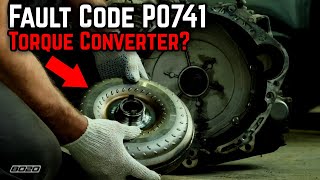
Est. part cost: $50-$100 for 4-5 quarts of fluid. - Worn or Failed Torque Converter ⚪ Low Probability → Shop Automatic Transmission Torque Converter This is less common than a solenoid failure but can happen on high-mileage vehicles, especially if driven for a long time with the P0741 code active, which causes excess heat and wear on the converter's internal clutch.
How to confirm: This is typically a diagnosis of exclusion. If the fluid and solenoid are confirmed to be good, but lock-up still fails (verified with a scan tool monitoring slip speed), the torque converter itself is the likely culprit. This is a complex diagnosis best left to a professional.
Typical fix: Replace the torque converter. This is a major repair that requires removing the entire transmission from the vehicle.
Est. part cost: $200-$500 for the part alone. - Clogged Transmission Valve Body ⚪ Low Probability → Shop Transmission Valve Body Old, degraded fluid can break down and create sludge or varnish that blocks the small passages in the valve body, preventing proper hydraulic pressure from reaching and actuating the TCC.
How to confirm: Inspect the valve body for foreign objects, scoring, or blockages when the transmission pan is removed. This is a difficult visual diagnosis.
Typical fix: In some cases, the valve body can be removed and professionally cleaned. More often, it is replaced.
Est. part cost: $300-$800 for a remanufactured or new valve body.
Rare But Worth Checking
- Wiring Harness Damage: The wiring leading to the transmission or the internal harness leading to the SL solenoid can become damaged, causing an open or short in the TCC solenoid circuit. It's worth a visual inspection of the external connector before replacing major parts.
- Faulty Engine Coolant Temperature (ECT) Sensor: The ECM uses input from the ECT sensor to determine when the engine is at operating temperature, which is a condition for commanding torque converter lock-up. A faulty sensor that incorrectly reports a cold engine can prevent lock-up and may trigger a P0741 code.
Diagnosis Steps
- Check the level and condition of the automatic transmission fluid (ATF). Ensure it is at the proper level and is clean, red, and free of burnt smells or debris. If low or very dirty, perform a drain-and-fill with Toyota Type T-IV fluid.
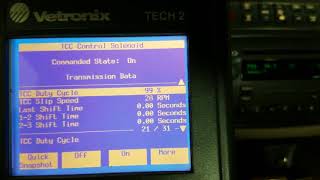
- Connect a professional OBD-II scanner (like Toyota Techstream) to monitor live data. Observe the 'TCC Command' (or 'SL Solenoid Status') and 'Torque Converter Slip Speed' PIDs while driving at a steady cruise (above 45-50 mph).
- Confirm that the ECM is commanding the lock-up. If it is, but the slip speed remains high (well over 100 RPM instead of near zero), the lock-up is not occurring mechanically or hydraulically.
- If possible, use the scanner's active test function to command the TCC solenoid on and off at a standstill or low speed to listen for a click from the transmission pan area.
- If the solenoid does not respond or the code persists, drain the transmission fluid and remove the oil pan.
- Locate the TCC solenoid (Shift Solenoid SL) on the valve body. It is a 3-way solenoid.
- Disconnect the solenoid and measure its resistance with a multimeter. According to Toyota service data, it should be between 11-15 ohms at 20°C (68°F). If it's out of spec, it is faulty and must be replaced.
- If resistance is good, you can apply 12V directly to the solenoid terminals to verify it clicks audibly.
- If the solenoid tests good, the issue is likely a blockage in the valve body, a wiring issue between the ECM and solenoid, or a mechanical failure of the torque converter itself.
Parts You'll Likely Need
- Torque Converter Clutch Solenoid (Shift Solenoid SL)
(OEM #35280-30050)— This solenoid is the most frequent failure point for the P0741 code on this vehicle. It is an electro-mechanical part that wears out over time.
Trusted brands: Toyota (OEM), Aisin, Rostra, Denso
OEM price range: $200-$250
Aftermarket price range: $75-$150 - Automatic Transmission Fluid (Toyota Type T-IV)
(OEM #00279-000T4)— Fluid must be drained and replaced when the pan is dropped for solenoid service. Using the correct fluid type is critical for Toyota transmissions. A drain and fill requires approximately 4 quarts.
Trusted brands: Toyota OEM, Idemitsu TLS, Aisin ATF-0T4
OEM price range: $8-$12 per quart
Aftermarket price range: $6-$10 per quart - Automatic Transmission Pan Gasket
(OEM #35168-21020)— The gasket should always be replaced when the transmission pan is removed to prevent leaks. Some technicians prefer using FIPG (Form-in-Place Gasket) sealant like Toyota's OEM product.
Trusted brands: Fel-Pro, Mahle, Toyota OEM
OEM price range: $20-$40
Aftermarket price range: $10-$25
Technical Service Bulletins (TSBs) & Recalls
- While no specific TSB for the Scion tC and P0741 was found, a related TSB for Toyota Corollas (TSB EG048-07) with the same code sometimes points to issues with the ECM or other sensors, indicating that while the solenoid is common, other causes are possible.
Platform-Specific Known Issues
- Confusion Over Solenoid Types: A Reddit user with a 2010 tC noted confusion because there are multiple solenoids in the valve body. For P0741, the specific solenoid is the lock-up or 'SL' solenoid, which is a 3-way solenoid and distinct from the other on/off shift solenoids.
Mechanic-Grade Diagnostic Values
- Shift Solenoid SL (TCC Solenoid) Resistance — expected: 11 to 15 Ω at 20°C (68°F). Failure: Resistance is outside of this range, indicating an electrical failure within the solenoid coil.
- Torque Converter Slip Speed (Lock-up Commanded ON) — expected: Near 0 RPM. Failure: Slip speed is 100 RPM or more while lock-up is commanded ON by the ECM.
- Torque Converter Slip Speed (Lock-up Commanded OFF) — expected: Varies with engine RPM and load.. Failure: Slip speed is less than 35 RPM when lock-up is commanded OFF, indicating the clutch is stuck engaged.
- ECM Connector Resistance to Ground (Solenoid Circuit) — expected: 11 to 13 Ω. Failure: Resistance is out of spec, indicating a wiring harness issue between the ECM and the transmission, or a faulty solenoid.
Scan Tool Commands That Help
- Toyota Techstream / Intelligent Tester: ACTIVE TEST: 'Control the Lock Up' — This function allows the technician to manually command the SL solenoid ON and OFF while monitoring system response (e.g., listening for a click, watching RPM change). It is used to verify if the solenoid is responding to electrical commands before removing the transmission pan.
Wiring & Ground Locations
- ECM Connector B30, Pin 79 (DSL) — This pin is located on the B30 connector at the Engine Control Module (ECM).. This is the specific pin that the ECM uses to send the control signal to the TCC/SL solenoid. A technician can test for continuity and resistance from this pin to ground to diagnose the entire circuit (wiring and solenoid) from the ECM side.
OEM Part Supersession History
35280-50020→35280-30050— Standard part revision and consolidation by the manufacturer.
Model Year Variations Within This Range
- 2005-2010: The first-generation Scion tC received a cosmetic facelift for the 2008 model year, but all primary mechanical components, including the 2AZ-FE engine and U241E automatic transmission, remained unchanged. Therefore, the causes and fixes for P0741 are identical across the entire 2005-2010 range.
Diagnostic Flowchart
Used vs. New Parts: Buying Guide for This Vehicle
When a used part is the smart pick: A complete, used transmission assembly from a reputable salvage yard can be a cost-effective alternative to a full rebuild if the failure is determined to be internal to the transmission and not just the solenoid.
Donor-vehicle mileage cap: roughly under 100000 miles for the part to have meaningful remaining life.
What to inspect on the donor part:
- Check for a vehicle history report on the donor car to verify mileage and check for accidents.
- If possible, inspect the transmission fluid from the donor unit. It should not be dark brown, black, or smell burnt.
- Look for any external damage to the transmission case, connectors, or cooler lines.
OEM-only on this vehicle (don't cheap out):
- While not strictly 'OEM-only', using the correct specification Toyota Type T-IV (or a fully compatible Aisin/Idemitsu equivalent) for transmission fluid is critical. Universal or multi-vehicle fluids are not recommended.
Aftermarket brands forum-validated for this vehicle:
- Solenoids: Aisin (often the OEM manufacturer), Rostra, Denso
- Fluid: Idemitsu TLS, Aisin ATF-0T4
Brands owners have reported issues with on this vehicle:
- Avoid unbranded, 'white-box' electrical components like solenoids from online marketplaces, as their quality control and longevity are highly questionable.
Real Owner Stories
Aggregated from forums and TSBs cited above. Mileages and costs reflect what owners reported in those sources.
2006 Scion tC 2.4L 2AZ-FE — 100000 miles
Symptoms: Experiencing high RPMs at highway speeds and a loss of power.
What fixed it: The community consensus pointed directly to a failed TCC solenoid as the cause.
Source hint: ScionLife.com: A 2014 thread titled 'Engine Codes like P0741 Torque Converter Clutch Circuit (HELP)'
2005 Scion tC 2.4L 2AZ-FE — 169000 miles
Symptoms: The P0741 code appeared despite the owner performing meticulous transmission fluid changes.
What fixed it: The failure confirmed that the TCC solenoid can fail from simple mechanical wear and tear over time, not just from dirty fluid.
Source hint: BobIsTheOilGuy.com: A 2016 thread 'P0741 Torque converter clutch stuck(replacement)'
2008 Scion tC 2.4L 2AZ-FE
Symptoms: The vehicle had an active P0741 code.
What fixed it: This was a story of misdiagnosis; a shop immediately quoted a $4,500 transmission replacement, while the community advised the owner that the actual problem was likely the much cheaper TCC solenoid.
Source hint: Reddit r/MechanicAdvice: A post about a 2008 Scion tC with P0741
2010 Scion tC 2.4L 2AZ-FE
Symptoms: Owner was confused about which of the multiple solenoids in the valve body was responsible for the P0741 code.
What fixed it: The issue was clarified: the correct part is the lock-up or 'SL' solenoid, which is a 3-way solenoid.
Source hint: A Reddit user with a 2010 tC noted confusion because there are multiple solenoids in the valve body.
Related OBD-II Codes
Frequently Asked Questions
My mechanic quoted a full transmission replacement for code P0741 on my Scion tC. Is this necessary?
Which specific solenoid do I need to replace for P0741? I see several on the valve body.
What type of transmission fluid should I use when servicing my Scion tC for a P0741 code?
How can I test the TCC (SL) solenoid myself before buying a new one?
Is P0741 a common problem on other Toyota vehicles that use the same 2.4L engine?
I found a Toyota TSB (EG048-07) for a Corolla with P0741. Does this apply to my Scion tC?
Helpful Videos


We Have This Part in Stock

The information in this article is provided for general reference and educational purposes only. Vehicle specifications, procedures, and part compatibility can vary by production date, trim level, and region. Always consult your vehicle's factory service manual and verify part numbers before purchasing or performing repairs. Safety-critical components such as airbags, seat belts, and braking systems should be installed by a qualified professional.
- Scion tC:
- 🧭 Diagnostic Flowchart
- 🎬 Helpful Videos
- 🛍️ Shop This Part
- What's Unique About the 2005-2010 Scion tC
- Symptoms You May Notice
- Most Likely Causes
- Rare But Worth Checking
- Diagnosis Steps
- Parts You'll Likely Need
- Technical Service Bulletins (TSBs) & Recalls
- Platform-Specific Known Issues
- Mechanic-Grade Diagnostic Values
- Scan Tool Commands That Help
- Wiring & Ground Locations
- OEM Part Supersession History
- Model Year Variations Within This Range
- Used vs. New Parts: Buying Guide for This Vehicle
- Real Owner Stories
- 2006 Scion tC 2.4L 2AZ-FE — 100000 miles
- 2005 Scion tC 2.4L 2AZ-FE — 169000 miles
- 2008 Scion tC 2.4L 2AZ-FE
- 2010 Scion tC 2.4L 2AZ-FE
- Related OBD-II Codes
- Frequently Asked Questions
- 🎟️ Get 5% Off