

P0751 on 2014-2018 Mazda Mazda6: Shift Solenoid 'A' Causes and Fixes
On a 2014-2018 Mazda6, P0751 is almost never a bad shift solenoid. It's a well-known issue of sticking oil pressure switches on the transmission valve body due to fluid contamination. This is documented in multiple Mazda TSBs. The fix involves replacing these switches, not the solenoid, and costs between $600 and $2000 at a shop. Often, a TCM software update is performed first or in conjunction with the repair.
- Do not automatically replace Shift Solenoid 'A'; the P0751 code on a 2014-2018 Mazda6 is almost always a symptom of sticking oil pressure switches inside the transmission.
- This is a known issue covered by Mazda TSB 05-004/18. Check for associated codes like P0780 and P1738 to confirm the diagnosis.
- This is a serious issue that requires immediate attention. Do not continue to drive the vehicle, as it can lead to complete transmission failure.
- Professional repair is strongly recommended due to the complexity of the job.
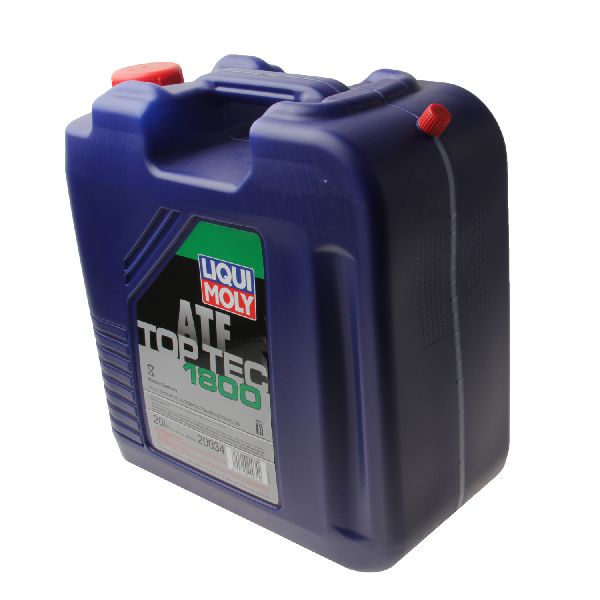
- Always use genuine Mazda FZ transmission fluid when performing this repair.
What's Unique About the 2014-2018 Mazda Mazda6
The 2014-2018 Mazda6 uses the SKYACTIV-Drive 6-speed automatic transmission (model FW6A-EL). On this specific transmission, the P0751 code is very rarely caused by a failure of the shift solenoid itself. Instead, it's a widely documented symptom of a different problem: oil pressure switches on the internal valve body getting stuck. This is caused by contamination in the transmission fluid from normal wear. Mazda has issued several Technical Service Bulletins (TSBs), such as 05-004/18 and its successors, about this exact issue, which often triggers a cluster of related transmission codes like P0780 and P0842. Manufacturer service bulletins like TSB Bulletin #05-003-14-2898A further confirm that P0751 often appears alongside P1738 and various other pressure switch codes in this transmission family.
Symptoms You May Notice
- Check Engine Light and/or AT (Automatic Transaxle) warning light is on
- Harsh, erratic, or delayed shifting
- Transmission getting stuck in one gear (often 3rd gear, known as 'limp mode')
- A noticeable "clunk" when shifting, especially into reverse
- Inability to shift into manual mode
- Reduced fuel economy
- Transmission slipping or overheating
- Replacing only Shift Solenoid 'A'. This is the most common misdiagnosis because the code name is misleading. On this platform, the problem is almost always the oil pressure switches on the valve body, and replacing the solenoid alone will not fix the issue.
Most Likely Causes
- Sticking Oil Pressure Switches on Valve Body 🔴 High Probability → Shop Engine Oil Pressure Switch This is a well-documented issue on the FW6A-EL transmission. Mazda TSB 05-004/18 and its successors directly address this failure, stating that contamination in the fluid causes oil pressure switches A and/or B to stick, leading to various DTCs. This prevents the TCM from correctly verifying the hydraulic circuit's status after a shift command.
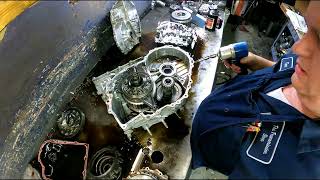
How to confirm: Scan for other codes, particularly P0842, P0847, P0872, P0877, P0780, and P1738, which are all listed in the relevant TSB. The presence of these codes alongside P0751 is a strong indicator of this specific failure. The definitive diagnosis involves removing the transmission pan and valve body 🎬 Watch: Step-by-step FW6A-EL transmission disassembly walkthrough to inspect and replace the switches.
Typical fix: Replace the faulty oil pressure switches (A and B) on the control valve body. In some cases, the entire valve body assembly may be replaced. A transmission fluid and filter change with the correct Mazda FZ fluid is mandatory. Often, a TCM software update is performed as well, as newer calibrations are less sensitive to minor switch issues.
Est. part cost: $150-$400 for the switches, fluid, and filter. A complete valve body assembly can cost $800-$1400. - Low or Dirty Automatic Transmission Fluid (ATF) 🟡 Medium Probability → Shop Transmission Assembly Dirty or degraded fluid is the source of the contamination that causes the primary issue of sticking pressure switches. Low fluid can cause a drop in hydraulic pressure, preventing proper solenoid and clutch operation, which can also trigger the code.
How to confirm: Check the transmission fluid level and condition. The fluid should be at the correct level and bright red. If it is dark, brown, or has a burnt smell, it is degraded and contaminated.
Typical fix: Perform a complete transmission fluid exchange using only Mazda Type FZ ATF. This is often done as part of the pressure switch replacement. If the fluid is very dirty, a simple drain and fill may not be sufficient.
Est. part cost: $100-$200 for fluid.
Rare But Worth Checking
- Failed Shift Solenoid 'A': → Shop Transmission Valve Body While the code points directly to this solenoid, it is rarely the actual root cause on this specific transmission. It should only be considered after the more common valve body issues have been ruled out.
- Wiring or Connector Issue: Damage to the internal transmission wiring harness or the main connector can cause a loss of signal to the solenoid, mimicking a failure. This is uncommon but worth inspecting while the pan is off. Corrosion or high resistance in the circuit can trigger the code.
- Transmission Control Module (TCM) Fault: → Shop Transmission Assembly In very rare cases, the TCM itself can fail. More commonly, the TCM's software may be outdated. Mazda TSBs often recommend reprogramming the TCM with updated software as a first step, as the new logic is more tolerant of minor pressure switch fluctuations.
Diagnosis Steps
- Check and verify the transmission fluid level and condition. Ensure it is full and not burnt or discolored.
- Using an OBD-II scanner, check for any other stored transmission codes. Pay close attention to codes like P0780, P1738, P0842, P0847, P0872, and P0877.
- Consult Mazda Technical Service Bulletin (TSB) 05-004/18 or its successors (like 05-004/19 or 05-002/23). These TSBs detail the known issue with sticking oil pressure switches and may recommend a TCM reflash as the first step. TSB Bulletin #05-003-14-2898 notes that P0751 may also be stored alongside P1738 (Automatic Transaxle Internal Malfunction).
- If related codes are present and the fluid level is correct, the next step is to gain access to the valve body by removing the transmission oil pan.
- Inspect the bottom of the oil pan and the magnets for excessive metal debris. A fine metallic paste is normal wear, but large chunks indicate a more severe internal failure.
- Remove the control valve body assembly.
- Replace the oil pressure switches (A and B) on the valve body. It is recommended to replace both even if only one is suspected to be faulty.
- Reinstall the valve body, install a new pan gasket and filter, and refill the transmission with the specified quantity of Mazda FZ Automatic Transmission Fluid.
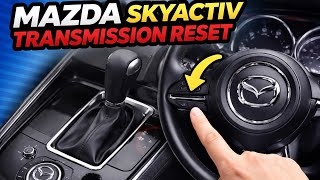
- Clear all DTCs and perform the 'Initial Learning Procedure'. This procedure resets the TCM's adaptive memory 🎬 See this quick guide on resetting Mazda adaptive memory and allows it to learn the response times of the new components. This can be done with a dealer tool or a specific manual sequence of shifting and ignition cycles.
- Perform a test drive to confirm the repair and ensure smooth shifting. The transmission may feel slightly unusual for the first 20-30 miles as it fine-tunes its adaptive learning.
Parts You'll Likely Need
- Transmission Oil Pressure Switch A
(OEM #FZ01-21-2C0)— This is one of the two switches that commonly fails by sticking, as documented in Mazda TSBs. It monitors pressure for the 2-6 Brake and 3-5-R Brake clutches.
Trusted brands: Mazda (OEM)
OEM price range: $70-$120 per switch
Aftermarket price range: $40-$80 per switch - Transmission Oil Pressure Switch B
(OEM #FZ01-21-2J0)— This is the second switch that commonly fails. It monitors pressure for the Low Clutch and High Clutch packs. It's recommended to replace both switches at the same time.
Trusted brands: Mazda (OEM)
OEM price range: $60-$120 per switch
Aftermarket price range: $40-$80 per switch - Automatic Transmission Fluid (ATF)
(OEM #0000-FZ-113E-01)— The correct, manufacturer-specified fluid is critical for the proper function and longevity of the SKYACTIV-Drive transmission. Using the wrong fluid can cause shifting problems. A fluid change is required for the repair.
Trusted brands: Mazda (OEM Type FZ)
OEM price range: $15-$25 per quart - Automatic Transmission Oil Pan Gasket
(OEM #FZ01-21-51X)— The gasket must be replaced anytime the transmission oil pan is removed to prevent leaks.
Trusted brands: Mazda (OEM), Fel-Pro, Mahle
OEM price range: $30-$50
Aftermarket price range: $15-$30 - Automatic Transmission Filter (Strainer)
(OEM #FZ01-21-500)— Since fluid contamination is the root cause, replacing the filter is a mandatory step to ensure the new fluid and components stay clean.
Trusted brands: Mazda (OEM)
OEM price range: $40-$60
Aftermarket price range: $20-$40
Related Codes That Often Appear With This One
- P0780 — Shift Malfunction. This code is explicitly mentioned in Mazda TSBs alongside the pressure switch codes as being caused by the same root issue of sticking internal components due to fluid contamination.
- P1738 — Automatic Transaxle Internal Malfunction. This is a general fault code that often appears when the TCM detects the illogical readings from the sticking pressure switches.
- P0842, P0847, P0872, P0877 — These are specific codes for the oil pressure switches (A and B) being stuck on or off. Their presence strongly confirms the diagnosis of a faulty valve body/pressure switch assembly.
Technical Service Bulletins (TSBs) & Recalls
- Mazda TSB 05-004/18
- Mazda TSB 05-004/19
- Mazda TSB 05-002/23
- TSB Bulletin #05-003-14-2898A
- TSB Bulletin #05-003-14-2898
Platform-Specific Known Issues
- The SKYACTIV-Drive (FW6A-EL) transmission is known for having its oil pressure switches on the valve body stick due to contamination, as outlined in Mazda TSB 05-004/18 and its successors. This is the primary cause for a range of transmission codes, including P0751.
Mechanic-Grade Diagnostic Values
- Shift Solenoid 'A' (No. 1) Resistance — expected: 5.0 - 7.0 Ohms. Failure: A reading outside this range (open or shorted) indicates a failed solenoid coil. However, the solenoid can test good electrically but still be mechanically stuck, which is why this isn't the primary failure mode for P0751 on this platform.
- On/Off Solenoid Resistance — expected: 11.0 - 14.0 Ohms. Failure: A reading outside this range points to a fault in the on/off solenoid that strokes the shift valves.
- ATF Temperature for Initial Learning — expected: 60-110 °C (140-230 °F). Failure: Attempting the learning procedure outside this temperature range may cause it to fail or not complete successfully.
Scan Tool Commands That Help
- Mazda M-MDS (or high-level equivalent like FORScan): Initial Learning Procedure — This is a mandatory step after replacing the oil pressure switches or the entire control valve body. The TCM must relearn the hydraulic fill times and clutch engagement characteristics of the new parts. Failure to perform this procedure will result in harsh shifting, incorrect shift timing, and may cause codes to return.
- Mazda M-MDS / FORScan: Solenoid On/Off Command / Solenoid Activation Test — This bidirectional command allows a technician to manually energize Shift Solenoid 'A' with the engine off. A 'click' should be audible from the transmission pan. This directly tests the solenoid's electrical circuit and mechanical actuation, helping to rule out a wiring or TCM driver issue before dropping the pan.
OEM Part Supersession History
FZA1-21-2C0→FZ01-21-2C0— Part number revision by the manufacturer for Oil Pressure Switch 'A'.FZA1-21-2J0→FZ01-21-2J0— Part number revision by the manufacturer for Oil Pressure Switch 'B'.
Model Year Variations Within This Range
- 2014-2015: According to TSB 05-002/23, 2014-2015 Mazda6 models with the relevant DTCs are directed to proceed with the Oil Pressure Switch Replacement procedure. Later models (2016-2017, 2021) are directed to first attempt a TCM Reprogramming. This suggests the physical parts or base software on earlier models are less likely to be fixed by a software update alone.
Diagnostic Flowchart
Other Known Issues on This Vehicle
Issues unrelated to this code that are worth knowing about as an owner of this generation:
- Infotainment Screen Delamination/Ghost Touch 🟠 Medium — Common issue, especially in hotter climates. The screen's layers can separate, causing cracks and phantom inputs.
- Sticking Shifter Switch (Drains Battery) 🟡 Low — In early models, a switch in the shifter assembly can fail, preventing the car from fully shutting off (stuck in accessory mode), leading to a dead battery.
- Prematurely Worn Rear Brake Pads 🟡 Low — Some owners report the rear brake pads wearing out faster than the front pads, sometimes due to sticking caliper slide pins.
- Carbon Buildup on Intake Valves 🟠 Medium — As with many direct-injection (GDI) engines, the SKYACTIV-G can suffer from carbon accumulation on the intake valves over high mileage (typically 80k+ miles), which can affect performance and efficiency.
- Thin Paint 🟡 Low — A common complaint is that the paint, particularly Mazda's signature 'Soul Red Crystal', is thin and prone to chipping easily from road debris.
Used vs. New Parts: Buying Guide for This Vehicle
When a used part is the smart pick: A complete, used valve body assembly from a low-mileage donor vehicle can be a cost-effective alternative to buying new pressure switches and paying for the labor to install them onto the old valve body. This is especially true if there's any suspicion of wear on the valve body bores themselves.
Donor-vehicle mileage cap: roughly under 70000 miles for the part to have meaningful remaining life.
What to inspect on the donor part:
- Verify the donor vehicle's VIN to ensure it's a compatible year and model.
- Ask for the mileage of the donor vehicle. Lower is always better.
- Inspect the electrical connectors for any signs of damage, corrosion, or bent pins.
- If possible, ask the seller to confirm the part is from a vehicle that did not have transmission-related fault codes.
OEM-only on this vehicle (don't cheap out):
- Automatic Transmission Fluid (ATF) - Only use Mazda Type FZ fluid. Aftermarket 'universal' fluids are not recommended for the SKYACTIV-Drive transmission.
- Oil Pressure Switches - While some aftermarket switches exist, using OEM Mazda parts is highly recommended for reliability and to avoid repeat failures.
Brands owners have reported issues with on this vehicle:
- Unbranded valve bodies from online marketplaces can be risky due to unknown quality, potential for incorrect TCM programming (if included), and lack of warranty support.
Real Owner Stories
Aggregated from forums and TSBs cited above. Mileages and costs reflect what owners reported in those sources.
2016 Mazda CX-5 (FW6A-EL Transmission)
Symptoms: Owner sought a detailed step-by-step guide for a manual transmission reset/relearn procedure after experiencing shifting issues common to this transmission family.
What fixed it: Performed the 'Initial Learning Procedure' using a manual sequence of shifting and ignition cycles to reset the TCM's adaptive memory.
Source hint: Mazdas247 Forum - 'DIY - Transmission reset/relearn procedure for 2016 Mazda CX-5'
2014-2018 Mazda Mazda6
Symptoms: Transmission getting stuck in 3rd gear (limp mode), harsh or erratic shifting, and a noticeable 'clunk' when shifting into reverse.
What fixed it: Replacement of oil pressure switches A and B on the control valve body, a transmission fluid and filter change using Mazda FZ fluid, and a TCM software update as per TSB 05-004/18.
Source hint: Mazda TSB 05-004/18
Mazda Owner Report
Symptoms: An owner reported that the check engine light came on along with the AT and traction lights, resulting in absolutely no power to the transmission.
What fixed it: Diagnostic scanning revealed codes P0780 and P0751 were present.
Source hint: NHTSA ODI #11596026
Related OBD-II Codes
Frequently Asked Questions
Which Mazda Technical Service Bulletins address the P0751 code on my Mazda6?
My 2016 Mazda6 is stuck in 3rd gear and won't enter manual mode. Is this related to P0751?
Can I just change the fluid to fix the P0751 code on my SKYACTIV-Drive transmission?
What is the 'Initial Learning Procedure' I keep reading about for Mazda transmission repairs?
Is it better to replace the individual switches or the whole valve body on a high-mileage Mazda6?
Does the P0751 issue affect other Mazdas besides the Mazda6?
Helpful Videos
We Have This Part in Stock




The information in this article is provided for general reference and educational purposes only. Vehicle specifications, procedures, and part compatibility can vary by production date, trim level, and region. Always consult your vehicle's factory service manual and verify part numbers before purchasing or performing repairs. Safety-critical components such as airbags, seat belts, and braking systems should be installed by a qualified professional.
- Mazda Mazda6:
- 🧭 Diagnostic Flowchart
- 🎬 Helpful Videos
- 🛍️ Shop This Part
- What's Unique About the 2014-2018 Mazda Mazda6
- Symptoms You May Notice
- Most Likely Causes
- Rare But Worth Checking
- Diagnosis Steps
- Parts You'll Likely Need
- Related Codes That Often Appear With This One
- Technical Service Bulletins (TSBs) & Recalls
- Platform-Specific Known Issues
- Mechanic-Grade Diagnostic Values
- Scan Tool Commands That Help
- OEM Part Supersession History
- Model Year Variations Within This Range
- Other Known Issues on This Vehicle
- Used vs. New Parts: Buying Guide for This Vehicle
- Real Owner Stories
- 2016 Mazda CX-5 (FW6A-EL Transmission)
- 2014-2018 Mazda Mazda6
- Mazda Owner Report
- Related OBD-II Codes
- Frequently Asked Questions
- 🎟️ Get 5% Off