

P0771 on 2010-2014 Volkswagen Golf: DSG Shift Solenoid 'E' (N92) Failure Guide
On a 2010-2014 VW Golf with a DQ250 DSG transmission, code P0771 almost always points to a failure within the mechatronics unit, specifically the N92 shift solenoid. This is a complex and expensive repair often requiring professional service to replace or refurbish the mechatronics unit. The issue is frequently heat-related and may appear intermittently at first.
- P0771 on a 2010-2014 Golf with a DSG transmission is a serious code pointing to an internal transmission fault.
- The most likely cause is a failed mechatronics unit, which is the combined computer and hydraulic controller for the transmission.
- Symptoms include harsh shifting, sudden loss of gears, and limp mode.
- This is not a simple DIY fix. Repair requires expensive parts and specialized tools for programming and is best left to a VW specialist.
- Do not ignore this code, as continued driving can lead to catastrophic transmission failure.
What's Unique About the 2010-2014 Volkswagen Golf
The 2010-2014 Golf (Mk6) often uses a 6-speed wet-clutch Direct-Shift Gearbox (DSG), known as the DQ250 (or 02E). Unlike a traditional automatic, its brain is a complex mechatronics unit that combines the control module (TCM) and the hydraulic valve body into one assembly. While this design allows for lightning-fast shifts, the mechatronics unit is a known weak point, highly susceptible to heat damage over time. Code P0771 on these cars is frequently a direct symptom of an internal failure of this unit, rather than a simple external sensor or wiring problem.
Symptoms You May Notice
- Transmission suddenly drops into neutral, especially during acceleration or when warm.
- Harsh, jerky, or delayed gear shifts.
- Vehicle enters 'limp mode', often indicated by a solid or flashing wrench icon and flashing gear indicator (PRNDS) on the dashboard.
- Inability to select forward or reverse gears until the vehicle is turned off and on again.
- Illuminated Check Engine Light or Transmission Malfunction warning light.
- Symptoms are worse when the transmission is hot, such as after a long drive or in traffic.
- Hesitation or stalling during acceleration.
- Replacing only the transmission fluid and filter when the mechatronics unit has already failed. While a fluid change is often recommended as a first step, it will not fix a failed solenoid or a faulty electronic driver on the mechatronics board.
- Replacing a single solenoid when the root cause is a failing driver circuit on the main mechatronics board. The problem will likely reoccur.
Most Likely Causes
- Failed Mechatronics Unit 🔴 High Probability → Shop Transmission Valve Body The DQ250 DSG mechatronics unit is a known failure point. Heat and age cause internal electronic components and solder joints on the circuit board to fail, leading to solenoid driver circuit faults.
How to confirm: A professional diagnosis with a VW-specific scan tool (like VCDS) is needed. The presence of other codes, like P1604 (ECU defective) or P1746 (Supply voltage for solenoid valves), strongly points to a mechatronics failure. The fault is often intermittent and worsens as the transmission heats up.
Typical fix: The entire mechatronics unit must be replaced with a new or remanufactured unit. The new unit requires programming and adaptation to the vehicle.
Est. part cost: $800-$1500 - Failed Shift Solenoid 5 (N92) 🟡 Medium Probability → Shop Transmission Valve Body The solenoid itself, located within the mechatronics unit, can fail electrically (open/short) or mechanically (sticking due to debris or wear). While the solenoid can be the root cause, it is often replaced as part of a full mechatronics service.
How to confirm: A technician can test the solenoid's resistance after removing the mechatronics unit. While specific OEM values for N92 are not published, a general rule for many transmission solenoids is a resistance between 5 and 30 ohms. An infinite reading indicates an open circuit, and a near-zero reading indicates a short. However, since accessing it requires removing the entire mechatronics unit, it's often diagnosed as a complete unit failure.
Typical fix: Replacement of the individual N92 solenoid or a full solenoid kit. Due to the significant labor involved, many shops recommend replacing the entire mechatronics unit or all solenoids at once.
Est. part cost: $50-$150 - Low or Contaminated Transmission Fluid ⚪ Low Probability → Shop Transmission Assembly The DQ250 requires fluid and filter changes every 40,000 miles. Neglecting this service leads to fluid breakdown and the accumulation of metallic debris, which can clog solenoid passages and cause them to stick.
How to confirm: Check the DSG fluid level and condition using the correct procedure (fluid must be at a specific temperature, 35-45°C). The fluid should be clean, not burnt, and free of excessive metal particles.
Typical fix: Perform a DSG fluid and filter service. This is a good first step for diagnosis, but if the code returns quickly, especially when hot, the issue is almost certainly a hard part failure within the mechatronics unit.
Est. part cost: $150-$250
Rare But Worth Checking
- Wiring Harness or Connector Issue: While less common than mechatronics failure, the main wiring harness connector to the transmission can suffer from corrosion, moisture intrusion, or pushed-out pins. A thorough visual inspection is warranted before condemning the expensive mechatronics unit.
Diagnosis Steps
- Scan the Transmission Control Module (TCM) with a VW-specific diagnostic tool like VCDS to confirm P0771 and check for any other related fault codes, especially P1604 or P1746.
- Document the fault frequency counter and freeze frame data. A high frequency counter (e.g., 255) indicates a persistent problem.
- Check the DSG transmission fluid level and condition. This must be done at a specific temperature (typically 35-45°C) per the factory procedure. In VCDS, this can be monitored in Measuring Blocks, Group 019.
- If the fluid is low, dirty, or overdue for service, perform a full DSG fluid and filter service. Clear the codes and test drive extensively, ensuring the transmission reaches full operating temperature to see if the fault returns.
- Visually inspect the main transmission electrical connector for any signs of corrosion, moisture, or damage to the pins and wiring.
- If the code persists after a fluid service, the fault is almost certainly internal to the mechatronics unit. The next step is to remove the unit for testing or replacement. This is best left to a professional.
- After replacement, the new mechatronics unit must be coded to the vehicle and a basic settings/adaptation procedure must be performed with a diagnostic tool.
Parts You'll Likely Need
- DSG Mechatronics Unit
(OEM #02E325025AL)— This is the most common cause of P0771 on the DQ250 DSG. The entire unit, which includes the TCM and all solenoids, is often replaced as a whole to guarantee the repair.
Trusted brands: Genuine Volkswagen/Audi
OEM price range: $1200-$1800
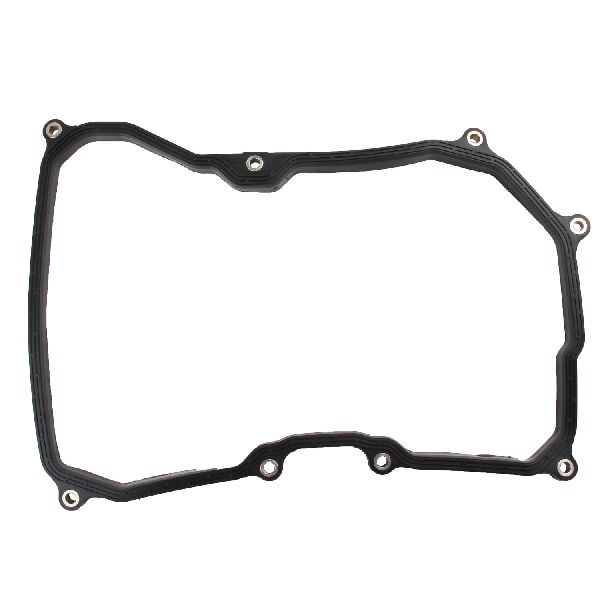
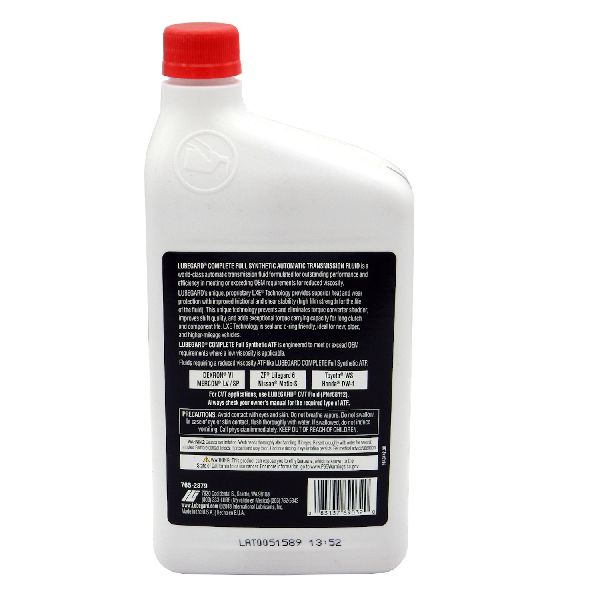
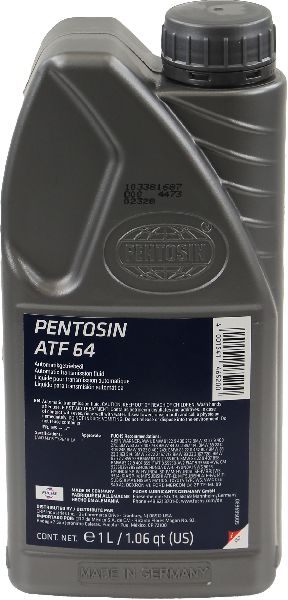
Aftermarket price range: $800-$1200 (Remanufactured) - DSG Transmission Fluid and Filter Kit — Required for any repair involving the mechatronics unit, and a good first step in diagnosis. Using the correct fluid is critical for the longevity of the new unit.
Trusted brands: Fuchs Titan, Liqui Moly, Pentosin, Genuine VW
OEM price range: $150-$200
Aftermarket price range: $100-$150 - Shift Solenoid N92 — For targeted repairs where only the solenoid is confirmed to be faulty. Often sold individually or as part of a larger solenoid kit.
Trusted brands: Genuine Volkswagen/Audi
OEM price range: $45-$70
Related Codes That Often Appear With This One
- P0702 — This code indicates a 'Transmission Control System Electrical' fault. When seen with P0771, it strongly suggests the mechatronics unit's internal computer has failed.
- P1604 — This code translates to 'Control Module Defective'. It is a definitive indicator that the TCM portion of the mechatronics unit has an internal, unrecoverable fault.
- P1746 — Indicates a fault in the 'Supply Voltage for Solenoid Valves', pointing towards a power delivery problem on the mechatronics circuit board itself.
Platform-Specific Known Issues
- The DQ250 (02E) 6-speed DSG transmission is known for mechatronics failures that can manifest as various solenoid performance codes, including P0771.
- Owners report that the problem is often exacerbated by heat, pointing to an electronic component failing under thermal stress. The car may drive fine when cold but fail once warmed up.
Mechanic-Grade Diagnostic Values
- DSG Solenoid Coil Resistance — expected: 5 to 30 Ohms (general specification). Failure: A reading of 0 Ohms indicates a shorted coil. An infinite (O.L.) reading indicates an open coil.
- DSG Fluid Temperature for Diagnostics/Service — expected: 30°C to 100°C (86°F to 210°F) for basic settings; 35°C to 45°C for fluid level check.. Failure: Performing procedures outside this temperature range can lead to incorrect fluid levels or failed adaptations.
- VCDS Basic Settings Status Field (Group 060/061) — expected: Field values should stop changing and the status should read 'ON'.. Failure: If the process is interrupted or fails, a status like 255 | 0 | 0 may be displayed, indicating the basic settings were not completed successfully.
Scan Tool Commands That Help
- VCDS (VAG-COM): Basic Settings - Group 060 (Transmission Tolerances) — This procedure must be run after replacing the mechatronics unit to allow the TCM to learn the synchronization points of the gear actuators. Failure to do so will result in harsh shifting or no-shift conditions.
- VCDS (VAG-COM): Basic Settings - Group 061 (Engaged Calibration) — This is the second part of the basic settings procedure, used to calibrate the clutch engagement points. It must be performed after replacing the mechatronics unit or clutches.
- VCDS (VAG-COM): Measuring Blocks - Group 019 — Used to monitor the transmission fluid temperature before checking the fluid level or performing basic settings to ensure the transmission is within the required temperature window (30-100°C for settings, 35-45°C for level check).
Wiring & Ground Locations
- Main Transmission Ground Strap — There is a primary ground connection on the transmission housing itself, typically a brown wire bolted to the case.. A poor ground connection can cause erratic behavior in the transmission control module and solenoids, leading to intermittent electrical faults. While not a common cause for P0771, it's a basic check before replacing expensive components.
- T20d Connector — This is the 20-pin main electrical connector on the mechatronics unit itself.. This is the single point of connection for all power, ground, and communication signals to the mechatronics unit. Inspecting Pin 11 (Terminal 30 - Power) and Pin 16 (Ground) for voltage drop or corrosion is a critical diagnostic step.
- Ground connection in plenum chamber, left (607) — Located in the plenum chamber (the area below the windshield wipers).. This is a major chassis ground point. While not directly for the transmission, poor connections here can cause a variety of difficult-to-diagnose electrical issues throughout the vehicle.
Real Owner Repair Stories
- AliExpress Blog Post / Buyer Review (2010 VW Golf GTD, 142k miles) — Jerking shifts, 'Transmission Fault' warning, limp mode on the highway, delayed engagement from Park, and codes P0730 and U0101.
❌ Tried (didn't work) Cleaning the valve body and resetting adaptations (worked for 3 weeks)., A remanufactured mechatronics unit (failed).
✅ What actually fixed it The owner ultimately fixed the problem by replacing the failed remanufactured unit with a new, genuine OEM mechatronics unit (part number 02E927770AD). The fix required proper installation and VCDS software to perform the adaptation procedure.
OEM Part Supersession History
02E325025AM→02E325025AL (various suffix codes like Z3X, ZM1, Z2T)— Part revisions to improve reliability and address common failure modes of the earlier mechatronics units.
Heads up: While many revisions are physically interchangeable, the software on the unit is critical. A new unit must be programmed for the specific vehicle's VIN. Some sellers of new or remanufactured units will pre-program it if you provide your VIN. Using a unit with incorrect software can cause shifting problems or a no-start condition.
Diagnostic Flowchart
Other Known Issues on This Vehicle
Issues unrelated to this code that are worth knowing about as an owner of this generation:
- Timing Chain Tensioner Failure (2.0T TSI) 🔴 High — Common on earlier models (approx. 2010-2012) before an updated tensioner was introduced. Failure can occur with little warning, often between 20k-80k miles, and results in catastrophic engine damage. (Ref: A TSB was issued, and a class-action lawsuit led to a warranty extension, but it was not a formal recall.)
- Water Pump / Thermostat Housing Failure (2.0T TSI) 🟠 Medium — Extremely common. The plastic housing becomes brittle and cracks, causing coolant leaks. Failure can occur at a wide range of mileages, sometimes as early as 30,000 miles. (Ref: VW extended the warranty on this component for many vehicles due to widespread failures.)
- Intake Manifold Runner Flap / Sensor Failure (P2015) 🟠 Medium — Widespread issue where the plastic intake manifold's runner control system fails, either due to a broken actuator arm or a faulty position sensor, triggering a P2015 code. (Ref: An extended warranty was offered for this component on many affected vehicles. Inexpensive aftermarket bracket kits are also available as a common fix.)
- Carbon Buildup on Intake Valves 🟠 Medium — An inherent issue with all direct-injection engines (like the 2.0T TSI). Over time (typically every 60k-80k miles), carbon deposits build up on the intake valves, restricting airflow and causing misfires, rough idle, and reduced performance.
- PCV Valve Failure 🟡 Low — The diaphragm in the Positive Crankcase Ventilation (PCV) valve can tear, causing a loud squealing noise, high idle, and lean fault codes. It is a relatively common and inexpensive part to replace.
Used vs. New Parts: Buying Guide for This Vehicle
When a used part is the smart pick: For the DQ250 mechatronics unit, a used part from a junkyard is almost never a smart choice. The failure rate of these units is very high, and a used part carries a significant risk of having the same internal faults or failing shortly after installation. A professionally remanufactured unit is a more viable, cost-effective alternative to a new OEM part.
Donor-vehicle mileage cap: roughly under 50000 miles for the part to have meaningful remaining life.
What to inspect on the donor part:
- For a remanufactured unit, look for sellers who provide a warranty (12 months is common).
- Ask if the unit has been fully tested on a dyno or with specialized software.
- Confirm if the seller can pre-program the unit with your vehicle's VIN.
- Check if known weak internal components have been replaced or upgraded.
OEM-only on this vehicle (don't cheap out):
- Mechatronics Unit: While remanufactured units are a good option, new Genuine VW/Audi units offer the highest probability of a long-term fix, albeit at the highest cost.
- DSG Fluid: Always use fluid that meets the VW specification. Using incorrect fluid can damage the clutches and mechatronics unit.
Aftermarket brands forum-validated for this vehicle:
- For remanufactured mechatronics units, companies specializing in transmission electronics like ControlUnits or Maktrans are frequently cited.
- For individual solenoids, OEM is the safest bet, though full aftermarket solenoid kits are available.
Brands owners have reported issues with on this vehicle:
- Be cautious of unbranded, low-cost mechatronics units or solenoids from online marketplaces without a warranty or clear testing information. A failed DIY repair story noted that a remanufactured unit failed, leading to the purchase of a genuine OEM part.
Real Owner Stories
Aggregated from forums and TSBs cited above. Mileages and costs reflect what owners reported in those sources.
2012 GTI
Symptoms: The transmission was dropping out of gear when it got warm.
What fixed it: A DSG fluid and filter change was performed but did not solve the problem, confirming the issue was the mechatronics unit itself, which required replacement.
Source hint: Golfmk6.com - code P0771 : shift solenoid 'e' stuck open or off
Golf GTI mk6
Symptoms: A VCDS scan showed a P0771 fault with a frequency counter of 255, indicating a hard, persistent failure rather than an intermittent one.
What fixed it: A professional technician confirmed that the standard and most reliable repair for this persistent fault is to replace the entire mechatronics unit.
Source hint: Ross-Tech Forums - Golf GTI mk6 shift solenoid 5 (N92) problem
Related OBD-II Codes
Frequently Asked Questions
My 2012 Golf's transmission only acts up and throws code P0771 when it's hot. Is this normal?
I have code P0771. Will a DSG fluid and filter change fix it?
My mechanic found codes P1604 and P1746 along with P0771. What does that mean?
To save money, can I just replace the single Shift Solenoid 5 (N92) instead of the whole mechatronics unit?
My 2011 Audi A3 has the same P0771 code. Is the problem the same as on the Golf?
Is any special procedure required after replacing the mechatronics unit on my Golf?
We Have This Part in Stock

The information in this article is provided for general reference and educational purposes only. Vehicle specifications, procedures, and part compatibility can vary by production date, trim level, and region. Always consult your vehicle's factory service manual and verify part numbers before purchasing or performing repairs. Safety-critical components such as airbags, seat belts, and braking systems should be installed by a qualified professional.
- Volkswagen Golf:
- 🧭 Diagnostic Flowchart
- 🛍️ Shop This Part
- What's Unique About the 2010-2014 Volkswagen Golf
- Symptoms You May Notice
- Most Likely Causes
- Rare But Worth Checking
- Diagnosis Steps
- Parts You'll Likely Need
- Related Codes That Often Appear With This One
- Platform-Specific Known Issues
- Mechanic-Grade Diagnostic Values
- Scan Tool Commands That Help
- Wiring & Ground Locations
- Real Owner Repair Stories
- OEM Part Supersession History
- Other Known Issues on This Vehicle
- Used vs. New Parts: Buying Guide for This Vehicle
- Real Owner Stories
- 2012 GTI
- Golf GTI mk6
- Related OBD-II Codes
- Frequently Asked Questions
- 🎟️ Get 5% Off