

P0872 on 2007-2009 Saturn Aura 3.6L: Transmission Pressure Switch Causes and Fixes
This code almost always indicates a failed pressure switch inside the transmission's control module (TEHCM). The official fix is to replace the entire module, which is costly. A more affordable DIY option is to replace the ruptured internal components with a specialized kit.
- P0872 on your Aura points directly to a problem with the #3 pressure switch inside the transmission.
- The most likely cause is a known design flaw in the Transmission Control Module (TEHCM) where internal seals fail.
- First, rule out simpler issues: check transmission fluid and inspect the external wiring harness for damage.
- The repair involves either replacing the entire expensive TEHCM (requires programming) or, for skilled DIYers, rebuilding the existing one with an affordable kit.
- This is a serious issue that affects driving safety and should be addressed promptly to avoid further transmission damage.
What's Unique About the 2007-2009 Saturn Aura
The Saturn Aura with the 3.6L engine uses a GM 6T70 6-speed automatic transmission. A widely documented weak point in this transmission is the Transmission Electro-Hydraulic Control Module (TEHCM). The pressure switches are integrated into this module as thin, laminate plastic discs that are prone to rupturing. Unlike many other vehicles where a pressure switch is a simple, separate, and easily replaceable sensor, on this platform, the switch is not serviced separately from the expensive control module. This design leads to a common and specific failure pattern where a minor component failure requires a major, complex repair.
Symptoms You May Notice
- Harsh, delayed, or erratic gear shifts
- Transmission slipping during acceleration
- Vehicle is stuck in one gear (limp mode)
- Check Engine Light or Transmission Warning Light is on
- Jerking or hesitation while driving
- Loss of Reverse gear (if other switches or the related 3-5-R wave plate have also failed).
- Replacing the entire transmission when only the TEHCM is faulty. Because the TEHCM is internal, some shops may quote a full transmission replacement without attempting to diagnose the specific component.
- Replacing the TEHCM when the issue is a simple wiring or connector problem at the main transmission harness, as described in TSB 08-07-30-021B.
Most Likely Causes
- Ruptured Pressure Switch Diaphragm in TEHCM 🔴 High Probability → Shop Transmission Valve Body The Gen 1 6T70/6T75 TEHCM uses laminate discs for its pressure switches that are known to become brittle, split, or rupture. This causes an internal pressure leak and a loss of signal, triggering the code. This is a well-documented design flaw.
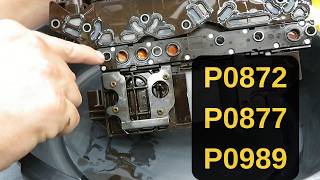
How to confirm: After confirming fluid level is correct and external wiring is intact, the TEHCM must be removed from the transmission for visual inspection. The ruptured orange laminate disc is typically obvious. One can also air-check the switches; a ruptured switch will not hold pressure. 🎬 Watch: How to test and repair these pressure switches. A vacuum test can also be performed on the individual switches after removal, checking if they can hold 25 inches of mercury.
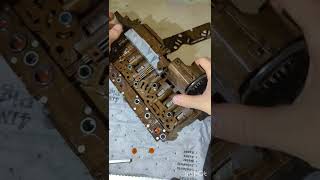
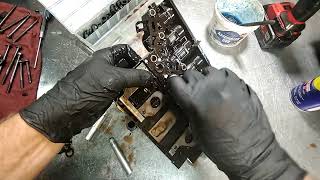
Typical fix: There are two paths: 1) Replace the entire TEHCM assembly with a new or remanufactured unit, which then requires programming by a dealer or properly equipped shop. 2) For advanced DIYers, replace the individual ruptured laminate discs and seals using an aftermarket repair kit (e.g., TransGo PSR-5 or Sonnax 124740-30K). 🎬 See a step-by-step guide on replacing the TEHCM membrane. This salvages the original TEHCM and avoids the need for programming.
Est. part cost: $20-$75 for a repair kit; $400-$800+ for a complete TEHCM assembly. - Wiring or Connector Issue at Transmission 🟡 Medium Probability → Shop Transmission Assembly GM issued TSB 08-07-30-021B (and later revisions) regarding GMLAN communication issues, which can be caused by chafed wiring or backed-out terminals at the main 16-way transmission harness connector. This can interrupt the signal from the pressure switch and mimic an internal component failure. Harnesses can also chafe against the cylinder head.
How to confirm: Visually inspect the wiring harness leading to the transmission for any signs of chafing, melting, or damage, especially where it routes near the engine. Disconnect the main connector and check for corrosion, moisture, or backed-out pins. The TSB specifically points to checking the terminal position assurance (TPA) lock.
Typical fix: Repair the damaged section of the wiring harness or clean/reseat/replace the faulty connector terminals. Ensure the TPA lock is fully seated.
Est. part cost: $10-$50 for wiring repair supplies. - Low or Burnt Transmission Fluid ⚪ Low Probability → Shop Transmission Assembly
How to confirm: Check the transmission fluid level and condition following the manufacturer's procedure (engine running, at operating temperature). The 6T70 has a check/fill plug on the side of the case, not a traditional dipstick. Fluid should be at the correct level, red in color, and not smell burnt.
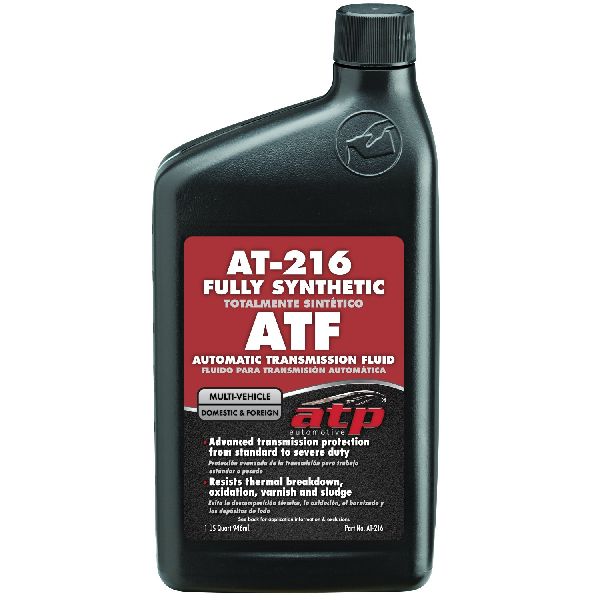
Typical fix: Top off the fluid to the correct level with DEXRON-VI fluid. If the fluid is low, the source of the leak must be found and repaired. If burnt, a fluid and filter change is a starting point, but internal damage may have already occurred.
Est. part cost: $50-$150 for fluid and filter.
Rare But Worth Checking
- Failed TEHCM Solenoid (not the pressure switch). While the laminate discs are the most common failure point, the solenoids within the TEHCM can also fail electrically, causing performance issues and codes. A repair kit for the discs will not fix a bad solenoid.
Diagnosis Steps
- Check the transmission fluid level and condition. Ensure it is full, clean, and does not smell burnt. Address any leaks.
- Use a scan tool to check for other related transmission DTCs. Codes for other pressure switches or solenoids strongly point to a TEHCM issue.
- Inspect the main transmission wiring harness and connector for any visible damage, corrosion, or loose pins, as outlined in GM TSB 08-07-30-021B. Pay close attention to the 16-way connector at the transmission case and areas where the harness may chafe on the engine.
- If fluid and wiring are good, the next step is to gain access to the TEHCM by removing the transmission's side cover.
- Once the TEHCM is removed, visually inspect the pressure switch laminate discs. Look for any orange discs that are torn, dislodged, or misshapen.
- If a disc is found to be ruptured, the TEHCM is confirmed as the faulty component. Proceed with either a TEHCM replacement or an internal repair kit.
- If no discs are ruptured, use a blow gun with a rubber tip and low pressure (around 30 psi) to air-check each switch. A good switch will hold air; a bad one will leak. Alternatively, a vacuum pump can be used to test if each switch holds 25 inches of mercury.
Parts You'll Likely Need
- Transmission Electro-Hydraulic Control Module (TEHCM)
(OEM #24256861 (verify by VIN))— This is the complete assembly containing the faulty pressure switch. This is the official manufacturer-recommended repair. It must be programmed to the vehicle after installation.
Trusted brands: ACDelco (OEM), Dorman (Remanufactured)
OEM price range: $500-$800
Aftermarket price range: $400-$600 - TEHCM Pressure Switch Repair Kit — This kit contains the replacement laminate discs and seals to repair the existing TEHCM, which is a much more affordable but complex repair that avoids the need for reprogramming.
Trusted brands: TransGo PSR-5, Sonnax 124740-30K
OEM price range: N/A
Aftermarket price range: $25-$75 - Transmission Valve Body Cover Gasket
(OEM #24269587 (for 2007-2008 models, verify by VIN))— This gasket must be replaced anytime the transmission side cover is removed to access the TEHCM.
Trusted brands: ACDelco, Fel-Pro
OEM price range: $30-$50
Aftermarket price range: $15-$30 - DEXRON-VI Automatic Transmission Fluid
(OEM #ACDelco 10-9395 (or equivalent))— The transmission will lose a significant amount of fluid when the side cover is removed. The system must be refilled with the correct specification fluid.
Trusted brands: ACDelco, Valvoline, Mobil 1
OEM price range: $10-$15 per quart
Aftermarket price range: $7-$12 per quart
Related Codes That Often Appear With This One
- P0873 — This is the code for 'TFP Switch 3 Circuit High'. It relates to the same switch and can appear if the fault is intermittent or related to a wiring short.
- P0741 — This code for 'TCC Stuck Off' can also be caused by pressure regulation issues originating from a faulty TEHCM.
- P0776 — This code for 'Pressure Control Solenoid 2 Stuck Off' points to another fault within the same TEHCM assembly. It is often associated with a broken 3-5-R wave plate, another common 6T70 failure.
- P0842 — This code for 'TFP Switch 1 Circuit Low Voltage' is also frequently seen with a broken 3-5-R wave plate.
Technical Service Bulletins (TSBs) & Recalls
- 08-07-30-021B/H - Addresses potential GMLAN communication errors from wiring issues at the transmission connector that can cause various transmission-related DTCs.
- 14404B - Special Coverage Adjustment for broken 3-5-R wave plate, a common internal failure on the 6T70/6T75 transmission.
- PIP4627A - Precursor TSB to the special coverage, identifying the broken 3-5-R wave plate as a cause for codes like P0776 and P0842.
Platform-Specific Known Issues
- The first generation 6T70/6T75 TEHCM is notorious for pressure switch laminate disc failure, leading to a variety of DTCs including P0872.
- This model also suffers from a high failure rate of the 3-5-R wave plate inside the transmission, which can cause loss of reverse and harsh shifts. GM issued Special Coverage Adjustment 14404B for this issue.
Mechanic-Grade Diagnostic Values
- Shift Solenoid (On/Off type) Resistance — expected: 20-40 ohms. Failure: A reading outside this range indicates a failed solenoid, requiring TEHCM replacement.
- PWM Solenoid (VBS type) Resistance — expected: 3-8 ohms (or 4-7 ohms, sources vary slightly). Failure: A reading outside this range indicates a failed solenoid, requiring TEHCM replacement.
- Shift Solenoid (On/Off type) Current Draw — expected: 0.3-0.7 amps at 12V. Failure: Incorrect amperage indicates a failed solenoid.
- TFP Switch Voltage (Normal Operation) — expected: Switches between 0V (low pressure) and ~5V (high pressure).. Failure: For P0872, the voltage for switch #3 remains low (0V) when it should be high.
- TFP Switch Vacuum Test — expected: Holds 25 inches of mercury.. Failure: Inability to hold a vacuum indicates a ruptured laminate disc or bad seal.
Scan Tool Commands That Help
- GM Tech2 / GDS2 or equivalent professional scan tool: Service Fast Learn / Transmission Adaptive Values Learn — This procedure is mandatory after replacing the TEHCM. It allows the new module to learn the hydraulic characteristics and clutch fill volumes of the specific transmission it's installed in. Failure to perform this can result in poor shift quality.
- GM Tech2 / GDS2 or equivalent professional scan tool: Solenoid Cleaning Procedure — Before replacing a TEHCM for performance DTCs, a technician can run this automated routine. The tool commands the solenoids to cycle while the system is pressurized to flush out potential debris that may be causing a valve to stick.
- GM Tech2 / GDS2 or equivalent professional scan tool: Solenoid On/Off Commands — Used during bench testing with a special test plate. A technician can command individual solenoids on and off while applying regulated air pressure to confirm the solenoid is functioning correctly and holding pressure.
Wiring & Ground Locations
- Main Transmission Connector — The 16-way (or 23-way, depending on source) connector on the side of the transmission case, where the main vehicle harness connects to the TEHCM pass-through connector.. This is the primary interface for all signals to and from the TEHCM, including the pressure switch signals. Corrosion, backed-out pins, or harness damage here can directly cause a 'Circuit Low' code like P0872, mimicking an internal failure. TSB 08-07-30-021B specifically targets this connector.
- G107 — On the right front of the engine for the 3.6L V6.. This is a primary engine ground. A poor connection here can cause electrical noise and voltage drops, potentially affecting the reference voltage or ground return for the TEHCM and its sensors, leading to erratic behavior and codes.
- G105 — Located at the center rear of the engine for the 3.6L V6.. This ground point is used by the Transmission Control Module (TCM). A corroded or loose connection here can directly impact the TCM's operation and its ability to correctly interpret sensor data.
- Harness Chafe Point — The wiring harness routing around the cylinder head.. A documented failure point is the harness rubbing against the edge of the cylinder head, eventually exposing wires. If the signal wire for TFP Switch #3 shorts to ground at this point, it will cause a P0872 code.
Real Owner Repair Stories
- YouTube Repair Channel 'Fix and Maintain' (Chevrolet Traverse with 6T70 Transmission (same powertrain family)) — Extended delay when shifting from Reverse to Drive. No check engine light was present, but the repair is listed as applicable for P0872.
❌ Tried (didn't work) Not specified; the diagnosis directly targeted the common TEHCM failure.
✅ What actually fixed it The TEHCM was removed, and the ruptured laminate pressure switch discs were replaced using an aftermarket repair kit. This resolved the delayed shifting symptom.
OEM Part Supersession History
24256861→19431596— This is an upgraded part released by GM to address reliability issues and supply shortages of the original TEHCM.
Heads up: While this part number is associated with GM 6-speed transmissions, it is critical to verify the correct part number by VIN. The part number 24256861 is used across many platforms, including Allison transmissions in trucks, and is not a universal fit for the Saturn Aura. Always match the part to the vehicle's specific calibration.
Model Year Variations Within This Range
- 2007-2009 (Gen 1 6T70): The TEHCM pressure switch failure is specific to the 'Gen 1' design of the 6T70/6T75 transmission. Later generations of this transmission used an improved TEHCM design that is less prone to this specific failure mode. The repair kits from Sonnax and TransGo are explicitly for the Gen 1 modules.
Diagnostic Flowchart
Other Known Issues on This Vehicle
Issues unrelated to this code that are worth knowing about as an owner of this generation:
- Premature Timing Chain Stretch (3.6L LY7) 🔴 High — Very common, often appearing between 70,000 and 120,000 miles. Causes codes like P0008, P0016, P0017. (Ref: TSB #12-06-01-009F, Special Coverage Adjustment #11340C (expired).)
- Broken 3-5-R Wave Plate 🔴 High — Common failure in 6T70/6T75 transmissions, leading to loss of 3rd, 5th, and Reverse gears. (Ref: Special Coverage Adjustment 14404B.)
- Loss of Electric Power Steering (EPS) Assist 🟠 Medium — Sudden loss of power steering assist can occur at any time while driving. (Ref: Recall #14152 / NHTSA Campaign 14V153000.)
- Brake Light Malfunction / BCM Voltage Fluctuation 🟡 Low — Can cause brake lights to stay on, cruise control to be disabled, and other electrical gremlins due to increased resistance in a BCM connection. (Ref: Recall #13036 / NHTSA Campaign 14V252000.)
- Leaking Power Steering Hoses 🟠 Medium — The hydraulic power steering lines on V6 models are prone to leaking, especially at the crimped ferrules, leading to fluid loss and pump noise.
- Transmission Shift Cable Failure 🔴 High → Shop Transmission Assembly — The shift cable adjustment clip can fail, causing a mismatch between the gear selector position and the actual transmission gear, potentially leading to a rollaway risk. (Ref: Recall #09041 / NHTSA Campaign 09V073000.)
Used vs. New Parts: Buying Guide for This Vehicle
When a used part is the smart pick: A used TEHCM from a junkyard is a high-risk option. While it may be cheaper initially, it likely suffers from the same inherent laminate disc flaw or may have other electronic issues. A used TEHCM will also require dealer programming to match the vehicle's VIN, adding cost and complexity. It only makes sense as a last resort if new or remanufactured units are unavailable and you are willing to accept the risk of premature failure.
Donor-vehicle mileage cap: roughly under 60000 miles for the part to have meaningful remaining life.
What to inspect on the donor part:
- Verify the donor vehicle was not in a severe front-end collision that could have damaged the transmission.
- Ask for the donor vehicle's VIN to check its service history if possible.
- Inspect the electrical connector pins for any signs of corrosion or damage.
- If possible, get a warranty from the salvage yard.
OEM-only on this vehicle (don't cheap out):
- Complete TEHCM Assembly: While remanufactured units from reputable sources like Dorman or Street Smart Transmission exist, the safest (though most expensive) bet is a new ACDelco OEM part, as it will have the latest revisions.
Aftermarket brands forum-validated for this vehicle:
- Sonnax (for pressure switch repair kit 124740-30K)
- TransGo (for pressure switch repair kit PSR-5)
- Dorman (for remanufactured complete TEHCM assemblies)
Brands owners have reported issues with on this vehicle:
- Unbranded, no-name pressure switch repair kits from online marketplaces have been reported by some users to use thinner materials that fail quickly.
Real Owner Stories
Aggregated from forums and TSBs cited above. Mileages and costs reflect what owners reported in those sources.
2008 Saturn Aura 3.6L V6 — ~85000 miles
Symptoms: Transmission failure, symptoms consistent with wave plate issues.
What fixed it: A new transmission was installed.
Cost: $3800-$3800
Source hint: Edmunds Car Forums - Saturn Aura Transmission Issues
Related OBD-II Codes
Frequently Asked Questions
My 2008 Saturn Aura has code P0872 and is also losing Reverse gear. Are these problems related?
Is the P0872 code on my Aura more likely to be a bad computer or a wiring issue?
Can I fix the TEHCM myself to clear the P0872 code without needing expensive dealer programming?
I saw TSB 08-07-30-021B mentioned for my Saturn. Could this TSB be related to my P0872 code?
What other GM vehicles share this same transmission problem leading to code P0872?
Helpful Videos

We Have This Part in Stock

The information in this article is provided for general reference and educational purposes only. Vehicle specifications, procedures, and part compatibility can vary by production date, trim level, and region. Always consult your vehicle's factory service manual and verify part numbers before purchasing or performing repairs. Safety-critical components such as airbags, seat belts, and braking systems should be installed by a qualified professional.
- Saturn Aura:
- 🧭 Diagnostic Flowchart
- 🎬 Helpful Videos
- 🛍️ Shop This Part
- What's Unique About the 2007-2009 Saturn Aura
- Symptoms You May Notice
- Most Likely Causes
- Rare But Worth Checking
- Diagnosis Steps
- Parts You'll Likely Need
- Related Codes That Often Appear With This One
- Technical Service Bulletins (TSBs) & Recalls
- Platform-Specific Known Issues
- Mechanic-Grade Diagnostic Values
- Scan Tool Commands That Help
- Wiring & Ground Locations
- Real Owner Repair Stories
- OEM Part Supersession History
- Model Year Variations Within This Range
- Other Known Issues on This Vehicle
- Used vs. New Parts: Buying Guide for This Vehicle
- Real Owner Stories
- 2008 Saturn Aura 3.6L V6 — ~85000 miles
- Related OBD-II Codes
- Frequently Asked Questions
- 🎟️ Get 5% Off