

P1440 on 2000-2006 Toyota Tundra 4.7L V8: Secondary Air Injection Failure Causes and Fixes
This code only applies to 2005-2006 Tundras. It means the Secondary Air Injection (SAI) system has failed, putting the truck in a low-power 'limp mode'. The root cause is a failed air pump sending debris into the air switching valves. The OEM repair is very expensive ($2,000+), so most owners install an aftermarket SAIS bypass kit for a permanent, cost-effective fix.
- P1440 only affects 2005-2006 Toyota Tundras with the 4.7L V8; earlier models are not affected.
- The code indicates a severe failure of the Secondary Air Injection (SAI) system that will put the truck in a low-power 'limp mode'.
- The root cause is a failed air pump under the intake manifold that destroys the air switching valves with debris.
- You have two main choices: a very expensive OEM repair ($2000+) or a much cheaper, highly-recommended aftermarket bypass kit (~$400) that permanently solves the problem.
- Simply replacing the one failed valve is not a fix; the entire system must be addressed.
What's Unique About the 2000-2006 Toyota Tundra
This code is a notorious issue, but it ONLY affects the 2005-2006 model years of the first-generation Tundra. The Secondary Air Injection (SAI) system was added to the 2UZ-FE engine in 2005 to meet stricter emissions rules; models from 2000-2004 do not have this system and will not experience this specific failure. The system's design is flawed: the air pump has an unfiltered inlet open to the atmosphere, allowing it to ingest moisture and dust. This causes the pump's internal foam filter and impeller to disintegrate, sending debris into the air switching valves and leading to a cascade of failures. This problem was so common that Toyota issued Technical Service Bulletin T-SB-0230-12 acknowledging the issue across the Tundra, Sequoia, 4Runner, and Land Cruiser platforms.
Symptoms You May Notice
- Check Engine Light is on
- VSC and/or TRAC lights are on
- Vehicle enters 'limp mode,' with severely limited engine power and acceleration (e.g., won't go over 40-50 mph)
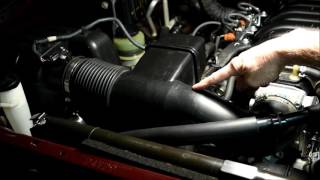
- Loud whining or 'vacuum cleaner' noise from the engine bay for 30-90 seconds on a cold start, which is a sign of the pump beginning to fail. 🎬 Listen to an example of this failing pump noise here.
- Flashing '4LO' light on 4WD models (this is part of the warning display, not a 4WD system fault)
- Replacing only the Bank 1 Air Switching Valve. This will not solve the problem long-term. The failed air pump has already contaminated the entire system, and the new valve will soon fail as well. Both the pump and both valves must be replaced together for a proper OEM repair.
- Diagnosing the issue as an EVAP system problem. Many generic code readers define P1440 as an EVAP fault, which is incorrect for this specific Toyota engine.
Most Likely Causes
- Failed Secondary Air Injection (SAI) Pump 🔴 High Probability → Shop Secondary Air Injection Pump The pump is located in an area where it can ingest moisture and debris (passenger side wheel well area), causing its internal foam filter and plastic fan blades to corrode and disintegrate over time. This is the root cause of the entire system failure.
How to confirm: Listen for a loud grinding or howling noise during a cold start, which indicates a failing pump. If there is no sound, the pump may have already seized completely. The pump is located under the intake manifold, making visual inspection difficult without disassembly.
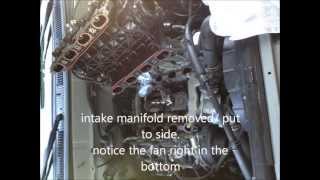
Typical fix: For a full OEM repair, the pump must be replaced. This is a labor-intensive job that requires removing the intake manifold. 🎬 Watch this walkthrough on how to remove the intake manifold. This repair must be done along with replacing the air switching valves, or debris from the old pump will destroy the new valves.
Est. part cost: $450-$600 for an OEM pump. - Seized/Failed Air Switching Valve (Bank 1) 🔴 High Probability This is a direct consequence of the air pump failing. Debris from the disintegrating pump is forced into the air switching valves, causing them to jam mechanically. This mechanical blockage eventually triggers the P1440 electrical circuit code when the ECU doesn't see the expected change in pressure or position.
How to confirm: Diagnosis is difficult without removing parts. The presence of P1440 along with other codes like P2440 (Valve Stuck Open) strongly indicates a seized valve. The valves are located at the rear of the engine, under the intake manifold assembly.
Typical fix: Replace the Air Switching Valve assembly. It is critical to replace the air pump at the same time, otherwise the new valve will quickly fail from the same contamination.
Est. part cost: $230-$280 for one OEM valve.
Rare But Worth Checking
- Damaged Wiring Harness: Rodents can chew on the wiring for the pump and valves, which are located under the intake manifold. This can cause an open or short in the circuit, triggering the P1440 code even if the components are mechanically sound. A forum user reported this exact issue.
Diagnosis Steps
- Confirm the presence of P1440 and any other related codes (P2440, P2442, P2445, C1201) using an OBD-II scanner.
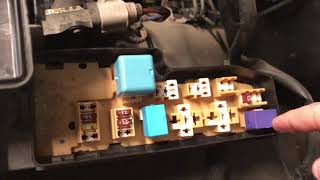
- On a cold engine, start the vehicle and listen for the SAI pump. A healthy pump sounds like a vacuum cleaner for 30-90 seconds. A loud grinding or howling noise indicates imminent failure; no noise indicates a dead pump or blown fuse/relay.
- Confirm the vehicle is in 'limp mode' (severely restricted power).
- At this point, the diagnosis is clear: the SAI system has failed. The owner must choose between two repair paths:
- a) Full OEM Repair: This involves removing the intake manifold to replace the air pump and both air switching valves. This is the most expensive option, often quoted at $2,000-$3,500.
- b) SAIS Bypass Kit: This involves installing an electronic module that bypasses the system entirely. This is the most common, cost-effective, and permanent solution for most owners, especially those not subject to strict emissions testing.
Parts You'll Likely Need
- Secondary Air Injection System Bypass Kit — This is the most popular and cost-effective fix. It electronically bypasses the entire failed system, clearing the check engine light and limp mode permanently without needing to replace the expensive mechanical parts.
Trusted brands: Hewitt-Tech, Slyfox
OEM price range: N/A
Aftermarket price range: $350-$450 - Air Pump Assembly
(OEM #17600-0F010)— This is the root cause of the failure and must be replaced for an OEM-style repair.
Trusted brands: Toyota (OEM), Dorman
OEM price range: $550-$720
Aftermarket price range: $150-$300 - Air Switching Valve Assembly (Bank 1)
(OEM #25710-50022)— This is the specific valve that triggers code P1440. It gets destroyed by debris from the failed pump and must be replaced in an OEM repair. This part number supersedes 25710-50020 and 25710-50021.
Trusted brands: Toyota (OEM)
OEM price range: $230-$280
Aftermarket price range: $100-$150 - Air Switching Valve Assembly (Bank 2)
(OEM #25720-50011)— It is highly recommended to replace both valves at the same time, as debris from the pump contaminates the entire system. Failure of the Bank 2 valve will trigger codes like P1443 or P2442.
Trusted brands: Toyota (OEM)
OEM price range: $230-$280
Aftermarket price range: $100-$150 - Intake Manifold Gaskets
(OEM #17171-50030)— Required when removing the intake manifold to access the pump and valves for an OEM repair.
Trusted brands: Toyota (OEM), Fel-Pro
OEM price range: $20-$30 each (2 required)
Aftermarket price range: $10-$20 each (2 required)
Related Codes That Often Appear With This One
- P2440 — Indicates the Bank 1 air switching valve is mechanically stuck open. This is the direct mechanical cause that leads to the P1440 circuit code.
- P2442 — Indicates the Bank 2 (driver's side) air switching valve is stuck. It is very common for debris from the pump to damage both valves simultaneously.
- P2445 — Indicates the Secondary Air Injection pump is stuck off. This code confirms the root cause is a seized or burned-out air pump motor.
- C1201 — This chassis code means 'Engine Control System Malfunction'. It is a secondary code triggered by the primary engine fault (like P1440) and is the code that actually activates the VSC/TRAC lights and limp mode.
Technical Service Bulletins (TSBs) & Recalls
- T-SB-0230-12: Acknowledges that a MIL 'ON' condition with codes like P1440, P2440, etc., on 2005-2006 Tundras with the 2UZ-FE engine may be caused by debris from the air pump contaminating the system.
Platform-Specific Known Issues
- The failure of this emissions component triggers a disproportionately severe 'limp mode' that makes the truck nearly undrivable on highways, which is a major point of frustration for owners.
- Due to the high cost of the OEM repair ($2000-$3500), the aftermarket bypass kit has become the standard, widely accepted solution within the owner community.
- The problem is so predictable that some owners proactively install a bypass kit as soon as they hear the 'vacuum cleaner' whine of the pump starting to fail, even before a check engine light appears.
Mechanic-Grade Diagnostic Values
- Air Switching Valve (ASV) Solenoid Coil Resistance — expected: 5.2 Ohms. Failure: An open circuit (infinite resistance) or a short (near zero ohms) indicates a failed solenoid coil.
- Fuel Pressure at Idle — expected: 265 - 304 kPa (38 - 44 psi). Failure: While not a direct cause of P1440, verifying correct fuel pressure is a baseline check when diagnosing any engine performance issue or limp mode condition.
- Air Pump Current Draw — expected: Approximately 25 to 30 Amps during operation.. Failure: A significantly higher draw could indicate a struggling motor, while zero draw indicates a dead pump or electrical supply issue.
Scan Tool Commands That Help
- Toyota Techstream: Active Test: Powertrain / Engine and ECT / Utility / Air Injection Check / Manual Mode — This function allows a technician to individually command the air pump and each air switching valve (ASV) on and off. It is the definitive way to test the functionality of each component in isolation after a circuit or mechanical fault code has been set, without needing a cold soak.
- Toyota Techstream: Active Test: Powertrain / Engine and ECT / Utility / Air Injection Check / Automatic Mode — This command initiates the entire SAIS self-test sequence on demand, even with a warm engine. It is used to verify a repair and confirm that the system can complete its cycle without setting pending codes. The scan tool will display a 'Pass' or 'Fail' result.
- Autel Scan Tool (MS906TS or similar): Active Test: Air Injection Check (Automatic and Manual Modes) — Professional-grade aftermarket scan tools like Autel replicate the OEM Techstream functionality, allowing for manual control of the pump/valves and initiation of the automatic system test. This is useful for independent shops that may not have Techstream software.
Wiring & Ground Locations
- Engine Control Module (ECM) — Behind the glovebox on the passenger side of the dashboard.. The ECM is the source of all commands to the SAIS and where the fault codes originate. Access is needed for advanced electrical diagnostics, such as checking for voltage at the ECM pins or if considering an ECM replacement after all other possibilities are exhausted.
- Ground Point: EU — On the right rear of the engine.. This is a primary ground point for engine components. A loose or corroded connection here can cause intermittent and difficult-to-diagnose electrical faults in various systems, including the SAIS.
- Ground Point: Engine Harness Ground (Shared) — The ground wire for the air switching valve shares a ground with the air pump motor.. A break in this shared ground wire can cause a circuit fault code for the valve (P1440/P1443) even if the valve's solenoid coil is good. A technician confirmed a good motor ground proves the main ground point is okay, isolating the fault to the wiring between the splice and the valve connector.
- Air Switching Valve Connector Pinout (Bank 1 & 2) — Connectors on the Air Switching Valves located under the intake manifold.. The 5-pin connectors for both Bank 1 and Bank 2 valves have identical pin functions: Pin 1 is ground, Pin 2 is the 5-volt reference, Pin 3 is the pressure sensor signal, Pin 4 is another ground, and Pin 5 is the voltage source. This is critical for testing for power, ground, and signal at the component.
Real Owner Repair Stories
- YouTube user 'DiagnosticDennis' (2005 Toyota Tundra 4.7L) — Check engine light with SAIS codes P1441 and P1444.
❌ Tried (didn't work) The customer had already replaced all physical SAIS components (pump and valves) but was still getting a circuit fault code.
✅ What actually fixed it A broken ground wire for the air switching valve. The technician performed a continuity test from the Air Injection Driver to the valve and found the power wire was good (3 ohms), but the ground wire showed an open circuit (14 million ohms). The pump motor ground was good, indicating the main ground point was intact, but the wire to the valve itself was broken somewhere in the harness. Bypassing the broken ground wire resolved the issue. - IH8MUD.com forum user (2007 Lexus LX470 (same 2UZ-FE engine and SAIS system)) — Check engine light with P1440 and P1443 after installing a Hewitt-Tech bypass kit.
❌ Tried (didn't work) Installing a Hewitt-Tech SAIS bypass kit, which is the standard fix., Replacing the first Hewitt-Tech module with a second one., Replacing the second module with a third one.
✅ What actually fixed it The issue was a combination of a bad batch of bypass modules from the manufacturer and a cracked ignition coil that was causing a rough idle. After replacing the faulty ignition coil and getting a functional bypass module from Hewitt-Tech, all codes were resolved.
Diagnostic Flowchart
Other Known Issues on This Vehicle
Issues unrelated to this code that are worth knowing about as an owner of this generation:
- Frame Rust/Corrosion 🔴 High — Extremely common on all 1st gen Tundras, especially those operated in cold climates with road salt. Can lead to structural failure. (Ref: Toyota initiated a recall and a Limited Service Campaign (SSC 90M) for 2000-2003 models, offering frame inspection, rust-proofing, or frame replacement. Later, 2004-2006 models were also acknowledged to have issues.)
- Lower Ball Joint Failure 🔴 High — Common enough to warrant multiple recalls. Failure can occur suddenly, leading to the wheel separating from the vehicle and a complete loss of steering control. (Ref: Recalls were issued for 2002-2006 models (NHTSA 05V-225, 07V-013) due to manufacturing defects or premature wear, offering replacement of the lower ball joints. Many owners replace them proactively every 100k miles as a maintenance item.)
- Cracked Exhaust Manifolds 🟠 Medium — Considered an inevitability on the 2UZ-FE engine. An audible ticking noise from the engine bay on a cold start that disappears as the engine warms up is the classic symptom. (Ref: No specific recall, but it is a widely documented problem across all vehicles with this engine. The design integrates the catalytic converter, making the manifold assembly heavy and prone to cracking from heat cycles and vibration.)
Used vs. New Parts: Buying Guide for This Vehicle
When a used part is the smart pick: For this specific P1440 failure, using used parts is STRONGLY DISCOURAGED. The failure is caused by a design flaw that allows moisture and debris into the system. A used air pump or air switching valve from a junkyard donor vehicle is almost guaranteed to have the same contamination and will either be failed already or will fail very shortly after installation.
What to inspect on the donor part:
- Do not purchase used SAIS pumps or valves for this repair.
OEM-only on this vehicle (don't cheap out):
- Air Switching Valves (Bank 1 & 2): While aftermarket valves exist, the OEM parts are recommended for an OEM-style repair due to better quality control. However, this is moot for most owners who opt for a bypass kit.
- SAIS Bypass Kit: While not an OEM part, it is critical to buy from a reputable, well-supported brand like Hewitt-Tech. Cheaper, unsupported kits can lead to persistent codes and diagnostic headaches.
Aftermarket brands forum-validated for this vehicle:
- Hewitt-Tech: Widely regarded in owner forums as the gold standard for SAIS bypass kits, with strong customer support for troubleshooting.
- Slyfox: Another mentioned brand for bypass kits.
Brands owners have reported issues with on this vehicle:
- Dorman Air Pump: While Dorman offers a replacement pump (e.g., 306-010) with a lifetime warranty, forum users note that they are not a permanent solution and may only last a couple of years before failing again. This option should only be considered if you are committed to an OEM-style repair on a budget and are willing to perform the labor repeatedly.
Real Owner Stories
Aggregated from forums and TSBs cited above. Mileages and costs reflect what owners reported in those sources.
2007 Toyota Tundra 4.7L V8
Symptoms: Check Engine Light, VSC, and TRAC lights came on simultaneously. The truck entered 'limp mode' with severely limited power.
What fixed it: Instead of a $2,000+ OEM repair, the owner opted for an aftermarket SAIS bypass kit.
Cost: $300
Source hint: Go-Parts owner report
2005-2006 Toyota Tundra 4.7L V8
Symptoms: Classic limp mode symptoms including low power and inability to exceed highway speeds.
What fixed it: Installation of an electronic module that bypasses the system entirely.
Source hint: Tundras.com - 'limp mode' thread
Related OBD-II Codes
Frequently Asked Questions
Does TSB-0230-12 apply to my 2005 Toyota Tundra with the 4.7L V8?
Why is my Tundra stuck in 'limp mode' and won't go over 40-50 mph?
I hear a loud 'vacuum cleaner' noise on cold starts; should I be worried?
Can I just replace the Air Switching Valve to fix P1440?
Is there a cheaper alternative to the $2,000-$3,500 OEM repair for the SAI system?
Are there other major issues I should watch for on my 2000-2006 Tundra?
Helpful Videos


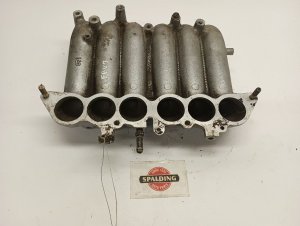
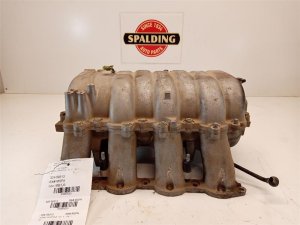
Used OEM Parts in Stock
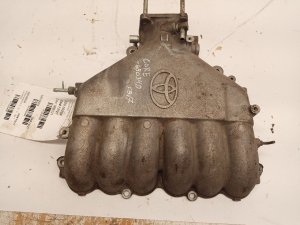
New Aftermarket Parts Available


The information in this article is provided for general reference and educational purposes only. Vehicle specifications, procedures, and part compatibility can vary by production date, trim level, and region. Always consult your vehicle's factory service manual and verify part numbers before purchasing or performing repairs. Safety-critical components such as airbags, seat belts, and braking systems should be installed by a qualified professional.
- Toyota Tundra:
- 🧭 Diagnostic Flowchart
- 🎬 Helpful Videos
- 🛍️ Shop This Part
- What's Unique About the 2000-2006 Toyota Tundra
- Symptoms You May Notice
- Most Likely Causes
- Rare But Worth Checking
- Diagnosis Steps
- Parts You'll Likely Need
- Related Codes That Often Appear With This One
- Technical Service Bulletins (TSBs) & Recalls
- Platform-Specific Known Issues
- Mechanic-Grade Diagnostic Values
- Scan Tool Commands That Help
- Wiring & Ground Locations
- Real Owner Repair Stories
- Other Known Issues on This Vehicle
- Used vs. New Parts: Buying Guide for This Vehicle
- Real Owner Stories
- 2007 Toyota Tundra 4.7L V8
- 2005-2006 Toyota Tundra 4.7L V8
- Related OBD-II Codes
- Frequently Asked Questions
- 🎟️ Get 5% Off