

P1442 on 2005-2009 Toyota 4Runner 4.7L V8: Secondary Air Injection Valve Failure Causes and Fixes
On a 2005-2009 4Runner V8, P1442 almost always means the Secondary Air Injection (SAI) valve for Bank 1 is seized due to moisture from the air pump. The official fix is a costly replacement of valves and pumps (over $2,000), but many owners install a much cheaper aftermarket electronic bypass kit to resolve the check engine light.
- P1442 on a 2005-2009 4Runner V8 points directly to a failed Secondary Air Injection (SAI) valve, usually caused by moisture from the air pump.
- This is a very common, well-documented design flaw.
- An OEM repair is very expensive ($2000+) and involves replacing valves and pumps, requiring removal of the intake manifold.
- Driving is possible, but a 'limp mode' with reduced power is a risk.
- For many owners, a much cheaper electronic bypass kit is a popular and effective long-term solution to eliminate the check engine light, provided it is legal in their state.
What's Unique About the 2003-2009 Toyota 4Runner
This is a notoriously common and expensive failure on the 2005-2009 4Runner V8 and its platform mates (Tundra, Sequoia, GX470, etc.). The 2003-2004 4.7L V8 engines did not have this SAI system and are not affected. The issue stems from a design flaw where the air pump's foam filter degrades or the housing allows it to ingest moisture. This water is then pumped into the air switching valves, located in the engine valley under the intake manifold, causing them to corrode and seize. This is a well-documented pattern failure, not a random occurrence, and was the subject of Toyota's Technical Service Bulletin T-SB-0230-12 Rev1 and a now-expired warranty enhancement program.
Symptoms You May Notice
- Check Engine Light is on
- VSC and TRAC control lights may also illuminate
- Vehicle may enter 'limp mode' with drastically reduced engine power (stuck around 2500 RPM).
- A loud, vacuum-cleaner-like noise from the air pump for about 30-60 seconds on cold start is normal, but its absence could indicate a failed pump.
- A louder-than-normal whining or howling sound on cold start can be an early warning sign of a failing pump.
- Replacing only one switching valve. The moisture that killed one valve has almost certainly damaged the other, and it will likely fail soon after.
- Replacing the valves without replacing or modifying the air pump. If the source of the moisture is not addressed, the new valves will fail prematurely.
- Installing a bypass kit without the included block-off plates. Some forum users report that failing to install the plates can lead to other rich-condition codes (P0172, P0175) as exhaust gases may still interact with the system.
Most Likely Causes
- Seized Air Switching Valve #2 (Bank 1) 🔴 High Probability The root cause is a design flaw where the air injection pump ingests moisture and sends it directly to the valves, causing internal corrosion and seizure. This is especially common in humid climates or areas with significant temperature swings that cause condensation.
How to confirm: Diagnosis requires accessing the valves under the intake manifold, which is a labor-intensive job. A technician can test the valve's function by applying vacuum or using a scan tool like Toyota Techstream to command it open. However, given the extremely high failure rate, the presence of code P1442 (especially if paired with P1445 for the other bank) is a near-certain indicator of valve failure. Manufacturer Bulletin #T-SB-0230-12 specifically links P1442 and P1445 to the Secondary Air Injection System Switching Valve No. 2 being stuck closed.
Typical fix: Replace the seized valve assembly. Due to the high likelihood of the other valve failing soon, both are typically replaced at the same time. The root cause (air pump) must also be replaced or modified to prevent a repeat failure.
Est. part cost: $200-$800 per valve (OEM) - Failed Secondary Air Injection Pump 🟡 Medium Probability → Shop Secondary Air Injection Pump The pump's foam filter degrades or the pump housing cracks, allowing it to suck in water, which is the primary cause of the valve failure. The pump itself can also fail from water damage, causing its motor to seize or the plastic impeller fins to break apart and contaminate the system.
How to confirm: Listen for the pump running on a cold start. If it does not run, check the 'AIR' fuse and relay first. If it sounds rough, is full of water upon removal, or sends no air, it has failed. The pump is located under the intake manifold, requiring significant disassembly to access.
Typical fix: Replace the air pump assembly. It is strongly recommended to replace the pump if you are replacing the valves to prevent a repeat failure. Some owners modify the new pump by drilling a small drain hole to prevent future water accumulation.
Est. part cost: $400-$700 for OEM, $200-$350 for aftermarket
Rare But Worth Checking
- SAI System Bypass Kit Installation: This is not a cause of the problem, but a common solution. For owners in regions without strict emissions testing, installing an electronic bypass kit is a popular, permanent, and much cheaper alternative to the expensive component replacement. The kit electronically tricks the ECU into thinking the system is functioning perfectly, turning off the check engine light and preventing limp mode. Hewitt-Tech is the most frequently cited manufacturer of these kits.
- Faulty Air Injection Control Driver: A less common cause is the failure of the electronic driver (relay) that controls the pump and valves. TSB T-SB-0230-12 Rev1 notes that if codes P0418 and P2445 are present together, the driver is a primary suspect.
Diagnosis Steps
- Confirm the presence of code P1442 with an OBD-II scanner.
- Check for related SAI system codes like P1445, P2440, P0418, etc.
- On a cold start (engine cold for several hours), listen for the air pump running for 30-60 seconds. It sounds like a loud blower or vacuum cleaner, typically from the front passenger side of the engine bay.
- If the pump runs but sounds excessively loud, rough, or like a jet engine, its bearings are likely failing.
- If the pump does not run, check the relevant fuses (marked 'AIR' or similar) and relays for the SAI system first.
- If the pump runs, the failure is almost certainly the switching valves under the intake manifold.
- Due to the 5+ hours of labor involved in accessing the valves, most owners and shops proceed with replacement based on the code alone, as it's a known pattern failure.
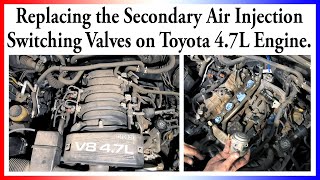
- The official repair requires removing the intake manifold to access 🎬 Watch this step-by-step walkthrough of the valve replacement process. and replace the switching valves. It is best practice to replace both valves (Bank 1 and Bank 2) and the air pump at the same time.
- Alternatively, consider installing an aftermarket bypass kit, which involves installing electronic modules and block-off plates at the valve inlets, a much less labor-intensive job.
Parts You'll Likely Need
- Air Switching Valve Assembly (Bank 1)
(OEM #25710-50022 (supersedes 25710-50020, 25710-50021))— This is the component that gets stuck closed and directly triggers code P1442.
Trusted brands: Toyota (OEM)
OEM price range: $200-$300
Aftermarket price range: N/A - Air Switching Valve Assembly (Bank 2)
(OEM #25720-50020)— This is the valve for the other bank. Since it has been exposed to the same moisture, it is highly recommended to replace it at the same time as the Bank 1 valve to prevent a repeat repair job.
Trusted brands: Toyota (OEM)
OEM price range: $400-$600
Aftermarket price range: N/A - Secondary Air Injection Pump
(OEM #17600-0F010)— This pump is the source of the moisture that causes the valves to fail and should be replaced to prevent a recurrence of the problem.
Trusted brands: Toyota (OEM), Dorman
OEM price range: $600-$700
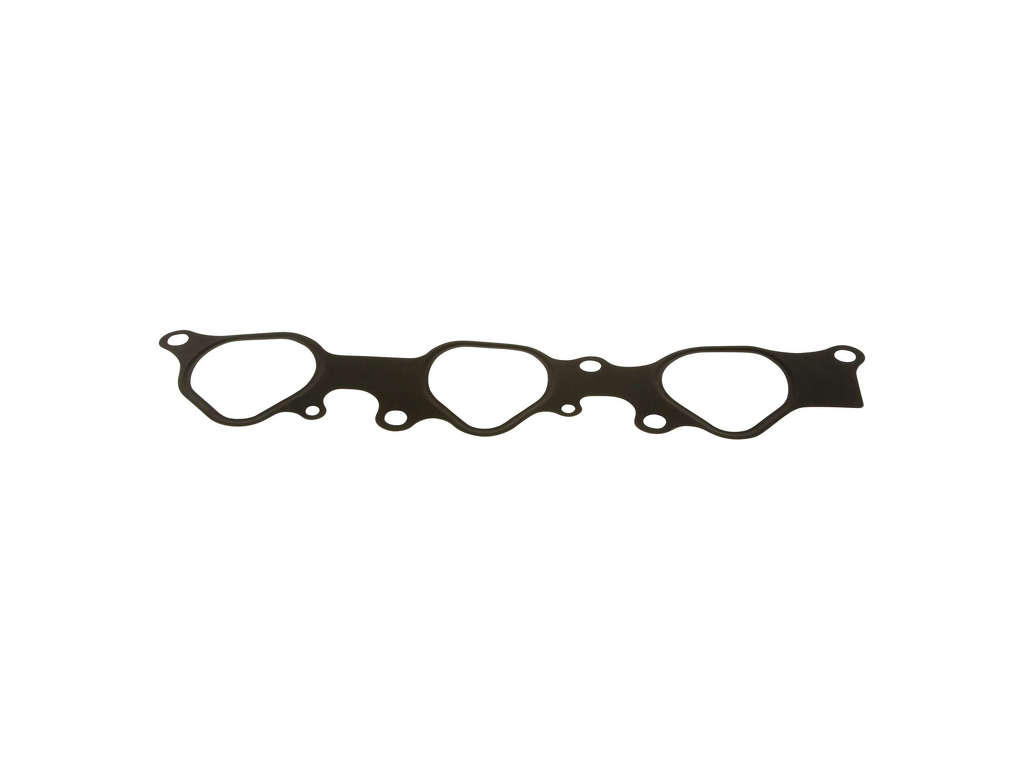
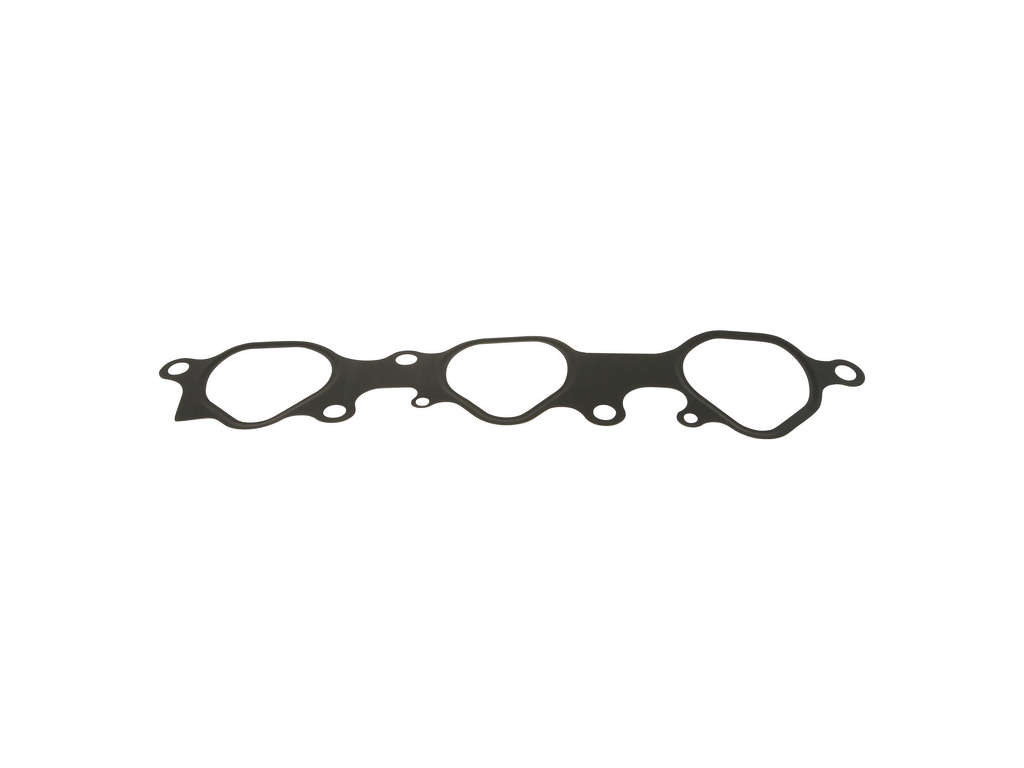
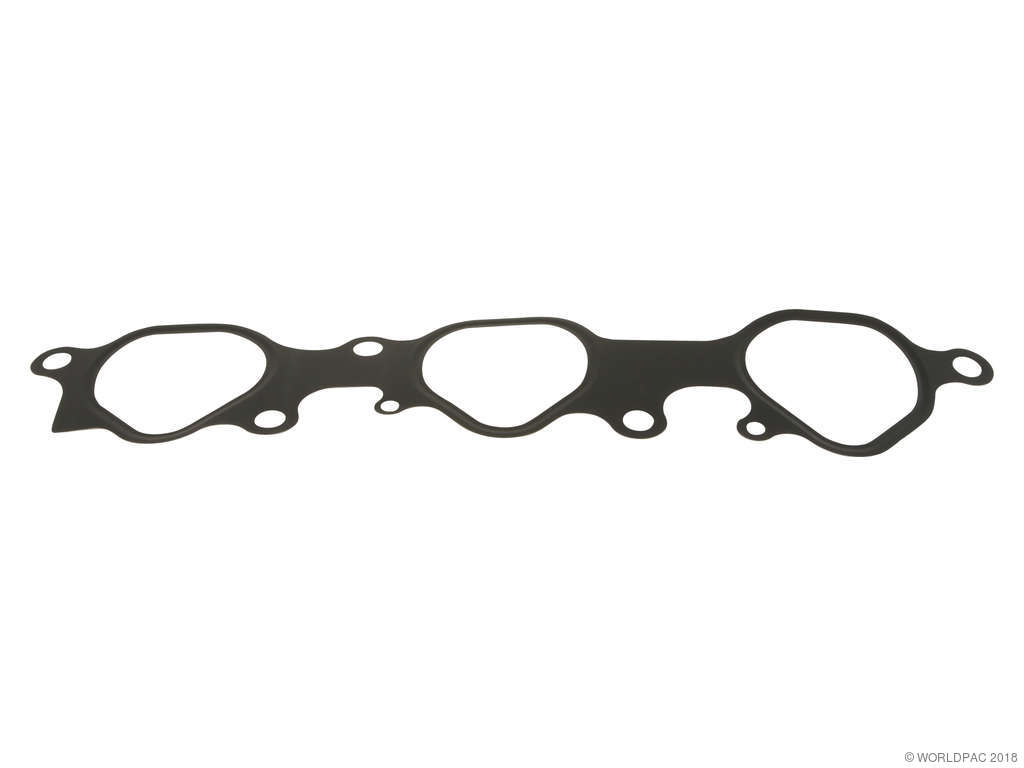
Aftermarket price range: $200-$350 - Intake Manifold Gaskets
(OEM #17171-50030)— These are one-time-use gaskets that must be replaced when the intake manifold is removed to access the SAI valves.
Trusted brands: Toyota (OEM), Fel-Pro
OEM price range: $40-$60
Aftermarket price range: $20-$30 - SAI System Bypass Kit — A cost-effective alternative to a full repair. It electronically disables the system and tricks the ECU, clearing the code and preventing limp mode. This is for off-road use or areas without emissions testing.
Trusted brands: Hewitt-Tech (Gen 1 or Gen 2 kits)
OEM price range: N/A
Aftermarket price range: $150-$400
Related Codes That Often Appear With This One
- P1445 — This code is for 'Switching Valve No. 2 Stuck Closed Bank 2'. The moisture that damages the Bank 1 valve usually damages the Bank 2 valve at the same time, so these codes often appear together.
- P2440, P2441, P2442, P2443, P2445, P2447 — These are all various codes related to the Secondary Air Injection system, indicating issues like valves stuck open, pumps stuck off, or pressure sensor faults. Their presence points to a widespread system failure, often originating from the same root cause of moisture and debris.
- P0418 — This code indicates a fault in the air pump control circuit. It often appears when the pump motor has seized from water damage, blowing a fuse or damaging the control driver.
Technical Service Bulletins (TSBs) & Recalls
- T-SB-0230-12 Rev1: Published Nov 27, 2012. Covers diagnosis and repair for multiple Secondary Air Injection System DTCs (including P1442) for 2005-2009 4Runner, 2005-2006 Tundra, 2005-2007 Sequoia, and 2006-2007 Land Cruiser. It identifies the cause as debris from the air pump contaminating the system.
- Bulletin #T-SB-0230-12 Rev: Dated Oct 17, 2013. This updated bulletin clarifies that codes P1442 and P1445 specifically indicate the Secondary Air Injection System Switching Valve No. 2 for Bank 1 or Bank 2 is stuck closed.
Platform-Specific Known Issues
- Toyota issued Technical Service Bulletin T-SB-0230-12 Rev1, which details the diagnostic and repair procedure for a list of SAI system codes, including P1442, on the 4.7L 2UZ-FE engine. This bulletin acknowledges the widespread nature of the problem and lists affected vehicles and part numbers.
- The location of the SAI valves and pump underneath the intake manifold makes this repair particularly difficult and labor-intensive, often requiring 5-7 hours of work.
- Some owners on forums report that the issue is more frequent in cold, damp climates where moisture can freeze inside the valves, causing them to stick.
Mechanic-Grade Diagnostic Values
- Voltage at SAI Pump Connector — expected: ~12V (Battery Voltage). Failure: 0V indicates a problem with the fuse, relay, or Air Injection Driver. 12V with no pump sound indicates a seized pump motor.
- Resistance of VSV (Vacuum Switching Valve) Solenoid — expected: 33 to 39 Ω at 20°C (68°F). Failure: A reading outside this range, or an open/short circuit, indicates a failed solenoid.
Hidden / Shadow Codes Worth Checking
- P0418 + P2445: While not 'shadow codes,' the simultaneous presence of P0418 (SAI Relay Circuit) and P2445 (Pump Stuck Off) is a specific combination that Toyota's TSB highlights as pointing directly to a failed Air Injection Control Driver, rather than the pump or valves themselves. (see via Standard OBD-II scanner.)
Scan Tool Commands That Help
- Toyota Techstream: Active Test: 'Air Injection Check' — This utility allows a technician to manually command the system's components to operate independently for diagnosis. The specific path is Powertrain / Engine and ECT / Utility / Air Injection Check / Manual Mode. From there, you can toggle 'AIR PUMP 1: ON/OFF' and 'ASV1: OPEN/CLOSE' to verify the function of the pump and valves without a cold start.
Wiring & Ground Locations
- Air Injection Control Driver (AID) Connectors — On the inner driver-side fender in the engine bay, typically mounted on a bracket near the brake master cylinder.. This is the central electrical hub for the SAI system. The main power comes in here, and control signals go out to the pump and valves. Diagnosing electrical issues or installing a bypass kit starts at these black and gray connectors.
- Air Switching Valve (ASV) Connectors — At the rear of the engine, on top of the valves which are located in the engine valley, underneath the intake manifold.. These connectors are difficult to access but are the final point for testing signals to the valve solenoids. A bypass kit harness will plug in-line with these connectors and the factory harness.
Real Owner Repair Stories
- Toyota Tundra Forum thread (Toyota Tundra (with same 2UZ-FE engine and SAI system)) — Persistent P1442 code ('SAI Switching Valve #2 Bank 1 Stuck Closed').
❌ Tried (didn't work) Replaced the #2 Air Switching Valve (for Bank 1), Replaced the associated vacuum switching valves/solenoids, Replaced the main air pump, Verified vacuum lines held vacuum and valves could be heard opening
✅ What actually fixed it The issue was unresolved after replacing all common components. The owner and others in the thread were suspecting the next failure points were either the main Air Switching Valve (diverter valve, located after the pump), the Air Injection Control Driver, or a fault in the Engine Control Module (ECM) itself. This demonstrates a scenario where the standard fixes are not enough. - NHTSA ODI #11421866 — An owner reported a cluster of codes including P1442, P1445, P2441, and P1441. The owner stated they had to install a completely new Secondary Air Injection System due to the defective emissions system.
"I Checked Everything" — The Actual Cause
- A smoke test is not a standard diagnostic procedure for this code. The equivalent scenario is when all mechanical components (pump, valves) are replaced with new parts and test good, yet the code returns. In these cases, as documented in forum discussions, the root cause is often not a mechanical or vacuum leak issue, but an electrical fault upstream. The primary suspects become the Air Injection Control Driver (the system's dedicated computer/relay) or, in very rare cases, the main Engine Control Module (ECM).
OEM Part Supersession History
25710-50020, 25710-50021→25710-50022— Standard part revision and improvement by the manufacturer.
Heads up: The newer part number (25710-50022) is the correct and direct replacement for the older versions and should be used for all repairs.
Model Year Variations Within This Range
- 2005-2009: No significant variations in the design or function of the Secondary Air Injection system are noted within the 2005-2009 model years for the 4Runner 4.7L V8. The TSBs and aftermarket solutions treat this entire range as a single group.
Diagnostic Flowchart
Used vs. New Parts: Buying Guide for This Vehicle
When a used part is the smart pick: Almost never for the core functional components (pump, valves). The failure is due to a design flaw causing moisture damage, not simple wear. A used part from a salvage yard has been exposed to the same conditions and is likely to fail soon, making the extensive labor required for replacement a wasted effort. Used parts should only be considered for non-functional items like mounting brackets if they were damaged during repair.
What to inspect on the donor part:
- Not applicable for this failure mode. The critical damage (internal valve seizure, pump motor corrosion) is not externally visible. A visually clean part can still be completely non-functional.
OEM-only on this vehicle (don't cheap out):
- Air Switching Valve Assembly. There are no known direct aftermarket replacements for the valve assemblies themselves. The only options are OEM new parts or a complete system bypass kit. Given the high labor cost, using a guaranteed OEM part is critical if choosing the repair route.
Aftermarket brands forum-validated for this vehicle:
- Hewitt-Technologies: This is the most reputable and widely recommended brand for SAI bypass kits, which is the most common alternative to OEM repair.
- Dorman: Offers a replacement air pump (P/N 306-010) which is a viable, lower-cost alternative to the OEM pump. However, forum discussions indicate mixed long-term reliability compared to OEM, which is a consideration given the labor involved.
Brands owners have reported issues with on this vehicle:
- Unbranded or 'white-box' air pumps and valves from online marketplaces. The quality control is unknown, and the risk of premature failure is very high. For a repair this labor-intensive, the cost savings are not worth the risk of having to do the job twice.
Real Owner Stories
Aggregated from forums and TSBs cited above. Mileages and costs reflect what owners reported in those sources.
2008 Toyota 4Runner 4.7L V8 — 110000 miles
Symptoms: The Check Engine Light came on, and a scan revealed two codes: P1442 – Switching Valve No.2 Stuck Close Bank 1, and P1445 – Switching Valve No.2 Stuck Close Bank 2.
What fixed it:
Source hint: Reddit r/4Runner
2006 Toyota Tundra 4.7L V8
Symptoms: Owner experienced a frustrating situation with recurring P1442 and P1445 codes.
What fixed it: The owner reported that even after replacing the air injection pumps and valves multiple times, the codes continued to return, highlighting the complexity of the issue.
Source hint: Reddit r/MechanicAdvice: Toyota ais codes p1442 and 1445 need help
2005 Lexus GX470 4.7L V8
Symptoms: The vehicle threw code P1442, which also caused the traction control system to be disabled, described as a major annoyance of the fault.
What fixed it:
Source hint: Overland Bound: GX470 2UZ-FE Secondary Air Injection System Replacement
Toyota Tundra 4.7L V8
Symptoms: SAI system codes persisted after aftermarket SAI valves had already been installed.
What fixed it: The issue was fully resolved by installing a Hewitt-Tech bypass kit, which also required additional pressure sensor modules to work correctly with the previously installed aftermarket parts.
Source hint: BobIsTheOilGuy Forum: Unreliable Toyota. Help.
Related OBD-II Codes
Frequently Asked Questions
Does Toyota have a TSB for the P1442 code on my 2003-2009 4.7L V8 4Runner?
My Check Engine, VSC, and TRAC lights are all on. Is this related to code P1442?
Why is the repair for the P1442 air injection valve so expensive and labor-intensive?
I hear a loud vacuum cleaner noise on cold starts. Is my air pump failing?
My mechanic wants to replace both switching valves and the pump for a single P1442 code. Is this necessary?
Is there a less expensive alternative to replacing the entire SAI system on my 4Runner?
I live in a cold, damp climate. Does that make this P1442 failure more likely?
Helpful Videos
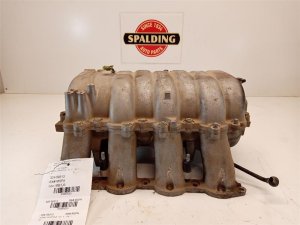
Used OEM Parts in Stock
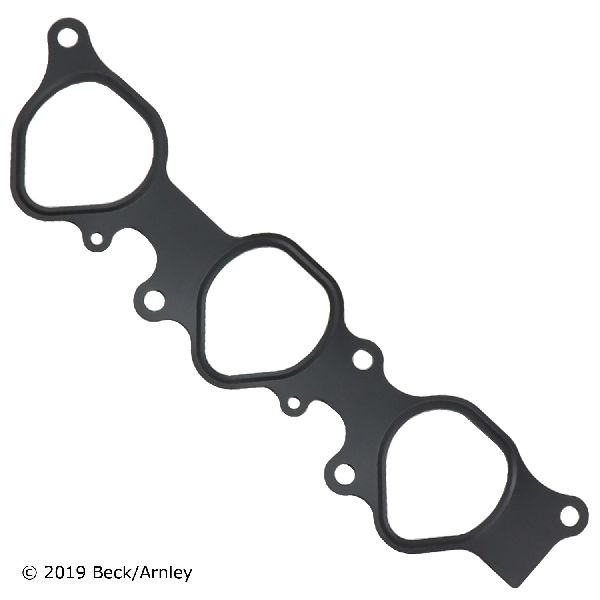
New Aftermarket Parts Available


The information in this article is provided for general reference and educational purposes only. Vehicle specifications, procedures, and part compatibility can vary by production date, trim level, and region. Always consult your vehicle's factory service manual and verify part numbers before purchasing or performing repairs. Safety-critical components such as airbags, seat belts, and braking systems should be installed by a qualified professional.
- Toyota 4Runner:
- 🧭 Diagnostic Flowchart
- 🎬 Helpful Videos
- 🛍️ Shop This Part
- What's Unique About the 2003-2009 Toyota 4Runner
- Symptoms You May Notice
- Most Likely Causes
- Rare But Worth Checking
- Diagnosis Steps
- Parts You'll Likely Need
- Related Codes That Often Appear With This One
- Technical Service Bulletins (TSBs) & Recalls
- Platform-Specific Known Issues
- Mechanic-Grade Diagnostic Values
- Hidden / Shadow Codes Worth Checking
- Scan Tool Commands That Help
- Wiring & Ground Locations
- Real Owner Repair Stories
- "I Checked Everything" — The Actual Cause
- OEM Part Supersession History
- Model Year Variations Within This Range
- Used vs. New Parts: Buying Guide for This Vehicle
- Real Owner Stories
- 2008 Toyota 4Runner 4.7L V8 — 110000 miles
- 2006 Toyota Tundra 4.7L V8
- 2005 Lexus GX470 4.7L V8
- Toyota Tundra 4.7L V8
- Related OBD-II Codes
- Frequently Asked Questions
- 🎟️ Get 5% Off