

P1442 on 2005-2009 Toyota Sequoia: Air Injection Valve Stuck Closed Causes and Fixes
P1442 on a 4.7L V8 Sequoia means the Secondary Air Injection (SAI) valve for Bank 1 is stuck closed. This is a very common failure caused by moisture from the air pump. The official fix is an expensive ($2,000+) replacement of the pumps and valves, but many owners choose a much cheaper aftermarket electronic bypass kit.
- P1442 on your Sequoia is almost certainly a failure of the Secondary Air Injection (SAI) system, not a random fluke.
- The root cause is a faulty air pump that allows moisture to enter and destroy the metal switching valves.
- You have two main fix options: a complete, very expensive OEM parts replacement, or a much cheaper aftermarket electronic bypass kit (if local regulations allow).
- A full DIY repair is extremely difficult (5/5), as it requires removing the entire intake manifold to access the components.
- Ignoring the code can lead to the vehicle entering a power-reducing 'limp mode' and will cause an automatic failure on an emissions test.
What's Unique About the 2005-2009 Toyota Sequoia
The 4.7L 2UZ-FE V8 in this generation of Sequoia is notorious for this specific failure. A critical design flaw is that the air pump assembly, located under the intake manifold, has an inlet with a simple foam filter that is open to the under-manifold atmosphere. This foam can degrade, allowing the pump to ingest moisture and debris over time. This water is then forced through the system, causing the metal air switching valves to corrode, rust, and ultimately seize. This is not a random component failure but a well-documented pattern issue for this platform and its mates (Tundra, 4Runner, GX/LX470), leading Toyota to issue Technical Service Bulletin T-SB-0230-12.
Generation note: This range covers the late first-generation (2005-2007) and the early second-generation (2008-2009) Sequoia, both of which used the 4.7L 2UZ-FE engine with this specific Secondary Air Injection system. The failure mode and primary components are the same across these years and also apply to the Tundra, 4Runner, and Lexus GX/LX470 models with the same VVT-i 2UZ-FE engine.
Symptoms You May Notice
- Check Engine Light is on
- VSC and/or TRAC warning lights are on
- Vehicle enters 'limp mode' with drastically reduced engine power (may not accelerate past ~2500 RPM)
- Loud vacuum cleaner or pump noise from the engine bay for a minute after a cold start, which may turn into a grinding sound as the pump fails
- Intermittent codes that may appear more frequently in cold or humid weather, as moisture in the system can freeze and cause the valves to stick.
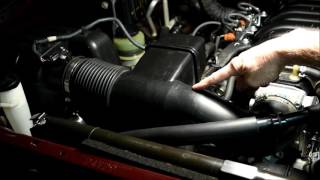
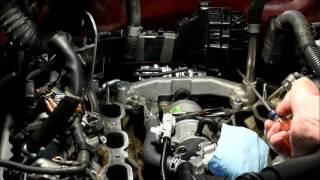
- Replacing only one switching valve. Because the root cause is moisture from the pump, the other valve is almost certain to fail soon after. The high labor cost of removing the intake manifold makes it impractical 🎬 Watch: Step-by-step guide to removing the intake manifold to not replace both at the same time.
- Replacing the valves but not the air pump. If the original pump is failing and sending moisture or debris downstream, it will quickly destroy the new, expensive valves.
- Assuming a bypass kit will fix a valve stuck open. Bypass kits work by preventing the system from running. If a valve is already stuck in the open position (e.g., code P2440), hot exhaust can still flow backward and damage components. In these cases, block-off plates must be installed.
Most Likely Causes
- Failed Air Injection Switching Valve #2 (Bank 1) 🔴 High Probability The valves are made of metal and are located in the hot engine valley. The root cause is moisture being pushed into them from the failing air pump, which causes internal rust and seizure. Debris from a disintegrating pump fan can also physically jam the valve.
How to confirm: During a full repair, the valves are removed and can be physically inspected for corrosion and tested for operation with a hand-held vacuum pump. A seized valve will not hold vacuum or actuate. A technician with a tool like Toyota's Techstream can command the valve to open and monitor the system's pressure sensor for a change.
Typical fix: Replacement of the air switching valve assemblies. Since the labor to access them is extensive (intake manifold removal), it is highly recommended to replace the valves for both banks at the same time.
Est. part cost: $400-$600 for both valve assemblies (OEM) - Failed Secondary Air Injection Pump 🔴 High Probability → Shop Secondary Air Injection Pump This is the root cause of the entire problem. The pump's air inlet is unsealed and uses a foam filter that degrades, allowing it to suck in moisture and road debris from the engine valley. The pump's plastic fan blades can also break apart, sending shrapnel into the valves and causing them to jam.
How to confirm: Listen for a loud, abnormal grinding or whining noise on cold start. If the intake manifold is removed, the pump can be inspected for water damage or broken fan blades. A technician can also command the pump on with a scan tool to check for operation.
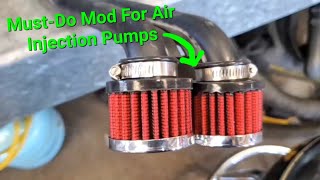
Typical fix: Replacement of the air pump assembly. This is considered essential for a long-term OEM repair to prevent the new valves from failing again. Some owners add a DIY pre-filter to the new pump's inlet to prolong its life.
Est. part cost: $450-$650 (OEM) - Cracked or Disconnected Vacuum Lines ⚪ Low Probability The vacuum lines that actuate the switching valves are located in the hot engine valley and can become brittle and rock-hard over time. A large wiring harness runs close to the nipples on the valves and can cause them to break off if not handled carefully during service.
How to confirm: Visually inspect all vacuum lines running to the air switching valves for cracks, breaks, or loose connections. Test the lines with a vacuum gauge. The vacuum switching solenoids (VSVs) can be tested with a 12V source to ensure they click and pass vacuum.
Typical fix: Replace the damaged section of vacuum hose.
Est. part cost: $5-$20
Rare But Worth Checking
- Failed Air Injection Control Driver: This is the electronic module that controls the pumps and valves. TSB T-SB-0230-12 mentions diagnosing this module if other codes like P0418 or P2445 are present. It's a possible, though less common, point of failure.
- Faulty Air Pressure Sensor: The ECU relies on this sensor (located on the Bank 1 valve assembly) to confirm the valves have opened. If the sensor is faulty, it may not detect the pressure change, leading to a P1442 code even if the valve is working. A forum user reported this as a potential cause after replacing all other components.
Diagnosis Steps
- Confirm the codes with an OBD-II scanner. Note if P1442 is present alone or with P1445 and other SAI codes.
- On a cold start, listen for the sound of the air pump running for the first 30-60 seconds. It should sound like a small vacuum cleaner. A loud grinding or no sound indicates a pump problem.
- If you have a bi-directional scan tool (like Toyota Techstream), command the SAI pump and valves to activate ('Air Injection Check' utility). Monitor the air pressure sensor data to see if it changes as expected when the valves are commanded open.
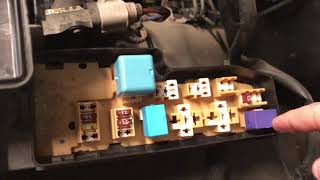
- Check the related fuses (e.g., 50A AIR fuse) and relays in the engine bay fuse box.
- The definitive diagnosis requires accessing the components. This involves removing the intake manifold to reach the air pump and switching valves located in the engine valley.
- Once removed, visually inspect the air pump for signs of water intrusion or a broken impeller fan.
- Inspect the air switching valves for rust and corrosion. Test their function using a hand-held vacuum pump; they should open and close smoothly and hold vacuum.
- Inspect the vacuum lines connected to the valves for cracks or breaks. These often become extremely brittle.
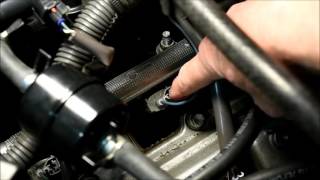
- (Advanced DIY) It is reportedly possible, though very difficult, to replace the rear switching valves without removing the intake manifold by accessing them from the sides of the engine bay near the firewall, as shown in some YouTube tutorials.
Parts You'll Likely Need
- Air Switching Valve Assembly (Bank 1)
(OEM #25710-50022 (supersedes 25710-50021, 25710-50020))— This is the valve assembly for Bank 1 (and includes the pressure sensor) that gets stuck, directly causing the P1442 code. It's highly recommended to also replace the Bank 2 valve (P/N 25720-50011) at the same time.
Trusted brands: Toyota (OEM), Dorman (911-646)
OEM price range: $250-$350
Aftermarket price range: $100-$180 - Air Pump Assembly
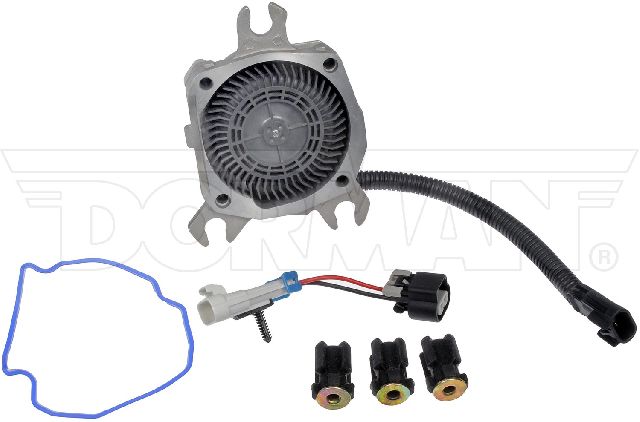
(OEM #17600-0F010)— This is the root cause of the failure. It ingests moisture and sends it to the valves. A full, long-term repair requires replacing the pump to protect the new valves.
Trusted brands: Toyota (OEM), Dorman (306-010)
OEM price range: $450-$650
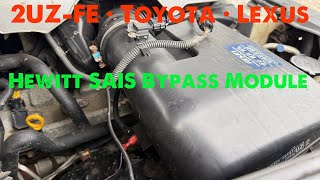
Aftermarket price range: $150-$300 - Secondary Air Injection System Bypass Kit — A popular and much cheaper alternative to a full mechanical repair. This electronic kit tricks the ECU into thinking the system is working perfectly, 🎬 Watch: How to install a secondary air injection bypass kit clearing the codes and taking the vehicle out of limp mode. It is a common solution for owners in areas without strict emissions testing.
Related Codes That Often Appear With This One
- P1445 — This is the identical code for the other bank ('Switching Valve No. 2 Stuck Closed Bank 2'). Since the moisture that damages one valve usually damages both, it's very common to see P1442 and P1445 together.
- P2440, P2441, P2443, P2445, P2447 — These are all related to the Secondary Air Injection system, indicating other failures like valves stuck open or pumps stuck off. Their presence points to a widespread system failure as described in TSB T-SB-0230-12.
- P0418 — This code points to a problem with the air pump's circuit or relay. It often appears alongside valve codes, confirming the issue originates with the pump assembly.
Technical Service Bulletins (TSBs) & Recalls
- T-SB-0230-12 Rev1: Titled 'Air Injection System MIL ON', this bulletin addresses a MIL 'ON' condition for a wide range of SAI codes, including P1442. It identifies the cause as debris/moisture from the air injection pump contaminating the system. It lists affected vehicles as the 2005-2009 4Runner, 2006-2007 Land Cruiser, 2005-2007 Sequoia, and 2005-2006 Tundra with the 2UZ-FE engine.
- Bulletin #T-SB-0230-12: This manufacturer bulletin specifically links P1442 and P1445 to the Secondary Air Injection System Switching Valve No. 2 (Bank 1 and Bank 2) being stuck closed.
Platform-Specific Known Issues
- The location of the SAI pump and valves in the engine valley, under the intake manifold, makes this repair extremely labor-intensive and therefore expensive.
- The failure is so common that a cottage industry of aftermarket bypass kits has emerged. Hewitt Technologies offers a more expensive, plug-and-play kit, while Slyfox offers a cheaper kit that requires splicing a wire.
- An advanced DIY mechanic may be able to replace the rear switching valves without removing the intake manifold, saving significant labor time, but the access is extremely tight.
Mechanic-Grade Diagnostic Values
- Pressure Sensor Voltage — expected: 1.0 to 2.2 V with the ignition ON, engine OFF.. Failure: Voltage outside of this range indicates a faulty pressure sensor.
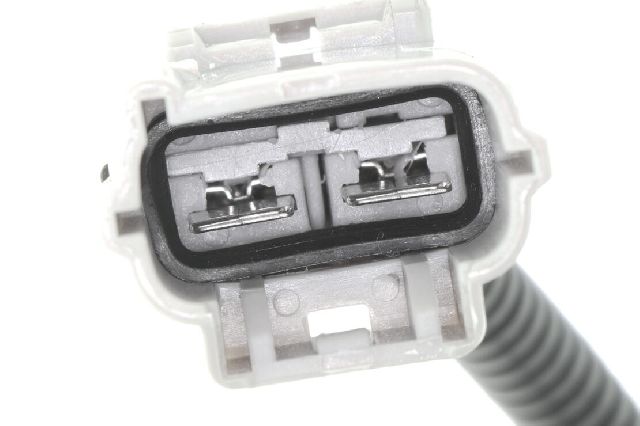
- Vacuum Switching Valve (VSV) Resistance — expected: 33 to 39 Ω at 20°C (68°F) between the two terminals.. Failure: Resistance outside this range, or continuity to body ground, indicates a faulty VSV.
- Live Data: Air Pump Pressure — expected: Approximately 14.2 PSI (atmospheric pressure) with system off. Should increase when pump is commanded on.. Failure: An extremely high reading (e.g., 18-19 PSI) when the pump is activated indicates a blockage, as the air has nowhere to go. No change in pressure indicates a failed pump or stuck-closed valve.
Scan Tool Commands That Help
- Toyota Techstream: Air Injection Check (Manual Mode) — This utility is the primary diagnostic step before any disassembly. It allows a technician to individually command the air pump and air switching valves (ASV1, ASV2) ON/OFF while monitoring the system's pressure sensor. This can confirm if the pump runs, if the valves respond, and if the pressure sensor is reading correctly, helping to isolate the exact point of failure.
Wiring & Ground Locations
- E1 / E2 — Ground points located at the top center rear of the engine.. These are primary ground points for the main engine harness. A poor connection here could potentially affect the Air Injection Control Driver or other system components located in the engine valley.
- Engine Harness Grounds (Driver & Passenger Side) — There are 10mm bolts grounding the engine harness to the back of the cylinder block/head area on both the driver and passenger sides, near the valve covers.. The Air Switching Valves and their associated VSVs are part of the engine harness. A loose or corroded ground on the bank with the fault (Bank 1 is driver's side) could cause erratic behavior or false codes, although this is a rare cause.
- Air Injection Control Driver — Located in the engine compartment. TSB T-SB-0230-12 includes a diagram showing it mounted on the passenger side fender wall, near the fuse box.. This is the module that powers the air pump and valves. All power and control signals for the system run through this driver, making its connector and ground a critical point of inspection if electrical codes (like P0418) are also present.
Real Owner Repair Stories
- Tundras.com Forum user 'Bilgepump' (Toyota Tundra with 2UZ-FE (same platform/engine)) — Recurring P1442 code, which was later joined by P1445 (Bank 2) and P2441.
❌ Tried (didn't work) Replaced the air pump with a brand new one., Replaced both Air Switching Valves (#2) with brand new ones., Tested the new valves with a vacuum pump before installation to confirm they worked., Confirmed with a vacuum gauge that the VSVs were receiving and holding 20 in/Hg of vacuum on cold start, indicating they were opening.
✅ What actually fixed it The user suspected the only remaining original parts were the main Air Switching Valve (the first valve after the pump), the Air Injection Driver, or the ECM itself. The thread ends with this suspicion, highlighting a scenario where replacing the common failure parts (pump and #2 valves) does not resolve the code, pointing towards a deeper electrical or sensor issue. - IH8MUD.com Forum user 'JessPurviance' (2006 Toyota Land Cruiser (same platform/engine)) — Intermittent P1442 and P1445 codes appearing primarily in the winter. Codes would be cleared and not return for one to three weeks.
❌ Tried (didn't work) Clearing the codes repeatedly.
✅ What actually fixed it The user noted that the codes were triggered by moisture in the system freezing and causing the valves to stick temporarily. During a trip to a drier climate (Colorado), the code did not appear for a week despite cold temperatures. This confirms the intermittent nature of the fault is often tied to ambient humidity and temperature, and the ultimate fix is either a full system replacement or a bypass kit. - NHTSA ODI #10551708 — An owner reported that the VSC and TRAC OFF lights kept coming on alongside P1442 and P1445 codes, noting the secondary valve was stuck closed.
- NHTSA ODI #10520439 — An owner reported a "jet engine" type noise from the engine bay; a dealer diagnosed the issue as an air injection pump problem with codes P1442 and P1445, resulting in the vehicle operating in "safe mode" at reduced capacity.
OEM Part Supersession History
25710-50020→25710-50021, and finally 25710-50022— Standard part revisions by the manufacturer to improve reliability or address minor issues. The design and function remain the same.
Heads up: All versions are interchangeable for the specified vehicle range. When ordering, you will receive the latest part number (25710-50022).17600-0F010→N/A— This remains the primary part number for the air pump assembly.
Diagnostic Flowchart
Used vs. New Parts: Buying Guide for This Vehicle
When a used part is the smart pick: For this specific P1442 issue, buying used OEM air pumps or switching valves from a junkyard is strongly discouraged. The failure is due to a fundamental design flaw causing moisture damage and wear over time. A used part is highly likely to have the same internal corrosion and will fail soon after the extensive labor for installation is complete.
Donor-vehicle mileage cap: roughly under 10000 miles for the part to have meaningful remaining life.
What to inspect on the donor part:
- If forced to consider a used part, only source from a very low-mileage, collision-totaled vehicle from a dry, non-salt-belt region.
- Ask the seller to inspect the air pump's inlet port for signs of water staining or a deteriorated foam filter.
- For valves, there is no reliable way to inspect for internal corrosion without testing them with a vacuum pump, which is not feasible at a junkyard.
OEM-only on this vehicle (don't cheap out):
- While the full OEM repair is expensive, the components are designed to work together. If not opting for a bypass kit, using all OEM parts (pump and valves) is the safest route to ensure compatibility and longevity.
Aftermarket brands forum-validated for this vehicle:
- Hewitt-Tech: This brand is the most frequently cited and trusted source for electronic bypass kits, which are the most popular alternative to an OEM repair.
- Dorman: Offers replacement pumps (306-010) and valves (911-646) that are significantly cheaper than OEM. Forum feedback suggests the quality is visually similar to OEM, but long-term reliability is less documented than the bypass kits.
Brands owners have reported issues with on this vehicle:
- No-name, unbranded electronic modules or parts from online marketplaces should be avoided. An improperly designed bypass kit can fail to resolve limp mode or cause other electrical issues. A poor quality pump or valve will fail quickly, wasting the significant labor cost.
Real Owner Stories
Aggregated from forums and TSBs cited above. Mileages and costs reflect what owners reported in those sources.
Toyota Tundra 4.7L 2UZ-FE
Symptoms: A user found that an aftermarket bypass kit did not fix their issue.
What fixed it: A full mechanical replacement of the components was required because debris from the disintegrated air pump had physically jammed one of the switching valves, preventing it from operating.
Source hint: TundraSolutions.com: Secondary Air System (SAIS) Replacement Info
Toyota 4Runner 4.7L V8
Symptoms: Owners experiencing issues with the Secondary Air Injection System (SAIS).
What fixed it: Multiple owners reported positive long-term experiences after installing either the Slyfox or Hewitt Technologies bypass kits, confirming them as an effective alternative to a full OEM system replacement.
Source hint: Reddit r/4thGen4Runner: Discussion on SAIS Bypass Kits
Toyota Tundra/Sequoia 4.7L 2UZ-FE
Symptoms: Check engine light with codes P1442 and P1445 returned shortly after replacing the air injection switching valves with new parts.
What fixed it: The initial repair of replacing the valves did not resolve the issue, suggesting a more complex problem possibly related to the pressure sensor, wiring, or the ECU itself.
Source hint: TundraTalk.net Forum: Tundra/Sequoia Emissions Experts - DTC P1442
Related OBD-II Codes
Frequently Asked Questions
Does Toyota have a Technical Service Bulletin (TSB) for the P1442 code on my 2007 Sequoia?
My Sequoia went into 'limp mode' and is making a loud vacuum cleaner noise on startup. Is this related to P1442?
Why is the repair for the P1442 code so expensive on the 4.7L V8?
I've heard about bypass kits for this problem. Are they a real alternative for my Sequoia?
My mechanic wants to replace both the air pump and the switching valves. Is all of that really necessary?
To save money, can I just replace the one failed valve for Bank 1 that's causing the P1442 code?
Is it possible to do this repair myself without removing the entire intake manifold?
Helpful Videos
We Have This Part in Stock


The information in this article is provided for general reference and educational purposes only. Vehicle specifications, procedures, and part compatibility can vary by production date, trim level, and region. Always consult your vehicle's factory service manual and verify part numbers before purchasing or performing repairs. Safety-critical components such as airbags, seat belts, and braking systems should be installed by a qualified professional.
- Toyota Sequoia:
- 🧭 Diagnostic Flowchart
- 🎬 Helpful Videos
- 🛍️ Shop This Part
- What's Unique About the 2005-2009 Toyota Sequoia
- Symptoms You May Notice
- Most Likely Causes
- Rare But Worth Checking
- Diagnosis Steps
- Parts You'll Likely Need
- Related Codes That Often Appear With This One
- Technical Service Bulletins (TSBs) & Recalls
- Platform-Specific Known Issues
- Mechanic-Grade Diagnostic Values
- Scan Tool Commands That Help
- Wiring & Ground Locations
- Real Owner Repair Stories
- OEM Part Supersession History
- Used vs. New Parts: Buying Guide for This Vehicle
- Real Owner Stories
- Toyota Tundra 4.7L 2UZ-FE
- Toyota 4Runner 4.7L V8
- Toyota Tundra/Sequoia 4.7L 2UZ-FE
- Related OBD-II Codes
- Frequently Asked Questions
- 🎟️ Get 5% Off