

P1607 on 2007-2012 Hyundai Santa Fe: ETS Communication Failure Causes and Fixes
On a 2007-2012 Santa Fe, P1607 means the engine computer has lost communication with the electronic throttle body. This will cause a severe 'limp mode.' The most likely cause is a damaged wire or faulty connector between the two components, followed by a failed electronic throttle body assembly.
- P1607 on a 2007-2012 Santa Fe means there's a communication failure with the electronic throttle body, which will cause a serious 'limp mode'.
- Before replacing any parts, always inspect the wiring harness and connectors between the ECM and the throttle body for damage or corrosion.
- The electronic throttle body assembly is a common failure point, but cleaning it should be attempted before replacement.
- A simple, no-tool throttle relearn procedure is necessary after cleaning or replacing the throttle body.
What's Unique About the 2007-2012 Hyundai Santa Fe
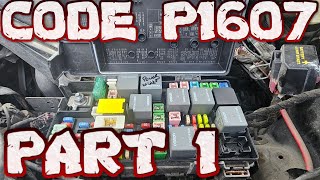
The second-generation (CM) Santa Fe uses a full drive-by-wire electronic throttle body, integrating functions that were separate on older models. Unlike a generic 'internal computer failure' code, Hyundai's P1607 definition points specifically to the communication circuit for this system. Owners often experience a sudden and dramatic loss of power, which can be alarming. The issue is almost always electrical in nature, residing in the wiring harness or the throttle body itself, rather than a failure of the main engine computer. 🎬 Watch this step-by-step guide to fixing code P1607 This is a critical distinction that directs diagnosis away from an expensive and unlikely ECM failure.
Symptoms You May Notice
- Vehicle enters 'Limp Mode' (also called Reduced Engine Power mode)
- Severely limited throttle response and poor acceleration
- Inability to rev the engine past a low RPM (e.g., 2000 RPM)
- Check Engine Light is on
- Engine may stall, especially when coming to a stop
- Rough or unstable idle
- Engine bogs down when accelerator is pressed, but may rev normally in Park or Neutral
- Replacing the Accelerator Pedal Position (APP) sensor. P1607 is related to the communication with the throttle body, not the pedal sensor.
- Replacing the PCM/ECM before thoroughly testing the wiring harness and throttle body assembly.
Most Likely Causes
- Damaged Wiring or Corroded Connector 🔴 High Probability The wiring harness in the engine bay is exposed to heat, vibration, and moisture over time, which can lead to chafed insulation, broken wires, or corrosion in the connector pins at the ECM or throttle body. Wires can become brittle and break internally, even if the insulation looks intact.
How to confirm: Visually inspect the entire length of the wiring harness between the ECM and the electronic throttle body. Pay close attention to areas where the harness bends or is secured by clips. Unplug the connectors (with the battery disconnected) and check for bent, broken, or corroded pins. Use a multimeter to check for continuity on the communication wire between the ECM and ETS connector. A wiring diagram is essential for this step.
Typical fix: Repair the damaged section of the wire or replace the corroded connector terminal. Ensure the harness is properly secured away from heat sources or sharp edges.
Est. part cost: $10-$50 - Faulty Electronic Throttle Body (ETB) Assembly 🟡 Medium Probability → Shop Fuel Injection Throttle Body The internal electronic components of the throttle body, including the control motor and integrated position sensors, can fail with age and mileage, causing a loss of communication with the ECM. This is a well-documented failure point on this platform.
How to confirm: After confirming the wiring is intact, the most practical way to confirm a faulty ETB is by substitution. A professional scan tool can also monitor live data from the throttle position sensors for erratic readings.
Typical fix: Replace the entire electronic throttle body assembly. After replacement, a throttle relearn procedure is required.
Est. part cost: $150-$400 - Dirty or Sticking Throttle Body ⚪ Low Probability → Shop Fuel Injection Throttle Body Carbon and oil vapor from the PCV system can build up inside the throttle body, causing the throttle plate to stick. While this more commonly sets performance codes, a severe restriction can sometimes trigger communication or logic faults. Hyundai has issued a general TSB (13-FL-002) advising technicians to clean the throttle body before replacement for certain throttle-related codes.
How to confirm: Remove the air intake hose from the throttle body and inspect for heavy carbon buildup around the throttle plate and bore.
Typical fix: Thoroughly clean the throttle body bore and plate with a dedicated throttle body cleaner and a soft brush. Perform a throttle relearn procedure afterward.
Est. part cost: $10-$20
Rare But Worth Checking
- Faulty Powertrain Control Module (PCM/ECM): → Shop Engine Control Module (ECM) This is the least likely cause. The PCM is a robust component. Do not consider replacing it until all other possibilities, especially wiring and the throttle body itself, have been exhaustively ruled out.
Diagnosis Steps
- Retrieve all stored fault codes with an OBD-II scanner.
- Visually inspect the wiring harness between the throttle body and the ECM. Look for any signs of damage, chafing, melting, or heat damage from the exhaust.
- Disconnect the battery. Unplug the connectors at both the throttle body and the ECM. Inspect for corrosion, moisture, or bent/damaged pins. Clean with electrical contact cleaner if necessary.
- Using a multimeter and a vehicle-specific wiring diagram, perform a continuity test on the communication wire between the ECM and throttle body connectors to check for an open or short circuit. Resistance should be below 1 Ohm.
- If wiring and connectors are confirmed to be good, consider cleaning the throttle body first, as heavy carbon buildup can sometimes cause issues.
- If the problem persists after verifying wiring and cleaning the throttle body, the next most likely cause is the electronic throttle body itself.
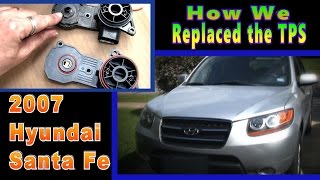
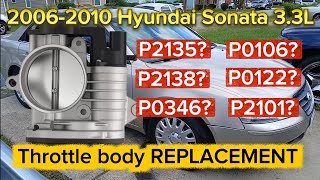
- Replace the electronic throttle body assembly. 🎬 Watch this video walkthrough of a throttle body replacement It is recommended to also replace the gasket.
- After any repair (cleaning or replacement), perform a throttle relearn procedure. This can often be done without a scan tool by following a specific sequence: Turn the ignition to 'ON' (engine off) for 10-15 seconds, then 'OFF' for 10-15 seconds. Repeat this cycle a few times. Then, start the engine and let it idle for several minutes to allow the ECM to learn the new idle parameters.
- If the code still returns after replacing the throttle body and verifying wiring, the ECM may be at fault, but this is very rare and should be confirmed by a professional.
Parts You'll Likely Need
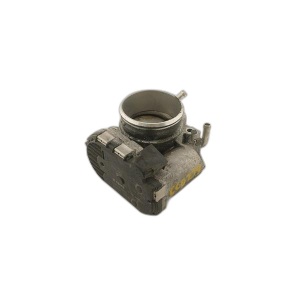
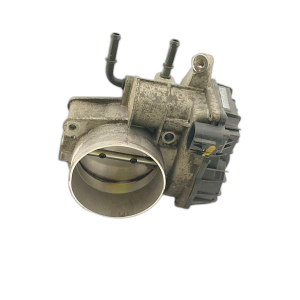
- Electronic Throttle Body Assembly
(OEM #35100-3E100 (For 2.7L V6), 35100-3C100 (For 3.3L V6))— The internal electronics of the throttle body are the most common component to fail that will cause this specific communication code, after wiring issues are ruled out.
Trusted brands: Hyundai (OEM), Bosch, Cardone, ECCPP
OEM price range: $300-$450
Aftermarket price range: $150-$250
Related Codes That Often Appear With This One
- P2106 — This code for 'ETC System Malfunction - Forced Limited Power' is often set as a direct result of the P1607 communication failure, as the ECM intentionally restricts power.
- P1295 — Indicates an 'ETC System Malfunction - Power Management,' which is another failsafe code triggered by the primary communication fault.
- P0638 — This code for 'Throttle Actuator Control Range/Performance' can appear if the ECM loses communication while trying to command a throttle position.
Technical Service Bulletins (TSBs) & Recalls
- TSB 09-FL-003-2: Addresses MIL illumination with ETC-related codes P2135 or P0638 on 2007-2009 Santa Fe models by providing an ECM software update.
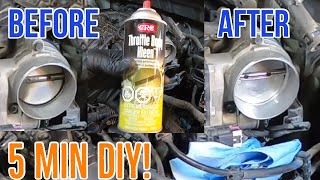
- TSB 13-FL-002: A general Hyundai bulletin that advises cleaning the throttle body for various throttle-related issues before replacing the assembly. 🎬 See how to clean your throttle body properly
Platform-Specific Known Issues
- There is a known history of throttle body and throttle position sensor issues on this platform that can cause limp mode. A Technical Service Bulletin (TSB 09-FL-003-2) was issued for related codes (P2135, P0638) on 2007-2009 models, which involved an ECM software update to improve the diagnostic logic for the throttle control system. While not specific to P1607, it highlights the sensitivity of the electronic throttle control system in these vehicles and the importance of ensuring the ECM software is up-to-date.
Mechanic-Grade Diagnostic Values
- TPS1 & TPS2 Voltage Sweep (3.3L V6, Key On, Engine Off) — expected: Using a scan tool, TPS1 voltage should sweep smoothly from approximately 0.5V (closed throttle) to 4.5V (wide open). TPS2 should sweep inversely, from ~4.5V (closed) to ~0.5V (wide open).. Failure: Any reading that is stuck, erratic, does not sweep smoothly, or drops out indicates a failed sensor within the throttle body assembly.
- Throttle Body Connector Voltages (3.3L V6, Key On, Engine Off) — expected: At the 6-pin connector: Pin 4 should have a 5V reference signal. Pin 2 should be sensor ground (~0V).. Failure: Absence of the 5V reference or a bad ground points to a wiring issue or a fault in the ECM, not the throttle body itself.
Scan Tool Commands That Help
- Hyundai GDS (Global Diagnostic System): Actuation Test: ETC Motor — With the key on and engine off, this command forces the throttle plate to open and close. It's used to verify if the throttle motor is physically responding to commands from the scan tool, which helps isolate a mechanical failure from a communication or sensor failure.
- Hyundai GDS (Global Diagnostic System): Special Function: Resetting Adaptive Values — This function should be used after cleaning or replacing the throttle body. It clears the ECM's learned values for idle and throttle position, forcing it to recalibrate to the new or cleaned component's baseline. This is the professional equivalent of a manual relearn procedure.
Wiring & Ground Locations
- Throttle Body Connector (3.3L V6) — The 6-pin electrical connector on the electronic throttle body assembly.. This is the primary test point. Pinout is: Pin 1 (TPS2 Signal), Pin 2 (Sensor Ground), Pin 3 (TPS1 Signal), Pin 4 (5V Reference), Pin 5 (Motor +), Pin 6 (Motor -). Testing for power, ground, and signal continuity here is the first step in diagnosing the electrical circuit.
- G52 (Ground) — Located on the left rear of the engine compartment.. This is a major engine compartment ground. A loose or corroded connection here can cause unstable voltage and floating ground references for various sensors, including the electronic throttle system, leading to intermittent communication faults.
- G39 (Ground) — Also located on the left rear of the engine compartment, near the PCM.. This ground is specifically referenced in diagrams for the immobilizer and PCM circuits. A poor connection here could disrupt the PCM's operation and its ability to communicate with other modules like the ETS.
OEM Part Supersession History
35100-3E100→N/A— No supersession found. This part number remains the correct OEM part for the 2.7L V6 engine from 2007-2009.35100-3C100→35100-3C200— Part was updated by the manufacturer for the 3.3L V6 engine. The newer part number should be used for replacement.
Heads up: While the older part may fit, the updated version likely contains internal revisions to improve reliability. Always use the latest part number available from the dealer.
Model Year Variations Within This Range
- 2007-2009: Pre-facelift models were equipped with either a 2.7L V6 or a 3.3L V6 engine. These engines use different throttle body assemblies and have different part numbers.
- 2010-2012: Facelift models received new powertrains: a 2.4L I4 and a 3.5L V6. These engines use completely different electronic throttle bodies, wiring pinouts, and diagnostic values compared to the 2007-2009 models. For example, the TPS signal wire color on the 2.7L engine changed between 2008 (Green) and 2009 (Red).
Diagnostic Flowchart
Other Known Issues on This Vehicle
Issues unrelated to this code that are worth knowing about as an owner of this generation:
- Front Valve Cover Gasket Leak Causing Alternator Failure 🔴 High — Very common, especially on the 3.3L V6. Oil leaks from the front valve cover directly onto the alternator, causing it to fail prematurely. (Ref: Service Campaign 936 (TSB 15-01-031) was issued to inspect and replace the gasket and potentially the alternator.)
- Faulty Fuel Level Sending Units 🟠 Medium — Extremely common. The two fuel level sensors in the tank fail, causing an erratic or completely inaccurate fuel gauge reading and often triggering a Check Engine Light (e.g., P0464). (Ref: No recall, but it is a widely documented and frequent repair need.)
- Crankshaft Position Sensor Failure 🟠 Medium — A common failure item that can cause intermittent stalling or a no-start condition, often without warning.
- Timing Chain Tensioner Wear (3.3L V6) 🟠 Medium — Can occur at higher mileage (typically over 100k miles), leading to a rattling noise on startup. If ignored, it can lead to timing chain failure.
Used vs. New Parts: Buying Guide for This Vehicle
When a used part is the smart pick: A used OEM throttle body from a reputable salvage yard is a reasonable choice for this repair, especially if on a tight budget. The failure is electronic, not typically a wear-and-tear item, so a part from a lower-mileage donor vehicle can be a cost-effective solution.
Donor-vehicle mileage cap: roughly under 100000 miles for the part to have meaningful remaining life.
What to inspect on the donor part:
- Check for a clean throttle plate and bore; excessive carbon may suggest high mileage or other engine issues.
- Ensure the electrical connector pins are straight, clean, and free of any corrosion or damage.
- Verify the part number on the used unit exactly matches the OEM part number for your specific engine (2.7L vs 3.3L/3.5L).
- Ask for the donor vehicle's mileage if possible.
Aftermarket brands forum-validated for this vehicle:
- Bosch (often the original OEM supplier)
- Cardone (remanufactured)
Brands owners have reported issues with on this vehicle:
- Unbranded, no-name parts from online marketplaces can have a high failure rate. Forum discussions often advise against the cheapest available options due to poor internal electronics and calibration issues.
Real Owner Stories
Aggregated from forums and TSBs cited above. Mileages and costs reflect what owners reported in those sources.
2008 Hyundai Santa Fe
Symptoms: The vehicle experienced limp mode and the owner noted a pattern of electronic throttle system issues consistent with model year range reports.
What fixed it: The owner followed guidance related to a TSB for throttle body codes which involved addressing the electronic throttle system.
Source hint: Reddit r/MechanicAdvice
2007-2012 Hyundai Santa Fe
Symptoms: Vehicle entered limp mode with P1607 and other throttle-related communication issues.
What fixed it: Repairing broken wires found in the wiring harness near the engine.
Source hint: hyundai-forums.com
2007-2012 Hyundai Santa Fe
Symptoms: Severe throttle response issues and P1607 fault code.
What fixed it: Replacement of the electronic throttle body assembly.
Source hint: hyundai-forums.com
Related OBD-II Codes
Frequently Asked Questions
Does TSB 09-FL-003-2 apply to my 2008 Hyundai Santa Fe if I have throttle issues?
Should I replace my throttle body immediately if I get a P1607 code?
Can I perform the throttle relearn on my Santa Fe without a professional scan tool?
Is there a specific wiring issue I should look for on this model?
Are there any other common issues on the 3.3L V6 Santa Fe that I should check while fixing this?
Can I use a used throttle body from a different Hyundai or Kia model?
Helpful Videos
We Have This Part in Stock

The information in this article is provided for general reference and educational purposes only. Vehicle specifications, procedures, and part compatibility can vary by production date, trim level, and region. Always consult your vehicle's factory service manual and verify part numbers before purchasing or performing repairs. Safety-critical components such as airbags, seat belts, and braking systems should be installed by a qualified professional.
- Hyundai Santa Fe:
- 🧭 Diagnostic Flowchart
- 🎬 Helpful Videos
- 🛍️ Shop This Part
- What's Unique About the 2007-2012 Hyundai Santa Fe
- Symptoms You May Notice
- Most Likely Causes
- Rare But Worth Checking
- Diagnosis Steps
- Parts You'll Likely Need
- Related Codes That Often Appear With This One
- Technical Service Bulletins (TSBs) & Recalls
- Platform-Specific Known Issues
- Mechanic-Grade Diagnostic Values
- Scan Tool Commands That Help
- Wiring & Ground Locations
- OEM Part Supersession History
- Model Year Variations Within This Range
- Other Known Issues on This Vehicle
- Used vs. New Parts: Buying Guide for This Vehicle
- Real Owner Stories
- 2008 Hyundai Santa Fe
- 2007-2012 Hyundai Santa Fe
- 2007-2012 Hyundai Santa Fe
- Related OBD-II Codes
- Frequently Asked Questions
- 🎟️ Get 5% Off