

P1738 on 2016-2020 Mazda CX-9: Automatic Transaxle Malfunction Causes and Fixes
On a 2016-2020 Mazda CX-9, code P1738 almost always indicates sticking oil pressure switches inside the transmission valve body, a well-documented issue. The fix involves replacing these internal switches and is not a DIY job. Expect a shop cost of around $450-$950. This issue is common across many Mazda models with the SKYACTIV-Drive 6-speed automatic transmission.
- P1738 on your CX-9 is a known issue with a specific, documented fix from Mazda.
- The cause is almost certainly not a catastrophic transmission failure, but rather inexpensive internal oil pressure switches that are sticking.
- This is not a DIY repair. It requires a professional technician to access internal transmission components.
- Do not agree to a full transmission replacement unless the specific switch replacement has been attempted or definitively ruled out.
- Ensure the repair shop uses genuine Mazda ATF FZ fluid during the service and replaces the internal filter.
What's Unique About the 2016-2020 Mazda CX-9
The SKYACTIV-DRIVE 6-speed automatic transmission (model FW6A-EL) used in the 2016-2020 CX-9 is known for this specific issue. Mazda has acknowledged the problem through multiple Technical Service Bulletins (TSBs), including 05-004/19 and its successor, 05-002/23. The bulletins clarify that the P1738 code is typically triggered by fine metallic debris from normal wear contaminating the transmission fluid, which then causes sensitive oil pressure switches on the internal control valve body to stick. This is a known failure pattern and is not usually indicative of a catastrophic transmission failure.
Symptoms You May Notice
- Check Engine Light illuminated
- Automatic Transaxle (AT) warning light illuminated
- Harsh or erratic shifting
- Transmission getting stuck in one gear (fail-safe or 'limp' mode)
- Inability to use manual shift mode
- i-Stop system disabled
- Replacing the entire transmission without first addressing the known issue of the oil pressure switches.
- Assuming a major mechanical failure when it is a much less expensive component failure.
- Replacing only one of the two pressure switches, when replacing them as a pair is best practice.
Most Likely Causes
- Sticking Internal Oil Pressure Switches 🔴 High Probability → Shop Engine Oil Pressure Switch Mazda TSBs 05-004/19 and 05-002-23 explicitly state this is the primary cause across SKYACTIV transmissions. Contamination in the transmission fluid causes switches A and/or B on the control valve body to stick temporarily or permanently. This is a very common and well-documented failure pattern for the FW6A-EL transmission.
How to confirm: A professional scan tool will show P1738 alongside other codes like P0842, P0847, P0872, P0877, or P0780, which directly point to the specific pressure switch that has failed. The presence of these codes is a strong confirmation. The official Mazda diagnostic procedure per the TSB is to first attempt a TCM software update; if the codes return, the switches require replacement.
Typical fix: Replace the faulty oil pressure switches (A and B) on the transmission valve body, replace the transmission oil strainer (filter), and refill with genuine Mazda ATF FZ. In some cases, a TCM software update performed by a dealer may resolve the issue without parts replacement.
Est. part cost: $100-$250
Rare But Worth Checking
- Failed Control Valve Body: → Shop Transmission Valve Body If the fluid passages in the valve body are severely blocked or damaged, or if the issue persists after replacing the switches, the entire valve body assembly may need to be replaced. This is a much more expensive repair.
- Complete Internal Transmission Failure: → Shop Transmission Assembly This is the worst-case and least likely scenario. If P1738 appears without any other pressure switch codes, it could indicate a more severe mechanical failure requiring a full transmission replacement, but this is very rare for this specific issue. The official Mazda diagnostic tree for a standalone P1738 can sometimes lead to a transaxle replacement recommendation.
Diagnosis Steps
- Confirm the presence of the Check Engine Light and AT warning light on the dashboard.
- Use an OBD-II scanner to read the trouble codes from the Transmission Control Module (TCM).
- Verify that P1738 is present, and check for any accompanying codes (e.g., P0842, P0847, P0872, P0877, P0780).
- If P1738 is present with related pressure switch codes, the diagnosis is very likely stuck oil pressure switches.
- Consult a dealer or qualified shop to check if a TCM software update is available per TSB 05-002/23. This is often the first recommended step.
- Inspect the transmission fluid level and condition. Note any burnt smell or excessive metal debris, though the issue is often caused by microscopic contaminants.
- If a software update does not fix the issue, proceed with the repair outlined in Mazda TSBs, which involves replacing the internal oil pressure switches (A and B).
- If P1738 is present alone, further professional diagnosis, including hydraulic pressure testing, may be needed to rule out a larger valve body or internal transmission issue.
Parts You'll Likely Need
- Transmission Oil Pressure Switch
(OEM #FZ01-21-2J0)— This is the component that sticks due to contamination, directly causing the fault code as per Mazda TSBs. This part number serves as pressure switch 'B'. Both switch A and B are typically replaced together.
Trusted brands: Mazda OE
OEM price range: $50-$100 each
Aftermarket price range: $40-$80 each - Transmission Oil Pressure Switch 'A'
(OEM #FZ01-21-2C0)— This is the second pressure switch ('A') located on the valve body. It is best practice to replace both switches at the same time to prevent a repeat failure.
Trusted brands: Mazda OE
OEM price range: $40-$80 - Mazda SKYACTIV-Drive ATF FZ Automatic Transmission Fluid
(OEM #0000-FZ-113E-01)— The system must be refilled with the correct fluid after dropping the pan to replace the switches. Using non-specified fluid can cause further issues. A drain and fill requires approximately 4-5 quarts.
Trusted brands: Mazda OE
OEM price range: $20-$30 per quart - Transmission Oil Strainer (Filter)
(OEM #FZ01-21-500)— Since the root cause is contamination, it is highly recommended to replace the internal transmission filter when the oil pan is removed for the switch replacement.
Trusted brands: Mazda OE
OEM price range: $30-$50
Aftermarket price range: $15-$30
Related Codes That Often Appear With This One
- P0842 — Indicates Oil Pressure Switch B is stuck on.
- P0847 — Indicates Oil Pressure Switch A is stuck on.
- P0872 — Indicates Oil Pressure Switch A is stuck on.
- P0877 — Indicates Oil Pressure Switch B is stuck off.
- P0780 — Indicates a general shift malfunction, often triggered by the underlying pressure switch issue.
Technical Service Bulletins (TSBs) & Recalls
- 05-004/19: CHECK ENGINE LIGHT AND A/T WARNING LIGHT ON WITH ONE OR MORE OF THESE DTCS... STORED IN TCM MEMORY. This TSB explicitly lists P1738 and identifies the cause as stuck oil pressure switches A and/or B due to contamination. It covers the 2016-2019 CX-9.
- 05-002-23: A more recent TSB that supersedes 05-004/19. It covers P1738 and related codes, confirming the same cause and repair procedure (software update first, then switch replacement if needed) for a wide range of Mazda models up to 2021+. Manufacturer TSB Bulletin #05-002-23 specifically notes that the check engine light and automatic transaxle warning light may illuminate with P1738 stored in the TCM memory alongside codes like P0842, P0847, P0872, P0877, and P0780.
Platform-Specific Known Issues
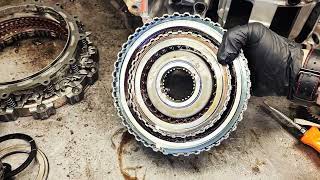
- This issue is well-documented by Mazda across multiple models using the SKYACTIV-Drive 6-speed automatic transmission (FW6A-EL), not just the CX-9. 🎬 Watch: Overview of the FW6A-EL Skyactiv transmission
Mechanic-Grade Diagnostic Values
- Oil Pressure Switch Continuity Check — expected: The switches are normally closed, showing continuity (near 0 ohms) between the two pins when no hydraulic pressure is applied (engine off).. Failure: An open circuit (infinite resistance) when no pressure is applied indicates a failed, 'stuck open' switch. A switch that remains closed when pressure is applied is 'stuck on', which is harder to test on the bench but is the common failure mode.
- Transmission Fluid Temperature (TFT) for 'Initial Learning' Procedure — expected: 60°C to 110°C (140°F to 230°F). Failure: Attempting the relearn procedure outside of this temperature range may cause it to fail or result in poor shift quality.
Hidden / Shadow Codes Worth Checking
- P1738:00: The ':00' is a Failure Type Code (FTC) that specifies a general 'Component Failure'. Mazda's diagnostic literature states this means the 'malfunction location cannot be determined based on combination of gear ratio malfunction and oil pressure switch pattern malfunction', confirming it as a non-specific internal fault. (see via Professional scan tools like Mazda's MDARS (Mazda Diagnostic and Repair System) or advanced aftermarket tools like FORScan will display the full DTC with the FTC. Basic OBD-II readers may only show 'P1738'.)
Scan Tool Commands That Help
- Mazda MDARS / FORScan: Initial Learning / TCM Adaptation — This procedure is mandatory after replacing the oil pressure switches or the entire valve body. It clears the TCM's old learned values for clutch engagement and forces it to relearn the hydraulic response of the new components to ensure smooth shifting.
- Mazda MDARS: Module Reprogramming — This is used to perform the TCM software update as specified in the TSB. This is the first step in the official diagnostic procedure, as updated software logic may be more tolerant of minor pressure fluctuations that trigger the fault codes.
- FORScan: Live Data Monitoring (PIDs) — Before repair, a technician can monitor PIDs for individual pressure switches (e.g., OSS_A, OSS_B) to see if their state (On/Off) matches the commanded gear, which can help confirm a switch is stuck.
Wiring & Ground Locations
- TCM (Transmission Control Module) — On the 2016-2020 CX-9, the TCM is mounted directly on top of the transmission case, located under the battery, battery tray, and air filter housing.. While rarely the cause, a corroded main harness connector at the TCM can cause communication errors. The connector seal is a point of interest for fluid seepage which can lead to pin corrosion.
- Main Transmission Ground — A primary ground strap connects from a bolt on the top of the transmission case to the chassis, typically near the driver's side strut tower or firewall.. A loose or corroded main ground can cause a host of erratic electronic behaviors, including incorrect sensor readings and shifting problems. Ensuring this connection is clean and tight is a fundamental diagnostic step for any transmission electrical fault.
- Oil Pressure Switch Connectors — Inside the transmission, on the control valve body. They are only accessible after removing the transmission oil pan.. These are the direct connectors for the components that fail. Each switch has a two-pin connector. A visual inspection for damage or corrosion is part of the replacement procedure, though the failure is almost always internal to the switch itself.
Real Owner Repair Stories
- Reddit user on r/mazda (2017 Mazda CX-5 (same FW6A-EL transmission), 120,000 miles) — AT light, Check Engine Light, Traction Control light all illuminated. Transmission felt fine otherwise.
❌ Tried (didn't work) The dealership initially quoted $1,040 to replace only the single failed pressure switch (Switch B, for code P0847)., The dealership also suggested the transmission was likely 'contaminated' and would require a full replacement for $8,768 after the switch was replaced.
✅ What actually fixed it The owner, referencing the Mazda TSB, knew that best practice was to replace BOTH pressure switches (A and B) together. While the final outcome of the repair wasn't posted, the owner correctly identified the TSB-specified repair and avoided an unnecessary, expensive single-part replacement or a full transmission swap. This highlights the importance of being aware of the TSB before approving repairs. - Mazdas247 Forum user (2019 Mazda CX-9, 14,000 miles) — Check Engine and AT warning lights illuminated.
❌ Tried (didn't work) N/A - Was taken directly to dealer.
✅ What actually fixed it The dealership performed the repair under warranty by replacing the internal pressure switches as per TSB 05-004-19. This confirms the failure can happen at very low mileage and is a known defect covered by the manufacturer's recommended procedure.
OEM Part Supersession History
Multiple older TSB numbers (05-005/16, 05-002/15, etc.)→TSB 05-004/19, then TSB 05-002-23— Mazda progressively updated the diagnostic logic, repair procedure, and expanded the range of affected models and years as more data became available.
Heads up: Following an older, superseded TSB might lead to an incorrect diagnosis or repair, for example, by not including a necessary software update step or by not covering the specific model year of the vehicle. Always use the latest TSB.N/A→FZ01-21-2J0 (Switch B), FZ01-21-2C0 (Switch A)— While there isn't a public record of a part number change for the switches themselves, the repeated TSB updates suggest that production changes were made to the transmission to reduce contamination. The replacement parts are the current standard, but the underlying issue was addressed in manufacturing over time.
Model Year Variations Within This Range
- 2016-2021+: The primary difference noted in the TSBs is the first step of the repair. For earlier models, a TCM software update is the first prescribed action. For some later models (e.g., 2021+), the TSB may direct the technician to skip the software update and proceed directly to replacing the switches, implying the software fix was already incorporated in later production.
Diagnostic Flowchart
Other Known Issues on This Vehicle
Issues unrelated to this code that are worth knowing about as an owner of this generation:
- Cracked Cylinder Head Causing Coolant Leak 🔴 High — A well-documented issue primarily affecting 2016-2020 models. Can occur at various mileages, but is a known weak point. Repair can cost over $7,000 if not covered by warranty. (Ref: TSB 01-002/23 (supersedes earlier versions) and associated warranty extension CSP11.)
- Carbon Buildup on Intake Valves 🟠 Medium — Common to all direct-injection engines, including the SKYACTIV-G 2.5T. Can cause misfires and rough running, typically becoming noticeable after 50,000-100,000 miles. Requires manual cleaning (e.g., walnut blasting).
- Premature Water Pump Failure 🔴 High — While not as common on the 2.5T as on the older 3.7L V6, water pump failure can still occur. A leak can lead to overheating, which in turn can contribute to or be mistaken for the cracked cylinder head issue.
- Infotainment 'Ghost Touch' or Delamination 🟡 Low — Common issue where the touchscreen registers phantom inputs or becomes unresponsive due to failure of the digitizer layer. It is a nuisance but does not affect vehicle operation.
Used vs. New Parts: Buying Guide for This Vehicle
When a used part is the smart pick: For this specific P1738 repair, using used parts is strongly discouraged. The failure is caused by contamination and wear on small, sensitive electronic switches. A used valve body or complete transmission from a salvage yard has a very high probability of having the exact same issue or developing it shortly.
What to inspect on the donor part:
- Not applicable. Do not use salvaged internal transmission components for this repair.
OEM-only on this vehicle (don't cheap out):
- Transmission Oil Pressure Switches (FZ01-21-2J0, FZ01-21-2C0)
- Mazda SKYACTIV-Drive ATF FZ Automatic Transmission Fluid (0000-FZ-113E-01)
Aftermarket brands forum-validated for this vehicle:
- For the transmission filter/strainer, reputable brands like WIX or Beck/Arnley are generally considered acceptable alternatives to OEM.
Brands owners have reported issues with on this vehicle:
- Avoid unknown, no-name brands for any transmission component, especially the electronic switches. Given the complexity of the labor, the risk of using a cheap, unreliable switch is not worth the small cost savings. Stick to Mazda Genuine Parts for the switches and fluid.
Real Owner Stories
Aggregated from forums and TSBs cited above. Mileages and costs reflect what owners reported in those sources.
2017 Mazda CX-5 SKYACTIV-G (FW6A-EL Transmission) — 120000 miles
Symptoms: Multiple warning lights illuminated on the dashboard.
What fixed it: The dealership identified a failed pressure switch (code P0847) and quoted a replacement of the specific component.
Source hint: r/mazda - A user with a 2017 CX-5 (same transmission) with 120k miles experienced multiple warning lights with code P0847.
Related OBD-II Codes
Frequently Asked Questions
Does TSB 05-002-23 apply to my 2016-2020 Mazda CX-9 regarding the P1738 code?
Can a software update fix P1738, or do I definitely need new parts?
What specific parts are required if the pressure switches in my CX-9's FW6A-EL transmission fail?
Why is my CX-9's i-Stop system disabled when the P1738 code is active?
Is the P1738 code related to the cracked cylinder head issue on the 2.5T engine?
Can I use aftermarket transmission fluid to fix the sticking switches?
Helpful Videos
We Have This Part in Stock


The information in this article is provided for general reference and educational purposes only. Vehicle specifications, procedures, and part compatibility can vary by production date, trim level, and region. Always consult your vehicle's factory service manual and verify part numbers before purchasing or performing repairs. Safety-critical components such as airbags, seat belts, and braking systems should be installed by a qualified professional.
- Mazda CX-9:
- 🧭 Diagnostic Flowchart
- 🎬 Helpful Videos
- 🛍️ Shop This Part
- What's Unique About the 2016-2020 Mazda CX-9
- Symptoms You May Notice
- Most Likely Causes
- Rare But Worth Checking
- Diagnosis Steps
- Parts You'll Likely Need
- Related Codes That Often Appear With This One
- Technical Service Bulletins (TSBs) & Recalls
- Platform-Specific Known Issues
- Mechanic-Grade Diagnostic Values
- Hidden / Shadow Codes Worth Checking
- Scan Tool Commands That Help
- Wiring & Ground Locations
- Real Owner Repair Stories
- OEM Part Supersession History
- Model Year Variations Within This Range
- Other Known Issues on This Vehicle
- Used vs. New Parts: Buying Guide for This Vehicle
- Real Owner Stories
- 2017 Mazda CX-5 SKYACTIV-G (FW6A-EL Transmission) — 120000 miles
- Related OBD-II Codes
- Frequently Asked Questions
- 🎟️ Get 5% Off