

P1775 on 1997-2010 Ford Mustang: Transmission Servo Bore and Solenoid Faults
On 2005-2010 Mustangs with the 5R55S automatic transmission, P1775 almost always indicates a mechanical failure from worn servo bores in the transmission case, not just a bad solenoid. This causes pressure loss, leading to shifting problems. The fix requires sleeving the bores or installing special aftermarket servo pistons.
- P1775 on a 2005-2010 Mustang with an automatic transmission points to a mechanical problem (worn servo bores), not just a bad solenoid.
- Simply replacing the solenoid pack is a common misdiagnosis and will likely not fix the issue.
- The correct fix is invasive and expensive, requiring either transmission removal for sleeving or a specialized aftermarket servo piston kit.
- This issue is specific to the 5R55S/W/N family of transmissions and affects many other Ford, Lincoln, and Mercury vehicles from the era.
What's Unique About the 1997-2010 Ford Mustang
There is significant confusion online regarding this code. Many databases incorrectly assign the Chrysler/Dodge definition of 'Solenoid Switch Valve Latched in TCC Position' to Fords. For the 2005-2010 Mustang with the 5R55S automatic transmission, this is wrong. The platform's specific issue is that the aluminum transmission case is prone to wear in the intermediate and overdrive servo bores. This wear causes a loss of hydraulic pressure needed to apply the transmission bands, leading to shift flares and eventual gear loss. The PCM misinterprets this mechanical pressure loss as an electrical fault with the controlling solenoid, triggering the P1775 code. This issue is well-documented in Ford's Technical Service Bulletin (TSB) 09-12-12.
Generation note: The vehicle range spans two generations, but this code and its common cause are primarily relevant to the 2005-2010 S197 generation equipped with the 5R55S automatic transmission. Earlier SN95 models (1997-2004) used different transmissions (like the 4R70W), and this specific servo bore issue does not apply to them.
Symptoms You May Notice
- Flashing Overdrive 'O/D OFF' light on the dashboard.
- Delayed or harsh shifting, particularly the 1-2 and 2-3 shifts.
- Engine RPMs flare up between shifts (shift flare).
- Slipping in gear, feeling like a loss of power.
- Complete loss of 2nd, 3rd, and/or 5th gear.
- Check Engine Light illuminated.
- Delayed or harsh engagement into Reverse.
- Shifting problems are worse when the transmission is hot.
- Replacing only the solenoid pack. This is the most common mistake. If the servo bores are worn, a new solenoid pack will not solve the underlying pressure leak, and the shifting problems will persist. The PCM blames the solenoid, but the root cause is mechanical wear.
Most Likely Causes
- Worn Intermediate and Overdrive Servo Bores 🔴 High Probability The 5R55S transmission case is aluminum. Over time, the hardened steel servo pins wear away the softer aluminum bores, creating a gap that allows hydraulic fluid to leak. This pressure loss prevents the transmission bands from applying firmly, causing shift flares and eventual failure of the overdrive and intermediate bands.
How to confirm: A technician can perform a pressure test at the servo ports. A more definitive diagnosis involves removing the servos and using special gauges to measure the bore diameter for wear, as outlined in Ford's TSB 09-12-12. Visual inspection may reveal a visible groove or scoring inside the bore. An air test at the servo apply passages can also reveal leakage.
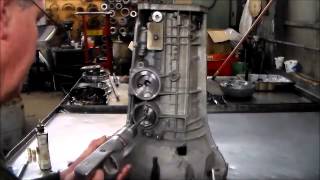
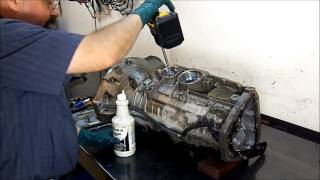
Typical fix: The transmission case must be repaired. The official Ford procedure (TSB 09-12-12) involves removing the transmission, reaming the worn bores with a special tool kit, and installing steel sleeves to restore the correct tolerances. 🎬 Watch: Step-by-step 5R55S servo bore repair and sleeving process An alternative aftermarket solution involves installing patented servo pistons 🎬 See: How to fix 5R55S shifting issues with O-ring servos equipped with O-rings that seal against the worn bores, a repair that can often be done with the transmission in the vehicle.
Est. part cost: $60-$300 for aftermarket servo kits or bore sleeve kits. - Failed Transmission Solenoid Pack ⚪ Low Probability → Shop Transmission Assembly While less common than the servo bore issue, the solenoid pack can fail electrically or its small internal valves can stick due to contaminated fluid. It's also critical to use the correct part number solenoid pack, as Ford made changes over the years that affect line pressure.
How to confirm: A technician can use a high-end scan tool to command individual solenoids and monitor their response. The solenoid pack's internal resistance can also be tested with a multimeter once it's removed from the vehicle. A definitive failure is often confirmed only after the servo bore issue has been ruled out.
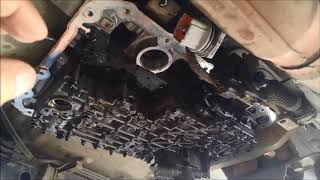
Typical fix: Replace the entire solenoid pack. It is located inside the transmission oil pan and is accessible after removing the pan and filter. 🎬 Watch: How to replace the solenoid block and adjust bands It is critical to use a high-quality OEM (Motorcraft) or OEM-supplier (Bosch) part with the correct part number for the vehicle's model year.
Est. part cost: $250-$450
Rare But Worth Checking
- Broken Transmission Band: → Shop Transmission Assembly A broken overdrive or intermediate band can cause a sudden loss of gears and may trigger a pressure control solenoid code because the PCM detects a complete failure to apply a gear. This usually results from the servo bore issue being ignored for too long, which leads to the band burning up from slipping.
- Worn Pressure Regulator Valve: Wear in the pressure regulator valve assembly within the valve body can cause erratic line pressure, leading to various shifting complaints that could be misdiagnosed. This requires valve body inspection.
Diagnosis Steps
- Check transmission fluid level and condition. Ensure the fluid is at the correct level and does not smell burnt or contain excessive metal debris.
- Scan for all DTCs. Note if any gear ratio error codes (P0732, P0733, P0735) are present alongside P1775.
- With a professional scan tool, monitor solenoid commands and transmission line pressure during a test drive to observe pressure drops during shifting, especially as the transmission warms up.
- Perform a stall test and line pressure test to assess the overall health of the transmission's hydraulic system.
- Inspect the servo bores. This is the critical step. For an in-vehicle check, remove the catalytic converter for access, then remove the servo covers, pistons, and pins. Visually and physically inspect the bores for wear or scoring.
- If bore wear is confirmed, proceed with the appropriate repair (sleeving or aftermarket O-ring servo pistons).
- If bores appear to be in good condition, test the solenoid pack for proper electrical resistance and function. Check for wear in the pressure regulator valve train in the valve body.
Parts You'll Likely Need
- Servo Bore Repair Kit (Sleeves or O-Ring Pistons) — This is the most common root cause of P1775 on the 5R55S transmission. The kit addresses the hydraulic leak from worn bores.
Trusted brands: Sonnax (Part No. 56361J-01K for sleeves), Northland, AJ1E Superior Solutions (Patented O-ring servo pistons)
OEM price range: N/A (Ford's solution is a tool kit and sleeves)
Aftermarket price range: $60-$300 - Transmission Solenoid Pack
(OEM #9L2Z-7G391-A (Updated design, verify by VIN))— Replaced if confirmed to be electrically faulty, or often replaced as a preventative measure while the transmission is open for the servo bore repair.
Trusted brands: Motorcraft, Bosch
OEM price range: $350-$450
Aftermarket price range: $200-$300 - Transmission Filter and Gasket Kit — Required for any repair that involves dropping the transmission pan.
Trusted brands: Motorcraft, Wix, ATP
OEM price range: $40-$60
Aftermarket price range: $20-$40
Related Codes That Often Appear With This One
- P0732 — Incorrect Gear Ratio 2
- P0733 — Incorrect Gear Ratio 3
- P0735 — Incorrect Gear Ratio 5. These codes often accompany P1775 because the underlying pressure loss from worn servo bores prevents the transmission from successfully engaging these gears, resulting in a gear ratio error.
Technical Service Bulletins (TSBs) & Recalls
- TSB 09-12-12: Addresses shift concerns, loss of 2nd, 3rd, and 5th gear, and incorrect ratio DTCs due to servo pin bore wear in 5R55S/W/N transmissions. It provides the procedure for inspecting and repairing the bores by sleeving the case.
Mechanic-Grade Diagnostic Values
- Shift Solenoids (SSA, SSB, SSC, SSD) Resistance — expected: 16 - 45 Ohms. Failure: A reading outside this range indicates a faulty solenoid coil.
- Torque Converter Clutch (TCC) Solenoid Resistance — expected: 9 - 16 Ohms. Failure: A reading outside this range indicates a faulty TCC solenoid coil.
- Pressure Control (PC A, B, C) Solenoids Resistance — expected: 3.1 - 5.7 Ohms. Failure: A reading outside this range indicates a faulty pressure control solenoid coil.
- Line Pressure at Idle (4.6L Engine, in Drive) — expected: 100 - 135 psi. Failure: Pressure significantly below this range, especially when hot, points to a hydraulic leak, likely from the servo bores.
- Line Pressure at WOT Stall (4.6L Engine, in Drive) — expected: 228 - 263 psi. Failure: Inability to reach this pressure under load confirms a major hydraulic leak or a weak front pump.
Scan Tool Commands That Help
- Ford IDS (Integrated Diagnostic System): Output State Control (OSC) — To individually command each shift solenoid (SSA, SSB, SSC, SSD) and the TCC solenoid on and off while monitoring for an audible click from the transmission and observing pressure changes. This helps isolate a single electrically failed solenoid from a mechanical issue.
- Ford IDS (Integrated Diagnostic System): PID Monitoring for PCA/PCB/PCC_AMP — To monitor the amperage commanded to the pressure control solenoids. If the PCM is commanding high amperage to a solenoid but line pressure does not increase accordingly, it points towards a hydraulic leak (like worn servo bores) rather than an electrical fault.
Wiring & Ground Locations
- G100 — On the radiator core support, near the driver's side headlamp assembly.. This is a primary chassis ground. A corroded or loose connection here can cause erratic behavior in various electronic modules, including the PCM, potentially leading to incorrect sensor readings or solenoid commands.
- G104 — On the left (driver's side) front fender apron, located behind the battery.. This is a critical ground point for the Powertrain Control Module (PCM). A poor connection here can directly impact transmission control functions and cause intermittent or false codes.
- G201 — Located in the passenger-side kick panel area, directly below the PCM.. This is another essential ground for the PCM. Verifying its integrity is a key step in diagnosing any electronic transmission code.
- Transmission Bulkhead Connector — On the passenger side of the transmission case, where the main vehicle harness connects to the transmission's internal wiring and solenoid body.. This connector is a common point for fluid intrusion or corrosion. The pins for the pressure control solenoids should be inspected for damage or contamination, which could cause resistance issues and trigger P1775.
Real Owner Repair Stories
- Ford Truck Enthusiasts Forums (2003 Lincoln Aviator (with 5R55S)) — Flashing O/D light, 'Check Transmission' message, intermittent hard shifts, codes P0755 & P0758.
❌ Tried (didn't work) A previous transmission rebuild by a different shop had apparently failed.
✅ What actually fixed it The owner took it to a specialty shop. They found the servo bores were in perfect condition, but the previous rebuild was faulty, causing a 'cut seal' somewhere internally that led to the solenoid circuit codes. A proper, quality rebuild resolved the issue. This highlights that while servo bores are the most common cause, a botched previous repair can mimic the same symptoms. - Lincoln vs Cadillac Forums (Lincoln LS (with 5R55 transmission)) — Harsh shifting, loss of gears.
❌ Tried (didn't work) Initial diagnosis pointed towards worn servo bores.
✅ What actually fixed it Upon disassembly, the owner discovered the servo bores were not worn, but one of the servo pistons itself was physically broken. Replacing both the intermediate and overdrive servos with an aftermarket servo fix kit and changing the fluid and filter resolved all shifting issues. This is a valuable edge case where the servo piston failed before the bore.
OEM Part Supersession History
4L2Z-7G391-AA→9L2Z-7G391-A— The updated solenoid pack features improved materials and design to enhance durability and resistance to failure from contaminated fluid and heat cycling.
Heads up: While the newer part is backward compatible, it is highly recommended to use the latest version (9L2Z-7G391-A) for any repair to get the benefit of the design improvements.
Model Year Variations Within This Range
- 2005-2008 vs 2009-2010: According to forum discussions, Ford updated some fluid paths in the transmission case and corresponding valve body for the 2009 model year. While the core servo bore issue remains the same, this means that a complete transmission or valve body from a 2009-2010 model may not be a direct swap for a 2005-2008 model without ensuring compatibility.
- 2005-2006 vs 2007-2009: Some forum users report a difference in the number of vent or return holes in the transmission case between 2005-2006 and later models. While this doesn't directly affect the P1775 cause, it is another factor to consider when sourcing a used transmission case, as it may indicate other internal revisions.
Diagnostic Flowchart
Other Known Issues on This Vehicle
Issues unrelated to this code that are worth knowing about as an owner of this generation:
- Cracked Plastic Intake Manifold (4.6L 2V) 🔴 High — Very common on 1996-2001 models. Coolant leaks from a crack in the front coolant crossover passage. (Ref: Subject of a class-action lawsuit and multiple TSBs (97M91, 99M01, 01M02).)
- Two-Piece Spark Plug Breakage (4.6L 3V) 🔴 High — Extremely common on 2005 to mid-2008 models. The spark plug's two-piece design causes the lower portion to seize in the cylinder head and break off during removal. (Ref: TSB 08-7-6)
- Passenger Footwell Water Leak (S197) 🟠 Medium — Common on 2005-2010 models. Clogged cowl drains under the windshield cause water to overflow through the cabin air filter opening, soaking the carpet and potentially damaging the Smart Junction Box (SJB). (Ref: A TSB was released for this issue.)
- Hood Edge Corrosion (S197) 🟡 Low — Very common on 2005-2010 models with the aluminum hood. Corrosion and bubbling paint appear on the leading edge of the hood seam.
- Failing Alternator (Early S197) 🟠 Medium — Common on 2005-2009 models. The alternator diode can fail, leading to battery drain issues.
Used vs. New Parts: Buying Guide for This Vehicle
When a used part is the smart pick: A used transmission assembly from a junkyard is a high-risk option for this repair. The primary failure is wear on the transmission case itself, a part that is integral to the assembly. A used unit, especially a high-mileage one, is very likely to have the same worn servo bore issue or will develop it soon. A used part only makes sense if the original case is physically cracked or damaged beyond the possibility of sleeving, and even then, the donor unit should be disassembled and have its bores sleeved before installation.
Donor-vehicle mileage cap: roughly under 60000 miles for the part to have meaningful remaining life.
What to inspect on the donor part:
- Check the donor vehicle's VIN to confirm the model year and ensure compatibility.
- Pull the dipstick (if available) to check the fluid. Dark, burnt-smelling fluid is a major red flag.
- If possible, drop the pan on the donor transmission to inspect for excessive metal shavings or clutch material.
- Ask for any available service history on the donor vehicle. A transmission that has already been replaced or rebuilt is a gamble.
OEM-only on this vehicle (don't cheap out):
- Transmission Solenoid Pack: While aftermarket options exist, the OEM Motorcraft/Bosch unit is strongly recommended for reliability and correct pressure control calibration. Mismatched solenoids can cause persistent shifting issues.
Aftermarket brands forum-validated for this vehicle:
- Sonnax (For bore sleeve kits and valve body components)
- Northland Transmission Parts (For bore sleeve kits)
- AJ1E Superior Solutions (For patented O-ring servo pistons)
Brands owners have reported issues with on this vehicle:
- Unbranded, low-cost solenoid packs from online marketplaces are frequently reported as being dead-on-arrival or failing prematurely.
Real Owner Stories
Aggregated from forums and TSBs cited above. Mileages and costs reflect what owners reported in those sources.
2005 Lincoln LS (5R55S/N)
Symptoms: Rough 2nd gear, no 5th gear, and harsh engagement when shifting into reverse.
What fixed it: The issue was identified as worn servo bores as described in TSB 09-12-12.
Source hint: lincolnvscadillac.com thread titled '2005 Lincoln LS Transmission Problems HELP!'
2005-2010 Ford Mustang (5R55S)
Symptoms: Flashing O/D lights, shift flares, and codes like P0775.
What fixed it: Installed patented o-ringed servo pistons without removing the transmission.
Source hint: fordservoboretransmissionfixsolution.com testimonials for AJ1E Superior Solutions
Related OBD-II Codes
Frequently Asked Questions
Does TSB 09-12-12 apply to my 2005-2010 Ford Mustang with the 5R55S transmission?
I have a 2005 Mustang with a water leak in the passenger footwell; could this be related to my transmission code?
Is there a way to fix the servo bore issue without removing the entire transmission from my Mustang?
Should I buy a used transmission from a junkyard to fix my P1775 code?
My 2006 Mustang is also having trouble with the spark plugs breaking; is there a TSB for that?
What specific solenoid pack should I use if I need a replacement?
Helpful Videos
We Have This Part in Stock

The information in this article is provided for general reference and educational purposes only. Vehicle specifications, procedures, and part compatibility can vary by production date, trim level, and region. Always consult your vehicle's factory service manual and verify part numbers before purchasing or performing repairs. Safety-critical components such as airbags, seat belts, and braking systems should be installed by a qualified professional.
- Ford Mustang:
- 🧭 Diagnostic Flowchart
- 🎬 Helpful Videos
- 🛍️ Shop This Part
- What's Unique About the 1997-2010 Ford Mustang
- Symptoms You May Notice
- Most Likely Causes
- Rare But Worth Checking
- Diagnosis Steps
- Parts You'll Likely Need
- Related Codes That Often Appear With This One
- Technical Service Bulletins (TSBs) & Recalls
- Mechanic-Grade Diagnostic Values
- Scan Tool Commands That Help
- Wiring & Ground Locations
- Real Owner Repair Stories
- OEM Part Supersession History
- Model Year Variations Within This Range
- Other Known Issues on This Vehicle
- Used vs. New Parts: Buying Guide for This Vehicle
- Real Owner Stories
- 2005 Lincoln LS (5R55S/N)
- 2005-2010 Ford Mustang (5R55S)
- Related OBD-II Codes
- Frequently Asked Questions
- 🎟️ Get 5% Off