

P1890 on 1997-2003 Ford F-150: 4WD Circuit Failure Causes and Fixes
On a 1997-2003 F-150, code P1890 almost always points to a failed transfer case shift motor or a bad 4x4 selector switch on the dash. Expect to pay $150-$250 for a new shift motor or around $30 for a new switch. Before replacing parts, test the switch resistance and check for power at the motor connector.
- P1890 on your F-150 means there's an electrical fault in the 4x4 system, specifically with the signal that confirms the transfer case position.
- The most likely culprits are a failed transfer case shift motor or a worn-out 4x4 selector switch on your dashboard.
- Start your diagnosis with the easiest and cheapest things first: check the 4x4 fuses and test the resistance of the dash switch before assuming the more expensive shift motor has failed.
- Always inspect for water damage around the GEM/fuse box, as a leaking windshield is a very common root cause for this and other electrical issues on this truck.
What's Unique About the 1997-2003 Ford F-150
The 10th generation F-150 (1997-2003) uses an Electronic Shift-On-the-Fly (ESOF) system that combines an electric motor on the transfer case with a vacuum-operated front axle disconnect. While the P1890 code specifically faults the electrical return circuit of the transfer case, the overall 4x4 system's reliability is often hampered by its vacuum components, which are known to fail. This is a different design from the Integrated Wheel End (IWE) system used on 2004 and newer models. A notorious issue on this platform is water intrusion from a leaking windshield seal, which drips directly onto the GEM/fuse box, causing a wide range of electrical problems, including 4x4 system failure.
Symptoms You May Notice
- Four-wheel drive (4WD) will not engage or disengage
- Flashing '4x4' or '4WD' lights on the instrument cluster
- Getting stuck in either 2WD or 4WD mode
- Audible clicking from relays under the dash with no 4WD engagement
- Grinding or humming noises when attempting to shift the 4x4 system.
- 4x4 light stays on after switching back to 2WD.
- Replacing the front axle actuator when the problem is a lack of vacuum from a failed solenoid.
- Replacing the transfer case shift motor when the actual problem is a simple blown fuse or a bad dashboard switch.
- Replacing the GEM module without first fixing the windshield leak that caused it to fail.
Most Likely Causes
- Failed Transfer Case Shift Motor 🔴 High Probability → Shop Transfer Case Motor The shift motor is mounted externally on the Borg Warner 4406 transfer case, exposing it to moisture, road salt, and debris. This leads to electrical failure of the motor or, more commonly, the internal position sensor (encoder) that reports the transfer case position back to the GEM.
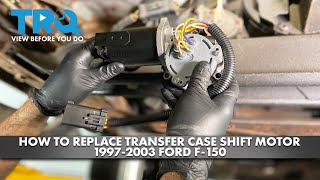
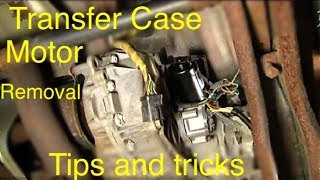
How to confirm: Have a helper turn the 4x4 switch while you are under the truck. If you don't hear or feel the motor attempt to run, test for power at the two large wires on its 7-pin rectangular connector. If power is present but the motor doesn't run, it has failed. If the motor runs but the code persists, the internal position sensor is likely bad. Replacing the entire motor assembly is the only fix. 🎬 Watch: Diagnose and replace your transfer case shift motor
Typical fix: Replace the transfer case shift motor assembly. The Motorcraft part number is often a variant of YL1Z-7G360-AA, with Dorman offering a common aftermarket alternative (e.g., 600-802).
Est. part cost: $150-$250 - Faulty 4x4 Selector Switch 🔴 High Probability The dash-mounted rotary switch is a high-use electrical component. Its internal resistive contacts wear out over time, sending an erratic or incorrect signal to the control module.
How to confirm: Using a multimeter set to Ohms, back-probe the two center pins (often dark blue wires) of the switch connector. The resistance should measure approximately 3.9kΩ in 2H, 1.1kΩ in 4H, and 360Ω in 4L. A reading of 0 or infinity in any position indicates a failed switch.
Typical fix: Replace the 4x4 selector switch on the dashboard. The Motorcraft part is F75Z-14B166-BA / Standard Motor Products part is FWD73.
Est. part cost: $25-$50 - Damaged Wiring or Corroded Connector 🟡 Medium Probability The wiring harness that runs down to the transfer case is susceptible to damage from road debris, heat from the exhaust, or chafing. The main 7-pin connector on the shift motor is a common point for water intrusion and corrosion, leading to an open or shorted return circuit.
How to confirm: Visually inspect the entire length of the harness from the firewall to the transfer case. Unplug the connector at the shift motor and check for green or white corrosion on the pins. A user on F150Forum.com found their P1891 (a related code) was caused by a bad connector on the wiring harness, which was an intermittent and difficult-to-diagnose issue.
Typical fix: Repair the damaged section of wire or clean the connector pins with an electrical contact cleaner and apply dielectric grease. In severe cases, the connector pigtail may need to be replaced (Motorcraft WPT-504).
Est. part cost: $5-$30 - Blown Fuse ⚪ Low Probability
How to confirm: Check the fuses related to the 4WD system in the central junction box (fuse panel in the cab). On many models, this is fuse #23 (15A) and #104 (20A). Always verify with your owner's manual.
Typical fix: Replace the blown fuse. If it blows again immediately, this indicates a short circuit in the system that needs to be diagnosed, often a shorted shift motor.
Est. part cost: $1-$5
Rare But Worth Checking
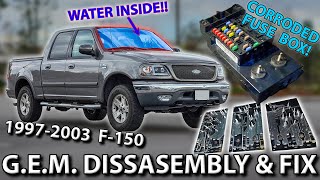
- Failed Generic Electronic Module (GEM): The GEM is the control center for the 4x4 system. It is notoriously prone to failure from water intrusion caused by a leaking windshield seal. Water drips onto the GEM and attached fuse box, causing corrosion and erratic behavior of multiple systems (wipers, windows, 4x4). If you have other strange electrical issues along with P1890, a water-damaged GEM is a strong possibility. 🎬 See how to remove and fix a water-damaged GEM Replacement requires a part with the exact same part number and may need dealer programming.
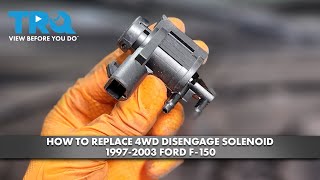
- Failed Vacuum Solenoids: While this P-code points to an electrical issue at the transfer case, the vacuum solenoids on the firewall are a very common failure point on these trucks that prevents the front axle from engaging. If the transfer case shifts (front driveshaft spins) but the front wheels don't engage, these solenoids or their vacuum lines are the likely culprit. This will not typically set a P1890 but is a critical part of the overall 4x4 system diagnosis. 🎬 Watch: How to replace the 4WD vacuum solenoid
Diagnosis Steps
- Read the code with an OBD-II scanner to confirm P1890 is present. Check for other related codes like P1867 or P1891.
- Check fuses #23 and #104 in the interior fuse panel. Replace if blown.
- Test the 4x4 Selector Switch: Set a multimeter to Ohms and test across the two center pins of the switch connector. Verify resistance values: ~3.9kΩ (2H), ~1.1kΩ (4H), ~360Ω (4L). If the readings are incorrect, replace the switch.
- Listen for System Activity: With the engine running, have a helper operate the 4x4 dash switch. Listen for a 'click' from the vacuum solenoids on the passenger-side firewall and for the shift motor on the transfer case to run.
- Inspect Wiring: Visually inspect the wiring harness to the transfer case shift motor for damage. Unplug the 7-pin connector and check for corrosion. Clean with contact cleaner and apply dielectric grease.
- Test the Shift Motor: If the switch and wiring are good, test the shift motor. Check for 12V at the appropriate pins on the motor connector when the switch is turned. If power is present but the motor does not run, the motor is bad and needs replacement.
- Check for GEM Water Intrusion: Inspect the area around the interior fuse box for signs of water stains or rust. If other electrical components (wipers, radio, windows) are acting erratically, suspect a water-damaged GEM module. This is a very common issue caused by a leaking windshield seal.
Parts You'll Likely Need
- Transfer Case Shift Motor
(OEM #YL1Z-7G360-AA)— This is the most common mechanical/electrical failure point in the ESOF system for this code, due to its exposed location and the failure of its internal position sensor.
Trusted brands: Motorcraft, Dorman (600-802)
OEM price range: $250-$350
Aftermarket price range: $150-$250 - 4WD Selector Switch
(OEM #F75Z-14B166-BA)— This switch is used every time 4WD is engaged/disengaged and its internal resistive contacts wear out, causing a loss of signal. It's a cheap and easy part to replace.
Trusted brands: Motorcraft, Standard Motor Products (FWD73)
OEM price range: $40-$60
Aftermarket price range: $25-$40 - 4WD Vacuum Solenoid
(OEM #6L3Z-9H465-B)— Though not the direct cause of P1890, these frequently fail, preventing 4WD engagement. They are often replaced during a full system diagnosis. Note that Ford has superseded the original part numbers.
Trusted brands: Motorcraft, Dorman
OEM price range: $30-$50
Aftermarket price range: $20-$35
Related Codes That Often Appear With This One
- P1867 - Transfer Case Contact Plate General Circuit Failure: This code is more specific than P1890 and points directly to a fault in the position sensor (contact plate) inside the shift motor assembly. If you have P1867, the shift motor is almost certainly the problem.
- P1891 - Transmission Transfer Case Contact Plate Ground Return Open Circuit: This code indicates a specific open in the ground return circuit for the contact plate, often due to a broken wire or corroded connector pin.
Technical Service Bulletins (TSBs) & Recalls
- SSM #15773 (April 5, 2002): Ford issued this Special Service Message to technicians acknowledging that various electrical conditions could be caused by water intrusion into the GEM/CJB (Central Junction Box) from a windshield leak. The procedure advises inspecting for corrosion and, if found, replacing both the GEM and CJB and completely resealing the windshield.
Platform-Specific Known Issues
- Leaking Windshield Destroying GEM Module: A widespread and well-documented issue on 10th gen F-150s is the factory windshield seal failing, allowing water to leak directly onto the GEM module and interior fuse box. This causes corrosion and leads to a host of bizarre electrical problems, including 4x4 system faults, erratic wipers or windows, and battery drain. Before replacing a faulty GEM, it is critical to have the windshield professionally resealed to prevent repeat failure.
Mechanic-Grade Diagnostic Values
- 4WD Selector Switch Resistance (at switch connector) — expected: 2H: ~3.9kΩ, 4H: ~1.1kΩ, 4L: ~360Ω. Failure: A reading of 0Ω (short) or infinite/OL (open) in any position.
- Manual Shift Motor Activation Voltage (at motor connector, harness disconnected) — expected: Apply +12V to Pin 3 (Yellow wire) and Ground to Pin 2 (Orange wire) to run the motor in one direction. Reverse polarity to run it in the other.. Failure: Motor does not run when voltage is applied, indicating a failed motor.
Scan Tool Commands That Help
- Ford IDS (Integrated Diagnostic System): Module Programming / Self Test / Data Logger — The dealer-level IDS tool can run self-tests on the GEM, command the transfer case motor to shift as a bidirectional test, and monitor live data from the position sensor to confirm if the GEM is receiving the signal.
- FORScan: Module Diagnostics & Live Data — A powerful aftermarket tool that provides dealer-level access to read codes and view live data from specific modules like the GEM, which is essential for diagnosing if the module is seeing the correct resistance from the switch or position from the motor.
Wiring & Ground Locations
- G201 — Lower left cowl panel, inside the cab behind the kick panel.. This is a major ground point for many interior electronics. Corrosion at this location, often due to water intrusion from a leaking windshield or door seal, can cause a host of intermittent electrical issues, including problems with the GEM module that controls the 4x4 system.
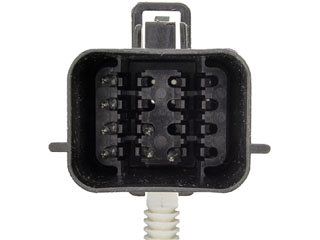
- Shift Motor Connector (C353 approx.) — On the transfer case shift motor itself.. This 7-pin connector is the primary test point. The two large pins, Pin 2 (Orange) and Pin 3 (Yellow), are for the motor itself. The other pins are for the internal position sensor (encoder). Corrosion here is a direct cause of P1890 and related codes.
Real Owner Repair Stories
- F150Forum.com user 'moonlightgt' (2000 Ford F-150 Lariat 5.4L, 97,000 miles) — 4x4 not working, leading to diagnosis of a bad transfer case motor.
❌ Tried (didn't work) Initial troubleshooting for two weeks.
✅ What actually fixed it Replacing the transfer case shift motor with a Dorman OE Solution (part #600-802) resolved the issue. The user specifically noted they had to transfer an extra wire from the old connector to the new one, a common step with this aftermarket part. - Multiple forum users (1997-2003 Ford F-150 (all trims)) — Intermittent and bizarre electrical issues (wipers, windows, radio, 4x4 failure) that are worse during or after rain.
❌ Tried (didn't work) Replacing individual components like the wiper motor or 4x4 switch., Drying out the fuse box without finding the source of the leak.
✅ What actually fixed it The final fix was a two-step process: 1) Having the windshield professionally removed, the channel cleaned, and the glass resealed to stop the water leak. 2) Replacing the water-damaged GEM module and/or the central junction box (fuse box).
OEM Part Supersession History
YC3Z-7G360-AA→DC3Z-7G360-B— Part has been updated by Ford over the years. The new part number is the current replacement.
Heads up: While the core part number for the 10th gen is often cited as YL1Z-7G360-AA, the YC3Z/DC3Z numbers are also associated with Ford shift motors of this era and show the supersession pattern. Always verify the exact part number for your specific VIN, but be aware that the number on the original part may have been replaced.
Model Year Variations Within This Range
- 1997-1998 vs 1999-2003: The 1999 model year introduced a significant refresh. While the core ESOF 4x4 system and its common failure points (shift motor, GEM leak) remained consistent, other systems changed. 1999+ models received different front-end styling, Coil-On-Plug ignition, four-door SuperCabs, and different transmission options (4R100 replacing the E4OD). The instrument cluster also changed from mechanical to digital in 1999, which could affect how 4x4 faults are displayed.
Diagnostic Flowchart
Other Known Issues on This Vehicle
Issues unrelated to this code that are worth knowing about as an owner of this generation:
- 5.4L 2V Spark Plug Blowout 🔴 High — Widespread issue on 1997-2003 4.6L and 5.4L 2V engines. The cylinder heads have very few threads for the spark plugs, causing them to be ejected under pressure, often damaging the coil and requiring a thread insert (Heli-Coil) repair. (Ref: TSB #07-15-2)
- Leaking Windshield Seal & GEM Failure 🔴 High — Extremely common. The factory urethane seal for the windshield fails, allowing water to run down the A-pillar and drip directly onto the Generic Electronic Module (GEM) and fuse box, causing widespread electrical chaos. (Ref: SSM #15773)
- Cracked/Leaking Exhaust Manifolds 🟠 Medium — Very common for the factory cast iron exhaust manifolds to crack or for the mounting studs to rust and break, causing a loud ticking noise, especially when cold.
- Cracked Plastic Intake Manifold (4.6L) 🟠 Medium — The 4.6L V8 used a composite plastic intake manifold with a plastic coolant crossover that is prone to cracking and causing a significant coolant leak at the front of the engine.
- Frame Rust (Especially in Salt Belt) 🔴 High — Common in regions where road salt is used. The frame is susceptible to severe rust-through, particularly in the area under the cab and bed. Can lead to structural failure.
Used vs. New Parts: Buying Guide for This Vehicle
When a used part is the smart pick: A used 4x4 selector switch from a junkyard is a reasonable, low-cost gamble. A connector pigtail from a donor vehicle harness is also a good option if your original connector is corroded or damaged.
Donor-vehicle mileage cap: roughly under 150000 miles for the part to have meaningful remaining life.
What to inspect on the donor part:
- For a GEM module: Inspect the donor truck for any signs of windshield leaks (water stains, rust around the fuse box). If any signs are present, do not buy the module.
- For a selector switch: Check for smooth, positive clicks between positions. Avoid switches that feel loose or gritty.
- For a wiring harness/pigtail: Inspect for any signs of corrosion, brittle insulation, or previous hack-job repairs.
OEM-only on this vehicle (don't cheap out):
- Generic Electronic Module (GEM): While a used OEM part can work, it MUST have the exact same part number as your original. Aftermarket GEMs are not widely available or recommended for this platform due to programming complexities.
Aftermarket brands forum-validated for this vehicle:
- Dorman (600-802 for shift motor): Frequently cited on forums as a reliable and cost-effective alternative to the OEM Motorcraft part.
- Standard Motor Products (FWD73 for selector switch): A well-regarded brand for electrical components like switches and sensors.
Brands owners have reported issues with on this vehicle:
- No-name, unbranded electronic parts from online marketplaces. The quality control is often poor, and they can fail quickly or be dead-on-arrival, especially for critical components like the shift motor's internal position sensor.
Real Owner Stories
Aggregated from forums and TSBs cited above. Mileages and costs reflect what owners reported in those sources.
1997 Ford F-150
Symptoms: The 4x4 selector switch was tested with a multimeter and returned a 0 ohm reading while in the 2H position.
What fixed it: Replacing the 4x4 selector switch on the dashboard.
Source hint: Ford Truck Enthusiasts Forums thread titled '97 4x4 selector switch bad resistance tested'
2000 Ford F-150
Symptoms: Experienced an intermittent and difficult-to-diagnose 4WD issue; the system would not reliably engage.
What fixed it: Repairing a bad connector on the wiring harness rather than replacing the shift motor.
Source hint: Ford F150 Forum user report regarding P1891 and wiring harness connector issues
2002 Ford F-150
Symptoms: Various electrical conditions including 4x4 system faults caused by water intrusion into the GEM/CJB.
What fixed it: Replacing both the GEM and CJB (Central Junction Box) and completely resealing the windshield.
Source hint: SSM #15773 (April 5, 2002)
Related OBD-II Codes
Frequently Asked Questions
My 4x4 lights are flashing and I hear clicking under the dash, but nothing happens. Does SSM #15773 apply to my F-150?
I'm testing my dash-mounted 4x4 selector switch with a multimeter. What resistance values should I see for a 1997-2003 F-150?
Can I just replace the shift motor on my Borg Warner 4406 transfer case to fix P1890?
Why are my wipers and windows acting crazy at the same time my 4x4 stopped working?
Is the 4x4 selector switch supposed to have 12V power?
Helpful Videos
We Have This Part in Stock


The information in this article is provided for general reference and educational purposes only. Vehicle specifications, procedures, and part compatibility can vary by production date, trim level, and region. Always consult your vehicle's factory service manual and verify part numbers before purchasing or performing repairs. Safety-critical components such as airbags, seat belts, and braking systems should be installed by a qualified professional.
- Ford F-150:
- 🧭 Diagnostic Flowchart
- 🎬 Helpful Videos
- 🛍️ Shop This Part
- What's Unique About the 1997-2003 Ford F-150
- Symptoms You May Notice
- Most Likely Causes
- Rare But Worth Checking
- Diagnosis Steps
- Parts You'll Likely Need
- Related Codes That Often Appear With This One
- Technical Service Bulletins (TSBs) & Recalls
- Platform-Specific Known Issues
- Mechanic-Grade Diagnostic Values
- Scan Tool Commands That Help
- Wiring & Ground Locations
- Real Owner Repair Stories
- OEM Part Supersession History
- Model Year Variations Within This Range
- Other Known Issues on This Vehicle
- Used vs. New Parts: Buying Guide for This Vehicle
- Real Owner Stories
- 1997 Ford F-150
- 2000 Ford F-150
- 2002 Ford F-150
- Related OBD-II Codes
- Frequently Asked Questions
- 🎟️ Get 5% Off