

P2101 on 2005-2006 Saab 9-2X 2.5L: Throttle Actuator Fault Causes and Fixes
P2101 on a 2005-2006 Saab 9-2X almost always means the electronic throttle body is failing. This will force the car into 'limp mode' with severely reduced power. The most common fix is replacing the entire throttle body assembly, which costs between $200 and $450 for the part. Since this car is a rebadged Subaru Impreza, parts and repair information for the Impreza are directly applicable.
- P2101 on your Saab 9-2X will cause immediate and severe power loss ('limp mode').
- The most likely cause is a failed electronic throttle body assembly.
- Before replacing parts, always inspect the wiring and connector at the throttle body for damage or corrosion.
- This Saab is a rebadged Subaru Impreza, so parts and repair information for a 2005 Subaru Impreza 2.5i are directly applicable and more plentiful.
- After cleaning or replacing the throttle body, a 'relearn' procedure is mandatory to restore normal idle and performance.
What's Unique About the 2005-2006 Saab 9-2X
The 2005-2006 Saab 9-2X with the 2.5L non-turbo engine (dubbed the 'Linear' model) is mechanically identical to the Subaru Impreza 2.5i of the same era, earning it the nickname 'Saabaru'. This is a critical fact for diagnosis and parts sourcing, as information and parts for the corresponding Subaru Impreza are much more common and directly apply to the Saab. The issue is rarely with Saab-specific electronics but rather with the underlying Subaru drive-by-wire throttle system. The 9-2X did receive some unique benefits like an upgraded STI steering rack and improved interior sound deadening.
Symptoms You May Notice
- Vehicle enters 'limp mode' (Reduced Engine Power)
- Severely limited acceleration and power, often capped at a low speed
- Check Engine Light is on
- Unstable, rough, or high idle, especially after cleaning or replacement
- Engine may stall at low speeds or when stopping
- Delayed or unresponsive throttle pedal
- In some cases, the engine may not start at all if the throttle plate is stuck closed
- Replacing the Accelerator Pedal Position (APP) sensor. P2101 specifically relates to the throttle actuator motor circuit at the engine. A faulty APP sensor would typically trigger different codes, such as P2122, P2135 or P2138.
Most Likely Causes
- Failing Electronic Throttle Body Assembly 🔴 High Probability → Shop Fuel Injection Throttle Body The internal electric motor wears out over time, or the internal plastic gears can fail, leading to a discrepancy between the commanded and actual throttle position. The integrated throttle position sensor (TPS) can also fail, sending incorrect data to the ECM.
How to confirm: Use a scan tool to command the throttle plate open and closed while observing its actual position in live data. If it sticks, moves erratically, or doesn't respond, the throttle body is faulty. You can also test the resistance of the motor pins; a reading of 0 or infinite ohms indicates failure. Some sources suggest a healthy motor has a resistance between 5-15 ohms.
Typical fix: Replace the entire throttle body assembly. Since the motor and sensors are integrated, replacing the complete unit is the standard repair. The correct Subaru OEM part number for the 2005 2.5L non-turbo Impreza is critical.
Est. part cost: $200-$450 - Damaged Wiring or Corroded Connector 🟡 Medium Probability The wiring harness to the throttle body is exposed to engine heat and vibration, which can cause wires to fray, break, or the connector pins to corrode over time. This is a common failure point on many electronic throttle systems.
How to confirm: Visually inspect the wiring harness leading to the throttle body for any signs of chafing, melting, or breaks. Unplug the connector and check for corrosion (green or white powder) or bent/loose pins. Use a multimeter to perform a continuity test on the harness wires between the ECM and the throttle body connector to check for opens or shorts. A voltage drop of more than 0.5V between the PCM supply and the motor connector suggests a wiring issue.
Typical fix: Repair the damaged section of wiring or replace the connector pigtail. Ensure all connections are clean and secure. Use dielectric grease on the connector to prevent future corrosion.
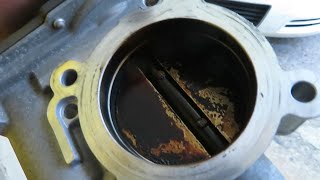
Est. part cost: $20-$50 - Heavy Carbon Buildup in Throttle Body ⚪ Low Probability → Shop Fuel Injection Throttle Body Over time, carbon and oil vapor from the PCV system can build up inside the throttle bore, restricting the movement of the throttle plate, especially near the closed position.
How to confirm: Remove the air intake hose from the throttle body and visually inspect the throttle plate and bore for a thick layer of black carbon. Gently try to move the plate with your finger (with the engine off); it should move smoothly without sticking.
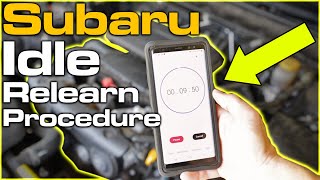
Typical fix: Clean the throttle body bore and plate thoroughly with a dedicated throttle body cleaner and a soft cloth. Do not spray cleaner directly into the electronics. 🎬 Watch: How to safely remove and clean the throttle body. A throttle relearn procedure is mandatory after cleaning 🎬 See this walkthrough of the Subaru idle relearn procedure. to reset the idle parameters.
Est. part cost: $10-$20
Rare But Worth Checking
- Faulty Powertrain Control Module (ECM): → Shop Engine Control Module (ECM) This is rare and should only be considered after all other possibilities (throttle body, wiring) have been definitively ruled out. A faulty ECM driver circuit can fail to properly power or read the throttle actuator.
Diagnosis Steps
- Scan for Codes: Use an OBD-II scanner to confirm P2101 and check for any other related codes like P2110 or P0638.
- Inspect Connector and Wiring: Turn the ignition off. Carefully inspect the electrical connector and wiring harness at the throttle body for any signs of damage, corrosion, or loose connections. Check for good ground and reference voltage at the connector.
- Inspect Throttle Body for Buildup: Remove the air intake duct and visually inspect the throttle bore for heavy carbon buildup that could cause the plate to stick. If dirty, clean it before proceeding.
- Test with a Scan Tool (Live Data): With the ignition on (engine off), use a scan tool to monitor 'Commanded Throttle Position' and 'Actual Throttle Position' while an assistant slowly presses and releases the gas pedal. The values should closely match. Any significant deviation, lag, or jumping points to a fault.
- Test the Actuator Circuit: Disconnect the throttle body. Use a multimeter to check the resistance between the two motor pins on the throttle body itself. A typical reading for a healthy motor is between 5-15 ohms. A reading of 0 (short) or infinite (open) ohms indicates a failed motor.
- Perform a Throttle Relearn: If you clean or replace the throttle body, a relearn procedure is required. There are multiple methods described online, but a common manual procedure involves disconnecting the battery for 30 minutes, reconnecting, turning the key to 'ON' for 15 seconds, starting the engine and letting it idle for 10-15 minutes without touching the throttle until the cooling fans cycle. Using a scan tool with this function is the most reliable method. 🎬 Watch: Another helpful guide for fixing Subaru idle issues.
Parts You'll Likely Need
- Electronic Throttle Body Assembly
(OEM #Subaru: 16112AA010 (verify for 2005) or 16112AA180 (superseded by 16112AA300 for later models))— This is the most common cause of P2101. The internal motor or position sensor fails, requiring replacement of the entire integrated unit. It is critical to match the part number to the vehicle year, as Subaru used different parts that are not interchangeable.
Trusted brands: Hitachi (OEM supplier), Subaru (Genuine), Cardone (Remanufactured)
OEM price range: $350-$500
Aftermarket price range: $200-$350
Technical Service Bulletins (TSBs) & Recalls
While the 9-2X shares its mechanical DNA with Subaru, manufacturer bulletins for other Saab models highlight similar throttle control failures. For instance, manufacturer service bulletin #PIP4578B notes that P2101 and reduced engine power mode may be experienced on high mileage vehicles. Additionally, bulletin #PIP4573B describes instances where technicians may find P2101 and other throttle-related codes when starting the engine in extremely cold ambient temperatures (approximately -10 Fahrenheit), sometimes accompanied by oil leaks from gaskets or seals.
Related Codes That Often Appear With This One
- P2110 — This code for 'Throttle Actuator Control System - Forced Limited RPM' is often set alongside P2101 as it describes the 'limp mode' action the ECM takes in response to the P2101 fault.
- P0638 — Another code for 'Throttle Actuator Control Range/Performance', often seen with P2101 on Subarus, reinforcing that the fault lies with the throttle body's operation.
Platform-Specific Known Issues
- The Saab 9-2X is known as a 'Saabaru' because it is a rebadged Subaru Impreza wagon with minor cosmetic and interior changes.
- Owners on forums frequently advise others to search for parts and repair guides using '2005 Subaru Impreza 2.5i' to get more accurate results.
- A user on a Saab forum described getting the P2101 code, entering limp mode, and having it temporarily resolved by a reset at a shop, only for it to return 12,000 miles later, confirming the progressive nature of the failure.
Mechanic-Grade Diagnostic Values
- Throttle Actuator Motor Resistance — expected: 5-15 ohms across the two motor pins. Failure: Infinite resistance (open circuit) or 0 ohms (short circuit)
- Throttle Position Sensor (TPS) Voltage — expected: Smoothly rises from ~0.5V (closed) to ~4.5V (wide open). Failure: Erratic spikes, dropouts, or a signal that doesn't correspond to the throttle plate's commanded position
- Ground Circuit Resistance — expected: Less than 1 ohm. Failure: Resistance greater than 1 ohm indicates a poor ground connection at the throttle body harness or engine block
- Voltage Drop Test (Throttle Motor Circuit) — expected: Less than 0.5V drop. Failure: A voltage drop greater than 0.5V between the ECM power supply and the motor connector indicates high resistance in the wiring or connector
Scan Tool Commands That Help
- Subaru Select Monitor (SSM) or equivalent (e.g., FreeSSM, iCarsoft CR MAX): Throttle Control Actuator Test / Throttle Position Sweep Test — This bidirectional command allows the technician to command the throttle plate to specific open percentages (e.g., 10%, 50%, 100%) while the engine is off. It is used to confirm if the motor is physically capable of moving the plate through its full range without sticking or hesitating, which isolates a mechanical failure from a sensor or wiring issue.
- Subaru Select Monitor (SSM) or equivalent: Idle Learn Reset / ETC Learn — This function is mandatory after cleaning or replacing the electronic throttle body. It erases the old learned values for the closed and idle throttle positions and forces the ECM to relearn the new parameters, preventing high idle, stalling, or hunting idle after the repair.
Wiring & Ground Locations
- Electronic Throttle Control Connector (E57) — The 6-pin electrical connector directly on the electronic throttle body assembly, mounted to the front of the intake manifold.. This is the primary connection point for the throttle motor and position sensors. Corrosion on pins, a loose connection, or frayed wires leading to this connector are common causes of P2101. Testing for power, ground, and signal integrity happens at this connector's pins.
- ECM to Throttle Control Harness — The wiring loom that runs from the main Engine Control Module (ECM), across the engine bay, to the throttle body connector (E57).. This harness is susceptible to heat and vibration, which can cause internal wire breaks or shorts to ground over time. A continuity check between the pins at the ECM connector and the E57 connector is necessary to rule out a harness fault.
- Engine Ground Straps (e.g., E9, E15) — Multiple ground points exist, but key ones are typically located on the intake manifold and from the engine block to the chassis frame rail near the battery.. A high-resistance or broken engine ground can cause erratic voltage signals throughout the engine management system, including the electronic throttle control. This can lead to false P2101 codes even if the throttle body and its direct wiring are good.
OEM Part Supersession History
16112AA010→N/A - This part number is specific to certain 2004-2005 models.— Model year specific design.
Heads up: This part is listed for the 2005 Subaru Impreza 2.5L non-turbo. It is not interchangeable with the part for the 2006 model.16112AA180→16112AA300— Internal design revision or supplier change by Subaru.
Heads up: Part number 16112AA180 is specified for the 2006 Subaru Impreza 2.5L non-turbo. It is not backward compatible with the 2005 model which uses a different part (16112AA010). Using the wrong year's part will result in operational failure.
Model Year Variations Within This Range
- 2005 vs 2006: The electronic throttle body assembly is different between the 2005 and 2006 model years for the non-turbo EJ253 engine. The 2005 model typically uses Subaru part number 16112AA010, while the 2006 model uses 16112AA180. These parts are not interchangeable. It is critical to verify the correct part number for the specific vehicle year before ordering a replacement.
Diagnostic Flowchart
Other Known Issues on This Vehicle
Issues unrelated to this code that are worth knowing about as an owner of this generation:
- Head Gasket Failure 🔴 High — Very common, typically between 100,000 and 150,000 miles. The single-layer composite gaskets used on the naturally aspirated EJ253 are known to fail, causing external oil and/or coolant leaks.
- Excessive Oil Consumption 🟠 Medium — Common on higher-mileage engines, often linked to piston ring wear or failing valve stem seals. Can be a precursor or related symptom of head gasket issues.
- Rear Wheel Bearing Failure 🟠 Medium — A common wear item on this chassis, often requiring replacement before 100,000 miles. Symptoms include a loud humming or grinding noise from the rear of the vehicle that changes with speed.
- Front Strut 'Clunk' 🟡 Low — Often occurs in colder weather. The front struts can develop a clunking noise over bumps due to the design of the top hats. While annoying, it is not typically a safety issue. Aftermarket solutions and revised OEM parts can fix this.
Used vs. New Parts: Buying Guide for This Vehicle
When a used part is the smart pick: A used throttle body from a reputable auto recycler can be a cost-effective option, especially if the budget is tight. Since the failure is due to wear on an electronic motor and gears, it's a calculated risk.
Donor-vehicle mileage cap: roughly under 80000 miles for the part to have meaningful remaining life.
What to inspect on the donor part:
- Verify the part number on the used unit matches the original part exactly.
- Inspect the electrical connector for any signs of corrosion, bent pins, or cracks.
- Look inside the throttle bore; minimal carbon buildup suggests a healthier engine and potentially less wear.
- Ask the recycler for the mileage of the donor vehicle; lower is always better.
- Ensure there is a return policy or warranty (e.g., 30-90 days) in case the part is faulty.
OEM-only on this vehicle (don't cheap out):
- While aftermarket options exist, the OEM part (often made by Hitachi) is highly recommended for best compatibility and to avoid potential idle or relearn issues that can occur with lower-quality copies.
Aftermarket brands forum-validated for this vehicle:
- Hitachi (Original Equipment Manufacturer)
- Cardone (Remanufactured - often a good budget alternative if a warranty is included)
Brands owners have reported issues with on this vehicle:
- Unbranded, no-name units from online marketplaces are a significant gamble and frequently cause more issues than they solve, according to forum discussions.
Real Owner Stories
Aggregated from forums and TSBs cited above. Mileages and costs reflect what owners reported in those sources.
2005-2006 Saab 9-2X EJ253 2.5L — 12000 miles
Symptoms: The vehicle threw a P2101 code and entered limp mode.
What fixed it: A reset at a shop temporarily resolved the issue, but it returned 12,000 miles later, confirming the progressive nature of the throttle body failure.
Source hint: A user on a Saab forum
2005-2008 Subaru Forester 2.5 X/XS
Symptoms: Stalling issue after maintenance.
What fixed it: The issue was resolved by cleaning a 'filthy' throttle body, which then allowed the car to complete its own idle relearn procedure.
Source hint: Reddit r/SubaruForester - Thread titled 'What is the proper procedure for relearning the idle?'
MY2002 Aero
Symptoms: Repeat 'limp home mode' incidents due to the throttle body.
What fixed it: A reset provided a temporary fix, but replacement of the throttle body was the eventual permanent solution.
Source hint: Saab Tech Talk (STT) - Thread titled 'Throttle Bodies'
Related OBD-II Codes
Frequently Asked Questions
I have a 2005 Saab 9-2X. Should I be looking for Subaru parts to fix the P2101 code?
What is the most likely part I'll need to replace for a P2101 code on my 9-2X?
I cleaned the throttle body on my Saab and now the idle is high and unstable. What went wrong?
Can I just clean the throttle body to fix P2101, or do I have to replace it?
How can I test the throttle body motor myself to confirm it's bad?
Are other Subaru models known to have this same P2101 throttle body problem?
Helpful Videos

We Have This Part in Stock


The information in this article is provided for general reference and educational purposes only. Vehicle specifications, procedures, and part compatibility can vary by production date, trim level, and region. Always consult your vehicle's factory service manual and verify part numbers before purchasing or performing repairs. Safety-critical components such as airbags, seat belts, and braking systems should be installed by a qualified professional.
- Saab 9-2X:
- 🧭 Diagnostic Flowchart
- 🎬 Helpful Videos
- 🛍️ Shop This Part
- What's Unique About the 2005-2006 Saab 9-2X
- Symptoms You May Notice
- Most Likely Causes
- Rare But Worth Checking
- Diagnosis Steps
- Parts You'll Likely Need
- Technical Service Bulletins (TSBs) & Recalls
- Related Codes That Often Appear With This One
- Platform-Specific Known Issues
- Mechanic-Grade Diagnostic Values
- Scan Tool Commands That Help
- Wiring & Ground Locations
- OEM Part Supersession History
- Model Year Variations Within This Range
- Other Known Issues on This Vehicle
- Used vs. New Parts: Buying Guide for This Vehicle
- Real Owner Stories
- 2005-2006 Saab 9-2X EJ253 2.5L — 12000 miles
- 2005-2008 Subaru Forester 2.5 X/XS
- MY2002 Aero
- Related OBD-II Codes
- Frequently Asked Questions
- 🎟️ Get 5% Off