

P2111 on 2007-2016 Toyota Sienna: Throttle Body Stuck Open Causes and Fixes
For a 2007-2016 Toyota Sienna, code P2111 is almost always caused by a faulty or dirty electronic throttle body. The vehicle will enter a low-power 'limp mode.' Cleaning the throttle body is the first step, but replacement is often required. Expect to pay ~$250-$450 for an aftermarket part or ~$500+ for OEM.
- P2111 on your Sienna will put the van into a 'limp mode' with severely reduced power for safety.
- The most likely cause is a failing electronic throttle body. A thorough cleaning may fix it, but replacement is very common.
- The failure can be intermittent and heat-related, meaning it might seem to work fine when the engine is cold.
- Do not replace the accelerator pedal sensor; this code points specifically to a fault at the throttle body.
- After cleaning or replacement, a throttle 'relearn' procedure may be necessary to correct a high idle.
What's Unique About the 2007-2016 Toyota Sienna
The 2GR-FE engine, used across many Toyota and Lexus models, has a known history of throttle body issues leading to codes like P2111. While extremely reliable otherwise, the electronic throttle body on this engine can become sluggish or fail due to carbon buildup or wear in the internal motor and gears over time. The failure is often intermittent and heat-sensitive, occurring when the engine is hot, which can make diagnosis tricky as the component may test fine when cold. Unlike some other Toyota models that had TSBs requiring ECM updates or intake manifold replacements for this issue (often related to cold weather), the Sienna's problem is typically a direct failure of the throttle body unit itself.
Generation note: This range covers two Sienna generations: the second generation (XL20, 2007-2010) and the third generation (XL30, 2011-2016). Both generations used the 2GR-FE 3.5L V6 engine, and the cause, symptoms, and fix for code P2111 are consistent across both. The 2GR-FE is known for its durability, often reaching high mileage with only routine maintenance.
Symptoms You May Notice
- Check Engine Light is on
- VSC (Vehicle Stability Control) light is on
- Vehicle enters 'limp mode' with drastically reduced engine power and acceleration
- Engine may idle higher than normal, sometimes over 1500 RPM.
- Poor or unresponsive throttle pedal. 🎬 Watch: Diagnosing a Sienna in limp mode with code P2111
- Engine may stall when coming to a stop
- In rare cases with severe sticking, excessive white smoke from the exhaust if coolant is ingested.
- Replacing the Accelerator Pedal Position (APP) Sensor. The P2111 code specifically points to a discrepancy at the throttle body itself (the actuator is not responding as commanded), not the pedal sensor that sends the driver's input.
Most Likely Causes
- Failing Throttle Body Assembly 🔴 High Probability → Shop Fuel Injection Throttle Body The internal electric motor and plastic gears in the throttle body actuator wear out over time. The failure is often heat-sensitive and intermittent, making it hard to diagnose with a simple resistance test when the engine is cold. The part may test good when cool but fail once the engine bay reaches operating temperature.
How to confirm: If the throttle body has been thoroughly cleaned and the code returns, the unit itself is almost certainly faulty. A mechanic can monitor live data to see if the commanded throttle position matches the actual position. A resistance test on the motor pins (pins 1 and 2, M- and M+) may show an out-of-spec reading (per Toyota, it should be 0.3-100 kΩ at 68°F), but a reading within spec does not guarantee the part is good, as it may only fail when hot. A failure is confirmed if the resistance is significantly higher.
Typical fix: Replace the entire throttle body assembly. After replacement, a 'relearn' procedure may be necessary, which can sometimes be accomplished by simply driving the vehicle or letting it idle.
Est. part cost: $250-$600 - Dirty or Carbon-Clogged Throttle Body 🟡 Medium Probability → Shop Fuel Injection Throttle Body Over time, carbon and oil vapor from the PCV system can build up inside the throttle body bore, physically restricting the throttle plate and preventing it from closing properly.
How to confirm: Remove the air intake hose from the throttle body. Visually inspect the throttle bore and the edges of the metal throttle plate for a thick, black layer of carbon buildup. 🎬 See this step-by-step guide on cleaning the 2GR-FE throttle body
Typical fix: Thoroughly clean the throttle body bore and plate with a dedicated throttle body cleaner and a soft cloth or brush. It is recommended to have an assistant press the accelerator pedal (with ignition 'ON' but engine off) to open the plate for cleaning, rather than forcing it by hand. Ensure no foreign objects are caught in the mechanism.
Est. part cost: $10-$20 - Wiring or Connector Issue ⚪ Low Probability
How to confirm: Visually inspect the wiring harness and 6-pin connector leading to the throttle body. Look for any signs of damage, corrosion, or loose pins in the connector. Wiggle the connector with the engine running to see if it affects the idle. A more advanced check involves testing for continuity between the throttle body connector and the ECM connector.
Typical fix: Repair the damaged section of wiring or replace the connector pigtail.
Est. part cost: $15-$50
Rare But Worth Checking
- Faulty Engine Control Module (ECM): → Shop Engine Control Module (ECM) This is extremely rare. The ECM should only be considered after all other possibilities, including replacing the throttle body with a known-good part, have been exhausted.
Diagnosis Steps
- Confirm P2111 is the primary code stored in the ECM using an OBD-II scanner. Check freeze frame data to see the conditions (e.g., engine temperature) when the code was set.
- Inspect the wiring harness and electrical connector at the throttle body for any visible damage, corrosion, or loose connections.
- Remove the air intake duct from the throttle body. Inspect the throttle bore and plate for heavy carbon buildup or any foreign objects that could cause it to stick.
- If significant carbon is present, thoroughly clean the throttle body using appropriate cleaner and a soft brush. Manually move the plate to check for any binding or sticking points.
- After cleaning, clear the codes. A throttle body relearn procedure may be required. Several methods exist, from simple idling to specific pedal sequences or just driving the vehicle until the idle normalizes. 🎬 Watch: How to fix high idle issues after a cleaning If the code returns, the throttle body assembly is the most likely culprit.
- (Advanced) A resistance test can be performed across the two motor pins (M+ and M-) on the throttle body. A reading outside 0.3-100 kΩ at 68°F (20°C) confirms a bad motor. However, be aware that the motor can test 'good' when cold and still fail when hot, making this test not entirely conclusive.
- If cleaning does not resolve the issue, replace the throttle body assembly.
Parts You'll Likely Need
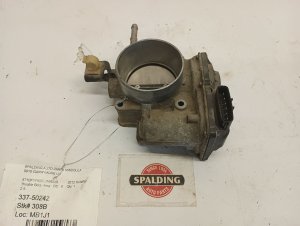
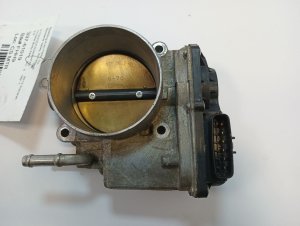
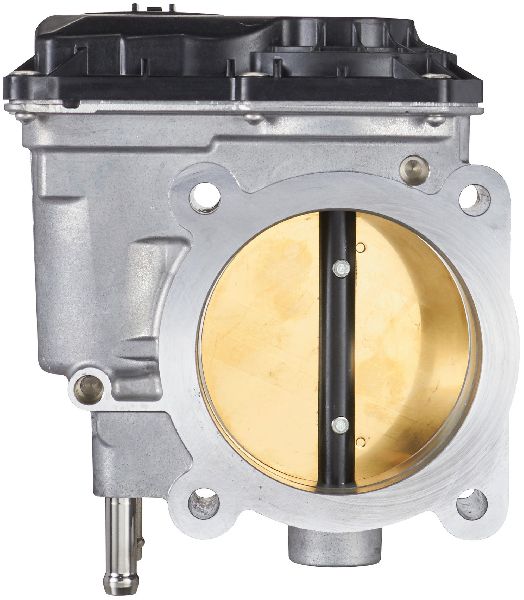
- Throttle Body Assembly
(OEM #22030-0P050)— This is the complete unit that fails, either due to internal electronic failure or physical sticking that cleaning cannot resolve. It contains the actuator motor and position sensors.
Trusted brands: Toyota (OEM), Aisin, Denso, Dorman, Hitachi
OEM price range: $500-$650
Aftermarket price range: $250-$450
Related Codes That Often Appear With This One
- P2112 — This code means 'Throttle Actuator Control System - Stuck Closed.' It can appear with P2111 if the throttle body is failing intermittently and getting stuck in both open and closed positions at different times.
- P0A0F — On some other Toyota models, especially hybrids, P2111 can appear with P0A0F ('Engine Failed to Start') during very cold weather, often pointing to a separate TSB-related issue with intake manifold icing. While less common on the Sienna, it's a related fault in the Toyota family.
Technical Service Bulletins (TSBs) & Recalls
- While no TSBs are specifically for the Sienna with code P2111, Toyota has issued them for other models with the same code. T-SB-0103-12 Rev2 for the Prius V and T-SB-0050-15 for the Highlander Hybrid address P2111 in cold weather, often requiring an intake manifold replacement. T-SB-0187-09 addressed P2111 on 2004-2005 Camrys. L-SB-0012-16 addressed stalling with P2111 on the Lexus HS 250h. This shows a history of Toyota addressing throttle control issues, though a specific campaign for the Sienna is not noted.
Platform-Specific Known Issues
- A YouTube video demonstrates a Sienna with P2111 where the throttle body passed the cold resistance test but was still faulty, confirming the intermittent, heat-sensitive nature of the failure. Replacement solved the limp mode issue.
- Another video shows a mechanic diagnosing a Sienna with P2111 and P2112, where the throttle body initially tested good but then failed a resistance test even when cold (reading 172 ohms), indicating a complete failure of the internal motor. The mechanic noted no programming was needed after replacement.
Mechanic-Grade Diagnostic Values
- Throttle Body Motor Resistance — expected: 0.3 to 100 kΩ at 20°C (68°F) between pins M- and M+.. Failure: A reading outside this range, typically very high or open circuit, indicates a failed motor. However, a good reading when cold does not rule out a heat-sensitive intermittent failure.
- Throttle Position Sensor Live Data (Scan Tool) — expected: 10% to 24% with throttle fully closed at idle. 60% or more with accelerator pedal fully depressed (WOT).. Failure: A reading that is stuck, does not change smoothly, or does not match the commanded position indicates a fault.
- Accelerator Pedal Position Sensor Voltage (at ECM) — expected: VPA (Main): 0.5V to 1.1V with pedal released; 2.5V to 4.5V with pedal fully depressed. VPA2 (Sub): 1.2V to 2.0V released; 3.4V to 5.0V depressed.. Failure: Voltage outside these ranges or that doesn't change smoothly can indicate an APP sensor issue, though this typically sets other codes.
Scan Tool Commands That Help
- Toyota Techstream: Active Test (ETCS / Throttle Actuator) — This bidirectional command allows the technician to directly order the ECM to open and close the throttle plate. It is the definitive test to see if the motor and gears are physically capable of moving, bypassing the pedal sensor. If the throttle fails to respond during the active test, the throttle body is confirmed faulty.
- Toyota Techstream: Utility -> Learning Value Reset — After cleaning or replacing the throttle body, the engine idle may be too high. This function resets the learned idle and air/fuel values stored in the ECM's EEPROM, forcing it to relearn the new baseline throttle position. This is the factory method for correcting a high idle post-repair.
- Toyota Techstream: Data List -> THROTTLE POS — Used to monitor the throttle valve opening percentage in real-time. This is critical for confirming if the throttle plate is physically stuck or not responding correctly to pedal input during a test drive or while operating the pedal in the bay (engine off, ignition on).
Wiring & Ground Locations
- Throttle Body Connector (T2) — The 6-pin electrical connector plugged directly into the electronic throttle body assembly.. This is the single point of connection for power and control. Pins 1 (M-) and 2 (M+) are for the actuator motor and are the pins used for resistance testing. The other pins are for the dual throttle position sensors.
- ECM Pins (Drive-by-Wire) — At the main Engine Control Module (ECM) connectors.. For advanced diagnosis, you can test continuity and voltage directly at the ECM. Key pins for the Sienna 2GR-FE are VPA (Throttle Position Main), VPA2 (Sub), VCPA (5V Power), VCP2 (5V Power), EPA (Ground), and EPA2 (Ground). This helps rule out a wiring break between the throttle body and the computer.
Real Owner Repair Stories
- Mustang6G.com forum user (2017 Ford Mustang GT (Note: Different vehicle, but identical code behavior and electronic throttle principle)) — P2111 code, erratic idle, and unresponsive throttle in stop-and-go traffic, forcing a restart.
❌ Tried (didn't work) The dealer replaced the throttle body with a new one, but the problem continued to occur.
✅ What actually fixed it The dealer installed a second brand new throttle body. The user suspects the first replacement part was faulty or a connection issue was unintentionally fixed during the second swap. - YouTube video by 'JM Auto Repair' (Toyota Sienna (year not specified, but with 2GR-FE)) — Intermittent limp mode with code P2111, would only occur when the engine was hot.
❌ Tried (didn't work) Initial resistance test of the throttle body motor passed when the engine was cold.
✅ What actually fixed it The mechanic suspected a heat-sensitive failure. The throttle body was replaced, which permanently resolved the limp mode and the P2111 code.
OEM Part Supersession History
22030-31030→22030-0P050— Likely internal revisions to improve reliability and address the known failure modes of the actuator motor or sensors.
Heads up: While the new part is a direct replacement, always verify the latest part number with a dealer using the vehicle's VIN, as further supersessions can occur.
Model Year Variations Within This Range
- 2007-2016: No significant variations have been noted regarding the cause or fix for code P2111 on the Sienna across this model year range. The 2GR-FE engine and its electronic throttle control system remained consistent in this application, exhibiting the same failure patterns.
Diagnostic Flowchart
Used vs. New Parts: Buying Guide for This Vehicle
When a used part is the smart pick: A used throttle body is a high-risk purchase for this specific failure. Because the fault is electronic wear and heat-related, a used part may have a very short remaining life. It should only be considered if it is from a verified low-mileage donor vehicle (e.g., a rear-end collision) and offered at a very steep discount compared to a new aftermarket part.
Donor-vehicle mileage cap: roughly under 60000 miles for the part to have meaningful remaining life.
What to inspect on the donor part:
- Check for a clean throttle plate and bore, which suggests the donor engine was well-maintained.
- Inspect the electrical connector for any signs of corrosion, bent pins, or heat damage.
- Ask for the VIN of the donor car to verify its low mileage.
- Avoid parts from vehicles that have been sitting in a junkyard exposed to the elements for a long time.
OEM-only on this vehicle (don't cheap out):
- While not strictly 'OEM-only', using a genuine Toyota, Aisin, or Denso throttle body provides the highest probability of a long-term fix. Cheap, unbranded aftermarket electronics are a significant gamble.
Aftermarket brands forum-validated for this vehicle:
- Aisin (often the original OEM manufacturer for Toyota)
- Denso (an OEM supplier for Toyota electronics)
Brands owners have reported issues with on this vehicle:
- Dorman: While widely available, owner and mechanic reviews for their electronic components like throttle bodies are often mixed. Some work perfectly, while others have been reported to fail prematurely.
- Unbranded/No-Name parts from online marketplaces.
Real Owner Stories
Aggregated from forums and TSBs cited above. Mileages and costs reflect what owners reported in those sources.
Toyota Sienna 2GR-FE 3.5L V6
Symptoms: Vehicle went into limp mode. The throttle body passed a resistance test when cold but was still faulty.
What fixed it: Replacement of the throttle body assembly solved the limp mode issue.
Source hint: A YouTube video demonstrates a Sienna with P2111 where the throttle body passed the cold resistance test but was still faulty, confirming the intermittent, heat-sensitive nature of the failure.
Toyota Sienna 2GR-FE 3.5L V6
Symptoms: Check Engine Light with codes P2111 and P2112 stored. The throttle body failed a resistance test (reading 172 ohms).
What fixed it: The throttle body was replaced. The mechanic noted no programming was needed after replacement.
Source hint: Another video shows a mechanic diagnosing a Sienna with P2111 and P2112, where the throttle body initially tested good but then failed a resistance test even when cold.
Related OBD-II Codes
Frequently Asked Questions
My 2011 Sienna has code P2111. Is cleaning the throttle body a permanent fix, or do I need to replace it?
I tested the throttle body motor resistance on my Sienna and it was within the 0.3-100 kΩ spec, but I still get P2111. Is the part still bad?
After replacing the throttle body on my Sienna, do I need a special scan tool for a 'relearn' procedure?
Are there any official Toyota recalls or Technical Service Bulletins (TSBs) for P2111 on the 2007-2016 Sienna?
My Sienna went into 'limp mode' and the VSC light came on along with the Check Engine Light. Is this typical for a P2111 code?
I have a 2012 Lexus ES350 with the same 3.5L engine. Is the P2111 problem the same as on the Sienna?
Helpful Videos
Used OEM Parts in Stock
New Aftermarket Parts Available


The information in this article is provided for general reference and educational purposes only. Vehicle specifications, procedures, and part compatibility can vary by production date, trim level, and region. Always consult your vehicle's factory service manual and verify part numbers before purchasing or performing repairs. Safety-critical components such as airbags, seat belts, and braking systems should be installed by a qualified professional.
- Toyota Sienna:
- 🧭 Diagnostic Flowchart
- 🎬 Helpful Videos
- 🛍️ Shop This Part
- What's Unique About the 2007-2016 Toyota Sienna
- Symptoms You May Notice
- Most Likely Causes
- Rare But Worth Checking
- Diagnosis Steps
- Parts You'll Likely Need
- Related Codes That Often Appear With This One
- Technical Service Bulletins (TSBs) & Recalls
- Platform-Specific Known Issues
- Mechanic-Grade Diagnostic Values
- Scan Tool Commands That Help
- Wiring & Ground Locations
- Real Owner Repair Stories
- OEM Part Supersession History
- Model Year Variations Within This Range
- Used vs. New Parts: Buying Guide for This Vehicle
- Real Owner Stories
- Toyota Sienna 2GR-FE 3.5L V6
- Toyota Sienna 2GR-FE 3.5L V6
- Related OBD-II Codes
- Frequently Asked Questions
- 🎟️ Get 5% Off