

P2198 on 2006-2012 Hyundai Santa Fe: O2 Sensor Stuck Rich Causes and Fixes
This code most often means the Bank 2, Sensor 1 oxygen sensor has failed and is stuck reporting a rich condition. On the Santa Fe V6, Bank 2 is the cylinder bank closer to the radiator. Replacing this upstream sensor is the most common fix. An OEM-quality replacement (Denso, NTK) is highly recommended over budget brands to prevent the code from returning. The part costs around $60-$120 for aftermarket or $150-$250 for OEM.
- P2198 on your Santa Fe means the front oxygen sensor on the engine bank near the radiator thinks the engine is running rich.
- The most likely cause is a failed oxygen sensor itself, which is a common wear-and-tear item.
- Before buying parts, check the sensor's live data with a scanner to confirm it's stuck on a high voltage reading.
- Also, inspect the sensor's wiring and connector for any visible damage, as this is another common point of failure.
- Ignoring this code will hurt your fuel economy and can lead to more expensive catalytic converter damage down the road.
What's Unique About the 2006-2012 Hyundai Santa Fe
On the transverse-mounted 3.3L and 3.5L V6 engines in the second-generation (CM) Santa Fe, 'Bank 2' is the cylinder bank closer to the radiator, making its oxygen sensor (B2S1) somewhat easier to access than Bank 1, which is against the firewall. The code is triggered specifically when the sensor fails to show a lean condition (voltage drop below 0.2V) during fuel cut-off events, pointing strongly toward a sensor or wiring fault rather than a true, persistent rich condition across the engine. While fuel system issues can be a cause, a faulty sensor is the most frequent culprit for this specific code on this platform.
Generation note: This guide covers the second generation (CM) of the Hyundai Santa Fe. This generation used the 3.3L Lambda V6 from 2007-2009 and the updated 3.5L Lambda II V6 from 2010-2012. The diagnostic principles for this code are the same for both engines, though the specific OEM part number for the sensor may differ.
Symptoms You May Notice
- Check Engine Light is on
- Reduced fuel economy, potentially by 15-30%
- Rough or uneven idle
- Hesitation during acceleration
- Strong gasoline odor from the exhaust
- Failing a vehicle emissions test due to high HC and CO levels
- Possible black smoke from the exhaust (in rare cases of a true rich condition)
- Replacing the wrong oxygen sensor (e.g., the downstream Sensor 2, or the Bank 1 sensor against the firewall).
- Replacing the Mass Airflow (MAF) sensor without evidence. A faulty MAF sensor would typically affect both engine banks and set codes for both, or cause other MAF-specific codes.
- Prematurely replacing the O2 sensor without first inspecting the wiring and connectors for visible damage.
Most Likely Causes
- Faulty Bank 2, Sensor 1 Oxygen Sensor 🔴 High Probability → Shop Oxygen Sensor Oxygen sensors are wear items that degrade over time from heat and contaminants. After many years and miles, the internal sensing element fails, leading to a fixed high-voltage signal. Forum users often report this as the primary fix.
How to confirm: Use an OBD-II scanner to watch the live data for the B2S1 O2 sensor. If the voltage is stuck high (typically above 0.8V) and does not fluctuate, while the Bank 1 sensor (B1S1) is switching normally, the sensor has likely failed. Swapping the Bank 1 and Bank 2 upstream sensors and seeing if the code changes to P2196 (Bank 1 Stuck Rich) will confirm the sensor is bad.
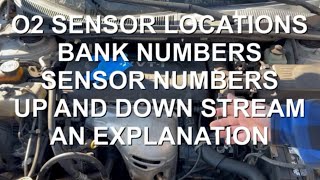
Typical fix: Replace the Bank 2, Sensor 1 oxygen sensor. Bank 2 is the front bank, near the radiator. 🎬 Watch: A guide to identifying bank numbers and sensor locations. Using a direct-fit sensor from Denso or NTK is highly recommended.
Est. part cost: $60-$150 - Wiring or Connector Issue 🟡 Medium Probability The wiring harness to the front oxygen sensor is exposed to engine heat and road debris, which can cause wires to become brittle, frayed, or corroded over time. A short to voltage on the signal wire can also cause a persistent high reading.
How to confirm: Visually inspect the wiring harness and connector leading to the B2S1 O2 sensor. Look for any signs of melting, chafing, corrosion, or loose pins in the connector. Use a multimeter to check for continuity (less than 5 Ω resistance) and for shorts to ground or power.
Typical fix: Repair the damaged section of the wiring harness or clean/replace the connector.
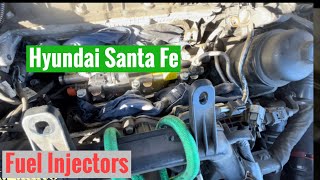
Est. part cost: $5-$50 - Leaking Fuel Injector(s) on Bank 2 ⚪ Low Probability → Shop Fuel Injector Fuel injectors can wear out or become stuck open over time, dripping excess fuel into one or more cylinders on Bank 2.
How to confirm: If replacing the O2 sensor does not fix the code, a leaking injector is a possible cause. A professional may need to perform a fuel injector balance test. Another sign is if the long-term fuel trim (LTFT) for Bank 2 is highly negative (e.g., < -10%) as the PCM tries to compensate for the excess fuel.
Typical fix: Replace the faulty fuel injector(s) on Bank 2. It is often recommended to replace all injectors on that bank at the same time.
Est. part cost: $70-$200 per injector - High Fuel Pressure ⚪ Low Probability A failing fuel pressure regulator can cause system-wide high fuel pressure, leading to a rich condition.
How to confirm: Connect a fuel pressure gauge to the fuel rail. Check if the pressure is within the manufacturer's specified range (typically 38-50 psi for this platform). If it's too high, the fuel pressure regulator (often part of the fuel pump module) may be at fault.
Typical fix: Replace the fuel pressure regulator or the entire fuel pump assembly.
Est. part cost: $150-$400
Rare But Worth Checking
- Powertrain Control Module (PCM) Fault: → Shop Engine Control Module (ECM) This is very rare. Before condemning the PCM, all other possibilities, including the sensor, wiring, and fuel system, must be exhaustively ruled out. Sometimes a software update (re-flash) from the dealer can resolve logic issues that misinterpret sensor data.
- Exhaust Leak Before the O2 Sensor: → Shop Oxygen Sensor An exhaust leak before the sensor usually causes a lean code by letting air in. However, in some rare cases, it can disrupt exhaust flow in a way that confuses the sensor, so a quick check for soot trails or audible leaks is worthwhile.
- Stuck Open EVAP Purge Valve: → Shop Vapor Canister A purge valve stuck open can allow un-metered fuel vapors from the charcoal canister to enter the intake manifold, creating a rich condition. This issue is more commonly noted on other vehicle makes like Ford but is a theoretical possibility.
Diagnosis Steps
- Read the code with an OBD-II scanner and confirm P2198 is present. Note any other codes. 🎬 See this breakdown of common causes for the P2198 code.
- Use the scanner's live data function to monitor the voltage of the Bank 2, Sensor 1 (B2S1) and Bank 1, Sensor 1 (B1S1) oxygen sensors.
- Observe the B2S1 voltage. It should fluctuate rapidly between approximately 0.1V and 0.9V. If it is stuck high (e.g., >0.8V), it confirms the 'stuck rich' condition.
- Compare B2S1 to B1S1. If B1S1 is switching normally while B2S1 is stuck, the problem is isolated to Bank 2.
- Perform a fuel cut test: Rev the engine to ~3000 RPM and release the throttle. During deceleration fuel cut, the sensor voltage should drop below 0.2V. If it stays high, the sensor is very likely faulty.
- Visually inspect the B2S1 oxygen sensor's wiring and connector for any damage, melting, or corrosion.
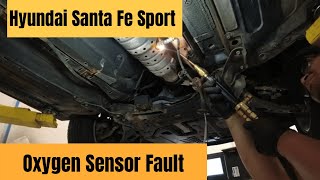
- If the sensor and wiring appear okay, consider swapping the upstream O2 sensors between Bank 1 and Bank 2. This is the definitive test. If the code changes to P2196 (Bank 1 Stuck Rich), you have proven the sensor is the faulty part. 🎬 Watch: How to test and confirm a faulty oxygen sensor. If the code remains P2198, the issue lies with the fuel system on Bank 2 or the wiring/PCM.
- If the problem persists after a sensor swap, investigate Bank 2 fuel injectors for leaks and check fuel pressure to ensure it is within specification.
Parts You'll Likely Need
- Oxygen Sensor (Bank 2, Sensor 1)
(OEM #39210-3C200 (for 3.3L, verify with VIN), 39210-3CAA0 (for 3.5L, verify with VIN))— This is the most common failure point for a P2198 code, as the sensor itself wears out and fails to read accurately.
Trusted brands: Denso (often OEM supplier), NGK/NTK, Bosch, Delphi
OEM price range: $150-$270
Aftermarket price range: $60-$120
Related Codes That Often Appear With This One
- P2196 — This is the equivalent 'Stuck Rich' code for Bank 1. Seeing both P2196 and P2198 simultaneously would point towards a systemic issue like high fuel pressure or a faulty MAF sensor, rather than an isolated sensor or injector problem.
- P0302, P0304, P0306 — If a leaking fuel injector is the cause, you may also get misfire codes for the specific cylinders on Bank 2 (cylinders 2, 4, and 6).
- P0174 — This code for 'System Too Lean (Bank 2)' can sometimes appear intermittently with P2198 if the PCM is trying to overcompensate for what it perceives as a rich condition, or if there's an intermittent sensor fault.
Platform-Specific Known Issues
- Bank 2 Location Confirmed: Multiple sources and owner forums confirm that for the transverse V6 in the Santa Fe, Bank 2 is the cylinder bank located at the front of the vehicle, by the radiator, making the B2S1 sensor easier to access than the B1S1 sensor at the firewall.
- Importance of Quality Sensors: While budget sensors are available, owners and mechanics often recommend sticking to OEM, Denso, or NTK branded sensors. Some aftermarket brands, even reputable ones like Bosch, have mixed reviews for fit and longevity on Asian vehicles, sometimes causing codes to return prematurely.
Mechanic-Grade Diagnostic Values
- B2S1 O2 Sensor Voltage (Live Data) — expected: Rapidly fluctuating between ~0.1V (lean) and ~0.9V (rich) on a warm engine at idle.. Failure: Voltage is stuck high, consistently above 0.6V-0.8V.
- B2S1 O2 Sensor Voltage (Deceleration Fuel Cut-Off) — expected: Voltage should drop and hold below 0.2V when coasting down from a higher RPM (~3000 RPM).. Failure: Voltage remains high, above 0.2V (some sources say >0.42V), during the fuel-cut event.
- O2 Sensor Heater Element Resistance — expected: Between 3 and 25 Ohms when measured across the two heater wires (often same color) with the sensor disconnected and cool.. Failure: Infinite resistance (open circuit / OL) or zero resistance (short circuit).
- Fuel Pressure (at fuel rail) — expected: 38 - 50 PSI at idle.. Failure: Pressure significantly above 50 PSI indicates a potential fuel pressure regulator failure.
- Injector Pulse Width (Bank 2) — expected: Typically 1.5ms - 2.9ms at normal hot idle.. Failure: A value significantly lower than Bank 1's pulse width may indicate the PCM is trying to compensate for the false rich signal by commanding less fuel.
- Wiring Harness Continuity — expected: Less than 5 Ω resistance from the sensor connector pin to the corresponding PCM pin.. Failure: High resistance (> 5 Ω) or an open circuit (OL) indicates a break in the wire.
Scan Tool Commands That Help
- Hyundai GDS (Global Diagnostic System): Vehicle S/W Management -> Resetting Adaptive Values — After replacing a component like an O2 sensor or fuel injectors, this function should be used to clear the old learned fuel trim adjustments from the PCM, forcing it to relearn with the new components.
- Hyundai GDS (Global Diagnostic System): Flight Record — For intermittent faults where the P2198 code is not always present. This function records data during a test drive and can be triggered to save data from the preceding minutes when the fault occurs, helping to capture the conditions that cause the issue.
Wiring & Ground Locations
- G01 (Unconfirmed for this model) — On a 2004 Santa Fe, a main engine-related ground point (G01) is located on the body near the right front of the engine compartment. This is a plausible location for the engine harness ground on the 2006-2012 models, which could affect sensor readings if corroded or loose.. A poor ground connection for the engine sensors or the PCM can introduce voltage offsets, potentially causing the PCM to misinterpret the O2 sensor's signal as being biased rich.
OEM Part Supersession History
39210-3C200, 39210-3CAA0→Varies, must confirm with VIN— Model year and engine changes.
Heads up: Extreme caution is required. Online catalogs are highly confusing. 'Front Left' (LH) typically refers to Bank 1 (firewall side), while this code is for Bank 2 (radiator side). 'Rear' typically refers to the downstream sensor (Sensor 2). The part number 39210-3C200 is frequently listed as a REAR/DOWNSTREAM sensor. Always confirm the exact part number for Bank 2, Sensor 1 (Upstream, Radiator side) with a Hyundai dealer using the vehicle's VIN before purchasing.
Model Year Variations Within This Range
- 2007-2009 vs 2010-2012: The engine was changed from the 3.3L Lambda to the 3.5L Lambda II. While the P2198 diagnostic logic is identical, the specific oxygen sensor part numbers are different between these two engine versions. Parts are not interchangeable.
Diagnostic Flowchart
Used vs. New Parts: Buying Guide for This Vehicle
When a used part is the smart pick: For this code, used parts are generally not recommended for sensors or fuel system components. A used wiring harness pigtail/connector is a sensible choice if the original is damaged and a new harness is unavailable or too expensive.
Donor-vehicle mileage cap: roughly under 80000 miles for the part to have meaningful remaining life.
What to inspect on the donor part:
- For a connector/pigtail: Ensure the plastic is not brittle, locking tabs are intact, and there is no visible corrosion on the pins.
- Check for any signs of overheating or melting on the connector housing.
- Ensure there is enough wire length on the pigtail for splicing.
OEM-only on this vehicle (don't cheap out):
- Powertrain Control Module (PCM) - While a used one can work, it must be an exact part number match and may require dealer programming/coding to the vehicle's VIN and options.
Aftermarket brands forum-validated for this vehicle:
- NTK (for O2 sensors)
- Denso (for O2 sensors)
Brands owners have reported issues with on this vehicle:
- Generic, unbranded 'no-name' oxygen sensors from online marketplaces are frequently reported to fail quickly or be dead-on-arrival.
Real Owner Stories
Aggregated from forums and TSBs cited above. Mileages and costs reflect what owners reported in those sources.
2009 Hyundai Santa Fe V6-2.7L — 128265 miles
Symptoms: The owner complained the engine was hard to start, and the Malfunction Indicator Light (MIL) was on.
What fixed it: The technician replaced the purge control solenoid valve (PCSV). After clearing the codes, the fuel trims returned to normal and the engine started easily. The issue was not the oxygen sensors or fuel injectors in this case.
Source hint: ALLDATA Tech-Assist: 'EVAP System Causes Santa Fe Hard Start Condition – MIL On'
Related OBD-II Codes
Frequently Asked Questions
Where is the Bank 2, Sensor 1 oxygen sensor located on my 2006-2012 Santa Fe V6?
What brand of replacement oxygen sensor is best for my Santa Fe to fix P2198?
How can I be absolutely sure the O2 sensor is bad before replacing it?
I replaced the B2S1 oxygen sensor, but the P2198 code came back. What should I check next?
Besides the check engine light, what other symptoms are common with a P2198 code?
I have a Kia Sorento with the same V6 engine. Does this P2198 information apply to it as well?
Helpful Videos


We Have This Part in Stock


The information in this article is provided for general reference and educational purposes only. Vehicle specifications, procedures, and part compatibility can vary by production date, trim level, and region. Always consult your vehicle's factory service manual and verify part numbers before purchasing or performing repairs. Safety-critical components such as airbags, seat belts, and braking systems should be installed by a qualified professional.
- Hyundai Santa Fe:
- 🧭 Diagnostic Flowchart
- 🎬 Helpful Videos
- 🛍️ Shop This Part
- What's Unique About the 2006-2012 Hyundai Santa Fe
- Symptoms You May Notice
- Most Likely Causes
- Rare But Worth Checking
- Diagnosis Steps
- Parts You'll Likely Need
- Related Codes That Often Appear With This One
- Platform-Specific Known Issues
- Mechanic-Grade Diagnostic Values
- Scan Tool Commands That Help
- Wiring & Ground Locations
- OEM Part Supersession History
- Model Year Variations Within This Range
- Used vs. New Parts: Buying Guide for This Vehicle
- Real Owner Stories
- 2009 Hyundai Santa Fe V6-2.7L — 128265 miles
- Related OBD-II Codes
- Frequently Asked Questions
- 🎟️ Get 5% Off