

P3000 on 2016-2019 Chevrolet Volt: Battery Control System Fault and BECM Failure Guide
On a 2016-2019 Volt, code P3000 almost always means the Battery Energy Control Module (BECM) has failed. Symptoms include a no-start condition, inability to charge, or sudden loss of power. The repair is covered by GM special coverage program N232432680 for 15 years/150,000 miles on most 2016-2018 models, a response to a NHTSA investigation.
- P3000 on a 2016-2019 Volt is a critical code that almost certainly points to a failed Battery Energy Control Module (BECM).
- Symptoms are severe and include sudden power loss, reduced power mode, or a complete failure to start.
- DO NOT pay for this repair out-of-pocket until you have a GM dealer check your VIN for Special Coverage N232432680, which extends the BECM warranty to 15 years/150,000 miles for most 2016-2018 models.
- The repair is complex, involves the high-voltage battery, and must be done by a certified EV technician.
- A weak 12V battery can cause confusing electrical issues, so it's worth checking, but the symptoms of BECM failure are very distinct.
What's Unique About the 2016-2019 Chevrolet Volt
The second-generation (2016-2019) Chevrolet Volt is known for a widespread and well-documented issue with its Battery Energy Control Module (BECM). This specific component failure is the primary trigger for the P3000 code on this platform. The problem became so prevalent that it prompted a NHTSA investigation and led General Motors to issue a special warranty extension, acknowledging the defect. Therefore, unlike in other hybrids where P3000 could have various causes, on the Gen 2 Volt, it points overwhelmingly to the BECM. The failure is believed to stem from internal soldering or manufacturing flaws. The replacement modules are reportedly sourced from a different supplier to prevent recurrence.
Symptoms You May Notice
- Check Engine Light is on
- Sudden loss of propulsion while driving
- Vehicle enters 'Propulsion Power is Reduced' mode
- Car will not start or 'turn on' (no-ready state)
- Inability to charge the high-voltage battery (may show a solid orange light)
- 'Shift to Park' message may appear on the dash when trying to select a gear
- State of charge indicator on the dash may fluctuate wildly or show empty despite being charged
- A burning electrical smell was noted by at least one owner prior to failure
- Replacing the entire high-voltage battery pack. P3000 points to a control system issue, most often just one module (the BECM) inside the pack, not the battery cells themselves.
- Assuming a failed onboard charger. While charger issues can prevent charging, they typically set different codes and are not associated with a sudden loss of propulsion while driving.
- Blaming the 12V battery without checking for U26xx codes. While a bad 12V battery can cause no-start issues, the specific cluster of U-codes points directly to the BECM.
Most Likely Causes
- Failed Battery Energy Control Module (BECM) 🔴 High Probability → Shop Vehicle Battery This is a widespread, documented defect on 2016-2019 Volts, believed to stem from internal soldering or manufacturing flaws in the module. GM acknowledged the issue with TSB 18-NA-261 and later issued Special Coverage N232432680. The replacement modules are reportedly sourced from a different supplier to prevent recurrence.
How to confirm: A professional scan tool is needed to check for accompanying codes, specifically in the U26xx range (e.g., U2603, U2605, U2618, U2619, U2622, U2623). The presence of these codes alongside P3000 is a definitive sign of BECM failure.
Typical fix: The BECM, located inside the high-voltage battery pack, must be replaced and reprogrammed by a certified EV technician at a Chevrolet dealership. There are no aftermarket solutions.
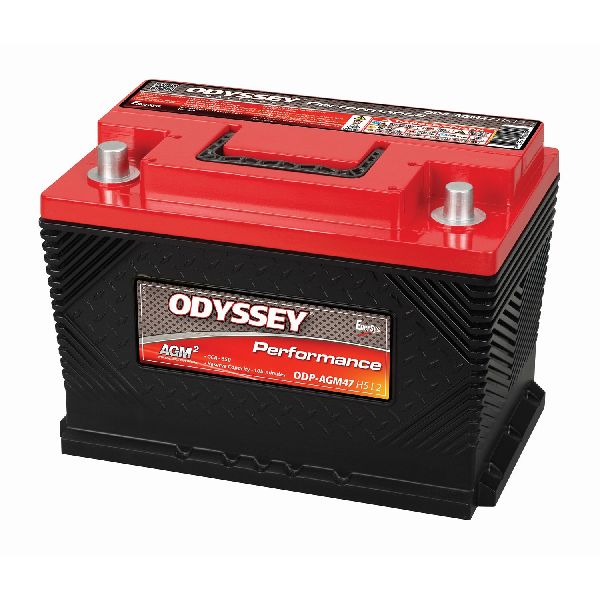
Est. part cost: $0 (if covered by warranty), $800-$1200 (if not covered) - Weak or Failing 12V AGM Battery ⚪ Low Probability → Shop Vehicle Battery Like all modern cars, the Volt relies on a stable 12V system to initialize its computers and close the high-voltage contactors. A weak 12V battery can cause a cascade of communication errors and prevent the car from starting, potentially triggering generic fault codes. Some owners have replaced the 12V battery as a first troubleshooting step, though it is rarely the root cause of P3000 when U26xx codes are also present.
How to confirm: Test the 12V battery (located in the trunk) with a digital multimeter or a proper battery tester. A resting voltage below 12.4V indicates a low state of charge, and a voltage below 12.0V suggests a bad battery. The battery should be load-tested for a definitive diagnosis.
Typical fix: Replace the 12V AGM battery. After replacement, persistent high-voltage DTCs may need to be cleared with an advanced scan tool (like a VCX Nano or dealer tool) before the car will operate normally.
Est. part cost: $180-$250
Diagnosis Steps
- Confirm the presence of code P3000 using an OBD-II scanner.
- Using a hybrid-capable scan tool, check for additional codes in the Hybrid Powertrain Control Module (HPCM-2). Note any 'U' codes, especially in the U2603-U2624 range.
- If U26xx codes are present, the BECM has almost certainly failed. Contact a Chevrolet dealer. Provide your VIN and ask them to check for coverage under Special Coverage N232432680.
- You can also check for warranty coverage yourself by entering your VIN on the Chevrolet owner website.
- If the dealer denies coverage despite your vehicle being a 2016-2018 model, it may be because it was originally sold in a CARB state and is already covered by the 10-year/150,000-mile PZEV emissions warranty. You may need to escalate the issue or try another dealer.
- If no U26xx codes are present, thoroughly test the 12V AGM battery in the trunk. Ensure it has a healthy charge and can hold a load.
- If the 12V battery is weak, replace it. Note that even after replacement, stored high-voltage fault codes may need to be cleared by a dealer or with a specialized tool before the vehicle will start.
- If the 12V battery is good and no U26xx codes are found, the issue may be more complex (e.g., wiring harness, other control module) and requires professional diagnosis following GM service procedures.
Parts You'll Likely Need
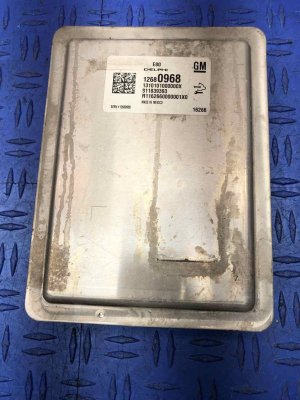
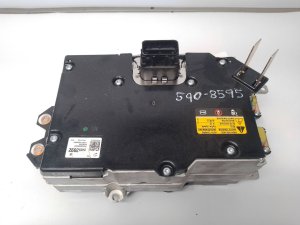
- Battery Energy Control Module (BECM)
(OEM #24291976 (This is a commonly cited part number, but always verify with a dealer using your VIN))— This is the component that fails in the vast majority of P3000 cases for this vehicle. It is responsible for monitoring and managing the high-voltage battery cells.
Trusted brands: ACDelco (GM Genuine)
OEM price range: $800-$1200
Aftermarket price range: Not Available
Related Codes That Often Appear With This One
- P1E00 — This is a generic code set by the Engine Control Module (ECM) to indicate that it has been requested to turn on the check engine light by another module. It essentially means 'look for codes in other systems,' like the Hybrid Powertrain Control Module (HPCM-2). It is almost always present with P3000.
- U2603 - U2624 — These codes indicate a loss of communication between the BECM and specific groups of battery cells (e.g., U2617, U2618, U2619, U2620, U2621, U2622, U2623, U2624). Their presence is a strong confirmation that the BECM has failed internally.
Technical Service Bulletins (TSBs) & Recalls
- TSB 18-NA-261: This bulletin, first issued in 2018 and revised since, instructs dealers on diagnosing a no-start or MIL condition caused by an 'internal issue in the BECM' and confirms the repair is to replace and reprogram the module.
- Special Coverage N232432680: Issued in March 2024, this document extends the warranty on the BECM for affected 2016-2018 models to 15 years/150,000 miles from the original in-service date, regardless of ownership. It provides specific labor codes for the repair and outlines the reimbursement process for owners who previously paid for the fix.
Platform-Specific Known Issues
- BECM Failure Warranty Extension: GM issued Special Coverage N232432680, extending the warranty on the BECM to 15 years or 150,000 miles for most 2016-2018 Volts. This was issued in March 2024 after a NHTSA investigation. 2019 models are not included in this specific coverage. Some owners report VINs being excluded, sometimes due to existing CARB PZEV warranty coverage (10yr/150k miles) which also covers the part.
- Parts Backorder: In the past, owners have reported long waits (weeks or even months) for the replacement BECM part due to supply chain issues. However, as of early 2026, many owners report that parts availability has significantly improved, with repairs often completed in under a week.
- Dealer Knowledge Varies: Owners report that some dealerships are not familiar with the special coverage or may incorrectly state a vehicle is not covered. Owners have had success by printing the TSB or Special Coverage bulletin and presenting it to the service advisor, or by trying a different, EV-certified dealer.
Hidden / Shadow Codes Worth Checking
- U2603 - U2624: These codes indicate a 'Lost Communication with Hybrid/EV Battery Interface Control Module' for a specific module number (1-12). For example, U2617 is for module 5, U2618 for module 6, U2619 for module 7, and so on. The presence of any code in this range is considered a definitive sign of internal BECM failure as documented in TSB 18-NA-261. (see via These codes are stored in the Hybrid Powertrain Control Module 2 (HPCM-2) and can only be read with a professional-level scan tool or a DIY setup using software like GDS2. They will not typically appear on a basic OBD-II code reader.)
Scan Tool Commands That Help
- GM GDS2 (Global Diagnostic System 2): Clear Secured High Voltage DTCs — This function, found under 'Hybrid Powertrain Control Module 2' -> 'Control Functions', can sometimes be used as a temporary fix to get the vehicle to start and drive to a service center. It forces a reset of the high-voltage system. However, if the underlying BECM fault is persistent, the codes will return quickly, and the procedure may not work at all.
- GM SPS2 (Service Programming System 2): Reprogram ECU - K114B Battery Energy Control Module — This is a mandatory step after physically replacing the BECM. The new module must be programmed to the vehicle's VIN using GM's official software. This requires an online subscription to ACDelco TDS. The process involves selecting the K114B BECM and following the on-screen instructions.
- GM SPS2 (Service Programming System 2): Reprogram ECU - K114 Hybrid Powertrain Control Module 2 — After programming the new BECM, GM procedures often require reprogramming or updating the HPCM-2 as well to ensure software compatibility between the modules.
- GM GDS2 (Global Diagnostic System 2): Configuration/Reset Functions - Reset Hybrid/EV Battery Pack Data — After a new battery pack or BECM is installed and programmed, this reset function under the HPCM-2 menu is used to clear learned values and initialize the system.
Wiring & Ground Locations
- K114B Battery Energy Control Module (BECM) — Located inside the high-voltage battery pack, on top of the battery cell sections. Access requires dropping the entire battery pack from the vehicle and removing its top cover.. This is the module that fails, causing the P3000 and associated U-codes. Its location inside the sealed battery pack is why replacement is a high-voltage procedure requiring certified technicians.
- K114 Hybrid Powertrain Control Module 2 (HPCM-2) — This module is separate from the BECM and is typically located in the engine bay. It acts as the master controller for the hybrid system, communicating with the BECM.. This is the module that stores the P3000 and U26xx fault codes. Diagnostic communication is established with the HPCM-2 to read the codes that condemn the BECM.
Real Owner Repair Stories
- YouTube channel 'Out of Spec Renew' (2016 Chevrolet Volt) — Vehicle going into 'turtle mode' (reduced power), check engine light on, and a full set of U26xx codes stored in the HPCM-2.
❌ Tried (didn't work) The owner first took it to a dealer, who diagnosed the failed BECM but quoted a high repair cost as the vehicle was just outside the warranty period (before the special coverage was announced).
✅ What actually fixed it An independent EV repair shop dropped the high-voltage battery pack, opened the case, and replaced the BECM with a new OEM part. The new module was then programmed using GM's SPS2 software via a J2534 pass-through device (Autel VCI) and a single-VIN subscription to GM's Techline Connect. After programming, all fault codes were cleared. - YouTube channel 'Miller Auto' (2017 Chevrolet Volt) — Customer concern was the vehicle would not go into gear and displayed a 'Shift to Park' message. A full set of U-codes for the BECM were present.
✅ What actually fixed it The technician dropped the battery pack, replaced the BECM inside the pack, and transferred the small foam cushion strips from the old module to the new one. The pack was reinstalled, and the new BECM was programmed using SPS2. After programming and clearing codes, a test drive confirmed the fix was successful. - DIY Repair via YouTube channel 'N V' (2016 Chevrolet Volt) — Check Engine Light and inability to start/drive, consistent with BECM failure.
✅ What actually fixed it The owner performed a DIY replacement in their garage. This involved dropping the battery, replacing the BECM, and then using a VXDIAG VCX Nano tool with GM's GDS2 and SPS2 software to program the new module. A subscription to ACDelco's programming service (around $50 for two years for one VIN) was required. The process involved programming the new BECM first, then reprogramming the HPCM-2, and finally clearing all DTCs.
OEM Part Supersession History
24279214, 24283058, 24288760, 24289067, 24294960→24296900— GM has superseded the BECM part number multiple times. The latest part, 24296900, is reportedly sourced from a different supplier to resolve the internal manufacturing flaws that caused the widespread failures.
Heads up: Using an old stock or used BECM with a previous part number is highly discouraged, as it is likely to have the same defect and fail again. Only the latest specified part number should be used for the repair.
Model Year Variations Within This Range
- 2019: The 2019 model year is not included in the Special Coverage N232432680 for the BECM. While the module can still fail, it is believed to be less common. Forum discussions suggest that later-production 2018 and all 2019 models may have been factory-equipped with the improved BECM module, though this is not officially confirmed by GM. Owners of 2019 models must rely on the standard 8-year/100,000-mile Voltec warranty or the 10-year/150,000-mile PZEV/CARB warranty if applicable.
- 2016-2018 (CARB States): Vehicles originally sold in California or other CARB states are covered by the PZEV (Partial Zero-Emission Vehicle) warranty, which covers the BECM for 10 years or 150,000 miles. GM may deny coverage under the N232432680 special program for these vehicles, stating that the PZEV warranty already applies. Some owners have reported issues getting this warranty honored if the vehicle is no longer registered in a CARB state.
Diagnostic Flowchart
Other Known Issues on This Vehicle
Issues unrelated to this code that are worth knowing about as an owner of this generation:
- 'Shift to Park' Message 🟠 Medium — Very common across 2016-2019 models. Prevents the car from shutting off, leading to a dead 12V battery. (Ref: TSB 19-NA-206 (and others). The fix involves replacing a microswitch in the shifter assembly and/or installing a jumper harness. It is covered under the 8yr/100k mile Voltec warranty for most models.)
- EGR Valve Failure 🔴 High — Common, particularly on 2017 models. Causes 'Propulsion Power Reduced' message and can strand the vehicle. Failures can happen at low mileage (e.g., 30k miles). (Ref: No recall, but covered under the 15yr/150k mile CARB/PZEV emissions warranty in applicable states. For years, the replacement part (OEM #12691147) was on a severe backorder, leaving owners waiting for months.)
- Battery Coolant Level Sensor Failure 🟠 Medium → Shop Vehicle Battery — A fairly common issue where a faulty sensor reports low coolant even when the level is correct, preventing the high-voltage battery from charging. (Ref: No recall. The sensor (OEM #22922224) can reportedly 'burn out' if the coolant level ever gets too low, requiring replacement even after refilling. Some owners install a 'defeat plug' to bypass the sensor.)
Used vs. New Parts: Buying Guide for This Vehicle
When a used part is the smart pick: For this specific repair, a used part is NEVER a smart choice. The BECM is a known high-failure-rate component. A used module from a salvage yard has a very high probability of either being faulty already or failing soon after installation. Furthermore, the module is VIN-locked and requires dealer-level programming.
What to inspect on the donor part:
- Not applicable, as used parts are not recommended.
OEM-only on this vehicle (don't cheap out):
- Battery Energy Control Module (BECM)
Aftermarket brands forum-validated for this vehicle:
- There are no aftermarket manufacturers for the BECM. Some electronics repair services claim they can repair the original module, but this is not a common or validated solution and would require a dealer or independent shop willing to install a customer-supplied, repaired part.
Brands owners have reported issues with on this vehicle:
- Not applicable.
Real Owner Stories
Aggregated from forums and TSBs cited above. Mileages and costs reflect what owners reported in those sources.
2018 Chevrolet Volt 1.5L L3A — 192625 miles
Symptoms: The owner experienced a total failure of the BECM at 310,000 km. They noted that parts supply had improved significantly by early 2026.
What fixed it: Replacement of the Battery Energy Control Module (BECM) at a dealership.
Source hint: reddit.com/r/volt - Thread: 'Finally hit with the dreaded BECM failure. So sad!'
2016-2019 Chevrolet Volt 1.5L L3A
Symptoms: The vehicle displayed a 'Shift to Park' message and lost propulsion. Diagnostic scans revealed P1E00 and multiple U26xx codes.
What fixed it: The owner performed initial troubleshooting by testing the 12V battery before determining the BECM required replacement.
Source hint: reddit.com/r/volt - Thread: 'Time to replace the BECM?'
Related OBD-II Codes
Frequently Asked Questions
Is the BECM failure on my 2017 Chevrolet Volt covered by a warranty extension?
My 2019 Volt has code P3000; is it included in the Special Coverage N232432680?
What specific codes should I look for alongside P3000 to confirm a BECM failure?
Can I fix the P3000 BECM issue myself with an aftermarket part?
Why does my dash show 'Shift to Park' when I try to diagnose this propulsion issue?
I've heard the BECM parts are on backorder; how long will my Volt be at the dealer?
Helpful Videos


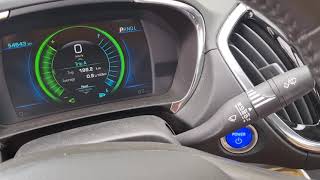

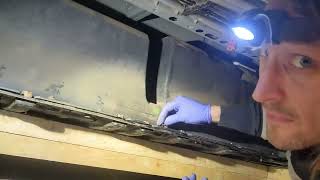

Used OEM Parts in Stock
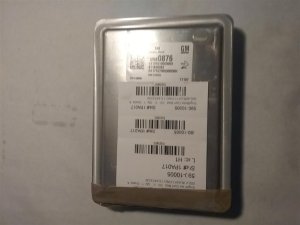
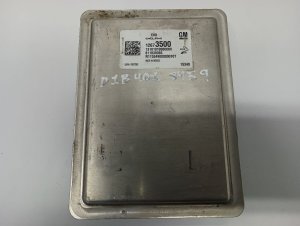
New Aftermarket Parts Available



The information in this article is provided for general reference and educational purposes only. Vehicle specifications, procedures, and part compatibility can vary by production date, trim level, and region. Always consult your vehicle's factory service manual and verify part numbers before purchasing or performing repairs. Safety-critical components such as airbags, seat belts, and braking systems should be installed by a qualified professional.
- Chevrolet Volt:
- 🧭 Diagnostic Flowchart
- 🎬 Helpful Videos
- 🛍️ Shop This Part
- What's Unique About the 2016-2019 Chevrolet Volt
- Symptoms You May Notice
- Most Likely Causes
- Diagnosis Steps
- Parts You'll Likely Need
- Related Codes That Often Appear With This One
- Technical Service Bulletins (TSBs) & Recalls
- Platform-Specific Known Issues
- Hidden / Shadow Codes Worth Checking
- Scan Tool Commands That Help
- Wiring & Ground Locations
- Real Owner Repair Stories
- OEM Part Supersession History
- Model Year Variations Within This Range
- Other Known Issues on This Vehicle
- Used vs. New Parts: Buying Guide for This Vehicle
- Real Owner Stories
- 2018 Chevrolet Volt 1.5L L3A — 192625 miles
- 2016-2019 Chevrolet Volt 1.5L L3A
- Related OBD-II Codes
- Frequently Asked Questions
- 🎟️ Get 5% Off