

U0001 on 2013-2024 Ford Transit: High-Speed CAN Bus Failure, Causes and Fixes
On a 2013-2024 Ford Transit, code U0001 is most often caused by water leaking into the Body Control Module (BCM), located under the driver's side dashboard. This leads to widespread electrical issues. Expect to pay for diagnosis and sealing the leak, and potentially $800-$1500+ for a new BCM if it's damaged beyond repair.
- Code U0001 on a Ford Transit is a critical network failure that requires immediate attention.
- The most likely cause is not a random electrical fault, but a specific, known issue of water leaking into the cabin and damaging the Body Control Module (BCM).
- Before any expensive parts are replaced, a thorough inspection for water leaks around the driver's side A-pillar, windshield, and dashboard is mandatory.
- Fixing the problem requires a two-step approach: first, permanently seal the water leak, and second, repair or replace the damaged BCM and its wiring.
- Due to the complexity of network diagnostics and the need for module programming, this repair is best left to a professional technician familiar with Ford vehicles.
What's Unique About the 2013-2024 Ford Transit
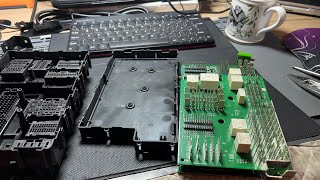
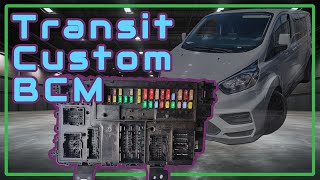
The Ford Transit, particularly from 2015 onwards, is highly susceptible to water leaks that directly impact the Body Control Module (BCM). Due to design and sealing issues around the windshield, cowl, A-pillar, and roof penetrations, water can enter the cabin and drip directly onto the BCM and its connectors, which are located under the steering wheel. 🎬 Watch: How to locate and remove the BCM Specific, owner-documented leak points include unsealed seams at the top of the A-pillar, poorly sealed roof bar mounting points (sometimes with plugs missing from the factory), and leaking roof antenna seals. This water runs down the A-pillar trim and onto the BCM, causing corrosion and short circuits. This specific vulnerability is a notorious pattern failure for the Transit platform, detailed in both owner forums and Ford TSBs.
Generation note: The 2013-2024 range covers the Ford Transit Custom (2013+) and the full-size Ford Transit (2015+ in North America). The documented water ingress issue leading to BCM failure and U0001 codes has been reported by owners of models from 2017, 2018, 2020, and newer, indicating the problem exists across this generation of Transit vans.
Symptoms You May Notice
- Multiple warning lights on the instrument cluster, often described as a 'Christmas tree' effect (ABS, Airbag, Traction Control, Check Engine)
- Engine will not start or stalls while driving
- Loss of power steering assist
- Erratic or non-functional gauges (speedometer, tachometer)
- Interior or exterior lights acting erratically or not working (e.g., stuck on dipped beam)
- Power windows, locks, or mirrors not functioning
- Alarm sounding randomly or horn sounding at random times
- Doors showing as 'ajar' on the dash when they are closed
- Engine continues to run after key is turned off and removed 🎬 Watch: Diagnosing a Transit with no start and no dash lights
- Replacing the PCM or ABS module without first checking for the common water leak at the BCM.
- Replacing the battery without properly testing the charging system and checking for parasitic draws caused by a water-damaged BCM.
- Blaming a replacement windshield for leaking without checking other known leak points like roof seams and roof rack mounts.
Most Likely Causes
- Water Ingress into Body Control Module (BCM) 🔴 High Probability → Shop Body Control Module Ford has documented insufficient sealing in several areas. Owner forums confirm leaks from A-pillar body seams, windshield seals (especially after replacement), cowl panel joints, and roof penetrations like the antenna or roof rack mounting points. Water travels down the pillar and drips directly onto the BCM.
How to confirm: Visually inspect for signs of water, dampness, or corrosion on and around the BCM, its connectors, and the surrounding floor/carpeting. Remove the driver's side A-pillar trim to check for water trails. Perform a targeted water test using a hose on the windshield, roof bar mounts, and roof seams to reveal the leak's source.
Typical fix: First, the source of the water leak must be found and sealed with automotive-grade sealant (e.g., Motorcraft TA-2). Then, the BCM and its connectors must be disconnected, dried, and cleaned of corrosion. If corrosion is severe or the module is internally shorted, the BCM must be replaced and programmed to the vehicle. 🎬 See this BCM replacement and programming walkthrough
Est. part cost: $0 (if drying works) - $1200 (for a new BCM) - Damaged CAN Bus Wiring 🟡 Medium Probability Vans are often modified for commercial use, leading to a higher chance of wiring being accidentally damaged, pinched, or improperly spliced into by aftermarket equipment installers. The sliding door harness is a known weak point that can chafe and short over time.
How to confirm: Visually inspect wiring harnesses, especially where they pass through the firewall, in door jambs, or near recent repair work. Perform a resistance test on the CAN bus at the OBD-II port (pins 6 and 14); a healthy bus should read approximately 60 Ohms with the battery disconnected.
Typical fix: Repair the damaged section of the twisted-pair CAN bus wiring. This involves soldering or using approved connectors and ensuring the twisted-pair configuration is maintained to prevent interference.
Est. part cost: $5-$50 - Weak Battery or Failing Charging System 🟡 Medium Probability → Shop Vehicle Battery Commercial vehicles often experience heavy electrical loads and frequent start/stop cycles, which can strain the battery and alternator. The battery is located under the driver's seat, making it less obvious to inspect. Low voltage can cause modules to drop off the network and trigger communication codes.
How to confirm: Test the battery voltage with the engine off (should be >12.4V) and while cranking (should not drop below ~10V). With the engine running, check alternator output (typically 13.5V-14.5V).
Typical fix: Recharge or replace the battery. If the charging system is at fault, replace the alternator.
Est. part cost: $150-$400
Rare But Worth Checking
- Faulty Control Module (Other than BCM): While the BCM is the most likely culprit due to water damage, any module on the high-speed CAN bus (like the PCM, ABS, or Electric Power Steering Pump) can fail internally and disrupt the entire network by sending incorrect voltages or no signal at all.
- Aftermarket Device Interference: Poorly installed GPS trackers, remote starters, custom lighting, or radios can interfere with or damage the CAN bus. Disconnecting these devices one by one is a key diagnostic step if present.
Diagnosis Steps
- Check for any signs of water intrusion in the driver's footwell and around the BCM under the steering wheel. This is the #1 priority for this vehicle.
- Remove the driver's side A-pillar plastic trim and inspect for water stains or active dripping, which indicates a leak from higher up.
- Scan for all DTCs in all modules to see which ones are reporting 'lost communication'. This can help pinpoint the origin of the fault.
- Test the battery and charging system to rule out low voltage as the cause.
- If no water is found and power is good, disconnect the battery and measure the resistance between Pin 6 (CAN-H) and Pin 14 (CAN-L) on the OBD-II port. The reading should be approximately 60 Ω. A reading of 120 Ω indicates an open circuit or a missing termination resistor. A reading near 0 Ω indicates a short between the CAN lines.
- Perform a targeted water test on known leak areas: windshield seal, roof seams, roof rack mounts, and antenna base. Have a helper watch the BCM area for drips.
- Visually inspect the CAN bus wiring harnesses for damage, corrosion, or poor connections, especially at the BCM, PCM, and any aftermarket-installed equipment.
- If a faulty module is suspected, a 'process of elimination' can be used by disconnecting one module at a time to see if communication is restored to the others. This is best done by a professional with a wiring diagram.
- If water damage to the BCM is confirmed, you must identify and seal the leak before replacing the module to prevent a repeat failure.
Parts You'll Likely Need
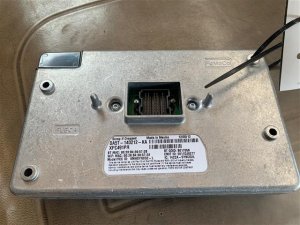
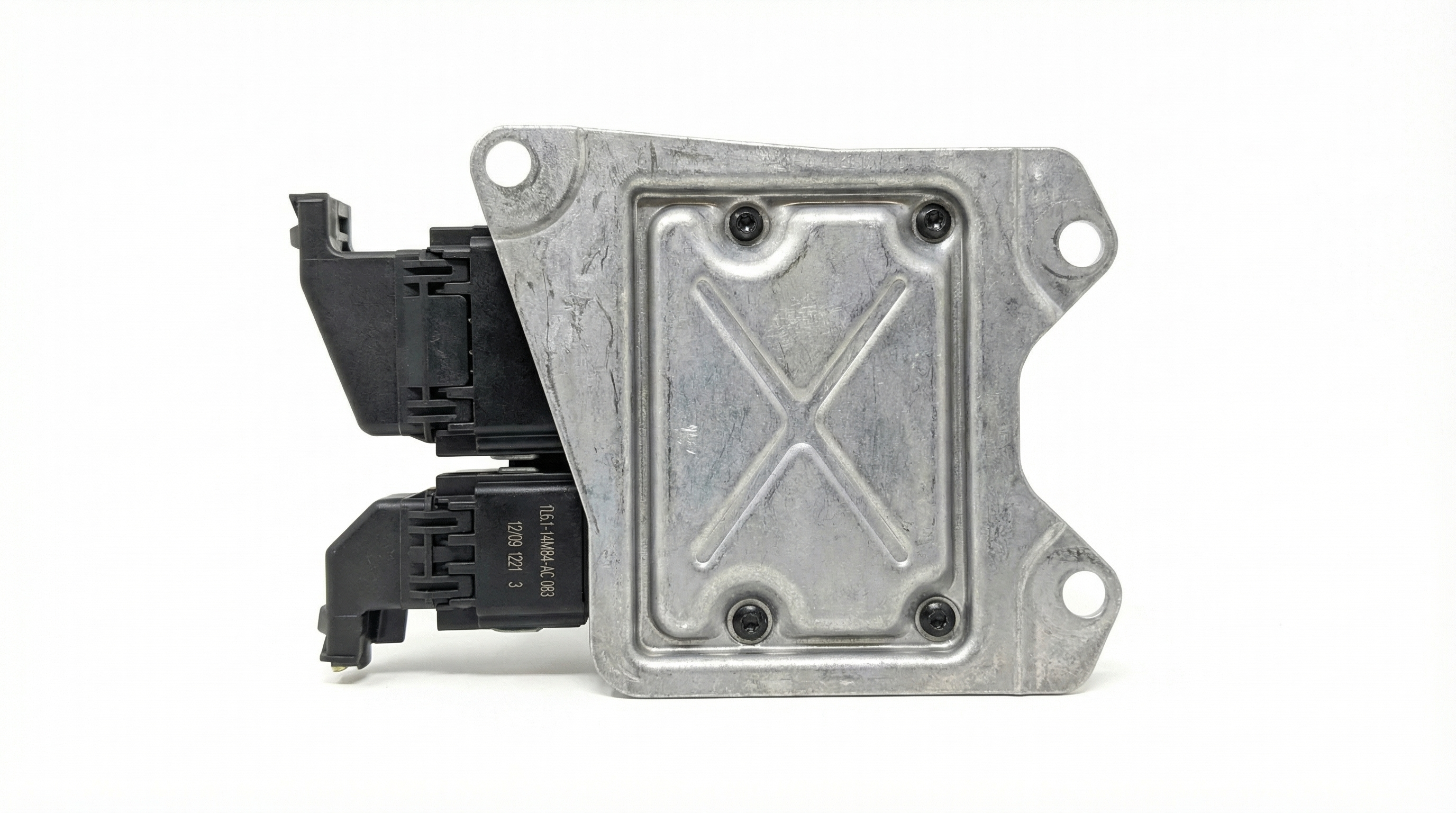
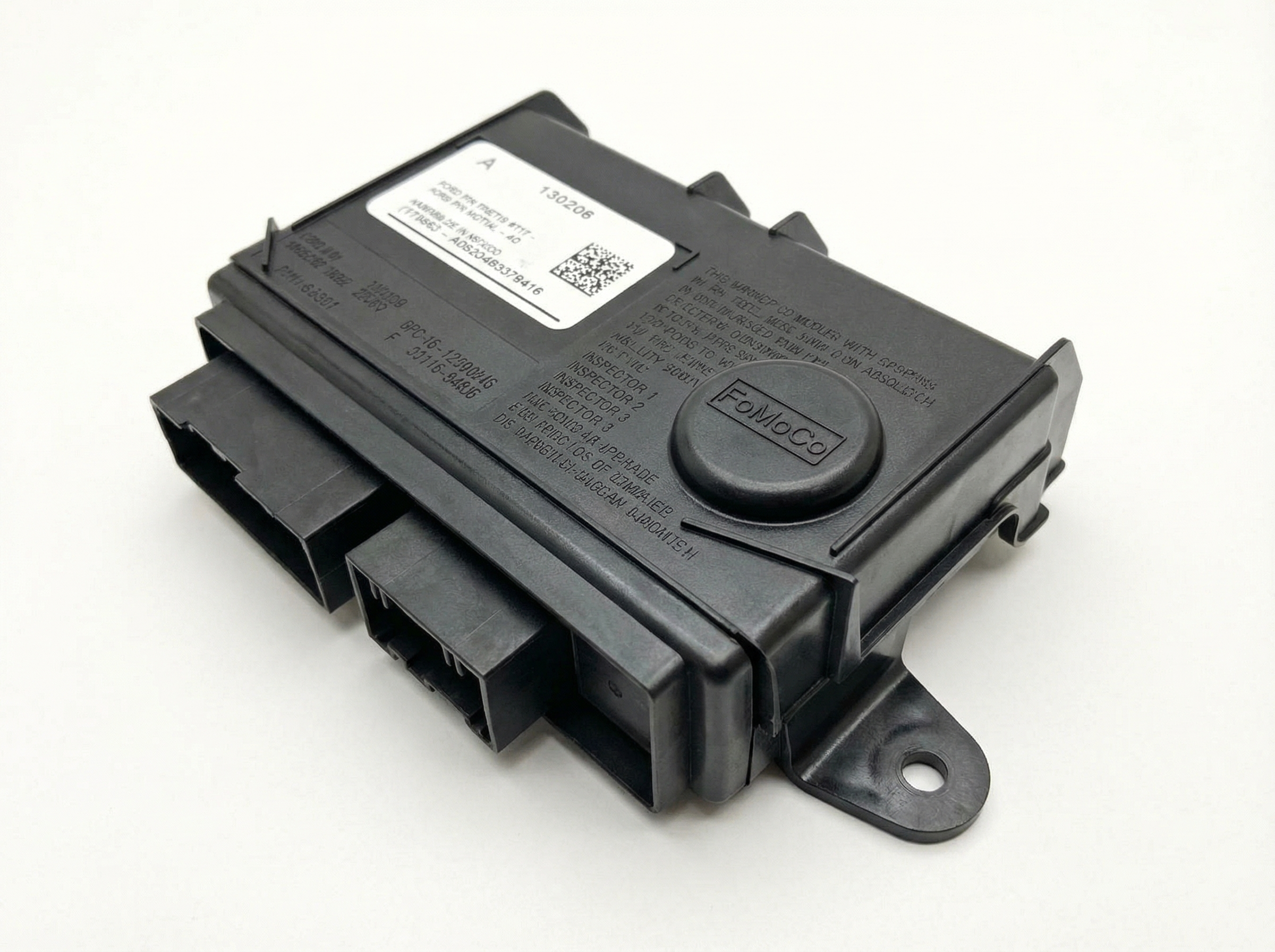
- Body Control Module (BCM)
(OEM #CK4T-14B476-CL, BK2T-14B476, GK2T-14B476-AF (Varies significantly by year and options, must verify with VIN))— This module is extremely prone to failure from water ingress on the Transit, which causes network-wide communication faults like U0001.
Trusted brands: Motorcraft (Ford OEM)
OEM price range: $800-$1200
Aftermarket price range: $500-$800 (Remanufactured) - Automotive Sealant
(OEM #Motorcraft TA-2)— Required to fix the underlying water leak that causes BCM failure. A high-quality, flexible body sealant is necessary.
Trusted brands: 3M, Permatex, Motorcraft
OEM price range: $25-$50
Aftermarket price range: $15-$30 - BCM Connector Pigtail
(OEM #Varies by connector)— If the BCM itself is salvageable or being replaced, the connector terminals are often corroded from water damage and may need to be cut out and replaced.
Related Codes That Often Appear With This One
- U0140 — Lost Communication With Body Control Module. This code often appears with U0001 when the BCM is the source of the network failure.
- U0121 — Lost Communication With Anti-Lock Brake System (ABS) Control Module. This is common because the ABS module is a critical node on the high-speed CAN bus.
- U0155 — Lost Communication With Instrument Panel Cluster (IPC) Control Module. This is set when the dashboard cluster goes dark or stops receiving data from the network.
Technical Service Bulletins (TSBs) & Recalls
- Water Ingress Into Body Control Module (BCM): → Shop Body Control Module Ford has issued technical service bulletins addressing water ingress into the BCM on Transit models. The bulletins identify insufficient sealing around areas like the heated windshield wiring, A-pillar joints, cowl panel, and roof antenna/plugs as the cause. The prescribed fix involves performing a water test, identifying the leak, and applying specific automotive sealant (e.g., Motorcraft TA-2) to the affected seams or joints before repairing or replacing the BCM.
Platform-Specific Known Issues
- A documented issue exists where water can leak from the windshield cowl, A-pillar, or roof-mounted accessories and drip directly onto the Body Control Module (BCM), causing corrosion, short circuits, and setting the U0001 code.
Mechanic-Grade Diagnostic Values
- HS-CAN Bus Resistance — expected: ~60 Ω (Ohms) with battery disconnected, measured between Pin 6 and Pin 14 of the OBD-II port.. Failure: A reading of ~120 Ω indicates an open circuit or a fault in one of the two terminating resistors. A reading near 0 Ω indicates a short circuit between the CAN High and CAN Low wires.
- HS-CAN Line Voltage (Key On, Engine Off, Bus Idle/Recessive State) — expected: CAN High (Pin 6): ~2.6V. CAN Low (Pin 14): ~2.4V. The sum of the two voltages should be approximately 5V.. Failure: CAN High voltage below 2.5V suggests a short to ground or to the CAN Low line. CAN Low voltage above 2.5V suggests a short to power or to the CAN High line.
- HS-CAN Line Voltage (Bus Active/Dominant State) — expected: CAN High (Pin 6): ~3.5V. CAN Low (Pin 14): ~1.5V.. Failure: Voltages that do not swing to these approximate levels during communication (viewed on an oscilloscope) indicate a bus problem, such as a short, open, or faulty module transceiver. A line stuck at 0V or 12V indicates a direct short to ground or power.
Hidden / Shadow Codes Worth Checking
- U0001:88-0A: This is a Ford-specific sub-type code. The
:88indicates a 'Bus Off' failure type, meaning a specific module has detected so many errors that it has stopped transmitting on the network to prevent further disruption. This points to a severe physical layer fault. (see via A professional scan tool like Ford IDS or a high-end scanner like FORScan that can read manufacturer-specific DTCs and failure types.)
Scan Tool Commands That Help
- Ford IDS (Integrated Diagnostic System) or FDRS (Ford Diagnostic & Repair System): Programmable Module Installation (PMI) — This function is required when replacing the BCM. It downloads configuration data from the old module (if possible) or from Ford's 'As-Built' database and uploads it to the new module, configuring it for the specific vehicle's options.
- Ford IDS/FDRS: Configuration Engine Immobilizer (CEI) / PATS Function — After installing a new BCM, this security function must be performed to program the vehicle's keys to the new module. The engine will not start until at least two keys are programmed.
- Ford IDS/FDRS: Network Test — This is a guided diagnostic routine that pings all modules on the network and reports which ones are not communicating. It's a primary step to see the scope of the U0001 fault and identify which modules are offline.
Wiring & Ground Locations
- BCM Connectors (e.g., C2280B, C2280C) — The BCM is located under the driver's side dashboard, above the pedals. It has multiple large connectors, often designated C2280A, C2280B, C2280C, etc.. These are the primary connectors that suffer from water damage. The HS-CAN bus wires pass through these connectors (e.g., Pins 7 & 8 of C2280C on some models). Corrosion on these specific pins will cause a U0001 code.
- Customer Connection Points — Under the driver's seat base, there is a set of high-current connection points for vehicle upfitters.. While not directly related to the CAN bus, any electrical work or shorting in this area can introduce significant electrical noise or voltage instability, potentially disrupting module communication and indirectly causing U-codes.
Real Owner Repair Stories
- Ford Transit Forum user 'Philbo' (2020 Transit Custom) — Broke down with 'all sorts of weird electrical issues.' After a supposed fix, the handbrake light stayed on and lights flickered. Later went into limp mode.
❌ Tried (didn't work) A Ford dealer initially said the van was fine. Later, a UK dealer replaced the BCM due to water damage, blaming a windshield replacement. The problems returned.
✅ What actually fixed it The BCM was replaced a second time under warranty. The story highlights that replacing the BCM without finding and permanently sealing the true source of the water leak can lead to repeat failures. - Ford Owners Club user 'Trenchy24' (Ford Mondeo Mk4 (shares Ford's CAN architecture)) — Non-start condition, instrument cluster lit up 'like a christmas tree', multiple modules not communicating on scan tool.
❌ Tried (didn't work) The car had been to multiple garages, including a Ford dealership. Various control modules were sent away for testing with no resolution.
✅ What actually fixed it The user diagnosed that the Electric Power Steering Pump module had failed internally and was sending 12V down a CAN line, which should have a maximum of ~5V. Unplugging the faulty power steering pump allowed the rest of the network to communicate and the car to start. - Cargo Van Dwelling forum user (2015 Ford Transit 3500) — Chronic electrical issues, battery failure, no-start, and 'crazy computer issues' after the van was parked and used at a job site.
❌ Tried (didn't work) The BCM was replaced twice and the battery was replaced once, all under warranty, but the root problem persisted.
✅ What actually fixed it A Ford engineer diagnosed a design flaw: the BCM activates for 20 minutes every time a door is opened. For a work van where doors are opened frequently, this creates a significant parasitic drain that kills the battery, leading to low voltage and communication codes. The 'fix' was an operational change (running the engine more often) or installing a kill switch, as the BCM could not be reprogrammed to change this behavior.
"I Checked Everything" — The Actual Cause
- The CAN bus equivalent of 'smoke test clean' is when the wiring shows a perfect 60 Ohm resistance and no shorts to power or ground with the key off, yet the fault persists. A real-world example is a faulty Electric Power Steering Pump module that, only when powered on, internally shorts 12V to the CAN line, corrupting the entire network. The wiring itself is fine, but the module poisons the bus.
Model Year Variations Within This Range
- 2015: A documented design issue exists where the BCM wakes for 20 minutes upon any door opening, causing a significant parasitic battery drain if doors are used frequently while parked. This leads to low voltage conditions that can trigger code U0001.
- 2013-2024: It is critical to distinguish between the full-size Ford Transit (subject of this article, BCM under driver's dash) and the smaller Ford Transit Connect. On some Transit Connect models, the BCM is located on the passenger side behind the glove box. Using repair info for the wrong model will lead to searching in the wrong location.
Diagnostic Flowchart
Other Known Issues on This Vehicle
Issues unrelated to this code that are worth knowing about as an owner of this generation:
- Driveshaft Flexible Coupling Failure 🔴 High — Common on 2015-2017 models, typically noticeable after 30,000 miles. Led to a major recall. (Ref: Ford Safety Recall 19S38 (supersedes 17S15).)
- Sliding Door Wiring Harness Failure 🟠 Medium — Common across all years. The plastic chain/track holding the wiring breaks, leading to chafed or broken wires. Causes 'door ajar' warnings and failure of door locks/sensors.
- 3.5L EcoBoost Timing Chain Stretch 🔴 High — Primarily affects first-generation 3.5L EcoBoost engines. Can cause rattling noises on startup (cold start rattle) and eventual engine timing issues, often appearing between 70,000 and 120,000 miles.
- Cowl Drain Clogging 🟠 Medium — Common if the vehicle is parked under trees. Debris blocks the drains below the windshield, causing water to overflow into the engine compartment, potentially onto wiring and the air filter housing.
- EGR Valve and Cooler Problems (Diesel Engines) 🟠 Medium — Reported on EcoBlue diesel engines, where carbon buildup can cause the EGR valve to stick, leading to poor performance, rough idling, and emissions-related warning lights.
Used vs. New Parts: Buying Guide for This Vehicle
When a used part is the smart pick: A used BCM from a donor vehicle is a very common and cost-effective repair strategy, especially given the high cost of a new OEM unit. It makes the most sense when the original BCM is physically damaged by water beyond repair, but its internal data might still be recoverable.
Donor-vehicle mileage cap: roughly under 150000 miles for the part to have meaningful remaining life.
What to inspect on the donor part:
- Verify the engineering part number on the used BCM EXACTLY matches the original module.
- Inspect the donor BCM's connectors for any signs of water intrusion, pin corrosion, or physical damage. Do not buy a used module that shows signs of the same failure mode.
- Source the part from a reputable recycler that guarantees the part is functional and provides the VIN of the donor vehicle, which can be helpful for programming.
- Ask if the part comes from a vehicle that was wrecked versus one that was scrapped for electrical issues.
OEM-only on this vehicle (don't cheap out):
- While the BCM itself can be sourced from the used market, the sealant used to fix the water leak (e.g., Motorcraft TA-2) should be a high-quality, new automotive body sealant. Do not reuse old sealant or use household-grade silicone.
Aftermarket brands forum-validated for this vehicle:
- For the BCM, this is less about brands and more about services. Reputable BCM 'cloning' services are a popular option. These services transfer the immobilizer and configuration data from your original BCM to the donor unit, making the replacement plug-and-play without needing dealer programming.
- Viretronics is a company mentioned by owners for BCM repair services.
Brands owners have reported issues with on this vehicle:
- Avoid any used BCM seller who claims the module is 'plug-and-play' without it being cloned from your original unit first. A used BCM will NOT work without being programmed to your vehicle's VIN and security system.
Real Owner Stories
Aggregated from forums and TSBs cited above. Mileages and costs reflect what owners reported in those sources.
2015-2023 Ford Transit
Symptoms: Traced a BCM water leak to missing factory plugs in the roof rack mounting holes. After removing the headliner, a clear path for water was visible running down the A-pillar to the BCM.
What fixed it: Sealing the roof holes with bolts and sealant and replacing the destroyed BCM.
Source hint: FordTransitUSAForum.com thread titled 'Water ingress, BCM failure'
2020 Ford Transit
Symptoms: Sudden electrical failure and communication issues immediately following a windscreen replacement.
What fixed it: Identified water damage to the BCM caused by an improper windshield seal.
Source hint: FordTransitUSAForum.com thread titled 'BCM and Water issue'
2018 Ford Transit Custom
Symptoms: Recurring BCM water damage even after previous dealer repairs; difficulty pinpointing the exact entry point of the water.
What fixed it: Checking the roof aerial seal and using talcum powder to trace the water path to the source.
Source hint: Ford Owners Club: Mk8 Transit Tourneo water ingress
Related OBD-II Codes
Frequently Asked Questions
Is there an official Ford TSB for water leaking onto the BCM in my Transit?
Where is the BCM located on the 2013-2024 Ford Transit, and why does it fail?
How can I check if my CAN bus wiring is damaged without a professional scanner?
Can a bad battery cause a U0001 code on my Transit?
What sealant should be used to fix the leaks causing the U0001 code?
Why does my Transit engine keep running even after I remove the key?
Helpful Videos

We Have This Part in Stock

The information in this article is provided for general reference and educational purposes only. Vehicle specifications, procedures, and part compatibility can vary by production date, trim level, and region. Always consult your vehicle's factory service manual and verify part numbers before purchasing or performing repairs. Safety-critical components such as airbags, seat belts, and braking systems should be installed by a qualified professional.
- Ford Transit:
- 🧭 Diagnostic Flowchart
- 🎬 Helpful Videos
- 🛍️ Shop This Part
- What's Unique About the 2013-2024 Ford Transit
- Symptoms You May Notice
- Most Likely Causes
- Rare But Worth Checking
- Diagnosis Steps
- Parts You'll Likely Need
- Related Codes That Often Appear With This One
- Technical Service Bulletins (TSBs) & Recalls
- Platform-Specific Known Issues
- Mechanic-Grade Diagnostic Values
- Hidden / Shadow Codes Worth Checking
- Scan Tool Commands That Help
- Wiring & Ground Locations
- Real Owner Repair Stories
- "I Checked Everything" — The Actual Cause
- Model Year Variations Within This Range
- Other Known Issues on This Vehicle
- Used vs. New Parts: Buying Guide for This Vehicle
- Real Owner Stories
- 2015-2023 Ford Transit
- 2020 Ford Transit
- 2018 Ford Transit Custom
- Related OBD-II Codes
- Frequently Asked Questions
- 🎟️ Get 5% Off